
 Em
EmJust so you know: This post contains affiliate links. As an Amazon Associate, I earn from qualifying purchases. I may also earn a small commission if you book a tour, hotel, or buy something else through these links. It helps me keep this blog running and full of travel tips. Thanks for your support!
Skopje might not be packed with bucket-list attractions, but it’s one of those cities that quietly gets under your skin — full of contrasts, contradictions, and a kind of charm that only reveals itself if you slow down and stay awhile.
All photos featured on this blog are from my personal travel experiences.
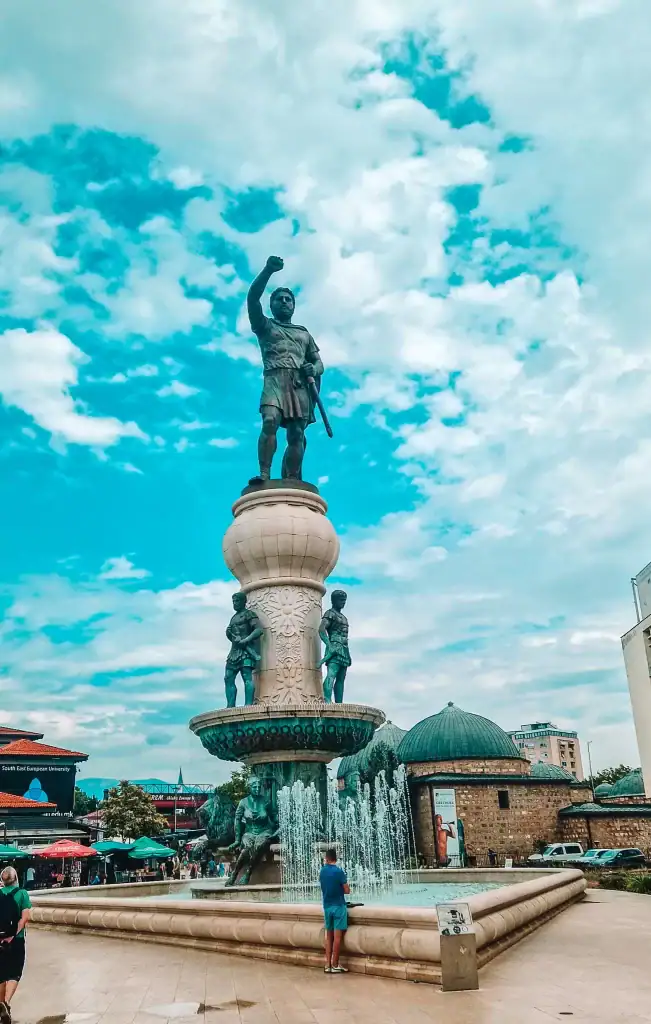
Nearly everything you see in central Skopje was rebuilt after a devastating earthquake in 1963, which flattened around 80% of the city. What rose in its place is an eclectic patchwork of modernist blocks, shiny neoclassical facades, and more statues than you can count — part of the infamous Skopje 2014 project, which aimed to give the city a grand new identity (with mixed results).
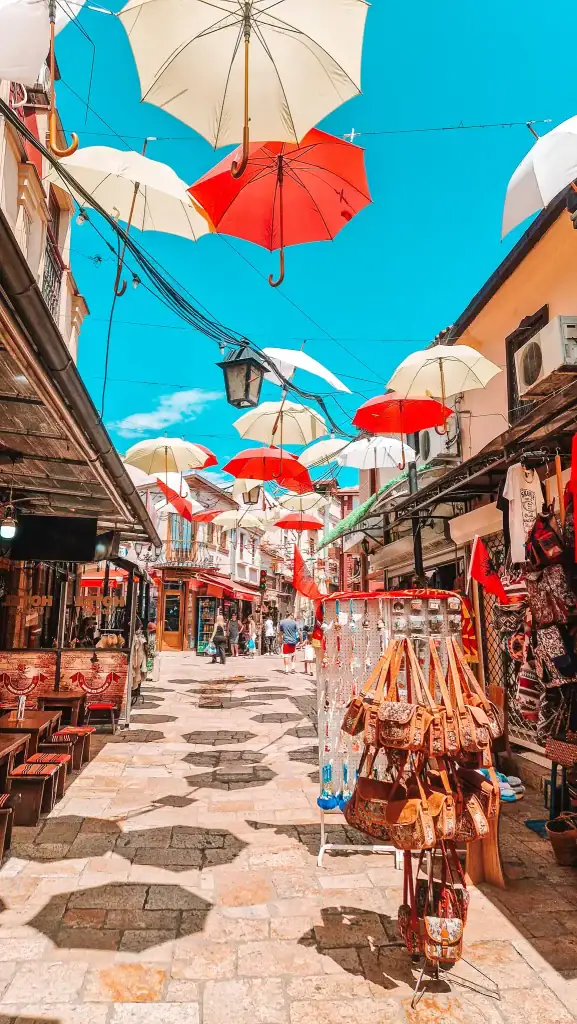
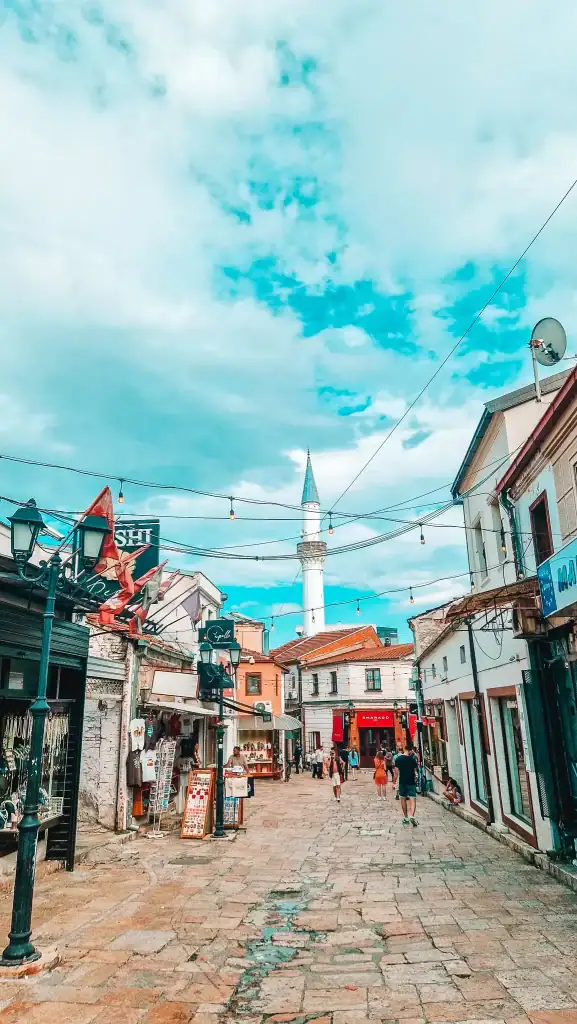
And yet, tucked just across the Stone Bridge, the Old Bazaar still stands — winding alleyways and Ottoman architecture that somehow survived both earthquakes and empires. It’s the kind of place where you can sip strong coffee, shop for copperware, and feel like you’ve time-travelled a little.
Skopje is almost entirely walkable — even the far edges of the city center are within 30 minutes on foot — and there’s something delightfully surreal about strolling past faux baroque buildings, giant bronze monuments, and a fleet of double-decker red London buses… in the Balkans.
If you’re curious about where to start, here are the best things to do in Skopje — from its strangest sights to its quiet corners.
Is Skopje Worth Visiting?
If you’re expecting a polished European capital, Skopje might throw you – and my honest answer is that if you’re looking for a weekend trip, I preferred nearby Tirana. But if you’re drawn to places with personality, layered history, and a bit of weirdness? Then yes — Skopje is absolutely worth a visit.
It’s a city of contrasts: old and new, ornate and crumbling, quietly local and oddly theatrical. You’ll walk from gritty side streets into grand squares lined with massive monuments and replica buildings that feel more Vegas than Balkans — and then, just across the river, find yourself in a centuries-old bazaar that still buzzes with everyday life.
Skopje isn’t trying to be anyone’s favourite city. But for the curious traveller, it’s a fascinating glimpse into a region that’s constantly reshaping itself — and a surprisingly comfortable base for deeper adventures around North Macedonia and the wider Balkans.
🗺️ Map of Skopje’s highlights
Use this interactive map to find all of my suggested Skopje visits below – just be aware that museums and businesses in Skopje very rarely update their hours on Google, and I often arrived to find the attraction, restaurant or cafe I wanted was closed.
🌆 Best Things to Do in Skopje (2025 Guide)
🏛 Explore Macedonia Square & the “Skopje 2014” Statues
Macedonia square is the heart of Skopje – or rather, the two hearts of Skopje. The main Macedonia Square is south of the river with a giant statue of a man on horseback in the centre, surrounded by a fountain. On the other side of the Stone Bridge is another square with another statue of a warrior on horseback – and that about sums up Skopje for me.
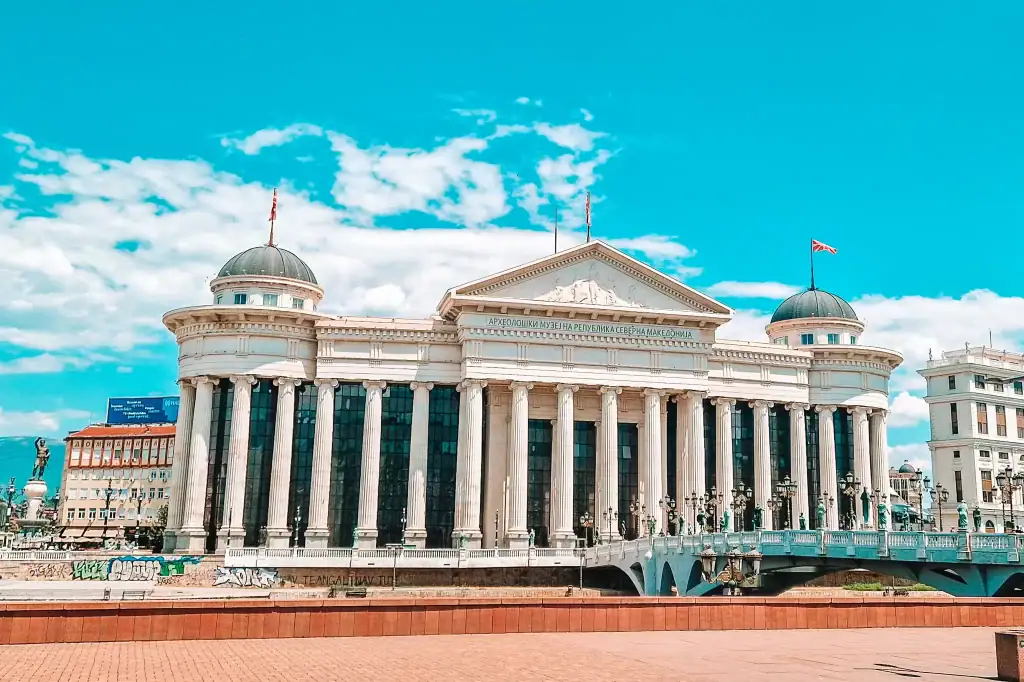
Skopje 2014 was a government-funded project launched to give the city a more classical, monumental feel — with dozens of statues, fountains, faux-baroque buildings, and a giant bronze Alexander the Great dominating the skyline.
You can’t move in Skopje for statues, and they often feel randomly placed and poorly maintained. The intention was to boost tourism, and I’ve been told it worked – but as a tourist, to me it often feels surreal.
Other spots to experience Skopje 2014: the Woman Warrior Park, along the riverfront and around the Museum of Macedonian Struggle. The red London-style buses are also a part of Skopje 2014 – they commemorate that after the 1963 earthquake, London lent Skopje some traditional red buses to help the city recover (although the current fleet were built in China).
🧿 Wander the Old Bazaar
The Old Bazaar is one of the few parts of Skopje that escaped the destruction of the earthquake, and as a result it has a completely different vibe to the rest of the city – much more like beautiful Lake Ohrid in the south. Head to this area to explore winding alleys, historic buildings, and more restaurants and bars than you could possibly ever explore – although I made a good try at exploring the cafes, and you can find my favourites in my guide to Skopje’s best cafes.
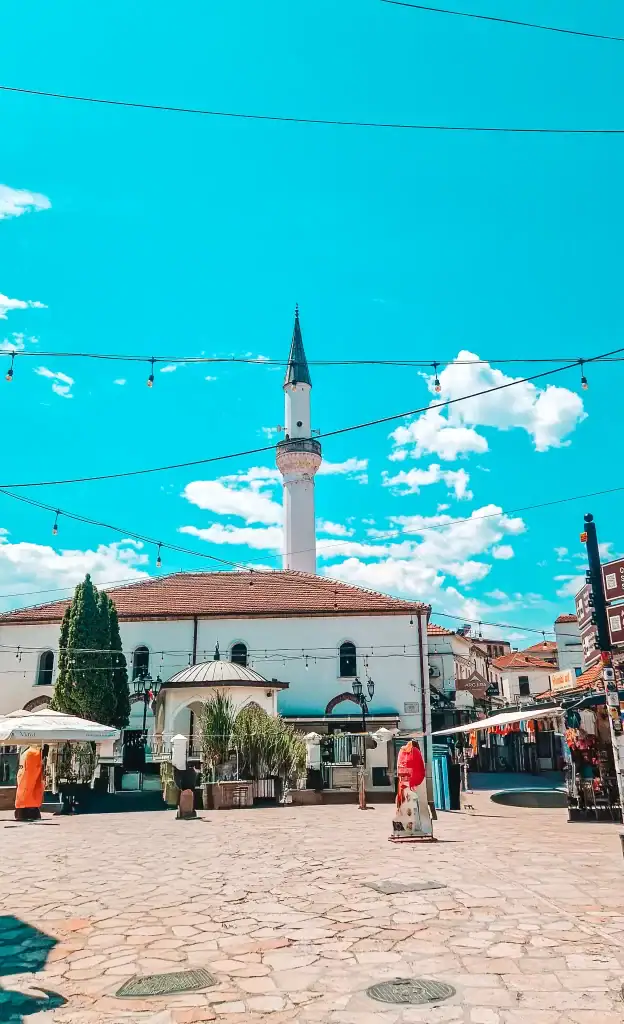
This area really comes alive at night time, when it’s a hive of sociability. Beware, if you’re a morning person – it’s unlikely that you’ll find much in the Old Bazaar open before 10am.
There are also a couple of museums and galleries in and around the Old Bazaar – read on to find out the best of them!
🖼 Visit the Museums
Skopje has more museums than you might expect — and I visited nearly all of them during my stay. Some are moving, some are bizarre, and one is full of wax figures you’ll never forget.
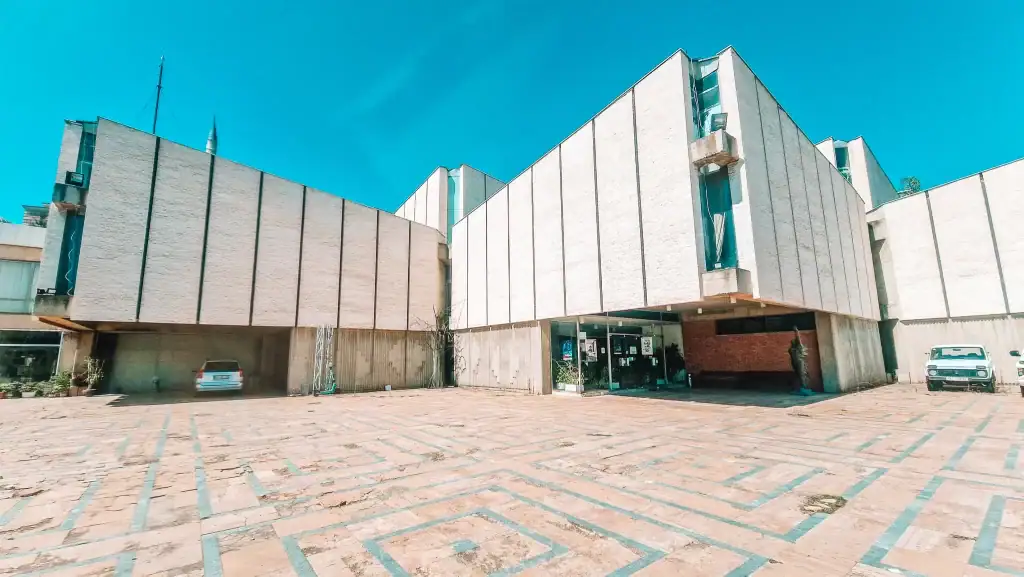
👉 Find out which ones to prioritise in my full museum guide.
🏞 Visit the stunning Matka Canyon
Cost:
- Boat ride: 500 MKD
- Kayaks: 200 MKD for a single seater/300 DEN for a two seater for 30 minutes (longer available).
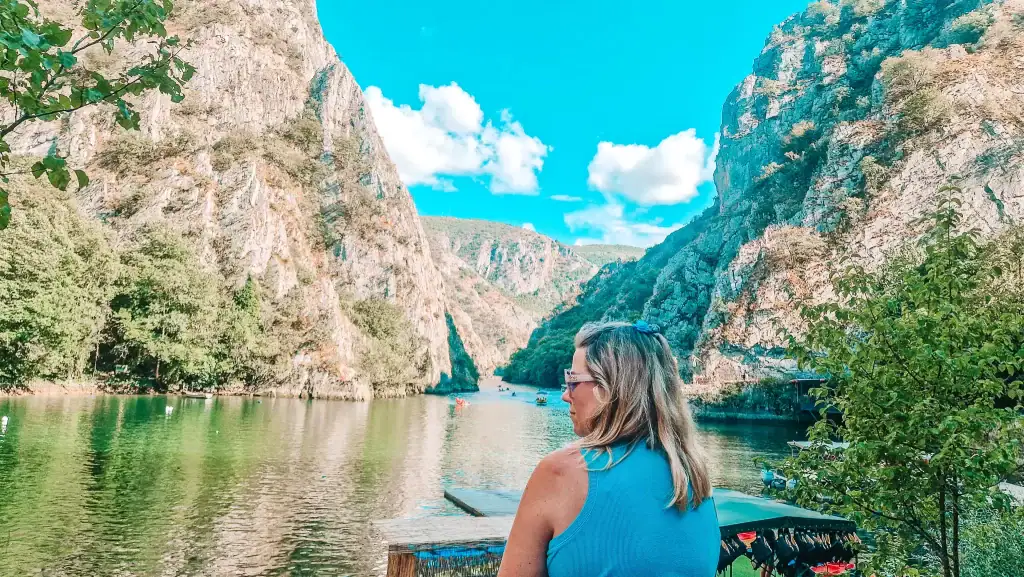
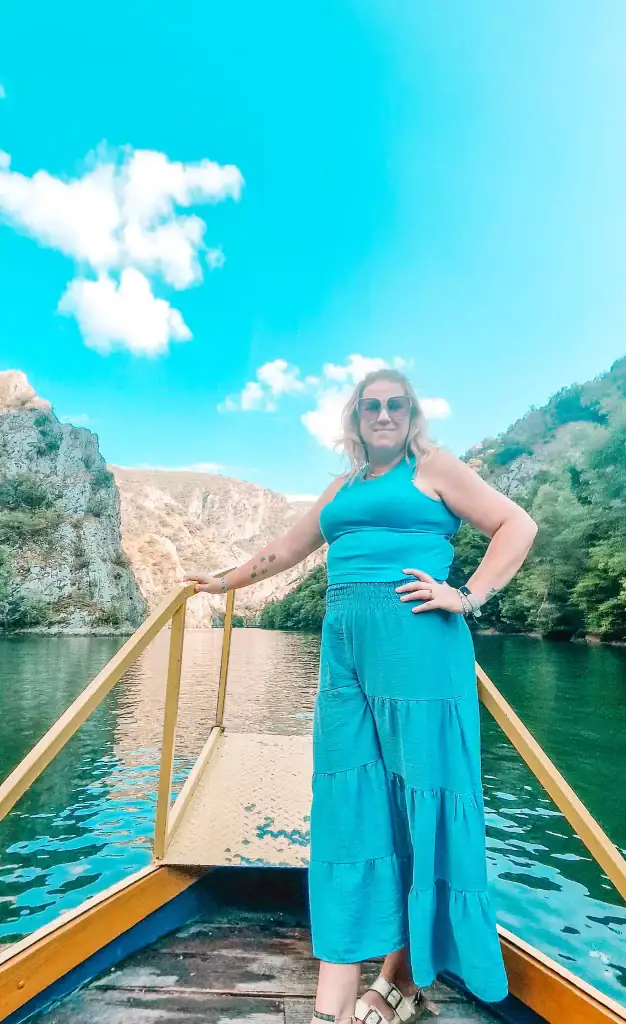
Definitely the most famous thing to do in Skopje is visiting the gorgeous Matka Canyon – a natural wonder in the mountains near the city – and much more accessible than the similarly stunning Shala River near Shkoder in Albania. Popular with locals as well as tourists, the canyon offers a range of activities including a boat tour through the canyon to a cave, and kayaking opportunities.
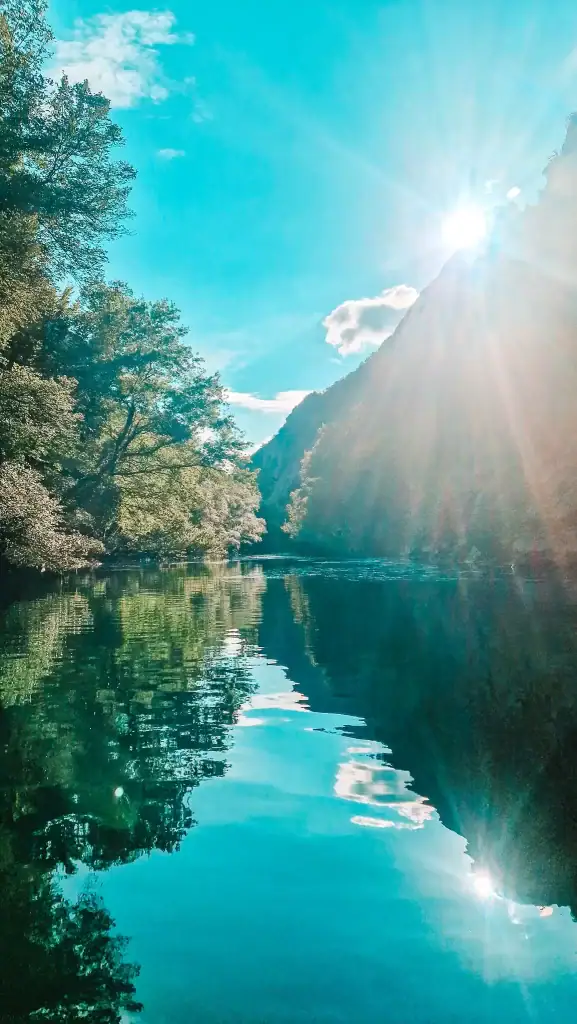
About two weeks before I visited, it had hosted the European Youth Olympic Festival kayaking event! Previously a river, it was dammed in 1938. This formed a small lake in the canyon which is perfect for amateur kayakers, while the much more skilled young kayakers took part in slalom events in the faster water before the dam.
The canyon is easily accessed from Skopje – both by organised day trip and local bus – and I’ll have a full guide on my day trip experience coming soon. But if you want a shortcut, I took this this trip and highly recommend it, which takes you to Matka Canyon, the Vodno Cable Car and St Panteleimon.
🏔 Take the Mount Vodno Cable Car
Cost: 120 MKD
A popular activity to combine with a trip to Matka Canyon is visiting Mount Vodno, the highest mountain surrounding Skopje. The Millennium Cross on top of the mountain is easily visible from most parts of Skopje, and is the end point for the Mount Vodno Cable Car.
The Millennium Cross was built in 2002 and has deep religious significance in it’s construction. A trip up in the cable car only takes a few minutes, but is worth it for the panoramic views of the city below.
The Mount Vodno Cable Car can also be accessed by Skopje’s city bus, or you can combine it with a guided day trip.
If you’re making the trip independently, try to check if the cable car is running before you go, especially if there is/has been rough weather. Unfortunately, when I tried to visit, a big storm the day before had broken the cable car!
🏘 Visit the Church of St. Panteleimon and the Etno Village
Cost: 120 MKD to enter St Panteleimon
Another popular stop on Matka Canyon tours is the Church of St Panteleimon, a 12th Century Church that survived the 1963 earthquake. Situated on the side of Mount Vodno, the church is really beautiful, with stunning murals inside. It’s a rare chance in Skopje to see a building that represents what Skopje would have been like before the destruction of 1963.
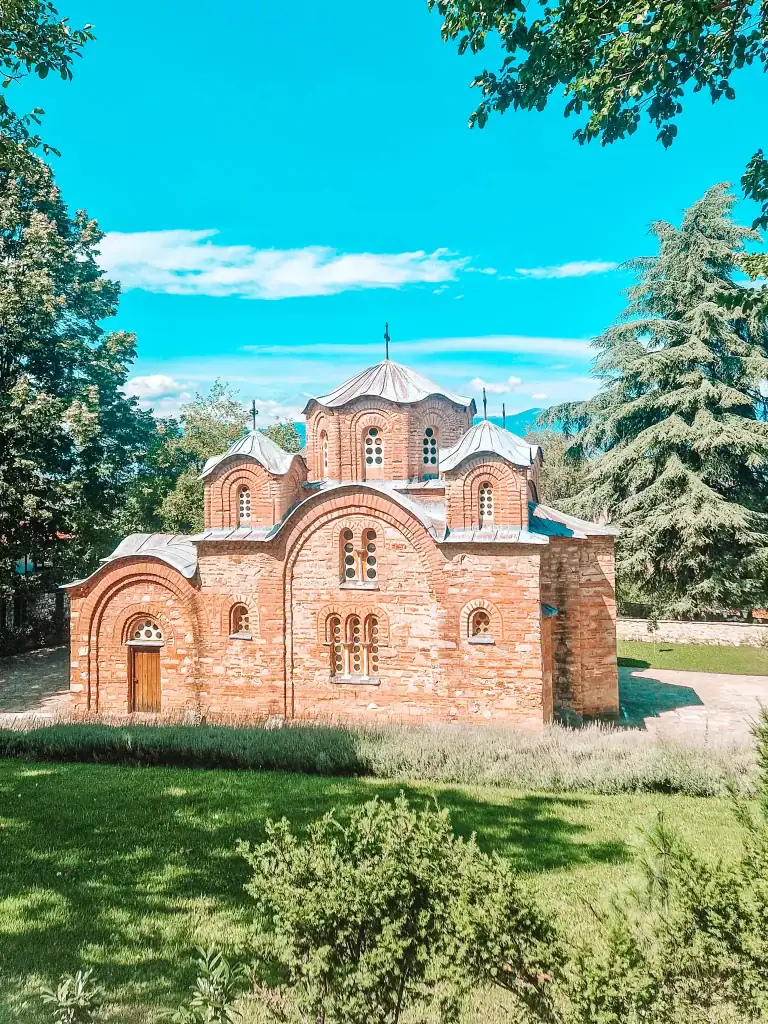
Just above the church is the Makedonsko Selo Etno Village, a strange little tourist trap that has been built to echo the traditional towns found in other parts of Macedonia – for example, in beautiful UNESCO-listed Ohrid. Each building is in a different style and they contain workshops for different types of traditional Macedonian skills, for example, beautiful filigree jewellery.
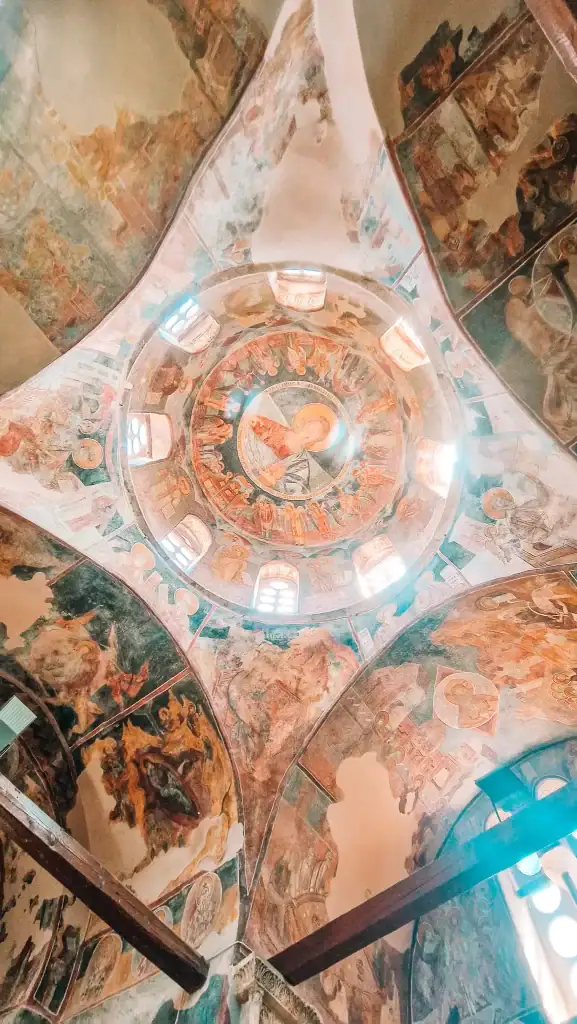
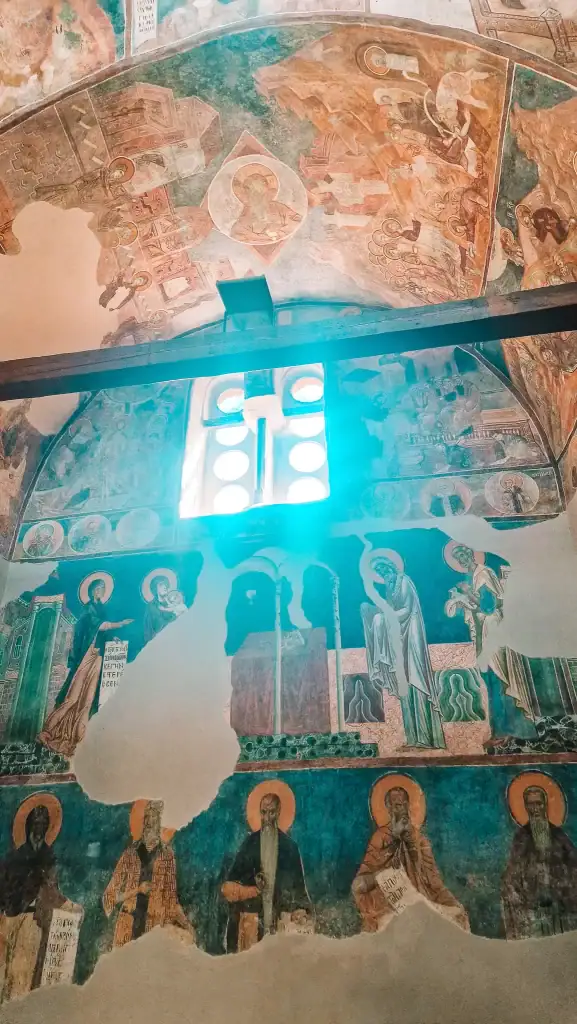
While the Etno Village is not authentic, it’s a nice little place to visit for lunch with a view and a wander around the shops. It’s a great place if you want a more meaningful souvenir than the mass-produced ones found in the Old Bazaar.
I particularly liked Esnaf, a store which had a variety of handmade items. They offer employment opportunities to people who might otherwise struggle to make a living, including some lovely souvenirs crocheted by local people with Down’s Syndrome.
🏰 Visit Skopje Fortress for panoramic views over the city
Cost: free
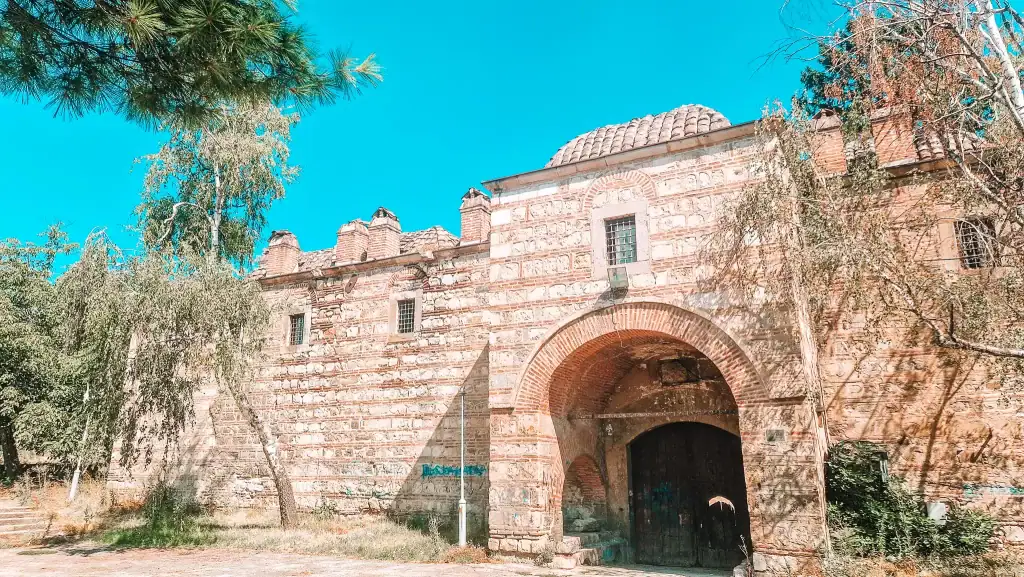
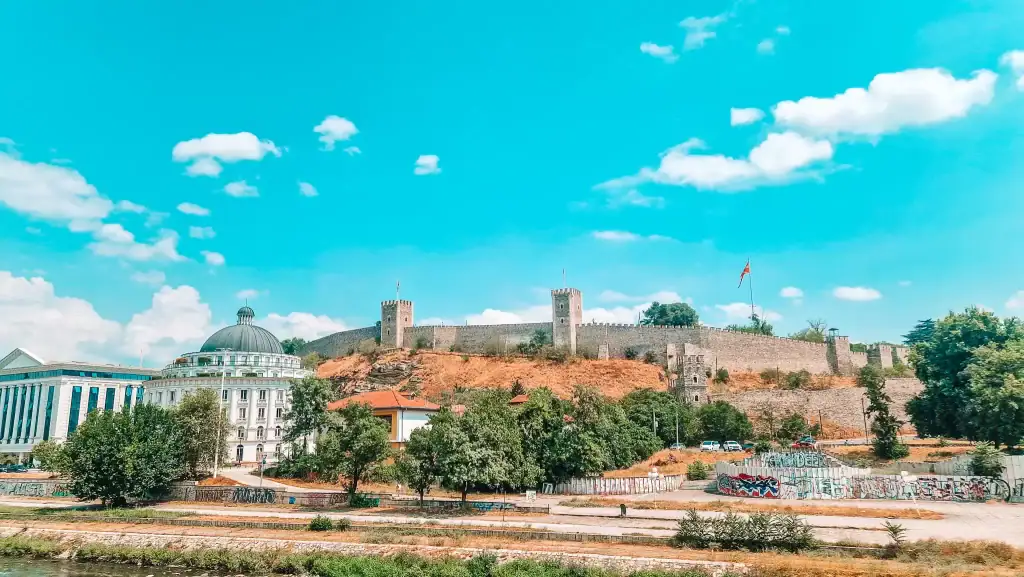
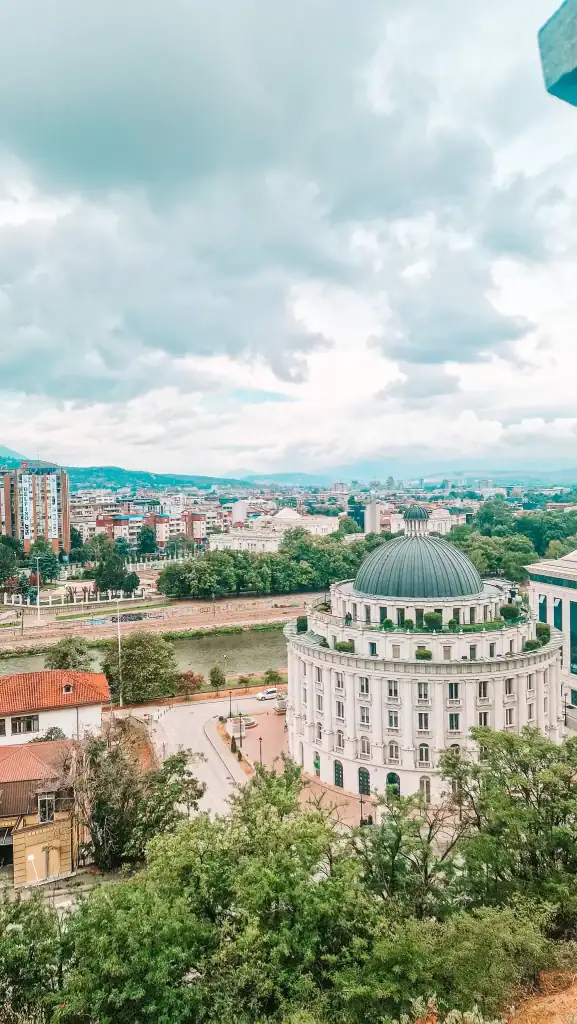
Like many Ottoman cities including Berat, Shkoder and Gjirokaster, Skopje has it’s own castle above the city. Take a steep walk up the hill to Skopje Fortress, which looms above the city. It’s free to enter and roam around the fortress, looking at the historic walls and views across the city. There isn’t any historic information up there unfortunately, but it does give you a birds eye view of all the Skopje 2014 statues and buildings.
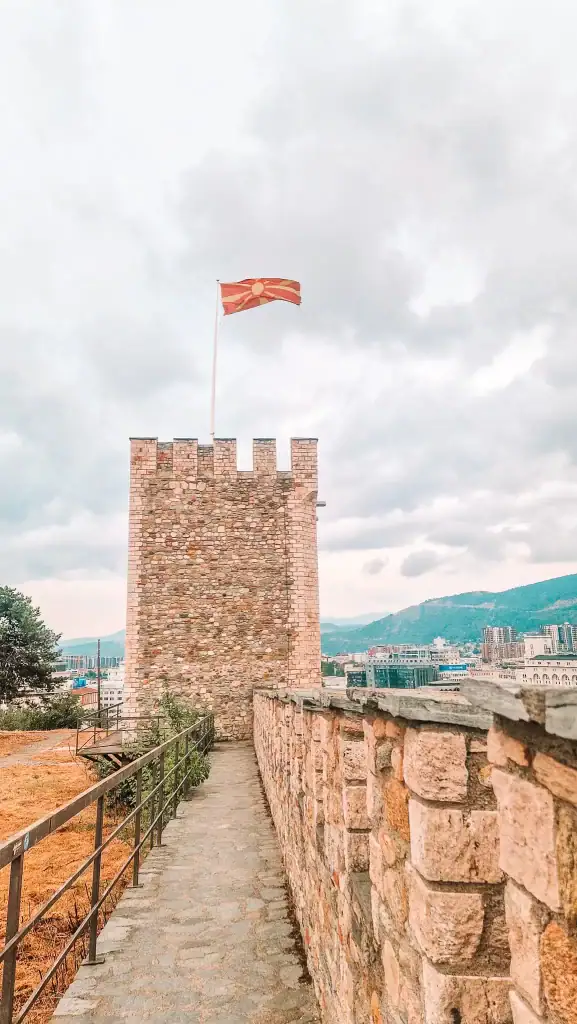
If you decide to do my recommended Matka Canyon day trip, it starts from the Skopje Fortress car park, so you could visit before (if you’re doing the afternoon trip) or after if you start for Matka Canyon in the morning.
Try locally made wine, beer and gin
Cost:
- Kartal Winery tour – 40e per person (35e for bigger groups)
- Smidgen Gin Distillery Tour – 990 MKD for the most basic tour
Skopje has some great alcohol tasting opportunities on offer if you’re a lover of craft alcohol.
- Macedonia is one of the oldest wine producing regions in the world, and as a result, Macedonian wine is cheap and easy to find in restaurants and bars across the city. But if you want a more structured tasting, try Kartal Winery on the edge of the city. They’ll give you a tour of the winery, including the wine making process, before you get to try a solid 6 wines (two white, one rose and three reds) alongside a deli platter
- Skopje also has it’s own gin distillery! Smidgen Gin Distillery is in the Debar Malo area, and offers a variety of tours. The basic tour gives you the chance to learn how gin is made before tasting their three gins. If you’re really into gin, you can sign up for a gin making class where you’ll get to make your own bottle designed to your own palate. I’ve done something similar to this near my home in the UK, and absolutely loved the experience.
🍽 Where to Eat & Drink
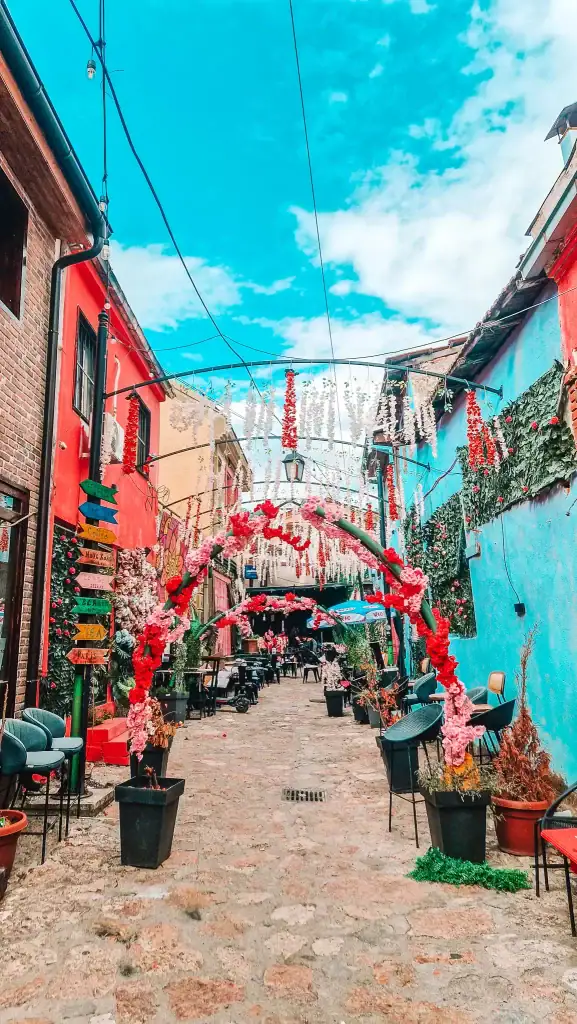
Skopje is full of great restaurants and cafes to try out. If you’re looking for the best cafes across the city, check out my dedicated guide to Skopje’s cafes.
There are three main areas if you’re looking for a good meal in Skopje:
- The Old Bazaar has a lot of restaurants aimed at tourists (both domestic and international) with great Macedonian food on offer. There are also a couple of amazing shops selling traditional Macedonian pastries and cakes – I liked Baklava Nexho and Sweets Shop Rigara (pictured below).

- The area around Macedonia Square and along the river has a variety of more traditional European restaurants, offering both Macedonian specialities and a range of European fare. I had pizza at Soul Kitchen on the river and loved it.
- Debar Malo is known to locals as ‘the restaurant area’ and is an area of small backstreets teeming with cafes and restaurants. I feature my favourite cafes in my guide to Skopje’s best cafes, but for restaurants try Chardak, which offers traditional Macedonian food or Bakery La Delicious for excellent byrek.
🛏️ Where to Stay in Skopje (and Why Location Matters)
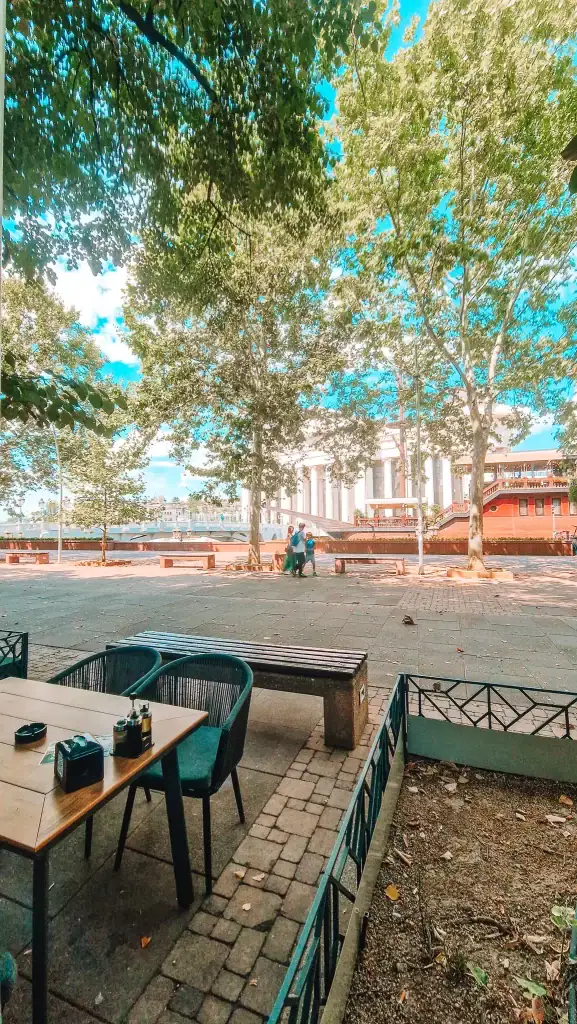
Skopje might be a walkable city, but picking the right place to stay still matters — especially if you’re short on time. I recommend choosing a spot near Macedonia Square to make the most of your trip. Use the interactive map below to check current prices and availability:
Here are three top-rated places I’d recommend:
- 🛌 Hostel Central Skopje – A highly rated hostel near the river, just steps from the city’s main sights. Dorm accommodation only, but with a 9.2 rating from 300+ reviews, it’s a solid budget option.
- 🛍 Aparthotel Waldinger Skopje – A mid-range hotel located just off Macedonia Square, with rooms inside a shopping centre (very handy!). Rated 9.3 from 70+ reviews.
- 🚢 Hotel Senigallia – Ever slept on a moored galleon? This quirky 4-star hotel sits on the river, in one of Skopje’s most iconic (and surreal) settings. A stationary boat + prime location = an unforgettable stay.
🚍 How to Get Around Skopje
Skopje is an incredibly walkable city, with most of the tourist attractions around Macedonia Square and the Old Bazaar.
Local buses:
However, if your accommodation is a little further out, or if you’re planning to get the bus to Matka Canyon or the Etno Village, Skopje does have a useful bus network – with a few caveats.
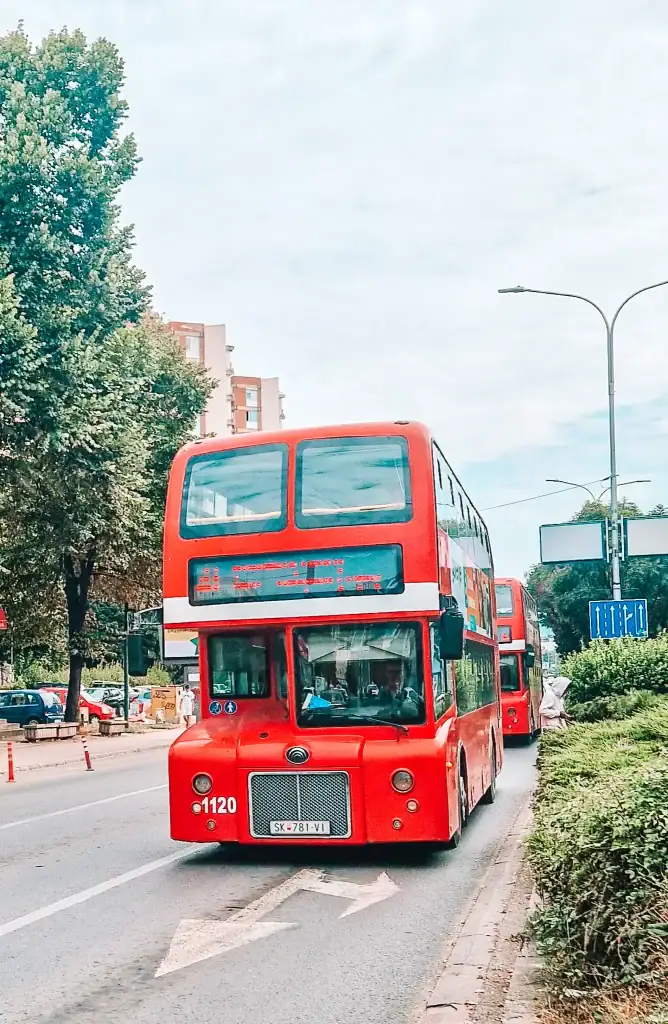
The best way to navigate the buses is to download the Skopje bus app, which is available on the Apple and Play stores and has an English-language interface. Use the journey planner on the app to plan your journeys – my major caveat around Skopje’s buses has been that the Google Maps information is not accurate.
Buying bus tickets:
While you can buy an Oyster-card style ticket from one of the many kiosks dotted around Skopje, I recommend using the app to either top up your wallet for a pay as you go approach, or buying the 10 ticket multi-pass (which only lasts two weeks). Once done, you use the QR code on the app to scan at the bottom of the ticket machines on the bus – you must do this each time you enter.
Taxis:
While Uber doesn’t exist in Skopje, there are a couple of alternatives and it’s worth having one of them on your phone for emergencies or if you’re out late at night. I used Wizi, which has an interface similar to Uber, but unfortunately still runs on an estimated cost/meter system – but at least you’re starting out with an estimate. I was also recommended Bee Taxi, but honestly, Skopje is so walkable that I only used taxis a couple of times.
🔗 What to Do Near Skopje
Skopje makes a great base for exploring Macedonia – Matka Canyon, mentioned above, is one of the highlights, but there are other great day trips to take from the city as well.
Check out my guide to day trips trips from Skopje – I’ll be including Matka Canyon, Tetovo, Bitola, and the stunning Lake Ohrid. While Lake Ohrid is a really popular day trip from Skopje, I think it’s even better if you can stay a couple of nights, so if your itinerary allows for that, check out my full guide to Lake Ohrid.
Frequently asked questions about visiting Skopje
Is Skopje safe for solo female travellers?
Yes — overall, Skopje is safe, especially during the day. The British Foreign, Commonwealth and Development Office (FCDO) lists the main risk to foreigners as bag snatching and pickpocketing, particularly late at night in tourist areas – this is in line with many European cities, including London.
Like any city, it’s smart to stay aware of your surroundings, avoid poorly lit areas at night, and use common sense. I lived here for a month solo and felt very comfortable.
How many days should I spend in Skopje?
One day is plenty to see the city’s main sights, with time to wander the Old Bazaar and visit museums. Add a second day if you want to include nearby day trips like Matka Canyon, which will most likely include the Ethno Village and Mount Vodno.
Is English spoken in Skopje?
English is fairly widely spoken in cafes, restaurants, and with younger locals. While some older people may not speak English, people are generally kind and helpful. English speaking locals will often stop and help translate if you are struggling.
Can you walk everywhere in Skopje?
Yes! Skopje is a very walkable city. Most major attractions are within a 15–30 minute stroll of each other, and the central area is mostly flat. Just bring comfy shoes — some streets are cobbled or uneven. The exception is Matka Canyon – you’ll either need to use a guided day trip or take a local bus.
What’s the best time of year to visit Skopje?
Spring (April–June) and early autumn (September–October) offer mild weather. Summer can get very hot, especially in the city, but it’s still manageable if you plan indoor breaks and early starts. However, in August many people leave the city for their summer holidays and it can feel quite empty, with some businesses shutting for a summer break. Macedonian Independence Day on August 2nd sees the city almost completely empty out.
🎒 What to Pack for Skopje
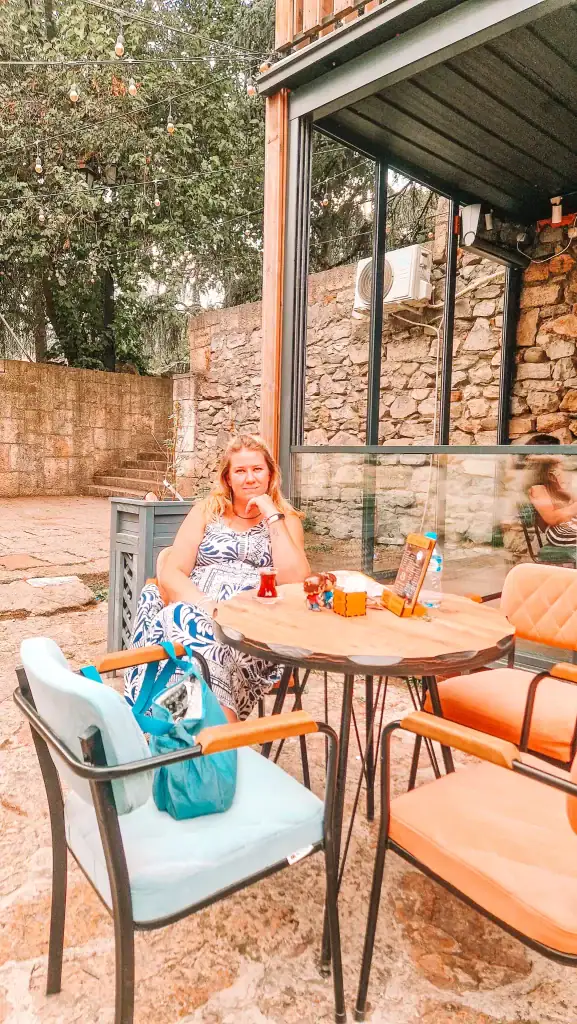
Skopje is a walkable city with unpredictable museum hours and plenty of time spent on our feet — here are a few essentials I always travel with (and used constantly during my month here):
- 🔋 Mini handbag charger – Lightweight but powerful, this has saved my phone on long museum days more times than I can count.
- 🤳 Selfie stick – Great for capturing those awkwardly grand Skopje 2014 statues from a better angle.
- 👣 Comfy walking shoes (like Birkenstocks) – Skopje is super walkable, but that means you’ll be clocking 10K+ steps a day. Your feet will thank you.
- 🎒 Anti-theft crossbody bag – If you’re heading into the Old Bazaar or taking buses, this keeps your essentials close and safe. Over 1,000 reviews and a score of 4.6.
- 🔌 Multi-port plug adapter – The one I’ve used for over a year. Fast-charges multiple devices and works in Europe (and beyond).
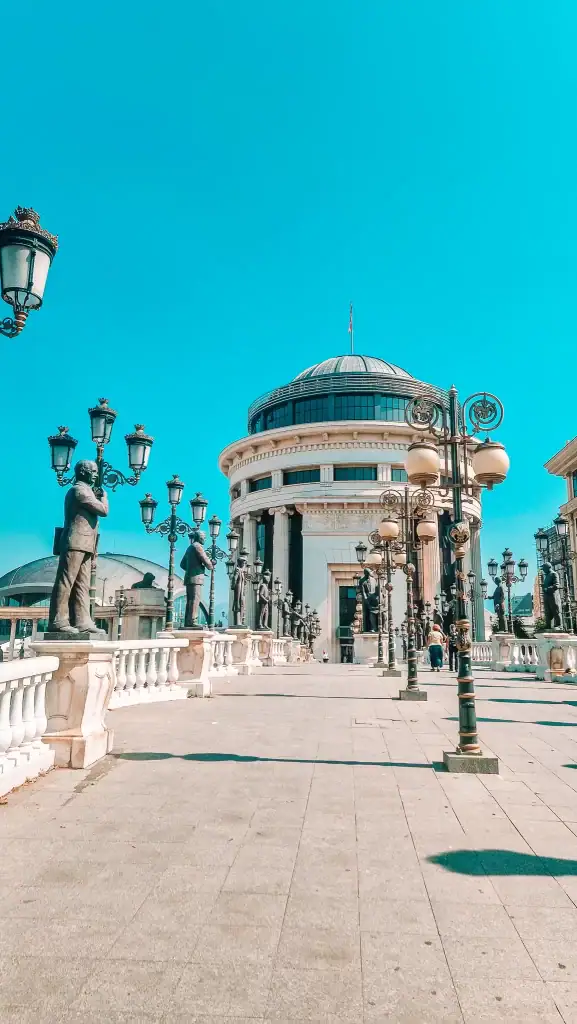
While Skopje isn’t a bucket list city for European travellers, it does have it’s charm, and is a great base for exploring the rest of Macedonia – as well as the logical transfer point between Balkan destinations such as Albania, Bulgaria, Kosovo and Serbia. Spent a day or two here in between other trips around the Balkans, and you’ll be rewarded with a city that hasn’t quite worked out it’s angle yet, but is trying a wide variety of ways to do so – resulting in some absolute gems.
✨ Planning your route through the Balkans? These guides will help you make the most of your time — from mountain lakes to underrated capital cities.
- 14 Best Things to do in Lake Ohrid, Macedonia
- Explore Bitola: Roman Mosaics, Ottoman Charm & Atatürk
- 48 Hours in Tirana – A guide to Albania’s underrated capital
- Why You Should Visit Albania, Montenegro & North Macedonia Before Everyone Else
- Things to Do in Krusevo, North Macedonia: History, Views & Local Gems
- Balkans Religious Landmarks: Mosques, Monasteries & Churches to Visit
And don’t miss my Culture-First Guide to the Balkans, covering Albania, North Macedonia, Kosovo and Bulgaria — with slow travel tips, history-rich stops, and local insights.
Or if you’d prefer someone to build a personalised itinerary for you — tailored to your time, interests, pace, and travel style — I also offer custom trip planning, including wider Balkan routes. 👉 Request a custom itinerary
Em is the voice behind Em’s Globetrotting Gems, a travel blog dedicated to uncovering cultural treasures and local experiences around the world. In August 2025, Em spent a month living in Skopje, exploring the city’s rich history, vibrant neighbourhoods, and everyday life beyond the guidebooks. Her writing blends first-hand experience with practical tips, offering readers an authentic look at destinations through the eyes of a curious, slow traveller.
✅ All photos featured on this blog are from my personal travel experiences. No stock images are used.


I loved Skopje when I visited – the Old Bazaar was an absolute highlight, with some amazing food!
Matka Canyon and the mountain with the cable car were my highlight when I visited. It’s a shame we didn’t get to visit the bazaar. It looked so cool from the pictures.
Skopje is worth a second visit to North Macedonia. I’ve been before, but just to Ohrid and Lake Ohrid. But there’s a lot to see and do in and around Skopje. The Matka Canyon and museums all sound great.
Skopje sounds like quirky fun city to visit. I’d love to see the old bazaar and eat everything in sight. 30 minutes to walk from end to end make me curious to know the population of Skopje.
When I saw the name, I had no idea where it was but worth a visit for the views and those markets. Great photos to share this beautiful place.