
 Em
EmJust so you know: This post contains affiliate links. As an Amazon Associate, I earn from qualifying purchases. I may also earn a small commission if you book a tour, hotel, or buy something else through these links. It helps me keep this blog running and full of travel tips. Thanks for your support!
The Balkans are quietly becoming one of Europe’s most interesting regions for digital nomads looking for affordable European bases. While destinations like Lisbon and Barcelona dominate remote work conversations, Southeast Europe offers something different: affordability, deep history, and cities that still feel genuinely lived-in rather than curated for tourists.
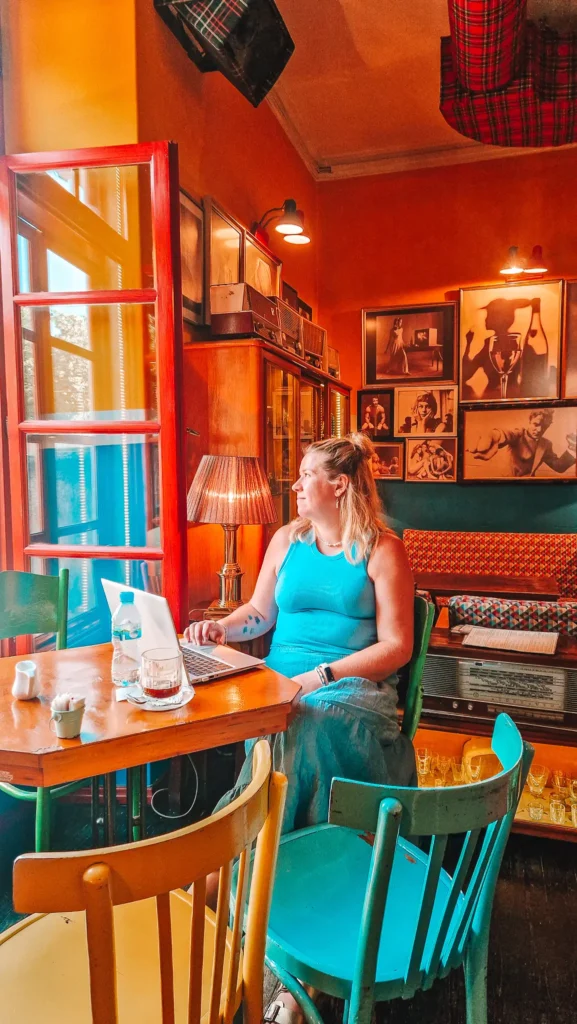
Two cities that are increasingly appearing on the radar of remote workers are Tirana and Skopje. Both are capital cities with growing café cultures, improving infrastructure, and access to some of the most fascinating landscapes in the Balkans.
Yet despite their similarities on paper, they offer quite different experiences.
Tirana feels energetic, colourful, and slightly chaotic in a way that makes everyday life interesting. Skopje, by contrast, has a slower rhythm and a strong sense of historical layering, where Ottoman bazaars sit beside monumental modern architecture.
If you’re choosing between the two as a base for remote work, the decision isn’t just about WiFi speeds or apartment prices. It’s about how the city feels to live in day-to-day.
This guide compares Tirana and Skopje across the things that matter most for digital nomads: transport, cost of living, work-friendly spaces, culture, safety, and community. While both cities have a lot to offer, one stands out as the easier and more enjoyable base for most digital nomads.
Quick overview:
| Category | Tirana | Skopje |
|---|---|---|
| Cost | Slightly higher | Cheaper |
| Cafés | Excellent | Limited |
| Coworking | Strong | Limited |
| Atmosphere | Energetic | Calm |
| Nature | Varied | Peaceful |
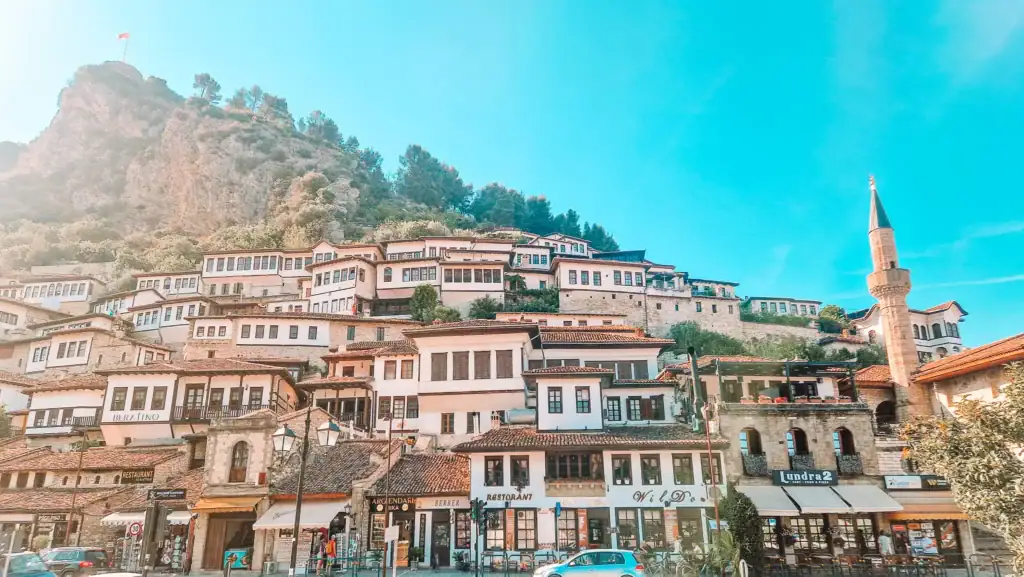
Getting There and Getting Around
For digital nomads planning a longer stay, ease of arrival and daily mobility can make a big difference to how comfortable a city feels.
Tirana
Tirana’s main gateway is Tirana International Airport, located about 17 kilometres from the city centre. The airport has seen rapid expansion in recent years and now connects Albania with dozens of European cities.
Budget airlines and regional carriers make it relatively easy to reach Tirana from hubs such as:
- London
- Vienna
- Rome
- Milan
From the airport, travellers typically take a shuttle bus or taxi into the centre. The journey takes around 25–30 minutes depending on traffic. Taxi fares into central Tirana should be capped – find out the 2026 rate before you travel (in 2025 it was €22).
Once in Tirana, the city is surprisingly walkable. The central districts around Skanderbeg Square and the trendy Blloku area are compact and filled with cafés, restaurants, and apartments popular with remote workers. Public transport is limited to buses, but they’re cheap and frequent (if frustratingly often without their bus number on the front). Taxis and ride-hailing apps are widely available.
Skopje
Skopje International Airport is smaller but still well connected to major European cities. Airlines operate regular routes from places such as:
- Istanbul
- Belgrade
- Vienna
- Zurich
The airport sits around 23 kilometres from the centre. A shuttle bus runs regularly to the main bus station, while taxis offer a quicker but slightly pricier option.
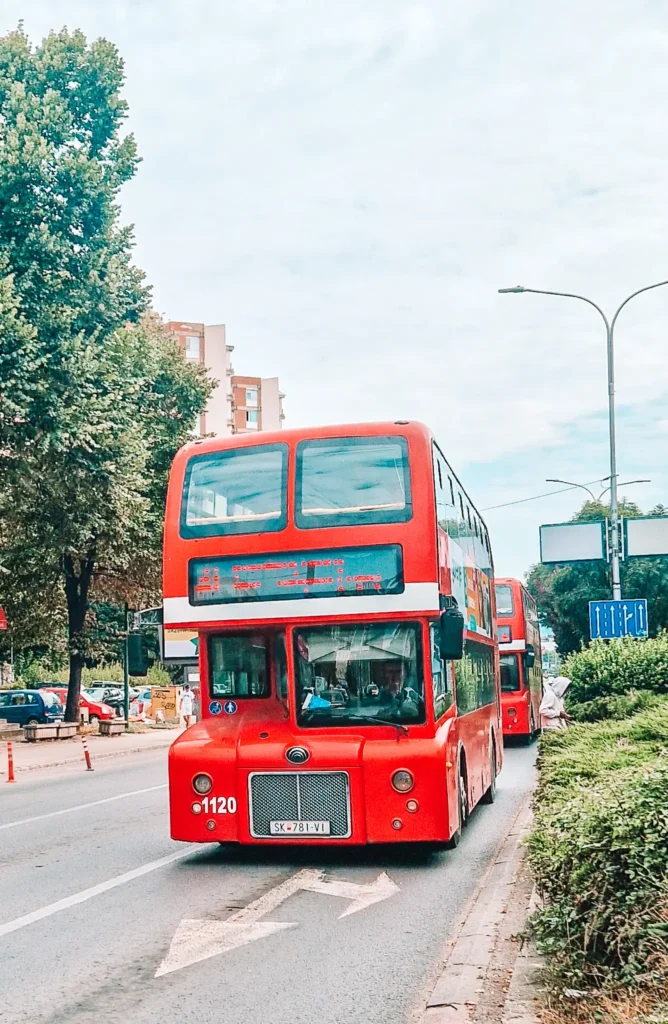
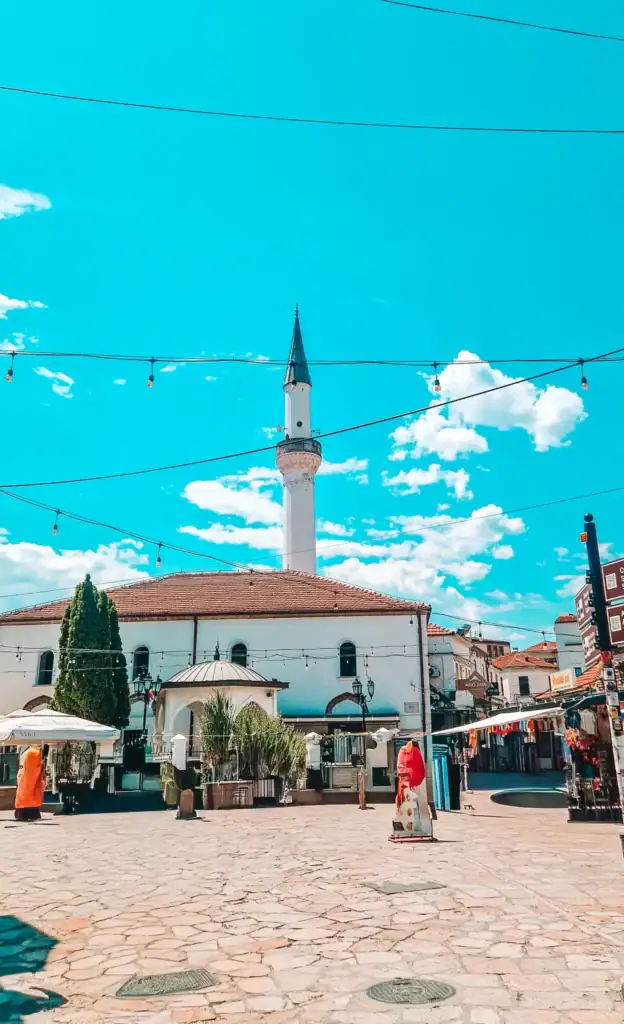
Within the city, Skopje is easy to navigate. The compact historic core around the Old Bazaar and the central square area makes walking a practical way to get around. Buses (based on the iconic red London buses) serve most neighbourhoods, though many visitors rely on taxis due to their low cost.
Which City Is Easier to Navigate?
Both cities are manageable without a car, but they feel different.
Tirana has a busier, more energetic street life, with heavy traffic and fast-moving taxis. Skopje tends to feel more relaxed and orderly, especially in the central areas. As it was rebuilt in the 1960s and 1970s after the devastating earthquake in 1963, it was rebuilt for modern life, with wide multi-lane roads and pavements.
For digital nomads who like walking between cafés and coworking spots, both cities work well. However, Tirana’s café culture and compact central districts arguably make it slightly easier to settle into a daily routine without relying on transport.
Cost of Living and Accommodation
If you’re choosing a digital nomad base in the Balkans, cost is likely one of the reasons you’re here in the first place. Both Tirana and Skopje are significantly more affordable than Western Europe—but the way you spend your money in each city feels slightly different.
Day-to-Day Cost of Living
On paper, Tirana and Skopje are fairly similar in price. In reality, Tirana tends to edge slightly higher overall—especially when it comes to eating out and trendy cafés.
- Eating out: Tirana has a more developed café and restaurant scene, particularly in areas like Blloku. That means more choice—but also slightly higher prices. Skopje, on the other hand, offers excellent value, especially in traditional restaurants and local eateries.
- Groceries: Prices are comparable in both cities, though local markets in Skopje can be noticeably cheaper. Imported goods are expensive in both places, so if your diet leans heavily on international products, your budget will creep up quickly.
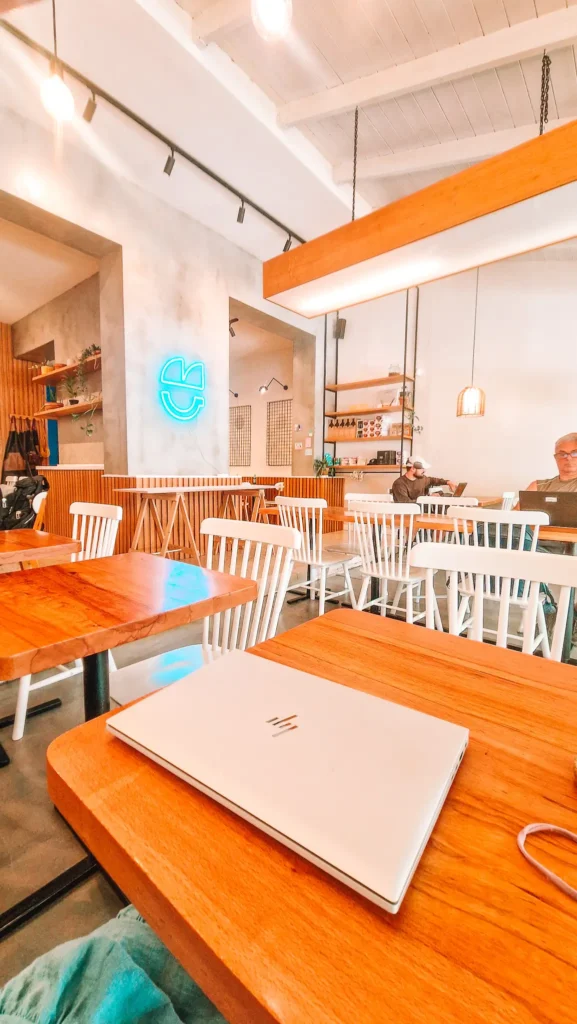
- Coffee culture (important, let’s be honest): Tirana wins here comfortably. You’ll find high-quality espresso on almost every corner, often for under €1–€1.50. Skopje is cheaper, but the café scene is less consistent if you’re picky about your coffee.
- Coworking spaces: Both cities offer affordable coworking compared to Western Europe, but Tirana has more choice and a slightly more modern feel. Skopje’s options are fewer but still functional and budget-friendly.
Bottom line: Skopje is marginally cheaper overall, but Tirana offers more variety in how you spend your money—especially if you enjoy working from cafés.
Accommodation Options
Accommodation is where your experience will really diverge—not just in price, but in quality and availability.
Tirana
Tirana has seen a surge in short-term rentals over the past few years, and it shows.
- Airbnb availability: plenty of modern, well-designed flats, especially in central areas like Blloku and near Skanderbeg Square.
- Monthly rentals: Expect to pay more for a well-furnished, comfortable apartment, particularly if you want a dedicated workspace.
- Style: Many apartments feel newly renovated, with a clean, minimalist aesthetic that suits remote work well.
However, demand is growing. If you’re arriving in peak season or staying longer-term, it’s worth booking ahead or negotiating a monthly rate. I’ve seen consistent reports in expat/digital nomad groups that rent is increasing steeply – a serious problem not just for nomads but for locals who are being completely priced out. Try to find somewhere local that is based on local rents, rather than using Airbnb, if at all possible.
Skopje
Skopje is a noticeably more hit-and-miss—but also where you can find excellent value.
- Airbnb availability: More limited, but often cheaper for similar space.
- Monthly rentals: Very affordable, particularly if you’re willing to go slightly outside the centre.
- Style: Apartments can feel older or more traditional, and you may need to compromise slightly on aesthetics or workspace setup.
That said, if you find a good place in Skopje, you’ll likely pay noticeably less than in Tirana for more space.
Living Slightly Off the Beaten Track
Both cities reward you for staying just outside the obvious centre—but in different ways.
- Tirana: Moving slightly away from Blloku can significantly reduce rent while still keeping you within walking distance of everything – I stayed away from the centre and loved it, in an area with a really local feel. Buses were frequent and quick – I never struggled to get where I wanted to be.
- Skopje: You can get excellent value in quieter neighbourhoods, but you’ll rely more on taxis or buses to get around. I also stayed out of central Skopje, and did find at times that the bus timetables were a pain to get me where I wanted to be.
If you prioritise a calm, residential feel, Skopje may suit you better. If you want everything on your doorstep, Tirana makes that easier.
Final Take on Cost and Accommodation
If your priority is keeping costs as low as possible, Skopje comes out ahead.
But if you’re balancing budget with ease, comfort, and a more developed remote work lifestyle, Tirana is likely to feel like better value—even if you’re paying slightly more.
It comes down to this:
- Choose Skopje if you want affordability, space, and a slower pace
- Choose Tirana if you want convenience, variety, and a smoother day-to-day working setup
Work-Friendly Spaces and Connectivity
For most digital nomads, this is the section that quietly makes or breaks a destination. You can love a city culturally, but if you’re constantly battling slow WiFi, uncomfortable seating, or nowhere to take a call, it wears thin fast.
Both Tirana and Skopje are improving quickly in this area—but they’re not on equal footing yet.
Coworking Spaces
Tirana
Tirana has made a noticeable push towards attracting remote workers, and it shows in its coworking scene.
- Multiple modern coworking spaces across the city
- Flexible day passes and monthly memberships
- Good mix of quiet working areas and social environments
- A growing sense of community, with occasional events and networking opportunities
Spaces tend to feel designed for remote work, not just adapted to it—which makes a big difference if you’re settling in for a few weeks.
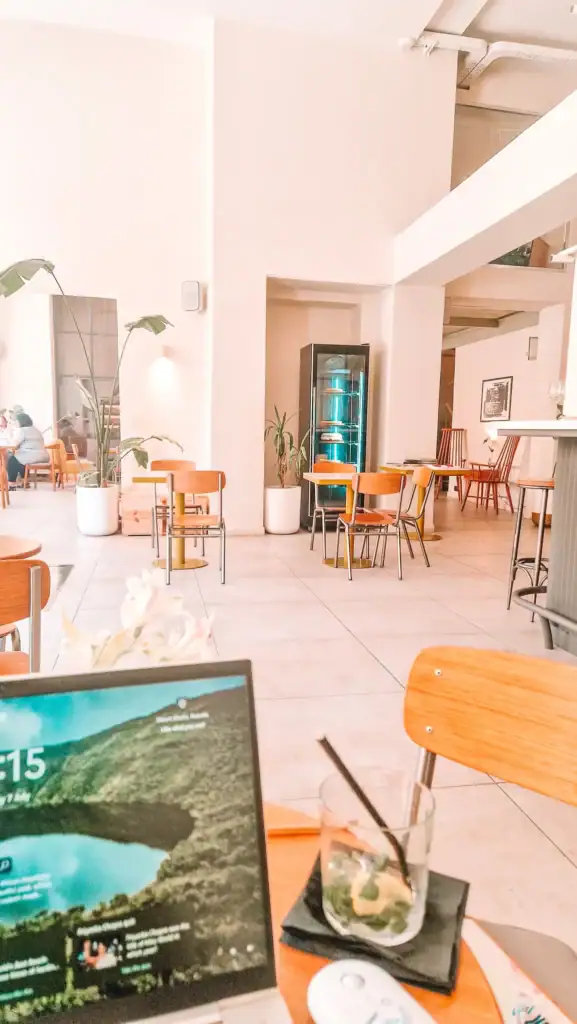
That said, I never really used them. Tirana’s incredible cafe scene means that cafe space is never at a premium and you’ll never feel unwelcome if you settle in – I spent my time moving from cafe to cafe.
Skopje
Skopje does have coworking spaces, but the scene is more limited.
- Fewer options overall
- Typically cheaper than Tirana
- Functional rather than inspiring in many cases
- Less visible nomad-focused community
That said, if you find a space that suits you, it’s perfectly workable—it just might take a bit more effort upfront. I did use one coworking space in Skopje that is very central and good value – but because I was there in summer, I was the only person using it. And as with Tirana, I never felt unwelcome working in cafes – quite the opposite.
Cafés to Work From
This is where the difference becomes more obvious.
- Tirana: Café culture here is exceptional. It’s normal to see people working on laptops throughout the day, and staff are generally relaxed about it as long as you’re ordering regularly. You’ll find:
- Strong coffee – you can order more typical coffees, but there are also a growing number of third-wave/speciality cafes
- Reliable WiFi in most central spots
- Plenty of seating, often outdoors (but with crucial shade) and aircon on inside during the hottest parts of the day
- A sociable but not overwhelming atmosphere
- Skopje: Cafés are plentiful and very affordable, but they’re less geared towards remote work. You’ll still find laptop-friendly spots, but:
- WiFi can be inconsistent
- The culture leans more towards socialising than working – the digital nomad revolution hasn’t quite reached Skopje yet and I was often the only person working. But I was still made to feel welcome!
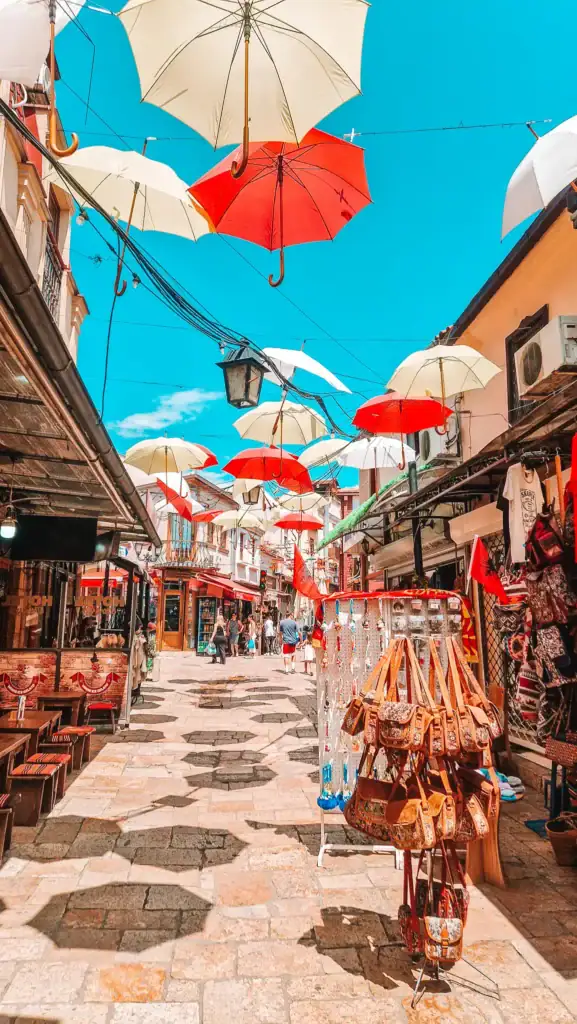
- Central Skopje – including the picturesque Old Bazaar – is not good for working from as there’s a lot of loud party music. You have to work a bit harder to find the perfect spot.
If you’re someone who likes to rotate between cafés rather than sit in one place all day, Tirana will feel far easier.
Internet Speed and Reliability
This is the part most people overthink—and in both cities, the reality is reassuring.
- WiFi speeds: Generally good in both Tirana and Skopje, especially in central areas and newer apartments
- Mobile data: Similar across both countries, though I found it surprisingly expensive. Neither is likely to be on free roaming as they’re not in the EU.
- Coverage: Strong in cities, though speeds can drop slightly in older buildings or more residential neighbourhoods
Final Take on Working Remotely
Both cities are viable bases for remote work—but they suit different styles.
- Choose Tirana if you want:
- Flexibility between cafés and coworking
- A more social, connected work environment
- Choose Skopje if you want:
- A quieter, lower-cost setup
- Fewer distractions
- A more independent, self-contained routine
Culture and Lifestyle
This is where the decision between Tirana and Skopje becomes far less about practicality—and far more about how you want your day-to-day life to feel.
Both cities are culturally rich, but they express it in completely different ways.
Everyday Culture and Atmosphere
Tirana feels young, dynamic, and constantly evolving.
There’s a visible energy to the city—colourful buildings, busy cafés, and a sense that things are changing quickly. You’ll notice:
- A strong café culture that shapes daily life
- A younger crowd, particularly in central areas
- A blend of traditional Balkan culture with modern influences
- A city that feels outward-looking and increasingly international
Skopje, on the other hand, feels more layered and introspective.
It’s a place where history is more visibly embedded in the cityscape. You’ll find:
- A slower, more traditional pace of life
- Strong Ottoman and Balkan influences, especially in the Old Bazaar
- A quieter, more local feel with fewer international influences
- A city that reveals itself gradually rather than immediately
If Tirana feels like it’s moving forward quickly, Skopje feels like it’s sitting with its past—and that shapes the experience of living there.
What There Is to Do (When You’re Not Working)
Both cities offer plenty to explore—but the style of exploration differs.
- In Tirana, downtime often looks like:
- Wandering around Skanderbeg Square
- Sitting outside a cafe and watching the world go by
- Exploring neighbourhoods like Blloku
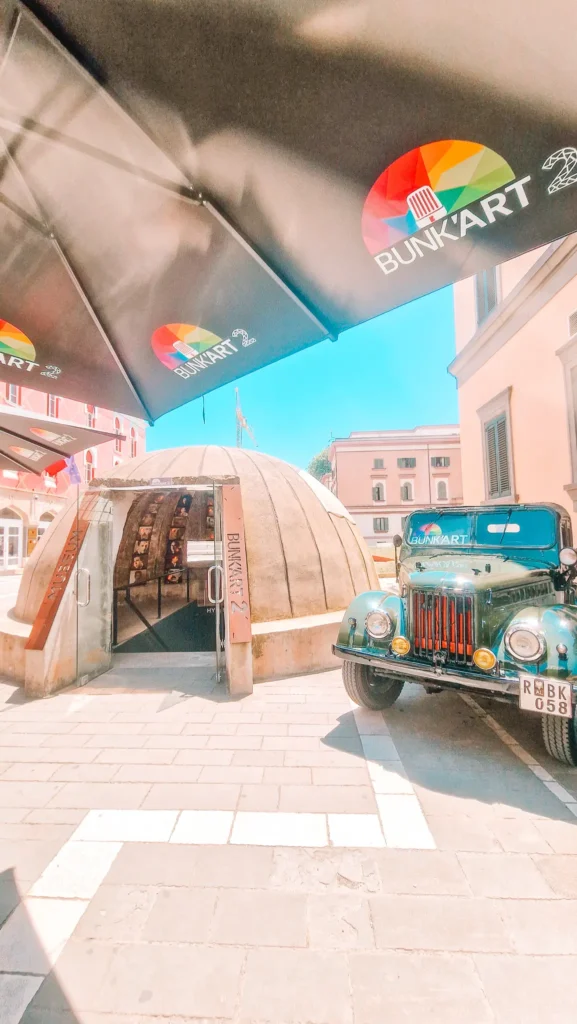
- Visiting museums that reflect Albania’s complex recent history
- Excellent weekend trips
- In Skopje, it’s more about:
- Getting lost in the Old Bazaar
- Walking along the Vardar River
- Exploring the city’s mix of statues, monuments, and contrasting architecture
- Diving into the region’s Ottoman and Yugoslav history
Food Scene
Food is one of the most enjoyable—and underrated—parts of living in this region.
- Tirana:
- Heavily Mediterranean-influenced – Italian food is honestly almost as good in Tirana as it is in Italy, because so many Albanians have spent time living in Italy
- Fresh vegetables, seafood, olive oil, grilled meats
- A growing number of modern restaurants alongside traditional spots
- Excellent coffee culture (genuinely one of the best in Europe for the price)
- Skopje:
- Heartier, more Balkan-style cuisine
- Grilled meats, breads, stews, and rich flavours
- Strong Turkish and Ottoman influences
- Very affordable dining, especially in local restaurants
If you prioritise fresh, lighter meals and variety, Tirana has the edge. If you’re after comfort food and generous portions, Skopje delivers.
Nightlife and Social Scene
This is another area where the cities diverge quite clearly.
- Tirana:
- Lively nightlife, particularly in Blloku
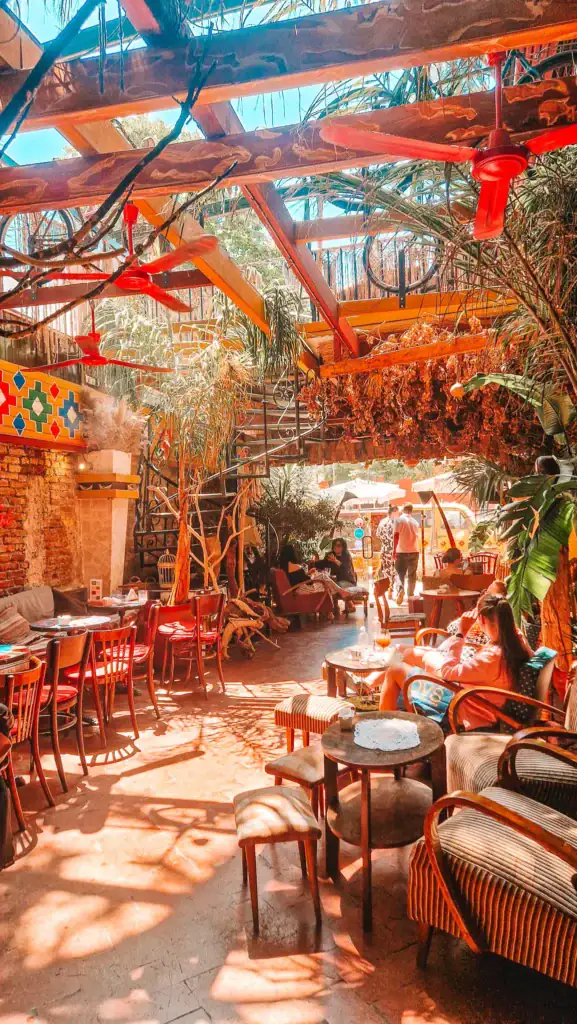
- Bars and cafés stay busy late into the evening – but they can have a real family feel, like much of southern Europe
- Easy to socialise, even as a solo traveller
- A mix of locals, expats, and visitors
- Skopje:
- More low-key overall
- Social life tends to revolve around cafés and meals rather than nightlife
- Fewer obvious “entry points” if you’re travelling solo
If you want your evenings to feel active and social, Tirana is the easier choice. If you prefer something quieter and more local, Skopje will suit you better.
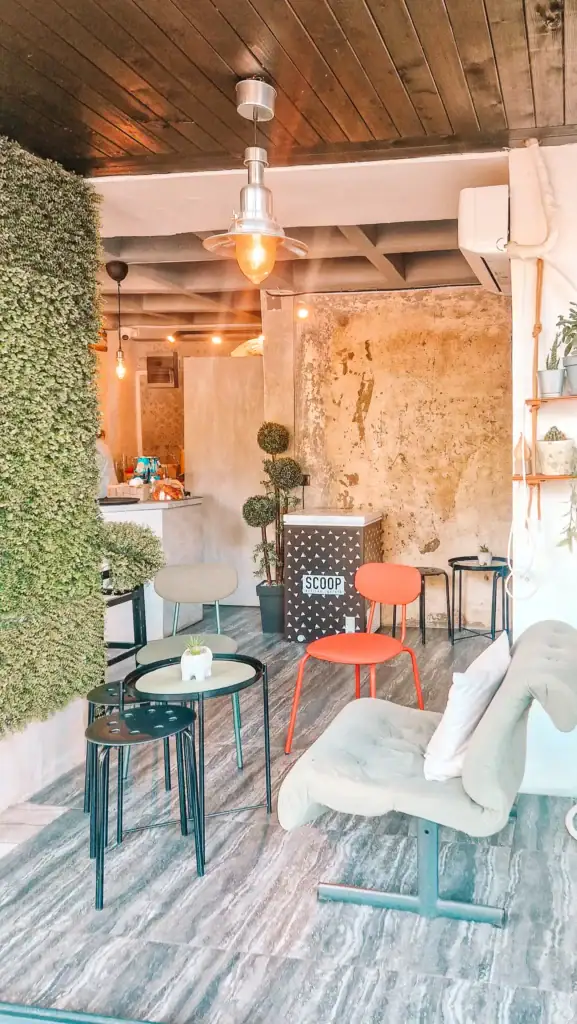
How Welcoming Do They Feel?
Both cities are known for hospitality—but it shows up slightly differently.
- In Tirana, people are open, curious, and increasingly used to foreigners. It’s easy to settle in quickly.
- In Skopje, interactions can feel a bit more reserved at first—but often become warmer over time.
In both places, you’ll find that making even a small effort—learning a few local phrases, showing interest in the culture—goes a long way.
Final Take on Culture and Lifestyle
This isn’t about which city is “better”—it’s about which one fits you.
- Choose Tirana if you want:
- energy, variety, and a social atmosphere
- a city that feels modernising and outward-looking
- an easy, engaging day-to-day lifestyle
- Choose Skopje if you want:
- a slower pace and deeper cultural immersion
- a more local, less international environment
- a city that reveals itself over time
Safety and Comfort
When you’re choosing a base as a digital nomad—especially as a solo traveller—feeling safe and comfortable day-to-day isn’t optional. It shapes how freely you explore, how relaxed you feel working from cafés, and how much you actually enjoy living in a place.
The good news: both Tirana and Skopje are generally considered safe cities. But, as always, the reality is more nuanced than a simple “yes or no.”
General Safety
- Tirana:
- Generally very safe, including for solo female travellers
- Petty crime (like pickpocketing) is rare but not unheard of
- Streets are lively late into the evening, particularly in central areas
- You’ll likely feel comfortable walking alone at night in busy districts
- Skopje:
- Also safe overall, with a slightly calmer atmosphere
- Even less petty crime reported compared to many European cities
- Quieter streets at night, which can feel peaceful or a bit isolating depending on your preference
- Still considered safe, but you may be more aware of your surroundings simply due to fewer people around
In both cities, basic common sense goes a long way—but neither stands out as high-risk.
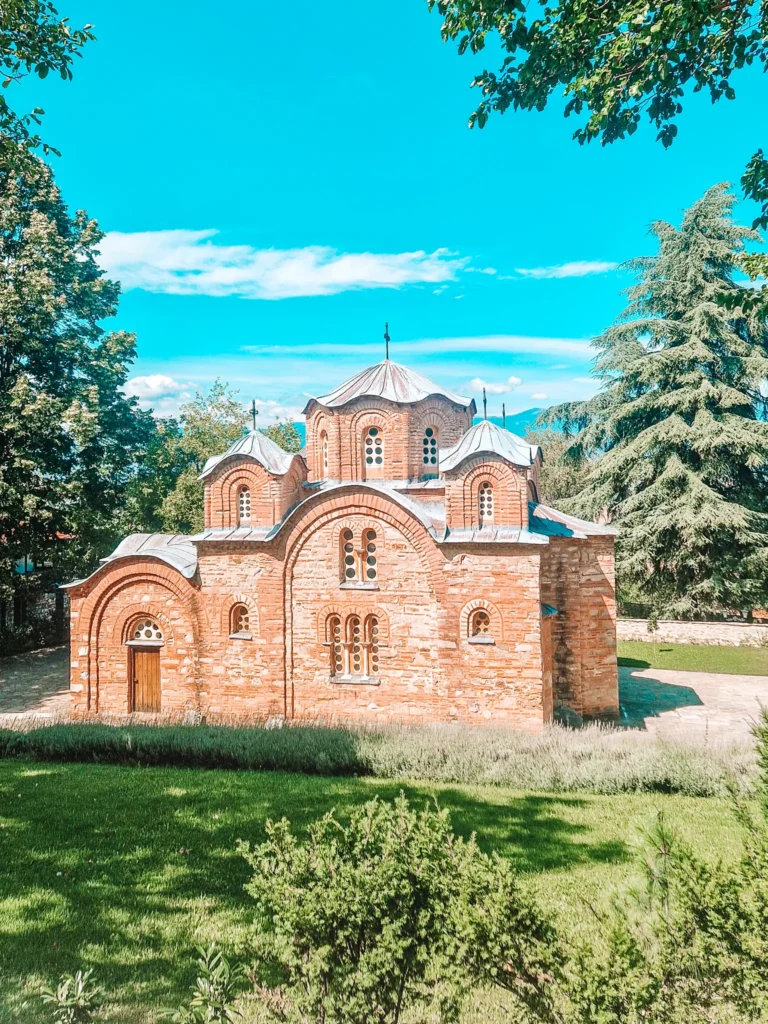
Safety for Solo Female Travellers
This is where lived experience matters more than statistics.
- In Tirana:
- You’re unlikely to experience harassment beyond the occasional look or curiosity
- The busy café culture means you’re rarely alone during the day
- There’s a noticeable presence of other solo travellers and expats
- In Skopje:
- Equally respectful in terms of behaviour
- Slightly less accustomed to solo female travellers, so you may stand out more
- The quieter environment can feel less reassuring at night if you prefer busy surroundings
If you’re someone who feels safer with a bit of background buzz, Tirana has the edge. If you’re comfortable in quieter environments, Skopje works just as well. I felt safe in both.
Healthcare and Practicalities
- Healthcare:
- Private healthcare is available and affordable in both cities
- Quality is generally good for routine care, though serious issues may require travel to another country
- Travel insurance is essential (and non-negotiable, frankly). I recommend finding a provider that offers access to an online doctor – that was invaluable for me when travelling.
- Pharmacies:
- Widely available and easy to access
- Pharmacists are often helpful and able to advise on minor issues – consistently when travelling, pharmacists were among the most helpful people I met
- Everyday logistics:
- Both cities are easy to manage for daily life (shopping and bigger supermarkets, laundry, errands)
- Tirana may feel slightly more convenient due to density and layout
Language and Communication
- Tirana:
- English is widely spoken, particularly among younger people – and when I was struggling, a local often stopped to translate for me!
- Easy to navigate daily life without speaking Albanian
- Locals are generally patient and accommodating
- Skopje:
- English is also commonly spoken, though slightly less universally than in Tirana
- You may encounter more situations where basic phrases or gestures help
- Still very manageable overall
In both cities, learning a few local words will noticeably improve your experience—and how warmly you’re received.
Overall Comfort Living There
This is where small details start to matter.
- Tirana:
- Feels more dynamic and “alive,” which can translate to comfort if you like energy around you
- Slightly more chaotic, which can occasionally feel tiring
- Skopje:
- Feels calmer and more predictable
- Easier to settle into a routine, but potentially less stimulating
Natural Spaces and Weekend Retreats
One of the biggest advantages of basing yourself in the Balkans is how quickly you can escape the city. You’re never far from mountains, lakes, or small towns that feel completely removed from urban life.
Both Tirana and Skopje deliver on this—but in very different ways.
Access to Nature
Tirana
Tirana is surprisingly well-positioned for both quick nature breaks and more adventurous weekends.
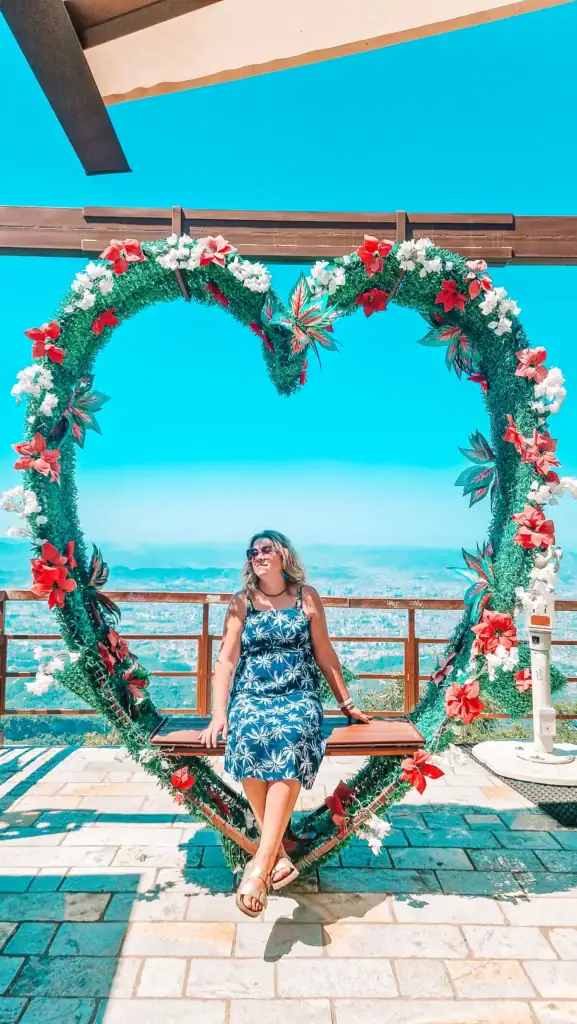
- Dajti National Park sits just outside the city
- You can take a cable car up the mountain for hiking, fresh air, and panoramic views
- The Grand Park of Tirana offers an easy, everyday escape within the city itself
- The Albanian Riviera—think turquoise water and dramatic coastline—is reachable for a long weekend
There’s a real variety here. You can go from a morning Zoom call to being in the mountains within an hour.
Skopje
Skopje’s natural surroundings are arguably its biggest strength.
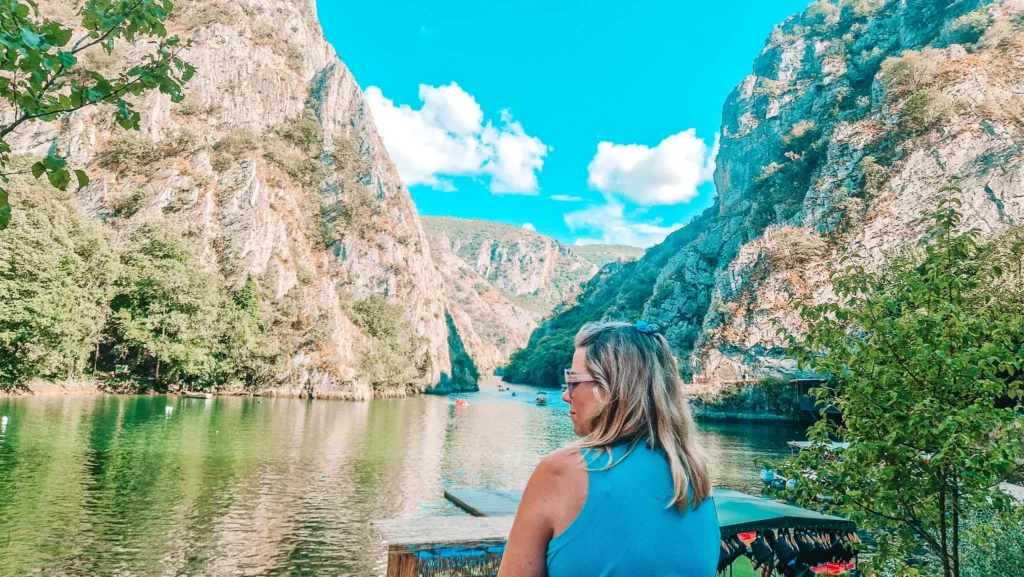
- Matka Canyon is one of the most accessible and beautiful spots in the region – I recommend this organised tour on Get Your Guide.
- Ideal for kayaking, hiking, or simply switching off for a few hours
- Mount Vodno offers hiking trails and views directly overlooking the city
- Nature feels closer, quieter, and less developed than around Tirana
If you’re someone who values peaceful, uncrowded nature, Skopje really delivers.
Weekend Trips
This is where your choice of base starts to shape your broader travel experience.
- From Tirana:
- Easy access to the Albanian coast
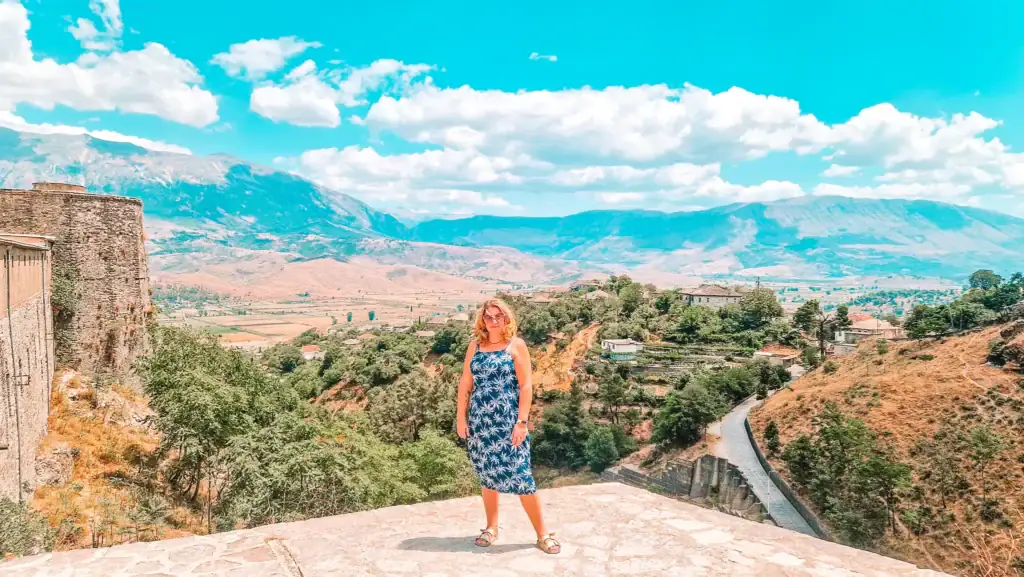
- Charming historic towns like Berat and Gjirokastër – book a highly rated tour to Berat here, or visit Gjirokaster on this longer day tour
- Access to laid-back Shkoder and the Albanian Alps
- A wider range of landscapes within a few hours
- Slightly more developed tourism infrastructure
- From Skopje:
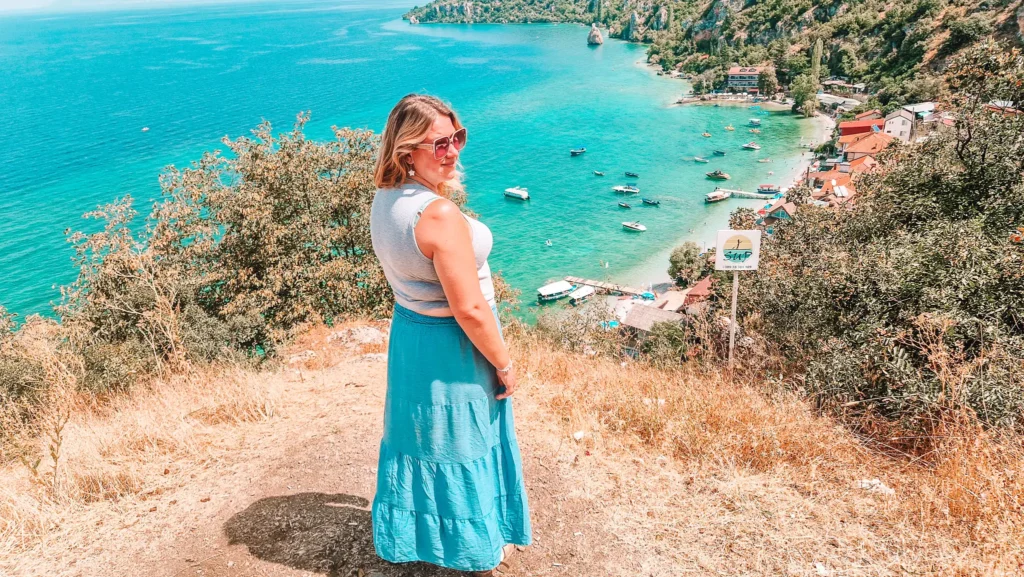
- Quick trips to Lake Ohrid, one of the most beautiful lake regions in Europe – If you don’t want to manage buses or transfers, this guided Ohrid day tour is a practical option.
- Beyond Lake Ohrid, Skopje is less developed for tourism, and to access the stunning natural sites you really need a car
- However, you can easily access Kosovo – Europe’s newest country. This guided day trip takes you to Pristina and beautiful Prizren, with no bus hassle or border stress OR you can book this tour to visit Pristina, a UNESCO monastery, and the incredible Bear Sanctuary.
For me, this is where Tirana clearly comes out ahead. You can even visit Lake Ohrid from Tirana!
Community and Networking
This is one of the most underestimated factors when choosing a digital nomad base—until you arrive and realise how much it shapes your experience.
You can have great WiFi, a comfortable flat, and plenty to do—but if you feel isolated, it changes everything.
Both Tirana and Skopje have emerging communities, but they sit at very different stages.
Digital Nomad and Expat Presence
- Tirana:
- Growing rapidly as a digital nomad destination
- Increasing visibility online and on social platforms
- A mix of short-term nomads, longer-stay expats, and remote workers
- Feels like it’s on the cusp of becoming much more established
- Skopje:
- Smaller, less visible nomad scene
- Fewer people passing through short-term
- More long-term expats than transient remote workers
- Still largely under the radar
If you like being somewhere that feels “early” before it gets popular, both cities qualify—but Tirana is clearly further along that curve.
Practical planning tips
If you’re still deciding between the two cities, these practical planning links may help you compare what staying there actually looks like.
Where to stay in Tirana
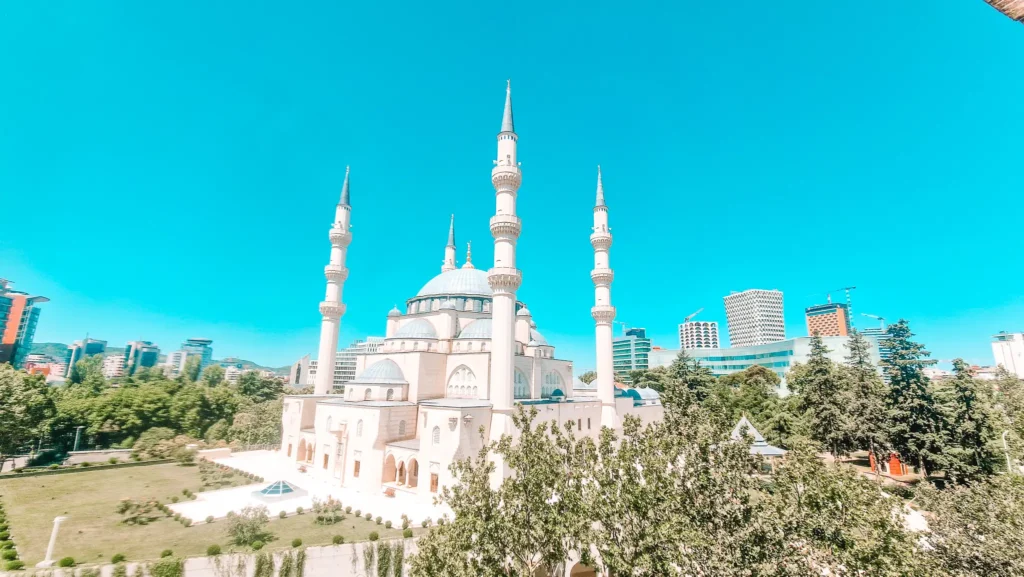
I recommend finding an apartment in Tirana – but it might be easier to do that once you arrive and spend your first few nights in a hotel while you do a quick search and some viewings. For those first few nights, these are my recommendations:
🚶 Near Skanderbeg Square – Best for First-Time Visitors & Easy Departures
The area around Skanderbeg Square is the easiest base for first-time visitors, especially if you want to be close to the main sights, airport buses, and onward transport.
- Urban Rooms provides a traditional hotel experience with an exceptionally high rating of 9.2 from over 1.3k reviews. It’s just steps from Skanderbeg Square
- Cozy Apartments is also incredibly close to the square, and provides modern apartment-style facilities, including a kitchenette. It has a high rating of 9.1 from over 350 reviews.
🍸 In the Blloku Area – Best for Nightlife & Dining
If you want a livelier area full of bars and restaurants, Blloku is a trendy, upscale neighborhood with a social vibe.
- Vila 2 at Blloku Area provides a slightly more budget options, offering small rooms that nevertheless have modern facilities. It’s rated 9.3 from over 100 reviews
- Cloud 5 Blloku Rooms offers a higher standard of rooms with modern decorations. Rooms also have streaming services and a coffee maker. It’s highly rated at 9.2 from over 120 reviews.
🏡 Near the New Bazaar – Best for Local Flavour
Looking for a more local and authentic area? Try the area around the New Bazaar, which offers proximity to the centre in a more residential part of Tirana.
- Your House in Tirana offers apartment style stays with kitchens and a separate living area. It’s has 9.2 stars from over 100 reviews
Where to stay in Skopje
Skopje might be a walkable city, but picking the right place to stay still matters. I recommend choosing a spot near Macedonia Square to make your apartment hunt easier.
Here are three top-rated places I’d recommend:
- 🛌 Hostel Central Skopje – A highly rated hostel near the river, just steps from the city’s main sights. Dorm accommodation only, but with a 9.2 rating from 300+ reviews, it’s a solid budget option.
- 🛍 Aparthotel Waldinger Skopje – A mid-range hotel located just off Macedonia Square, with rooms inside a shopping centre (very handy!). Rated 9.3 from 70+ reviews.
- 🚢 Hotel Senigallia – Ever slept on a moored galleon? This quirky 4-star hotel sits on the river, in one of Skopje’s most iconic (and surreal) settings. A stationary boat + prime location = an unforgettable stay.
I haven’t personally stayed at these hotels, but I only recommend places that meet my own standards for location, value for money, and guest reviews. I’ve chosen options I would genuinely consider for myself if they fit within my travel budget.
My digital nomad kit
You don’t need loads of gear to work remotely from Tirana or Skopje, but a few small items made café-working much easier for me:
- Noise-cancelling earbuds – Coffee culture is about connection and catching up and it can get loud!
- Portable USB fan – while most cafes have AC, they often only put it on in the very hottest part of the day. A portable fan will keep you cool when it’s 30c at 10am.
- Travel-sized power bank – keep yourself connected even if your battery dies.
- Multi-Port Plug Adapter for plugging in – useful when cafés have limited sockets or your accommodation only has one convenient plug point.
- Lightweight laptop stand – make sure you don’t hurt your back hunching over a laptop!
✈️ Need internet to café-hop while working remotely?
I got a local sim card once I’d settled into each city, but for the first few days I arrive in a new country, I always use an eSim to make sure I have reliable data on arrival. Try Airalo to make sure you get data across Albania or North Macedonia. Grab your eSIM here.
FAQs: Tirana vs Skopje for Digital Nomads
Which city has better internet connectivity?
Both Tirana and Skopje offer solid internet overall, but there are small differences worth noting:
Tirana:
✔ More consistent WiFi in cafés and coworking spaces
✔ Better infrastructure for remote work setups
✔ Fewer surprises when it comes to connection stability
Skopje:
✔ Generally good speeds, especially in apartments
✔ Slightly more variability in cafés and public spaces
✔ Worth double-checking WiFi before booking accommodation
Verdict: Tirana has the edge for reliability, especially if you rely on video calls or need consistent speeds throughout the day.
Is the visa or permit process straightforward for digital nomads?
Neither Albania nor North Macedonia has a fully established “digital nomad visa” in the same way as some other countries—but both are relatively straightforward for short- to medium-term stays.
Albania (Tirana):
✔ Many nationalities can stay visa-free for up to 90 days
✔ Some (including UK citizens) may be allowed longer stays under specific agreements
✔ Simple entry process with minimal bureaucracy for short stays
North Macedonia (Skopje):
✔ Also offers visa-free access for many nationalities (typically up to 90 days within 180 days)
✔ Extensions and longer stays are possible but require more admin
Verdict: Both are easy for short stays. Tirana may offer slightly more flexibility depending on your passport.Many nationalities can stay visa-free for up to 90 days
Some (including UK citizens) may be allowed longer stays under specific agreements
Simple entry process with minimal bureaucracy for short stays
How do Tirana and Skopje compare in terms of public safety?
Both cities are considered safe, including for solo travellers.
Tirana:
✔ Lively and busy, which can feel reassuring
✔ Very low levels of serious crime
✔ Occasional petty theft, but not a major concern
Skopje:
✔ Calm and generally very safe
✔ Even lower levels of petty crime in many cases
✔ Quieter streets at night, which can feel less reassuring to some
Verdict: Both are safe choices. Your personal comfort will depend more on whether you prefer busy or quiet environments.
What language skills are helpful or necessary?
You can get by with English in both cities, but there are slight differences.
Tirana:
✔ English widely spoken, especially among younger people
✔ Easy to navigate daily life without Albanian
✔ Locals are used to interacting with foreigners
Skopje:
✔ English commonly spoken, but slightly less universal
✔ Learning a few basic phrases in Macedonian can be helpful
✔ Communication is still manageable without the local language
Verdict: No language barrier in either city, but Tirana is slightly easier for English speakers.
Are there many other digital nomads in these cities?
Tirana:
✔ A growing and increasingly visible digital nomad scene
✔ Easier to meet other remote workers
✔ More short-term travellers passing through
Skopje:
✔ Smaller, quieter community
✔ Fewer nomads, more long-term expats
✔ Less obvious networking opportunities
Verdict: If community matters, Tirana is the easier place to connect.
Which city is better overall for digital nomads?
This depends entirely on what you prioritise:
Choose Tirana if you want:
✔ A lively, social atmosphere
✔ Strong café culture and coworking options
✔ A more “plug-and-play” remote work experience
Choose Skopje if you want:
✔ Lower costs and a quieter lifestyle
✔ Deeper cultural immersion
✔ A slower, more independent routine
Summary: Tirana vs Skopje for Digital Nomads
Both Tirana and Skopje offer something that’s becoming increasingly rare in Europe: the chance to live and work in a capital city that still feels authentic, affordable, and relatively undiscovered.
Skopje deserves real credit here. It’s calm, affordable, and culturally rich in a way that rewards slower travel. If you’re looking for a base where you can settle into a routine, avoid crowds, and experience a more local, grounded way of life, it does that beautifully.
- Lower cost of living across the board
- Easy access to peaceful nature and places like Lake Ohrid
- A slower pace that supports focus and downtime
- A more immersive, less “internationalised” experience
For the right person, Skopje isn’t just a good option—it’s exactly what they’re looking for.
But—and this is where the distinction becomes clear—Tirana simply works better for most digital nomads. It’s not just about having more coworking spaces or better cafés (although it does). It’s about how easy life feels there – and how quickly you’ll feel like you become part of the community that’s bubbling around you.
- More reliable infrastructure for remote work
- A stronger, more visible nomad and expat community
- A café culture that genuinely supports working, not just socialising
- A more dynamic, engaging day-to-day environment
I really enjoyed my time in both cities – but I loved my time in Tirana. From the very first night I arrived, when I got chatting with zero shared language with the man running the local shop, I felt like I was becoming part of the local community. The city is easy to navigate, public transport is quick and cheap, it has one of the highest concentrations of cafes in Europe, and the weekend trips are supreme. If you have time to spend in both, you’ll get a lot out of spending time in Skopje – but if you only plan to visit one, I’d choose Tirana.
Find all my guides to Tirana and Skopje below to help plan your stay:
- Why You Should Visit Albania, Montenegro & North Macedonia Before Everyone Else
- 10 Unforgettable Cultural Experiences in Albania, North Macedonia & Kosovo
- The 10 Best Cafés in Tirana (2025): Where to Sip & Work
- 48 Hours in Tirana: A Weekend Guide to Albania’s Underrated Capital
- Cultural & Historic Day Trips from Tirana – Castles, UNESCO Sites & Hidden Gems
- Why I Fell in Love with Gjirokastër, Albania’s Magical Stone City — and Why You Will Too
- Things to Do in Berat, Albania: Complete Travel Guide
- Things to Do in Shkodër: Culture, Lakeside Vibes & Day Trips
- The Best Things to Do in Skopje: Statues, History & Hidden Gems
- The Best Day Trips from Skopje: Churches, Canyons & Cross-Border Adventures
- The Best Cafés in Skopje (for Working, Reading & People-Watching)


