 Em
EmJust so you know: This post contains affiliate links. As an Amazon Associate, I earn from qualifying purchases. I may also earn a small commission if you book a tour, hotel, or buy something else through these links. It helps me keep this blog running and full of travel tips. Thanks for your support!
The Balkans are often called a crossroads of civilizations, and nowhere is that more visible than in the region’s religious landmarks. From Ottoman-era mosques with dazzling painted interiors, to centuries-old Orthodox monasteries clinging to hillsides, to Catholic cathedrals and Jewish synagogues that speak to diverse communities past and present — every town seems to hold a story written in stone, fresco, or minaret.

What struck me most as I travelled through Albania, North Macedonia, Kosovo, and Bulgaria is just how close these traditions sit side by side. In one afternoon you can step inside a medieval Orthodox church, pass a mosque with intricate calligraphy, and hear bells ring from a Catholic cathedral. It’s a living reminder of the cultural layers that make the Balkans so fascinating to explore.
In this post, I’ll share some of the most memorable religious and cultural sites I’ve visited over the summer of 2025. Whether you’re drawn to quiet monasteries, vibrant mosques, or grand cathedrals, these landmarks are not just beautiful stops on an itinerary — they’re windows into the history, identity, and resilience of the Balkans.
Want to plan your Balkans Trip without feeling overwhelmed?
- Want a fully personalised itinerary planned for you → Book my custom itinerary service
- Want a detailed, self-guided resource for inland Albania → Albania, Unlocked
- Want a free, culture-first introduction to thoughtful travel → Download the free guide
🧳 Respectful Travel: How to Prepare for Balkans Religious Landmarks
- Dress codes: Many Orthodox churches and mosques require modest clothing. Shoulders and knees should be covered – although most mosques I visited provide cover ups, it can be helpful to keep a light scarf or shawl in your day bag.
- Shoes off: In mosques, you’ll need to remove your shoes before entering.
- Photography: Rules vary — some sites ban photos inside, while others allow them for a fee. Always check before snapping.
- Entry fees: Some sites are free, others charge a few euros or local currency. Carry small change in coins.
- Guided tours: The history here is deep and often complex. A good guide makes all the difference – I’ve listed some of my favourite guided tours below
Orthodox Icons: Byzantine Masterpieces Across the Region
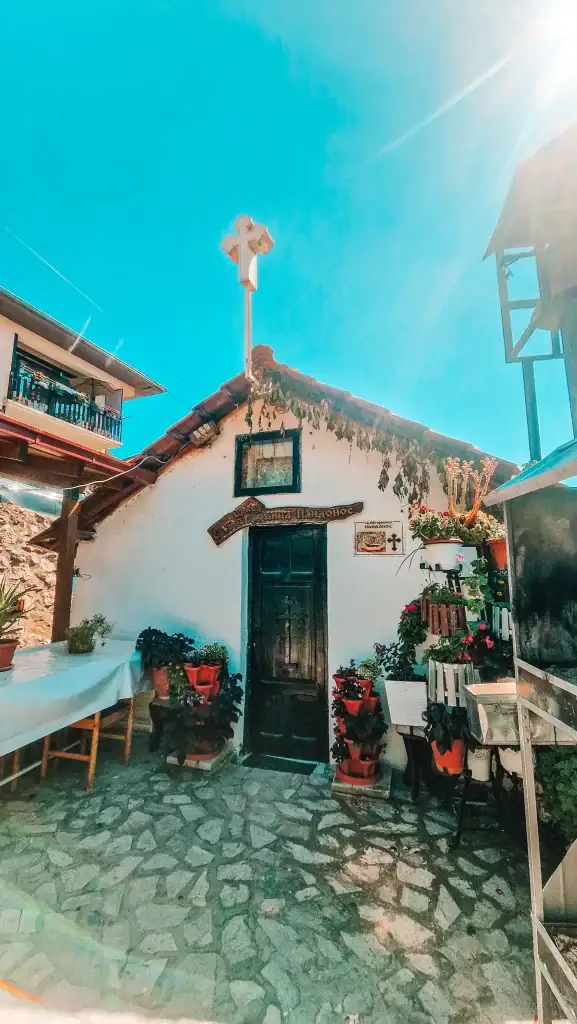
From the medieval period onwards, much of the Balkans was Orthodox Christian, and in many regions there are beautiful churches dating from as early as the 10th century. Even after the Ottoman Invasion, when the dominant religion became Islam, the Ottomans were happy for Christians to continue worshipping – they were just taxed more! This meant that many of the beautiful historic Orthodox churches survived – like St Panteleimon near Skopje, which was built in the 12th century.

Rila Monastery, Bulgaria: UNESCO Treasure of the Rila Mountains
Cost: Free
Practicalities:
- Public transport to the site is limited so I recommend using this guided tour (✨ 4.7/129 reviews) – which I used for my combined trip to beautiful Melnik. You can buy a cheaper transport-only version or audio-guide version, but I highly recommend having a guide to take you around.
- Food options at the monastery are limited and queues can be long – bring your own snacks
- You’ll need 1 LEV coins to access the toilets, and they are not particularly clean squat toilets – mentally prepare yourself.
Undoubtedly the most stunning sight on this list of stunning sights, Rila Monastery is a UNESCO-listed gem about 2 hours outside of Sofia in Bulgaria. I visited on a combined day trip with the gorgeous Bulgarian wine town of Melnik – find my full review here!
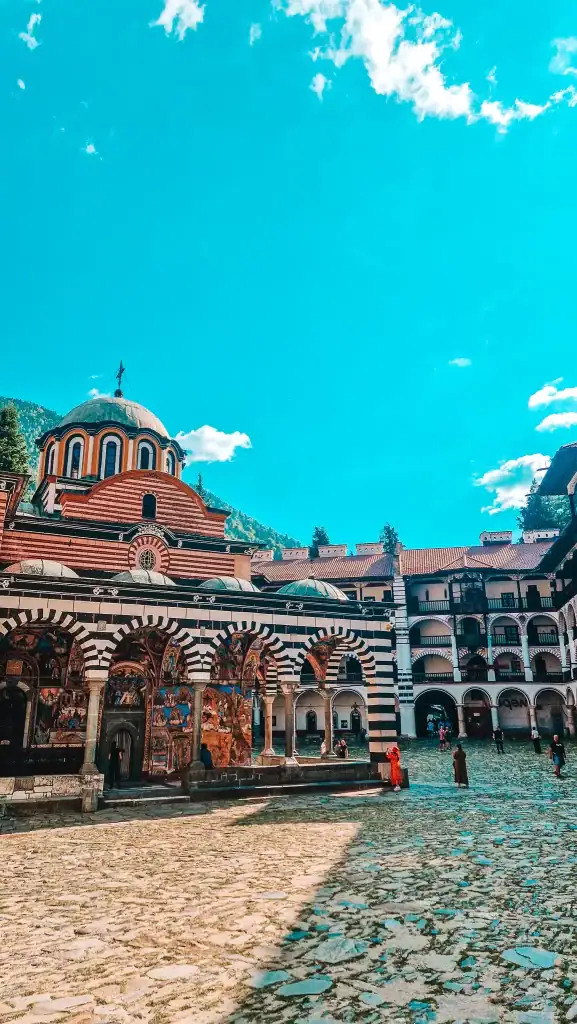
The monastery was founded by St John, a saint who lived as a hermit on Rila Mountain in protest against the opulence of the church – if you’re a hiker, you can still visit his cave as part of guided tours. After his death, his followers moved downhill and founded the full monastery. The current buildings date from 1834-1862, and were rebuilt following a fire – the only original structure is the 14th century Clock Tower in the middle of the courtyard.

Despite their relatively young age, the newer buildings are nothing short of spectacular. Nestled into the fir trees of the surrounding mountains, the Monastery stands out for the plethora of beautiful murals on the outside walls, telling the traditional stories of heaven and hell. My particular favourites were the different groups who had been condemned to hell, including a mural of fraudsters who had watered down wine – truly a crime.
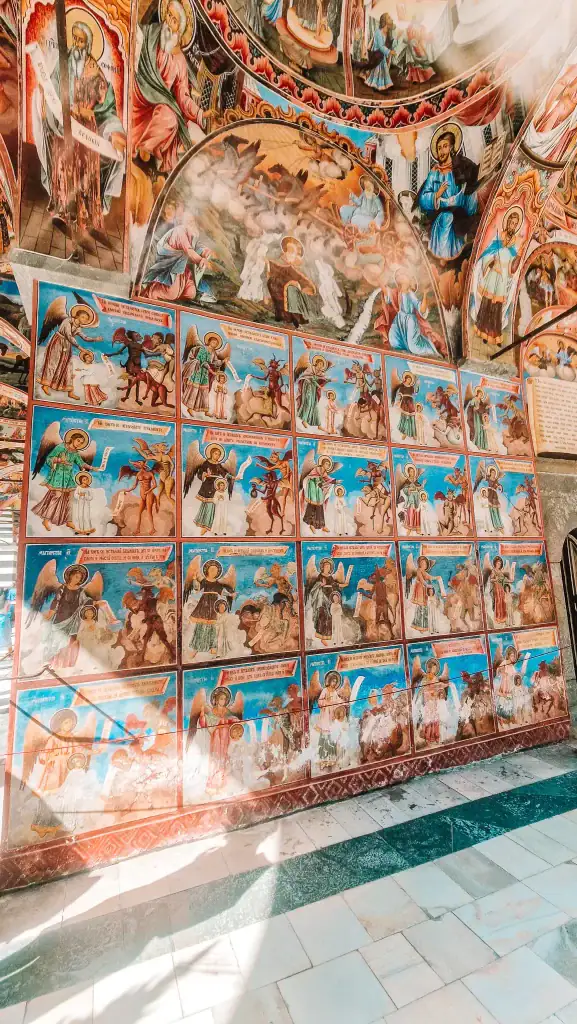
The inside is just as stunning, including an ancient case of relics surrounding an icon of the Virgin Mary and the huge gold screen in front of the tomb of St John – which he would undoubtedly have hated.
This Rila Monastery trip has 129+ reviews with a 4.7⭐ rating — I can personally recommend this tour and it does sell out, so book early.
Churches of Ohrid, North Macedonia: The ‘Second Jerusalem’ of the Balkans
Cost: different at each church
Practicalities:
- All the churches in Ohrid are easily accessible on foot while walking around the Old Town, although some are at the top of a steep hill.
- If possible, spend a couple of nights in beautiful Ohrid. But if there isn’t time for this, it can be visited as a day trip from Skopje (✨4.9/77) or Tirana (✨ 4.9/395).
Ohrid is known as the ‘Second Jerusalem’ for the sheer number of churches in the town – reputed to be at least one for every day of the year. While not all are extraordinary, there are a few that are more than worth your time. I’ve listed the highlights below, but if you’re heading to Lake Ohrid, check out my full guide to exploring this magical UNESCO-listed town.
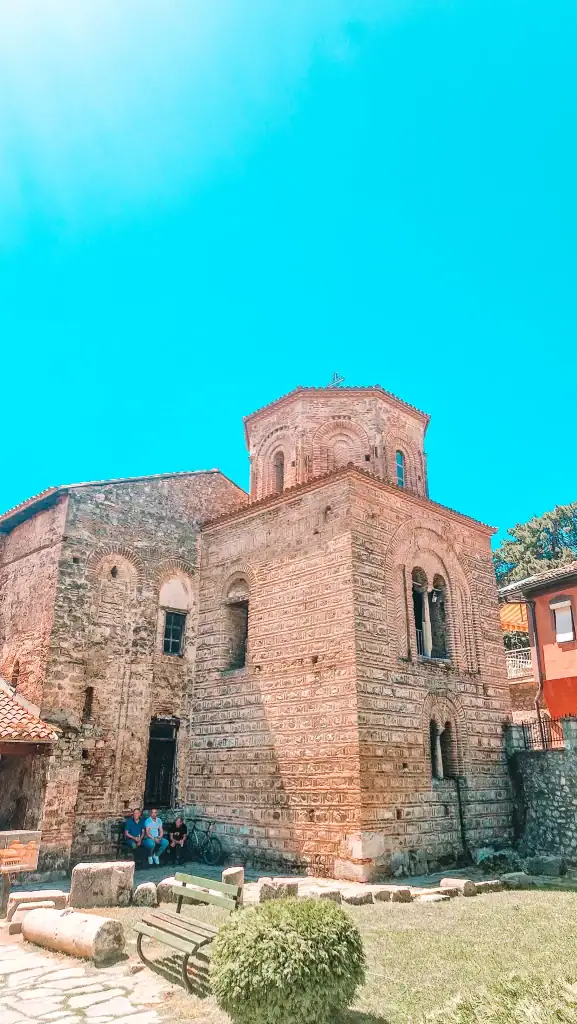
Head first to St Sophia, in the centre of Ohrid’s Old Town. Built in the 11th century, this beautiful church is modelled on the Hagia Sophia in Istanbul, and is a beautiful example of Byzantine art.
Want all the historic context behind these amazing buildings? Try this walking tour of Ohrid that takes you to all three churches, as well as gems from Ohrid’s other historical eras (✨ 5/21).
Once you’ve finished marvelling at St Sophia, make the trek uphill past the Amphitheatre to Church of Saints Clement and Panteleimon. This beautiful church was originally built in the 9th century, before being destroyed by the Ottomans and then reconstructed in the 20th century. Even better, it offers stunning views over Lake Ohrid.
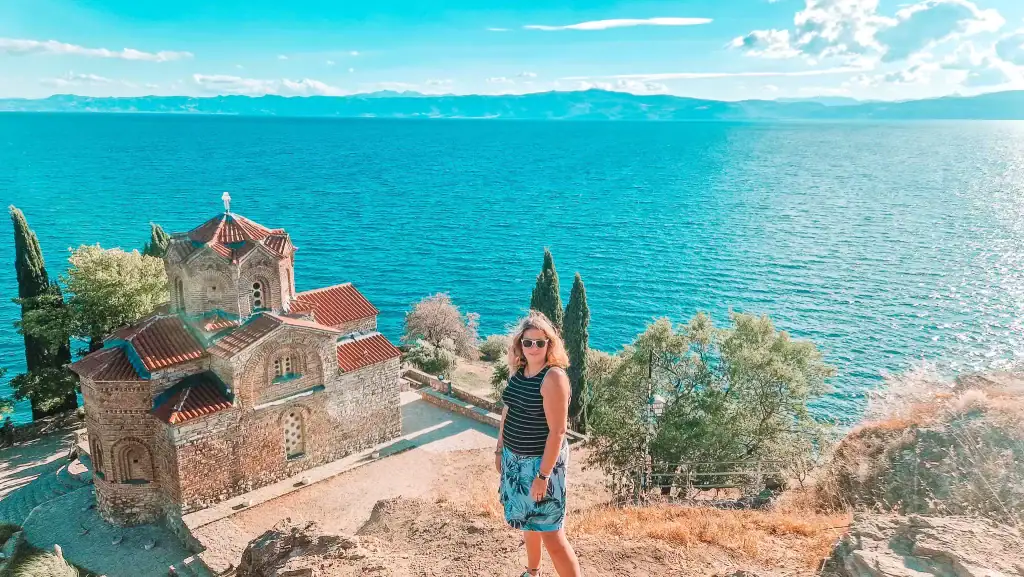
Finally, from St Sophia, follow the boardwalk around the coast to the incredible St John at Kaneo. This stunning church is one of the most Instagrammable places I’ve ever seen, with the beautiful arches and brickwork superimposed against the blue of the lake behind it.
Top tip: St John at Kaneo is also beautiful viewed from the water, particularly on a sunset cruise. I recommend this tour to get perfect sunset pics – it sells out quickly, so book now to secure your spot.
Gracanica Monastery, Kosovo: UNESCO Orthodox Landmark
Cost: €5
Practicalities:
- Easiest to visit as part of a guided day trip – I recommend this one I took from Skopje (✨ 4.8/477+).
- There are toilets on site as well as a small gift shop.
- No photography inside
Nestled in the Serbian-majority area of Kosovo, Gracanica Monastery is one of four UNESCO-listed sites in Europe’s newest country. The church dates from 1321 and has deep religious significance. It was built by the Serbian King Stefan Milutin, and apart from the beautiful frescoes inside, it is known for its five-domed structure – which make it truly stand out when you’re approaching.

It’s also a fascinating visit because it’s in a Serbian part of Kosovo – the change from the more Albanian area of Pristina, filled with the red Albanian eagle flag to an area where Serbian flags flicker in the wind is striking. The church is also still surrounded by barbed wire, decades after the end of the conflict – a visible reminder of the complex history and emotions that still shape this part of the Balkans.
Visit as part of wider Kosovo adventure – find my guide to the best things to do in Kosovo here! Or take this day trip, which has 470+ reviews and a 4.8⭐ average — travellers consistently praise the guides for their cultural insights. I can personally confirm it was incredibly insightful.
St. Panteleimon Monastery, Skopje: Early Frescoes That Anticipated the Renaissance
Cost: €2/120 MKD
Practicalities:
- While St Panteleimon can be accessed by public bus, these don’t depart from central Skopje – you’ll most likely need a connection. Instead, I recommend this day trip that also takes you to the beautiful Matka Canyon, and ensures you get all the historical context you need about beautiful St Panteleimon (✨ 4.7/1.4k+)
- There are toilets available at the nearby Etno Village
St Panteleimon is a small monastery and church in the hills above Skopje. Unlike most of the historic buildings in North Macedonia’s capital, it survived the 1963 earthquake, and is therefore one of the most important historical buildings in the north of the country.
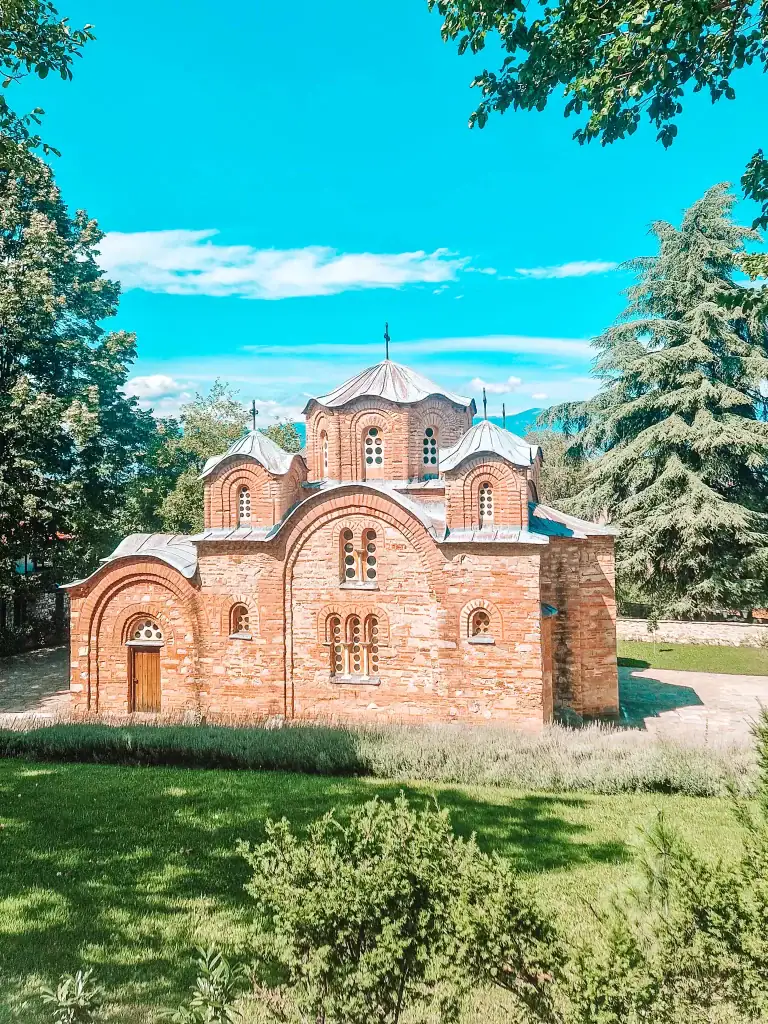
Built in the 12th century, the inside of the church is full of frescoes. Those at the bottom are the earliest, while those towards the top were redone at a later date. What makes this fascinating is that the older frescoes are still fresh and vibrant, while the upper ones are faded. This is a result of the much more expensive and durable lapis lazuli used to paint the stunning blue of the originals, whereas the later ones used cheaper materials, probably because the area was then under Ottoman Muslim control.
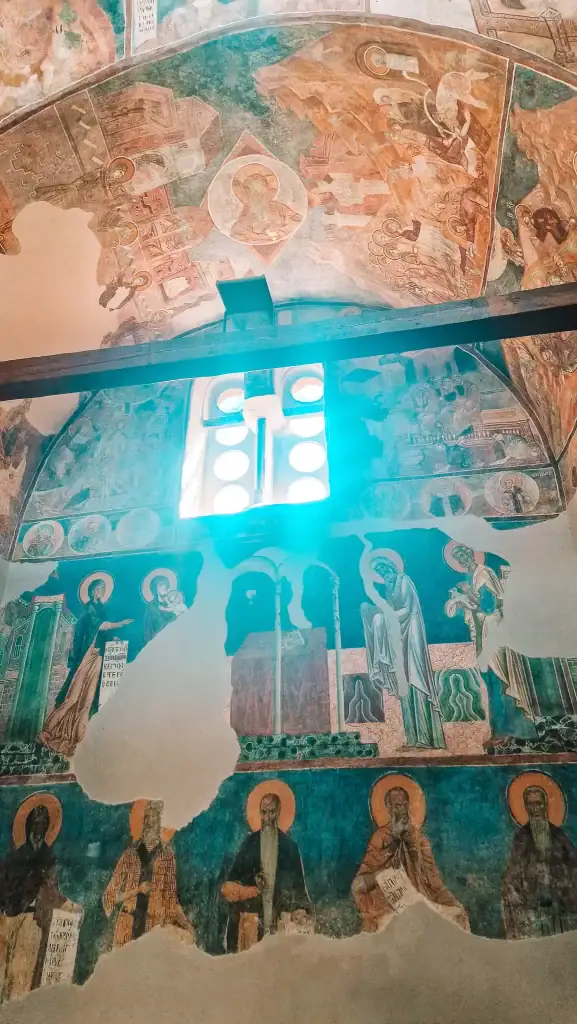
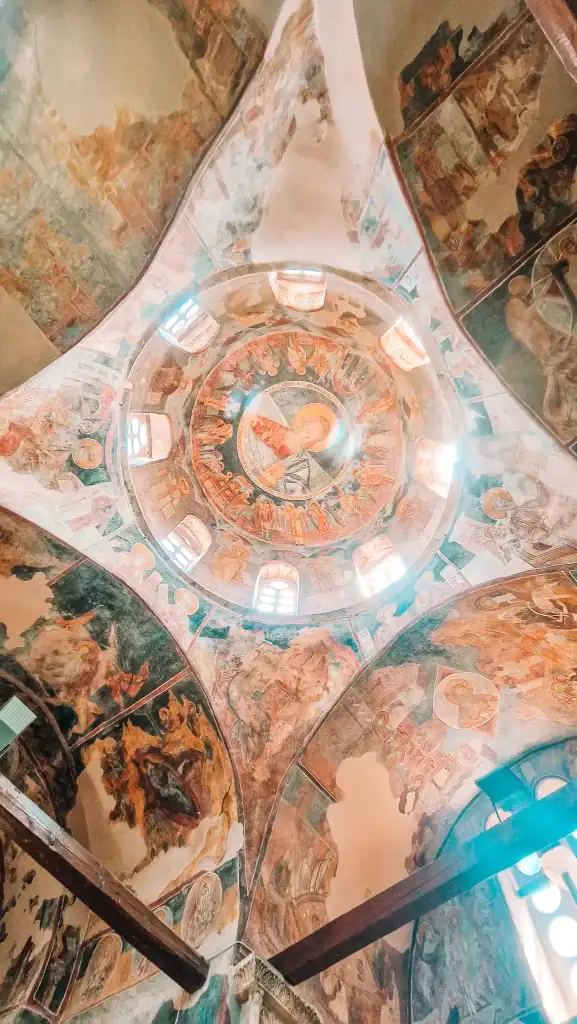
The frescoes are also famous for marking a change in the way frescoes were painted – they show emotion and naturalism in a way that’s often not considered possible until the Renaissance. Some art historians consider this to have anticipated Renaissance art by more than 150 years.
At least when I visited, the church is also a haven of peace, far away from the centre of Skopje in the mountains. Although the new Etno Village is nearby, the church stands alone and is still very much a working monastery – we saw monks working while we were there – and we were the only visitors.
With 1,400+ glowing reviews (including one from me), this tour is a favourite for combining St Panteleimon’s history with one of North Macedonia’s most beautiful nature spots.
Alexander Nevsky Cathedral, Sofia: Bulgaria’s National Symbol
Cost: free
Practicalities:
- Easily accessible on foot from central Sofia
- I did this amazing walking tour in Sofia (✨ 4.9/60+), which started at the cathedral – it was amazing for putting the Cathedral in its historical context and helping me to orient myself in Sofia. The guide has only just started running this tour, so I expect that relatively small number of reviews to grow very quickly!
The majestic Alexander Nevsky Cathedral soars above Sofia, with pure gold domes glinting in the sunlight. It’s an incredible and enormous structure, with construction beginning in 1882 as part of Bulgaria’s celebration of independence from the Ottoman Empire. Much of Sofia’s magnificent buildings date from this period, when Bulgaria wanted to prove itself as a new nation. Much of the construction took place in the early 20th century, and the cathedral was officially consecrated in 1924.

Inside, it looks much older, with darkened frescoes giving it a historic feel. The cathedral was dedicated to St Alexander Nevsky, the personal patron saint of Tsar Alexander II of Russia – reflecting the important role the Russian army played in the liberation of Bulgaria. The cathedral can host 5000 people and still plays an important role in city life – when I visited in September 2025, it was Bulgarian Reunification Day, and there was a full orchestral concert outside the cathedral.
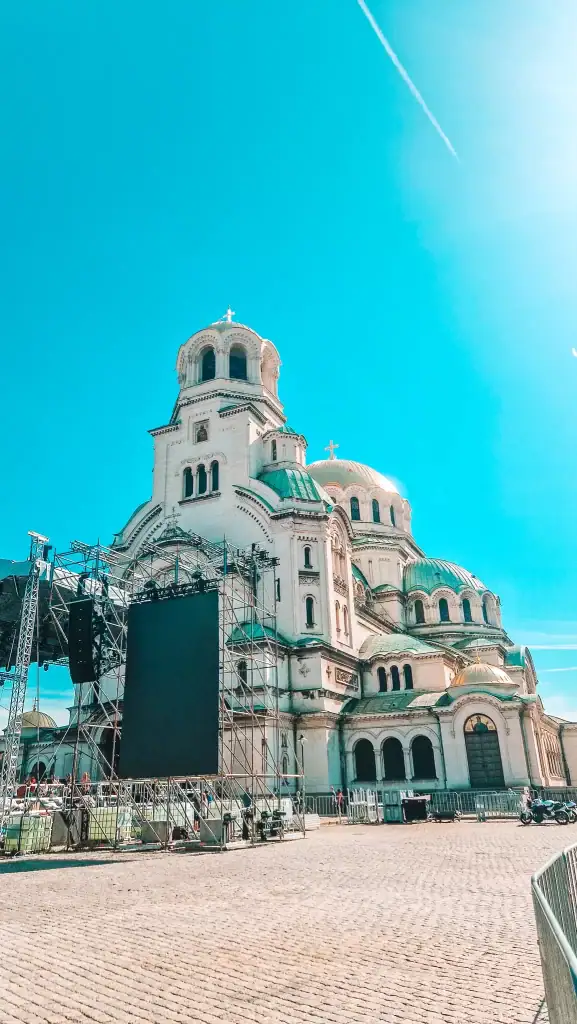
This top-rated Sofia walking tour has 60+ 5✨ reviews (including one from me!) and is ideal if you want the cathedral’s history explained in context.
👉 If you’re planning to spend more time in the Bulgarian capital before or after visiting Alexander Nevsky Cathedral or Rila Monastery, check out my full guide to 2 Days in Sofia: The Perfect Itinerary for First-Time Visitors.
Bachkovo Monastery, Bulgaria: Byzantine & Georgian Heritage Near Plovdiv
Cost: Free
Practicalities:
- About 1 hour from Plovdiv. Local buses run but schedules are inconsistent — a guided tour is the easiest option and provides essential historical context.
- Cover-up required – bring your own.
Bachkovo Monastery, which is on Bulgaria’s UNESCO Tentative List, is nestled in the mystical Rhodope Mountains in the south of Bulgaria. While not as visually spectacular as the more famous Rila, it makes up for that because the buildings are significantly older!
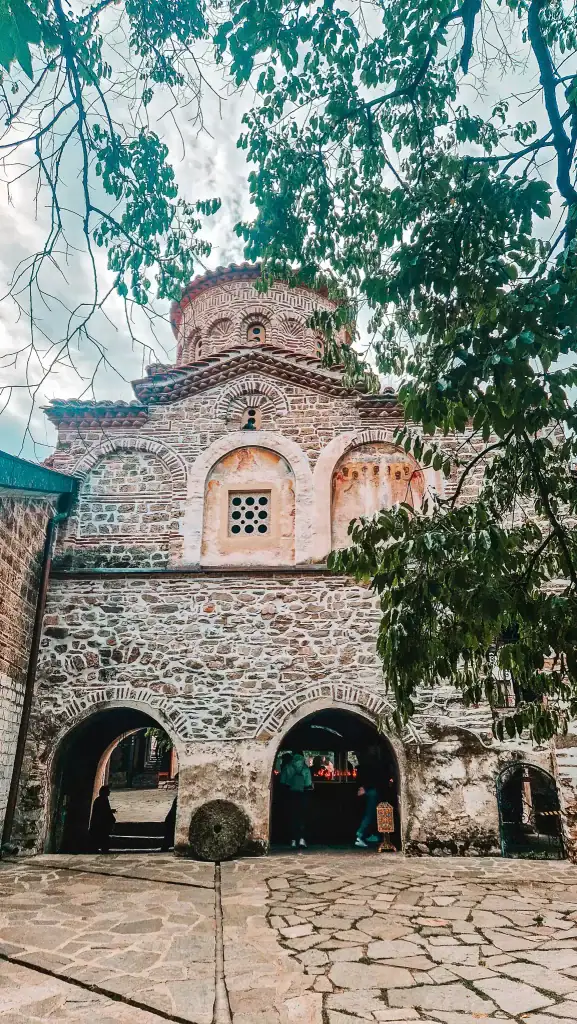
It was founded in 1083 by the Georgian military commander Grigorii Bakuriani and his brother Abasii, during the time of the Byzantine Empire. Originally serving as a centre for Georgian monasticism, the monastery reflects a unique blend of Byzantine, Georgian, and Bulgarian cultural and architectural traditions.
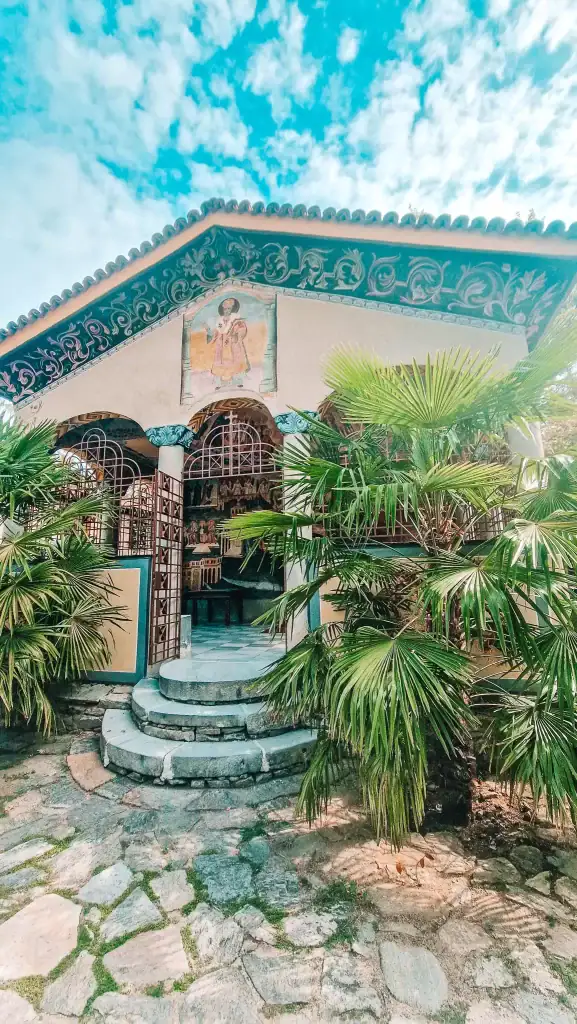
It’s now surrounded by both native pines and beautiful tropical plants, with courtyards full of banana trees, cacti and other exotic species. The beautifully preserved frescoes date from the 11th to the 19th centuries, which are much older than those at Rila. There’s also a famous sacred relic: a revered icon of the Virgin Mary, believed to be miraculous; when I visited on a Sunday morning, there was a huge queue to worship at this icon.
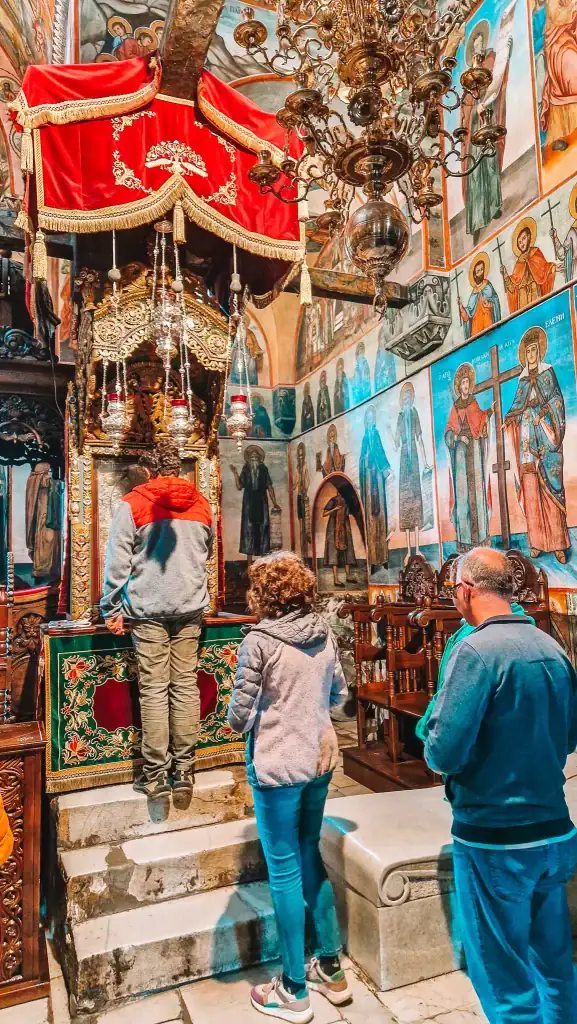
Bachkovo is still very much a living monastery – it has the highest number of monks in Bulgaria, and when I visited, we also saw a baptism taking place. If you’re in the south of Bulgaria, it’s definitely worth visiting, especially if you combine it on a day trip to the nearby Asen’s Fortress, originally built in the 9th century and reconstructed in 1231 by Tsar Ivan Asen II.
👉Bachkovo Monastery is best seen on a day trip. This is the exact highly rated tour I used – book here! (✨5/50+ reviews)
Mosques of the Balkans: Traces of the Ottoman Empire
Once the region was conquered by the advancing Ottoman Empire, the dominant religion became Islam – although many Christians did not convert. Nevertheless, this period saw the building of a huge amount of beautiful mosques – with Ottomans stating that no Orthodox Church could be bigger than local mosques.
People in some areas of the Ottoman Empires converted more than others – for example, Albania became much more Muslim than Bulgaria – but the ravages of the 20th century and Enver Hoxha’s atheist dictatorship saw the destruction of many mosques in Albania.
Ethem Bey Mosque, Tirana: Albania’s Most Historic Mosque
Cost: donation requested
Practicalities:
- Easily accessed on foot from central Tirana
- Cover-ups are provided
- Too small to offer toilet facilities
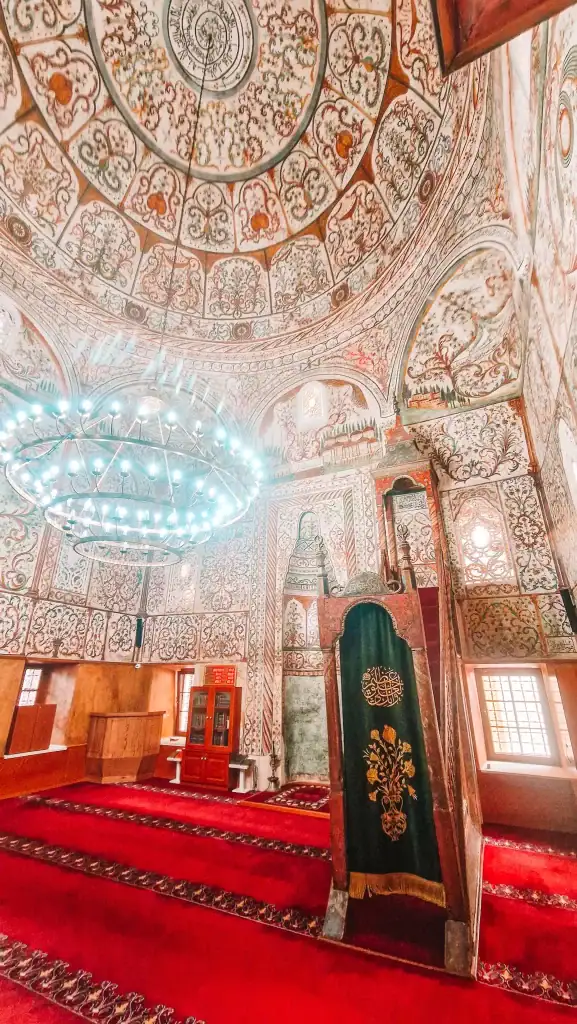
The tiny Ethem Bey Mosque, just off the central Skanderbeg Square in Albania, is one of the few religious sites that survived the dictatorship of Enver Hoxha. When he declared Albania to be the world’s first atheist country, many religious buildings were destroyed or repurposed, for example into sports halls. However, the beauty and cultural heritage of Ethem Bey saved it from destruction – and helped it to play a key part in Albanian history as the site of one of the first religious services after the fall of communism.
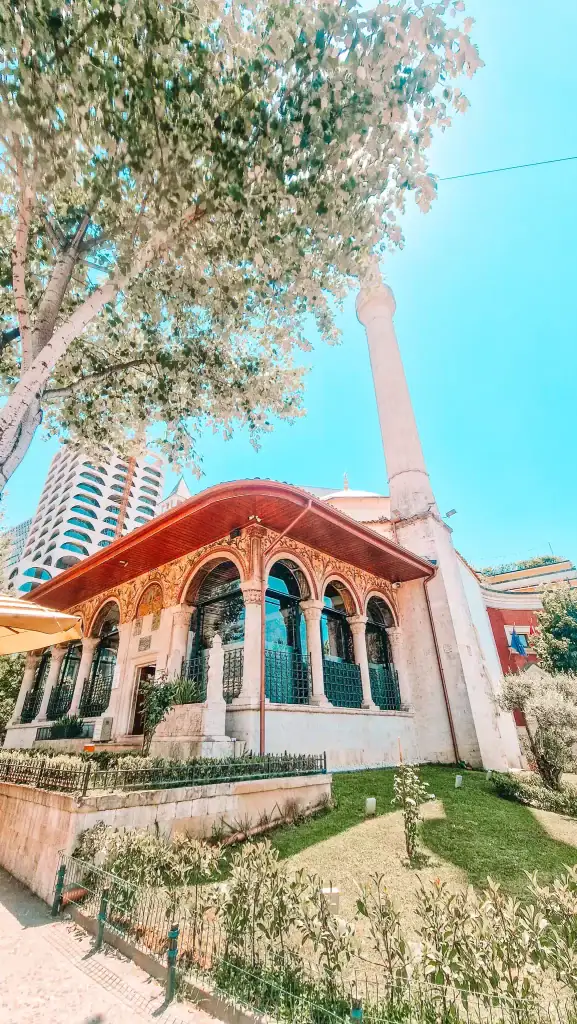
The mosque will only take a few minutes of your time, but those few minutes are well worth the effort (there is sometimes a small queue to enter, given the tiny space). The mosque dates from 1819-1821 and was built by Ethem Bey, a key Ottoman administrator who was also a poet. You’ll find gorgeous and unusual murals of nature and a deep sense of peace inside, making this a beautiful refuge from the bustle of Skanderbeg Square.
👉 If you’re visiting Tirana, find out everything you need to know about Skanderbeg Square and beyond in my guide to 48 Hours in Tirana, or find a spot for a delicious coffee after your visit in my guide to Tirana’s best cafes.
Painted Mosque of Tetovo, North Macedonia: A Kaleidoscope of Color
Cost: free
Practicalities:
- Best visited on a day trip from Skopje, Tetovo is easily accessed by bus. Find out more in my guide to Skopje’s best day trips.
- Cover-ups are provided.
This gorgeous mosque is found in Tetovo, about 1.5 hours from Skopje by public bus. Tetovo is one of North Macedonia’s Albanian-majority towns, and this shows in the higher proportion of Muslims found in the area. The most important mosque is the famous painted mosque, which is unlike anything you’ve ever seen.
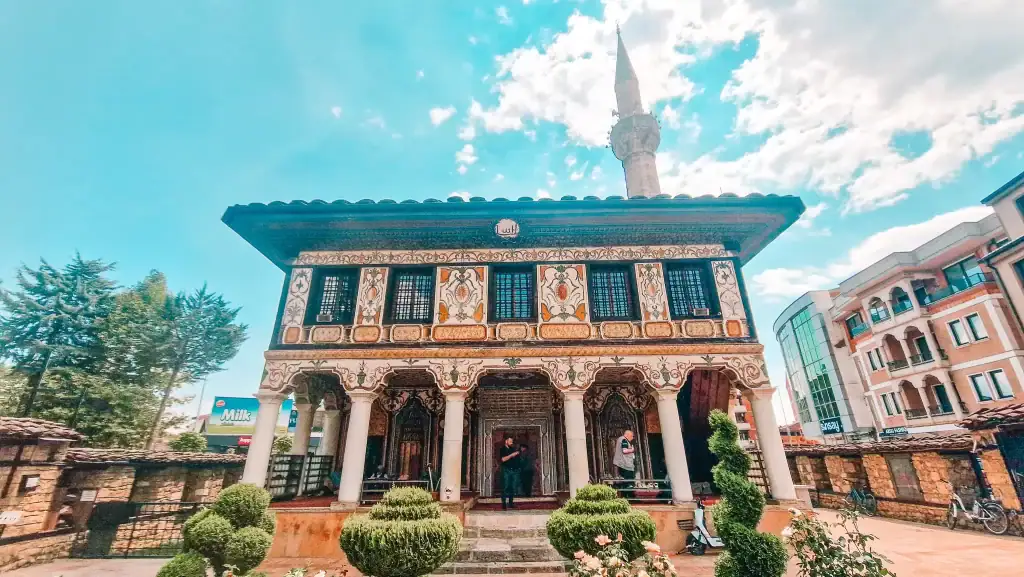
The mosque is unique in that it is entirely covered in murals, both inside and out. While a short visit is all you’ll need, you’ll spend that time marvelling at the explosion of colour and decoration on every inch of wall. The most famous picture inside is of Mecca – a rarity in mosques of this age, and painted because a local artist had made pilgrimage to Islam’s most holy city.
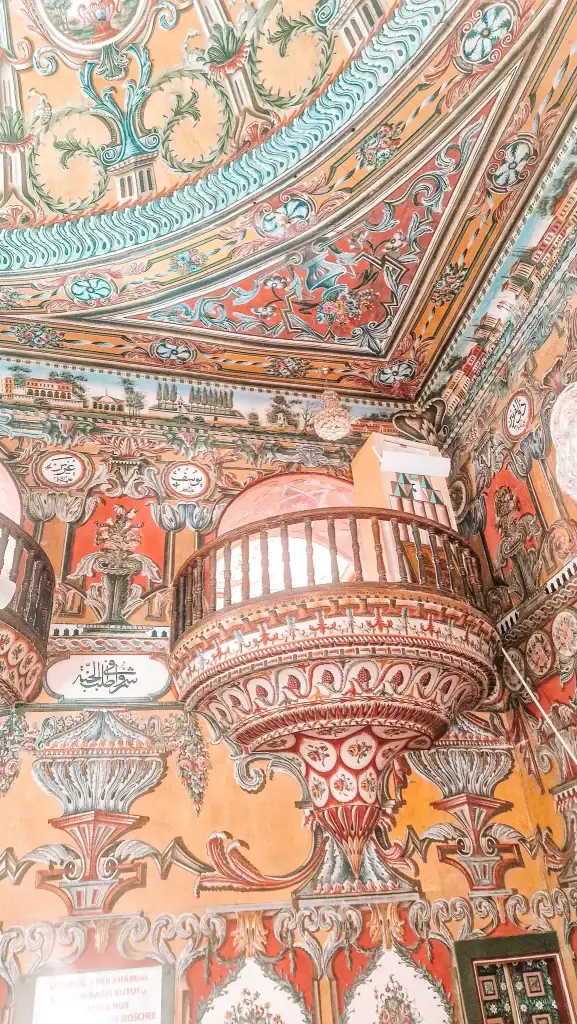
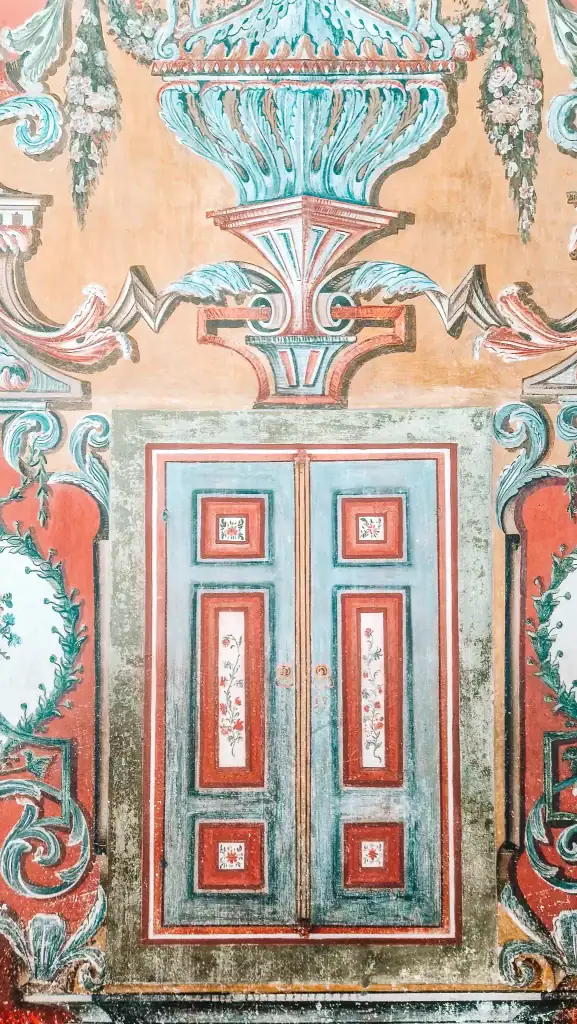
The mosque was originally built in 1438, but later destroyed by fire. It was meticulously rebuilt in the 1830s, which is when the beautiful murals date from – the artist used oil paint mixed with thousands of eggs to ensure their longevity. It is still very much an active site of worship today – be respectful while visiting and note that it closes during prayer times.
👉 Visiting Tetovo makes a perfect day trip from the Macedonian capital — I’ve rounded up this and other ideas in my guide to the Best Day Trips from Skopje.
Sinan Pasha Mosque, Prizren: Kosovo’s Ottoman-Era Landmark
Cost: free
Practicalities:
- Cover-ups are provided.
- Easily accessible on foot in Prizren Old Town
- If you’re visiting Albania or North Macedonia, consider taking a day trip to stunning Prizren – I personally used this one from Tirana (✨ 4.5/320+) and took another tour with the company that provides this tour from Skopje (✨ 4.7/190+) (and highly recommend them).
The Sinan Pasha Mosque, in fairytale Prizren, was built in 1615. It’s a important part of Prizren’s cultural heritage, and the beautiful dome is a major part of the city’s magical skyline. Although the Sinan Pasha Mosque isn’t on the UNESCO list — partly because of ongoing political complexities around Kosovo’s status — it has been officially recognized as a Monument of Culture and remains one of the most important landmarks in the region. Today, it’s also protected as part of Kosovo’s cultural heritage framework, and continues to serve as an active place of worship and community gathering.
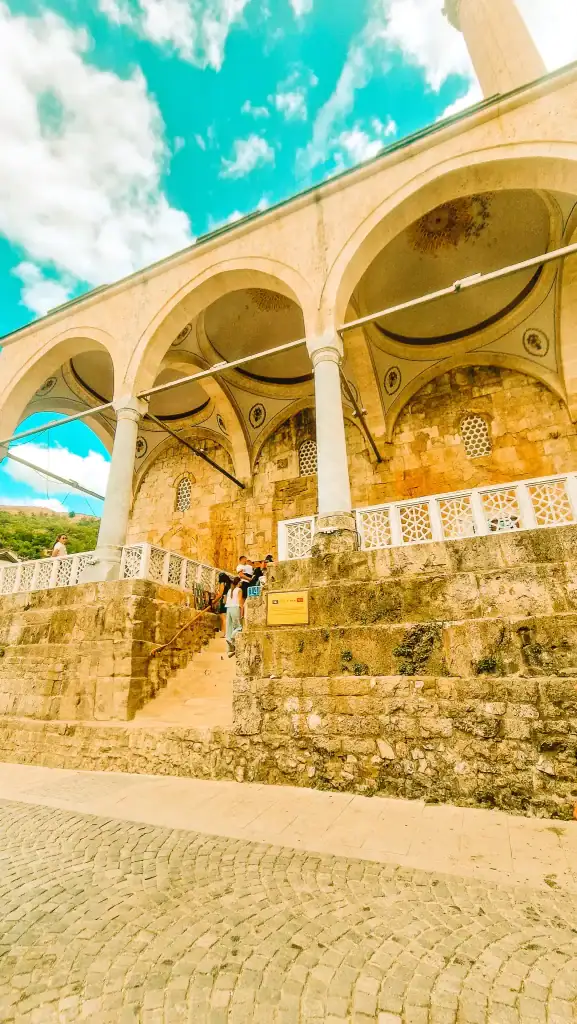
Inside, the mosque is both beautiful and incredibly well-constructed – the walls are an incredible 1.65m thick! These walls are covered with floral decoration and Qur’anic verses.
This Skopje-based Kosovo tour has 190+ reviews with a 4.7⭐ rating, while this version from Tirana has a 4.5⭐ rating from 320+ reviews — a reliable way to see Prizren in one day.
👉I visited Prizren as part of a full-day tour from Albania, which also included the capital city Pristina. You can read all about my experience in my Day Trip Review: Prizren & Pristina from Tirana.
Catholic & Jewish Heritage Sites
While the Orthodox and Ottoman influences are the most visible in the Balkans, traces of Catholic and Jewish communities are just as important to understanding the region’s layered history. From grand cathedrals along the Adriatic coast to synagogues that once stood at the heart of thriving Jewish quarters, these landmarks speak to centuries of diversity and resilience. Though smaller in number, they offer a powerful window into the cultural richness, and sometimes turbulent history, of the Balkans.
St. Tryphon Cathedral, Kotor: Romanesque Jewel of Montenegro
Cost: €4
Practicalities:
- Easily accessible on foot in Kotor Old Town
Built in the 12th century, St Tryphon Cathedral is one of the highlights of Kotor. With it’s two front towers, it has an iconic and completely different look from the other churches on this list. While the current structure dates back to the 12th century, it was built on a much older (and smaller) church in a Roman style.

Inside, you’ll find beautiful 14th century frescoes, as well as the remains of St Tryphon, the patron saint of Kotor. It was significantly damaged in a major earthquake in 1667, and the subsequent renovations are when the beautiful bell towers were added.
As well as admiring the artwork and architecture, the church also houses a treasury museum where you can find a large number of gold and silver religious artefacts.
👉 If you’re visiting Kotor, check out my guide to the best things to do in this historic city to make sure you don’t miss out.
Central Synagogue of Sofia: The Largest Sephardic Synagogue in the Balkans
Cost: 5 BGN
Practicalities:
- There is significant security at the site. You will need to provide ID and have your bag searched by security guards.
- They provide a free audio guide to use on your phone
While in Sofia in September 2025, I took the chance to visit a religious building I haven’t been able to visit in years – the Central Synagogue of Sofia. Built in the early 20th century (around the same time as the Alexander Nevsky Cathedral), the synagogue is the largest Sephardic-Jewish synagogue in the Balkans and one of the largest in Europe.
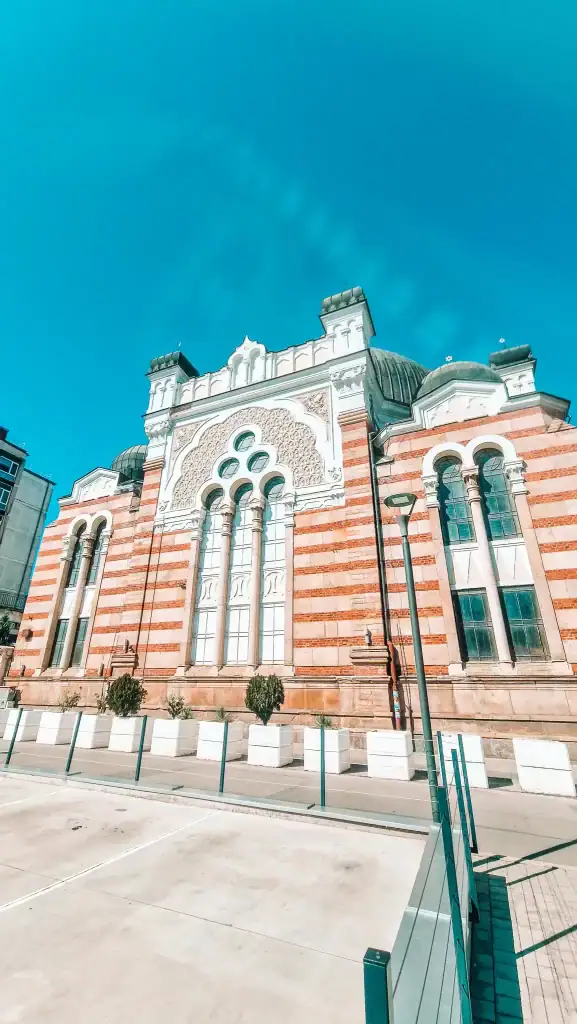
It’s incredibly beautiful inside, and the capacity of over 1,100 people attests to the size of the Jewish community in Sofia at the time. I loved the beautiful dome and window arches with blue ceilings and stars, which symbolise the heavens.
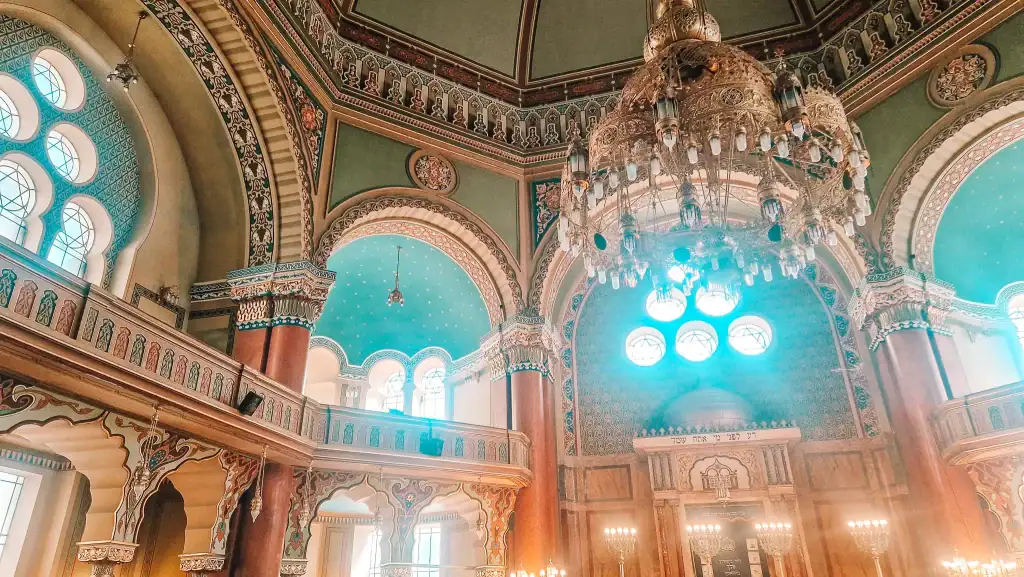
The synagogue has an interesting modern history as well – it was struck by a bomb during British bombardment of Sofia in 1944. Luckily, the bomb didn’t explode, but the vibrations shattered the stained glass windows. During the communist era, the Bulgarian Minister of Culture tried to transform the space into a concert hall, but had to back down after fierce resistance.
If exploring Jewish history is a focus of your travels, don’t miss the Skopje Museums Guide, where I share my visit to the Macedonian Holocaust Memorial Center along with other must-see museums that bring the region’s complex heritage to life.
Map of the Locations
Use this interactive map to find the key religious monuments that you want to prioritise. Click the pins to see practical details, and use the + button to zoom in on cities like Ohrid or Sofia.
FAQs About Religious Landmarks in the Balkans
What is the most famous monastery in the Balkans?
The Rila Monastery in Bulgaria is the most famous and also a UNESCO World Heritage Site. It’s known for its colourful frescoes, mountain setting, and deep historical significance.
Is Bachkovo Monastery a UNESCO site?
Not yet — Bachkovo Monastery is currently on Bulgaria’s UNESCO Tentative List, meaning it is a candidate for future inscription. It’s still one of the country’s most important Orthodox monasteries and well worth visiting.
Can you visit mosques in the Balkans if you’re not Muslim?
Yes, most mosques in the Balkans are open to visitors regardless of religion, but you must follow local etiquette: dress modestly, remove shoes, and avoid visiting during prayer times. Many mosques, particularly in Albania, offer a cover up at the door.
Are photos allowed inside churches and mosques in the Balkans?
Rules vary by site. Some allow photography freely, others charge a small fee, and some ban it entirely (such as inside Gracanica Monastery). Always check signage or ask before taking photos.
Do I need to cover my head when visiting Orthodox churches?
Head coverings are not usually required in Orthodox churches, but women may be asked to wear a shawl in certain monasteries. Mosques typically require both men and women to dress modestly, with women covering their hair.
What’s the best way to visit these landmarks without a car?
Most major sites, like Rila Monastery, Bachkovo Monastery or St Panteleimon, are best visited on guided day tours from nearby cities (Sofia, Skopje, Tirana). This saves time and includes historical context that you’d miss if traveling alone.
Are these religious sites still active places of worship?
Yes — almost all of the churches, monasteries, synagogues, and mosques in this guide are still active. Visitors are welcome, but you should be respectful of ongoing services.
Which Balkans city the most churches?
The city of Ohrid in North Macedonia is sometimes called the “Second Jerusalem” because it once had 365 churches — one for every day of the year.

Exploring the Balkans through its churches, mosques, monasteries, and synagogues is so much more than a sightseeing checklist. Each fresco, minaret, and dome tells the story of centuries of coexistence, conflict, and resilience. What struck me most is how close these traditions sit side by side – a living reminder that this region truly is where East meets West.
If you find this as fascinating as I have, try reading Goodbye Eastern Europe: An Intimate History of a Forgotten Land, which I’ll be recommending on my upcoming Balkans reading list. This incredible history takes a thematic approach, covering all the major religions as well as Eastern Europe’s early pagan past, before moving on to more modern history – and provides a great background for any Balkans trip.
If you’re planning your own trip, make time for at least a few of these sites. They aren’t just beautiful buildings — they’re windows into the history, faith, and culture that make the Balkans so endlessly fascinating.
👉 Ready to keep planning your Balkans adventure?
If you want a culture-first travel guide to inland Albania — with realistic itineraries, destination deep dives, practical bus travel guidance, and advice on extending your trip into neighbouring countries — Albania, Unlocked is designed to help you plan a confident, well-paced journey beyond the beaches.
👉 Explore inland Albania thoughtfully with Albania, Unlocked
If you’re still in the early inspiration or research phase, you can also download my free Culture-First Traveller’s Guide to the Balkans, covering Albania, North Macedonia, Kosovo & Bulgaria — focused on travelling with context, curiosity, and care.
👉 Get the free culture-first guide
And if you’d prefer someone to build a personalised itinerary for you — tailored to your time, interests, pace, and travel style — I also offer custom trip planning, including Albania and wider Balkan routes.
👉 Request a custom Albania itinerary
Finally, here are some of my other cultural and travel guides to help you:
- Top 10 Cultural Experiences in Albania, North Macedonia & Kosovo – food, festivals, and living traditions
- Kosovo Day Trip from Albania – what to expect and whether it’s worth it
- Why Visit Albania, Montenegro & North Macedonia – the best reasons to go now
- Guide to Ohrid – churches, lakeside strolls, and unforgettable sunsets
- 48 Hours in Tirana – where Ottoman history meets café culture
- Best Things to do in Skopje – find out more details about visiting St Panteleimon, Matka Canyon and other incredible buildings
- Best Museums in Skopje – many cover the diverse religious history of the Balkans, particularly the Holocaust Memorial Centre
💡 Don’t forget to pin this post for later, so you can build your own Balkans itinerary around these cultural highlights.
And if you’re craving coastal vibes after all that history? Jump over to my Kotor travel guide or Petrovac beach escape (coming soon) for a different side of Montenegro.
Em is a writer and slow traveller who has explored the Balkans in depth, from mountaintop monasteries to Ottoman-era mosques and centuries-old churches. She shares culture-first travel guides for curious travellers drawn to history, architecture, and meaningful connection.
✅ All photos featured on this blog are from my personal travel experiences. No stock images are used.