 Em
Just so you know: This post contains affiliate links. As an Amazon Associate, I earn from qualifying purchases. I may also earn a small commission if you book a tour, hotel, or buy something else through these links. It helps me keep this blog running and full of travel tips. Thanks for your support!
Tucked between jagged limestone cliffs and the sparkling Adriatic Sea, Kotor feels like stepping into a medieval fairytale. Whether you’re wandering cobbled alleyways past centuries-old churches or watching the sun dip behind the mountains from the old city walls, this town has a magic that lingers.
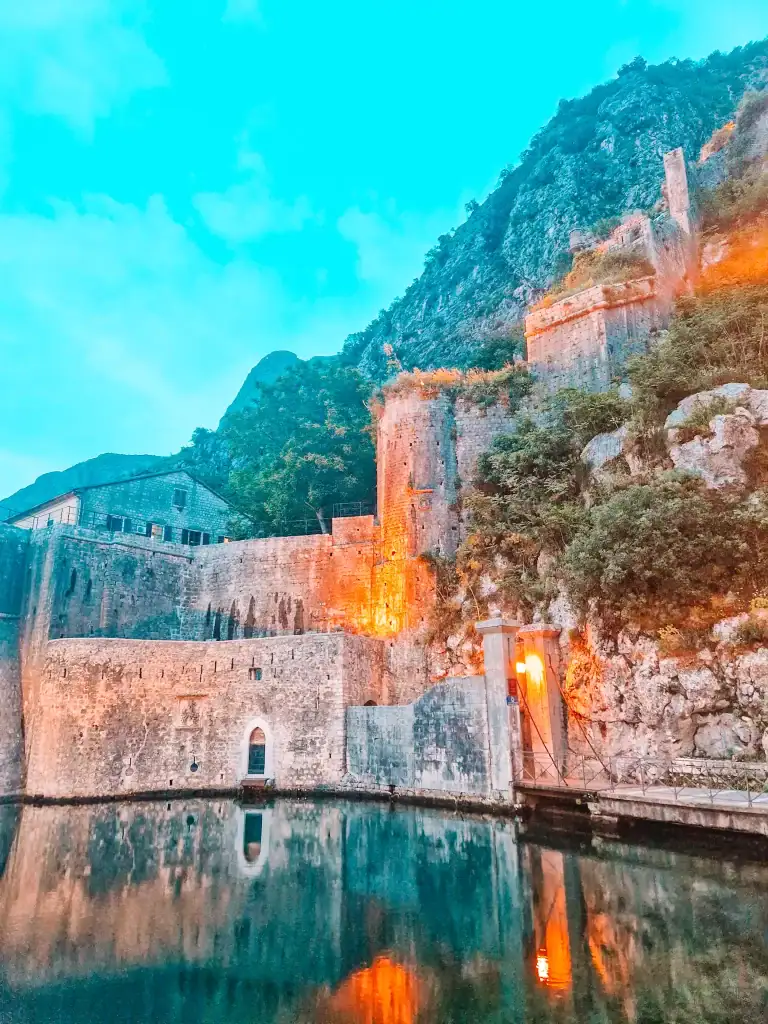
All photos featured on this blog are from my personal travel experiences.
I visited Kotor with high expectations — and it still blew me away. It’s the perfect mix of history, beauty, and just enough tourist buzz without feeling overrun. From boat trips to tiny island churches, to casual dinners in candlelit squares with live music drifting in the air, Kotor has something for everyone.
In this post, I’ll walk you through the best things to do in Kotor, Montenegro — plus a few easy day trips that made my time here even more unforgettable.

👉 Looking for more offbeat Balkan gems? Don’t miss my post on why you should visit Albania, Montenegro and North Macedonia before everyone else.
Is Kotor, Montenegro, worth visiting?
Montenegro is undoubtedly one of Europe’s hidden gems, with relatively few tourists from western Europe heading to its beautiful old towns and sandy beaches. It’s also a UNESCO Heritage Site, recognised for both its historic buildings and natural beauty.

There are so many amazing things to do in Kotor, undoubtedly the famous town. It oozes centuries-old charm, with the added benefit of being right on a beautiful bay on the Adriatic – so it’s perfect for both cozy cafes down a winding alley and waterfront cocktails. There’s a variety of day trips too – Our Lady on the Rocks is one of the most picturesque places I’ve ever visited.💌 Planning a culture-first Balkans trip?
Grab my free Culture-First Balkans Travel Guide — packed with weekend-worthy destinations from Bulgaria to Albania.
And if you’d prefer someone to build a personalised itinerary for you — tailored to your time, interests, pace, and travel style — I also offer custom trip planning, including wider Balkan routes.
👉 Request a custom itineraryr European bucket list!
Soak up the history: the top things to do in Kotor, Montenegro
🏘️ Stroll through Kotor’s atmospheric old town
The absolute highlight of my trip to Montenegro was wandering the alleyways and squares of Kotor town. Built from the 15th century onward, the town really shows it’s age – in the best way! Take your time wandering narrow alleys between centuries-old houses, visiting beautiful churches, and having a coffee at any of the many squares scattered throughout the town.

If you want to know more about Kotor’s fascinating history, take a walking tour. This highly rated option on Get Your Guide will take you to the highlights like the Square of Arms and the Clock Tower, before taking you to lesser known gems.

👉 A walking tour is the easiest way to uncover details you’d miss on your own (like secret alleyways and hidden frescoes). This highly rated option has small groups and covers all the highlights – book now to secure your spot ✨ 4.8/120 reviews!
One of my favourites places was the ‘main’ square, by the gates in the old town wall. I sat eating delicious pizza with a view of both the town and the mountains surrounding it. It’s even more beautiful at night, lit with soft light, the epitome of summer (or spring) in Europe.
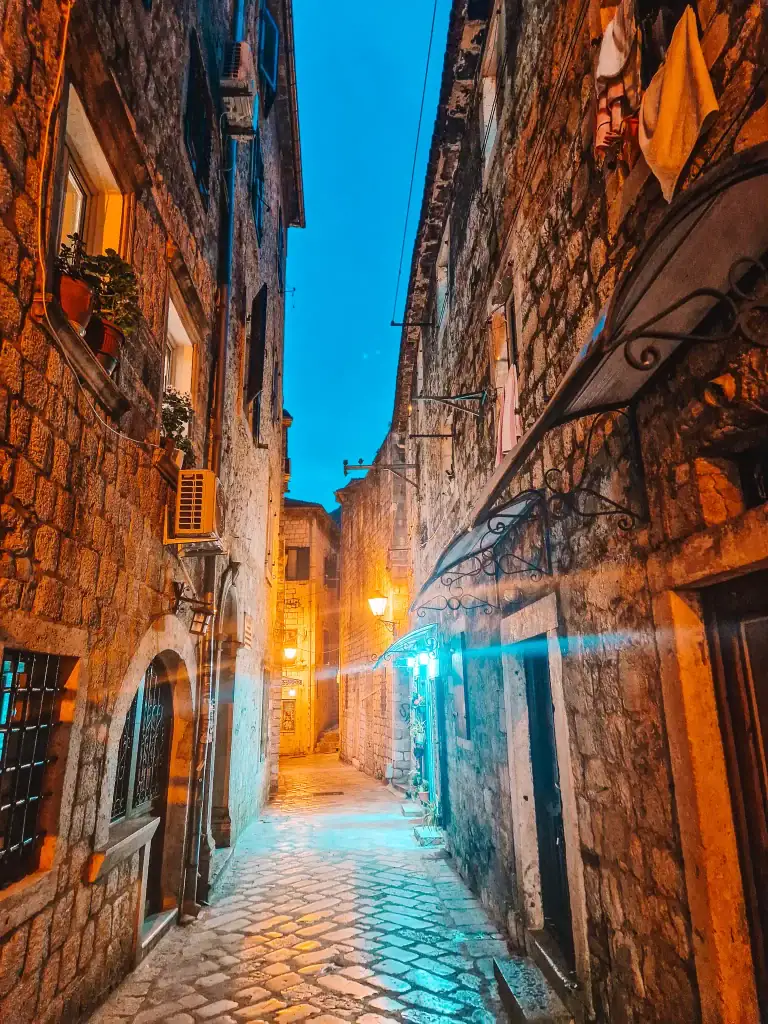
After a long day of sightseeing, spend your evenings relaxing, with many of restaurants featuring live music. Sample Montenegrin specialties such as cevapi (grilled meat and veg), cuttlefish ink risotto, and the local spirit rakia.
🏰 Enjoy Montenegro’s history on Kotor city walls
Cost: €15 between 8am-8pm
Kotor is a walled city, which contributes to the enormous sense of history you feel when you visit. Built between the 9th and 14th centuries, the walls still circle the majority of the city today. So many of the most interesting things to do in Kotor are inside the walls that I only ventured outside for a supermarket and a cafe on the waterfront!
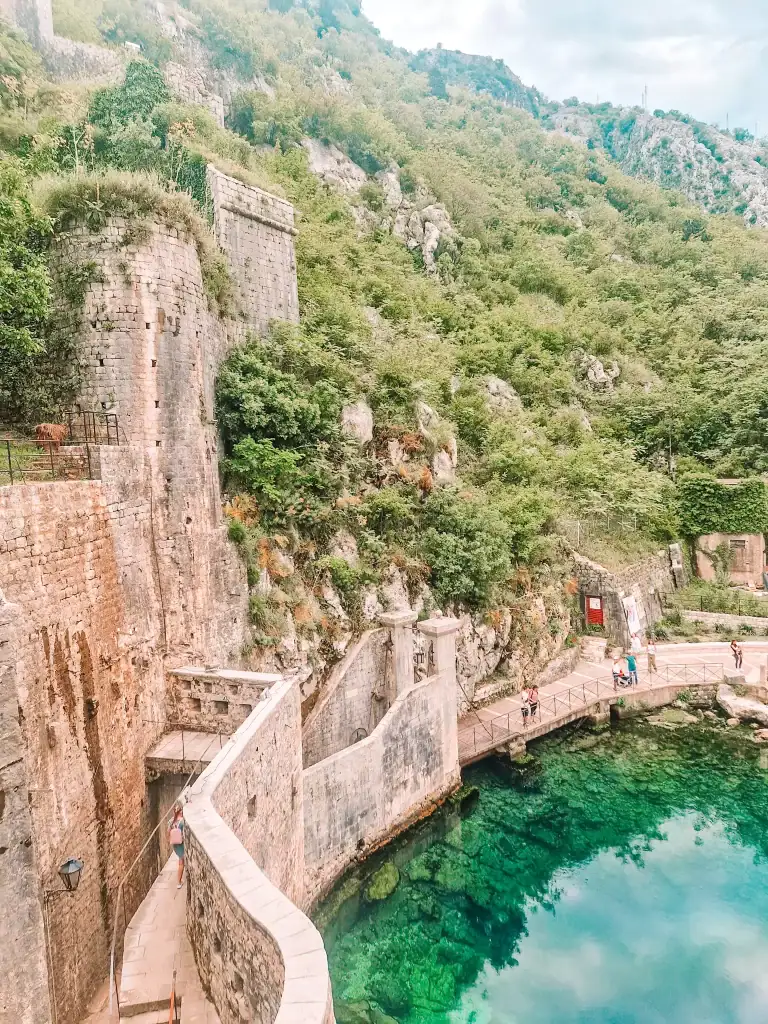
Despite my enduring hatred of steps, I loved climbing the few steps up and promenading around. The views are spectacular, with mountains on one side and water on the other, and you can see right across the city rooftops.
One of my favourite experiences was the insight into the daily lives of people living in Kotor – unlike many European tourist cities (looking at you, central London), this is a city where local life continues. Parts of the wall go right up against people’s houses and you are walking past their laundry and kids playing. I always love seeing the reality of a town, as well as the tourist hotspots.
You can access the walls from various spots around the town. However, don’t be fooled into thinking all the stairs in Kotor lead to the walls – some lead up to houses nestled into the mountains, like my airbnb.
🕍 Visit Kotor’s Historic Churches
Cost: St Tryphon – €4
👉 Kotor is now busy during the summer season, so if you want beautiful pictures or chilled vibes, visit early in the morning.
Kotor is absolutely full of beautiful churches. The most famous is St Tryphon Cathedral, more commonly known as Kotor Cathedral. First mentioned in the 9th century, the current structure dates from the 13th century. Its twin towers and sweeping views of the square below make it one of the most photographed spots in town, and the inside is just as grand.

The tiny Church of St. Luke (Sveti Luka) is one of the oldest — built in 1195 — and you’ll feel its age the moment you step inside. It’s small, a little dark, and filled with that almost tangible quiet you only find in really old places. The floor is uneven stone, the frescoes are faded, and the whole place smells like incense and history. It’s the kind of church you enter and automatically lower your voice without thinking.

On the other hand, the Church of St. Nicholas, an Orthodox church from the early 20th century, feels much more polished. It has a striking black dome, golden icons everywhere, and flickering candles that cast shadows along the walls. It’s still atmospheric, but in a completely different way.

The contrast between Catholic and Orthodox churches here isn’t just architectural — it’s cultural. It gives you a glimpse into Montenegro’s complex religious history, where east meets west, and different traditions coexist in the same small town.
You’ll see this same contrast echoed across the Balkans — from the serene Orthodox Gracanica Monastery just outside Pristina in Kosovo, to the hilltop churches of Ohrid overlooking Lake Ohrid, to St. Panteleimon Monastery near Skopje, known for its stunning 12th-century frescoes. If you’re a fan of Byzantine art, religious history, or just peaceful, scenic places, these are well worth adding to your itinerary.
🚤 Take a day trip to Our Lady of the Rocks
Cost: €25
The church of Our Lady of the Rocks is on a tiny island outside the serene waterside town of Perast, and taking a day trip to both is an absolute must-do.
Built in the 15th century, legend has it that the islet of our Lady of the Rocks was formed after local seamen found an icon of the Madonna and Child in the sea in 1452, and made an oath to create a church in their honour. They formed the island through depositing a rock after each successful voyage. This tradition continues with a rock depositing event every July.

Our Lady of the Rocks is undoubtedly one of the most Instagrammable spots I’ve ever seen. I visited in blazing sunshine, and the contrast of the tiny island, beautiful building and stunning blue water behind makes it a photographer’s dream.
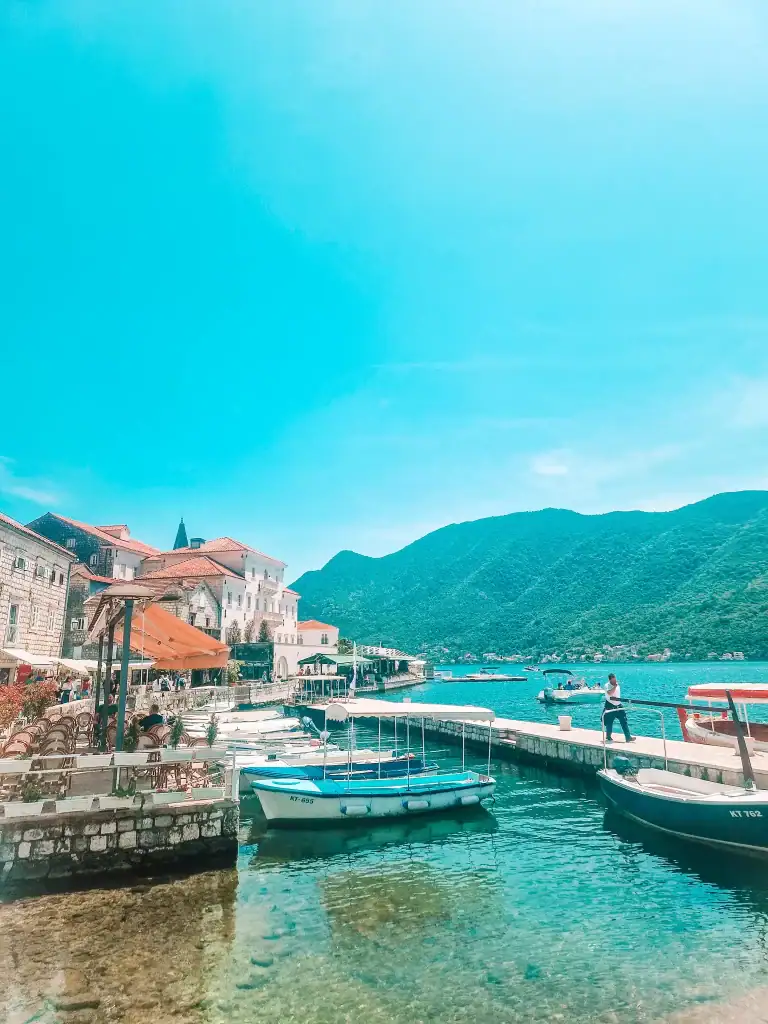
After, you’ll visit Perast, one of the most beautiful places I’ve ever seen, and a UNESCO Heritage Site. Perast is a small town, with waterfront restaurants where you can eat with the water lapping just below your feet. There are a few shops as well, and you can explore the small church and the back alleys of the town, which is set into the hills.
Surreally, while I was in Perast I found a group of English morris dancers and saw them performing in the square outside the church – one of the weirdest things that’s happened to me on all my trips around the world!

👉 This day trip is highly rated on Get Your Guide and is one of the few that prioritises Perast over the Blue Cave (see below). This is a small group tour, so book now to secure your spot! ✨ 4.7/850 reviews!
🏰 Hike up to St John’s Fortress
If you’re up for a steep but unforgettable climb, the hike to St. John’s Fortress is one of the top things to do in Kotor. The trail starts just outside the old town and zigzags its way up the mountain behind the city to the fortress 260 metres above Kotor, offering breathtaking views over Kotor Bay. Full disclosure: I was too lazy to do this. But my Airbnb host was absolutely adamant that this is one of the must dos in Kotor.

The fortress itself dates back to the 6th century, with major fortifications added during the Venetian period (15th–17th centuries). For centuries, it served as a key defensive stronghold, keeping watch over the narrow bay and protecting Kotor from Ottoman invasions and pirate raids. Today, the crumbling stone walls and panoramic views are just as impressive, but thankfully a little less life-or-death.
It takes about 45–60 minutes to reach the top, depending on your pace. It’s mostly lots and lots stairs, so bring plenty of water (try this insulated water bottle), good shoes, and ideally go early or late to avoid the midday heat.
💡 My Essentials for Exploring Kotor
Packing light but smart made my time in Kotor so much easier. These are the things I wouldn’t visit without:
- Birkenstock Sandals – I live in Birkenstocks and I’ve worn them for climbing uneven steps for months now. If you’re more of a sandal person than a hiking shoe person, they’ll see you through cobblestones, alleyways, and long days of sightseeing.
- Insulated Water Bottle – It gets hot fast in Kotor, especially if you’re climbing the city walls. This one keeps water cold for hours.
- Packable Day Bag – Big enough for your camera, sunscreen, and a snack, but folds down small when you don’t need it.
- Dock and Bay Towel – for a cooling dip in the Bay of Kotor.
👉 These will make a big difference between “uncomfortably sweaty sightseeing” and actually enjoying yourself.
😺 Pet Kotor’s many cats or visit the Kotor Cat Museum
If you are a cat lover, then petting the many cats will absolutely be one of your Kotor highlights. Cats roam everywhere, just waiting for your attention. I was lucky enough to have a terrace in my Airbnb. I walked out each morning to find cats sprawled across the patio furniture.

I didn’t make it to the Kotor Cat Museum, but if you’re a feline fanatic (and let’s be honest, this town is all about the cats), it’s a quirky little spot that might be worth a stop — especially on a rainy afternoon or if you’re traveling with kids.

🌊 Sail through the famous Blue Cave
Instead of visiting the Blue Cave, I chose to visit gorgeous Perast – but the majority of tours and visitors head out to the Blue Cave, on a much longer boat tour. The Blue Cave is a natural wonder, only accessible by boat, and it’s one of the most popular things to do in Kotor.
It’s a large cavern where the water combines with smooth walls to create an unusual blue light effect and you’ll have time on the boat trip to swim and enjoy the space.
👉 If this sounds more like your vibe than Perast, try this highly rated trip that takes you to both Our Lady of the Rocks and the Blue Cave – ✨ 4.7/3k reviews!
🛏️ Where to stay in Kotor
I recommend staying in Kotor’s Old Town – the historic vibes are unmatched, and you’ll be near to everything, from perfect cafes and delicious restaurants to boat tours from the harbour. I’ve listed a few highly recommended options below, or check out the interactive map below to find your perfect stay:
Budget-friendly stays in the old town
- The Old Town Hostel is one of the best budget stays in Kotor. The historic building offers a central location and both private and dorm accommodation. However, it does have a bit of a party hostel vibe, with pub crawls and activities organised – bear this in mind if this isn’t your thing. ✨ 9.3 from over 1k reviews.
- Most budget stays in the old town are apartments – check out your options here.

Perfect mid-range options
- Pearl Apartments is not much more expensive than a double in the hostel, but offer full apartment facilities. ✨ 9.5 from over 200 reviews.
- Vila Perast Boutique Hotel offers a stay in gorgeous, peaceful Perast. ✨ 8.2 from over 500 reviews.
Want somewhere deluxe? Try these highly rated options:
- Boutique Hotel Hippocampus is in the heart of the Old Town, with a stunning roof terrace for breakfast ✨ 8.3 from over 490 reviews.
- Historic Boutique Hotel Cattaro is situated in part of the city’s historic walls, and offers views of Kotor Bay. ✨ 8.9 from over 400 reviews – but note that it also houses one of Kotor’s biggest nightclubs.

Bonus: shopping in the Old Town
One of the best things to do in Kotor, Montenegro is to go memento shopping! As well as the usual tourist knick knacks, there are a variety of more unusual gifts to bring back for your friends and family. My favourite was a shop selling an abundance of lavender-themed gifts. You could easily spend a morning wandering from shop to shop, trying to work out what to bring home for that special someone who really deserves a gift.

Thinking of another European city break?
- 💡 Try Porto, one of Europe’s most beautiful cities, where you can wander medieval alleys and sample local port wine
- 💡 Beautiful Brasov is another fairytale town in Romania – this time with the option to see bears!
- 💡 Elegant Bath in the UK has three eras of history – Roman, Medieveal and Regency – and is where much of Bridgerton is filmed
- 💡 Tirana in Albania is, for me, one of Europe’s most underrated capitals – full of innovative museums, relaxed charm and one of the highest proportions of cafes to humans in Europe!

Frequently asked questions about Kotor
Where is Kotor?
Kotor is a small city in the north of Montenegro, a small country nestled between Albania, Serbia and Bosnia & Herzegovina. Montenegro has a Mediterranean coastline, close to Dubrovnik in Croatia and directly across from the heel of Italy’s boot.
What currency is used in Kotor?
Kotor and Montenegro more widely use the Euro, making it a convenient choice for European travelers who don’t need to exchange currency. Although it isn’t part of the European Union, Montenegro has applied and hopes to join by 2028.
Is Kotor safe?
Montenegro is as safe as most European destinations – which means you should take the usual precautions you would anywhere else. The British Foreign, Commonwealth and Development Office lists the main risks as petty theft and ATM fraud.
I’m a solo female traveller who has travelled all over the world, and never felt any sense of danger. Stats show relatively low levels of crime in Montenegro. Kotor is one of those European cities where nightlife extends long into the night, and there are always lots of people around to help you feel safe. However, you should always be careful walking alone late at night.
When is the best time to visit Kotor?
Like much of the Balkans, Kotor experiences hot, humid summers, so peak season is best avoided.
sightseeing. If you travel in:
April → Average max: 19°C
July → Average max: 31°C
October → Average max: 18°C
November → Average max: 13°C
Montenegro is a great option for an autumn getaway since it stays much warmer than the UK or Northern Europe. I visited in May, when temperatures were around 20°C—warm enough for the beach but still comfortable for sightseeing.
How do I get to Kotor
Montenegro has two main airports – Podgorica (where most budget airlines arrive) and Tivat (better for Kotor, if you can find a flight). Traffic in Montenegro is notoriously bad – the mountainous terrain doesn’t suit big roads – so the drive from Podgorica can be long and painful. Aim for Tivat if that’s an option for you.
Buses in Montenegro are cheap and reliable. Use Flixbus to book tickets in advance – they do get booked up quickly in summer.

Kotor is one of those places that completely lives up to the hype. Whether you’re strolling through its medieval old town, climbing ancient fortress walls for sweeping bay views, or hopping on a boat to a tiny island church, this town has an atmosphere that’s hard to describe — and even harder to leave behind.
If you’re planning a trip to the Balkans, I’d absolutely recommend giving Kotor at least a couple of nights. It’s compact enough to explore on foot, but rich enough in history, beauty, and food that you’ll never be bored.

But Montenegro is just one piece of the puzzle. If you’re building a regional itinerary, here are a few more posts to help you plan your next stops:
- Why Visit Albania, Macedonia & Montenegro – An overview for building a multi-country trip
- The Best Things to do in Shkoder, Albania – hop just across the border in Albania to visit the Albanian Aps (coming soon)
- Why I Fell in Love With Gjirokaster, Albania’s Magical Stone City – similar vibes to Kotor, at a lower price point
And if you’re craving a slower pace and beachside sunsets? You’ll love Petrovac — it’s where I went to unwind after Kotor, and it quickly became one of my favourite spots in the Balkans.
👉 Read my full guide to Petrovac here – coming soon.
Ready to plan your trip? Don’t forget to book your accommodation in Kotor early — Old Town stays sell out months in advance. And for the best views and stories, grab a spot on a Kotor walking tour before you go.

Em is the solo traveller and writer behind Em’s Globetrotting Gems, where she shares honest, practical guides to exploring hidden corners of Europe and beyond. She’s passionate about slow travel, discovering cultural gems, and helping others plan unforgettable adventures across the Balkans and beyond.
✅ All photos featured on this blog are from my personal travel experiences. No stock images are used.


[…] out my post Top 10 things to do in Montenegro to find out […]