 Em
EmJust so you know: This post contains affiliate links. As an Amazon Associate, I earn from qualifying purchases. I may also earn a small commission if you book a tour, hotel, or buy something else through these links. It helps me keep this blog running and full of travel tips. Thanks for your support!
Planning a visit to Borobudur and feeling overwhelmed by the ticket rules, tour options, or how early you need to book? You’re not alone. With new regulations, capped visitor numbers, and different ticket types for various access levels, figuring out how to visit this UNESCO World Heritage Site can be confusing—even for experienced travellers. When I visited Borobudur in August 2024, I found that a little planning goes a long way. From knowing the difference between general entry and temple access tickets, to deciding whether to hire a guide or join a group tour, there are a few key things you’ll want to get right in advance—especially if you’re short on time.

In this guide, I’ll walk you through everything I wish I’d known before my visit: how to get tickets (and why you should book early), what kind of tour options are available, what to wear, and how to make the most of your time at the world’s largest Buddhist temple. Let’s get into it—so you can focus on soaking up history, not searching for last-minute info.
Is Borobudur worth visiting?
Borobudur is absolutely worth visiting, as it’s a UNESCO Heritage Site and one of the most impressive monuments I’ve seen in 10 months of travelling. It was built in the 8th century and it’s the world’s largest Buddhist temple. It emerges dramatically from an otherwise flat landscape and looms towards the skyline, with incredible ornate carvings on the walls.
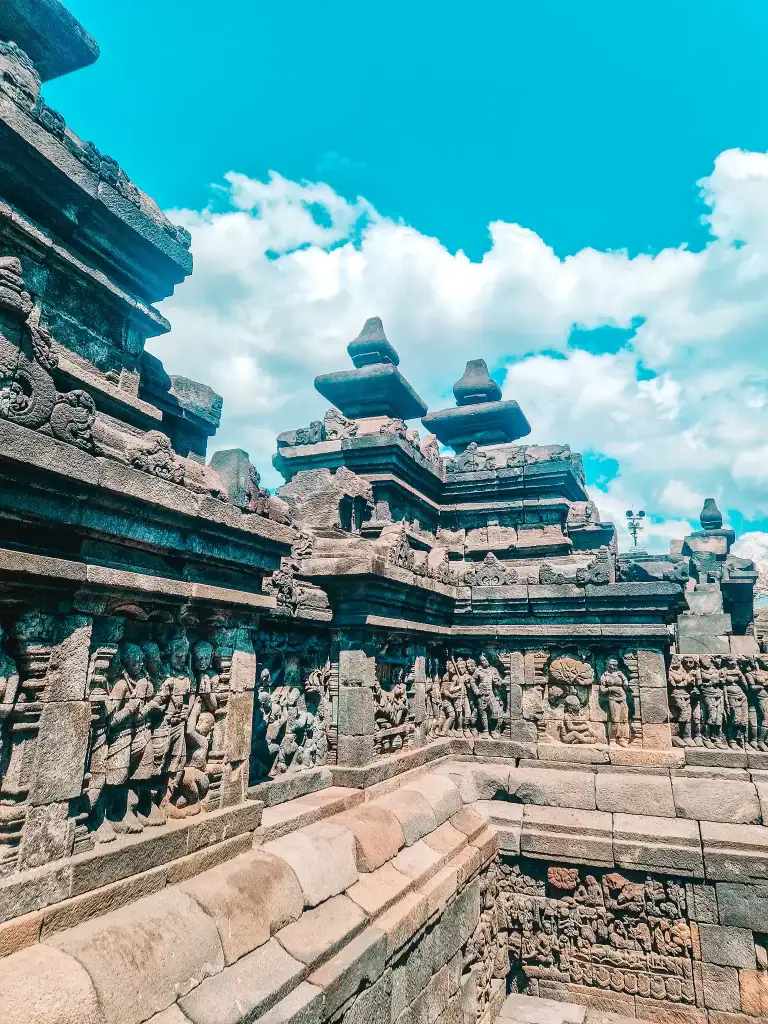
It’s one of the most important religious and archaeological sites in Southeast Asia, comparable to Angkor Wat in Cambodia or the ornate Imperial Palace complex in Hue, and certainly more impressive than the social-media famous Batu Caves in Kuala Lumpur. No visit to Yogyakarta, or indeed Java, is complete without a visit to Borobudur.
Our guide mentioned that Borobudur was abandoned after a volcanic eruption. However, other sources suggest the decline of Hindu kingdoms in Java led to its desertion. Either way, the British coloniser Stamford Raffles (also known as the founder of Singapore) ‘rediscovered’ Borobudur in the 1800s, and brought it back to the attention of the world. A team of Dutch archaeologists originally restored the site in 1907-11, and there was a further restoration in the 1980s.

There’s another UNESCO listed temple called Prambanan about an hour and a half away from Borobudur. I recommend visiting both, but if you only have time for one, Borobudur is more popular. Borobudur survived relatively untouched, and the majestic nature of the temple is very different to the destruction visible at Prambanan. Borobudur is almost pristine, while Prambanan is being slowly restored, with roughly one temple per year being completed. Prambanan is also more similar in style to many of the beautiful temples you might see if you visit Ubud in Bali, though significantly bigger and more impressive.
Wondering if Java is the right island for you, or if Bali or Sumatra would be a better fit? Check out my comparative guide to all three islands to help make your decision.
Should you visit Borobudur and Prambanan on the same day?
If you’re visiting Yogyakarta, particularly on a tight schedule, my recommendation is to combine Borobudur Temple and Prambanan Temple into one big day trip, as it works out more cost-effective to have a driver/join a tour than to do them separately.
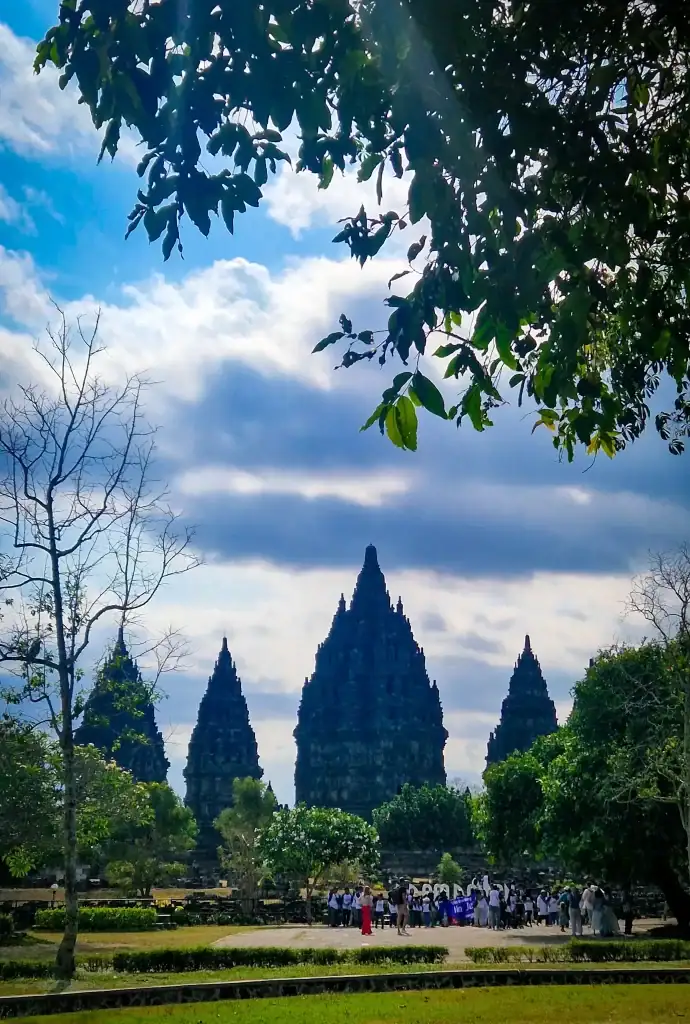
I looked into whether it would be viable to do them on separate days to have a more relaxed schedule, but it worked out much more expensive. You’ll need an early start to fit everything in, given driving times, but it’s worth it.
How to get your Borobudur Ticket
Ticket cost: 455,000 IDR per adult. This is usually around $25 but current exchange rate (August 2025) puts it at $27.
Guided tour: included
Planning your visit to Borobudur is more complex than you might expect. Alongside Angkor Wat, Borobudur is one of the most incredible historic temples in South East Asia, but much less busy. Access is strictly controlled, as in the past over-tourism has threatened to harm the structure. This means either booking your ticket in advance via the official site, or finding a guide/tour operator who has tickets available at short notice.
You have to book tickets for a specific timeslot and tickets includes an official Borobudur guide. There are two types of tickets:
- Ground tickets – ‘Temple Ground Ticket’
- Tickets to climb to the top – ‘Temple Structure Ticket’
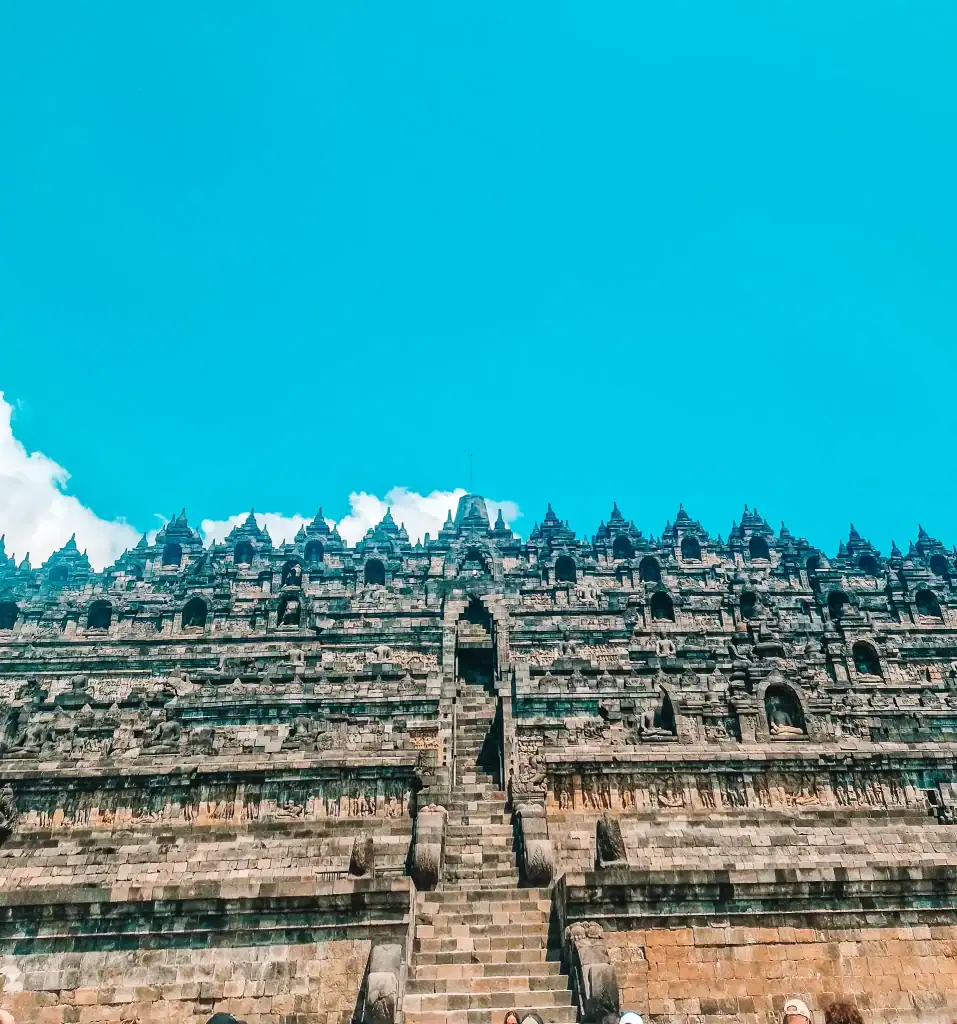
You want the tickets to the top, as exploring the grounds alone does not give you the same understanding of the history of Borobudur, but tickets to the top sell out more quickly. If you’re worried about the climb, I talk about it in more detail below.
If you are buying your own tickets, it’s definitely a case of the sooner the better. Tickets are available on the official website, but prices may change over time
What’s the best time to visit Borobudur
When buying your ticket to Borobudur, you’ll need to select a timeslot – this means that you need to think in advance about the best time to visit Borobudur.
You have a few options:
- Many tours offer a sunrise option, where you view sunrise emerging over Borobudur from a nearby hill. You then visit the temple on an early entrance ticket. Needless to say, this requires an exceptionally early start. If you’re going for this option, I recommend questioning your tour operator about which timeslot they have for Borobudur, as I’ve read reviews where people were waiting around for a long time in between sunrise and temple entry. The earliest ticket available is for 8.30am – question your tour operator to make sure they have these premium tickets. This highly-rated half day tour takes you to Borobudur for sunrise:
- Morning – Sunrise is too early for me, so I recommend visiting Borobudur in the morning as early as possible. The earliest slot is at 8.30am and the next 9.30am. I recommend trying to get these tickets, as later in the day the heat gets very fierce, and there is limited shade in the temple. If you’re planning to visit independently, buy your tickets as early as possible. If you’re using a guided tour, question your operator about which timeslot they have available. When I visited, I spotted some tour operators on Jalan Prawirotaman. the main tourist street, advertising that they had early slots available for the next day, so it is possible to find an early slot at short notice. This tour on Get Your Guide is highly rated – just ask in advance what ticket slot they have.
- Sunset – some tour operators offer a sunset slot. This isn’t a particularly popular option, but might be best for you if you are a night-time person. It’s also likely to be less crowded.
AVOID midday slots if you possibly can, as the heat is intense.
What to Wear to Borobudur
- Borobudur is a religious site, so you will need to dress modestly. Make sure your shoulders and knees are covered, or bring a scarf for your shoulders. If your knees are uncovered, you will be given a sarong free of charge to cover up, but in reality this wasn’t enforced.
- Don’t worry about wearing walking shoes, as you’ll be given special temple shoes to wear inside. However, if you are visiting Prambanan later in the day, I do recommend sturdy shoes (I wore sandals with a sturdy sole) as the ground at Prambanan is uneven.
- Make sure to bring water, sunscreen and your camera. If you like to wear a hat, this is a good idea given the lack of shade in the temple (I hate wearing a hat in the summer!).
Top Tip: As you’re walking, you’ll be offered the chance to rent umbrellas for 20k ($1.20) to shield you from the sun. I highly recommend this, as even at 9.30am the heat was fierce, and there is limited shade in the temple.
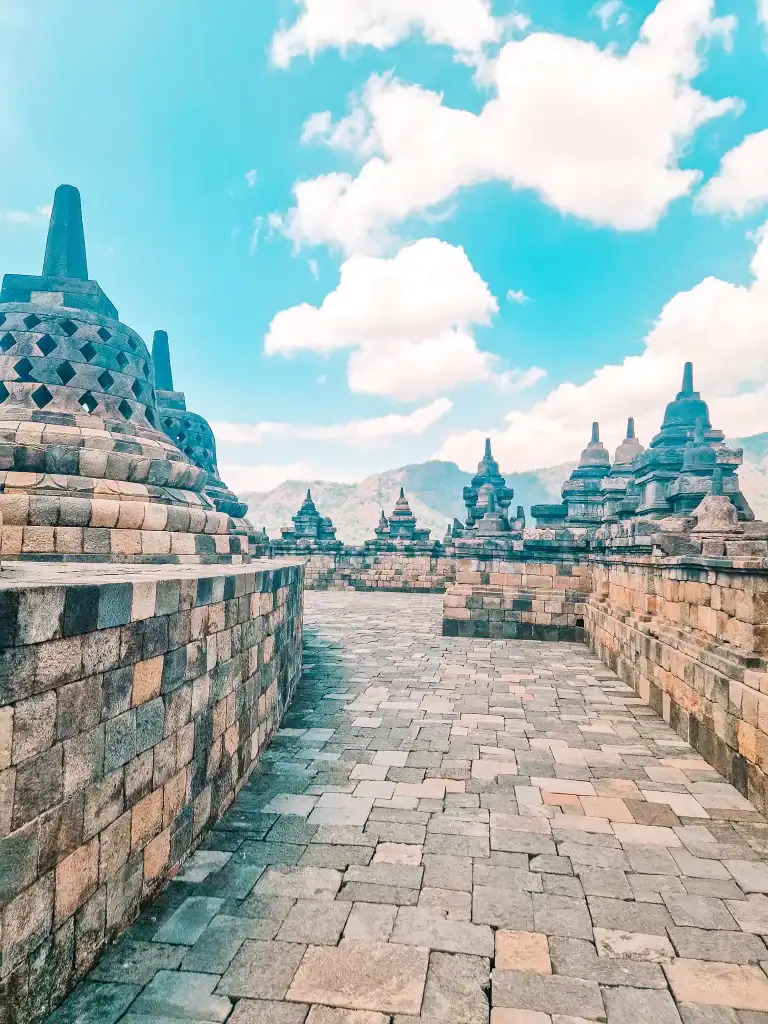
How to Get to Borobudur
The main way to get to Borobudur from Yogyakarta is by car, and it’s about 1.5 hours from the city centre. There are three options:
- Use Grab or Gojek (ride sharing apps like Uber). You can hire a driver for a set amount of time, ask your driver to wait for you, or find another driver when you’ve finished your visit. Given how popular Borobudur is, it’s likely that there will be Grab cars nearby.
- Take a shared or private tour with a driver. This could include combining your trip to Borobudur with a trip to nearby(ish) Prambanan Temple, and some options include a short visit to the Mount Merapi volcano as well. Alternatively, you can book a sunrise tour of Borobudur and head home at lunchtime for a well-deserved nap after your early start. If you’re keen to do a private tour, consider this highly rated option on Get Your Guide, which includes all your tickets and also takes you to two smaller temples on the drive between Borobudur and Prambanan.
- Take a motorbike tour with ViaVia. If you’re comfortable driving a motorbike, you can take an alternative tour with local ecotourism provider ViaVia, who drive via back routes so that you get to see a different side of Yogyakarta and Borobudur. While I didn’t take a tour with them, I did look into their tour options and eco-tourism credentials (and ate in their restaurant). They have a 4.9 rating on Google Reviews from over 100 reviews, specifically for their travel service.
I chose to do a shared tour which also included a trip to Prambanan and a stop for Loewak Coffee. I had a great time on this tour – it was a long day, from around 8am to 5.30pm, but it was worth it. Part of the reason I chose this was cost-effectiveness – I looked into separate trips to the two temples, but the costs of two separate journeys added up to more than the shared tour. In addition, the company I chose (who sadly no longer have their presence on TripAdvisor) had early morning (9.30am) tickets available for Borobudur at short notice. I decided against a sunrise tour, as I knew I would be doing one at Mount Bromo a few days later and one ridiculously early start in a week is enough.
If you’re interested in my trip to Prambanan, check out my full guide to spending two days in Yogyakarta.
Do You Need a Guide at Borobudur?
You absolutely need a guide at Borobudur to fully understand the complexity of the site, but the great news is that a guide is included in your ticket price. Before entering the monument, you’ll be allocated to an official guide. If you’ve taken a guided tour from Yogyakarta, for example as part of a combined tour to Prambanan, Mount Merapi or another site, it’s unlikely that this personal guide will enter Borobudur, and they’ll probably take the chance to have a well earned nap in the car.
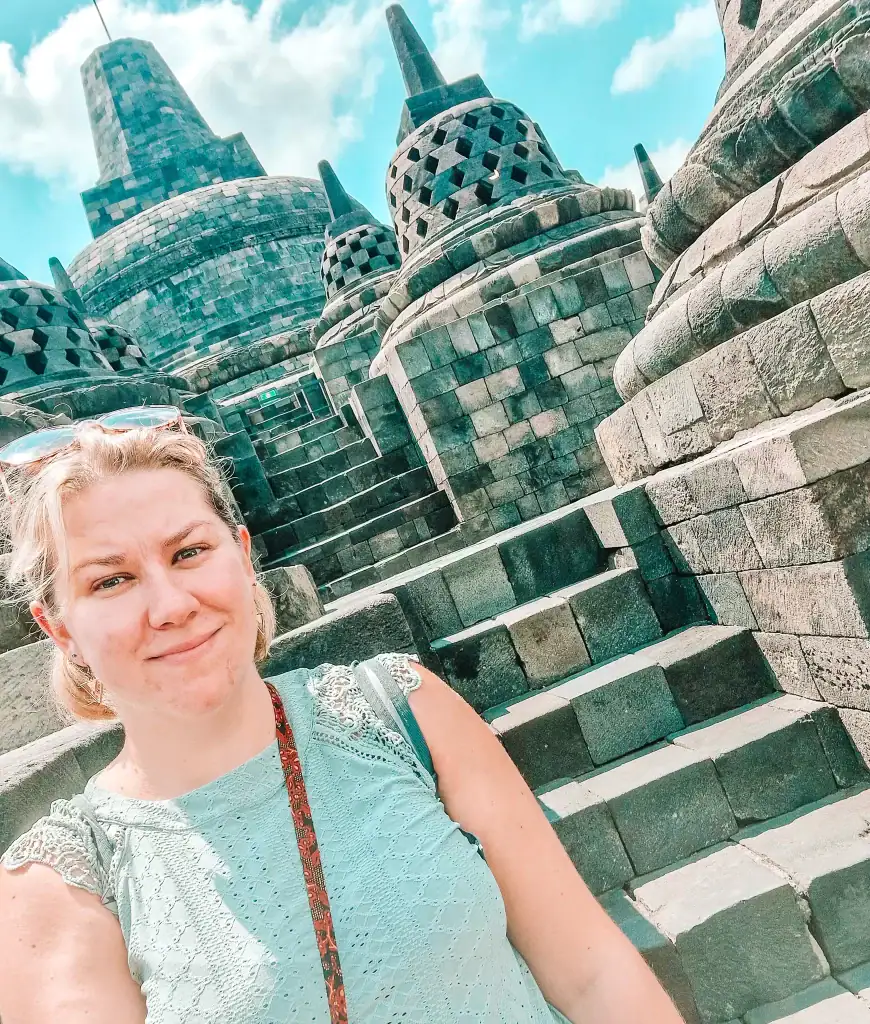
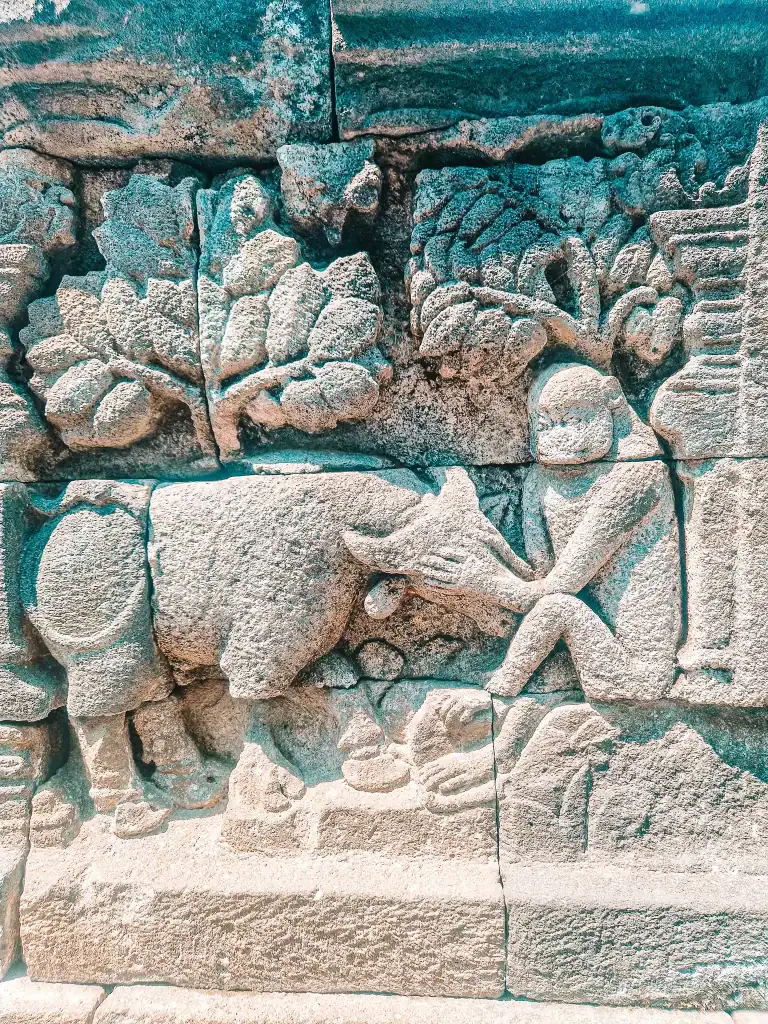
Our official guide was well-versed in Borobudur’s significance and history, and spoke fluent English. As we toured the monument, he explained different murals to us, as well as talking us through the history of the site.
What to Expect at Borobudur
When you arrive and go through the ticketing process you will be given a token with your tour number on it. Our driver/guide went through the ticketing process for us, which I was extremely grateful for as it was crowded and confusing – this is one reason I recommend taking a guided tour including Prambanan.
Next is the shoe area, to collect the sandals that everyone visiting the monument must wear to avoid damaging the structure. You get to keep these shoes at the end, so no worries about sticking your feet in grotty used shoes. There is the opportunity to swap if your first size doesn’t fit, and you get a bag for your own shoes (I still use mine as a laundry bag). I have feet that are completely different sizes, so I was really glad that I was able to change the first pair I asked for!

Once you’ve got suitable shoes, you go to a seating area to wait for your timeslot. When your timeslot arrives, staff will call out each tour group by number. You’ll join your allocated guide and group of around 20 people. Your guide will walk you down towards the temple, explaining some of the history as you go.
Your guide will walk with you as you ascend Borobudur, stopping at different levels to explain the history, and tell some of the stories depicted in the stone carvings.
Once you’re at the highest level open to the public, you get free time to walk around. While the visit felt very crowded at the lower levels, once we got to this point it was really clear how much they’d limited the number of visitors, as it was easy to take pictures without other people. The results are stunning – it’s a beautiful monument.
The exit gauntlet
As your visit comes to an end, everyone has to descend by a certain time, as the next timeslot will arrive at the monument. You then walk back to your car/driver – be aware that not only is this a long walk, it’s through a seemingly-never ending alleyway of tourist stalls. Every time I thought it was over, there were more. Just brace yourself, you’ll get to the end eventually.
Needless to say, if you’re thirsty, this is a great chance to get a bottle of water, or to rehydrate with my favourite Pocari Sweat, one of the most popular electrolyte drinks in Asia.
Where should you stay if you’re visiting Borobudur?
The best place to stay to visit Borobudur is in central Yogyakarta. While there are hotels near the monument, srelatively little else in the area and it’s likely that you’ll feel quite cut off from anything else you might want to visit. Staying in Yogya gives you the chance to see other incredible sights within the city, like the beautiful Kraton (the Royal Palace of the Sultan of Yogyakarta) and the stunning Taman Sari (the Water Palace). I planned a two-day itinerary for Yogyakarta, which includes Borobudur and Prambanan, to help you make the most of your time.
If you do stay in Yogyakarta, I recommend staying around Jalan Prawirotaman. Try these options:
Otu Hostel had basic rooms but with everything I needed. The staff at this hostel were amazing – so friendly and helpful. The location is also great – down quiet backstreets but just off Jalan Prawirotaman. But the cherry on top is the pool – a beautiful spot to rest and relax, with bean bag chairs offering you a comfortable place to sit. I can’t recommend Otu highly enough.
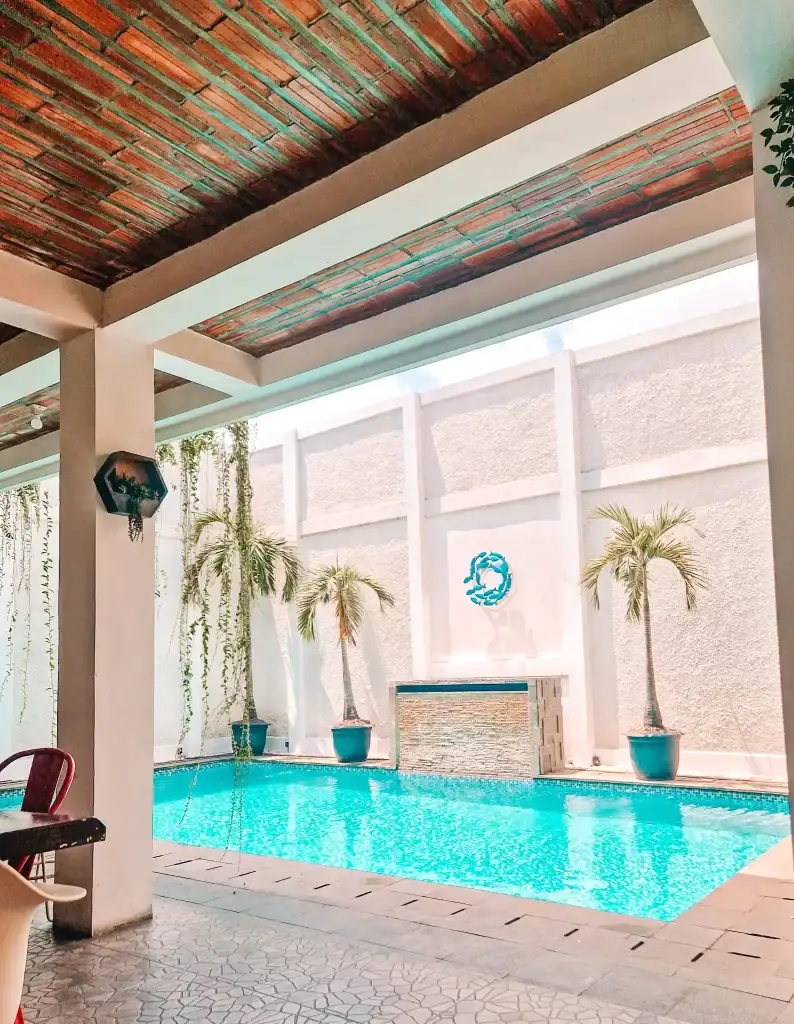
The Aloha Hotel, which has a score of 9.1 with over one thousand reviews, which is situated just by Jalan Prawirotaman.
If you’re looking for an alternative, many of the major hotel chains have hotels in Yogya, including the Sheraton and Hyatt. A more expensive/ high-end hostel option is Snooze, which has a huge number of positive reviews and is near the Kraton.
Frequently asked questions
Do you need to be physically fit to visit Borobudur?
I was really worried about how difficult it would be to climb Borobudur, particularly in the heat. However, while the steps are strenuous, you will take it slowly and ascend the levels over a period of time, as your guide tells you about each level. This makes it suitable for people at most fitness levels.
However, it’s not an accessible monument. The steps mean that it’s not suitable for wheelchair users. The steps are not evenly spaced and they’re often very steep, so if you have an injury that means you struggle with steps, you will need to take it very slowly.
Can you visit Borobudur without a guide?
In short, no. Your ticket price includes access to a guide. Access to the monument is strictly controlled, with clear timeslots that mean you have to exit at a certain time before the next group comes in. Apart from giving you interesting information about the monument, your guide is also responsible for making sure you leave Borobudur at the right time.
You can however travel to the monument independently, either via the Grab or Gojek,rideshare apps or through hiring a private driver. They will either drop you off at the monument or wait for you, depending on what you’ve negotiated.
Can I buy Borobudur tickets on the day?
No, Borobudur tickets should be booked in advance due to limited time slots, especially if you want to climb the temple.
Same-day tickets may only be available through certain local tour operators.
Are you allowed to climb to the top of Borobudur?
Borobudur is a temple that represents the different levels of spirituality required to ascend to Nirvana, with the top level representing Nirvana. As of the time of writing, the top level is closed to tourists. However, you do climb to one of the high levels of the monument, giving you an amazing view of lower levels and the surrounding countryside.
If you want to climb Borobudur, you will need to select a ‘Temple Structure Ticket’ which allows you to enter the temple itself. The ‘Temple Grounds Ticket’ only offers access to the areas surrounding the monument.
How much does a ticket to Borobudur cost?
A adult ticket to Borobudur costs 455,000 IDR, usually around $25 but current exchange rate is $27 (August 2025). A child ticket costs 305,000 (around $18) and is valid for children under 10 years old.
Tickets must be booked in advance.
Visiting Borobudur can take a bit of planning, but it’s absolutely worth it. With the right ticket, a little advance preparation, and a sense of curiosity, you’ll be rewarded with one of Southeast Asia’s most awe-inspiring historical sites. I hope this guide—based on my own visit in August 2024—helps you feel more prepared and excited for your trip.
Got questions or your own tips to share? Drop a comment below—I’d love to hear from you.
Em is the traveller behind Em’s Globetrotting Gems, a blog where she shares practical tips and personal insights from her adventures across the globe. During a six-week journey through Indonesia in 2024, she visited the majestic Borobudur temple in August, taking time to appreciate its history, scale, and beauty. Her blog is all about helping fellow travellers plan meaningful experiences with honest advice and a sense of curiosity.
✅ All photos featured on this blog are from my personal travel experiences. No stock images are used.