 Em
EmJust so you know: This post contains affiliate links. As an Amazon Associate, I earn from qualifying purchases. I may also earn a small commission if you book a tour, hotel, or buy something else through these links. It helps me keep this blog running and full of travel tips. Thanks for your support!
lanning 1 day itinerary for Kuala Lumpur and wondering how to make the most of your time? This guide is designed to help you experience the city’s top attractions, from its rich cultural heritage to its stunning modern skyline. Whether you’re stopping over on a Southeast Asia trip or it’s an integral part of your Malaysia itinerary, Kuala Lumpur offers a perfect mix of history, iconic landmarks, and incredible food – and you can see it all within a short timeframe.
All photos featured on this blog are from my personal travel experiences.
In just one day, you can visit the famous Batu Caves, marvel at the Petronas Towers, explore vibrant markets, and end the day with breathtaking city views from a rooftop bar. This guide ensures you won’t miss the must-see highlights of Kuala Lumpur, even with limited time.
I’ve also listed a few must-pack items here that made a big difference during my visit.
Is Kuala Lumpur worth visiting
Yes, Kuala Lumpur is worth visiting! As a modern, thriving city, and the hub for budget airline AirAsia, it’s likely any Southeast Asia itinerary will see you in Kuala Lumpur. Kuala Lumpur is particularly popular with people looking for the best of modern life, from rooftop bars to amazing shopping.
While Kuala Lumpur may not have as many historical and cultural attractions as neighbouring Singapore, it’s still worth a visit. This guide will talk you through the best things to do in Kuala Lumpur to make the most of a short visit to Malaysia’s capital city.
How many days in Kuala Lumpur
There are relatively few traditional tourist sites in Kuala Lumpur, and these can be seen in one (busy) day. I visited in August 2024 and was able to see everything I wanted across 24 hours, before heading on to the amazing and off-the-beaten track Sumatra.
However, Kuala Lumpur is one of the biggest cities in Southeast Asia, and if you’re there for longer, there is plenty more to do. If you’re into shopping—or looking for souvenirs at the end of your trip—Kuala Lumpur is the perfect place. Additionally, Kuala Lumpur offers plenty of opportunities to enjoy fabulous restaurants, rooftop pools, and bars. KL is also known for its luxury cinemas, where you can watch the latest blockbuster from a comfortable reclining bed.
You could also consider a day trip to beautiful Malacca, one of the original colonial cities, or Ipoh, a growing tourist destination with amazing street art and cave temples – I’ll put some links in the article for amazing guided tours to these great cities.
History of Kuala Lumpur
Kuala Lumpur was founded around 1857 at the confluence of the Gombak and Klang rivers. The name “Kuala Lumpur” translates to “muddy confluence” in Malay.
Unlike many of the other cities in the area, including Singapore and Penang, Kuala Lumpur was not founded by the British. Instead, the Selangor Royal Family hired prospectors to open a tin mine in the Klang valley.
In 1880, the British colonial administration moved the capital of Selangor from Klang to Kuala Lumpur, recognizing its strategic and economic importance. When the Federated Malay States were formed in 1896, Kuala Lumpur became the capital.
It was occupied by the Japanese during World War II and then played a big part in Malaysian independence. In 1957, Malaysia declared independence from British colonial rule in Merdeka Square.
If, like me, you learn about history through reading well-researched historical novels, check out my guide to books about Malaysia, including some set in Kuala Lumpur, or my wider guide to books about Southeast Asia that I’ve read and loved.
🧳 Quick Packing Essentials for KL
- Selfie stick – for those all important Petronas Tower shots
- Collapsible water bottle – Kuala Lumpur is HOT
- Foldable day pack – make sure everything is safely tucked away before the monkeys steal it at the Batu Caves
Your Kuala Lumpur Itinerary for 1 day
This useful interactive map will help you plan your day in Kuala Lumpur!
While I’ve set out a day focused on independent travel, if you want to make things easy and efficient, you could consider a guided tour. This highly-rated option takes you to the Batu Caves, Thean Hou and Petaling Street, helping you to make the most of your time in Kuala Lumpur.
Stop 1: Visit the iconic Batu Caves
Cost: Free entry to the main cave
Dress code: Batu is a religious site. You should dress appropriately, covering your shoulders and knees.
Transport: The caves are easily reachable via Kuala Lumpur’s public transport system:
- Use the blue KTM Seremban Line.
- Start from KL Sentral, or another station on the same line if there’s one nearer to you
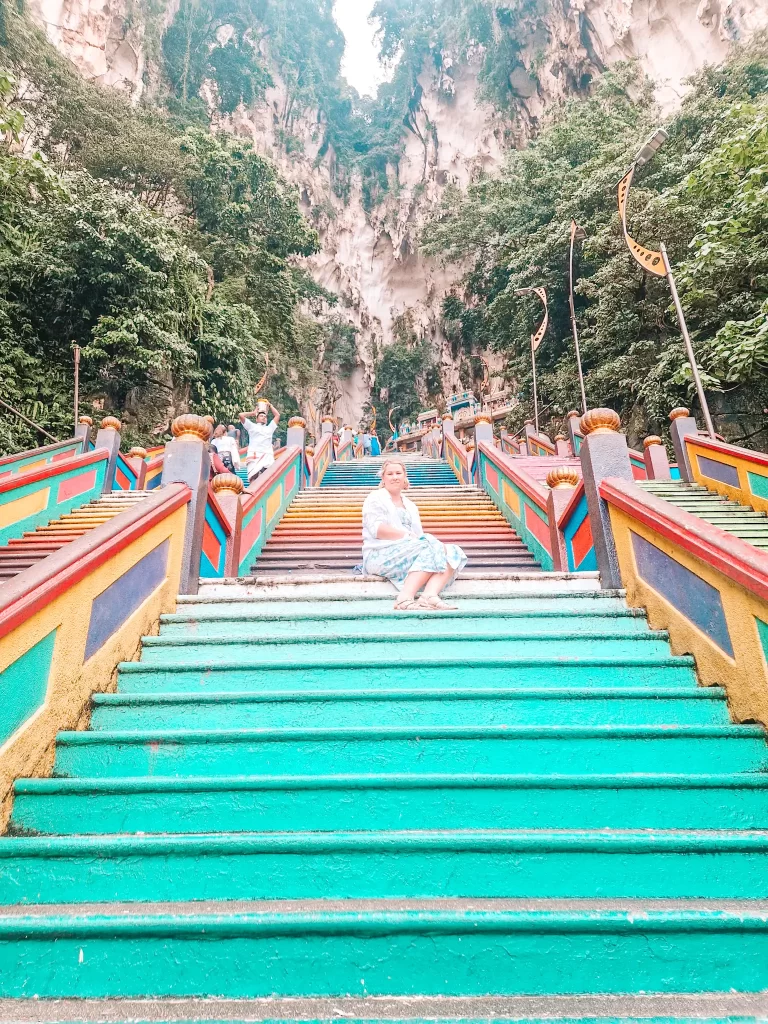
Start your day as early as possible at Kuala Lumpur’s most famous attraction, the Batu Caves. This fascinating destination is well worth the visit (and the climb) but gets busy later in the day. Add to that the increased heat as you climb those 250 stairs (consider bringing a collapsible water bottle – it will help keep you hydrated when you’re sweating buckets as you climb those stairs), plus the terrifying monkeys later in the day, and you’ll agree an early start is better!
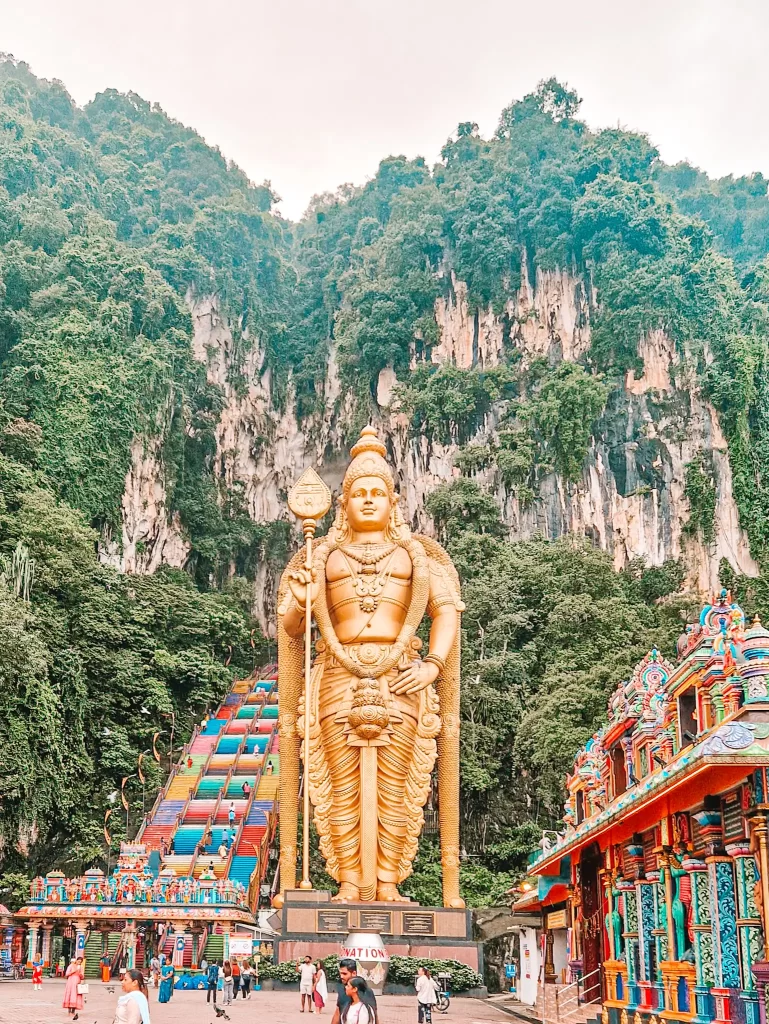
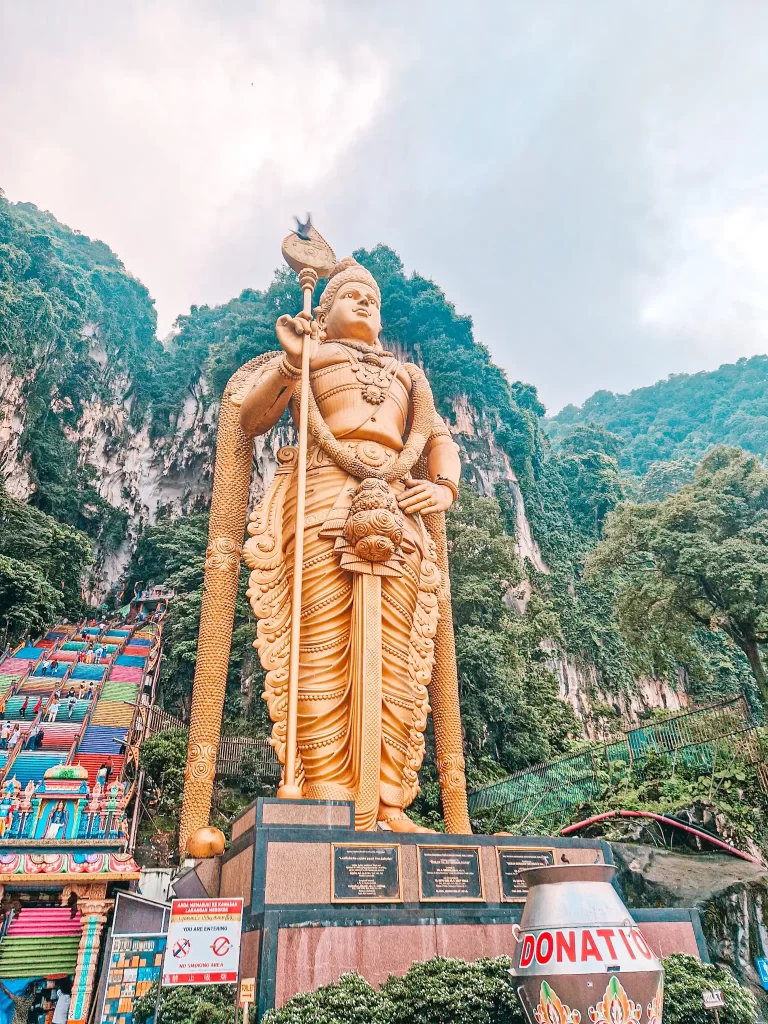
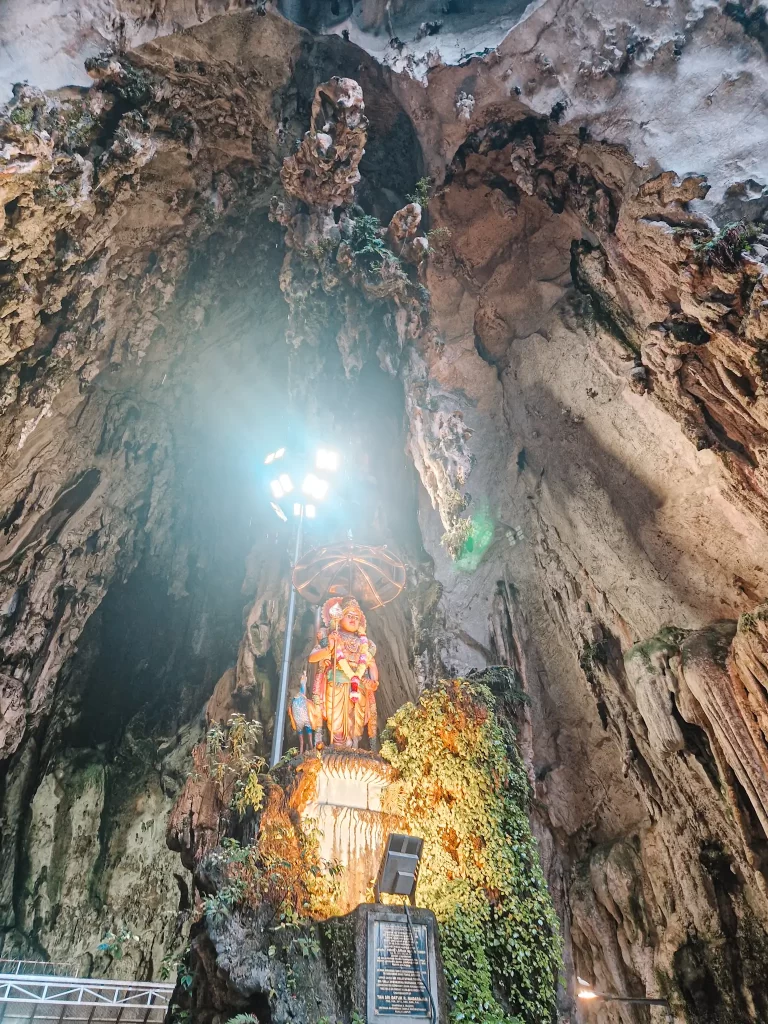
Batu became a religious site in 1891, a Hindu temple dedicated to Lord Murugan. The giant golden statue of Lord Murugan, one of the largest in the world, was constructed in 2006. The stairs received their rainbow hue in 2018 as part of a restoration project, and they’ve since become an Instagram sensation.
Most visitors explore the main temple cave, which is the best option for a 1-day itinerary. Within the main cave, there are a couple of different Hindu temples built into the rock. The biggest is not available to the public to enter, as it is reserved for worship.
You can also climb more stairs to very top of the cave, which is like a cenote and open to the air.
As there’s lots to know about visiting Batu, I created a more detailed guide, but if you’re as scared of the monkeys as I am, consider taking a small packable backpack. This highly-rated rucksack folds up small, but will fit any extra bits you normally carry outside your bag (like your phone or water bottle) so that they can be packed up as you climb the stairs – helping you to avoid the attention of any potential monkey-thieves.
Stop 2: Thean Hou Temple
Cost: Free
Transport: Take the blue KTM Seremban line back to MidValley. Then hop a Grab taxi to Thean Hou Temple, as it isn’t near any transport options, or walk 25+ minutes uphill.
Dress code: Thean Hou is a religious site. You should dress appropriately, covering your shoulders and knees.
Once you’ve visited the main cave temple, it’s time to move on to the next stop on your 1 day Kuala Lumpur itinerary.
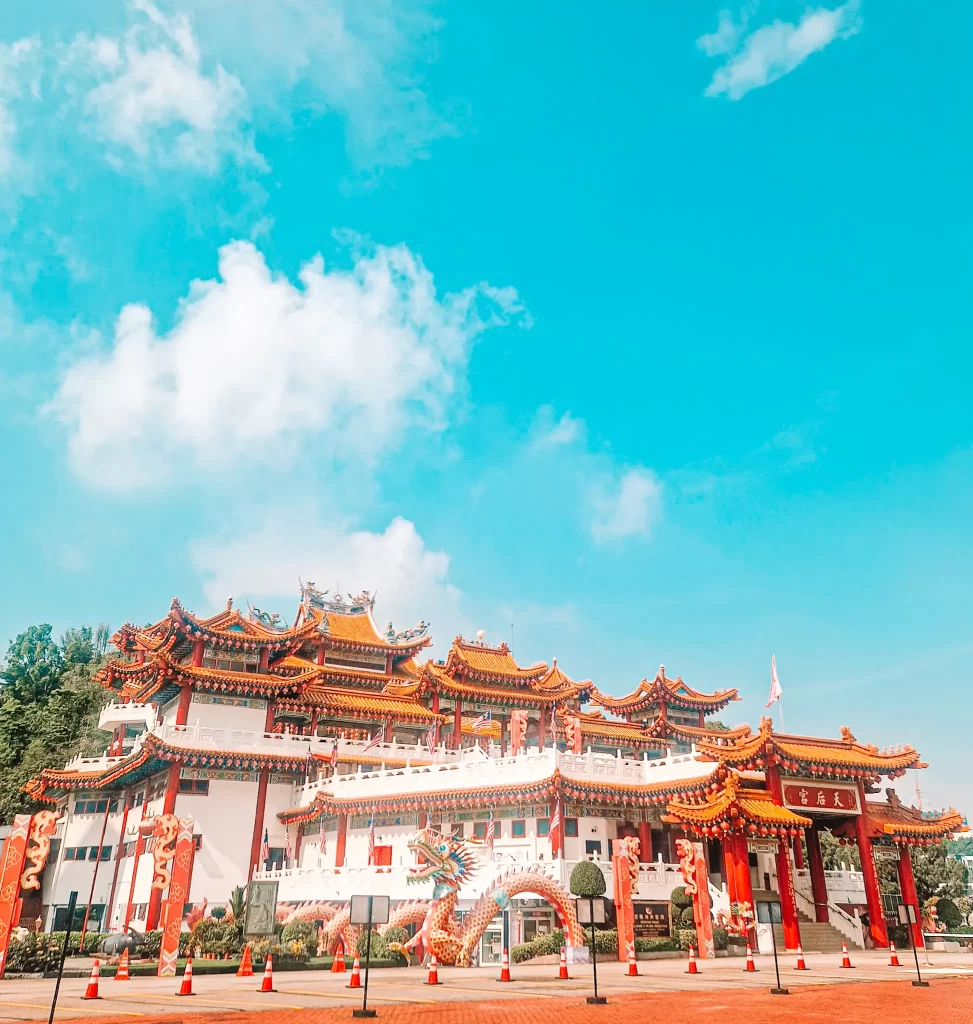
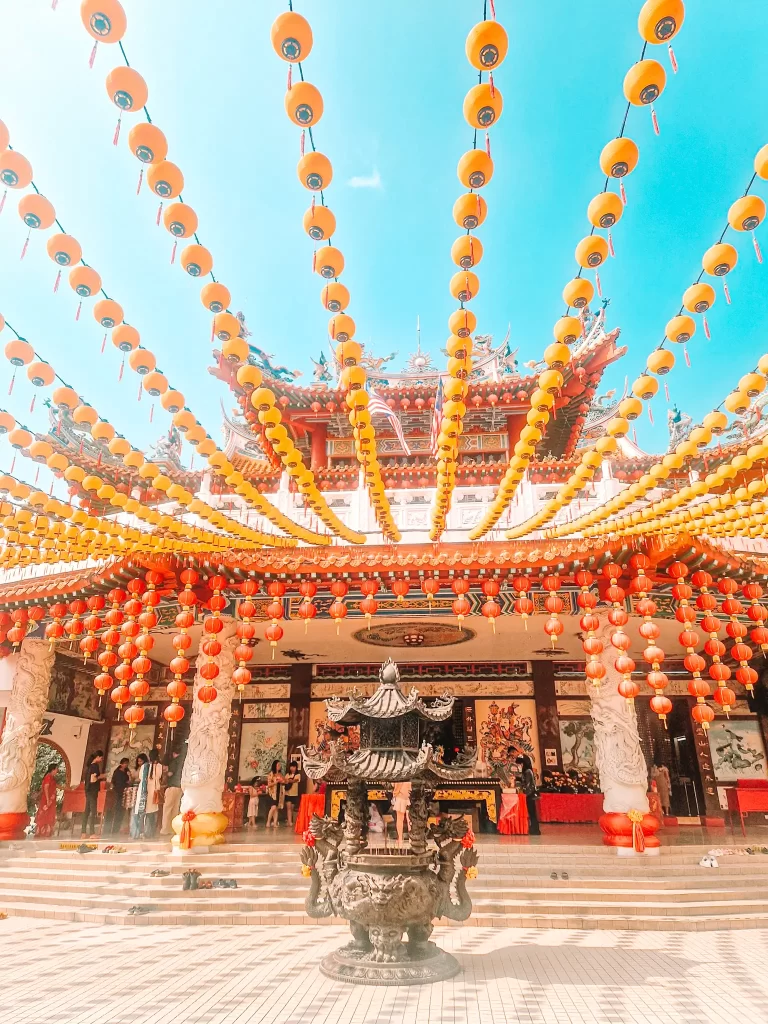
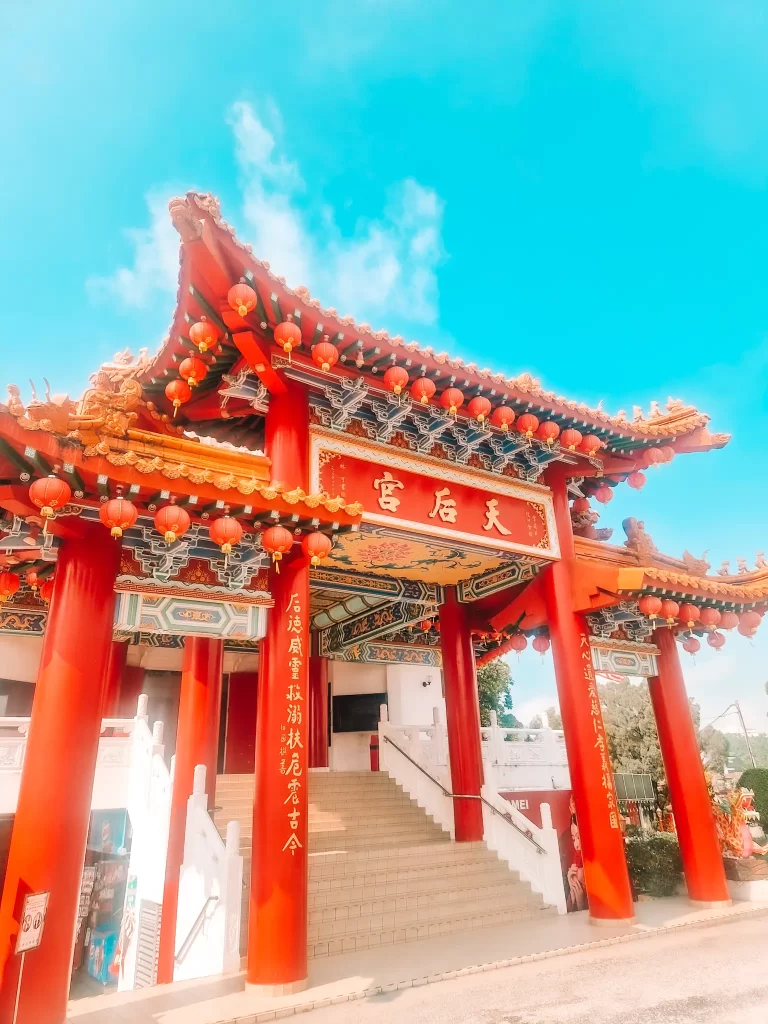
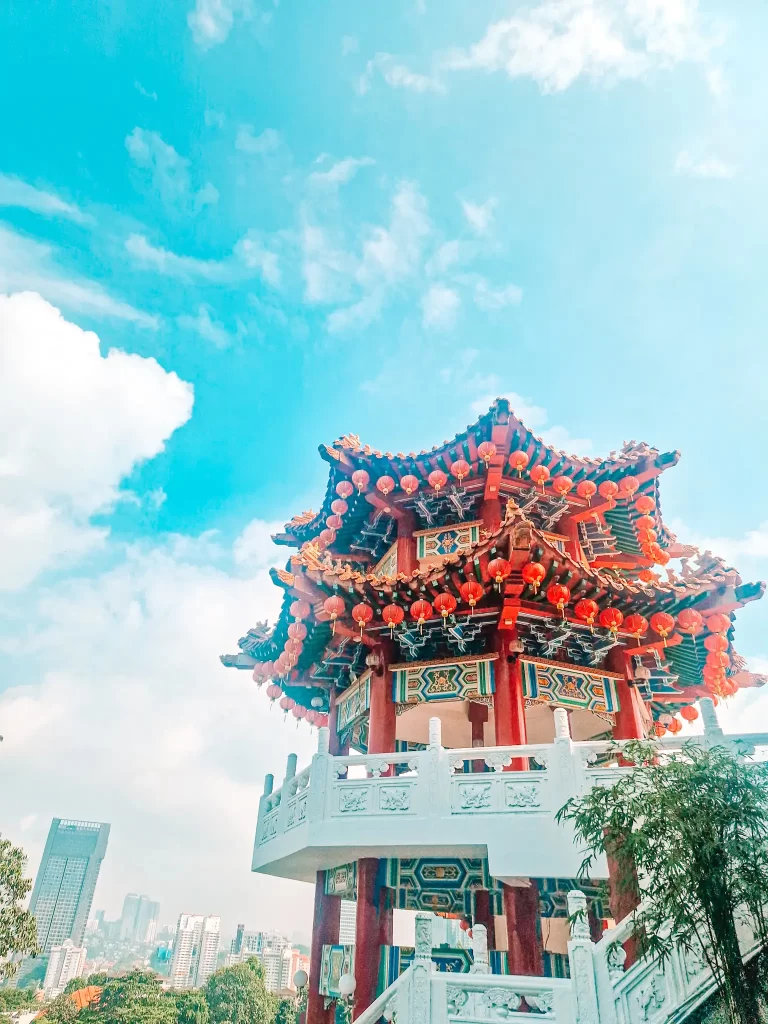
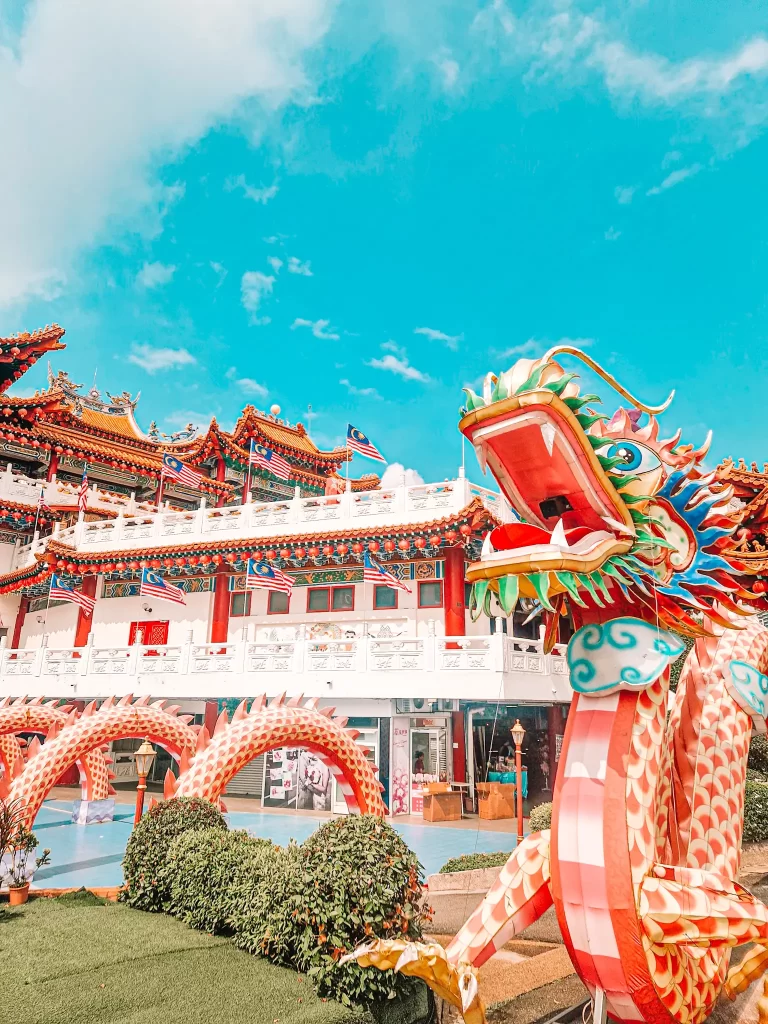
Thean Hou is one of the most beautiful modern temples I’ve visited in Asia. Built in the 1980s by Kuala Lumpur’s Hainanese community, the temple features multiple floors to explore. It’s also a popular wedding site for the Chinese population in Kuala Lumpur, and when you visit you’ll see why: it’s picture perfect.
When I visited, it was fairly quiet, with only a few tourists around. It provides a beautiful antidote to the chaos of the Batu Caves – not least because there are no terrifying monkeys! However, even without this, it feels serene – the view of the city from the hill is also amazing.
Stop 3: Petaling Street, the market hub of Kuala Lumpur
Cost: free to enter
Transport: Take a Grab directly to Petaling Street (10 minutes), or take a Grab/walk down the hill (about 25 minutes walk) to Bangsar to get the KJL Line to Pasar Seni.
Once you’ve drunk in the beauty and calm at Thean Hou, it’s time to switch gears. Head to bustling Petaling Street in central Kuala Lumpur. This is one of Kuala Lumpur’s oldest and most famous markets, as it has been active since the founding of the city in the mid-19th century. Petaling Street is the heart of Kuala Lumpur’s Chinatown, as it was originally a centre for Chinese tin miners.
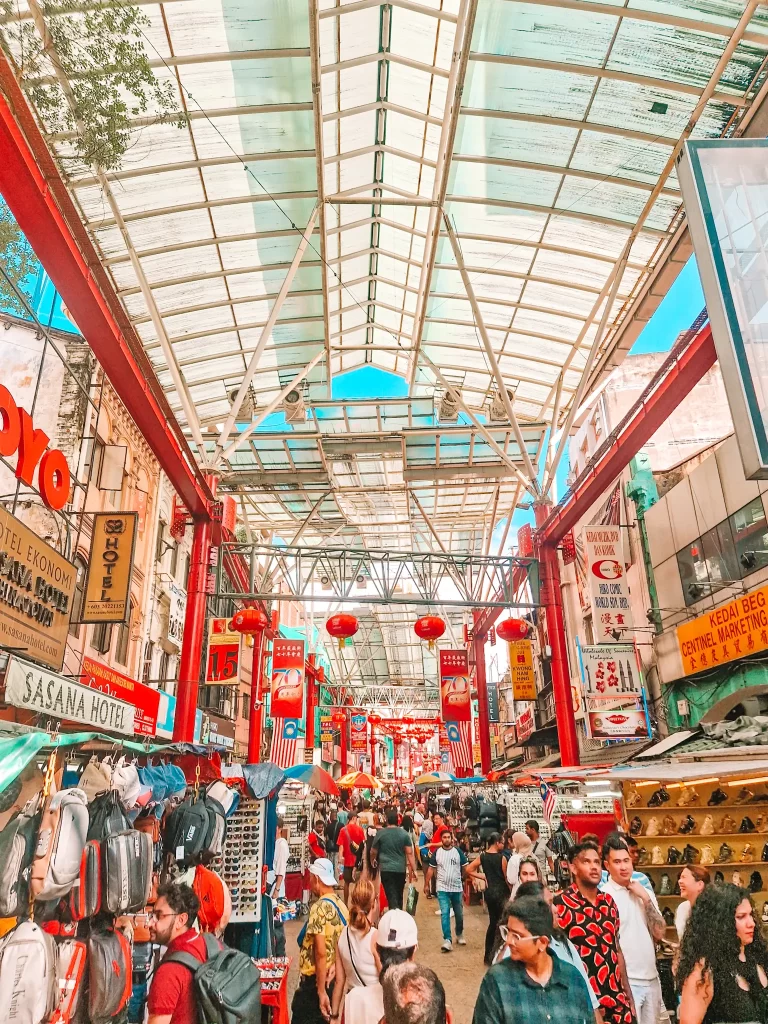
Petaling Street is always bustling, so it’s best to just embrace the energy. It’s famous for selling clothes, bags, watches and souvenirs, as well as tech gadgets. If you’re planning to shop, be prepared to haggle as the first price will be wildly inflated.
The shopping area of Petaling Street is also surrounded by food stalls and restaurants, and it’s a great place to try some of the Chinese specialties typical in Malaysia.
Maximising your time in Kuala Lumpur with top rated guided tours:
If you want to maximise your time in Kuala Lumpur and avoid using public transport, this highly rated tour takes you to the Batu Caves, Thean Hou and Petaling Street, as well as the beautiful National Mosque of Malaysia (Masjid Negara). You’ll also get a deep cultural insight into the two temples from a tour guide – while I love exploring cities on my own, having a guide brings so much more context to the experience.
If you’d rather skip the hassle of planning, this guided tour makes it all effortless—highly recommend it if you want to make the most of your 24 hours.
Stop 4: Sultan Abdul Samad Building
Cost: free
Transport: walk from Petaling Street (c.10 minutes)
Once you’ve spent all your money at Petaling Street, it’s time to do something free. Take a short walk to Independence Square to admire the iconic Sultan Abdul Samad Building. This is an especially important part of your Kuala Lumpur itinerary if you’re a history buff, or interested in the way that Southeast Asian countries gained their independence.
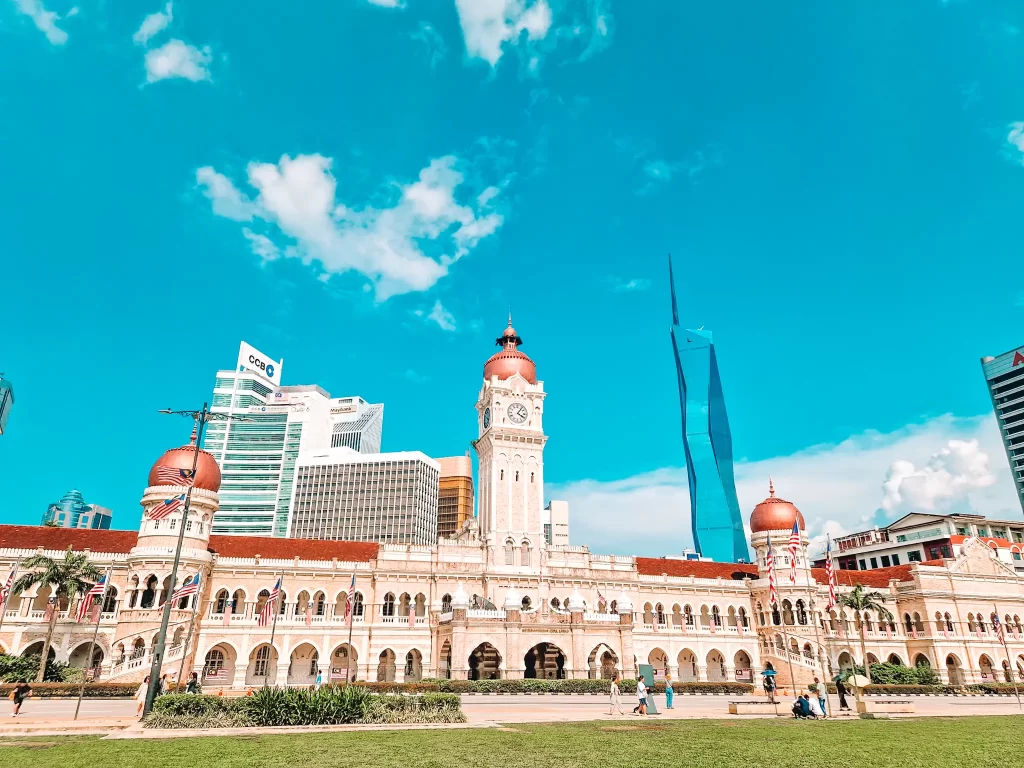
This spacious square is where the first Malaysian flag was raised at midnight on August 31st 1957, when Malaysia was liberated from British colonisation. Malaysians gather in the square each year to celebrate independence.
The Sultan Abdul Samad Building lines one side of this square. Built in the late 19th century, it was the original British government offices in Malaysia. In 1974, it was renamed after Sultan Abdul Samad, the reigning sultan of Selangor at the time when construction began. It’s a stunning building and well worth a visit.
Stop 5: Switch eras at the Petronas Towers
Cost: 90RM (£18/21e/$22) for admission to the Petronas Towers
Transport: Take the red KJL Line from Masjid Jamek to KLCC and then walk around or through the shopping mall to get to the front of the towers.
Having soaked up so much of Kuala Lumpur’s history, it’s time to move into a more modern era. Time to head over to the Petronas Towers!
Built in the 1990s, construction finished in 1996. From 1998 to 2004, they held the title of the world’s tallest buildings and remain the tallest twin towers today. They were built to mark Kuala Lumpur’s place as a major commercial and cultural city, and they are iconic!
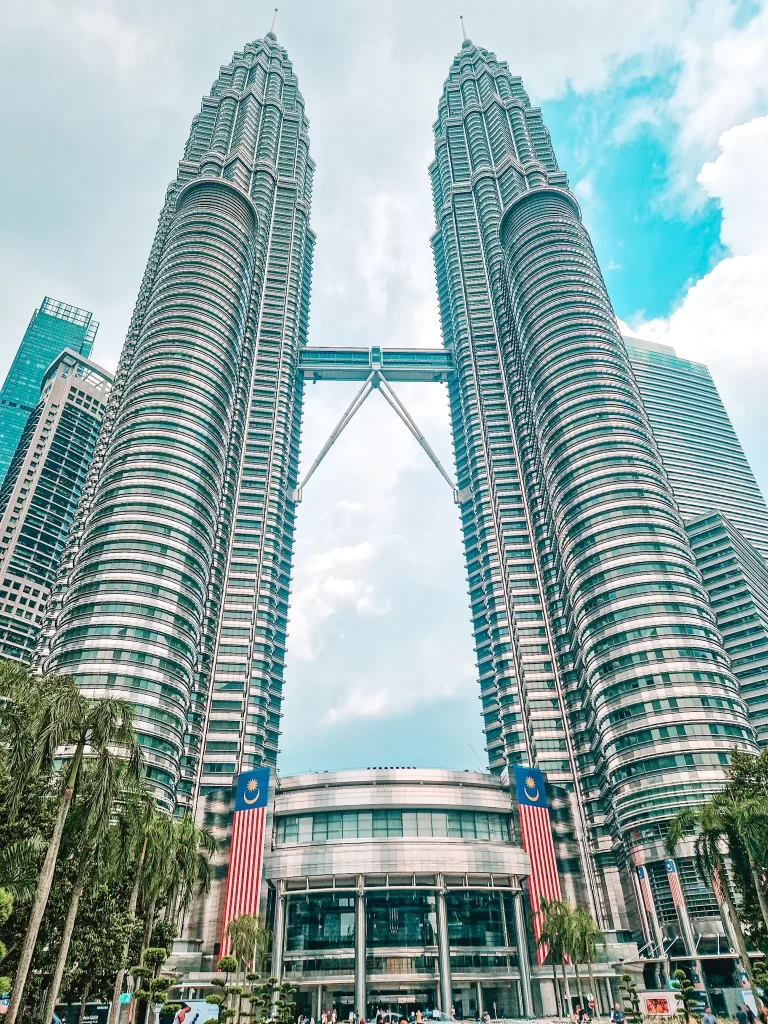
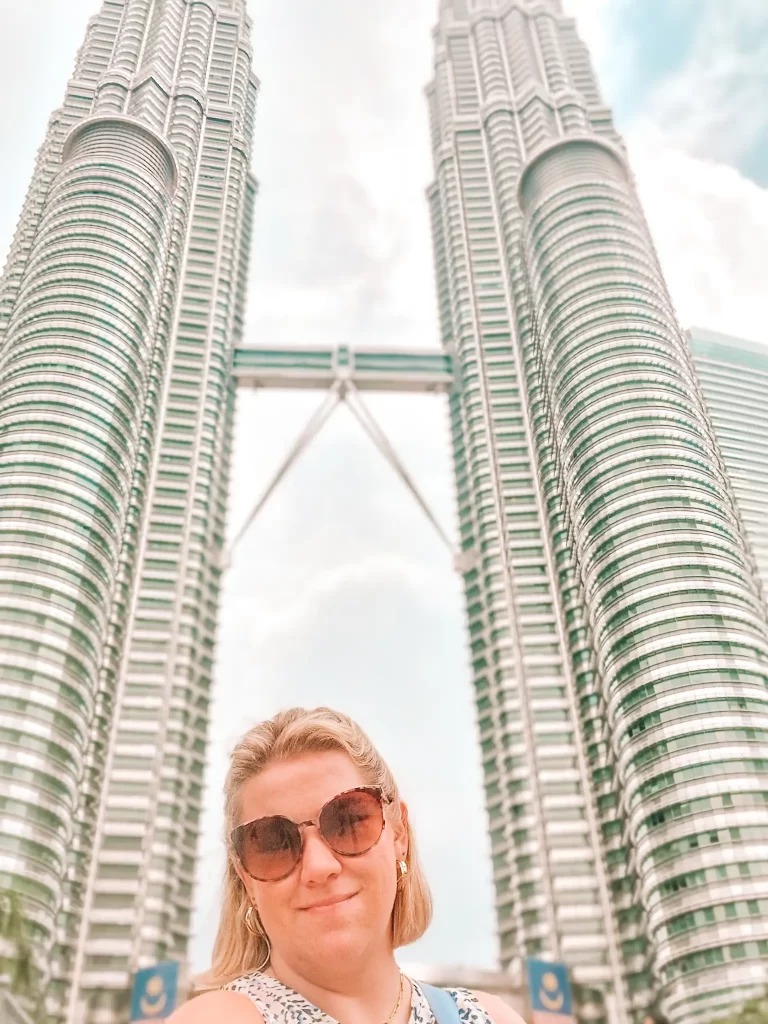
There are several ways to experience the towers. The easiest is to head to the bottom of them, where there is a plaza to take photos. There are a number of street vendors here who will happily take your photo for a small fee, or you can bring a selfie stick – this is the exact selfie stick I used to get the picture below, which helped me avoid paying for a photo!
You can also go up to the top of the Towers for a stunning view over Kuala Lumpur. Note that they are closed every other Monday, although open the rest of the week. As this is one of the most popular things to do in Kuala Lumpur, tickets tend to sell out for the day so do book in advance.
Take a selfie stick to get good pictures at the bottom of the Petronas Towers
Top Tip: directly next to the Petronas Towers is a huge shopping mall, Suria KLCC. This is a great opportunity to grab any essentials you might need (there’s even a Body Shop as well as the ubiquitous Uniqlo), or to take a shopping break if that’s your thing. If you’re considering whether to do your shopping in Kuala Lumpur or another point on your Malaysia itinerary, Kota Kinabalu in Borneo also has two big malls.
Stop 6: Take in stunning views of the city from a rooftop bar, the best way to relax after a long day
Cost: 100RM minimum spend to visit Sky 51 at EQ for a panoramic view of the Petronas Towers,
Notes: Book Sky 51 in advance
After such a busy day, it’s finally time to rest and grab a cocktail!
Visiting the Petronas Towers will obviously give you an amazing view over Kuala Lumpur, but not a great view of the Towers themselves. If you’re keen for an elevated view of the Towers, I was recommended EQ. Sky 51 at EQ has a minimum spend of 100RM which will get you a couple of drinks/some food/whatever you fancy. Unfortunately, I missed out because I didn’t book in advance!
There are many other rooftop bars to choose from in Kuala Lumpur, if you’re not fussed about being able to see the Petronas Towers close up. I didn’t end up visiting any – my friend was in KL, with her 5 year old and 3 year old, and they weren’t bringing a rooftop vibe (more the Suria KLCC Foodcourt, unfortunately). But this handy guide will help you to find the right one for you.
🛏️ Where to Stay in KL: Walkable & Worth It
Use this map to find central hotels near the Petronas Towers or KL Sentral.
Spending more time in Kuala Lumpur? Consider an amazing day trip
I think that one day in Kuala Lumpur is enough to see all the historic and cultural sites, so if you’re spending a second day in Malaysia’s capital you’ll need a different plan. One of the best ways to pass time in Kuala Lumpur is to relax – you can head to a rooftop pool or one of the amazing luxury cinemas.
However, if you’re keen to experience more of Malaysia, I recommend taking a day trip to one of the amazing heritage cities nearby. I visited both Malacca and Ipoh during my six weeks in Malaysia. They’re both amazing cities, and can be visited as a day trip from Kuala Lumpur.
I have full guides to both Ipoh and Malacca, but I’ve put a quick TL;DR below:
UNESCO-listed Malacca – Portuguese, Dutch and British colonial history in one of Asia’s most unusual towns
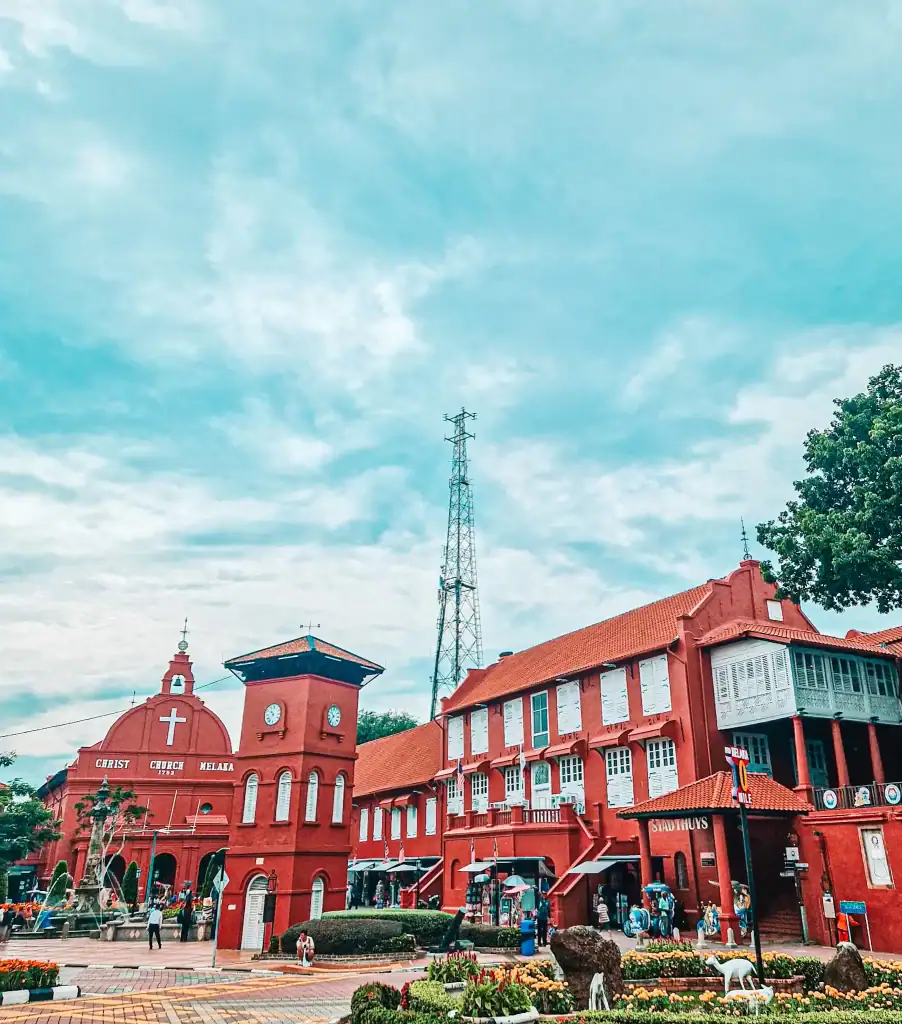
Malacca is most famous for it’s stunning and unusual red square, which is full of Dutch colonial buildings that are unlike anything else I’ve seen in Asia. In addition, Malacca has incredible Chinese heritage, including the gorgeous Cheng Hoon Teng Temple, and delicious food. This highly rated day trip will whisk you from modern KL to colonial Malacca, helping you step back in time efficiently in your short time in Malaysia’s capital.
👉 I didn’t take this exact tour to Malacca, but it’s highly rated, covers everything I’d recommend, and if I were planning a day trip from KL to Malacca, this is the one I’d book.
Historic Ipoh – visit magnificent cave temples and heritage coffee in this underrated town
Ipoh has recently been nominated as Asia’s most underrated city by CNN – take this day trip and get there before the crowds discover it. On this efficient day tour, you’ll explore Ipoh’s British colonial history, taste the city’s iconic white coffee, and most importantly – visit Ipoh’s incredible cave temples. Cut into natural caves in Ipoh’s limestone karsts, these temples are active sites of worship, but also serene and unique tourist attractions.
👉 I visited Ipoh independently, but this day tour includes all the must-see sights—especially the incredible cave temples—and is exactly what I’d book if I wanted a seamless experience next time.
Em’s recommendation: If you only have time for one, I think Malacca has more to offer and makes a better day trip from Kuala Lumpur. It’s nearer, meaning that you spend less time travelling, and the red Dutch buildings are like nothing else I’ve seen.
How to get around in Kuala Lumpur
Public transport
Kuala Lumpur has a substantial public transport system you can use to travel around the city. The easiest way to pay for this is to use contactless payment. You can also get a Touch’n’Go card (similar to London’s Oyster cards). This is an excellent guide to using a Touch’n’Go card if that’s your preferred option.
Grab
Grab is a ridesharing app, and essentially the same version of Uber – it’s even built on what appears to be the same technology. It’s incredibly easy to use, and I particularly love that it provides safety features and a set fare, removing the need to haggle.
Grab is widely used in Kuala Lumpur and is much cheaper than taxis in Europe. Even if you’re a dedicated public transport afficionado (like this Londoner), you’ll probably want to use it at some point. For example, the walk up to the Thean Hou Temple from the nearest metro station is very steep and not quick – given the heat, I hopped in a Grab.
Top tip: Neither Grab nor Google Maps can fully cope with KL’s intense traffic. I found that arrival times for Grab drivers were regularly longer than stated, and journeys took longer. Allow extra time in all your trips by car!
Frequently asked questions
How to get to Kuala Lumpur by Air
Most visitors arrive in Kuala Lumpur via its excellent airport – Kuala Lumpur International Airport (KLIA). Flights arrive from all over Asia, including other popular Southeast Asia destinations like Kota Kinabalu and Sa Borneo, Bangkok, Hanoi and Bali, as well as almost all major destinations in Europe. KLIA has two terminals:
KLIA 1 hosts the big name airlines, including long haul flights.
KLIA 2 focuses on AirAsia and other budget airlines, for example Indonesia’s Citilink.
Both terminals have excellent facilities, including a wide range of shops and restaurants.
How to get from Kuala Lumpur International Airport to the city centre
Like many airports, KLIA is located away from the main city. The quickest way to get from KLIA to central Kuala Lumpur is via the KLIA Ekspres train, which takes about 30 minutes. This has two options:
✔ KLIA Ekspres, non-stop from KLIA to the city centre,
✔ KLIA Transit, which has more stops
For me, the price difference between KLIA Ekspres and KLIA Transit is negligible, and will be for most western tourists, so it’s easiest to take the non-stop option. There is a small discount for buying online in advance. You buy a ticket for the day, not a specific time, so there’s no worry if your flight is late.
The trains take you into KL Sentral, the main station in Kuala Lumpur. It’s quick and easy to get a Grab to your hotel.
Buses from KLIA to central Kuala Lumpur are cheaper than the KLIA Ekspres, but will take significantly longer due to KL’s terrible traffic – around 1 to 1.5 hours depending on traffic and the time of day.
How to get to Kuala Lumpur by train
Malaysia has a modern, punctual train network that connects Kuala Lumpur to other parts of the country, including Ipoh and Butterworth/Penang. Most trains arrive in the central and modern KL Sentral station, which is well connected by public transport and Grab.
If you’re travelling around Malaysia, I recommend choosing trains over buses whenever possible (mainly because they have toilets). Get your tickets from the official website, or I used Busonlineticket – I travelled from Ipoh to Kuala Lumpur by train and recommend the experience.
Which station in Kuala Lumpur do most trains arrive at?
If you are planning on getting the train, make sure you book your ticket to KL Sentral. The stop before KL Sentral is, confusingly, named Kuala Lumpur (the old terminal). If you book your ticket to ‘Kuala Lumpur’, you will not be able to pass the barriers at KL Sentral!
Luckily, the staff seemed to be used to this happening. Along with another woman who had made the same mistake, I was not fined but taken to pay the difference. But still a risk if you get a staff member who isn’t helpful – make sure you book to KL Sentral!
How to arrive in Kuala Lumpur by bus
Many long distance buses in Kuala Lumpur also arrive into KL Sentral. However, some buses arrive into a different bus terminal, TBS (Terminal Bersepadu Selatan), a bit further out of the city. For example, a popular day trip from KL is Malacca – this is where buses to Malacca depart and arrive.
The easiest way to get to TBS is again via Grab. You can also take various train routes to the nearby Bandar Tasik Selatan station, and then walk to TBS. This includes KLIA Transit (mentioned above from the airport), the LRT system and the KTM Kommuter trains.
TBS is a modern bus terminal with a few useful convenience stores, aircon and toilets. It operates on a gate system like an airport – you have to swipe to get into the departure area. If you are leaving KL via TBS and you’ve bought your ticket online, you’ll have to swap it for a boarding pass before you can get your bus.
Are there any specific things I should pack for Kuala Lumpur to make the most of the city?
Yes – there are a few things that will make your time in Kuala Lumpur easier (and help reduce the risk of monkey theft, always important). These are my recommendations:
✔ Selfie stick – for those all important Petronas Tower shots
✔ Collapsible water bottle – Kuala Lumpur is HOT
✔ Foldable day pack – make sure everything is safely tucked away before the monkeys steal it at the Batu Caves
Even with just 24 hours in Malaysia’s capital, this 1-day itinerary for Kuala Lumpur allows you to experience the city’s best sights, from sacred temples and bustling markets to its glittering skyline. While KL may not have as many tourist attractions as some neighboring cities, its mix of culture, history, and modern luxury makes it a fantastic stopover or short city break. Whether you’re soaking in views from the Petronas Towers, navigating the lively streets of Chinatown, or unwinding at a rooftop bar, you’ll leave Kuala Lumpur with unforgettable memories—and maybe even a reason to return for a longer stay.
Don’t forget to grab this KL day tour—it’s the one I’d choose if I wanted to maximise my time in KL.
Em is the traveller behind Em’s Globetrotting Gems, a blog where she shares practical travel tips and honest insights from her journeys around the world. During a six-week adventure through Malaysia, she spent time exploring the dynamic city of Kuala Lumpur — even managing to pack a lot into just one day. Her guides are designed to help fellow travellers make the most of every destination, no matter how short the stay.
✅ All photos featured on this blog are from my personal travel experiences. No stock images are used.


[…] Wondering what to visit after the Batu caves? Check out my blog on The most amazing things to do in Kuala Lumpur! […]
[…] The Most Amazing Things to do in Kuala Lumpur […]
[…] There are also a variety of train and bus options from across Malaysia, including Kuala Lumpur […]
[…] is likely to include a connection to Kuala Lumpur, where I recommend spending a day to enjoy the best of Malaysia’s capital city, including the incredible Batu Caves. There are also direct flights to Sandakan from Kota Kinabalu, […]