
 Em
EmJust so you know: This post contains affiliate links. As an Amazon Associate, I earn from qualifying purchases. I may also earn a small commission if you book a tour, hotel, or buy something else through these links. It helps me keep this blog running and full of travel tips. Thanks for your support!
Wondering how to make the most of just 2 days in Yogyakarta? You’re not alone—this vibrant city is packed with ancient wonders, cultural experiences, and hidden gems, and squeezing it all into a short trip can feel overwhelming. Between figuring out how early to visit Borobudur, which temples are truly worth your time, and how to navigate transportation, planning a short Yogyakarta itinerary takes more than just guesswork.
All photos featured on this blog are from my personal travel experiences.
When I visited in August 2024, I faced the same questions—how do you prioritize the highlights without burning out? What’s the easiest way to book tickets for Borobudur, especially with changing regulations? After experiencing the city first-hand, I’ve put together this practical 2-day itinerary to help you confidently plan your own adventure, avoid common pitfalls, and get the most cultural richness out of every hour.
Let’s dive in to your Yogyakarta 2 day itinerary —so you can spend less time scrolling and more time exploring.
Is Yogyakarta worth visiting?
I absolutely loved this small, busy city. Apart from the obvious draw of Borobudur and Prambanan, the two UNESCO World Heritage Sites nearby, there’s plenty to do in Yogyakarta itself.
Yogya is unique in Indonesia because it’s a ‘Special Region’ or Sultanate, meaning it’s the only part of the country still ruled by a Sultan. The Yogya Sultanate was formed in 1755 and survived Dutch colonisation. The Sultanate was supportive of the Indonesian fight for independence following the Second World War, and Yogya even briefly became the Indonesian capital while Jakarta was held by the Dutch. In recognition of this, the region was given special permission in 1950 to remain a Sultanate. I found this glimpse into Javanese history fascinating, and one of the best things to do in Yogyakarta is to visit the Kraton, or Royal Palace, where the current Sultan still lives.
Yogyakarta also has a thriving middle class and lots of students (it was ranked the 6th best city for students in Southeast Asia), which means there’s lots of good coffee shops and restaurants to keep you well fed. Finally, I had a glorious spa experience in Yogya – so there’s plenty of opportunity to relax as well.
Wondering if Yogyakarta and Java are the right fit compared to Bali, or even Sumatra? I prepared the ultimate guide to help you make the right choice for your adventure.
Find your perfect hotel in Yogyakarta:
Day 1 of your 2 Day Yogyakarta Itinerary: Explore Yogyakarta’s cultural heart
Day 1 of your two day Yogyakarta itinerary is your chance to really get to know Jogya itself. Assuming you’ve arrived the night before (or overnight via the night trains), I would start bright and early before the heat of the day.
Use this interactive map to help plan your perfect Jogya itinerary:
Stop 1: Kraton – Yogyakarta’s Royal Palace
Ticket cost: $1.50 per person (note that ticketing information comes from other tour guides and may change. There is no official source that I can find).
Guided tour: $3 for group (when I visited in August 2024)
The current Sultan still lives in the Kraton Palace in central Yogyakarta, which should be your first stop of the day. Construction started in 1755 for the first Sultan, but much of the palace was destroyed due to an earthquake in 1876. It was rebuilt by Sultan Hamengkubuwono VIII in the early 20th century and the Palace still plays an important ceremonial role today.
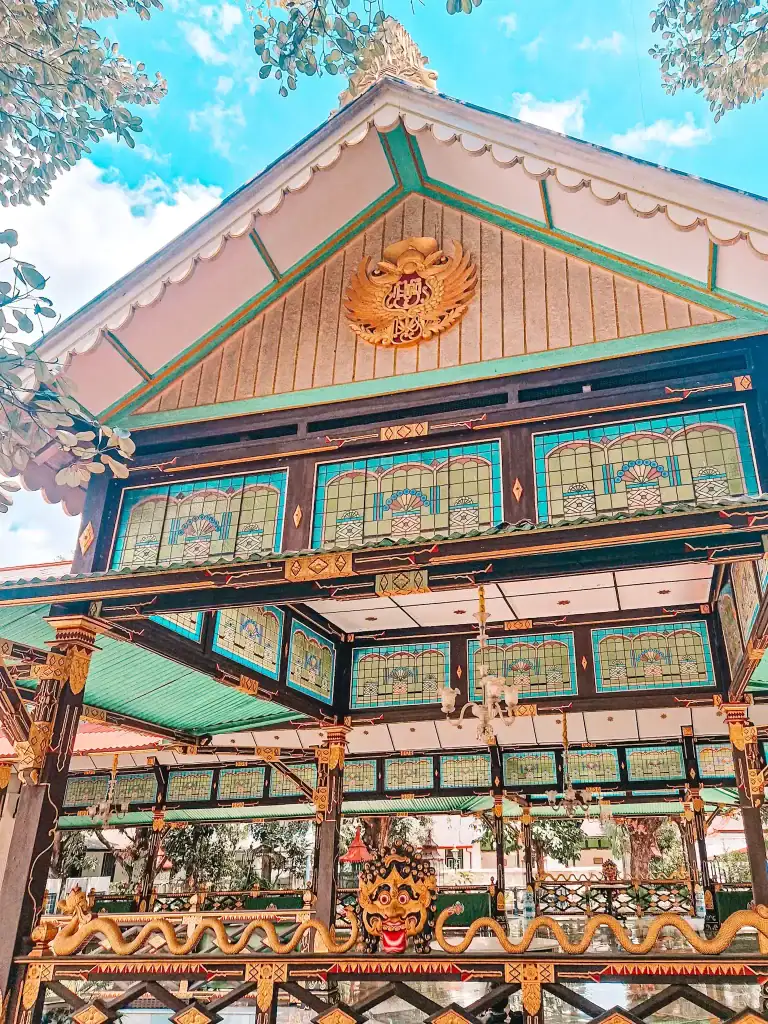
The main part of the Kraton was closed for renovation when I visited in August 2024, but there was still plenty to visit. The part of the palace that’s still open is beautiful, and very interesting. As with many historical sites, like Angkor Wat in Cambodia, or the Hue Imperial Palace and the My Son areological ruins in Vietnam, It’s definitely worth hiring a guide to take you around. Our guide was from the Sultan’s Guard, dressed in his ceremonial uniform and toting his arsenic covered blade.
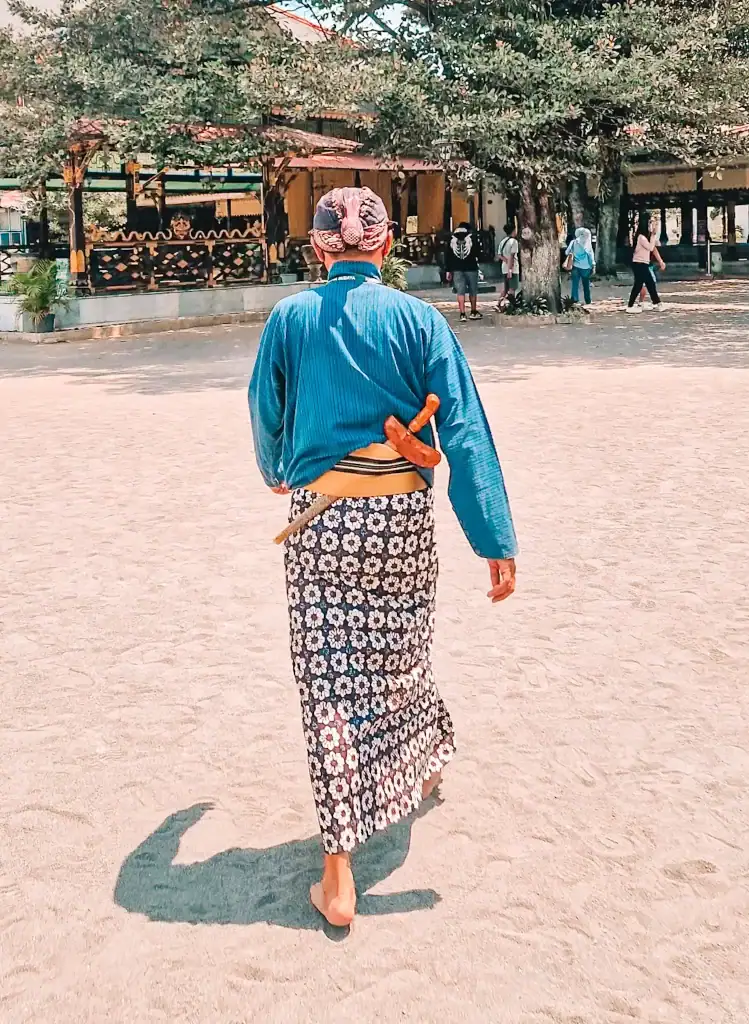
I split a tour with two other travellers and it cost us 50k ($3) for the tour. Our guide was extremely knowledgeable and filled us in on the Sultan and his daughters, all of whom have married commoners. It was a really good way to understand the unique way Yogyakarta fits into Java and Indonesia as a whole.
Stop 2: Taman Sari, the Water Palace
Ticket cost: $1.50 per person (note that ticketing information comes from Tripadvisor and may change. There is no official source that I can find).
Guide for tour: $6 for group (when I visited in August 2024)
Once you’ve taken in the history of the Kraton, it’s time to head to Taman Sari, the Water Palace or Water Castle. Built around 1759, by the same Sultan who built the Kraton, the palace was intended as a place to rest and retreat. As soon as you enter you can see why. It’s an Instagram-perfect site with multiple pools and places to pause for reflection (though it’s unlikely you’ll be doing any of that given the number of visitors). Make sure you take your camera and selfie stick, as the site is absolutely gorgeous.
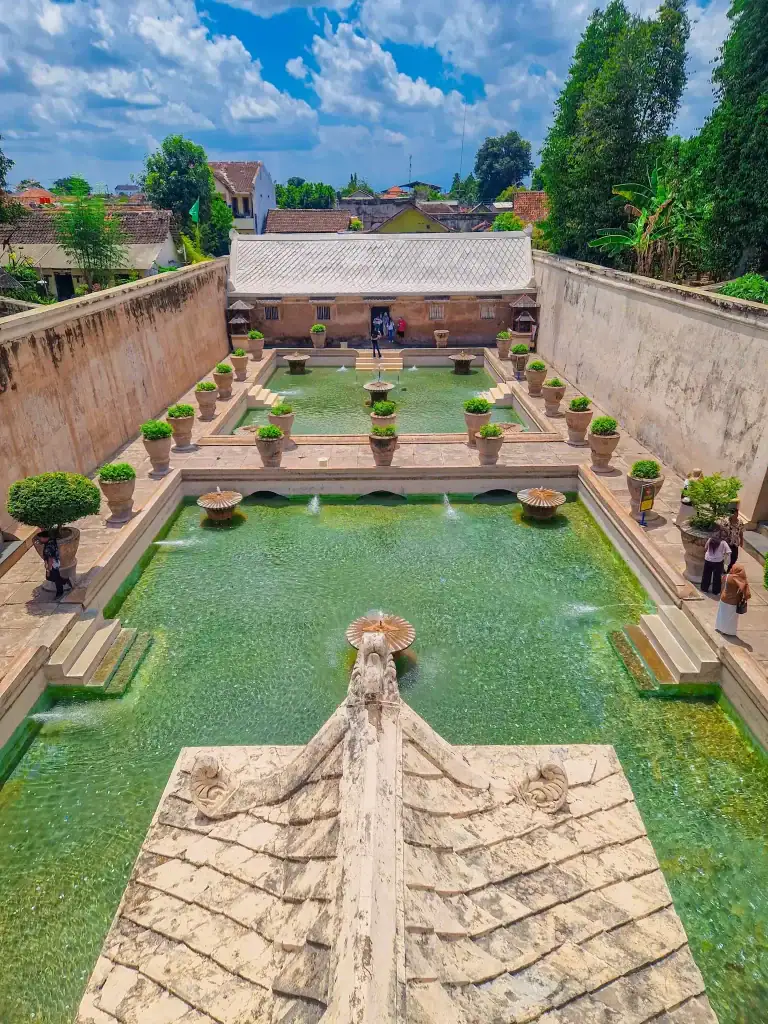
While the original site is huge, with around 59 buildings, only the bathing complex is visitable today. After the reign of the first Sultan, maintenance of the site became sporadic due to the complexity of the water features. The Palace fell out of use after damage from an earthquake in 1867, and was eventually occupied by squatters. Since the 1970s, efforts have been made to restore the site, but only the bathing complex has been fully restored.
I didn’t pay for a guide at Taman Sari as 100k felt steep, especially compared to the Kraton. But if you are a group, it would definitely be worth it to understand the history of the site.
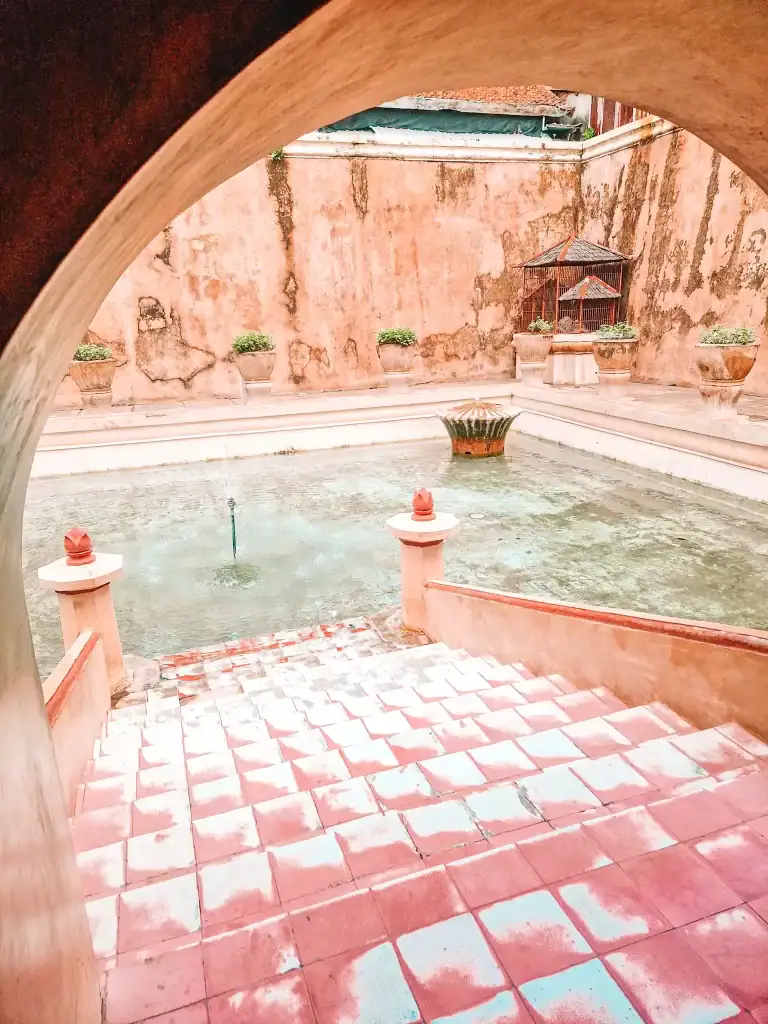
Taman Sari is about a 15 minute walk from the Kraton. If it’s too hot to walk, you can also take a becak (the local tuktuks), with plenty waiting outside, or hop in a Grab.
How to avoid scams in Yogyakarta
When I arrived at the closed part of the Kraton, I was taken to Batik workshop by a friendly helper on the palace doors – not quite a scam as I didn’t pay anything, but he was definitely on commission. If you don’t fancy the Batik workshop, don’t select ‘main gate’ if you take a Grab or Gojek, as this is the closed area. Head to the entrance by Rotowijayan Mosque instead.

After the Kraton, I walked to Taman Sari. I was joined on my walk by another friendly man who was clearly trying to encourage me to visit his friend’s coffee shop. I never felt threatened or worried by this man, but if you don’t like someone walking with you like this, politely but firmly insist that you’d like to walk alone.
To avoid these scams, and the hassle of negotiating with a guide at the entrances, consider booking a guided tour in advance:
Lunch break: Roaster and Bear
Once you’ve walked around the Kraton and Tama Sari, you’ll be ready for a break and food! Get a Grab to one of Yogyakarta’s most unique restaurants, Roaster and Bear.

This western-style restaurant is located in a hotel near the top of Malioboro, your next stop. It has an excellent menu with a wide variety of delicious and beautifully presented Western and Asian dishes. However, the real draw is the BEARS.
I found this restaurant on various Yogya guides well in advance of my trip. Their two giant bears feature heavily in their social media presence, and once you’re in the restaurant you’re free to take selfies with them (as lots of people were when I was there). The restaurant is also beautifully decorated with a bear theme, and you can even order a bear-themed coffee.

The service here was incredibly friendly – once I explained I’d been following them on social media, they even brought me a complimentary desert plate!
Stop 3: Malioboro
Once you’ve spent enough time with the bears, head to Malioboro street. This is the thriving main street in Yogya with a variety of shops including a medium sized mall. Walk down the street to Beringharjo Market at the far end. Originally an open air trading space, the permanent market building was built in 1926.
This huge market is absolutely not what I was expecting – it’s not touristy at all, but rather an insight into how people in Yogya shop. There’s a huge variety of items on sale and it’s worth taking a quick walk around to marvel at everything available.
Stop 4: Relaxation
Your second day in Yogya is going to be busy, so take this opportunity to relax before an early start tomorrow. There are a lots of options to relax in Yogya:
- Spend time by the pool – lots of hotels and even hostels in Yogya have pools, so this is a great opportunity to chill out in a beautiful spot
- Head to one of the many coffee shops on Jalan Prawirotaman, the main tourist street. Some of my favourites were Ministry of Coffee (great coffee and ultra-modern chill out vibes), Opera (incredible pastries) and Adam’s Coffee and Pastry (good for working)
- Try a delicious gelato at Tempo Gelato – a hugely popular spot with young Yogyans, who flock there in the evenings
- Get a massage or spa treatment – there are so many on offer! I went with a full spa experience at Saarah Day Spa and can thoroughly recommend it, but it is at the higher end of the price range. Shop around if you want a cheaper alternative
Alternatively, if you fancy a more active evening, head down to Alun-Alun to check out the famous neon cars! You could also consider one of this highly rated guided night time tour:
Day 2 of your Yogyakarta itinerary: Visit the UNESCO Heritage Sites of Borobudur and Prambanan,
Today is the big day! Visiting Borobudur is not straightforward, so check out my full guide with everything you need to know before you go.
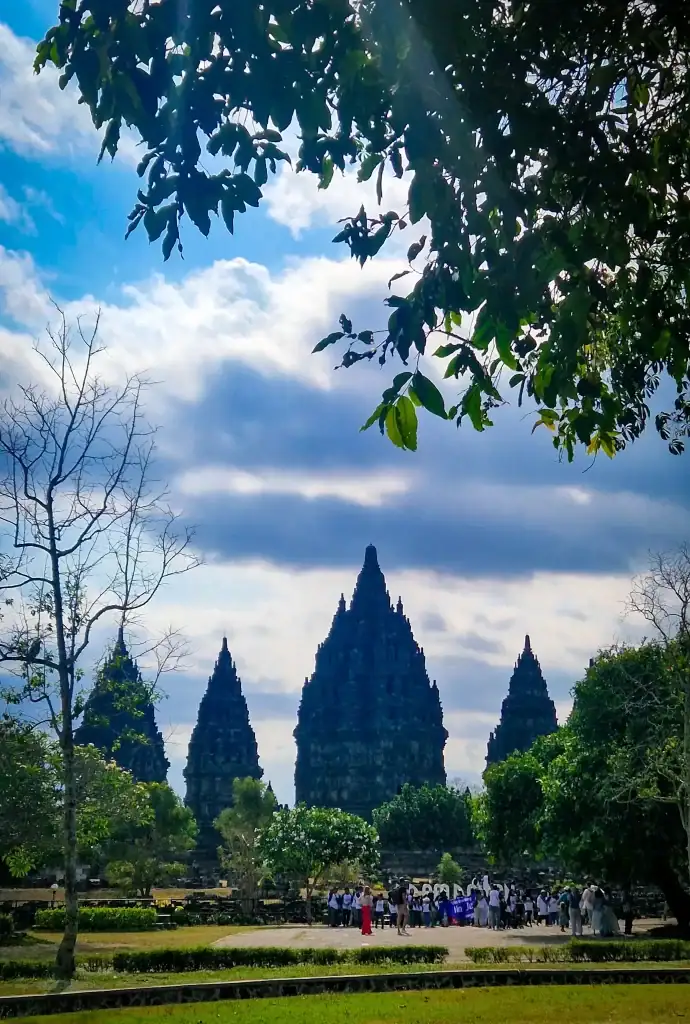
My recommendation for a 2 day Yogyakarta itinerary is to combine Borobudur Temple and Prambanan Temple into one big day trip, as it works out more cost-effective to have a driver/join a tour than to do them separately. I booked a shared tour with a vendor I found in Yogya (his Trip Advisor profile is now gone) but there are also many available on Get Your Guide.
Note: both Borobudur and Prambanan are religious sites. You should dress modestly or bring cover-ups for both.
Stop 1: Borobudur Temple
Ticket cost: $25 per person from the official website
Guided tour: included in the ticket price
Unlike more modern temples, such as the 19th century Batu Caves in Kuala Lumpur or the 21st century temples at Mount Fansipan in Vietnam, Borobudur has a long history. Its older than Angkor Wat, and contemporary with My Son, near Hoi An in Vietnam, both UNESCO Heritage sites.
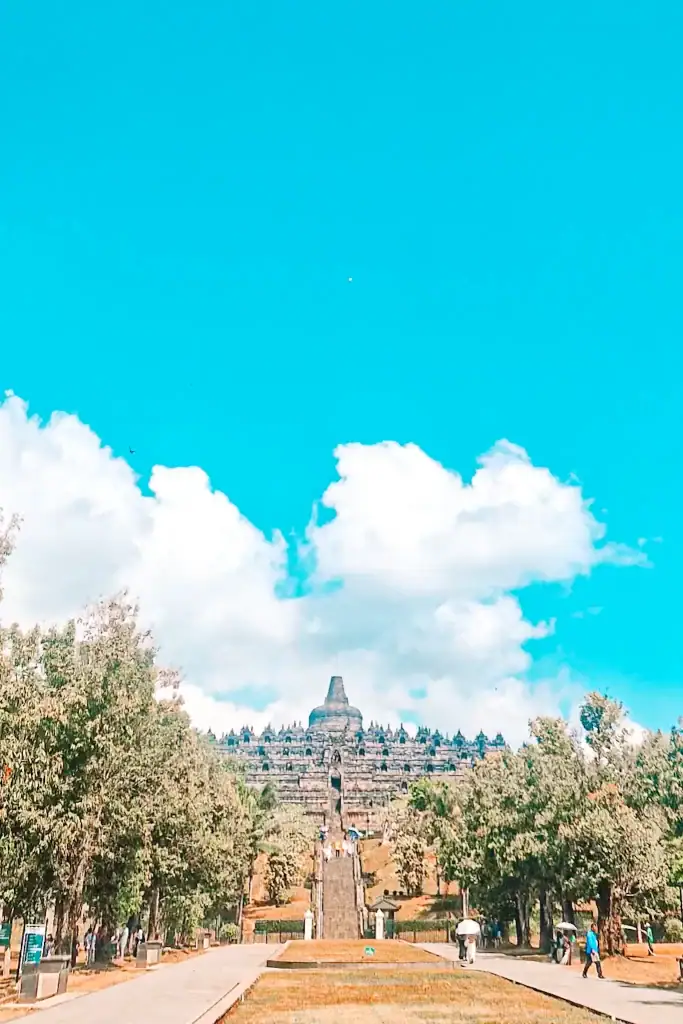
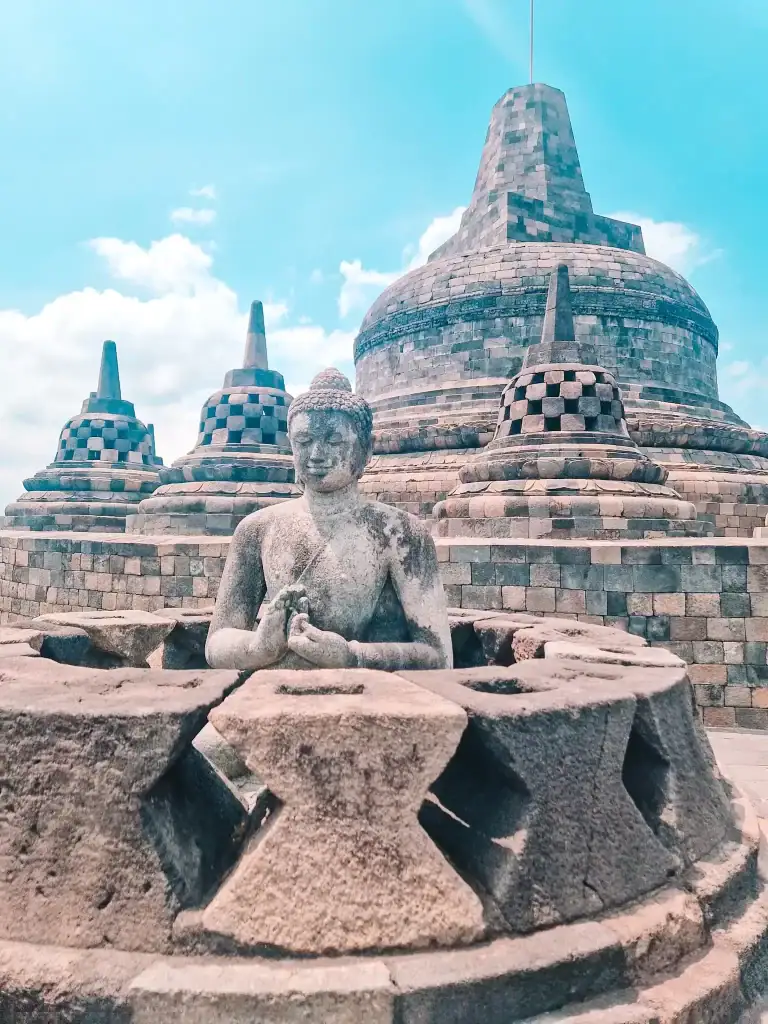
Built in the 8th century, Borobudur is an imposing monument emerging dramatically from the landscape. It is the world’s largest Buddhist temple and one of Southeast Asia’s greatest architectural and archaeological wonders. It was designated as a UNESCO World Heritage Site in 1991.
Our guide mentioned that Borobudur was abandoned after a volcanic eruption. However, other sources suggest the decline of Hindu kingdoms in Java led to its desertion. Either way, the British coloniser Stamford Raffles ‘rediscovered’ Borobudur in the 1800s, and brought it back to the attention of the world. A team of Dutch archaeologists originally restored the site in 1907-11, and there was a further restoration in the 1980s.

I loved my visit (despite the fierce 9am heat). There is so much to see at Borobudur, as the walls are so detailed, and our guide made sure we knew some of the stories behind the wall carvings. The steps are steep but manageable, and the views are incredible.
As part of your visit, you’ll climb to the highest level of Borobudur that’s open to the public, before having free time for photos. It’s a wonderful monument and well worth the admin required to visit.
Stop 2: Choose Between Loewak Coffee or the Chicken Temple
Different tours offer different options for the journey between Borobudur and Prambanan, which is about a 1.5 hour drive. Some tours offer the opportunity to visit the surreal chicken temple, but we decided to try the famous Loewak Coffee. If you are taking a guided tour, you should decide which option you prefer in advance and pick a relevant tour.
Loewak coffee, known in the west as Civet Poop Coffee and in Vietnam as Weasel Coffee, is the most expensive coffee in the world. Created from beans eaten, digested and then pooped out by civets, the process takes much longer than ordinary coffee harvesting.
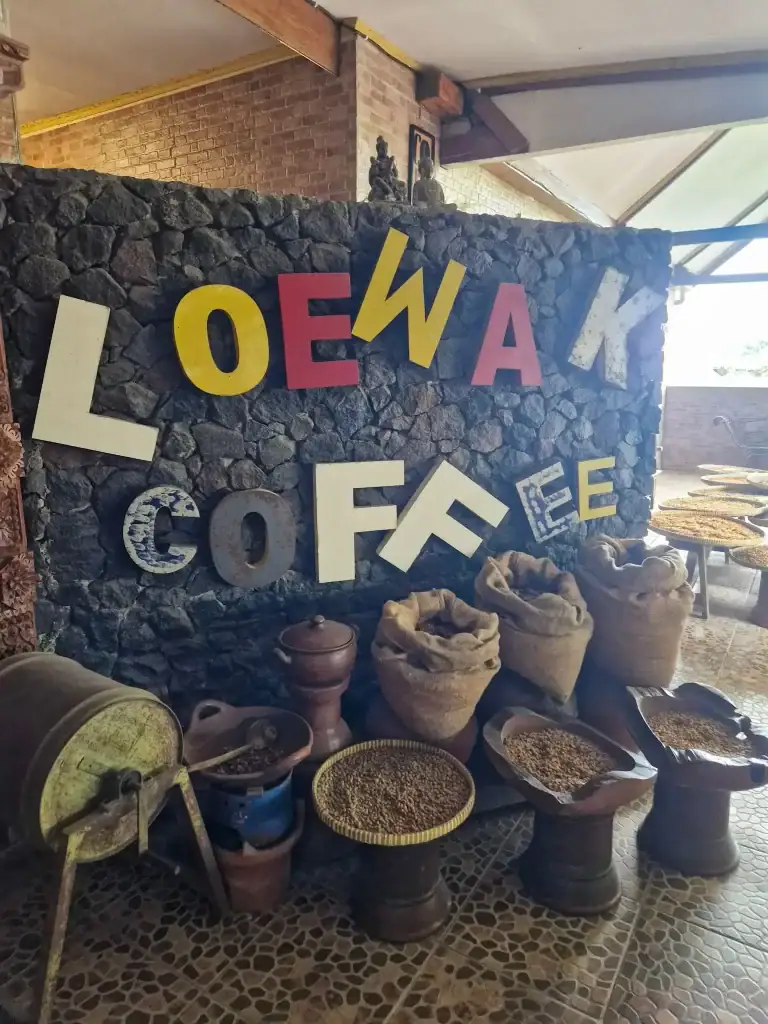
I thoroughly enjoyed our trip for loewak coffee, and learning about how it’s made. We had the opportunity to try the coffee and to buy coffee to take away.
However, I’ve since been told that many people consider loewak coffee unethical, as the civets are not treated well. In retrospect, I’d do more research on this – and I advise that you consider this when planning your trip.
Stop 3: Lunch near Prambanan
If you’re on a guided tour/with a driver, you will go for lunch before visiting Prambanan. If you’re organising the day yourself, I highly recommend stopping at this point. There are a number of restaurants around Prambanan to choose from.
Stop 4: Prambanan Temple
Ticket cost: $25 from the official website
Guided tour: $9 for group (possibly negotiable)
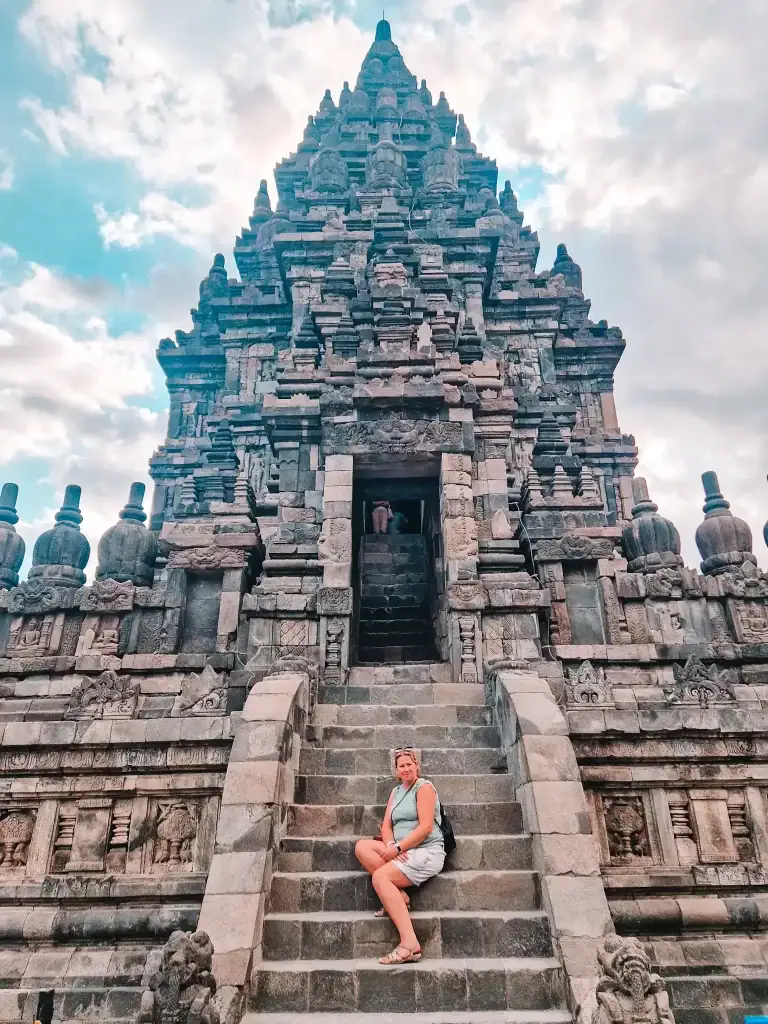
While Prambanan is less well known than Borobudur, it’s definitely worth visiting as part of your Jogya itinerary. I absolutely loved the Prambanan temples, probably more than Borobudur. While Borobudur is one tall structure, Prambanan is a series of temples stretching across the landscape.

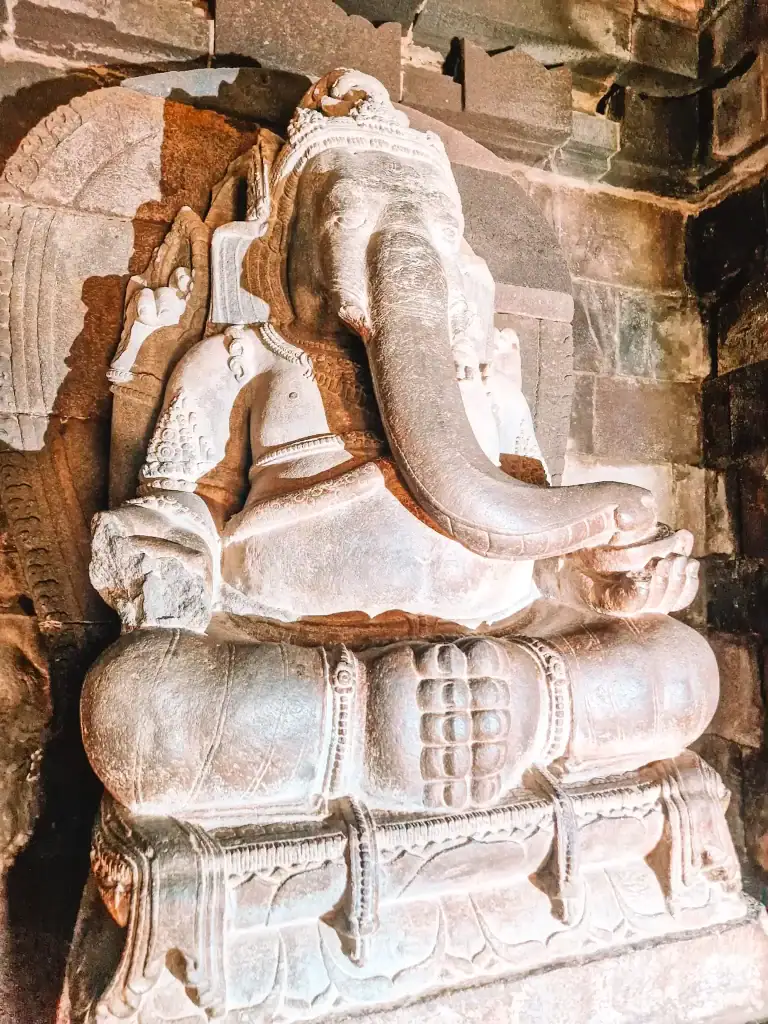
Built in the 9th century, it is the largest temple complex dedicated to Shiva in Indonesia. The three largest temples are dedicated to Shiva, Vishnu and Brahma, and depict the Hindu epic Ramayana. It was originally 240 structures – today, only a fraction of those survive. The temples collapsed in the 11th century due to earthquakes, volcanoes and changes in political power, and were rediscovered by the Dutch East India Company in the 18th century.
Archaeologists are rebuilding them at the rate of one temple per year. While I can’t find any sources to prove it, our guide was adamant that this work was being done by local archaeologists. rather than foreigners, which would be amazing. As a dedicated history buff, one of my favourite things at Prambanan was seeing the rebuilt temples and understanding the complex jigsaw required to achieve this.
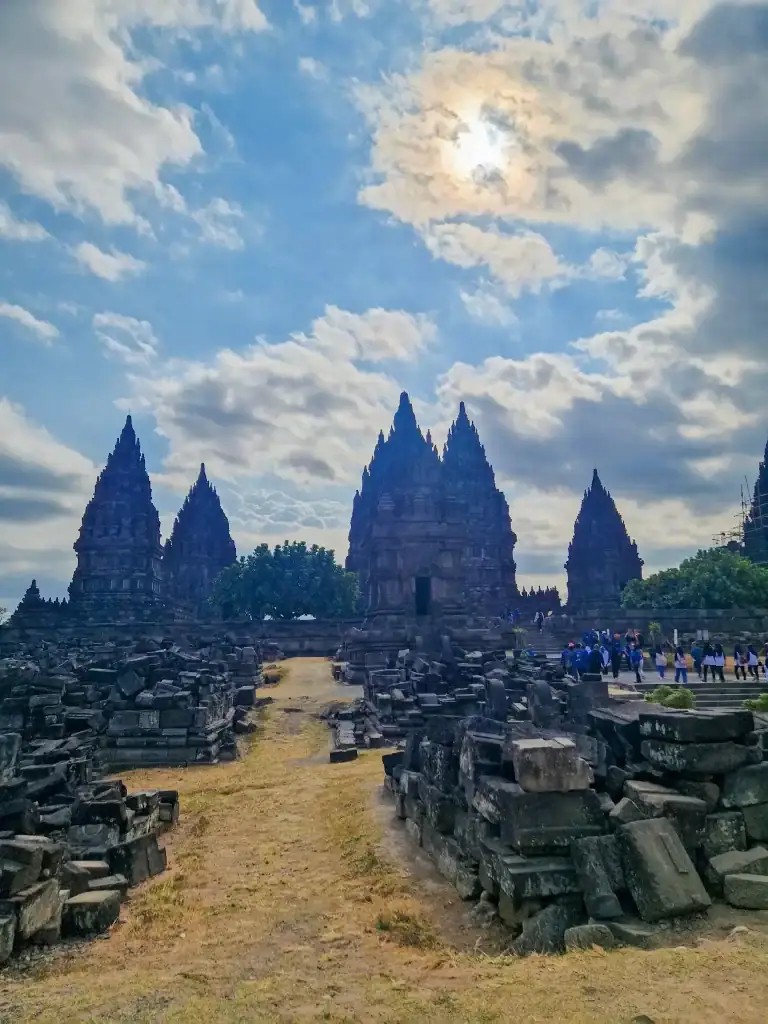
As there is no guided tour included in the ticket, I recommend contracting a guide within the temple. Our guide took us to the three main temples, taking us inside the largest and explaining the meaning of the statues hidden within. This led to one of the highlights of my entire trip so far – he encouraged me and the other lady on my tour to touch a statue for fertility, and we both flat out refused, to much laughter. He also took us to the best spots to get people-free photos.
Top tip: Exiting Borobudur and Prambanan
Both temples have lengthy exit routes lined with endless vendor stalls, many of whom are quite insistent. I thought we’d avoided the vendors at Prambanan, as the initial walk is through the beautiful grounds, where there are coffee and ice cream spots (and bathrooms). However, just before the car park there is the same lengthy row of vendors as at Borobudur. Take this into account when planning your leaving times from both temples, as it really adds to the visit timings!
Stop 5: Dinner
Once you’ve finished your visit to Prambanan, it’s time for another lengthy drive back to central Yogyakarta. The drive is around 50 minutes, but could be longer depending on rush hour traffic. Unfortunately, Borobudur and Prambanan are on opposite sides of the city, so there is no avoiding having to drive for significant parts of your day.
Having started our trip at 7.30am, we arrived back in Yogya around 5.30pm. Once you’re back, you’ll most likely want a chilled out evening to recover from such a busy day. I recommend heading to Jalan Prawirotaman for dinner. There are excellent restaurants up and down this street:
- Via Via – excellent healthy food with lots of veggie and vegan options
- Mediterranea – while I didn’t visit, so many people recommended this place
- Ministry of Coffee – if you just want something quick, their Mie Goreng was excellent
Alternative Itineraries in Yogya
While I’ve set out my favourite way to spend two days in Yogyakarta, I’ve listed some alternative options below.
Borobudur sunrise
One of the most popular things to do in Yogya is to visit Borobudur for sunrise. I’m far too lazy to get up this early, but it’s on offer in lots of places.
It involves heading to a sunrise spot near the temple, rather than the temple itself, for sunrise. You’ll then visit the temple itself afterwards. If you choose this option, make sure to check what time slot the tour company has for Borobudur entrance, to ensure you avoid waiting around for hours.
If you’re keen to visit for sunrise, consider this half day trip. You could then visit Prambanan independently in the afternoon, or on another day.
Mount Merapi
Indonesia’s most active volcano is another popular destination near Yogya, although not as busy as Mount Bromo on the other side of Java. Trip options include visiting for sunrise, or to see the lava.
It can be combined into a (very busy) day trip to the two temples, or done on its own.
If you’re keen to see Borobudur at sunrise and visit Mount Merapi, as well as visiting Prambanan, consider this tour:
Cultural tours
Via Via offer a number of cultural tours around Yogya, including to local villages. They also offer alternative routes to Borobudur and Prambanan, particularly by motorbike. This is a great way to see a different side of Yogya, including more of the local community. They offer biking, hiking and food tours, and are committted to sustainable, community based tourism.
Ramayana Ballet
One of the most popular activities in Yogya is to see the Ramayana Ballet at Prambanan. Sadly this wasn’t on when I was in Yogya, but if your trip coincides with a show, it’s highly recommended. Tickets start at $9 if you visit independently – you will need to factor in transport on top of this. You can also join a guided tour.
You can also see traditional Ramayana Ballet in the city centre, near Malioboro.
Frequently Asked Questions
How long should I spend in Yogyakarta
Two full days is the absolute minimum you need to really enjoy Yogyakarta. I’ve set this blog up to give you two days in Yogyakarta, but I spent five days in the city. I loved the chill vibe and plethora of coffee shops for working in.
If you want to stay longer, you could do one temple on each day, making for a more relaxed schedule. You could also take one of the alternative itinerary options above, like visiting Mount Merapi or taking a cultural tour with Via Via. There are also plenty of museums to visit, and you can also get great spa experiences.
Is it Yogyakarta or Jogyakarta
Yogyakarta is also spelt Jogyakarta, and shortened to both Yogya and Jogya.
The reasons for this are complex, but the difference in spelling dates to the period of Dutch colonial rule. Jogyakarta became more ppoular during the colonial period as it reflected the way it was translated at the time. However, as the colonial period came to an end, the original Yogyakarta became popular agian as it better reflected the original Javanese pronunciation and spelling. Both are used today, as Jogyakarta still better reflects current pronunciation.
I’ve used these interchangeably throughout, and want to note that the history behind this more complex than I could ever convey here.
How to get around in Yogyakarta
Like most cities in Asia, Yogya is not the most walkable. Pavements are rarely in good condition (if they exist) and many of the sites in this itinerary are spread out around the city.
The easiest way to get aruond in Jogya is to use Grab or Gojek. These apps are like Uber in Europe or America. Grab is common across southeast Asia, while Gojek is the Indonsian alterntive. Both are easy to download and use, and very popular in the city, which means minimal wait times.
There are also lots of tuktuks available in Yogya. If you want to use one of these, agree your fare in advance, and remember to negotiate!
How to get to Yogyakarta: Air
I arrived by plane from Sumatra into Yogyakarta International (YIA), the new airport. Flights are available from destinations including Bali, Singapore and Kuala Lumpur, as well as Jakarta.
YIA is modern and clean, and there is a train into central Yogya. This train should be booked ahead at peak times – it can get full.
You can also drive into central Yogya from the airport – it’s about 1 hour and costs around 100k ($6) for a private car. I chose this option as my flight arrived relatively late, and as a solo female traveller I prefer private transfers when I’m arriving to new cities in the dark.
How to get to Yogyakarta: Train
Like Vietnam’s rail network, Java has excellent train services across the island. The trains are modern and punctual, though different routes have slightly newer trains compared to others. For example, the trains from Jakarta to Yogya are more modern than the trains from Yogya to Malang. There are two main classes, Executive, with bigger and more comfortable seats, and Economy.
While the trains are modern and user friendly, they are not super straightforward to book if you have a foreign bank account. After a lot of research, I booked my ticket via Tiket and had no problems.
Ticket costs:
Jakarta to Yogya – 6-8 hours, c.$32 for Executive Class or $21 for Economy
Malang to Yogya – 6 hours, c.$28 for Executive or $16 for Economy
Many people arrive in Yogya via train from Jakarta. While I didn’t take this train, I met other travellers who did, and I heard only good things.
I took the train in the opposite direction, from Yogya to Malang, where I visited Mount Bromo. It was comfortable and punctual (at least in the Executive Class, which is worth paying for).
How to get to Yogyakarta: Bus
There is also a strong bus network in Java. Buses are available between:
Yogya and Jakarta – c.11 hours, $16 for an Executive bus
Yogya and Malang – 8/9 hours, $15 for an Executive bus
However, given how cheap, reliable and comfortable the train is, I would recommend taking the train unless you are really committed to budget travelling. Not only are journeys quicker, they avoid any dangerous driving or tired drivers.
Where to stay in Yogyakarta
Most hotels are around Jalan Prawirotaman, the main backpacker street in Yogya. I’d advise staying around here, as it’s near a plethora of restaurants and coffee shops, as well as tour options.
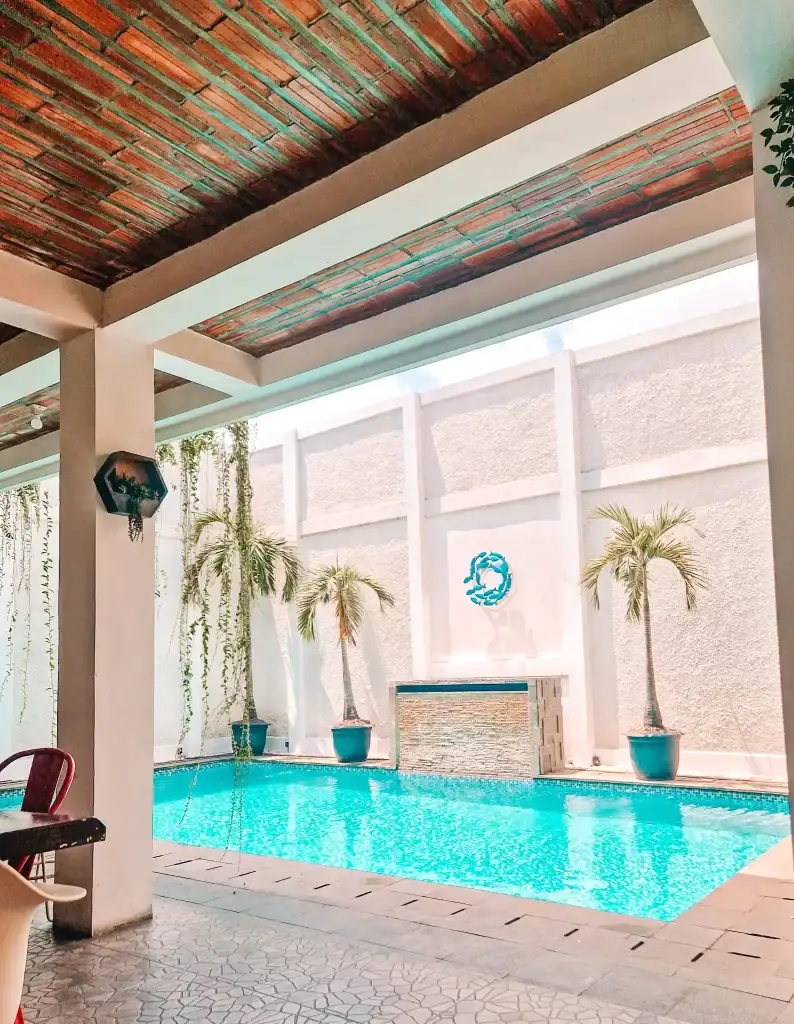
I stayed at Otu Hostel. The rooms were basic but had everything I needed. The staff at this hostel were amazing – so friendly and helpful. The location is also great – down quiet backstreets but just off Jalan Prawirotaman. But the cherry on top is the pool – a beautiful spot to rest and relax, with bean bag chairs offering you a comfortable place to sit. I can’t recommend Otu highly enough.
If you’re looking for an alternative, many of the major hotel chains have hotels in Yogya, including the Sheraton and Hyatt. A more expensive/ high-end hostel option is Snooze, which has a huge number of positive reviews and is near the Kraton.
However, I recommend staying near Jalan Prawirotaman, the main backpacker/tourist street. Yogya is not super pedestrian-friendly, and staying in this area means you can go out for dinner without needing to take a taxi. If this sounds like the right option for you, try the Aloha Hotel, which has a score of 9.1 with over one thousand reviews.
Your 2 day Yogyakarta itinerary is the perfect mix of history, culture and adventure—just the way I love to travel. Whether you’re exploring ancient temples, wandering through market at Malioboro, or sipping Javanese coffee in a tucked-away café, Yogyakarta is an experience that stays with you. Have questions or your own travel tips to share? Drop a comment below or follow along on Pinterest for more expert Southeast Asia travel guides. Happy exploring!
Em is the travel writer behind Em’s Globetrotting Gems, where she shares real experiences and practical tips from her journeys around the world. During her 2024 travels through Java, she spent five days in Yogyakarta, exploring its rich culture, history, and iconic sights. Her blog is designed to help fellow travellers make the most of their time with honest advice and thoughtfully crafted itineraries.
✅ All photos featured on this blog are from my personal travel experiences. No stock images are used.


[…] Arriving in Bali from Java? Check out my guide 2 Perfect Days in Yogyakarta – including everything you need to know to visit Borobudur and Pr… […]
[…] AsiaIndonesia […]
[…] from Yogyakarta? Check out my guide 2 Perfect Days in Yogyakarta – including everything you need to know to visit Borobudur and Pr…. […]
Thanks for all this advice. Seems like there is a lot to do in Yogya!
Definitely a lot to keep you busy! Its a great city!
What an incredible detailed guide! I love all the helpful details you added like getting the sun umbrella and a bag for your shoes. These are all the facts I always search for and can’t find. Looks like a heck of a trip!
I agree, I think those details are so important. Some tour companies will provide sun umbrellas but you can’t guarantee that, so it’s good to know what your options are! And yes, I loved Yogya, definitely recommend!
A cool guide, I would probably spread it out over multiple days, but would love to visit all these sites. The chicken temple looks fun to see, so does Loewak Coffee. The temples are a must.
I don’t hear about this specific destination much, so I loved learning more about it. Seeing your beautiful photos of these temples gave me goosebumps. I would love to visit, as I love visiting places that aren’t talked about as much.
Yeah I’m not sure why its not more famous for Westerners. The temples were beautiful and really well set up and Java is so easy to navigate. I guess Bali steals all the fame.
Great post! I loved Yogyakarta, and spent about three days there, so that I could visit loads of batik, shops, coffee shops and the famous temples, of course! I would advise against the Kopi Luwak, though. The civet cat is nocturnal and to produce the luwak coffee, they are often held in terrible conditions and force fed coffee cherries. Java has a lot of coffee culture and I’s explore some of Yogya’s famous (luwak-free) roasteries instead, like Kopirelo, Space or Maige (there are many more)