
 Em
EmJust so you know: This post contains affiliate links. As an Amazon Associate, I earn from qualifying purchases. I may also earn a small commission if you book a tour, hotel, or buy something else through these links. It helps me keep this blog running and full of travel tips. Thanks for your support!
Planning a quick European getaway? Don’t skip Tirana. After spending a full month living here in summer 2025, I can confidently say Albania’s capital deserves more than a glance between beach towns and mountain escapes.

Tirana may not be a traditional European capital in the postcard-perfect sense, but that’s precisely what makes it so refreshing. It’s laidback yet buzzing, modern yet full of history, and increasingly creative without losing its offbeat charm. In just 48 hours, you can explore the deeply moving Bunk’Art 2 museum, sip espresso in effortlessly cool cafés, stroll through the expansive Tirana Park, and discover local stories at the small but powerful Women’s Museum—all without the crowds of more well-trodden capitals.
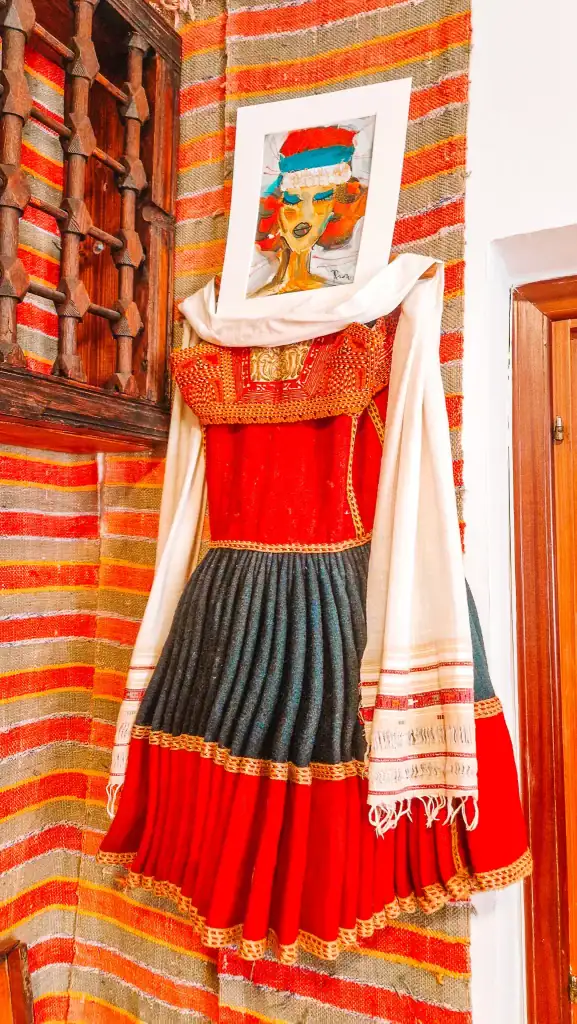
Having travelled through 27 European countries, I’ve come to appreciate cities that reward curiosity. Tirana is one of them. Whether you’re here for a spontaneous weekend escape or looking to tick off a lesser-known destination, this Tirana travel guide will help you make the most of your two days in the Albanian capital. Let’s dive in.
👉 Planning a wider trip in the Balkans? Check out my guide to why you should visit Albania, North Macedonia and Montenegro before everyone else!
Is Tirana worth visiting?
Tirana is often seen as a less exciting part of Albania, compared to the crystal clear water at the beaches in the south, or the beauty of the Albanian Alps in the north. But Tirana is absolutely worth visiting, especially if you are interested in modern Albanian or European history.
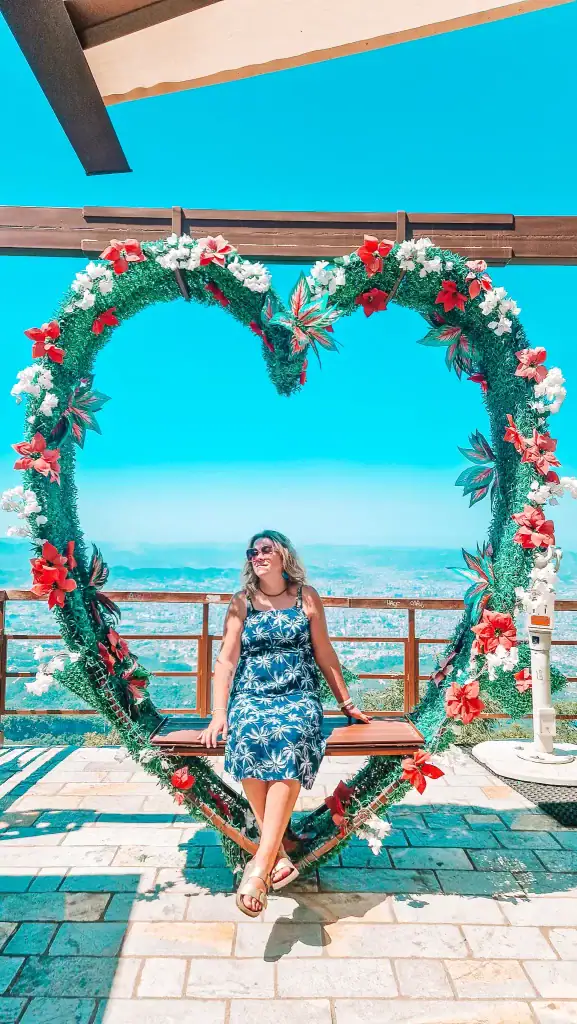
I loved Tirana for its southern European vibes, with the highest proportion of cafes per capita in Europe meaning that there’s a cafe every couple of metres – check out my guide to the best of them! Modern buildings compete with traditional lanes, and the food scene is excellent. There’s plenty to occupy you during 48 hours in Tirana, ranging from innovative museums to spectacular mountain views.
I spent a month in Tirana in June and July 2025, working on Em’s Globetrotting Gems and exploring everything Tirana has to offer. In this guide, I’ll talk you through my highlights, what not to miss (and what you can safely skip if you’re short on time).
💡 Visiting other Balkans capitals? Check out my guide to the best things to do in Skopje, North Macedonia and the best cafes in Skopje.
Want to plan your Albania Trip without feeling overwhelmed?
- Want a detailed, self-guided resource for inland Albania → Albania, Unlocked
- Want a free, culture-first introduction to thoughtful travel → Download the free guide
- Want a fully personalised itinerary planned for you → **Book my custom itinerary service**
Map of what to do in Tirana
Use this interactive map to plan your itinerary!
🗺️ 2 Days in Tirana Itinerary
Here’s how to spend a perfect weekend in Albania’s capital city!
Day 1 – Central Tirana
Your first day focuses on central Tirana, and everything is in easy walking distance. It takes you to historic sights and interesting museums, before finishing up at the picturesque Tirana Castle for dinner.
Wander around Skanderbeg Square
Tip: You might see people drinking from the water fountains designed to cool the square. This water isn’t drinkable – we checked with a tour guide!
Skanderbeg Square is the focal point of Tirana, and no visit is complete without a visit to this massive refurbished plaza, which is completely different from traditional European squares like the picturesque Piata Sfatului in Brasov.
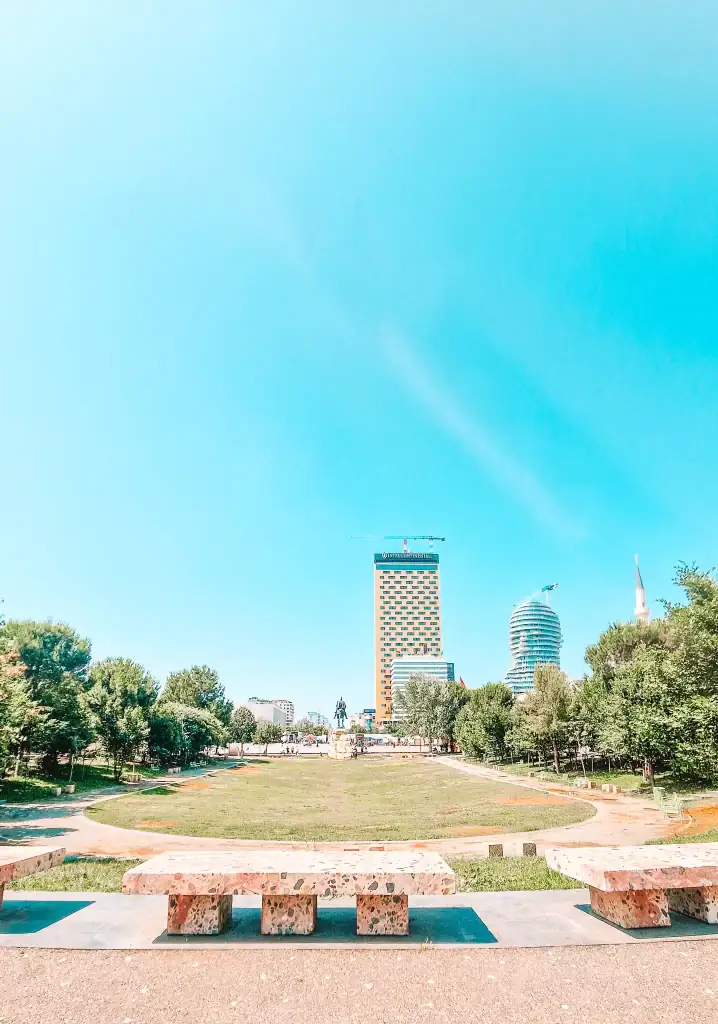
Named after Albanian’s national hero, Skanderbeg, who worked to unite the country in the 15th century, it stretches across a huge part of Tirana’s centre. If you’re interested in learning more about Skanderbeg, consider a day trip to Kruje Castle, where you can visit a museum dedicated to his life.
One side hosts the national Opera House, while sadly the National Museum is currently closed for renovation on another (although you can still see a restored Soviet-era mosaic). The square is also ringed with beautiful buildings from the monarchist phase between the wars, when an Italian style of architecture was popular in Albania.
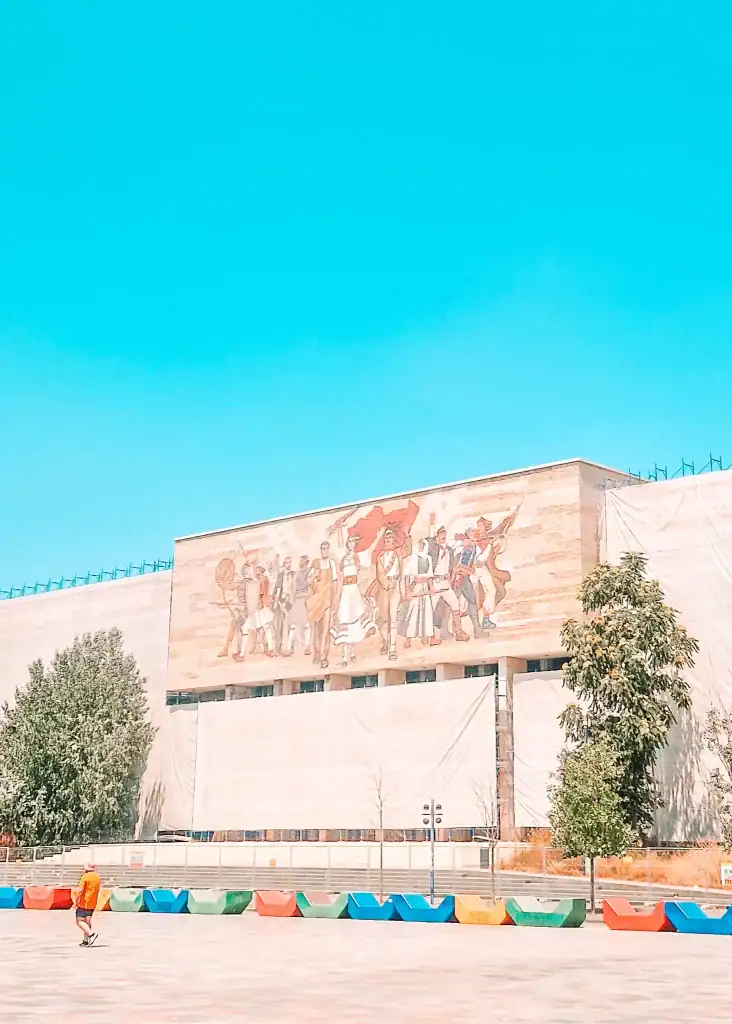
You’ll probably walk through Skanderbeg Square multiple times on your trip to Tirana, but don’t forget to stop and take it in at least once.
🎟️ Want expert guidance while you’re in Tirana? These are the top-rated tours I recommend:
- Tirana Walking Tour – ✨4.8/500+ – this exact walking tour gave me a great overview of Tirana (and Albania’s) history
- Kruje Day trip ✨4.8/1.5k+ – I did this one and definitely recommend it
- Traditional Albanian cooking class with Rakia ✨5/100+ – I wish I’d done this!
Book now on GetYourGuide or Viator and cancel anytime.
Visit the smallest Mosque in Tirana
Cost: technically free, but in practice you’re asked for a donation on entry
Practicalities: Cover ups are available before you enter
At the edge of Skanderbeg Square is the Et’hem Bey Mosque, the smallest mosque in Tirana – a complete contrast to the huge modern mosque you’ll see on your next stop. It’s also significantly older than much of Tirana, dating from around 1791 (historians aren’t sure of exact dates).
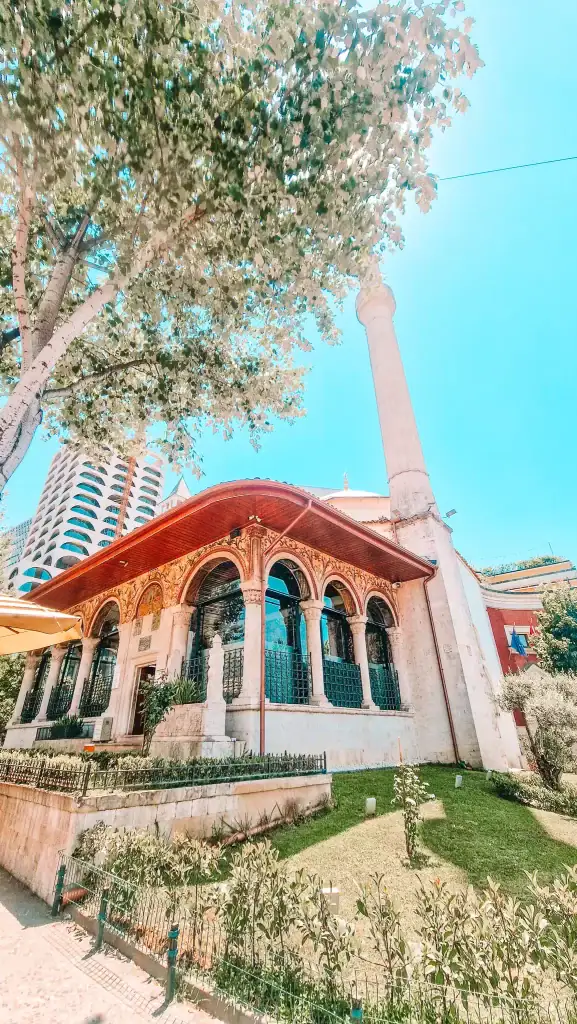
The mosque is ornate and beautiful inside, if tiny. It survived the communist era, when many religious buildings were destroyed, because it was declared a historic monument. It was restored in the 1960s and 1970s.
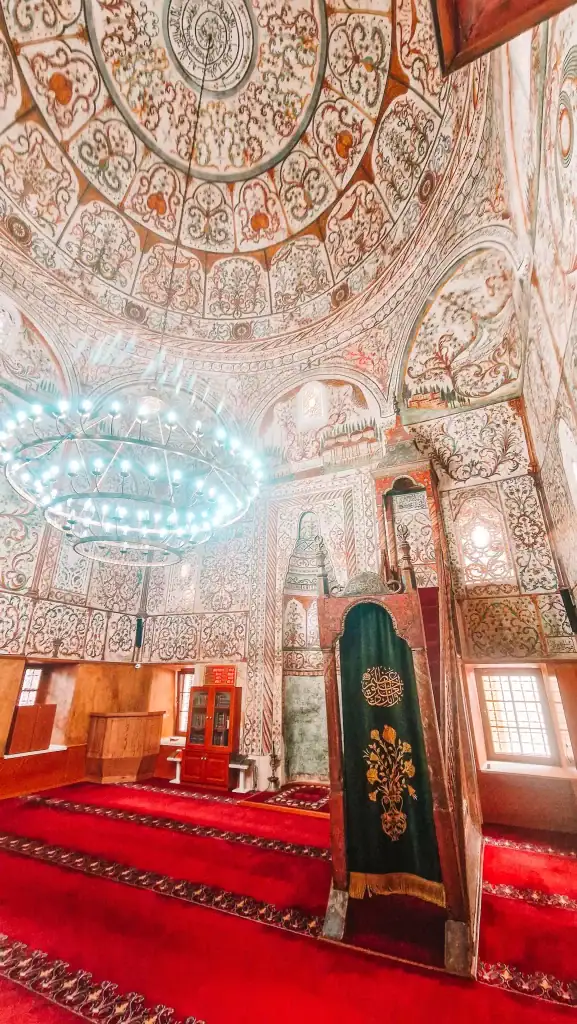
In January 1991, over 10,000 people entered the building carrying Albanian flags despite resistance from the authorities, and it played a major role in recreating religious freedom in Albania.
Experience Tirana’s religious tolerance at the new Namazgja Mosque, Resurrection of Christ Orthodox Church and St Paul’s Catholic Cathedral
One thing I’ve heard multiple times since arriving in Albania is that they are proud of their religious tolerance. While the country is majority Muslim, there is a strong population of Orthodox Christians, a fair amount of Catholics, and a smattering of people from other religious including Bektashi, who worship at the beautiful Sari Salltik shrine on a hilltop near Kruje.
You can see all three major religions in massive new buildings in Tirana, as the religious population works to recover from the destruction and disuse of religious buildings during the communist era. From Skanderbeg Square, head to the Resurrection of Christ Orthodox Cathedral, a huge new church completed in 2012, which definitely looks modern, before heading to St Paul’s Cathedral, another new church that looks nothing like any other Catholic church I’ve ever seen.
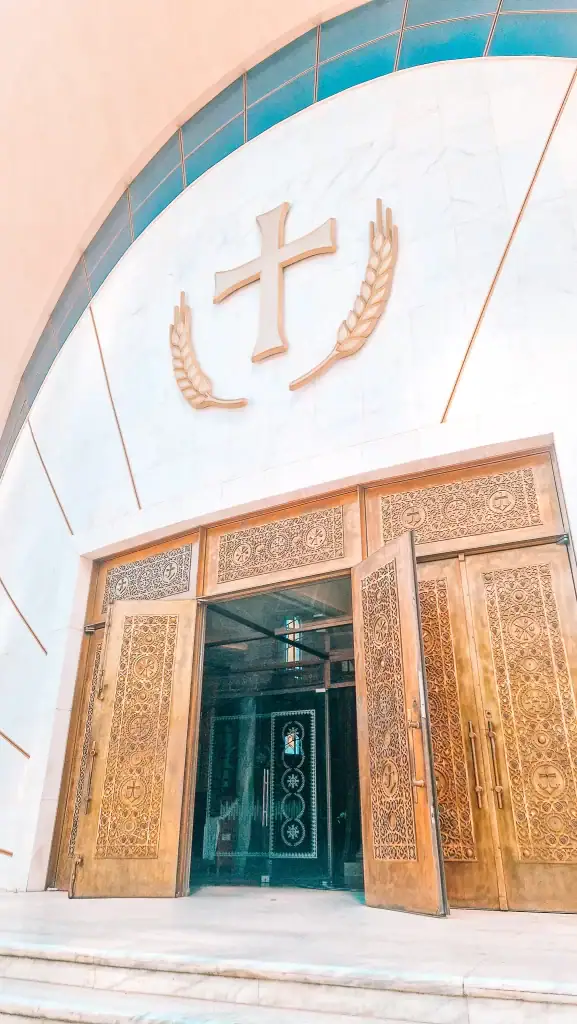
While none of these buildings have the charm of the historic Bath Abbey or the beautiful Porto Cathedral, or even the smaller St Typhon Cathedral in nearby Kotor, they are still worth visiting to understand the unique way that Albania views religion.
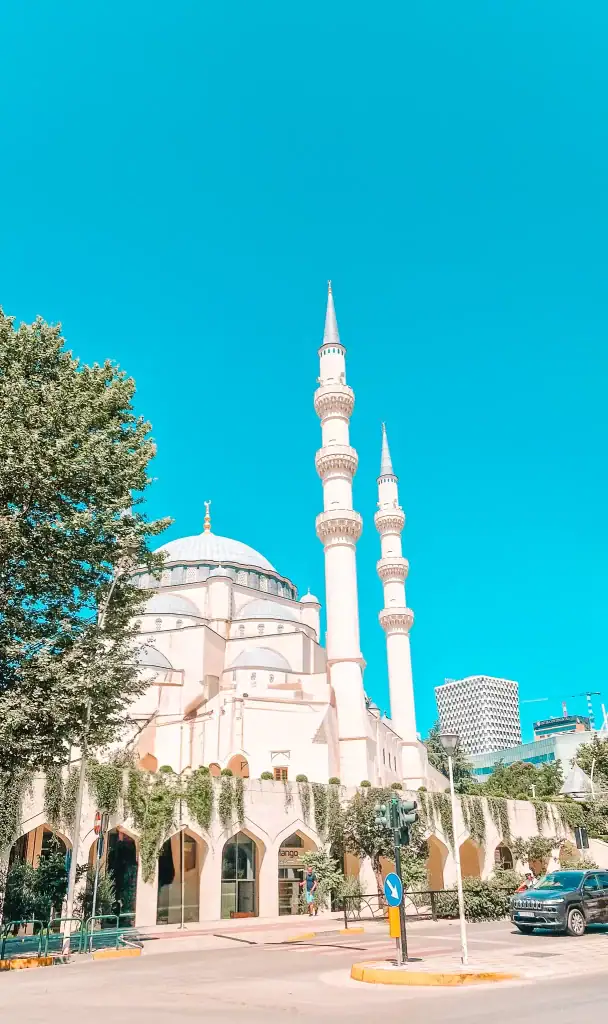
From St Paul’s, walk down to the beautiful Namazgja Mosque, a brand new building that looks historic (until you spot the coffee shops underneath). It’s possible to enter this beautiful building and marvel at the decoration inside – cover-ups are provided for women at the entrance.
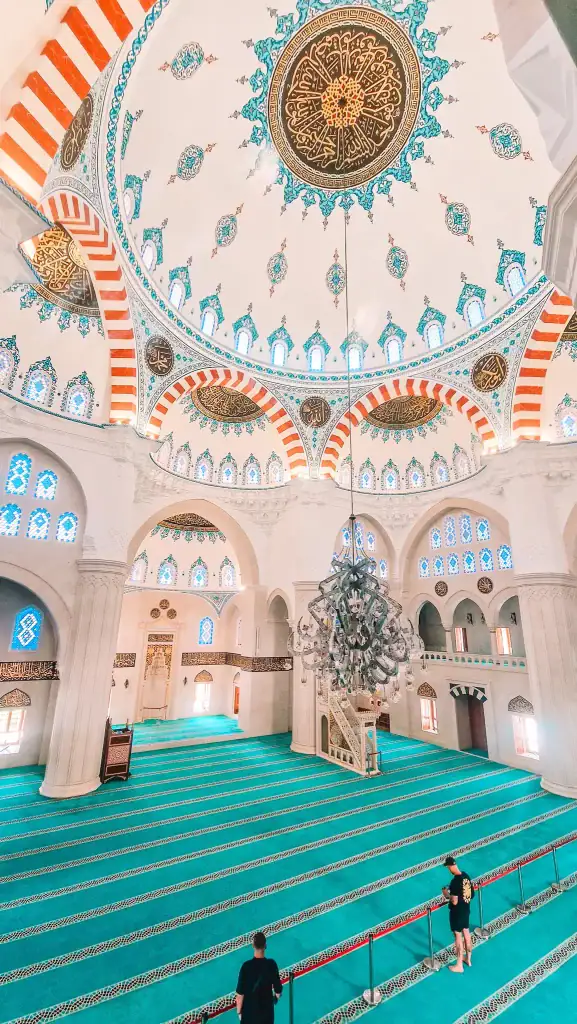
While these buildings are all new, they are major landmarks in TIrana, and there’s something beautiful about witnessing this level of religious tolerance first-hand.
For travellers who love to dig deeper, these books about Albania will give you a powerful lens on the country’s history and identity.
Learn about the communist era at the fascinating Bunk’Art 2
Cost: 900 LEK/about €9 (if you are planning to visit both Bunk’arts within 3 days, you can buy a combo ticket)
Trigger warnings: this museum deals with the violence of a dictatorship, so there are a few installations that are distressing, including one which details different types of torture. There’s also one room with flashing/flickering lights. As you’re in an underground bunker, it may trigger claustrophobia, although there are no particularly small spaces.

Bunk’Art 2 is an old communist-era bunker that has been turned into a very modern museum. Your descent into the bunker feels very atmospheric, and that vibe only continues once you’re in the museum. There are four main areas, or passageways, that cover the atrocities committed by the communist government of Enver Hoxha.
The museum has moving installations that present information in unusual ways, for example through hanging cards with lists of the names of the executed and disappeared. There’s also a fascinating room that presents the propaganda used by the communist government through the presence of optical illusions.

All of this is surrounded by artefacts from the period, and some rooms in the bunker are set up as they would have been during the 1970s and 1980s. The museum reminded me of the detailed way that the atrocities of the Khmer Rouge are portrayed at Tuol Sleng in Phnom Penh, Cambodia, and this is definitely an excellent museum if you want a thorough grounding in this part of Albania’s history, presented in an innovative way.
💡 If you’re looking for more museums in the Balkans, check out my guide to the best museums in Skopje, the capital of North Macedonia.
Explore the role of women and persecuted families at the Women’s Museum
Cost: 500 LEK or €5 (they accept either)
Trigger warnings: this museum talks about sexual violence, the consequences of unsafe abortions, and violence in general
Opening/closing: only open on Sundays during August 2025, otherwise Mon-Sat
Not far from Bunk’Art 2 is a completely different kind of museum. Where Bunk’Art 2 is ultra-modern and uses innovative methods to capture attention, the Women’s Museum is a deeply personal and intimate experience.
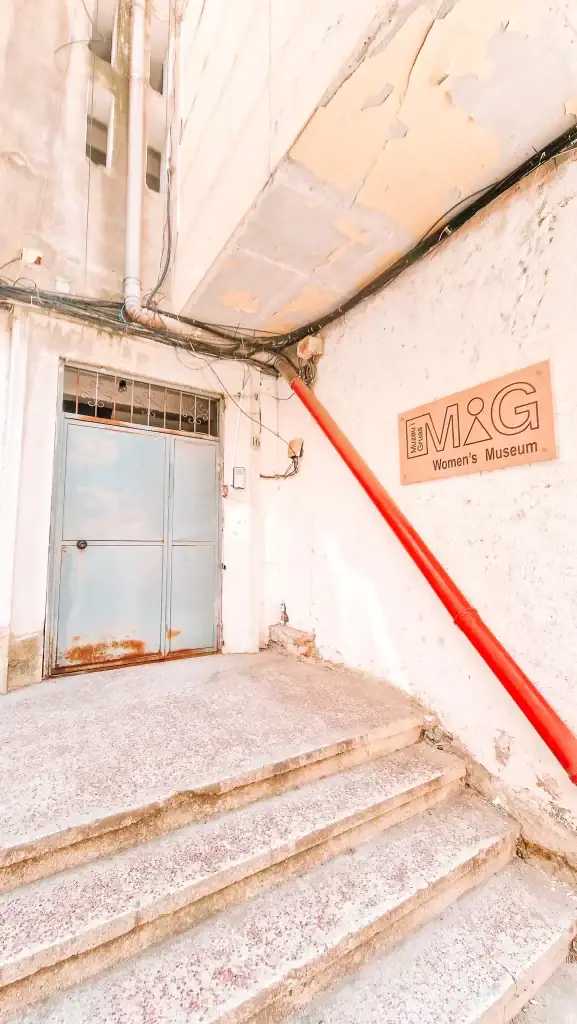
Found in an apartment building just behind one of Tirana’s main streets (go around the back from where it appears on Google Maps), the museum was founded by Elsa Ballauri in 2017.
It details the role of women in Albania, from the ancient Illyrians right through to the end of the communist era. But what makes this museum exceptional is that it also tells the story of Elsa’s family. The museum is housed in her family’s apartment, and many of the later exhibits are from her grandparents, particularly her grandmother.
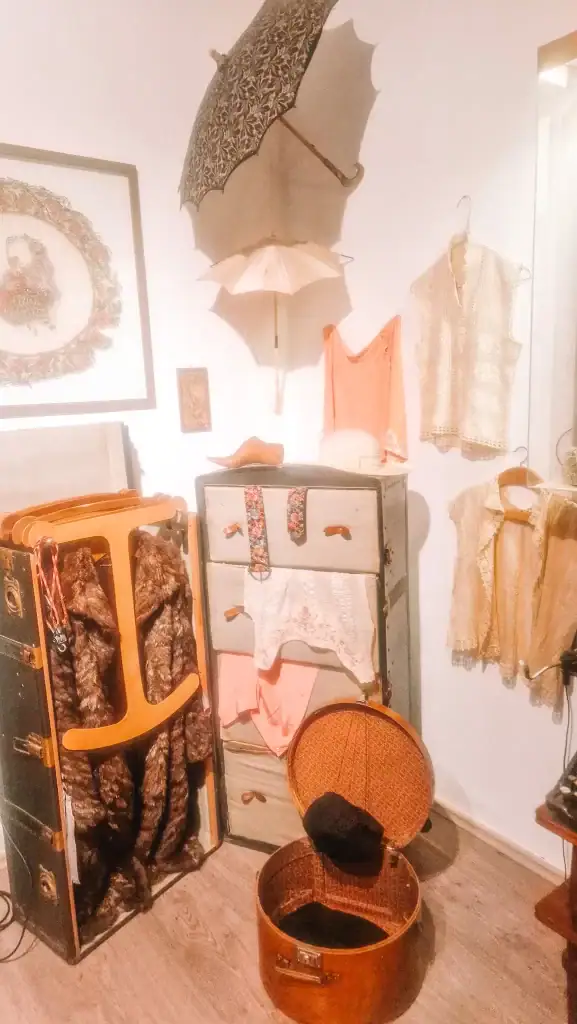
If you visit, you’ll be given a personal tour by either Elsa or her son Jay, and they expertly bring to life the persecution faced by their family and other similar families during the communist period. I particularly loved seeing her grandmother’s Great Gatsby-esque trunk, fur coat and clothes from the 1920s, highlighting that Albania was on a path towards a very different future before the Second World War.
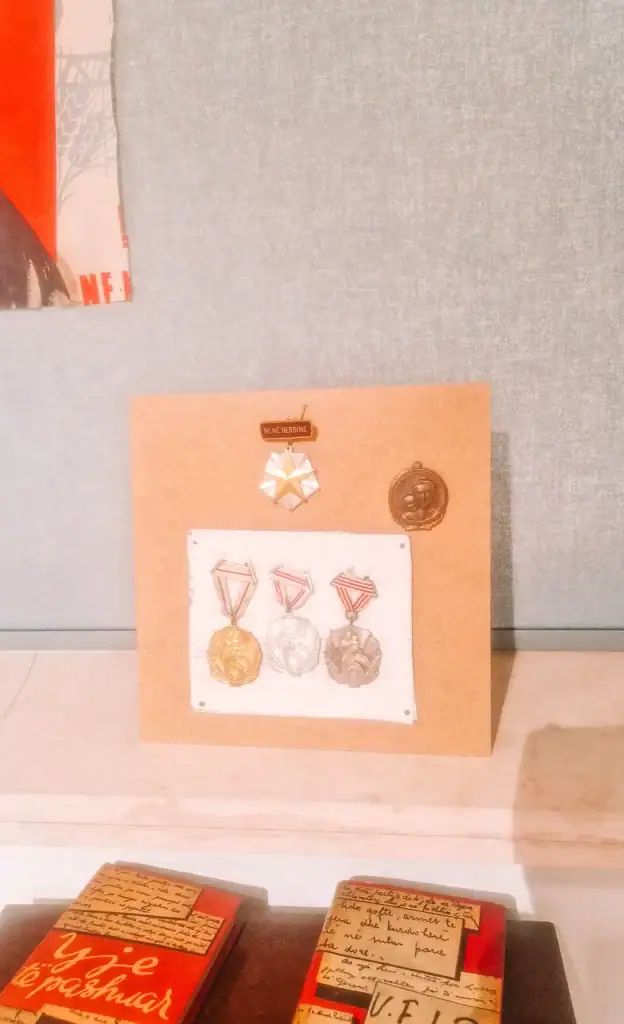
The museum also has uncomfortable parallels with today, showcasing medals given to Albanian women who had certain (high) numbers of children – echoing current plans in America for a National Motherhood medal.
This museum was my favourite thing to do in Tirana, and is not to be missed. If this appeals to you, consider a visit to the Red Flat in Sofia, Bulgaria (guide coming soon).
Have dinner and a drink in Tirana Castle
Cost: free to wander, but drinks and food considerably more expensive than other parts of Tirana
Tirana Castle is something of a misleading statement in Tirana, as there’s no actual castle – Tirana only became a major settlement in the 20th century. However, there are some ruins of a very old castle just outside, and inside is a new structure built by the Toptani Family.
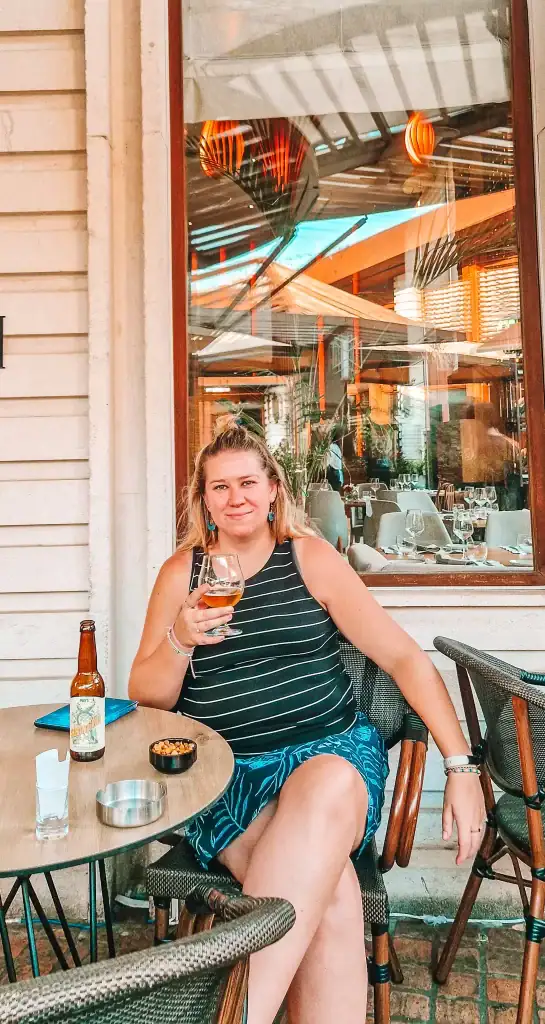
Despite the lack of history, Tirana Castle is well worth a visit, as it’s a little off-road haven of restaurants, bars and shops that hasn’t yet been fully co-opted by tourists – there are still plenty of locals visiting for a night out. There’s lots of different cuisines to choose from, but I was recommended Ceren by two different tour guides, which offers a tasting menu of different Albanian specialties for 23e (as of June 2023). I also tried a local craft beer by Pan’s Brewery at Gzona.
Day 2 – getting out of the city centre
Your second day in Tirana takes you out of the tourist centre of the city, to the mountains and parks around the city. Take a chance to get away from the crowds and explore some of Tirana’s less visited gems.
Start your day with coffee on the rooftop at Monarc Hotel
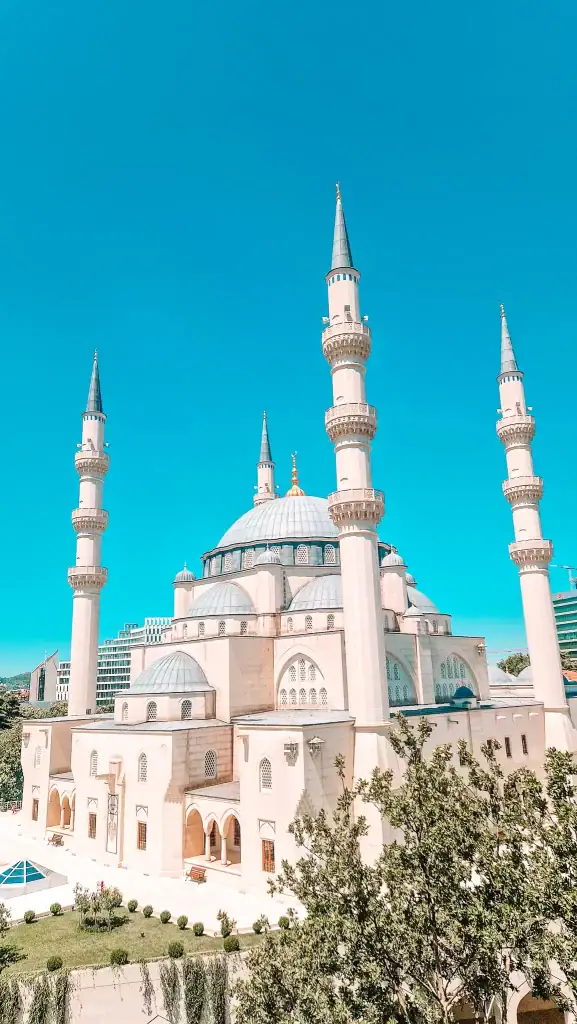
Start your day with one of the most fabulous views in Tirana. The rooftop bar at the Monarc Hotel isn’t well advertised, but it’s well worth a visit. Head to the fourth floor, where you’ll find a lovely casual cafe/bar.
The views are incredible – the hotel is opposite the beautiful Namazgja Mosque. The cafes and shops below the mosque can make it difficult to get a perfect photo from the street, but the Monarc bar gives you exactly the right angle.
Visit Bunk’Art 1, designed to host the Albanian government in times of war
Cost: 900LEK/€9 (if you are planning to visit both Bunk’arts within 3 days, you can buy a combo ticket)
Trigger warnings: content at Bunk’Art 1 is less distressing than Bunk’Art 2, but still difficult. As you’re in an underground bunker, it may trigger claustrophobia, although there are no particularly small spaces.
Transport: around 40-50 minutes on Bus Line 11, or use a taxi/Patoko ride share. If you’re not confident using Google Maps on the bus (or don’t have data) ask the conductor for ‘Teleferiku’.
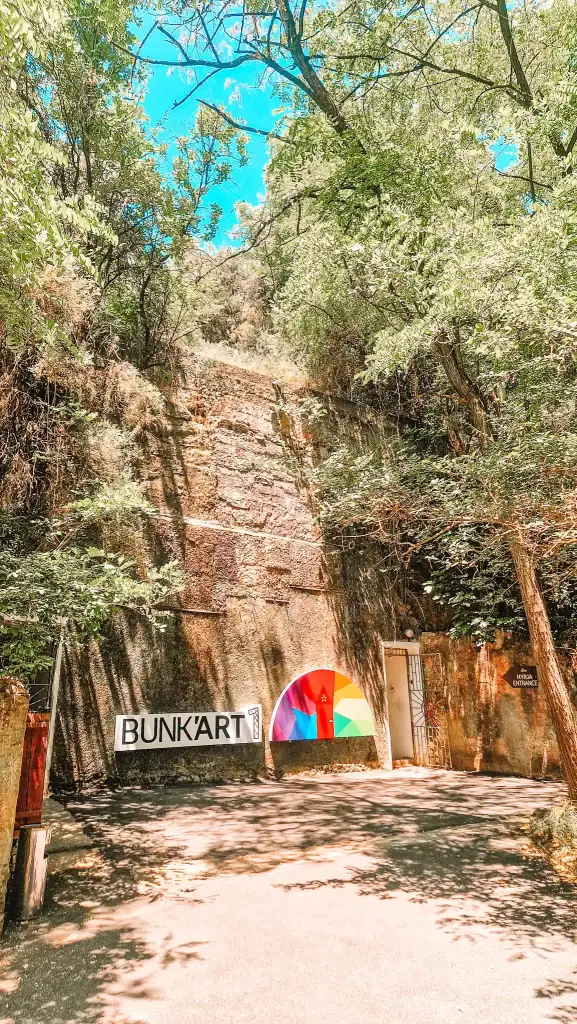
Once you’re fully caffeinated, walk a few minutes to the bus stop at Pazari I Re and get the bus to Bunk’Art 1. This mammoth bunker out at the edges of the mountains surrounding Tirana was built by Albanian dictator Enver Hoxha during his bunker building phase, and is one of the largest in Albania.

It was designed to host the Albanian parliament in the event of an attack by Albania’s enemies, and the finale of the museum is the huge audience chamber(/cinema) so that the Albanian government could continue functioning.
Even ff you’ve already visited Bunk’Art 2, this museum is still worth visiting. While it covers the same time period (the run up to the Second World War and then the communist era until 1991), it takes a different approach, focusing initially on the war and the impact of peace negotiations on Albania.
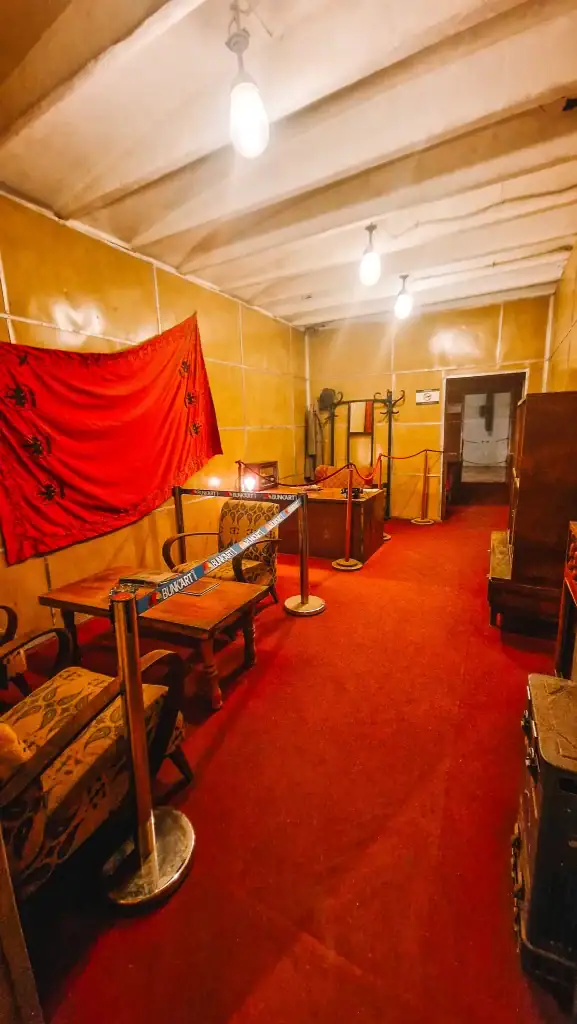
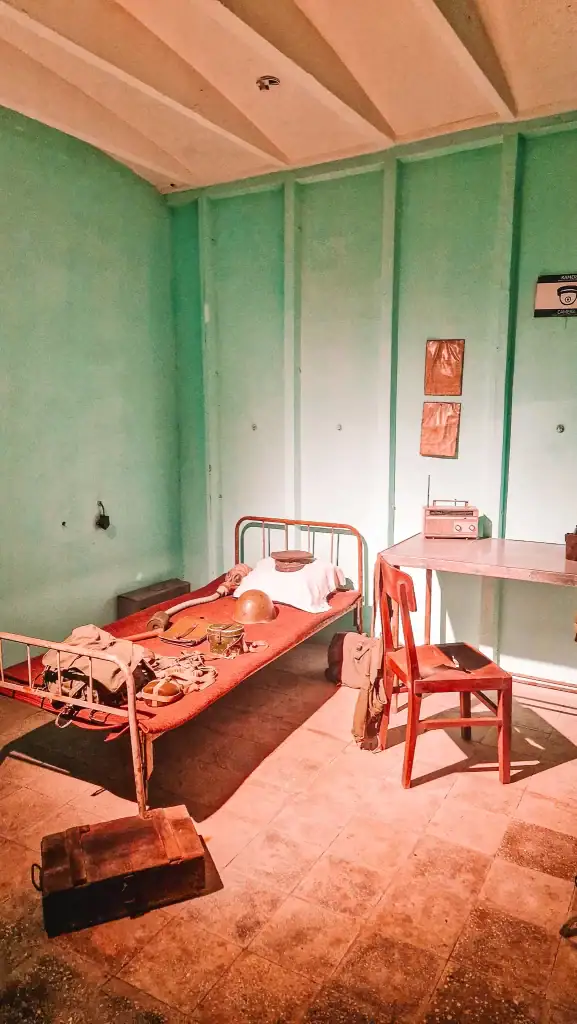
While at times I felt there was a bit too much information to take in, I enjoyed seeing the recreations of Hoxha’s rooms and others used by senior members of the government. I also enjoyed the focus towards the end on the lives of ordinary Albanians, including the mind-blowing fact that as furniture production was deeply controlled by the state, everyone essentially had one of three available furniture sets.
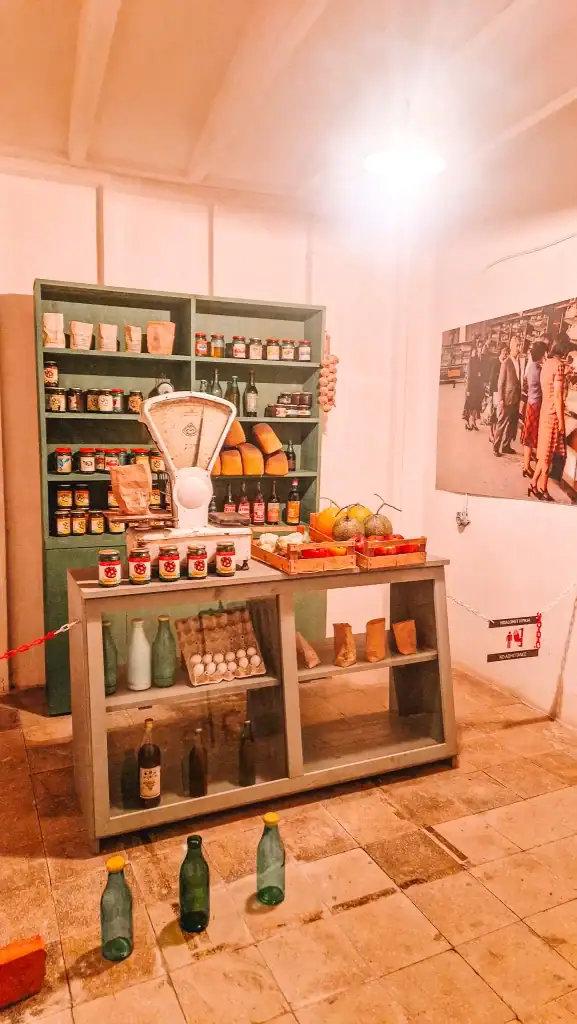
There’s also a section on rationing in Albania, which existed throughout the communist period – the milk bottles below represent people’s places in early morning food queues.
The Bunk’art Museums are among my top cultural highlights in Albania, North Macedonia and Kosovo – to find out the others, check out the full guide.
Have lunch with a view on Dajti Mountain
Cost: €15 return for the cable car
💡 Honest take: Unless you’re heading there for lunch, I don’t recommend visiting Dajti Mountain on a short trip. While the views are lovely, there’s not much to do at the top — and at €15, it’s not a budget-friendly choice.
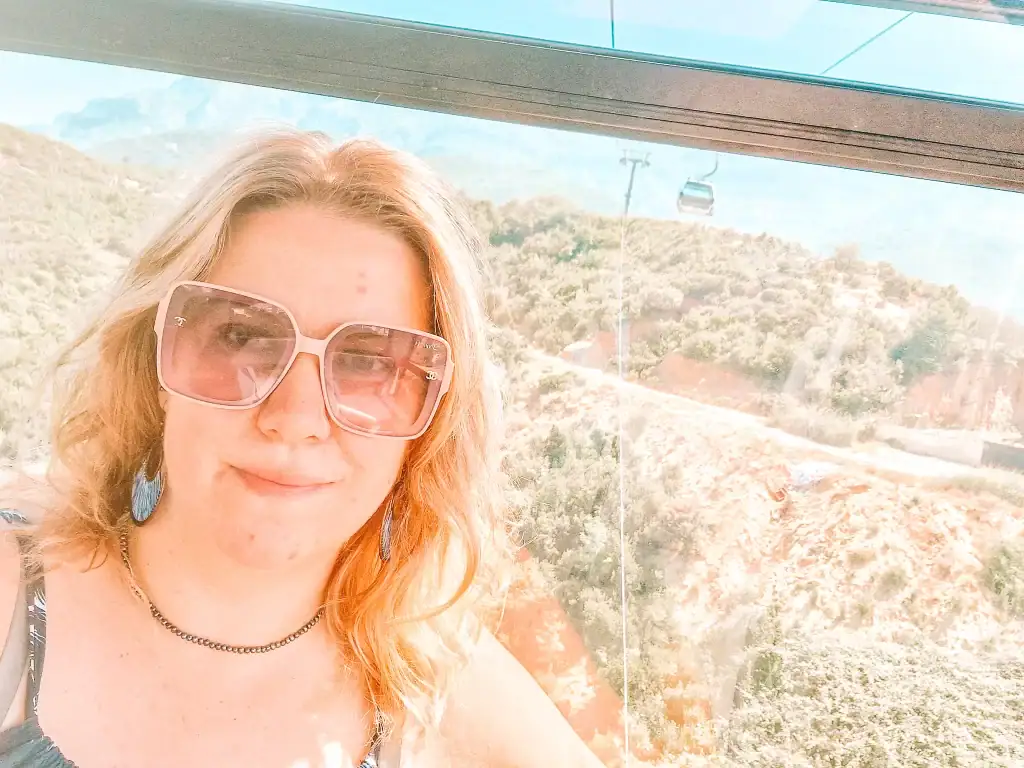
After Bunk’Art 1, walk a few extremely steep minutes uphill to the Dajti Mountain Cable Car. You’ll be swept across the Albanian countryside to the top of Dajti Mountain in cable cars that take up to 8 people, although I had mine to myself! The ride does take a while, so you’ll have plenty of time for selfies.
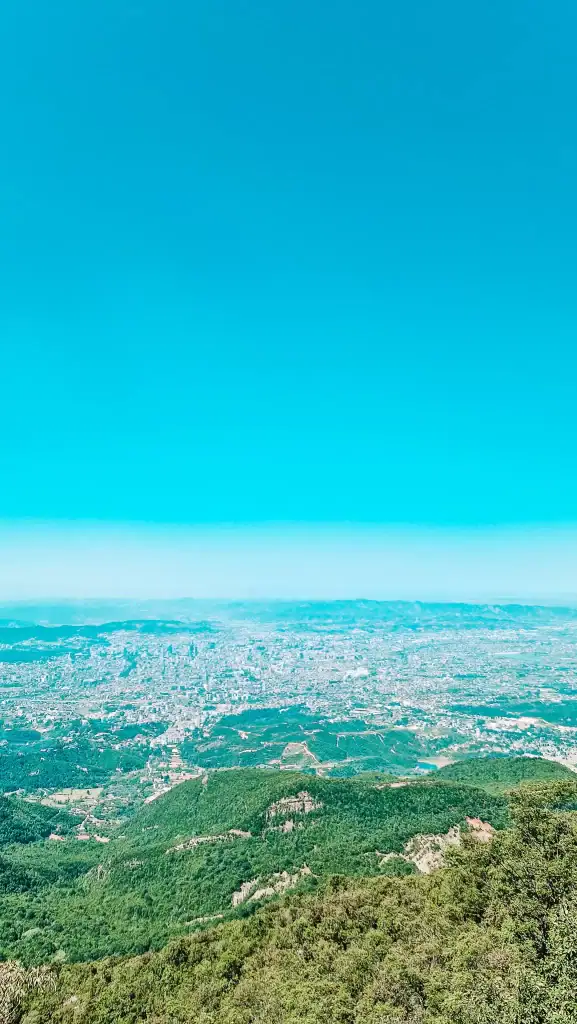
At the top of the mountain, visit the photo balcony before heading for lunch at Balkoni Dajti. This restaurant is on the side of the mountains with views across Tirana (and all the way to the Adriatic on a clear day, apparently).While I didn’t get to visit, it has strong ratings on Google (4.4 from over 1k reviews) and serves traditional Albanian food as well as pizza.
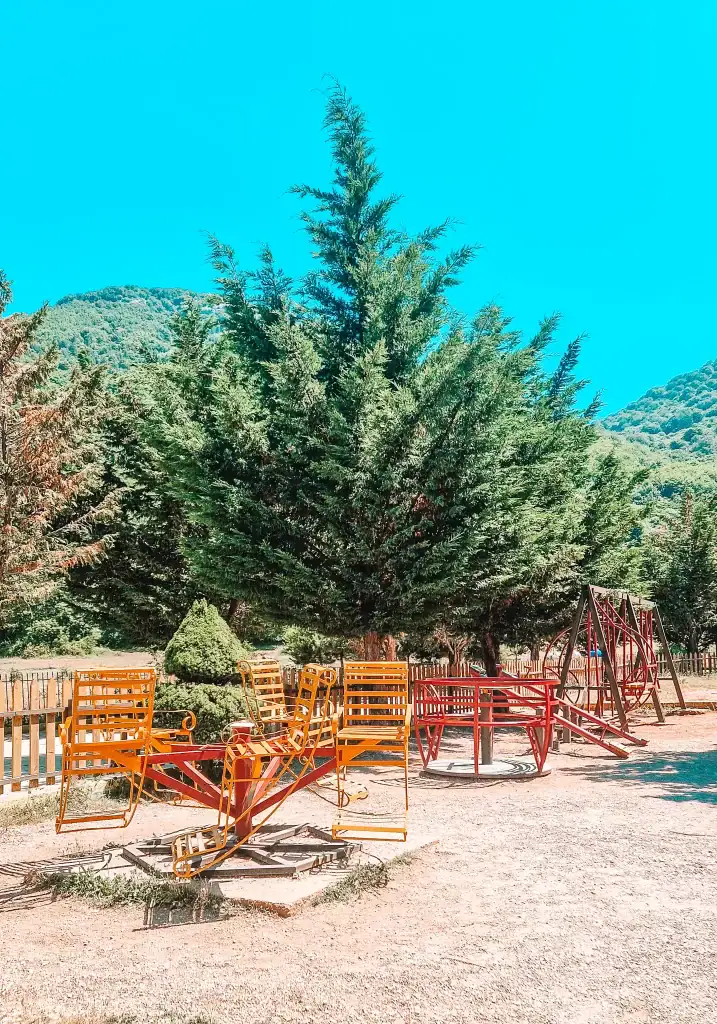
You could also enjoy some mini golf, or if you’re keen to shoot a gun, try the paintball shooting range. If you have kids, there’s this retro playground that they might enjoy, as well as a more modern one.
Learn about state surveillance at the House of Leaves Museum
Cost: 700 LEK (about €7)
After a lazy lunch on Dajti Mountain, head back into central Tirana to continue exploring this fascinating city.
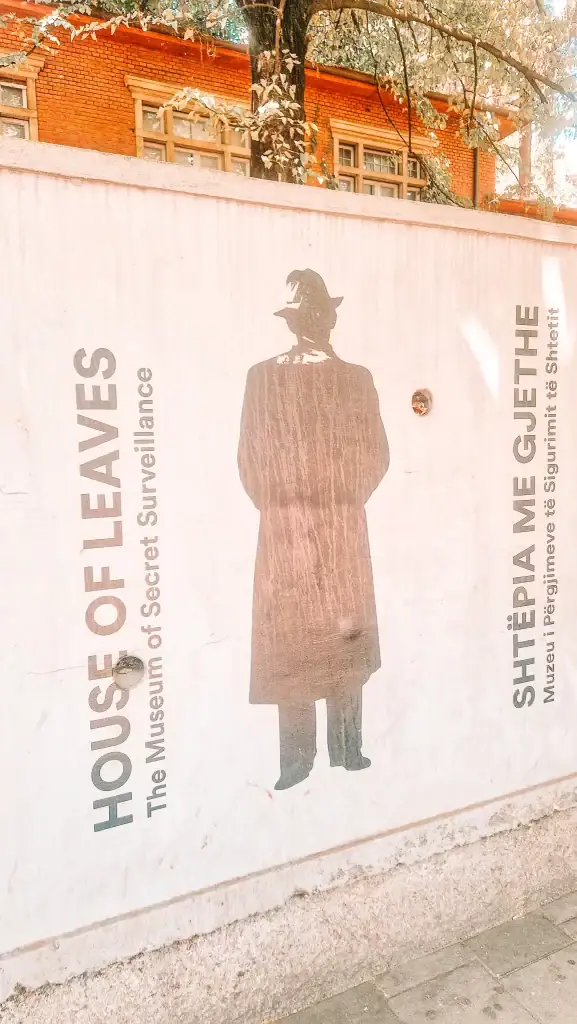
The beautiful House of Leaves is another museum where you can learn about Albania’s communist past. This gorgeous house was built in the 1920s to be one of Albania’s first hospitals, but was co-opted after the Second World War to become the centre of spying and surveillance in Albania.
The museum concentrates specifically on this element of the communist era, detailing the methods used to spy on ordinary Albanians suspected of disloyalty to the state. There are huge collections of hardware from different decades, including some seriously nostalgia-inducing handheld video cameras from the late 1980s and early 1990s.
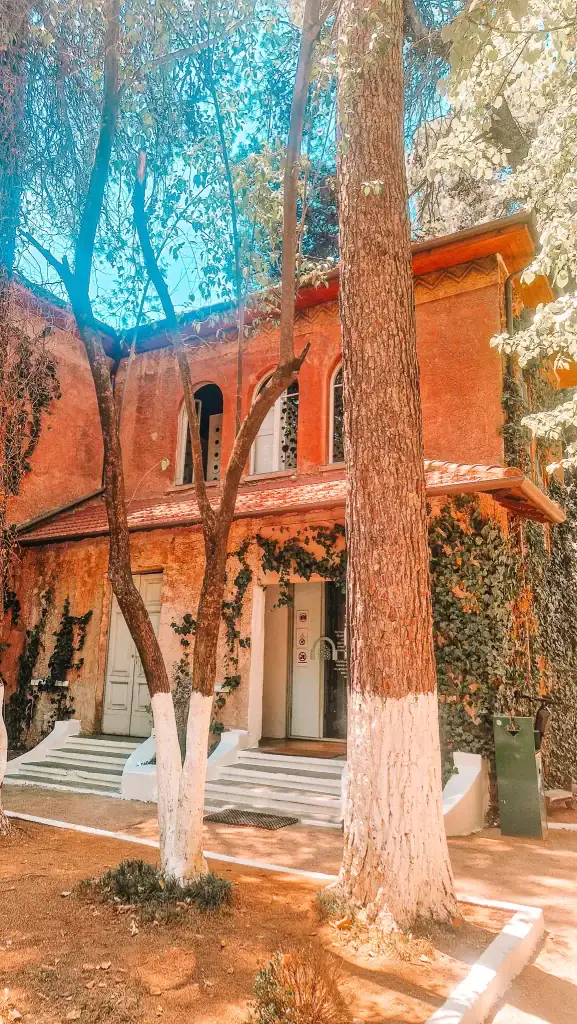
The House of Leaves won the 2020 Council of Europe Museum Prize. This award recognizes the museum’s contribution to promoting cultural heritage and European values.
💡If you’re looking for more information about state surveillance and persecution during the Hoxha dictatorship, try the Site of Witness and Memory in Shkoder – one of my best things to do in this relaxed city.
Visit the Tirana Pyramid in the evening
Accessibility: there is a lift available for those unable to climb the stairs.
After your time in Tirana Park, head back to central Tirana to visit the famous Tirana Pyramid. Originally built in 1988 as a museum to Albania’s dictator Enver Hoxha, the museum has been completely transformed, and is something of a symbol of the country’s resurgence. The brutalist monument originally hosted Hoxha’s tomb, and after the fall of Communism it became many things, including a nightclub and eventually a rundown haven for drug use and homeless people.
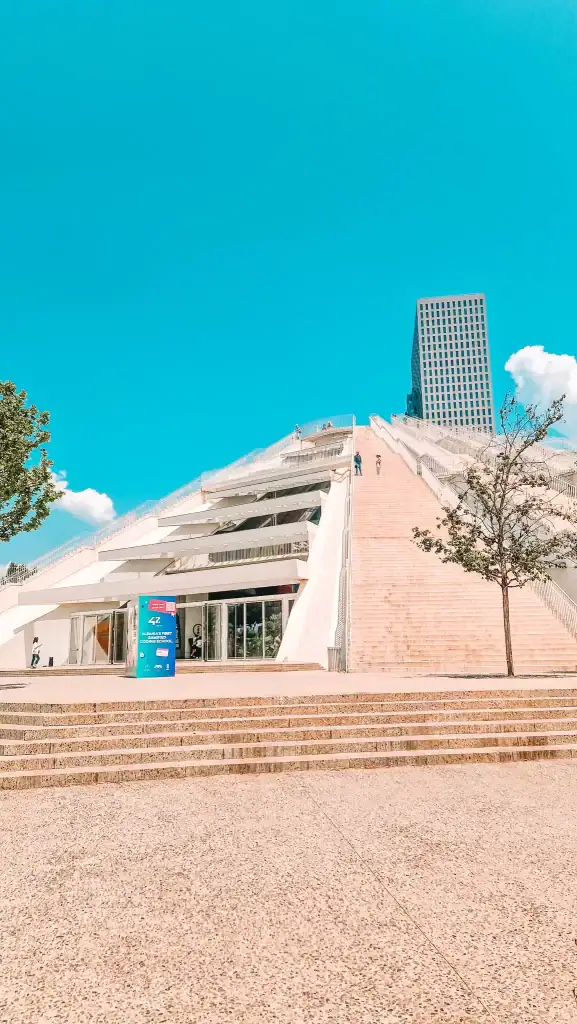
It’s now a modern space dedicated to developing IT skills and international cooperation – particularly important after the years when Albania was closed off to the world. Many of the rooms are used by a non-profit supporting young people to develop IT skills after school.
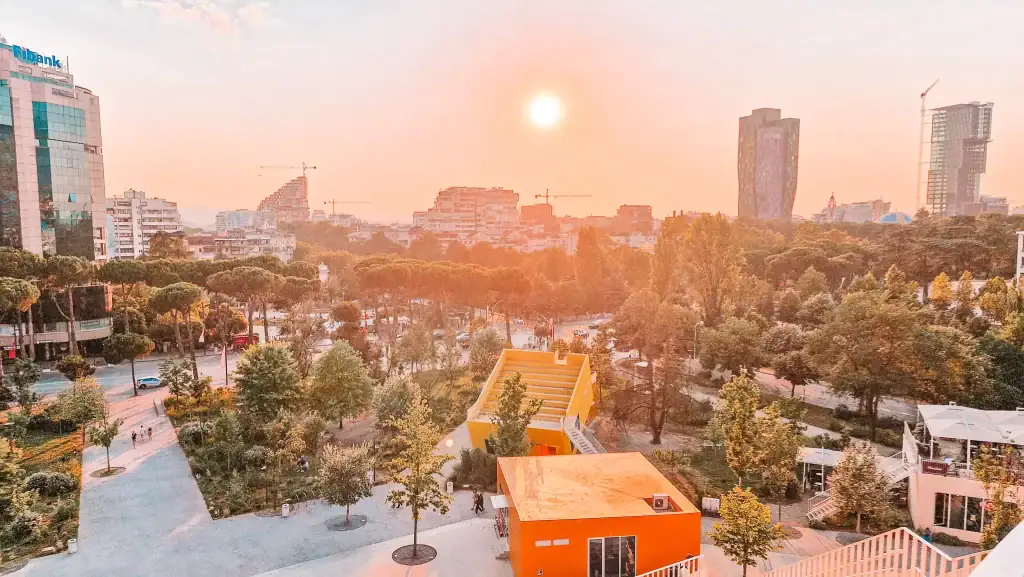
Climb the steps to the top of the pyramid to find sweeping views across Tirana. This is best done in the evening, particularly in the summer, as there is no shade at the top.
Shop, eat and drink at Tirana’s New Bazaar
Cost: free to wander
About ten minutes walk from the Pyramid is my favourite spot in Tirana. The New Bazaar area hosts both the traditional meat and fish markets, which still function today, and a more touristy souvenir market, which has some cool retro and second hand stalls mixed in. There is a small plaza with the souvenir market in the middle, with a host of decent restaurants around the edge. Go a bit further on and you get to an enormous plaza with more local cafes.
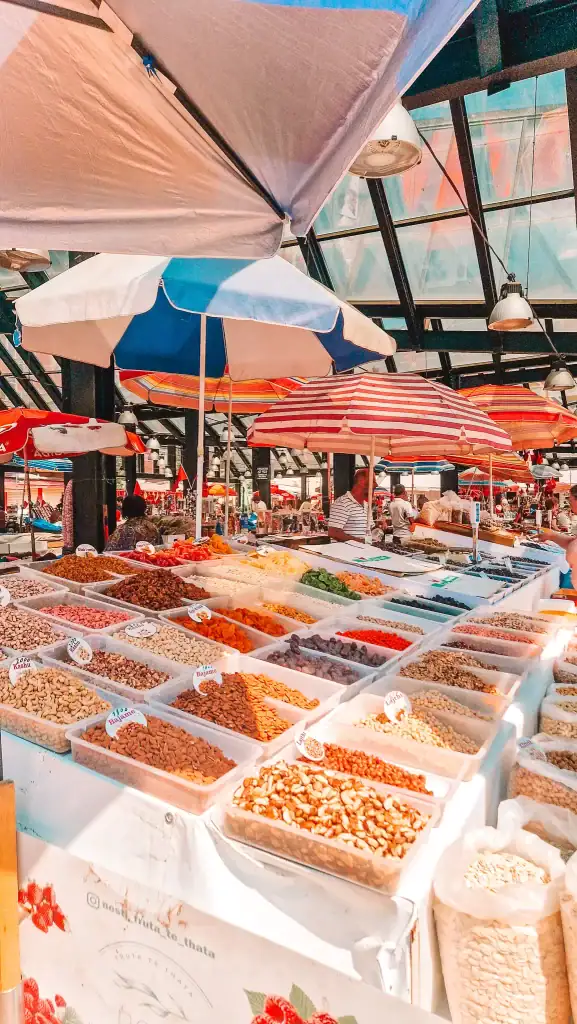
New Bazaar is a thriving area in the evening, and the perfect place to come for some souvenir shopping followed by a cold beer. There are also some highly recommended restaurants in this area – Oda’s Garden was recommended by several tour guides and offers live music as well as traditional Albanian food.
🧳 Planning to explore before hotel check-in or after checkout? Drop your bags at a secure spot through Radical Storage. They have multiple partner locations around central Tirana, including near the New Bazaar and Pyramid of Tirana.
Bonus: Spot the street art on Tirana’s electricity boxes
Cost: free
One of my favourite things about travelling is how much more common street art is pretty much everywhere, compared to the UK (although big shout out to the Bowie mural in Brixton near where I grew up).
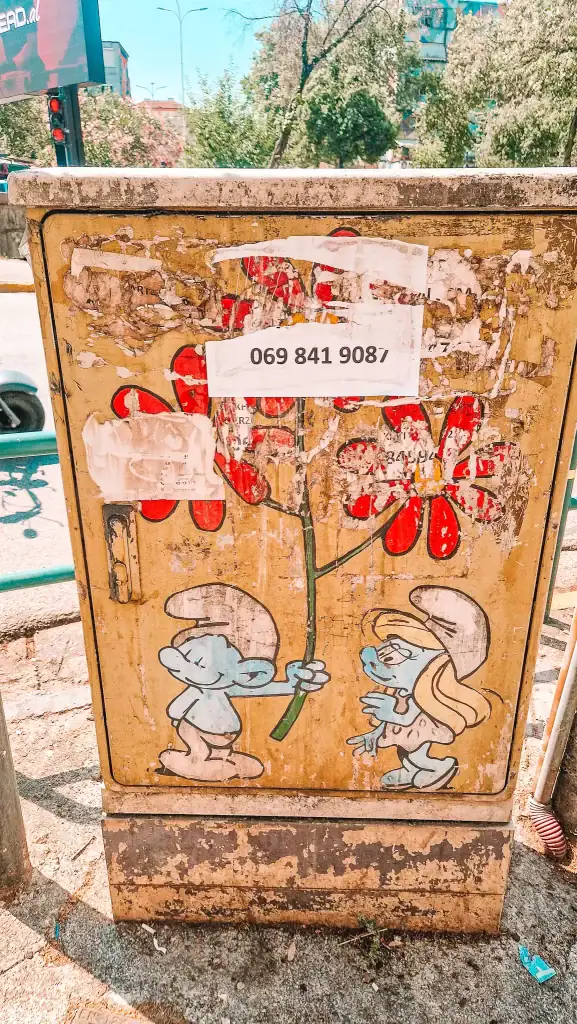
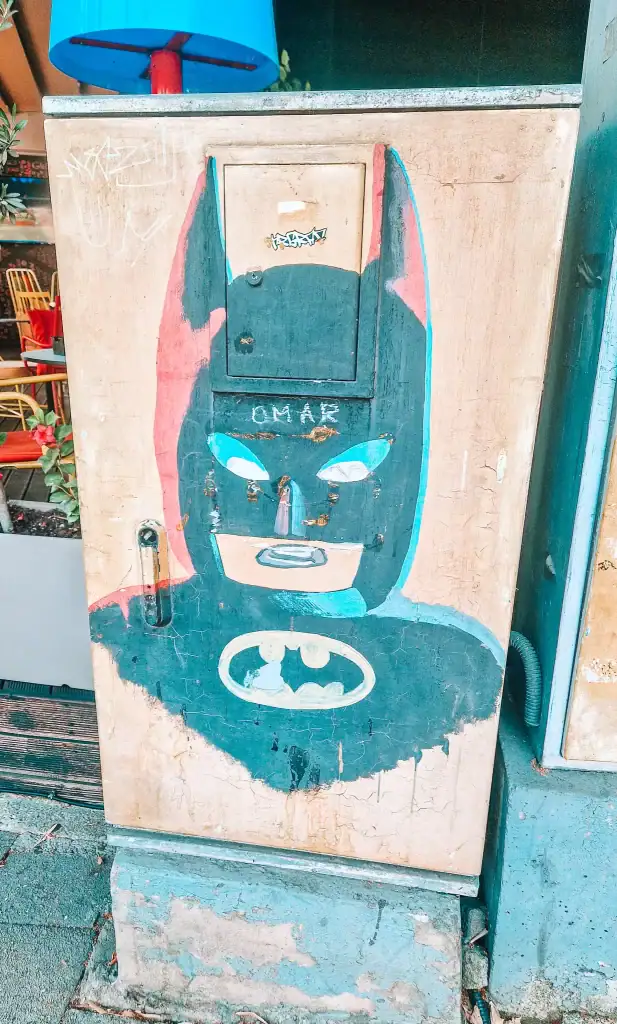
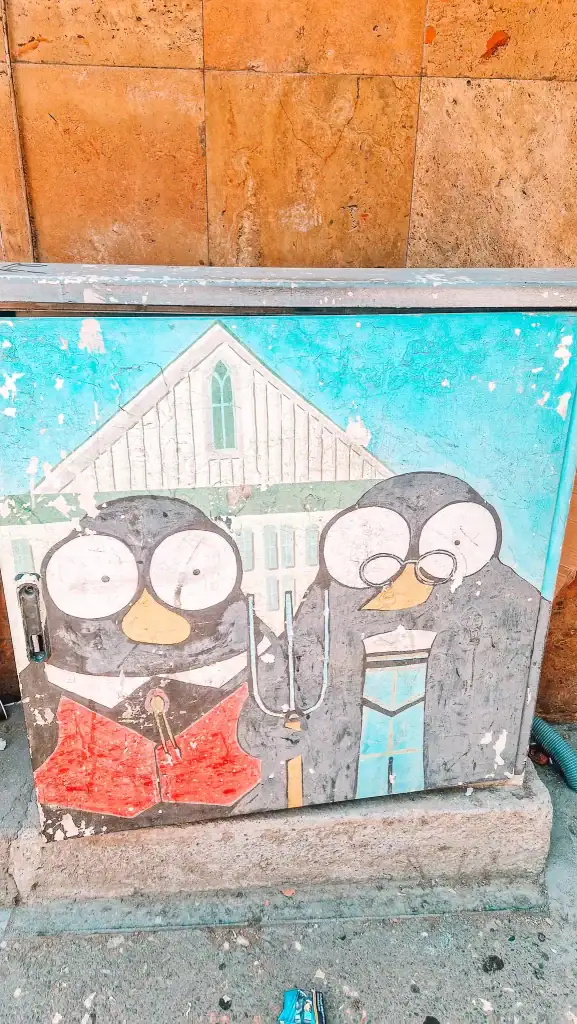
In Tirana, there is often stunning street art on apartment buildings in more residential areas – keep your eyes peeled if you go on any days trips from Tirana. But in central Tirana, there is artwork on the electricity boxes on the street itself – I’ve put some of my favourites below!


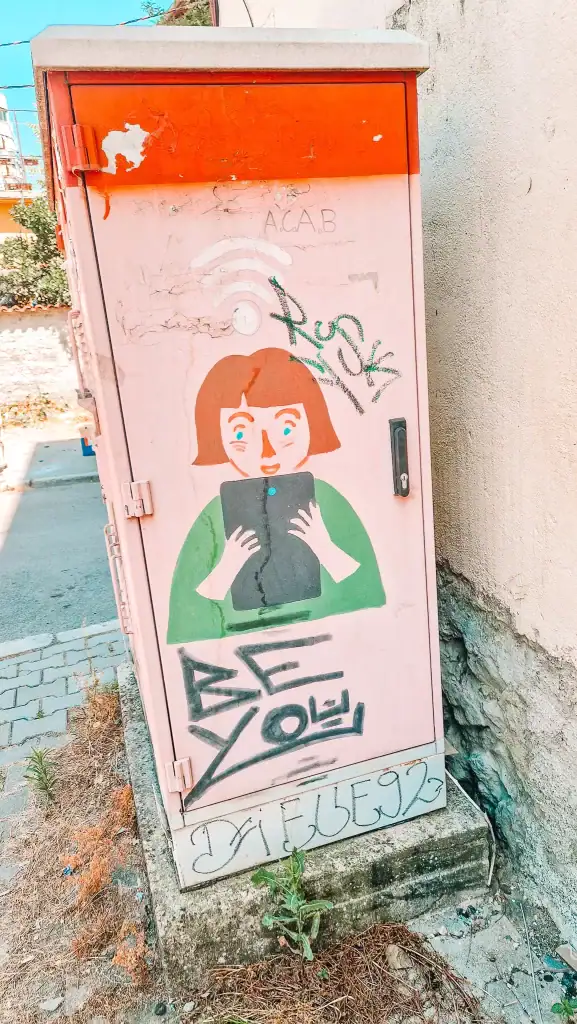

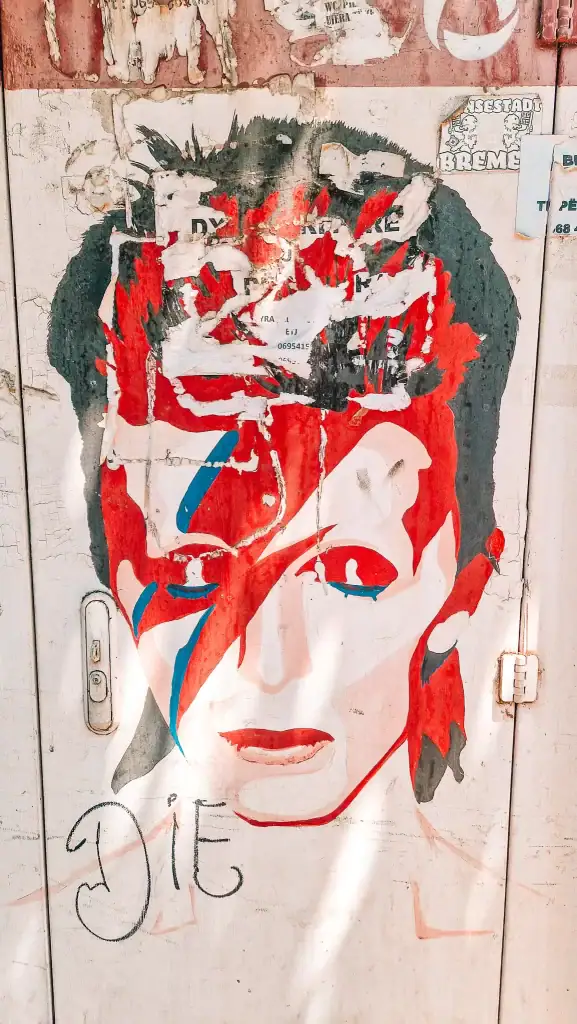
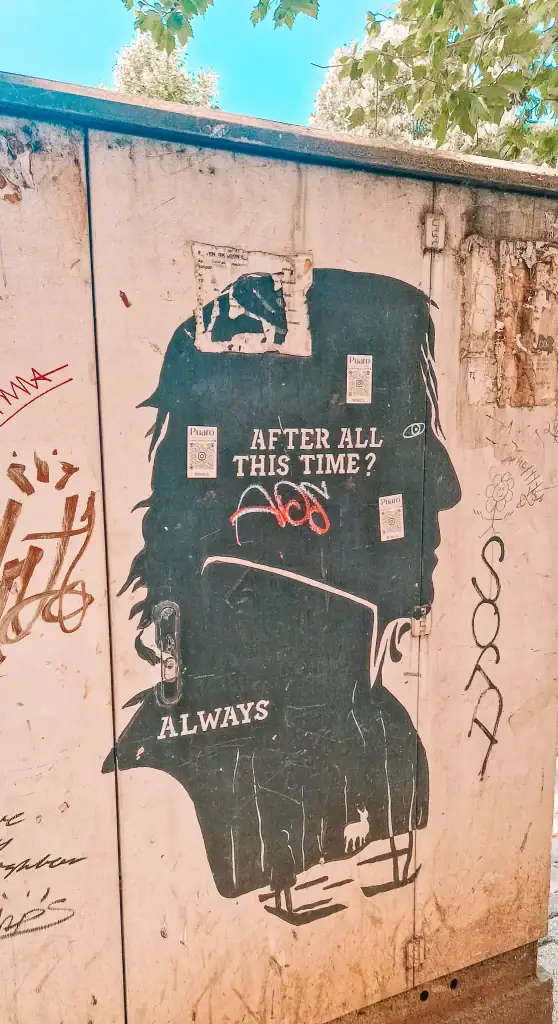
Planning to spend more than 48 hours in Tirana?
Researching those budget flights, and finding it cheaper to extend your weekend getaway by a day? Don’t worry – I’ve got you.
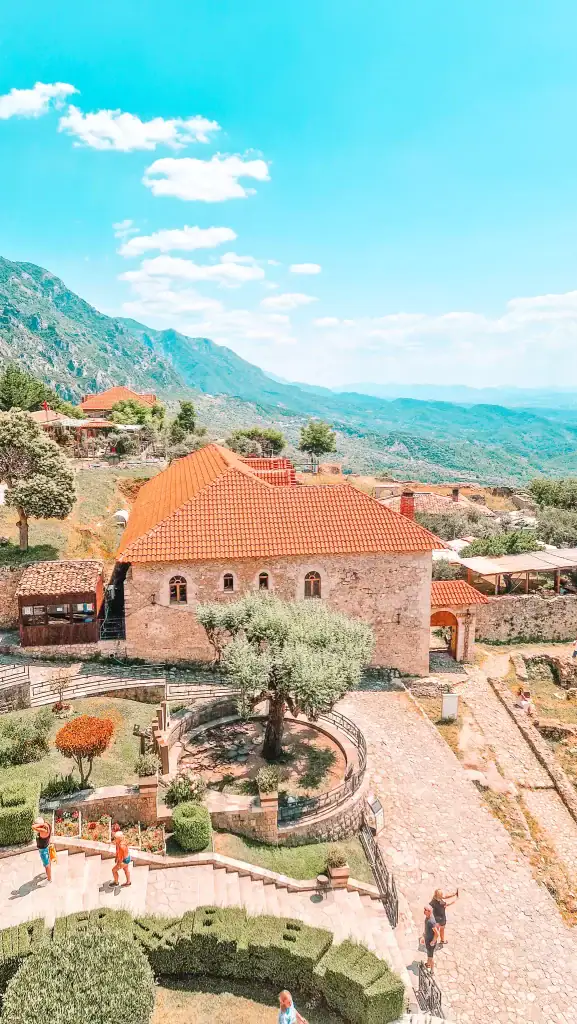
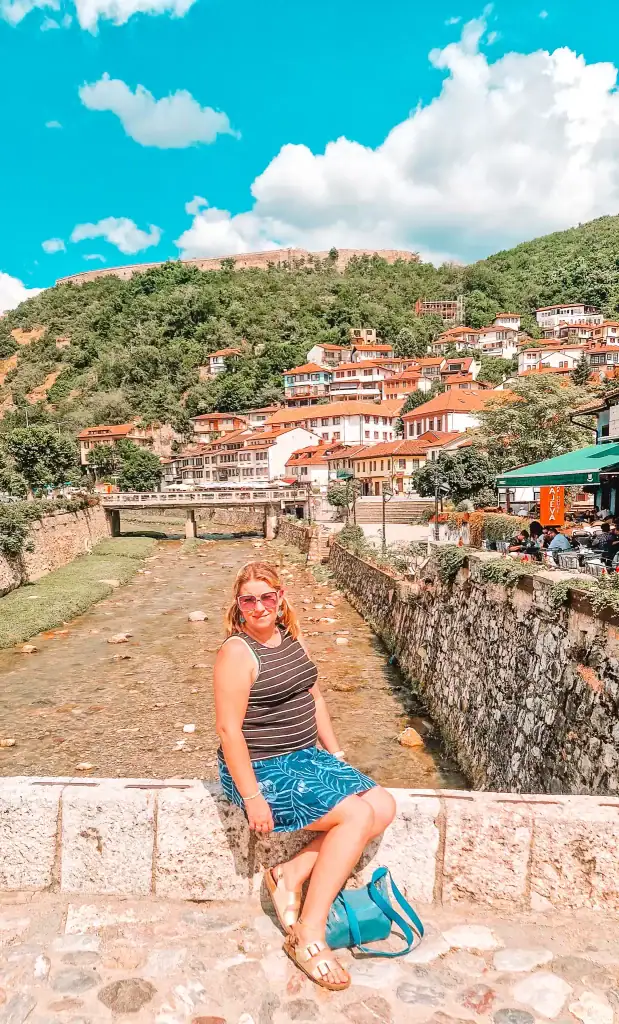
Tirana’s central location in Albania was one reason it was chosen in the 1920s to be the nation’s new capital, but it also means that there’s a variety of great day trips that are easily accessible from the capital. Check out my guide to the best of them, including historic Berat, beautiful Kruje and even a quick dive into Europe’s newest country, Kosovo. You can even take daytrips to the beautiful Kotor in Montenegro or across the border to stunning Lake Ohrid in North Macedonia!
👉 If you’re also heading to Skopje, check out my guide to the best day trips from North Macedonia’s capital.
Where should you stay in Tirana?
If you are visiting Tirana for 2 days, I recommend staying in central Tirana.
🚶 Near Skanderbeg Square – Best for First-Time Visitors & Easy Departures
The area around Skanderbeg Square puts you in a good location for the key tourist sites
- Urban Rooms provides a traditional hotel experience with an exceptionally high rating of 9.2 from over 1.3k reviews. It’s just steps from Skanderbeg Square
- Cozy Apartments is also incredibly close to the square, and provides modern apartment-style facilities, including a kitchenette. It has a high rating of 9.1 from over 350 reviews.
🍸 In the Blokku Area – Best for Nightlife & Dining
If you want a livelier area full of bars and restaurants, Blokku is a trendy, upscale neighborhood with a social vibe.
- Vila 2 at Blokku Area provides a slightly more budget options, offering small rooms that nevertheless have modern facilities. It’s rated 9.3 from over 100 reviews
- Cloud 5 Blokku Rooms offers a higher standard of rooms with modern decorations. Rooms also have streaming services and a coffee maker. It’s highly rated at 9.2 from over 120 reviews.
🏡 Near the New Bazaar – Best for Local Flavour
Looking for a more local and authentic area? Try the area around the New Bazaar, which offers proximity to the centre in a more residential part of Tirana.
- Your House in Tirana offers apartment style stays with kitchens and a separate living area. It’s highly rated at 9.2 from over 100 reviews
I haven’t personally stayed at these hotels, but I only recommend places that meet my own standards for location, value for money, and guest reviews. I’ve chosen options I would genuinely consider for myself if they fit within my travel budget.
🛬 How to Get From Tirana Airport to the City Centre
🚖 Option 1: Taxi (Fixed Fare)
The official airport taxi charges a fixed fare of €22 / 2200 LEK to central Tirana. Prices should be clearly displayed inside the car, so there’s no need to negotiate. This is the easiest option if you want a direct, no-fuss ride.
⚠️ Heads up: As of July 2025, roadworks near the airport are causing heavy traffic delays. If you’re heading to the airport, give yourself extra time.
✈️ Want a stress-free arrival?
Welcome Pickups offers a stress-free experience — your driver meets you at arrivals holding a sign, and you skip the hassle of currency exchange or data issues right off the plane. Ideal if you’re arriving late, solo, or just want peace of mind.
👉 Book your airport transfer with Welcome Pickups here.
🚗 Option 2: Rideshare with Patoko
For a slightly cheaper option, try Patoko, Albania’s local rideshare app. Fares from the airport to central Tirana are currently around 1800 LEK (as of July 2025).
✅ Bonus: You don’t need an Albanian SIM to register — confirmation is done via WhatsApp. Great if you’re using an eSIM (more on that below!).
💡 Staying connected is easy with an eSIM. I’ve used Airalo many times and had flawless coverage from the moment I landed. No kiosks, no hassle.
👉 Get your Albania eSIM from Airalo now.
🚌 Cheapest Option: Tirana Airport Bus
If you’re on a budget, the Rinas Express runs 24/7 between Tirana Airport and the city centre.
- Cost: 400 LEK (~€4)
- Duration: ~30 minutes (traffic depending)
- Frequency: Every hour
- Pickup/Drop-off: Behind the Palace of Culture at Skanderbeg Square
🎟️ You can buy your ticket in advance on Gjirafa Travel — they also cover some intercity routes across Albania.
🧳 Need to store luggage before or after your flight? Radical Storage has secure drop-off locations near the airport bus stop in central Tirana.
👉 Book your luggage storage here.
What to pack for Tirana
🧳 A few essentials made my time in Tirana significantly smoother:
- Portable fan — the heat in July is no joke
- Power bank — especially useful for long museum visits or Dajti day trips
- Multi-Port Plug Adapter – my go-to for travel → fast charge + universal.
- Selfie stick – get those cable car selfies
🧳 Plan Your Tirana Weekend in 5 Minutes
✅ Flights booked? Great. Here’s what to do next:
Here’s what I recommend booking in advance:
Lock in the essentials now → more time for exploring later.
Frequently asked questions
What’s the best time of year to visit Tirana for a weekend trip?
Spring (April–June) and early autumn (September–October) offer pleasant weather, fewer crowds, and vibrant city life. They also offer better prices, as Albanian tourism relies on summer beach tourists.
Summer is hot (it is 37c at the time of writing), but still lively—especially in the evenings when locals fill the parks and cafés.
Is Tirana easy for tourists?
Yes. Tirana is considered safe and friendly for visitors. The British Foreign, Commonwealth and Development Office (FCDO) reports that crimes against foreigners are very rare.
Use common sense as you would in any city and watch your belongings in busy areas.
English is commonly spoken in English, especially in the hospitality and tourism sectors. Older Albanians may not speak English and use of Google Translate is not as common as in other countries, but people are friendly and helpful – on several occasions, passing strangers stopped to help me with ad-hoc translations e.g. on buses and in shops.
How walkable is Tirana?
Tirana is very walkable. Most key sights, including Skanderbeg Square, Bunk’Art 2, and the main café districts, are within a short walking radius. Tirana’s flat terrain and pedestrian-friendly zones make exploring easy and enjoyable. However, if you’re going a bit further, for example to Bunk’Art 1, Tirana Park or the cable car, Tirana has a decent bus network. Tickets cost 40 LEK (around 0.4 euros) and many buses run frequently.
👉 If you’re travelling more widely in Albania, check out my guide to Albania’s buses.
Two days in Tirana might not seem like much, but it’s just enough to get a real taste of what makes this city quietly captivating. From exploring its layered history at Bunk’Art 2 to unwinding in lush Tirana Park or discovering hidden stories at the Women’s Museum, the capital offers a weekend that’s both enriching and effortlessly relaxed. For me, after living here for a month and seeing much of Europe, Tirana stands out not because it shouts—but because it surprises. So if you’re planning a weekend away and want something different from the usual city break, give Tirana your 48 hours. It might just win you over, too.
Planning a Trip to Albania?
If you want a culture-first travel guide to inland Albania — with realistic itineraries, destination deep dives, practical bus travel guidance, and advice on extending your trip into neighbouring countries — Albania, Unlocked is designed to help you plan a confident, well-paced journey beyond the beaches.
👉 Explore inland Albania thoughtfully with Albania, Unlocked
If you’re still in the early inspiration or research phase, you can also download my free Culture-First Traveller’s Guide to the Balkans, covering Albania, North Macedonia, Kosovo & Bulgaria — focused on travelling with context, curiosity, and care.
👉 Get the free culture-first guide
And if you’d prefer someone to build a personalised itinerary for you — tailored to your time, interests, pace, and travel style — I also offer custom trip planning, including Albania and wider Balkan routes.
👉 Request a custom Albania itinerary
Em is the founder of Em’s Globetrotting Gems, a blog dedicated to honest, experience-driven travel across Europe and beyond. With over 52 countries explored and a passion for uncovering lesser-known destinations, Em spent a month living in Tirana in 2025 to get under the skin of Albania’s capital. Her writing blends cultural insight with practical tips, always from first-hand experience. When she’s not exploring new cities, you’ll find her editing on the road with an Americano in hand.
✅ All photos featured on this blog are from my personal travel experiences. No stock images are used.


Tirana has not been on my radar, but it looks like an amazing place to visit. The Women’s Museum especially looks like something I would love, and wandering around the New Bazaar is definitely something I would enjoy. The Namazgja Mosque is reminding me a lot of Hagia Sophia, I’ll have to add that one to my bucket list! Thanks for introducing me to Tirana! 🙂
What rich history! Thank you for the inspiration and beautiful photos..would love to visit someday.
What a great way to spend a weekend. And I love how you start your days with a coffee – I always start my days with a coffee too.
I didn’t know much about Albania and you have made it sound like a place to visit. Great photos and ideas.
I’ve never been to Tirana, but it looks like a great weekend getaway! I’ve heard many times that Albania is underrated, so I would like to check it out sometime.