
 Em
EmJust so you know: This post contains affiliate links. As an Amazon Associate, I earn from qualifying purchases. I may also earn a small commission if you book a tour, hotel, or buy something else through these links. It helps me keep this blog running and full of travel tips. Thanks for your support!
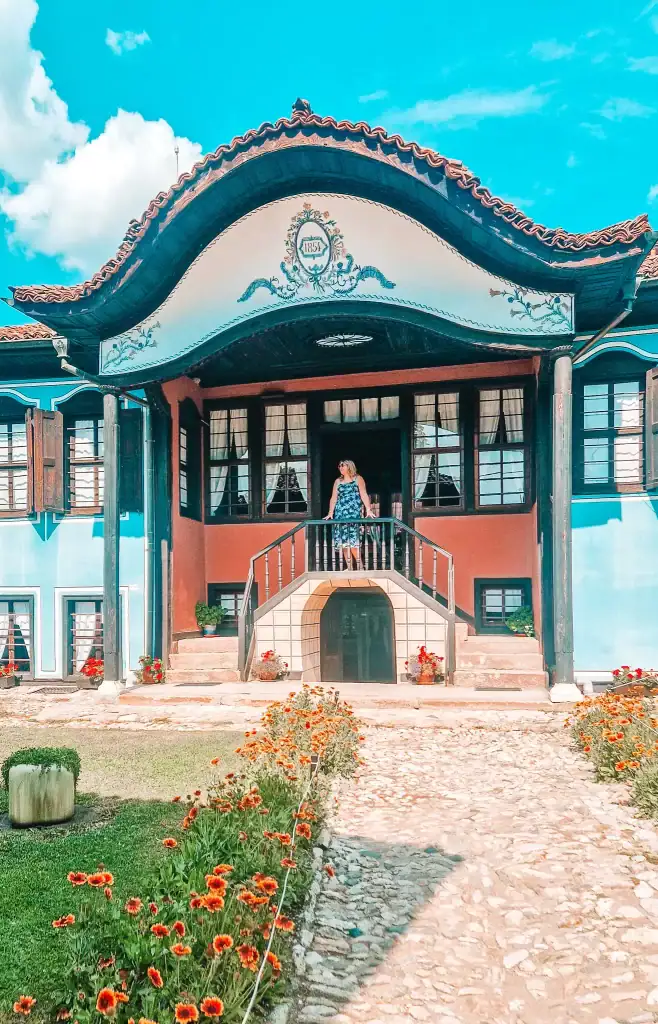
Tucked away in the Sredna Gora mountains, Koprivshtitsa is one of Bulgaria’s most colourful and historic towns. With its painted wooden houses, cobbled lanes, and mountain backdrop, visiting feels like stepping back into the 19th century. I spent a day wandering through merchant mansions, Revolutionary landmarks, and quiet courtyards, and it quickly became one of my favourite stops in Bulgaria.
All photos featured on this blog are from my personal travel experiences.
This guide covers the best things to do in Koprivshtitsa — from exploring Revival-era houses and learning about the April Uprising, to soaking up the atmosphere in traditional taverns. Whether you’re visiting on a day trip from Sofia or Plovdiv, or staying overnight to enjoy the town’s peaceful evenings, Koprivshtitsa is a destination that combines history, charm, and scenery in one unforgettable package.
📍 Read my guides to the best day trips from Sofia and the best day trips from Plovdiv to find the best day trip for you.
📚 If like me, you love reading about a country before you visit, check out my guide to the best books about Bulgaria.
Is Koprivshtitsa Worth Visiting?
Yes — Koprivshtitsa is absolutely worth visiting, especially if you want to experience Bulgaria’s cultural and historic heart. Unlike bigger cities, this small mountain town has preserved its 19th-century charm almost intact, with beautifully painted Revival-era houses, cobbled streets, and a slower pace of life.
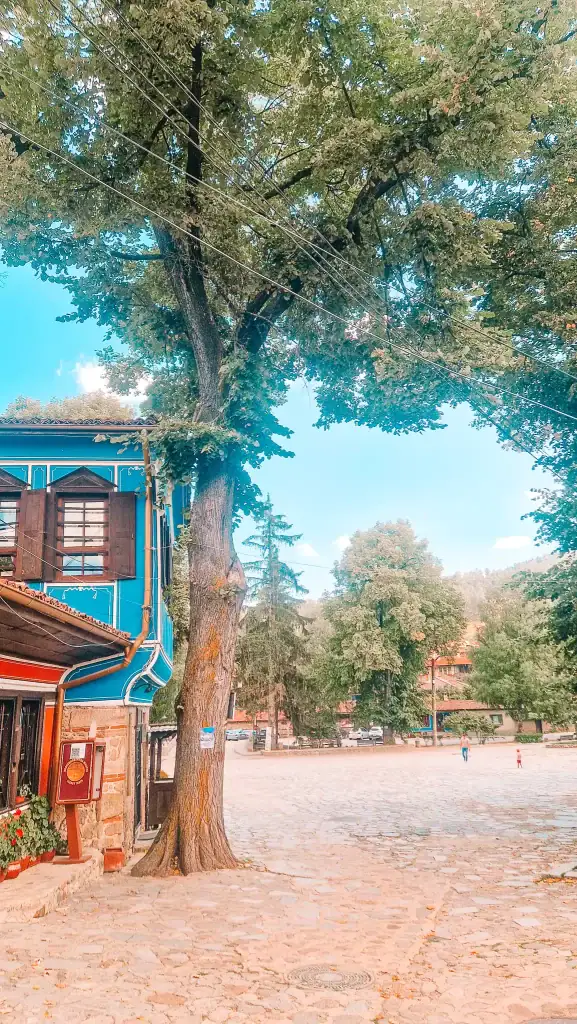
What I loved most, though, was the atmosphere. It’s peaceful, colourful, and surrounded by stunning mountain scenery. Whether you’re into history, architecture, or simply want to escape the bustle of Sofia or Plovdiv for a day, Koprivshtitsa is one of the most rewarding towns to visit in Bulgaria.
While Koprivshtitsa is worth visiting in it’s own right, it is also the perfect way to break your journey between buzzing Sofia and historic Plovdiv, as I did.
Why Koprivshitsa is so important in Bulgarian history
Koprivshtitsa is one of Bulgaria’s best-preserved National Revival towns, with brightly painted 19th-century houses that once belonged to wealthy merchants and influential revolutionaries. The town played a pivotal role in the April Uprising of 1876, when local revolutionaries sparked the rebellion against Ottoman rule — an event that ultimately paved the way for Bulgaria’s independence.
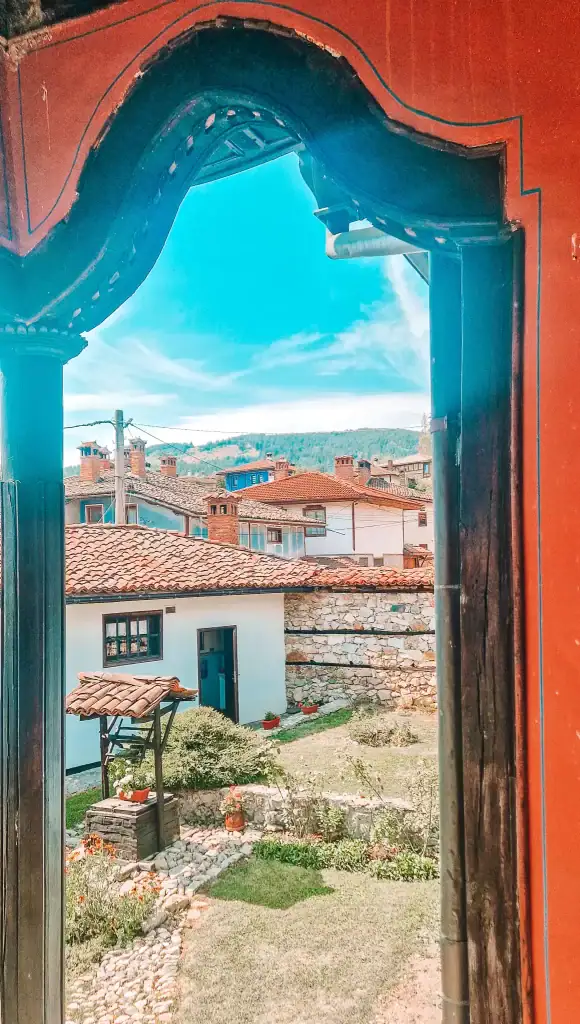
Walking through the town feels like stepping back into that moment — every square and house has a story, and many are now small museums that showcase both daily life and Bulgaria’s fight for independence.
Planning a culture-first Balkans trip?
Grab my free Culture-First Balkans Travel Guide — packed with weekend-worthy destinations from Bulgaria to Albania.
And if you’d prefer someone to build a personalised itinerary for you — tailored to your time, interests, pace, and travel style — I also offer custom trip planning, including wider Balkan routes.
Things to Do in Koprivshtitsa
Explore the gorgeous Revival-Era Houses & Churches
- Cost: Each house costs 7 BGN to visit. Many of them are available as part of a combi pass for 15 BGN
- Practicalities: Some buildings in Koprivshtitsa close on a Sunday and some on a Monday. If you’re visiting over a weekend, plan your time with this in mind (I did not, and missed a couple of things I wanted to see!).
The most important and fascinating thing to do in Koprivshtitsa is to explore the Revival-Era houses, which have been restored, like the beautiful Skenduli House in Gjirokaster, Albania, or the Robevci Family House in Lake Ohrid, North Macedonia. Many of Koprivshtitsa’s houses are tied to the Bulgarian Revolution, and while they’re all beautiful, each one takes a slightly different approach to what it covers.
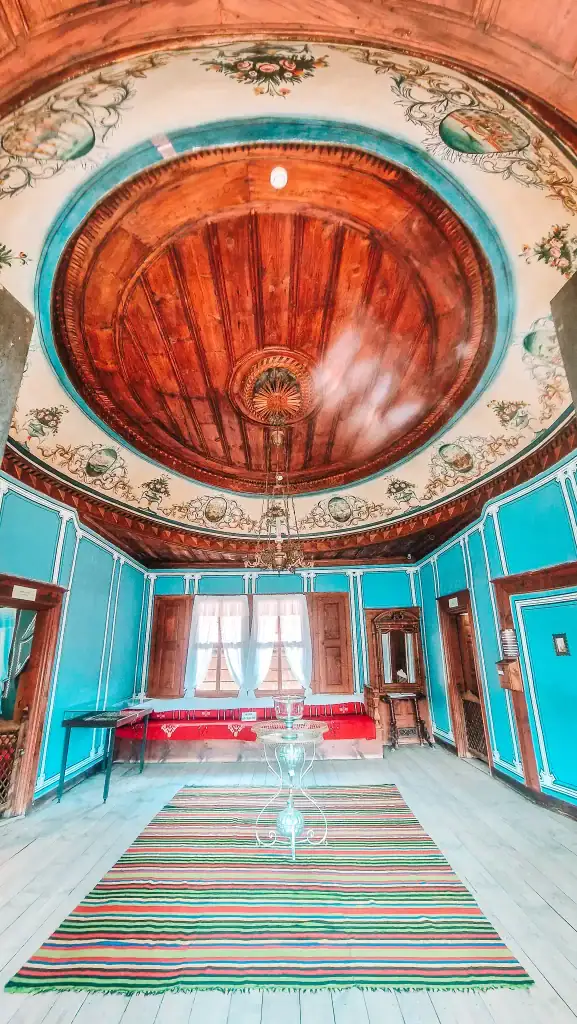
- Oslekov House
One of the most beautiful houses in Koprivshtitsa (although they’re all beautiful), the Oslekov House was the home of a famous merchant family. It was built in 1856 and is truly opulent inside – the most beautifully decorated in town. The family also used the house as a workshop, and you can see some of the history of weaving in Koprivshtitsa. Don’t miss the indoor well on the ground floor – a luxury the family would have really appreciated in winter!

- Todor Kableshkov House
This was the first house I visited, and it’s one of the highest in town, up a steep hill – but it was worth it! Todor Kableshkov was one of the leaders of the Bulgarian revolution, and this house focuses on that history. It’s a great stop for learning about Kableshkov himself, as well as the wider revolution.

- Dimcho Debelyanov House
The Dimcho Debelyanov House was my absolute favourite. It belonged to Debelyanov, a famous Bulgarian poet who lived a little bit later than the town’s revolutionaries, and sadly died in the First World War. While the house details his life and work, the majority of this is in Bulgarian, so it isn’t great for learning about his impact.
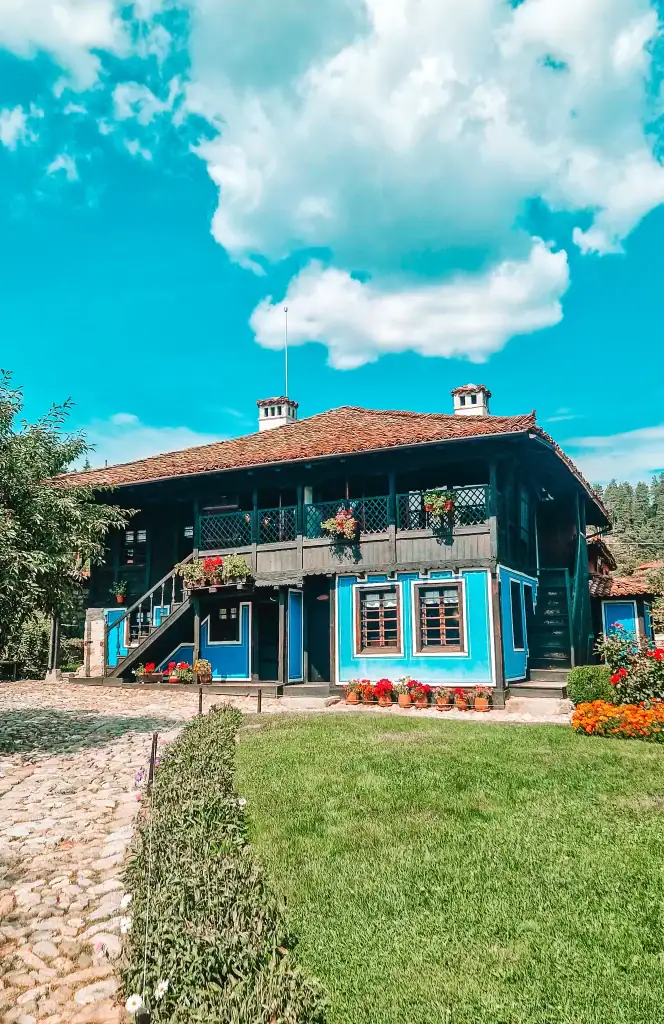
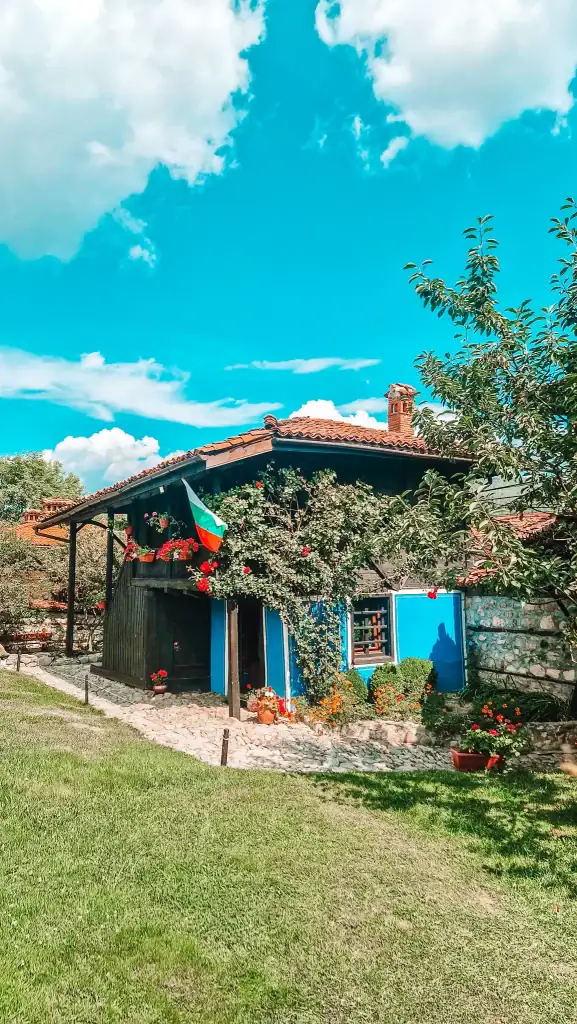
However, the house itself makes up for this. It’s smaller than the other houses on this list, and feels more like a cottage. I loved the beautiful blue colour and peaceful garden, and was so glad I visited.
- Lyuben Karavelov House
A bit further along the small stream that marks the middle of town is the Lyuben Karavelov House. Karavelov was a writer and revolutionary, and the house explores his role in shaping both the revolution and Bulgarian identity.
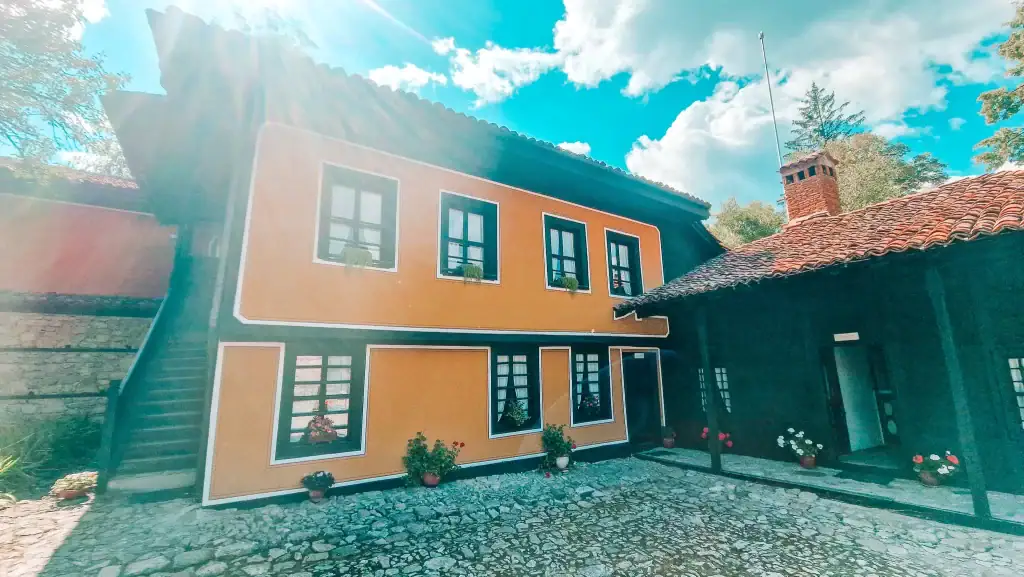
The museum also contains Koprivshtitsa’s first printing press, giving you an idea of why the town became such a cradle of revolution. What I found most fascinating about this residence was the two buildings – a winter and a summer house – which really showcased how the family would have lived.
- Lutova House Museum
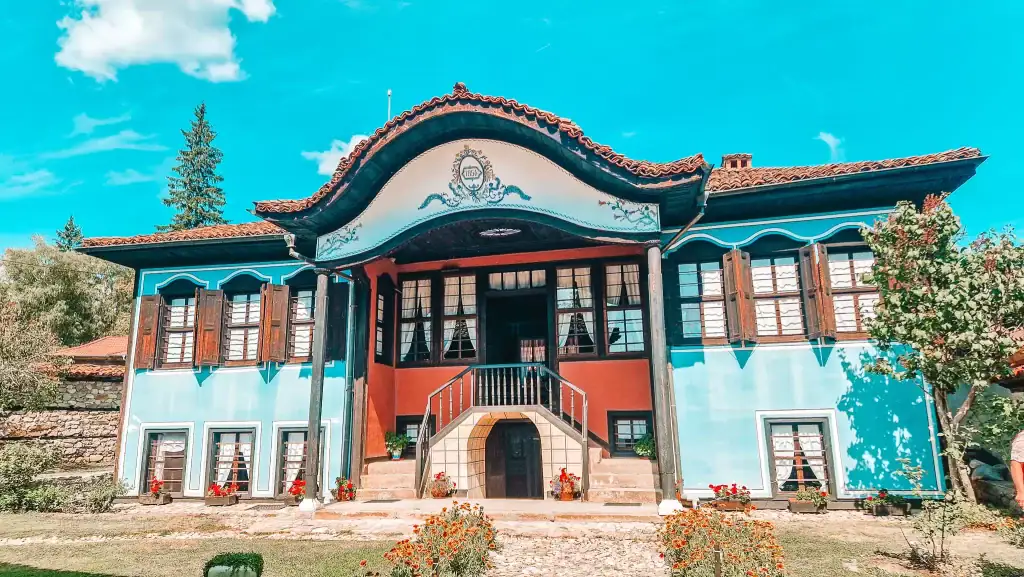
This house was built in 1854 for Stefan Topalov and later owned by a wealthy merchant called Lyutov. It’s famous for it’s incredible wooden ceilings and wall paintings. I particularly loved it for the light blue colour used both inside and out.
- Georgi Benkovski House
This house is dedicated to another of the leading figures of the April Uprising of 1876, and highlights the revolutionary fervor that started in Koprivshtitsa. Unfortunately, I didn’t get to visit this one as it was closed the day I tried to visit – some houses are closed on Sundays and some on Mondays.
- The School House
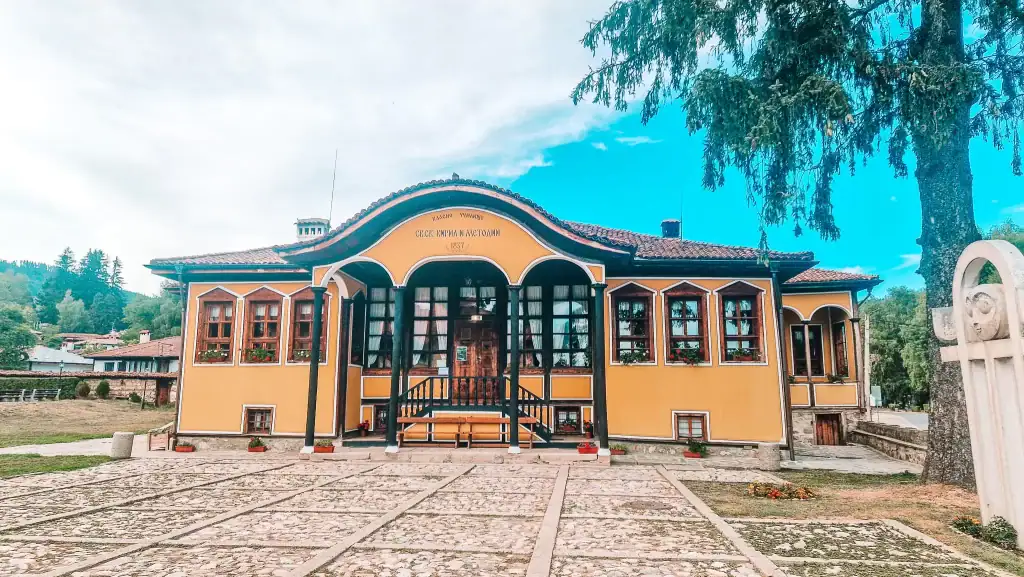
Another truly gorgeous building in Koprivshtitsa is the historic school house. Built in 1837, this former school is one of the first secular schools in Bulgaria, symbolising the National Revival’s push for education and cultural identity. Unfortunately I didn’t get to visit – another casualty of the museums closing on a Monday – but it looked fascinating from the outside.
- Church of the Assumption of the Virgin Mary (Uspenie Bogorodichno)
I stumbled across this gorgeous blue church while walking to the Todor Kableshkov Museum, and it was definitely worth popping in. Built in 1817, its Koprivshtitsa’s oldest standing church and one of the best examples of Bulgarian National Revival religious architecture. It was constructed with donations from the townspeople after the original medieval church was destroyed during Ottoman rule.
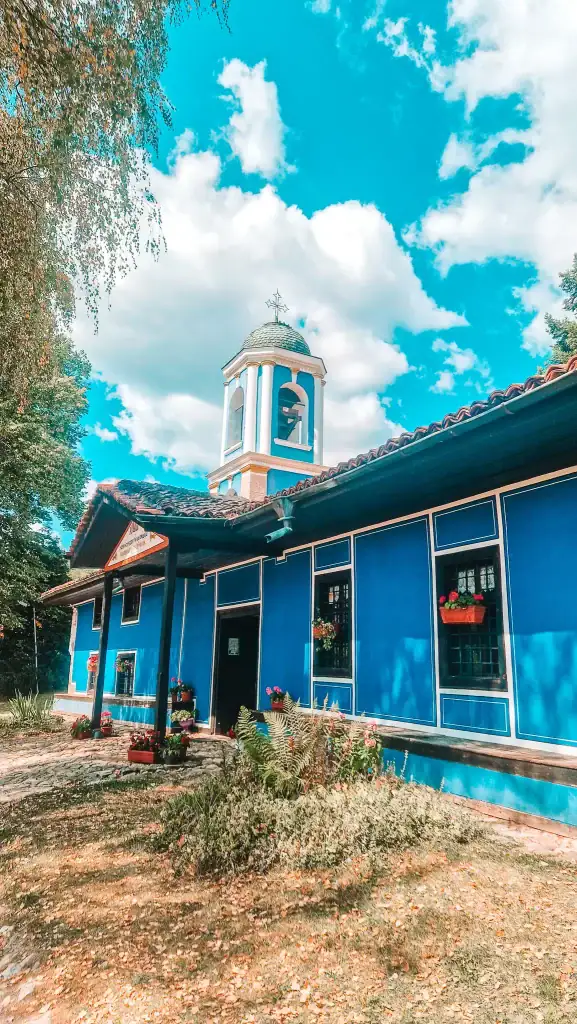
Inside, you’ll find beautifully carved wooden iconostases and colourful frescoes created by artists from the Tryavna school. The church also played a role in the town’s revolutionary history, as it was a gathering point for locals during the April Uprising of 1876.
Stroll the Cobbled Streets and relax at a local Mehana
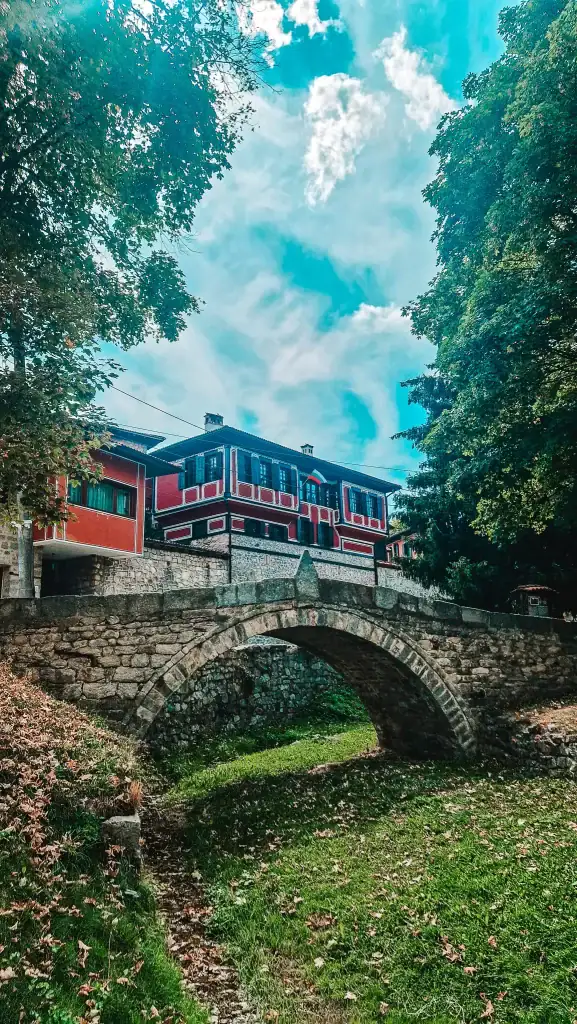
Koprivshtitsa is a town made for strolling and relaxing. As you wander between between the different house museums, you’ll find hidden alleys, picturesque bridges and beautiful private homes.
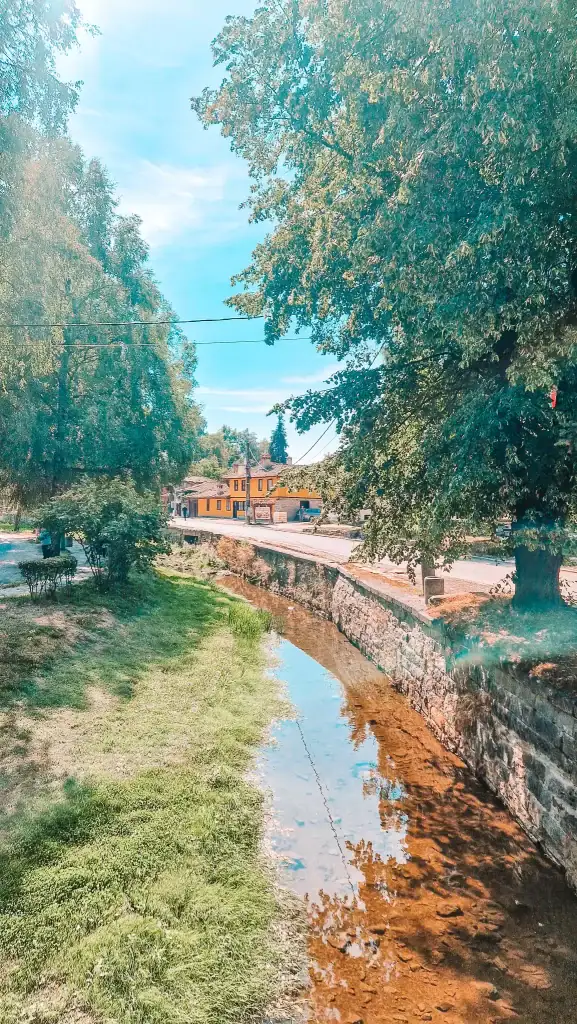
If you want a look at what life is like now for people living in the town, head down to the area near Guest House Todorini Kashti, where you’ll find the town’s few shops, kids enjoying the local playground, and the town elders sitting out for a coffee and a rakia.
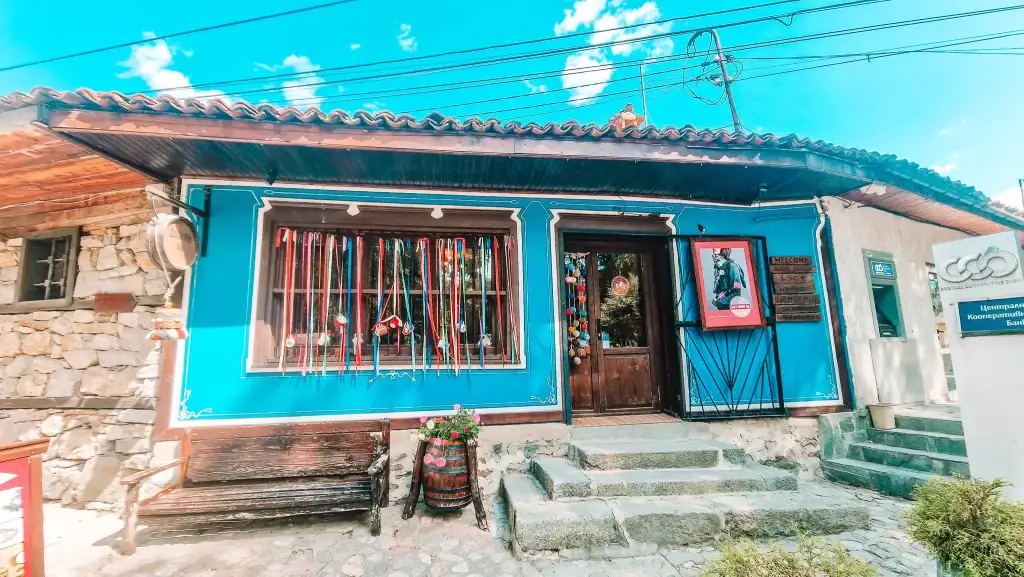

You should also visit Gift Shop 49, a local craft shop that offers handmade gifts. Even in September, it was a bit chilly early in the morning so I brought myself some of the knitted socks which are a traditional part of Koprivshtitsa’s industry.
If you’re looking for coffee or food, I recommend the following:
- Cafe at Tourist Complex Koprivshtitsa – for coffee and cakes in the town’s main square.
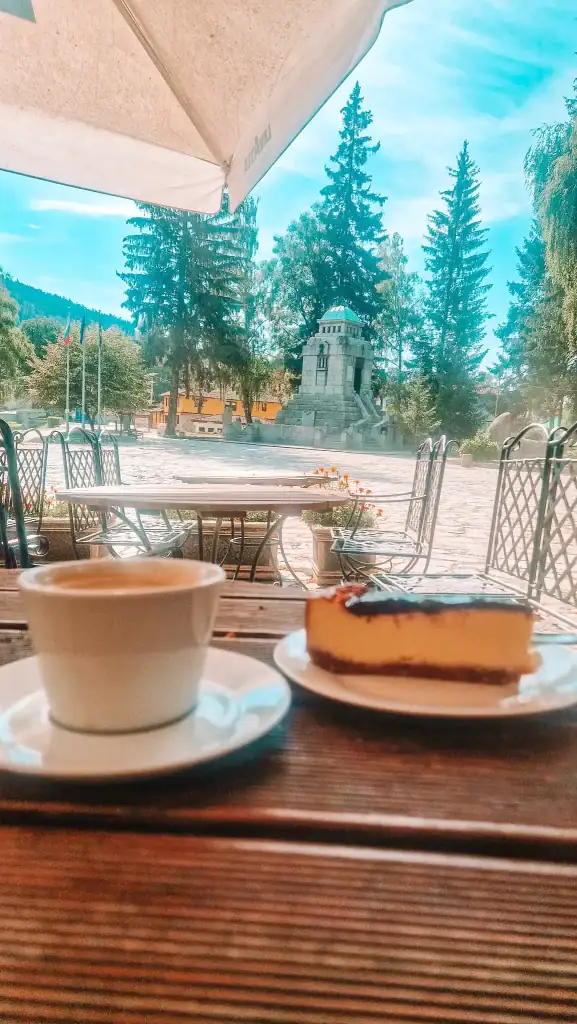
- Cafe at the blue building next to Antico – this is the alterative cafe, especially when the tourist complex is closed on a Monday. Serves small traditional coffees – my Americano was barely bigger than an espresso – but it was delicious. This only has a Cyrillic name, but its easy to find.
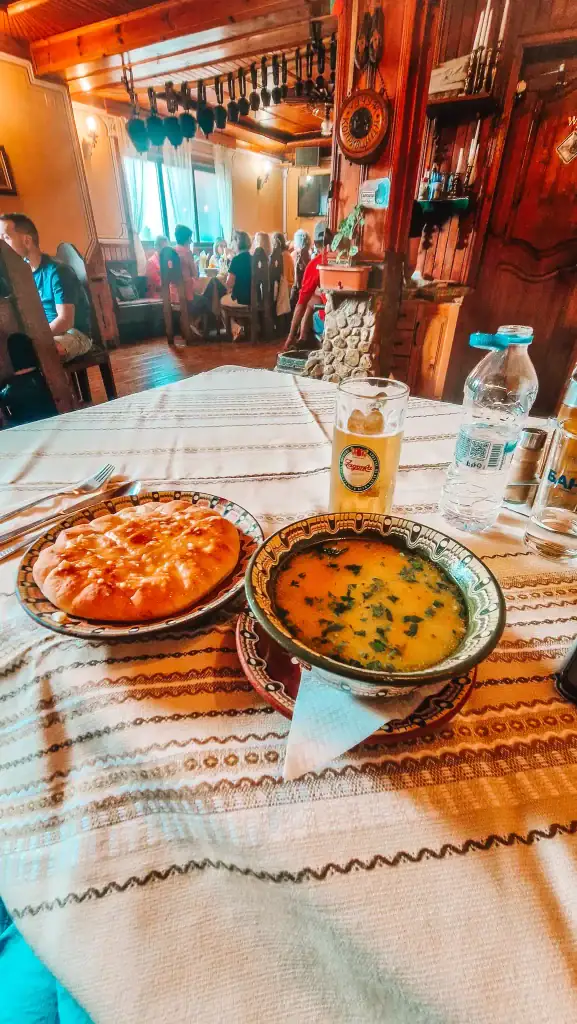
- Chuchura Family Restaurant and Hotel – following a recommendation from my hotel, I had lunch here and it was fabulous. This gorgeous spot on the main road through Koprivshtitsa was always busy when I was there, and offered a range of traditional Bulgarian food. I had the mushroom soup – always good to get some vegetables in while travelling – as well as a delicious flatbread.
- Restaurant Bulgaria – unfortunately I didn’t get to eat here as it was closed both days I was in town, but this was the other recommendation from my host.
Which Museums in Koprivshtitsa Should I Prioritise?
One of the biggest questions I grappled with while in Koprivshtitsa was how to prioritise which beautiful building to visit – I wish all my problems were like this! But it’s a real issue if you’re short on time, for example if you’re passing through on your way between Plovdiv and Sofia. Having visited most of them (I did get caught out by Monday closing for some), these are my recommendations
- Oslekov House – the most opulent with beautifully decorated interiors, and a central location
- Dimcho Debelyanov House – this gorgeous blue house is a quick visit and is too pretty to miss
- Todor Kableshkov House – talks through the Bulgarian Revolution and the role Kableshkov played, and as it’s right next to the Church of the Assumption of the Virgin Mary, you get extra bang for your buck
If you have more time, explore as many as you can – they’re the primary reason for visiting Koprivshtitsa. But these three will give you a good balance of beauty, history and revolution!
If you’re short on time or worried about museum closures, I really recommend these guided options (book here from Plovdiv or book here from Sofia ) — they cover the highlights without you needing to juggle schedules or transport connections.
Where to Stay in Koprivshtitsa
While Koprovshtitsa is a great day trip from either Sofia or Plovdiv, I really loved spending the night there. The town was so quiet after all the day trippers went home – it felt like I was experiencing something completely different. I had time to quietly wander the streets, have a glass of wine and just relax. If you want to spend the night, use the interactive map below to find your perfect guesthouse, or I’ve put my recommendations below:
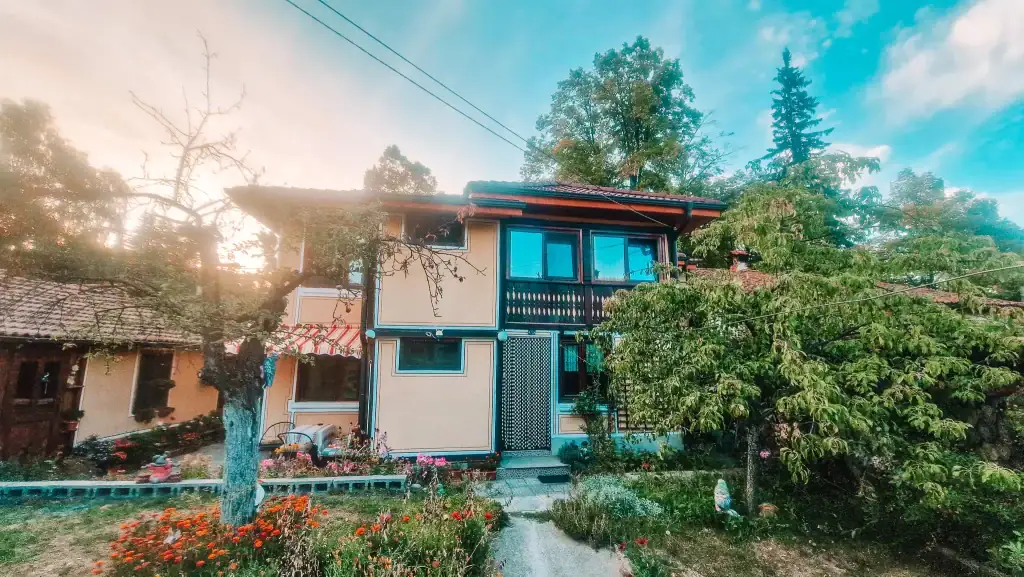
- Guest House Bashtina Striaha – I stayed here and it was perfect. You’ll get to sleep in a historic house that’s been beautifully maintained, and it was spotlessly clean. The owner was incredibly friendly and it was so peaceful in the evening. A great budget option. ✨ 9.6/230+
- Etho– historic building with a garden, offering rooms and apartments, mixing traditional with more modern touches✨ 9.7/315+
- Guest House Zlatniyat Telets – historic building where rooms have balconies or terraces. There is a communal outdoor kitchen, and some rooms even have fireplaces. ✨ 9.2/279+
How to get to Koprivshtitsa
By train
This is how I travelled, and it was very easy.
- From Sofia: the train takes between 2-3 hours, depending on the train type (some Bulgarian trains are ‘fast’ trains that stop less frequently. The train was punctual and comfortable.
- From Plovdiv: you need to change at Karlovo, which is a major interchange station with toilets (squat), shops and a cafe. It took me between 3-4 hours and my train at Koprivshtitsa was not on time, so leave time for your connection.
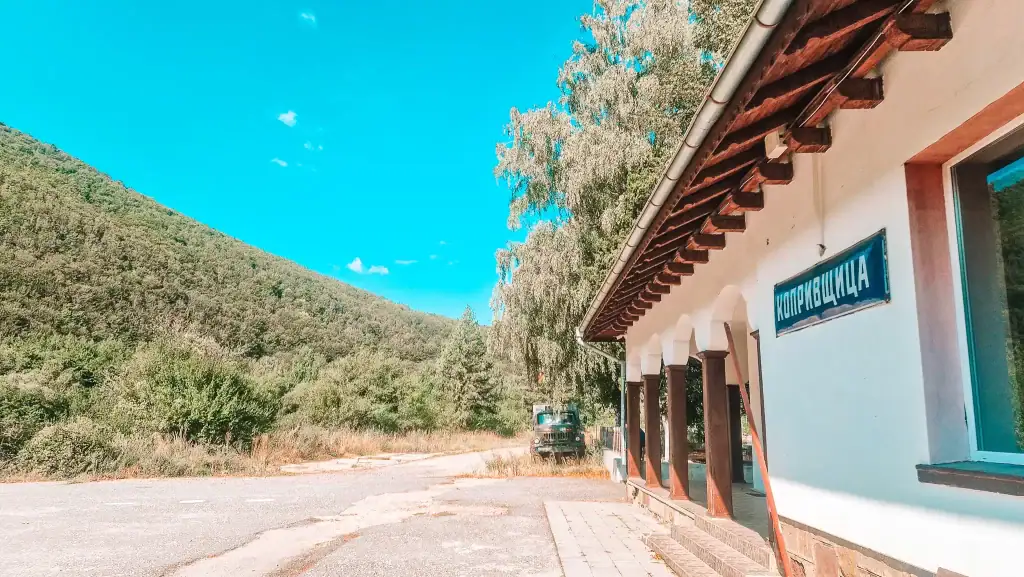
Koprivshtitsa Station is around 10km from the town. There is a local shuttle bus that meets the trains (more or less) and costs 4 BGN. There is a timetable for this at the station (we had about a 20 minute wait after our train) and near where the bus stops in Koprivshtitsa Town (I’ve marked the bus stop on my interactive map).
By bus
While it’s possible to get from Sofia to Koprivshtitsa by bus, this takes longer and they are less frequent. I recommend the train. There was no bus that I could find between Koprivshtitsa and Plovdiv.
By car
Koprivshtitsa is easily accessible by car from both Sofia and Plovdiv. From Sofia it takes about 2 hours and from Plovdiv about 2.5 hours.
If you’d like to travel by car without the stress of driving, this handy and not particularly expensive transfer takes you between the two main cities with a guided stop in Koprivshtitsa. I used this company for my trip to Rila Monastery and Melnik and highly recommend them, and this is a great way to maximise your time in Bulgaria if you’re planning to visit both Sofia and Plovdiv.
Guided tours
You can visit Koprivshtitsa on guided tours from both Sofia and Plovdiv, and this is a great way to see the town if your time is limited or you want to avoid multiple hotel stops.
I recommend these options:
- From Plovdiv – this guided tour takes you to Koprivshtitsa, as well as the Starosel Thracian Tombs. Book here! ✨ 4.5/17+
- From Sofia – this guided tour offers a full day experience in Koprivshtitsa. Book here! ✨ 5/9+
- From Sofia – if you’re short on time, this highly rated tour combines both Koprivshtitsa and Plovdiv in one busy and historic day! Book here! ✨ 4.6/250+
Frequently Asked Questions About Visiting Koprivshtitsa
How long do you need in Koprivshtitsa?
You can see the highlights of Koprivshtitsa in half a day, but a full day allows you to visit more museums and enjoy a relaxed lunch. Staying overnight is best if you want to experience the town once the day trippers have gone. I spent an afternoon and the following morning to take advantage of the evening quiet.
Is Koprivshtitsa walkable?
Yes — the town is compact and easy to explore on foot. That said, expect some uphill cobbled streets between houses, so comfortable shoes are a must.
When is the best time to visit Koprivshtitsa?
Spring and autumn are ideal, with pleasant weather and fewer tourists. Summer is busier and can be hot, while winter is quieter but can be snowy and cold in the mountains. Even in early September it was chilly early in the morning.
What is Koprivshtitsa famous for?
Koprivshtitsa is famous for its beautifully preserved Bulgarian National Revival architecture and its role in the April Uprising of 1876 against Ottoman rule.
Can you visit Koprivshtitsa as a day trip from Sofia or Plovdiv?
Yes — it’s a popular day trip from both Sofia (about 2 hours by car/train) and Plovdiv (about 2.5 hours). If you don’t want to deal with transport logistics, guided tours are also available.
Are the museums in Koprivshtitsa open every day?
No — some close on Sundays, some on Mondays. It’s worth checking in advance or planning extra time so you don’t miss out (I got caught out by this myself!).
Are there restaurants or cafes in Koprivshtitsa?
Yes, there are several restauarnts and cafes in Koprivshtitsa. There are two main cafes that focus on daytime non-alcoholic drink and several local mehanas/tavernas. All the tavernas will also serve coffee. I recommended my favourites above.
How to Get to Koprivshtitsa
Given that it’s in the middle of nowhere, Koprivshtitsa is remarkably accessible by train and bus. There are direct trains from Sofia and you can reach Plovdiv with a connection. From the station there is a short shuttle bus which is timed to meet the train. Buses are less frequent, so I recommend the train. See the full section on how to get to Koprivshitsa above for details.
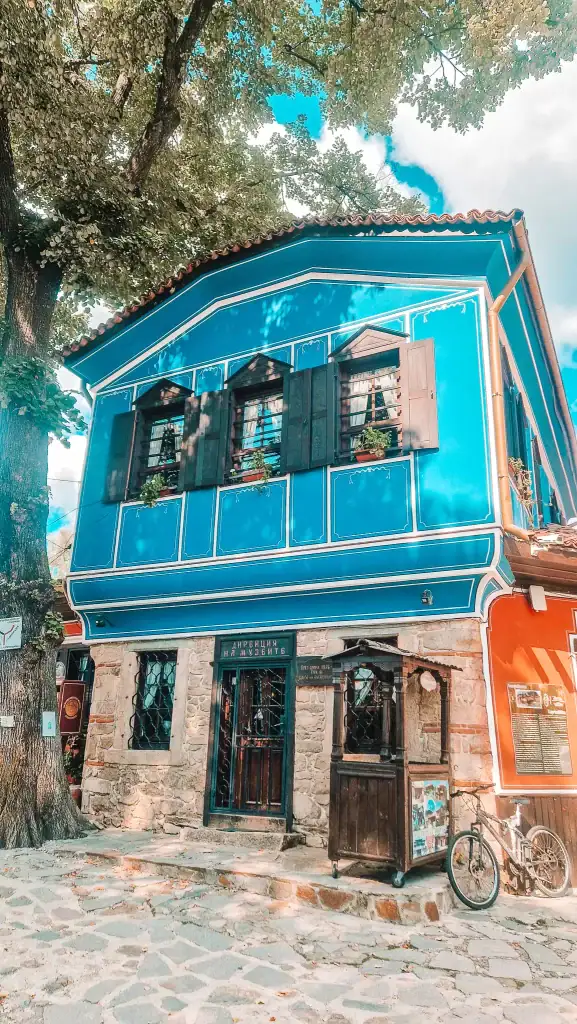
Koprivshtitsa might be small, but it’s one of Bulgaria’s most rewarding destinations. With its cobbled lanes, brightly painted Revival houses, and powerful revolutionary history, it offers a glimpse into the country’s soul that you won’t find in Sofia or Plovdiv alone.
Whether you’re wandering between museums, sipping coffee in a quiet mehana, or simply soaking up the mountain views, Koprivshtitsa has a way of slowing you down and connecting you to Bulgaria’s past.
If you’re planning a trip, I’d recommend at least half a day — though staying overnight is even better for experiencing its peaceful atmosphere once the day trippers leave. And if logistics sound stressful, consider joining a guided day tour (see options here) so you can focus on enjoying the town’s beauty and history.
👉 Looking for more Bulgaria inspiration? Check out my 2 days in Sofia itinerary and my full guide to the Rila Monastery and Melnik day trip to help you plan the perfect Bulgaria route. I also loved Plovdiv, Europe’s oldest continually occupied city – check out my guide to things to do in Plovdiv, the best cafes in Plovdiv and the best day trips from Plovdiv.
👉 If you’re planning a wider trip across the Balkans, check out my Balkan guides also covering Albanian, Montenegro, Kosovo and North Macedonia (Bosnia coming soon).
Em is a writer and slow traveller who spent six weeks exploring Bulgaria. Her time in the revival town of Koprivshtitsa deepened her love for history-rich places and local storytelling. She shares culture-first travel guides for curious travellers who want to go beyond the usual stops.
✅ All photos featured on this blog are from my personal travel experiences. No stock images are used.


