 Em
EmJust so you know: This post contains affiliate links. As an Amazon Associate, I earn from qualifying purchases. I may also earn a small commission if you book a tour, hotel, or buy something else through these links. It helps me keep this blog running and full of travel tips. Thanks for your support!
This is not an itinerary for rushing — and it’s not a one-size-fits-all route either. Laos rewards time, patience and flexibility, and this south-to-north journey is designed to be adapted, not followed blindly. It begins in the quiet river islands of Don Det, builds through waterfalls, karst landscapes and modern history, and ends slowly — either drifting down the Mekong, sleeping in the jungle canopy, or both.
I spent over a month travelling Laos in 2024, and it’s one of the few places in Southeast Asia I’d return to without hesitation. Not because it was easy — it wasn’t — but because it felt slower, kinder, and far less shaped around travellers than anywhere else in the region.
Rather than forcing everything into a single route, this guide offers three realistic 3-week itineraries, built around different priorities:
- A balanced route that mixes culture, landscapes and recovery time
- Extends time in southern Laos to complete the full Bolaven Plateau loop
- An adventure-led option, centred around the Gibbon Experience
All three share the same backbone — but diverge where it matters.
This itinerary focuses on realistic pacing, not ticking boxes. Travel days can be long, plans change, and preparation matters — but if you move slowly, Laos gives you space to settle in rather than rush through.
For transport, money, SIMs and border crossings, I recommend reading my Laos Travel Basics guide alongside this post. This guide is about where to go, how long to stay, and how to choose the version of Laos that suits you best.
Why Three Weeks Is the Sweet Spot for Laos
Three weeks is an ideal amount of time to travel Laos well — long enough to experience its diversity, but not so rushed that transport and logistics take over the trip.
On paper, Laos looks compact. In reality, travel days are slow, routes aren’t always direct, and the mental load of moving around is higher than in much of Southeast Asia. A three-week timeframe gives you the breathing room to absorb delays, rest properly between long journeys, and actually enjoy each stop rather than constantly planning the next one.
This itinerary is built around staying put longer in fewer places, which suits Laos far better than fast-paced hopping. It allows time for:
- Full days for travel, to allow rest and the space for delays
- Full days for landscapes and activities, not just half-days either side of buses
- Flexibility when plans change (because they often do)
It also reflects how Laos is best experienced emotionally. The pace slows as you go. You settle into routines. Places that feel quiet or underwhelming on day one often become favourites by day three.
I’ve got a few suggested ways you can plan your three weeks, depending on your interests – I’ve popped them into the table below and marked on the detailed section where things change.
| Itinerary 1 | Itinerary 2* | Itinerary 3 | |
|---|---|---|---|
| 1 | Arrive in Don Det/4000 Islands | Arrive in Don Det/4000 Islands | Arrive in Don Det/4000 Islands |
| 2 | Don Det | Don Det | Don Det |
| 3 | Don Det | Don Det | Don Det |
| 4 | Travel Don Det → Pakse | Travel Don Det – Pakse | Travel Don Det – Pakse |
| 5 | Bolaven Loop – 1 day guided tour | Bolaven Loop – 1 day guided tour | Bolaven Loop |
| 6 | Fly Pakse to Vientiane | Fly Pakse to Vientiane | Bolaven Loop |
| 7 | Vientiane | Vientiane | Bolaven Loop |
| 8 | Travel Vientiane → Vang Vieng | Travel Vientiane → Vang Vieng | Bolaven Loop |
| 9 | Vang Vieng | Vang Vieng | Fly Pakse to Vientiane |
| 10 | Vang Vieng | Vang Vieng | Vientiane |
| 11 | Travel Vang Vieng → Luang Prabang | Travel Vientiane → Vang Vieng | |
| 12 | Luang Prabang | Travel Vang Vieng → Luang Prabang | Vang Vieng |
| 13 | Luang Prabang | Luang Prabang | Vang Vieng |
| 14 | Luang Prabang | Luang Prabang | Travel Vang Vieng → Luang Prabang |
| 15 | Travel Luang Prabang → Nong Khiaw | Luang Prabang | Luang Prabang |
| 16 | Nong Khiaw | Luang Prabang | Luang Prabang |
| 17 | Nong Khiaw | Slow boat – Luang Prabang → Huay Xiay | Luang Prabang |
| 18 | Travel Nong Khiaw → Luang Prabang | Slow boat – Luang Prabang → Huay Xiay | Luang Prabang |
| 19 | Slow boat – Luang Prabang → Huay Xiay | Gibbon Experience | Slow boat – Luang Prabang → Huay Xiay |
| 20 | Slow boat – Luang Prabang → Huay Xiay | Gibbon Experience | Slow boat – Luang Prabang → Huay Xiay |
| 21 | Cross into Thailand from Huay Xiay – either to continue your adventure or fly home | Cross into Thailand from Huay Xiay – either to continue your adventure or fly home | Cross into Thailand from Huay Xiay – either to continue your adventure or fly home |
Itinerary 2 note
Itinerary 2 gives you one extra day — where you spend it is up to you. The best use of this time is to slow down further rather than squeeze in another stop. Add an extra night to:
- Don Det for pure rest
- Vang Vieng for an additional adventure activity like ziplining or a lagoon day
- Luang Prabang for deeper cultural exploration or a second day trip
You could attempt a condensed two-day Bolaven Loop by motorbike, but this only makes sense if you’re an experienced rider and have researched road conditions carefully.
I don’t recommend adding Nong Khiaw with just one full day — the journey is long and uncomfortable, and it’s a place that only really pays off if you have time to slow down.
Stop 1: Don Det (4,000 Islands)
- All itineraries – 3 nights, 2 full days
- Best for: Slowing down, cycling, river swims
- Vibe: Hammocks, dusty lanes, sunsets over the Mekong
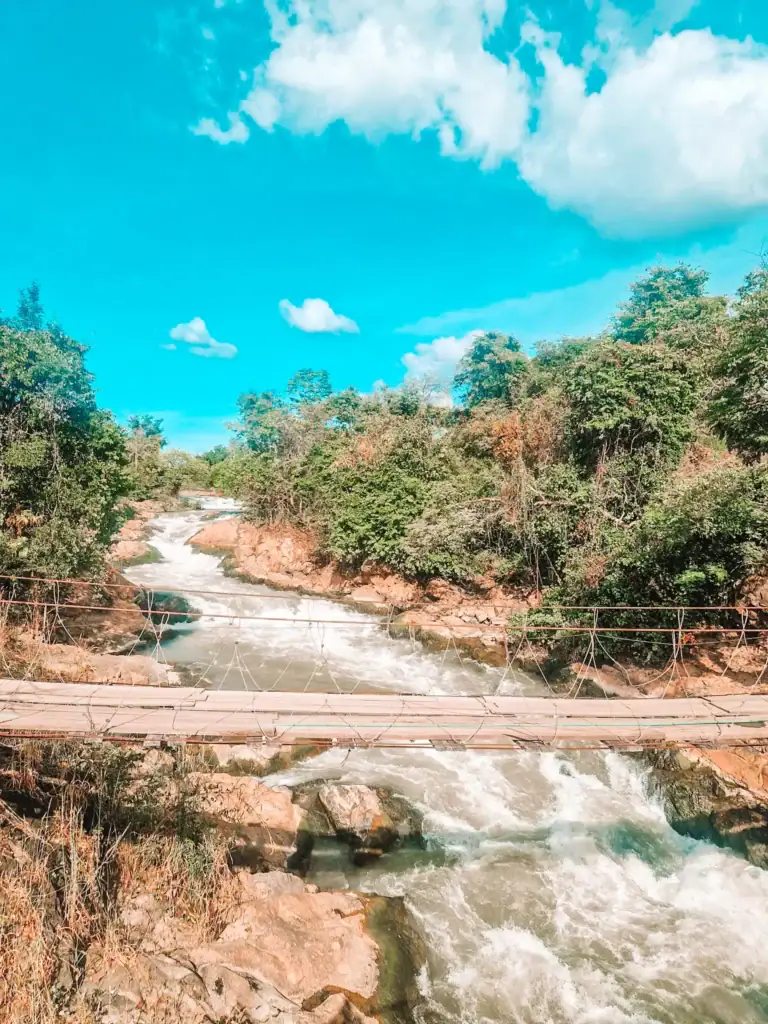
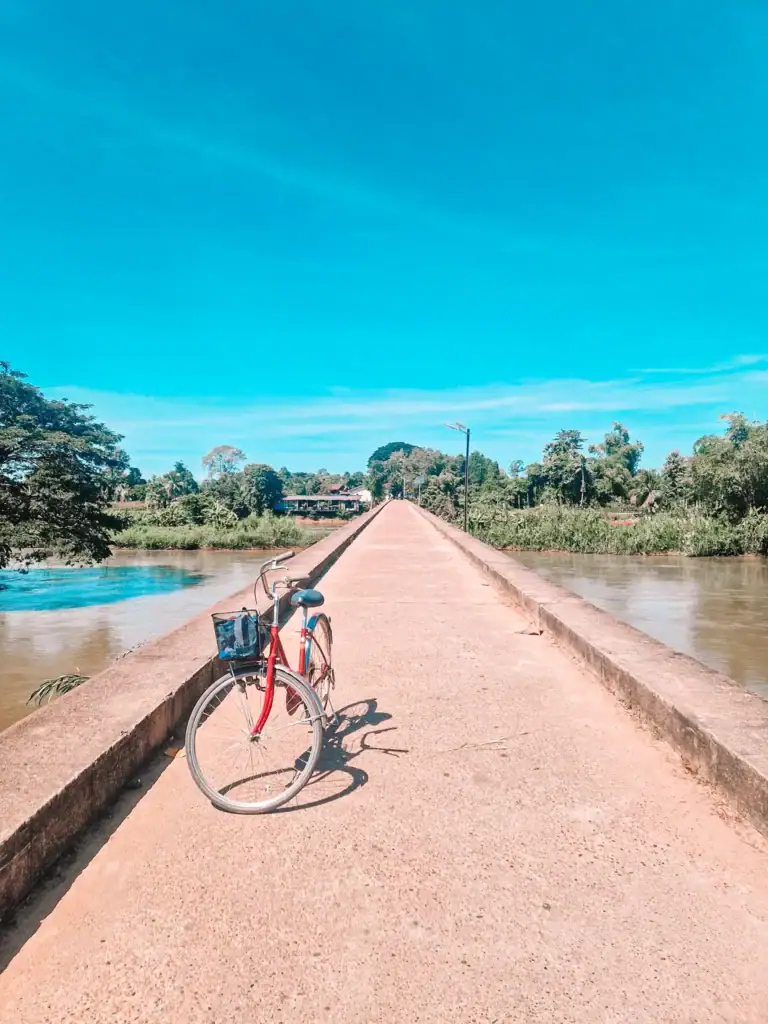
Don Det works exceptionally well as a starting point for a Laos itinerary. After border crossings, long journeys or flights, the islands force you to slow down in the best possible way. There’s very little pressure to do anything – and that’s exactly the point – but here are the vibes:
- Cycling: Don Det and neighbouring Don Khon are flat, quiet and ideal for cycling. You’ll pass rice fields, temples, riverbanks and small villages, often with no traffic at all. Even as someone who had barely been on a bike in years, I loved it.
- Waterfalls: Cycle across to Don Khon to visit Li Phi (Somphamit) Falls and the quieter Khone Pay Soy waterfall — both easy half-day trips.
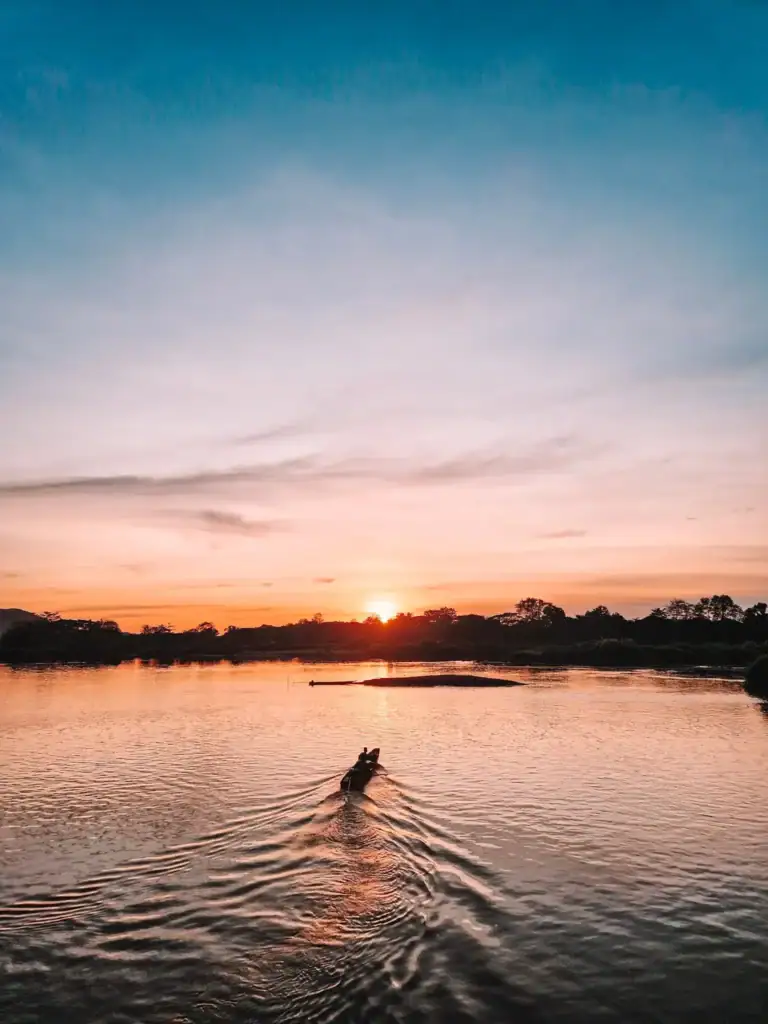
- River life: Sunset is the main event. Watch kids play in the water, boats drift past, and the light change over the Mekong. Kayaking or a simple boat ride at golden hour is worth it if you have the energy.
Life here revolves around the Mekong River. Days stretch out. Evenings are dictated by sunset. Time feels softer. There’s no nightlife scene, no big-ticket attractions, and no easy onward transport. They’re also well off the main tourist trail, partly because they’re not connected to the Laos–China railway.
Where to stay:
- Namknong View – small, simple guesthouse on the sunset side of the island with aircon (unlike most places in the 4000 Islands), hammocks on the river and excellent food on site. I loved it here. ✨8.8/230+
Practicalities: There are no ATMs on the islands and almost everything is cash only (including accommodation). If you need an ATM, use one before getting on the boat (not easy, they don’t work reliably) or if you’re really stuck, there are shops offering a pricey (but secure) withdrawal service on the islands. See more in my guide to Laos Travel Basics.
👉 Read More : My full guide to the 4000 Islands
Stop 2: Pakse & the Bolaven Loop
- Itinerary 1 & 2: 2 nights in Pakse, 1 full day (guided day trip)
- Itinerary 3: 2 nights Pakse + 3 nights on the Bolaven Plateau (full loop)
- Best for: Waterfalls, coffee plantations, countryside
- Vibe: Lush, green, rural Laos — with a bit of structure
Pakse itself is not a destination you linger in – it’s not dangerous, but it has zero charm. It’s a functional base for one of southern Laos’ highlights: the Bolaven Plateau, which is greener and cooler than the lowlands.
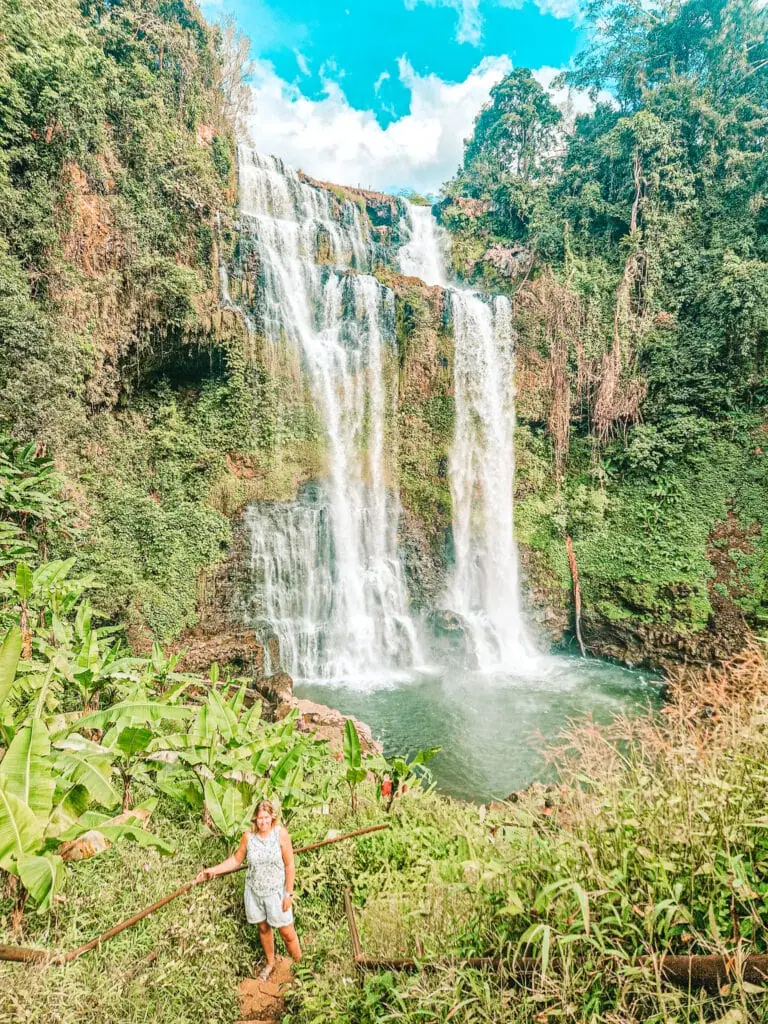
The Bolaven Loop is best known as a multi-day motorbike route, but if you’re short on time, energy, or confidence on a scooter, a guided day trip by van is a genuinely good alternative. That’s how I visited, and it was still well worth stopping for.
Here’s what the experience looks like as a day trip:
- Waterfalls: This is the headline. Multiple large, powerful falls set in dense jungle, with plenty of stops to walk, photograph and cool off. They’re impressive even if you’ve seen waterfalls elsewhere in Laos – and one has an amazing zipline!
- Coffee plantations: The plateau is Laos’ main coffee-growing region. Stops usually include tastings and a look at how beans are grown and processed — a nice contrast to the more activity-heavy parts of the trip.
- Rural scenery: Red dirt roads, small villages, farmland and open landscapes you wouldn’t otherwise see if you stuck to towns.
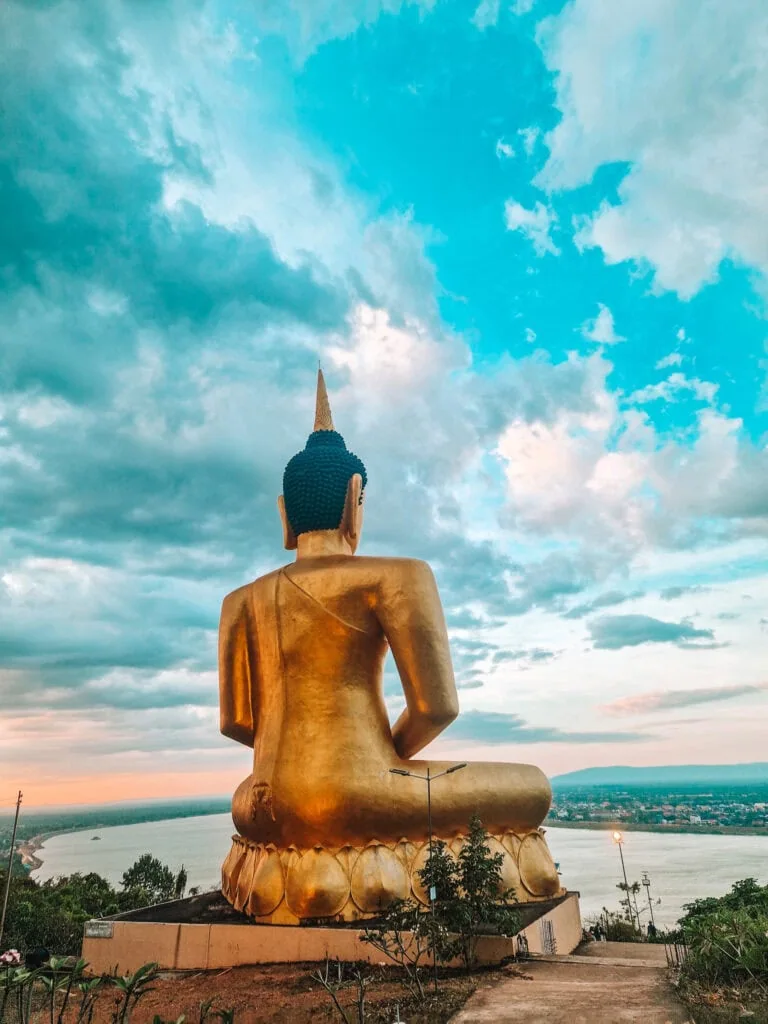
- Finishing at the famous Pakse Buddha for sunset
I’ve included the Bolaven Loop as a day tour for Itineraries 1 & 2, with the full loop reserved for Itinerary 3 if this is a priority for you. Just make sure you’re genuinely confident on a scooter — road conditions here are rough and unpredictable.
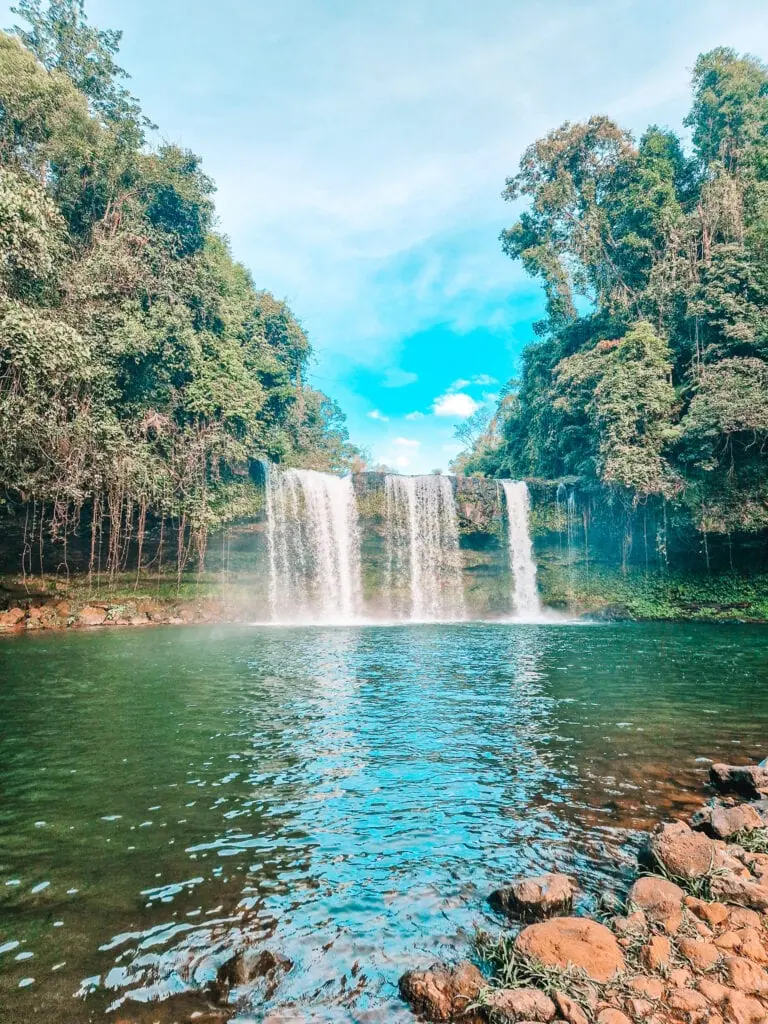
Where to stay:
- Heaven Guesthouse – small guesthouse that’s full of personality, with an incredible host. Excellent, homemade breakfast available and regular group dinners with homecooked Laotian specialities. A little outside the centre but worth it -Tina is one of the friendliest and most helpful hosts I’ve ever met ✨8.4/870+
Practicalities:
- Pakse is a good place to reset — ATMs are more reliable than on the islands, SIMs are easy to find and there’s even a small mall with a DairyQueen if that’s your vibe (it was right next to my accommodation and the shops were useful!). It’s one of the few places in southern Laos where flying onward makes sense. For transport decisions (bus vs flight), see my **Laos Travel Basics** guide.
- There is limited information available online about day tours. I got my guest house to arrange it for me – it was organised by the main hostel in town Sanga Rooftop Hostel – this is your best bet for finding a guided tour.
- Unlike in Vietnam where Easyrider tours are ubiquitous, I didn’t see any Easyrider options for the Bolaven Loop – part of the reason I didn’t do it. That could change in the future though!
- There are a couple of agencies in town that specialise in organising the full Bolaven Loop – Miss Noy was the one I most often saw recommended
Stop 3: Vientiane
- All Itineraries: 2 nights, 1 full day
- Best for: Context, history, cafés, a mental reset
- Vibe: Calm, understated, quietly grounding
Vientiane is one of Southeast Asia’s most underestimated capitals — and one of the easiest to dismiss too quickly. Most travellers pass straight through on their way north, assuming there’s little reason to linger. I felt the same — until I spent a full, intentional day here.
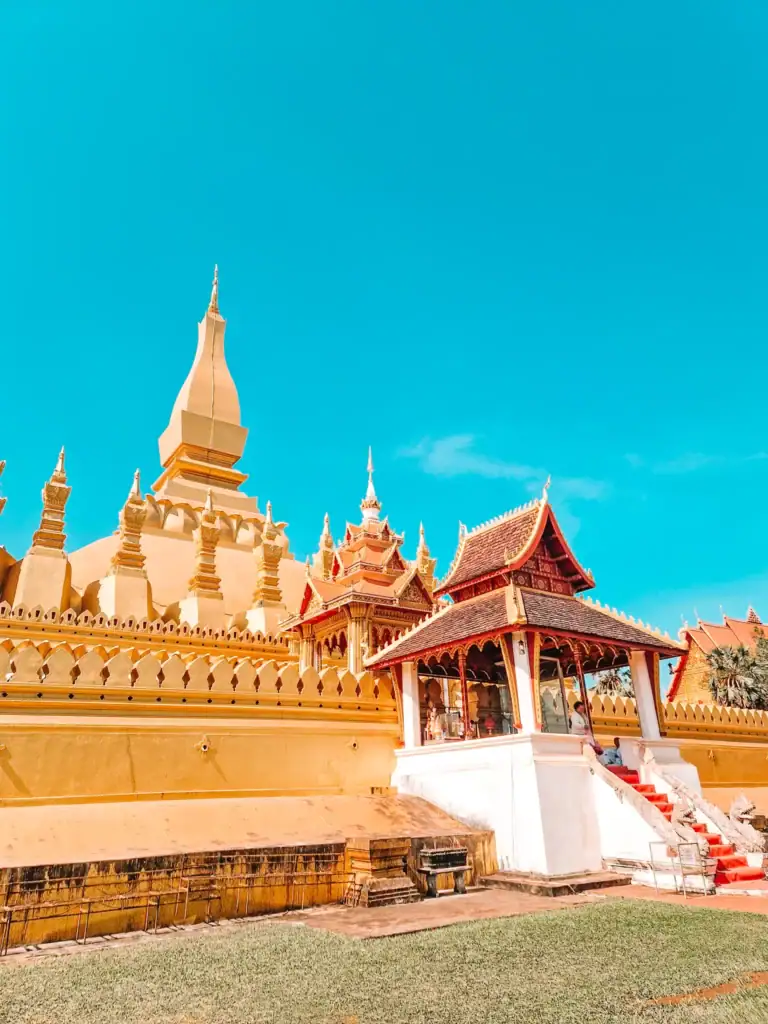
This isn’t a city of blockbuster sights or frantic sightseeing. Instead, Vientiane rewards a slow, thoughtful pace: golden temples set back from wide boulevards, genuinely important museums, and long, hazy evenings along the Mekong. After the movement of southern Laos, it works perfectly as a pause point before heading north. Prioritise:
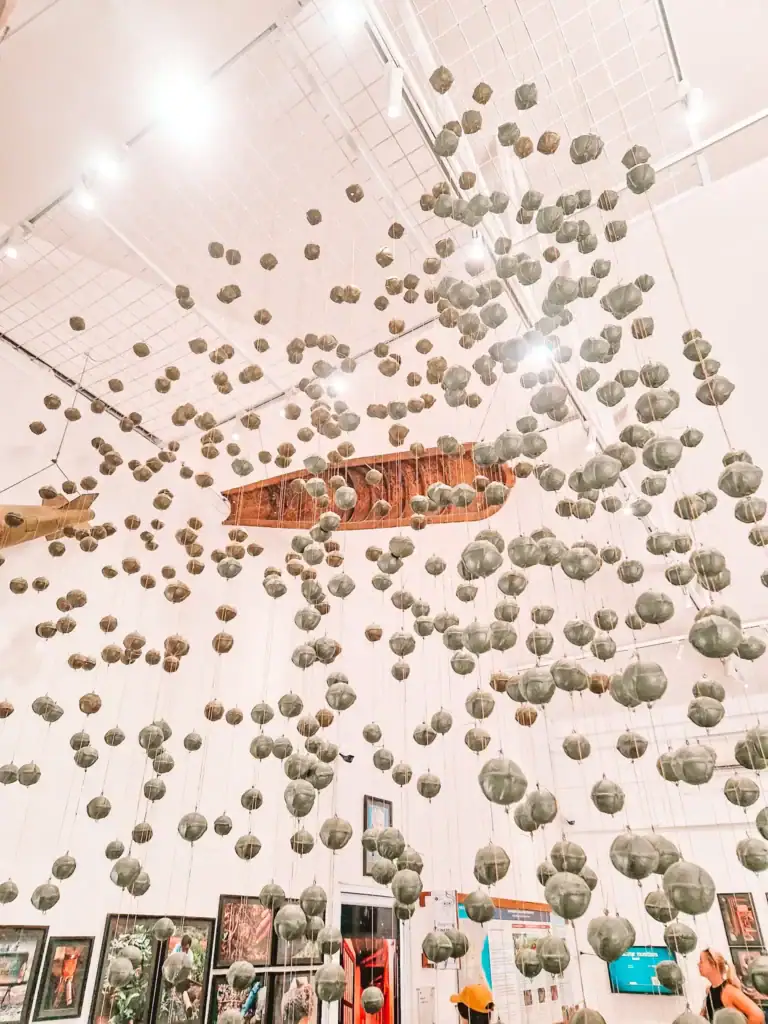
- COPE Visitor Centre: This is the most important stop in the city, and arguably in Laos. Visiting COPE Visitor Centre gives essential context on the legacy of unexploded ordnance from the US bombing of Laos. It’s difficult, but deeply worthwhile — and it will change how you understand the country.
- Pha That Luang: The spiritual heart of Laos and a national symbol. Seeing it in person anchors the trip culturally.
- Temples & museums: Wat Sisaket and Ho Phra Keo are compact, walkable stops that work well together.
- Mekong evenings: Sunset drinks or a wander through the night market are a relaxed way to end the day — no rushing required.
This is a city that’s best experienced on foot, with café stops built in. It’s flatter, quieter and far more walkable than most Southeast Asian capitals.
Where to stay:
- Peaceful 2 Hotel – mid-range option in a central area with friendly staff 9.3/250+
Practicalities:
- Vientiane is one of the easiest places in Laos to manage logistics: ATMs are more reliable, SIMs are easy to buy, and taxis via the Loca app actually work. There’s a bigger mall than in Pakse for essentials.
- For transport comparisons (train vs bus vs flight), see my Laos Travel Basics guide.
👉 Read more: My full 1-day Vientiane itinerary, including COPE, temples, cafés and where to eat
Stop 4: Vang Vieng
- All itineraries: 3 nights, 2 full days.
- Best for: Dramatic landscapes, adventure activities
- Vibe: Backpacker-heavy, outdoorsy, not subtle
Vang Vieng is probably the most polarising stop on a Laos itinerary — and it’s not entirely undeserved. This is a backpacker town, built around adventure activities, river days and (for some) drinking. It’s not especially charming, and it’s unlikely to win you over through food, culture or atmosphere alone.
But here’s the thing: the landscape is extraordinary — and that alone earns Vang Vieng its place in this route.
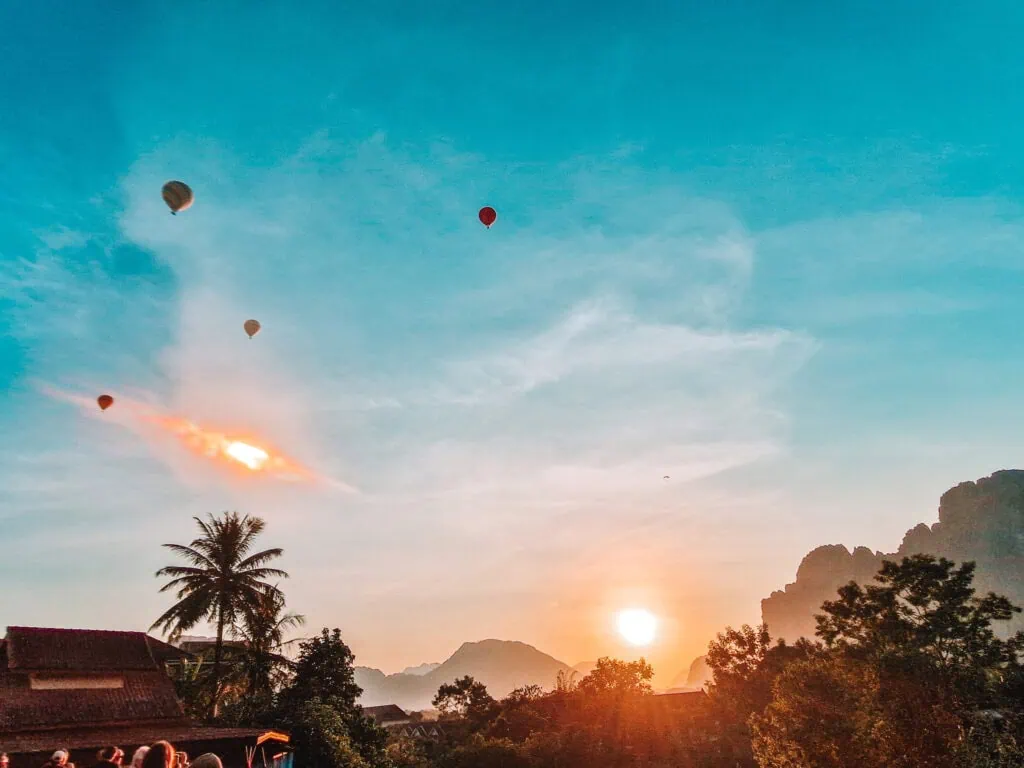
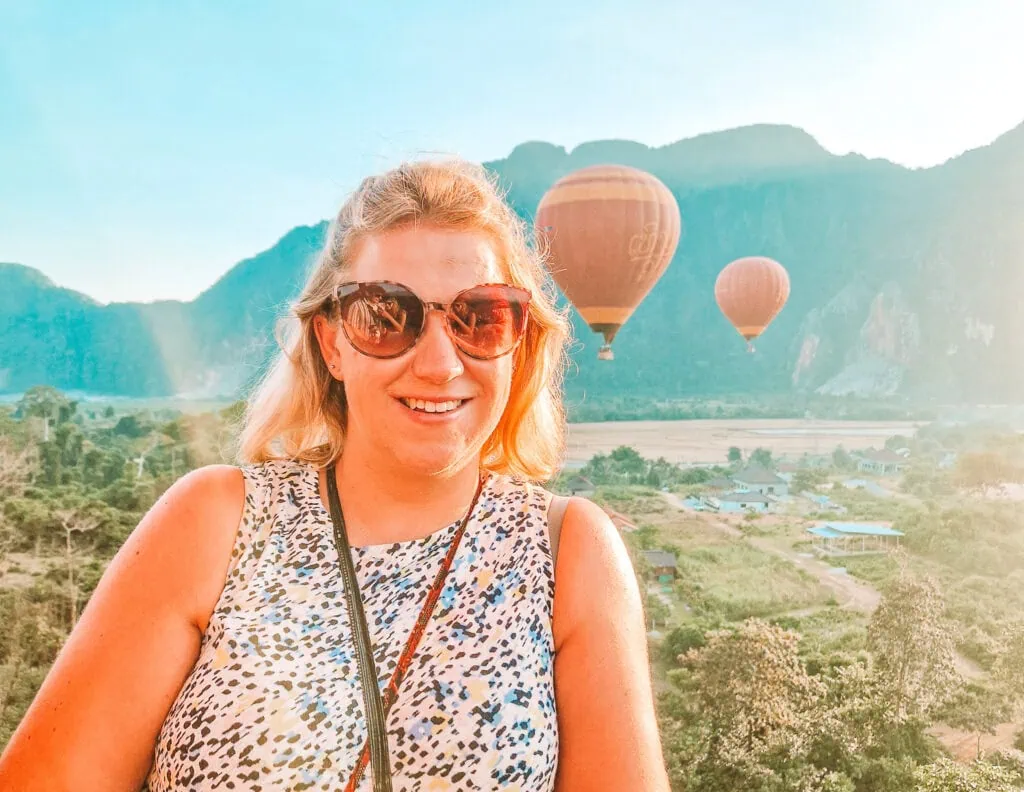
Towering limestone karsts, misty mornings, rivers cutting through green valleys. Even if you do nothing else, simply being here and looking around is enough to justify the stop. This is what I’d prioritise:
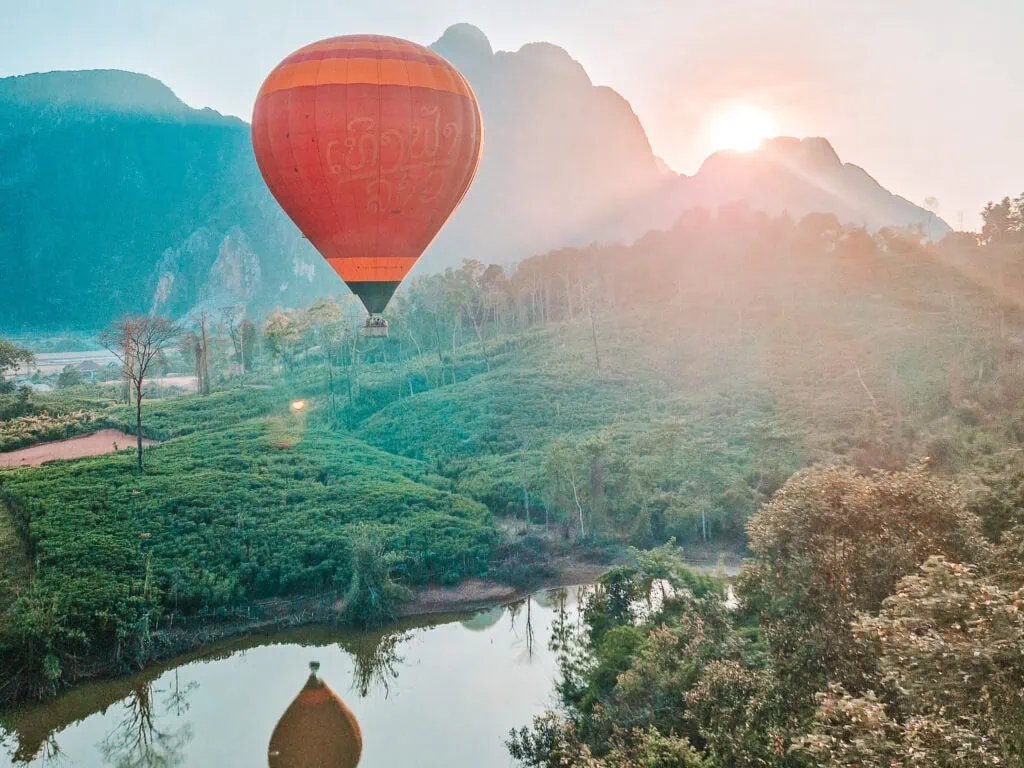
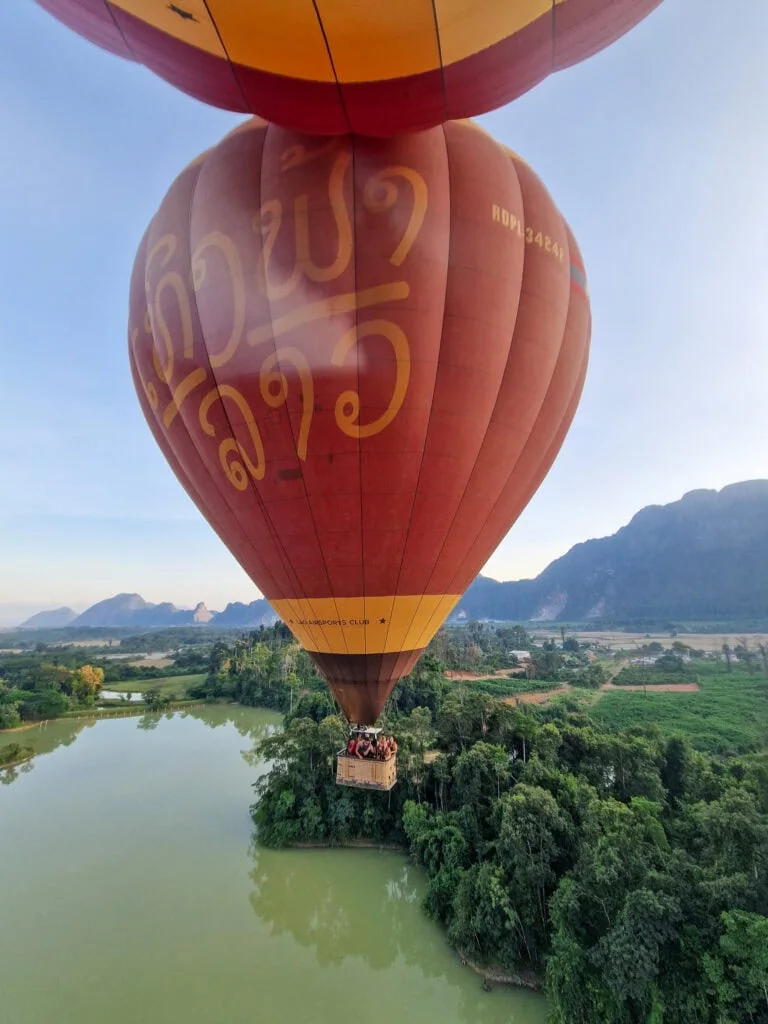
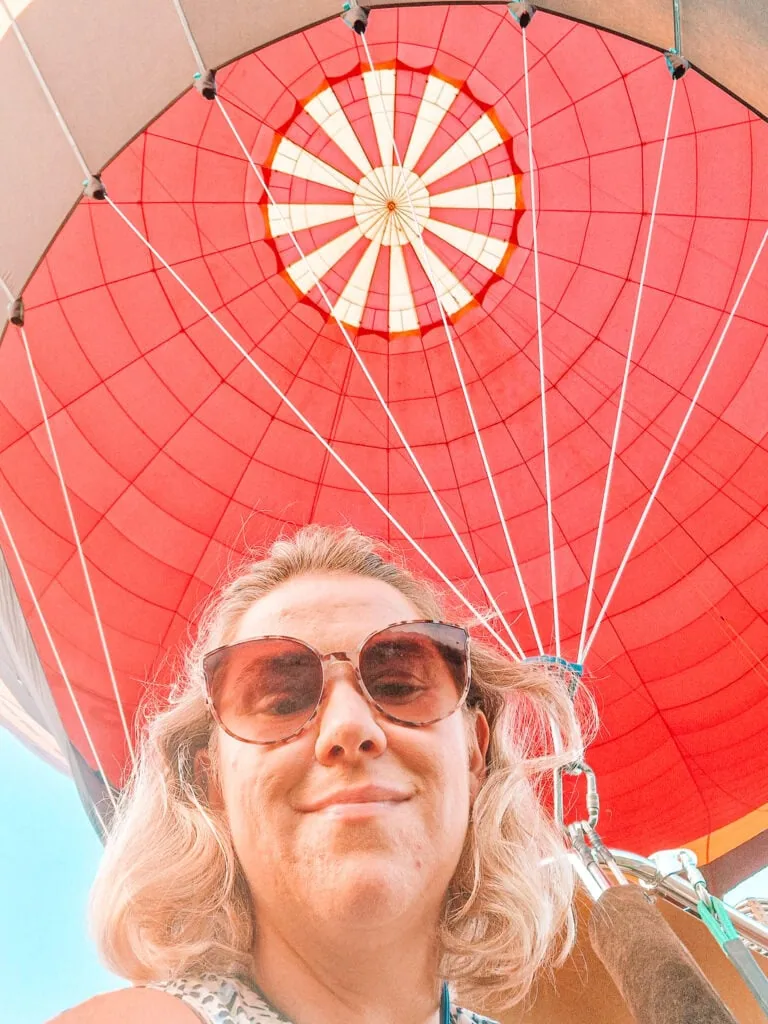
- Hot air ballooning: This is one of the cheapest places in the world to take a hot air balloon ride, and the views over the karst landscape at sunrise are genuinely spectacular. Even if you only do one “big” activity here, this would be my pick. I flew with and recommend Above Laos – they are French/Laos owned and subscribe to European safety standards. They also don’t fly near the town – I saw balloons from other companies nearly landing on houses!
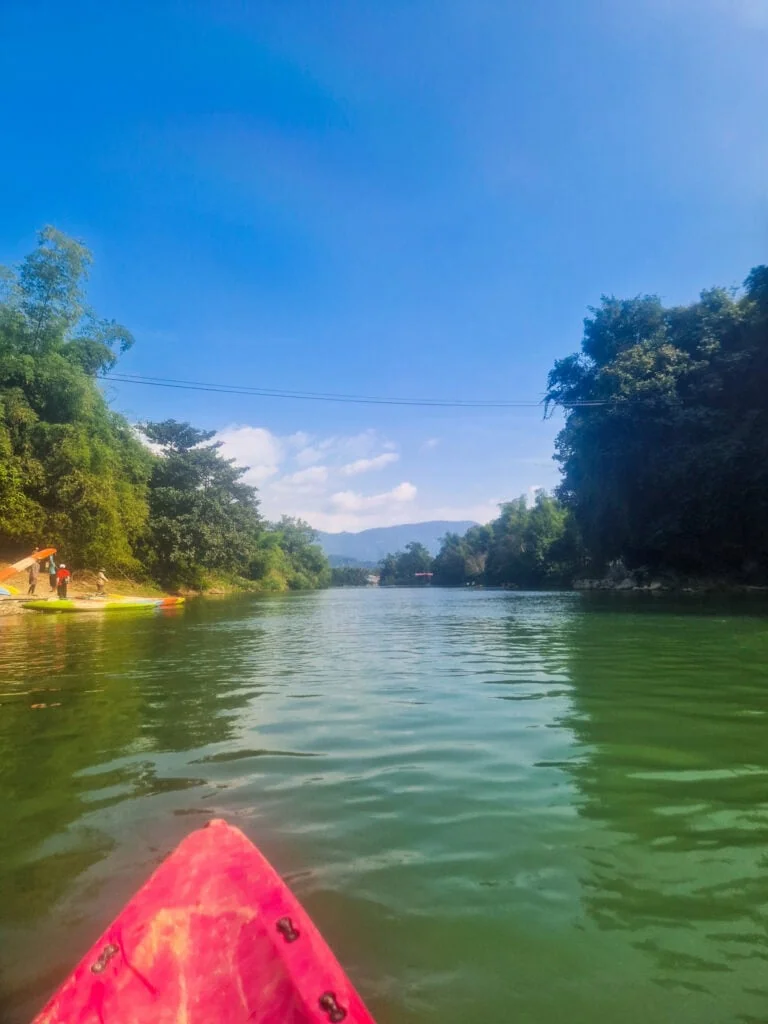
- One-day adventure tours: I did a full-day trip combining zip-lining, kayaking and a lagoon visit — it was active and fun, and there are lots of customisable options if a particularl activity isn’t your thing.
- Lagoons: If adventure tours aren’t your thing, just pick a lagoon and spend the day there. Swimming, reading, drifting — it’s the easiest way to enjoy the landscape at your own pace.
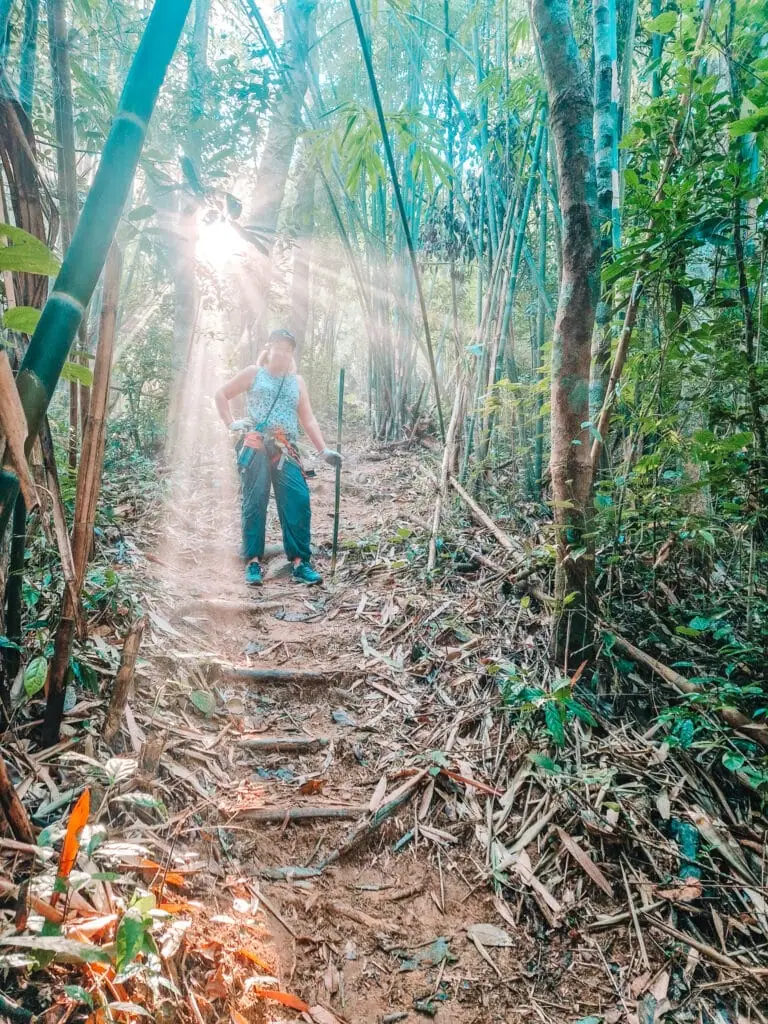
- Viewpoints: Short hikes (early morning or late afternoon) give you sweeping views over the valley without committing to anything extreme. Often included on the adventure tours.
Where to stay:
- Premier Vang Vieng Hotel – budget hotel accommodation that’s central but not noisy, with a great vegetarian restaurant just opposite. Needs some TLC, but clean and great value, especially the included breakfast ✨8/1k+
Practicalities:
- The train makes arriving and leaving Vang Vieng straightforward and the station isn’t far from the centre.
- Cash is still important here, especially for activities and transport.
- If you want calm evenings, eat early and head back — mornings are the real highlight.
A quick note on safety & methanol poisoning
About a week before I arrived in Vang Vieng, there were reports of methanol poisoning affecting travellers. These incidents tend to be linked to poor-quality or illicit alcohol, particularly in high-volume backpacker settings.
It’s unsettling — and worth acknowledging — but it’s also manageable with sensible precautions:
- Avoid ultra-cheap or suspicious alcohol
- Stick to reputable bars or don’t drink at all
- Skip shots and “free” alcohol offers
- If in doubt, choose beer or don’t drink
Stop 5: Luang Prabang
- Itinerary 1: 4 nights, 3 full days
- Itinerary 2 & 3: 5 nights, 4 full days
- Best for: Culture, history, food, reflection
- Vibe: Golden, gentle, magical
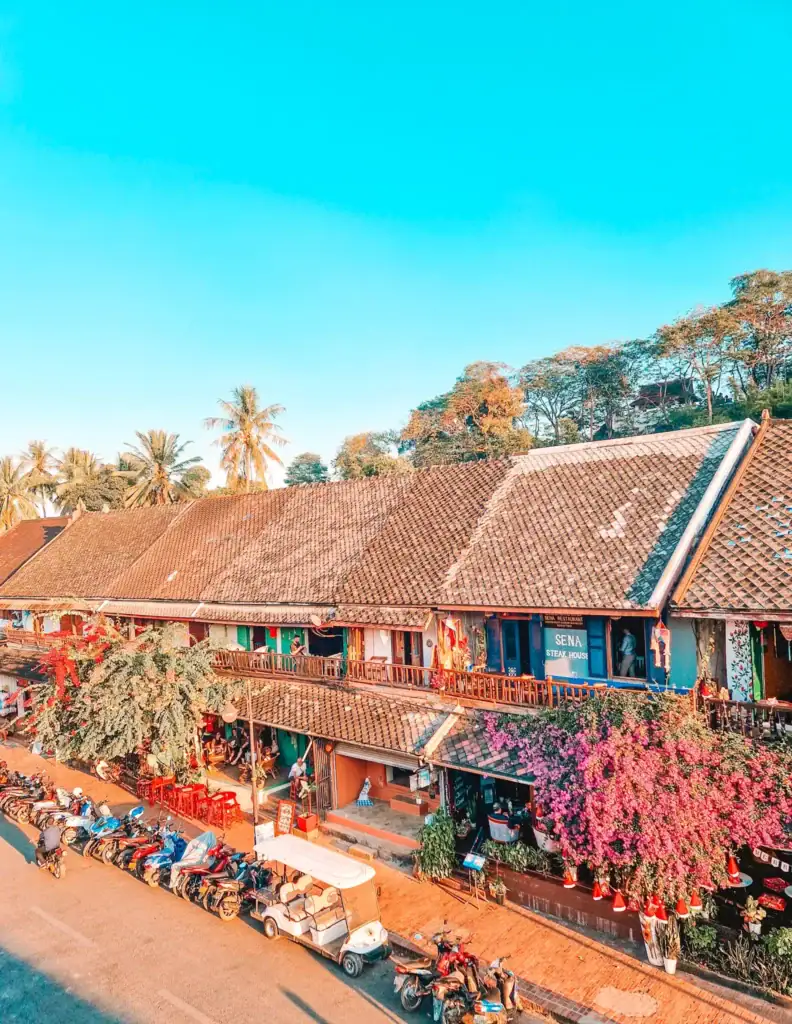
Luang Prabang is one of my favourite places in the world. Set between the Mekong and Nam Khan rivers, this UNESCO-listed city manages something rare: it feels deeply historic without being frozen in time, and tourist-friendly without losing its soul. If there’s one place in Laos that rewards lingering, it’s here – here’s what to take in:
- Temple wandering: The city centre is compact and packed with beautiful wats. Wat Xieng Thong is the standout, but the joy is in wandering, not ticking them off.
- Royal Palace & Phou Si Hill: These anchor the city historically and spiritually. Phou Si at sunrise or sunset is worth the steps.
- Understanding Laos’ recent history: The UXO Visitor Centre is essential. Alongside COPE in Vientiane, it gives you the context that stays with you long after the trip ends.
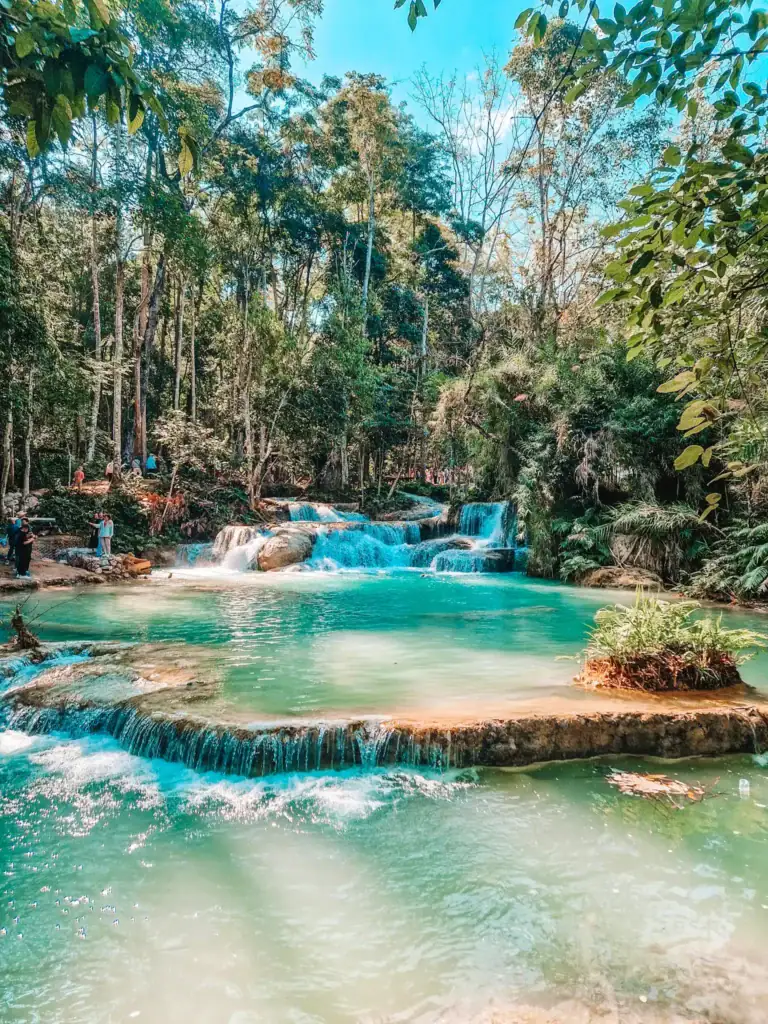
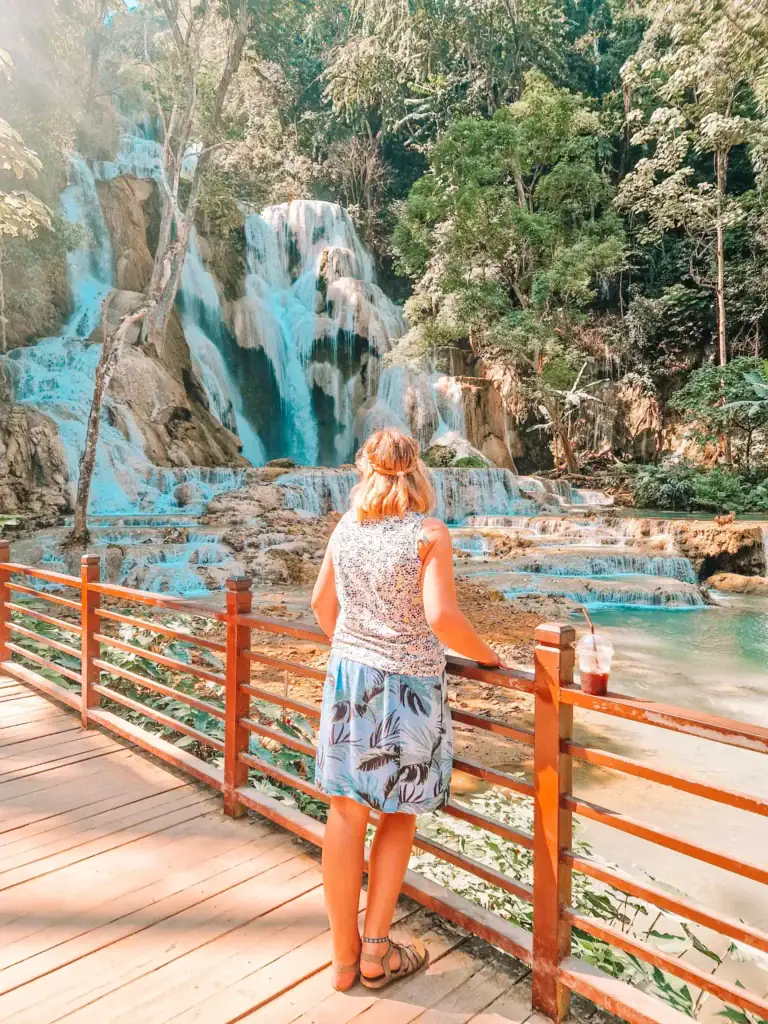
- Day trips into nature: Kuang Si Waterfalls are famous for a reason — turquoise pools, forest paths, and one of the most beautiful settings in northern Laos. This highly rated tour takes you to Kuang Si Waterfalls in the morning, followed by the Buddha Cave and a sunset Mekong Cruise – book here ✨4.7/1.8k+
- Evenings done properly: Night markets, slow dinners, tea houses, riverfront cafés. This is a city that shines after dark without needing nightlife.
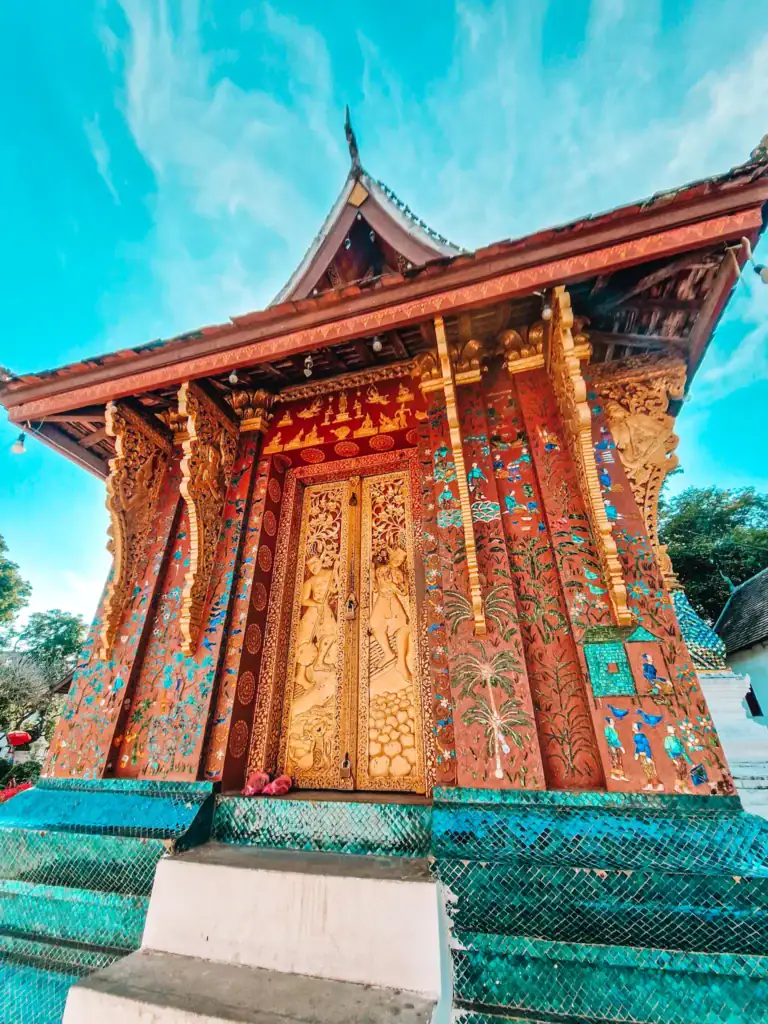
Luang Prabang brings together everything Laos does best: spiritual depth, natural beauty, layered history and a slow pace of life.
Things I recommend approaching with care
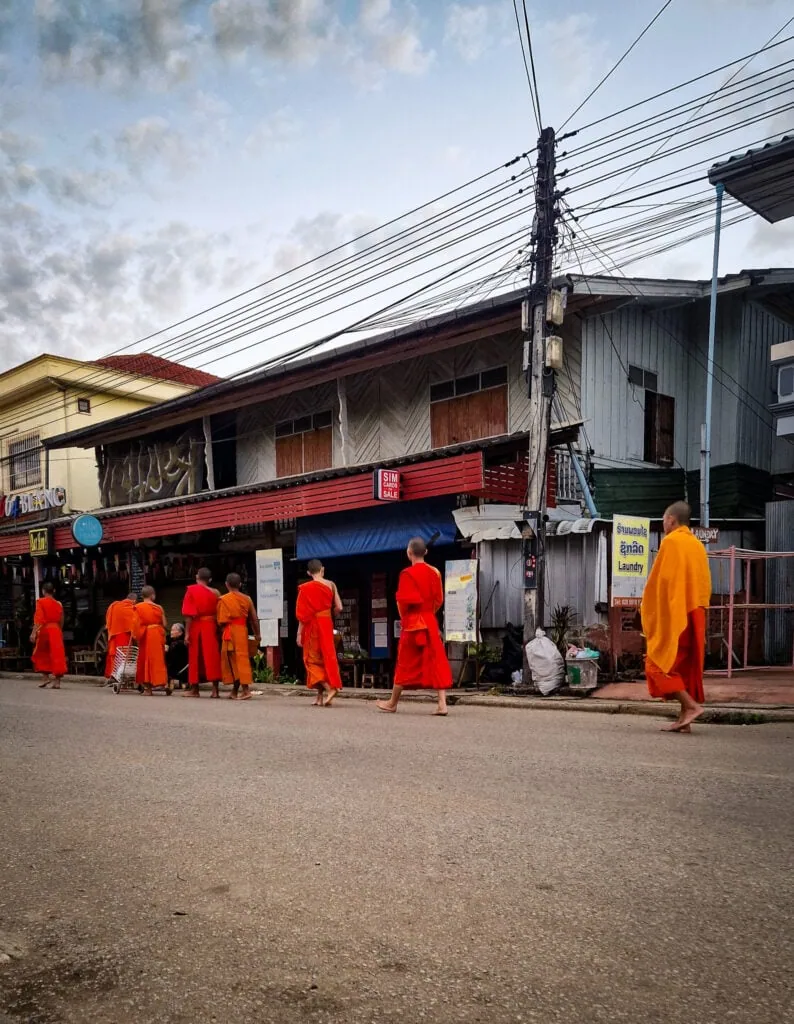
- Alms giving (Sai Bat): Beautiful in principle, but heavily commercialised in the city centre. If you want to observe, do so quietly and respectfully — or skip it entirely.
- “Cultural villages” on tours: Some feel uncomfortably voyeuristic. If learning about ethnic minority groups matters to you, the Traditional Arts and Ethnology Museum is a far better place to start.
Where to stay
- Villa Ban Packham – just next to the Royal Palace, this hotel offers clean and cosy 3* comfort. You’ll get a great breakfast, which you can eat on the terrace overlooking the incredibly characterful morning market. ✨9.1/241
Practicalities:
- Luang Prabang is one of the easiest places in Laos to manage day-to-day — but ATMs can still be unreliable, so don’t get complacent.
- The train makes the journey much smoother and quicker than in previous years – but arrival at the station can feel chaotic.
- You can’t take anything into the Royal Palace, even water – so plan to visit at cooler times
👉 Read more: My full guide to the best things to do in Luang Prabang, including temples, museums, waterfalls and day trips
Stop 6: Nong Khiaw
Itinerary 1: 3 nights, 2 full days
Best for: Nature, viewpoints, river life
Vibe: Limestone karsts, misty mornings, quiet evenings
Nong Khiaw is where Laos really leans into its landscapes. Set dramatically on the Nam Ou River, surrounded by towering limestone karsts, Nong Khiaw is less about attractions and more about access — access to hikes, river journeys, remote villages and some of the most striking scenery in northern Laos.
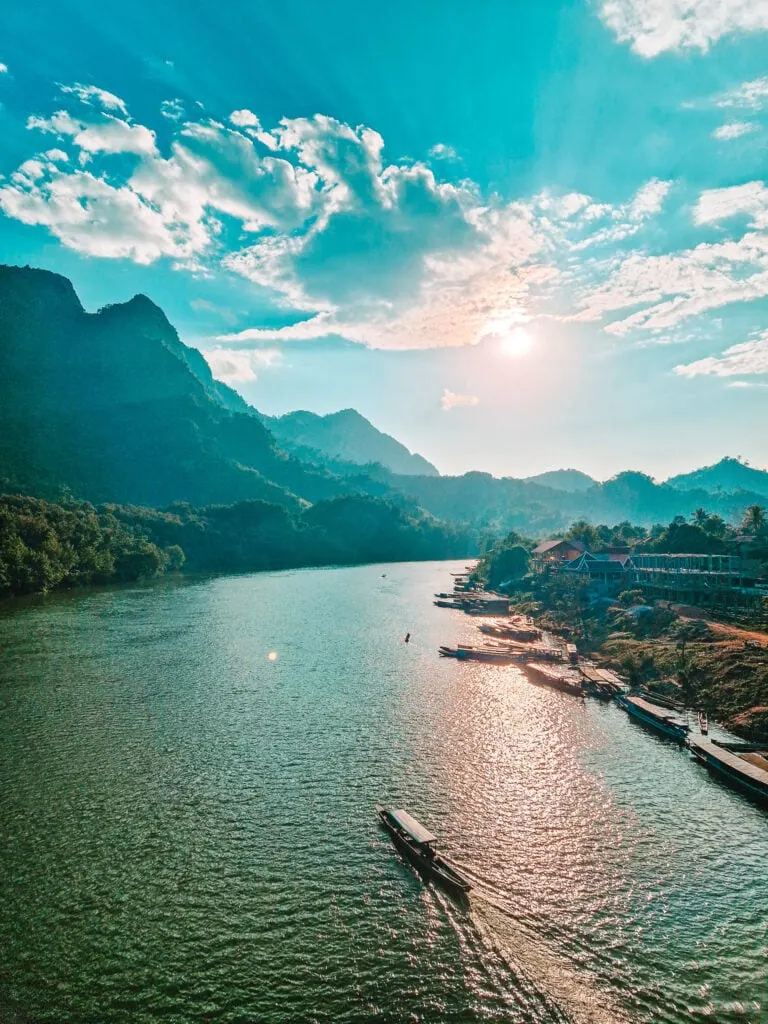
It works both as a launch point into nature and as a place to slow down and linger, especially if you’re feeling travel fatigue after Luang Prabang. Most people come for:
- Viewpoint hikes: Steep climbs rewarded with jaw-dropping views over the river and karsts. Early morning or late afternoon is best.
- River travel or kayaking on the Nam Ou: Nong Khiaw is a key stop on boat routes between small river towns.
- Multi-day trekking: Including the famous overnight hike where you sleep on a platform under the stars.
- Cultural and village-based tours: but these are pricey and logistically tricky compared to other parts of Southeast Asia
But even if you don’t do any of that, it’s a surprisingly pleasant place to stay put for a couple of days — reading, swimming, watching the river change colour with the light. I had massages in two very different places — one hyper-local, one run by therapists trained in four-star resorts in Luang Prabang — and the contrast was striking. One was serene and restorative. The other was a shared room where three men lay watching videos on their phones while our muscles were thoroughly pummelled. Together, they felt like a perfect snapshot of Laos — calm and beauty alongside unfiltered reality.
Visiting Muang Ngoi by boat — plan this properly
Just down the river lies Muang Ngoi – an even smaller, more peaceful town that’s only reachable by boat. If you want to visit, you must be organised
- Boats only depart each destination in the morning
- There are no same-day out-and-back options
- A “day trip by boat” is not possible
If you don’t want to add another change of accommodation, Nong Khiaw still works beautifully as a base.
Where to stay:
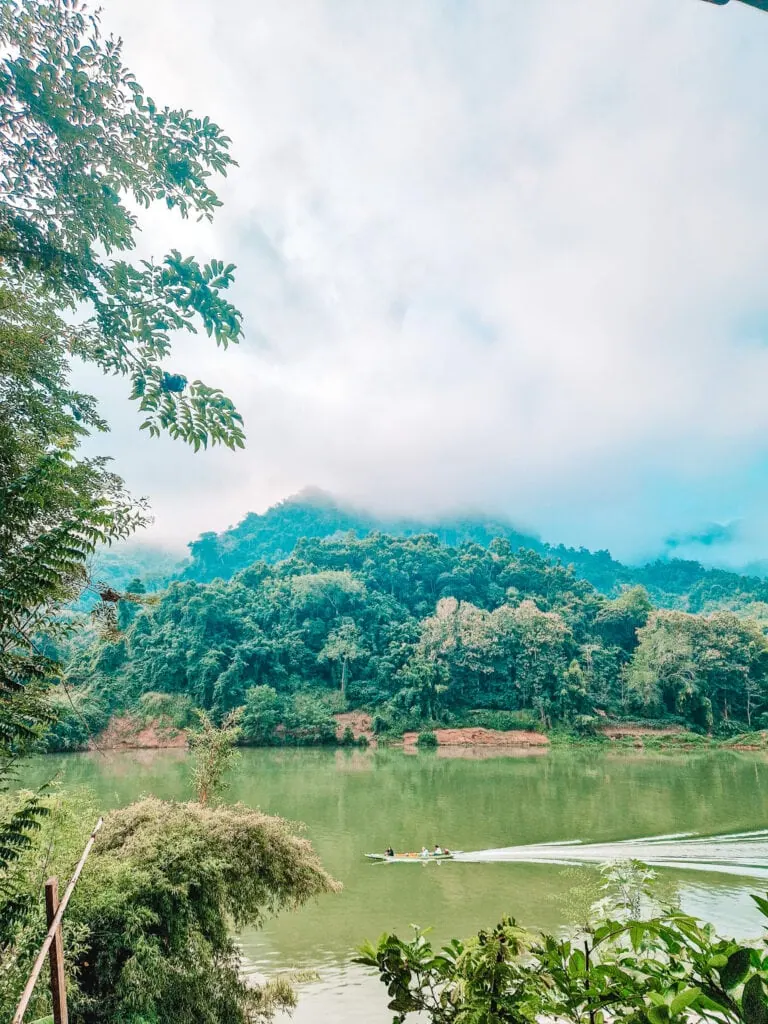
- Ing Ing Mountain View – Lovely family run guesthouse offering individual wooden rooms. Basic but clean, and right on the river so you’ve got a great breakfast with an incredible view. And they run the best bus back into Luang Prabang. ✨8.4/300
Practicalities:
- Transport in and out is slow and limited – and bumpy. Consider travel sickness remedies if you even struggle just a little bit.
- ATMs are unreliable; arrive with cash
Stop 7: The Slow Boat on the Mekong River
- All itineraries: 2 days, 1 night. I recommend staying overnight in Huay Xiay on arrival to avoid stress/rushing/arriving in Chiang Rai at night, although it’s possible to transfer directly to Chiang Rai in Thailand that evening.
- Best for: Perspective, decompression, seeing Laos properly
- Vibe: Wooden benches, river mist, forced stillness
The slow boat is one of those experiences that sounds mildly inconvenient on paper — and then quietly becomes a highlight of the entire trip.
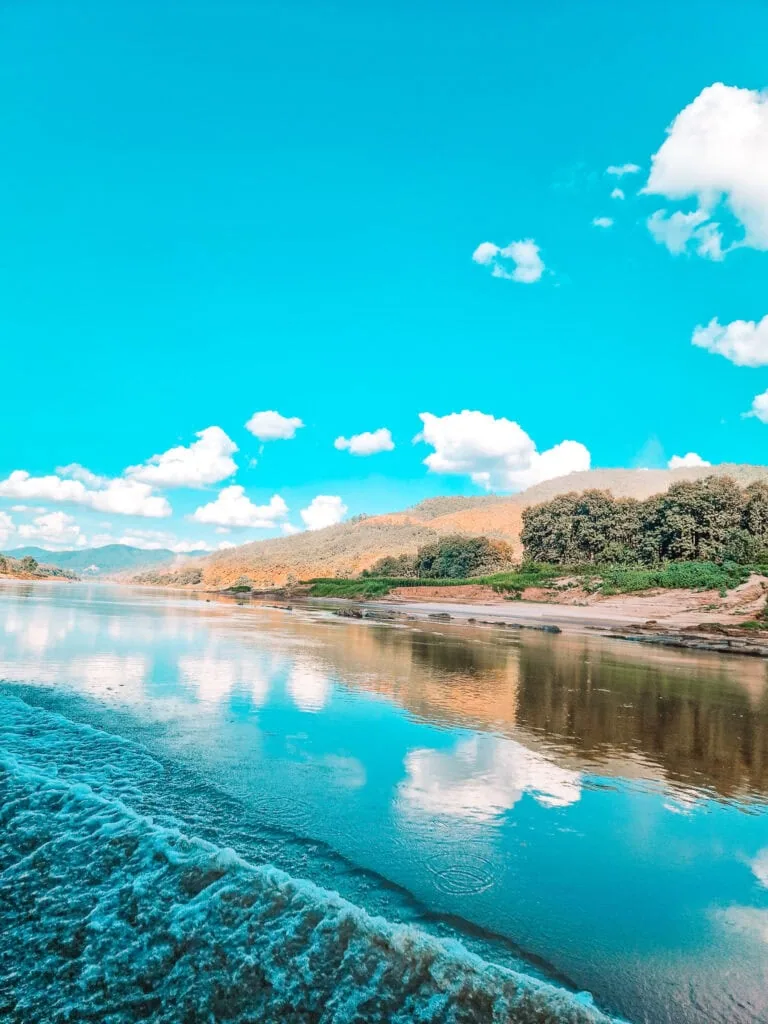
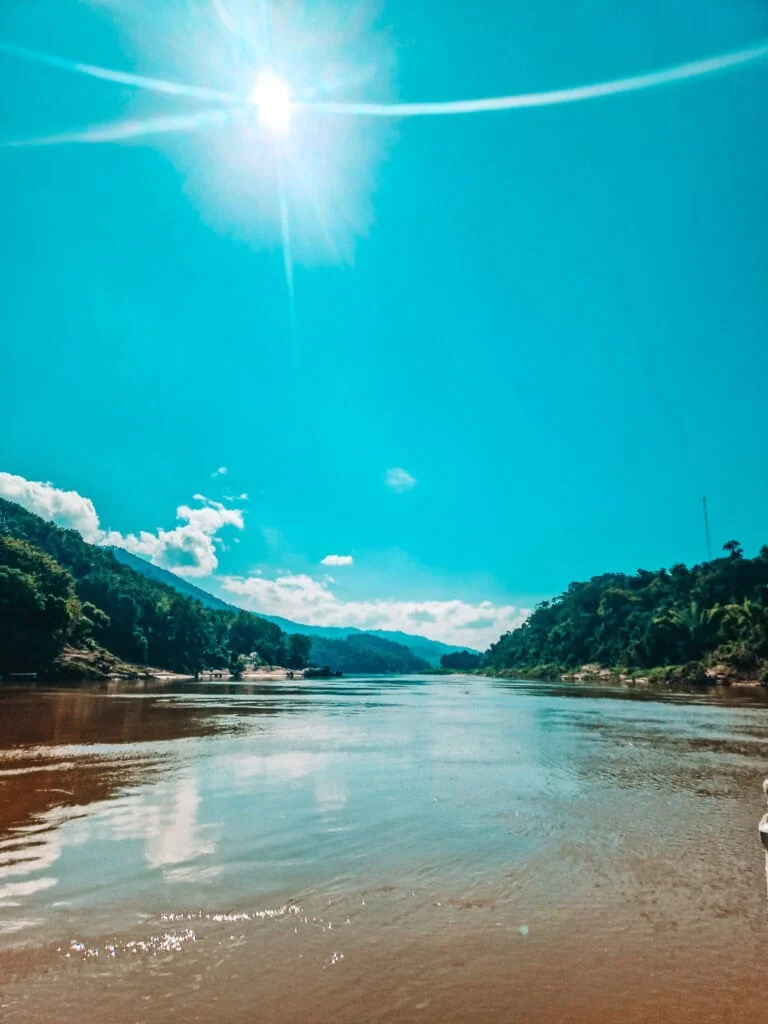
Travelling by slow boat between northern Laos and Thailand isn’t efficient, luxurious, or particularly comfortable. What it is is deeply grounding. After weeks of moving through Laos by road, train and plane, drifting down the Mekong felt like finally seeing the country from the inside. The scenery is extraordinary: jungle-covered hills, remote villages, fishermen casting nets, kids waving from riverbanks and it gives you a rare chance to literally do nothing.
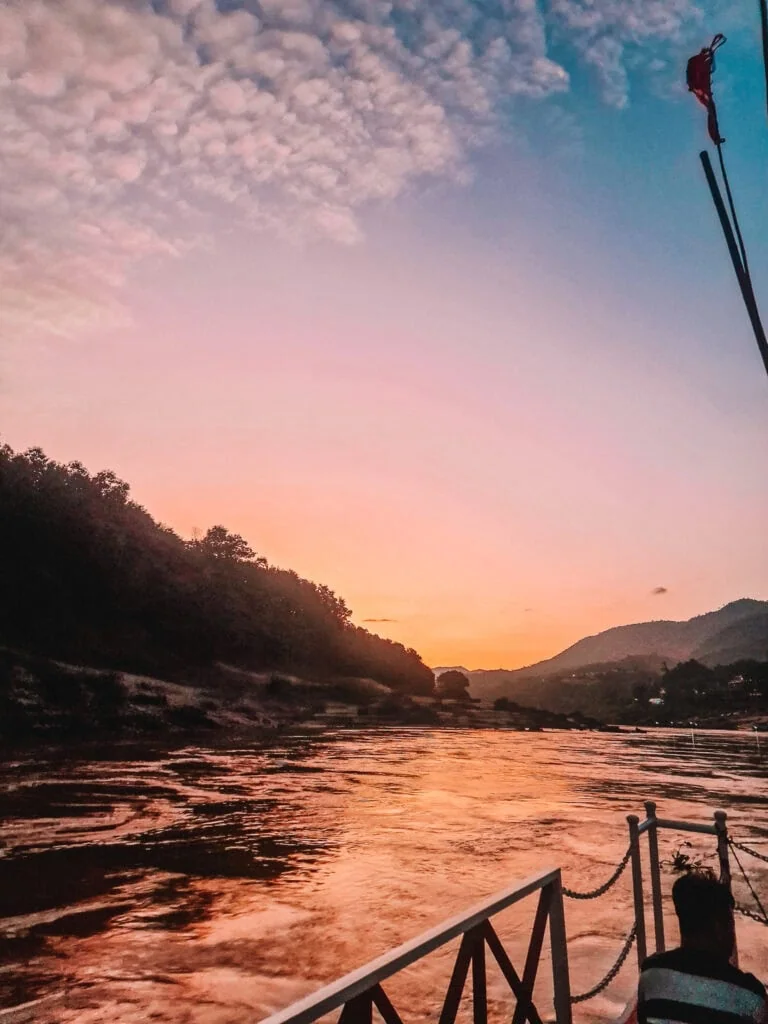
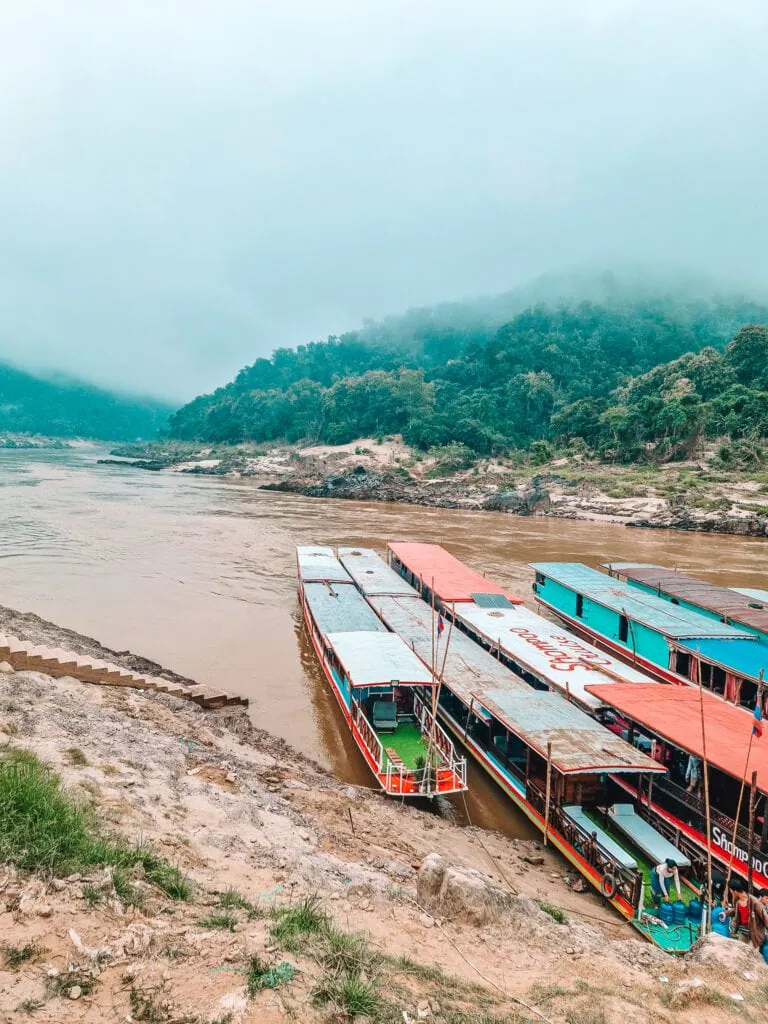
This is not a cruise. It’s a working river boat, adapted for travellers, with bench seating (some padded, some not) and no Wi-fi. You spend two full days on the river, with an overnight stop in Pak Beng — a small town that exists almost entirely to serve slow boat passengers. Days are structured around light, weather, river bends and lunch stops rather than clocks. You arrive in Huay Xiay on the borders of Thailand – a little town that mainly functions as stopping point for people either doing the Gibbon Experience, or where people spend a couple of days on a border run from Thailand.
Would I recommend it? Unreservedly — as long as you’re not in a hurry.
Where to stay in Pak Beng:
- Monsavnah Guesthouse – basic guesthouse in central Pak Beng – the closer you are to the slow boat the better! The family own a good bakery across the road which offers pre-ordered breakfast. ✨7.8/800+
Where to stay in Huay Xiay:
- Oudomphone Guesthouse 2: Another basic guesthouse with big rooms and a good breakfast menu at extra cost, run by a friendly family who can help with onward travel plans ✨7.7/1k+
Practicalities:
- Bring layers: mornings/evenings can be cool, afternoons hot.
- Pack snacks, water, toilet paper and entertainment. There were limited food/drink options available on board: instant coffee, local tea, noodle pots, water/soft drinks.
- Expect reasonably basic facilities – but both of my boats had western-style toilets (a big win!)
- Pak Beng is very geared towards the slow boat – you can order breakfast in advance to collect on your way to the boat
- The route from Luang Prabang to Thailand is much less busy than the reverse – on my second day I had four seats to myself and had a lovely morning nap
- Both Pak Beng and Huay Xiay have very steep ascents from the slow boat, via stairs – I really struggled. Locals will offer to help you in return for a tip, or try to lighten your bag before you go!
Stop 8: The Gibbon Experience
- All itineraries: 2 nights, 3 days in the jungle if you’re doing the Classic Route. Stay in Huay Xuay the night before for the early start. I’ve suggested staying in Huay Xuay for an extra night when the Gibbon Experience is over, but if you’re in a rush it’s definitely possible to move on to Chiang Rai that evening.
- Best for: Once-in-a-lifetime adventure, deep jungle immersion
- Vibe: Wild, physical, slightly uncomfortable — utterly unforgettable
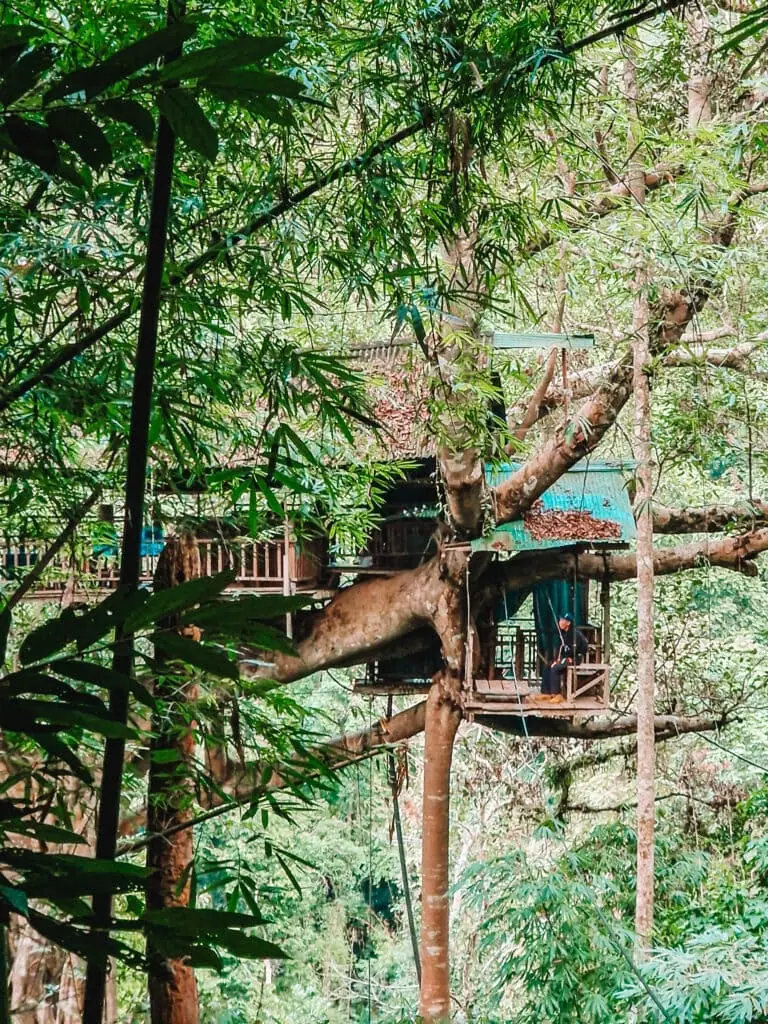
The Gibbon Experience is bucket-list travel in the truest sense. You’ll trek into the jungle to sleep in the world’s highest treehouses – which are only accessible via Zipline. After a quick crash course on safety at a local village, you’ll start your ziplining adventure, spending the whole of the second day trekking between the different ziplines in the jungle.
It’s one of those trips you plan around, not slot in. I found it physically demanding, logistically rigid, occasionally uncomfortable — and still one of the most extraordinary travel experiences I’ve ever had. Despite everything — the discomfort, the rigidity, the physical effort — there is nothing else like it.
- You move through the forest, not past it
- You sleep inside the canopy
- You experience Laos at its wildest, most inaccessible edge
If what you want is a story you’ll tell for the rest of your life — this is it. This isn’t easy Laos. It’s extraordinary Laos.
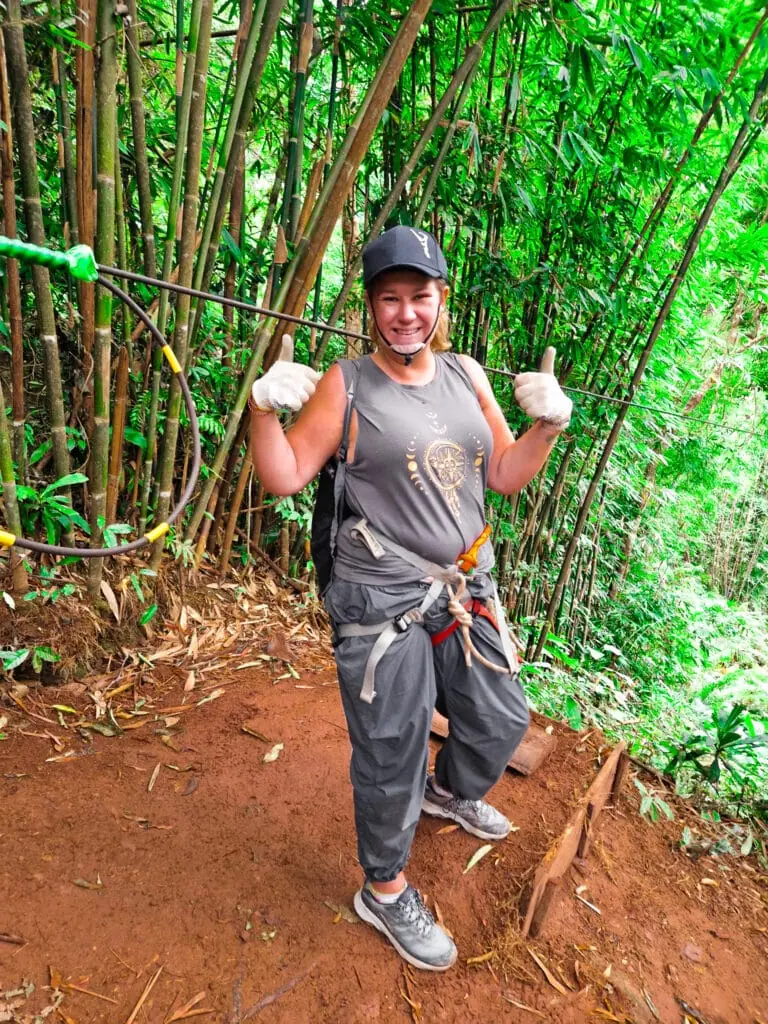
The routes:
There are three route options, and the marketing can be misleading.
- The Classic route is a longer stay and often described as more accessible — but it still involves a full day of hiking, broken up by walking between zipline platforms. I found it genuinely tiring.
- The Giant route is a shorter stay, but steeper and more technical — but gibbons are less likely to be seen on this option. When I visited, this was exclusively very young people.
- The new Escape route is a more intense, shorter version of the Classic – 1 night in the jungle, more walking, requiring more fitness.
Gibbons are shy. Even on the Classic route, sightings tend to be from a distance — fleeting, high in the canopy. On the shorter route, they’re not seen at all.
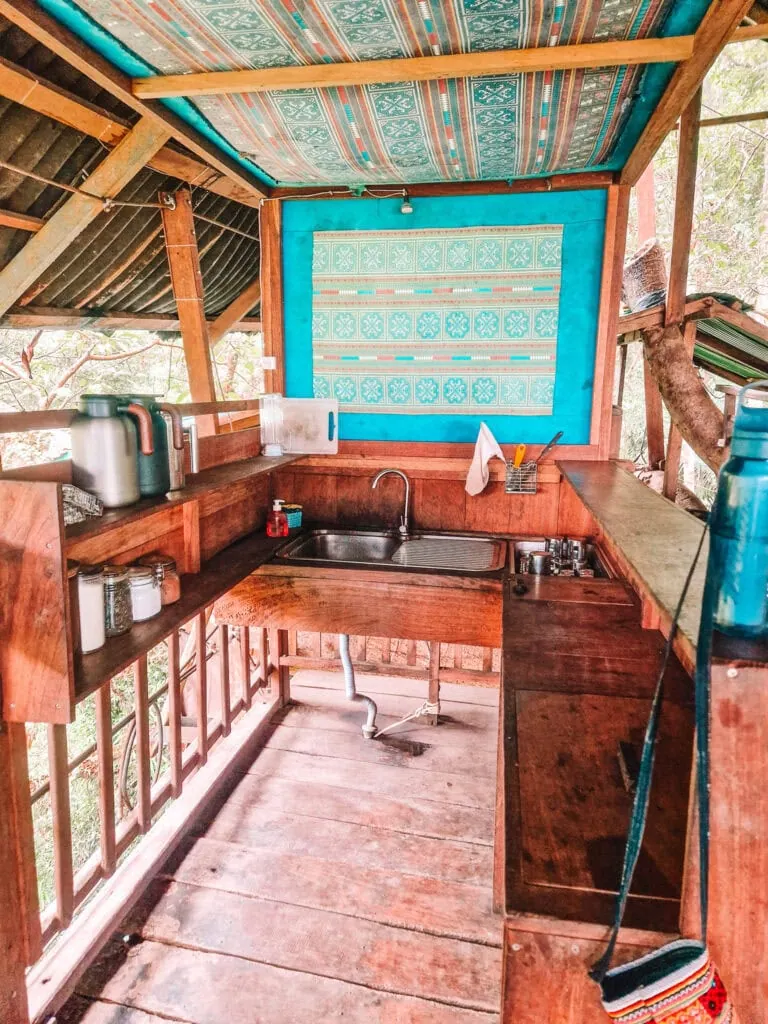
Life in the canopy
Staying in a treehouse, suspended high above the jungle floor, is surreal. Staff deliver meals, tea and coffee via zipline, and you’ll shower with the walls open to the jungle (don’t worry, no humans can see you!).
When I went, it rained for the first time in months. We were absolutely freezing — a deeply strange sensation in the Lao jungle — wrapped in layers, listening to rain drip from the leaves around us. Uncomfortable? Yes. Memorable? Completely.
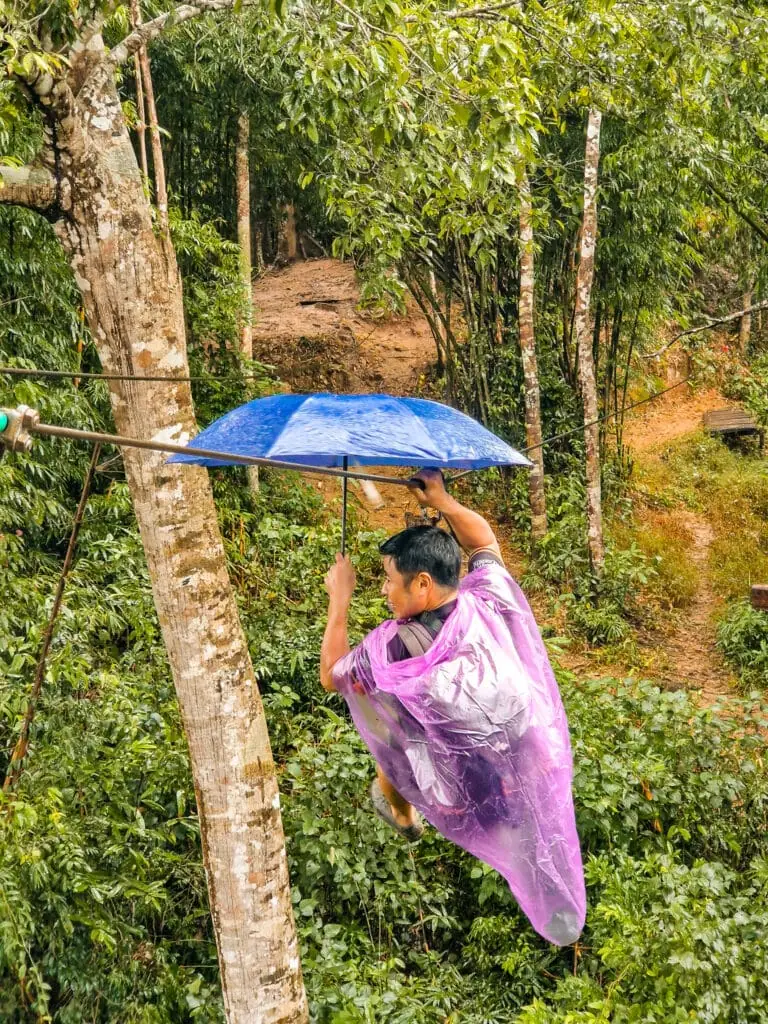
Practicalities:
- Book far in advance — spaces are limited and sell out quickly
- No easy cancellation — once you’re in, you’re in
- Dates are fixed, flexibility is minimal
- You can leave your big bag in the Gibbon Experience office – just don’t leave any food because of the rats…!
- Departure from central Huay Xuay, where the slow boats arrive/depart
- Long, winding jeep rides with bench seating in the back — bumpy, uncomfortable, and not ideal if you struggle with motion sickness.
- In my opinion – avoid during rainy season as trails become slippery and dangerous.
Frequently Asked Questions About Travelling Laos
Is Laos hard to travel?
Laos is operationally harder than most of Southeast Asia, but not unsafe or unmanageable. Transport is slow, plans change, infrastructure is limited outside major towns, and you’ll need more patience and preparation than in places like Thailand or Vietnam. If you’re comfortable with flexibility and slower pacing, it’s deeply rewarding.
Is three weeks too long for Laos?
No — three weeks is ideal. Shorter trips often feel rushed and logistics-heavy. Three weeks allows you to absorb delays, rest between travel days, and actually enjoy places rather than constantly moving on. Laos rewards staying put longer in fewer destinations.
Can I do this itinerary without riding a motorbike?
Yes. This itinerary is designed so that motorbikes are optional, not essential. You can do Don Det, Pakse (with a guided Bolaven day trip), Vientiane, Vang Vieng, Luang Prabang, Nong Khiaw, the slow boat and even the Gibbon Experience without renting a scooter.
Is Laos safe for solo travellers?
Generally, yes — including for solo female travellers. Violent crime is rare, and people are often quietly kind and helpful. The main risks are road accidents, transport fatigue, unreliable infrastructure, and alcohol-related issues in backpacker-heavy areas. Sensible precautions go a long way.
Is the slow boat from Laos to Thailand worth it?
Yes — if you’re not in a hurry. It’s slow, basic, and quietly beautiful. If you’re tight on time or hate enforced stillness, you’ll resent it. If you want perspective and decompression, it’s one of the most memorable ways to leave Laos.
Should I do Nong Khiaw or the Bolaven Loop?
It depends what you want more of — and how comfortable you are on a motorbike.
✔ Choose Nong Khiaw if you want mountains, river scenery and stillness, without needing to ride a scooter. It’s ideal if you prefer hiking, boats and slow days over driving.
✔ Choose the full Bolaven Loop if you want waterfalls, coffee plantations and rural countryside and are genuinely confident riding a motorbike on rough roads. This route involves long days on uneven surfaces and isn’t a great place to learn or push your limits.
If you like the idea of the Bolaven Plateau but don’t ride, a guided day trip from Pakse is a much better option — and still well worth doing.
Is the Gibbon Experience worth the effort and cost?
If you want a once-in-a-lifetime experience and are comfortable with discomfort, yes. It’s physically demanding, inflexible, and expensive — but utterly unlike anything else. It’s not wildlife tourism in the conventional sense; it’s immersion.
When is the best time to do this itinerary?
The best window is November to February.
✔Dry season
✔Cooler temperatures (by Lao standards)
✔Safer trekking and transport conditions
Avoid March–April (burning season) and be cautious in the rainy season, especially if hiking, boating or doing the Gibbon Experience.
Laos isn’t a country you conquer with efficiency.
It asks for patience. It asks for rest days. It asks you to let go of tight schedules and accept that some days will be slower, messier, or quieter than you planned.
But if you give it that — if you travel it with space and intention — Laos gives something rare in return: depth without spectacle, beauty without performance, and moments that feel genuinely unmanufactured.
Whether you end your journey drifting down the Mekong, sleeping high in the jungle canopy, or lingering in Luang Prabang longer than planned, this itinerary is designed to help you choose your version of Laos — not rush through someone else’s.
👉 Next steps:
- Read my Laos Travel Basics guide for transport, trains, money, SIMs and borders
- Dive deeper into individual stops:
- Use 12GoAsia to check realistic transport options before you arrive
- Leave space in your plans — Laos will fill it for you
If there’s one rule to travelling Laos well, it’s this:
Move slower than you think you need to. Laos will meet you there.