 Em
EmJust so you know: This post contains affiliate links. As an Amazon Associate, I earn from qualifying purchases. I may also earn a small commission if you book a tour, hotel, or buy something else through these links. It helps me keep this blog running and full of travel tips. Thanks for your support!
I first visited Mostar in 2012, passing through on a whirlwind trip, and like so many travellers, I remembered the iconic bridge and little else. But when I returned in 2025 and spent four days here as part of a longer journey through Bosnia, the city unfolded in a way I hadn’t expected.
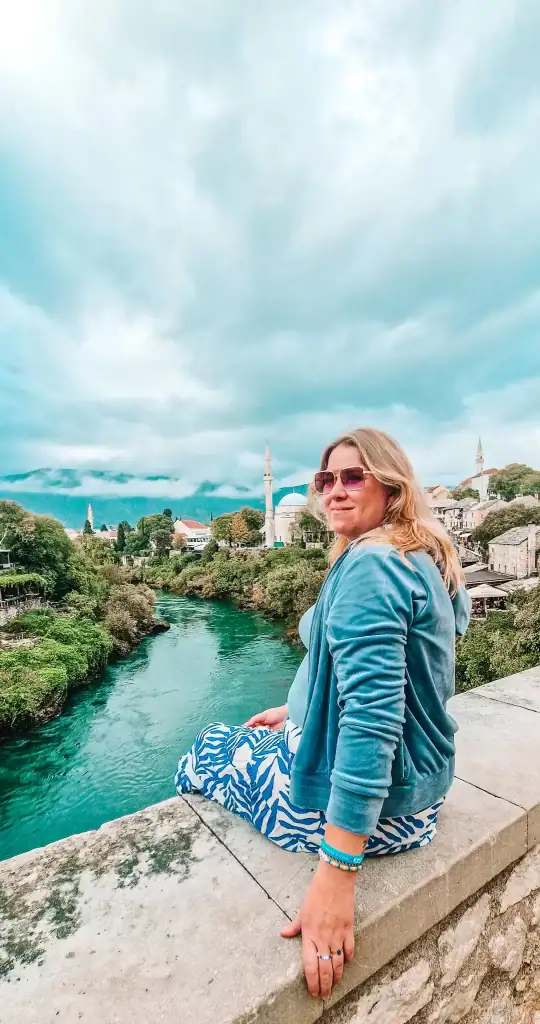
Mostar is more than just a postcard-perfect bridge. It’s a city layered with beauty and tragedy, where war-scarred buildings stand beside thriving street cafés, and the soft call to prayer floats through a valley surrounded by hills that once held snipers. It’s a city of contrasts: sweet Bosnian coffee and bitter memory, turquoise river and bloodstained history.
What surprised me most? The wine is excellent. The beer scene is growing. And the people, once you pause to listen, will share stories that stay with you.
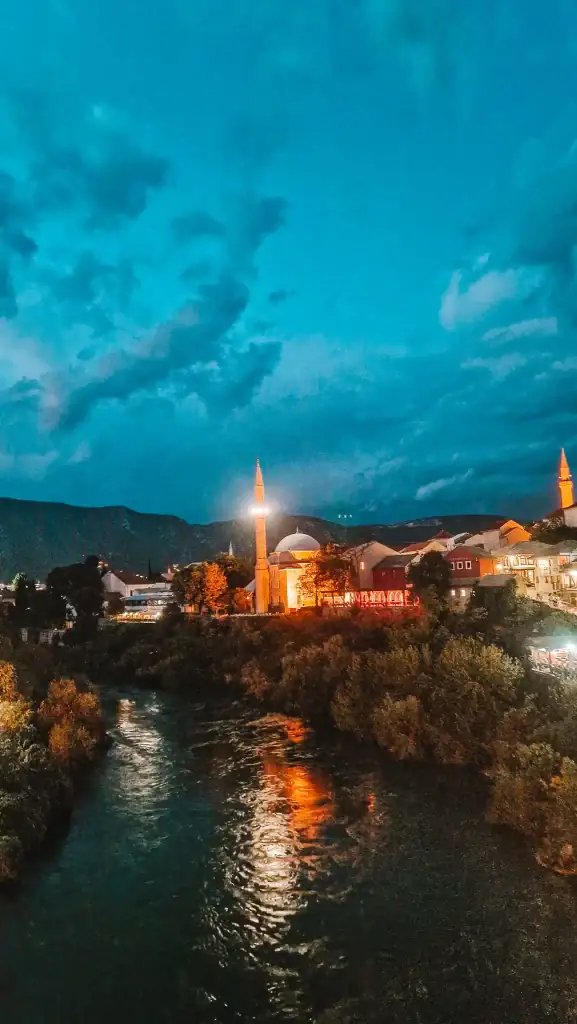
This guide is for travellers who want to go deeper — not just snap the bridge, but understand what it means. Not just drink the coffee, but learn how to sip it slowly, the Bosnian way.
Let’s explore.
A Quick Look at Mostar’s History
Mostar has been a cultural and commercial hub in the Herzegovina region for centuries, named after the “mostari,” or bridge keepers, who guarded the city’s iconic Stari Most. Built in the 16th century during Ottoman rule, the bridge became a symbol of connection between communities, trade routes, and cultures.
Later, under Austro-Hungarian rule, and then as part of Yugoslavia, Mostar developed a unique blend of East and West — something still visible in its architecture, cuisine, and way of life.
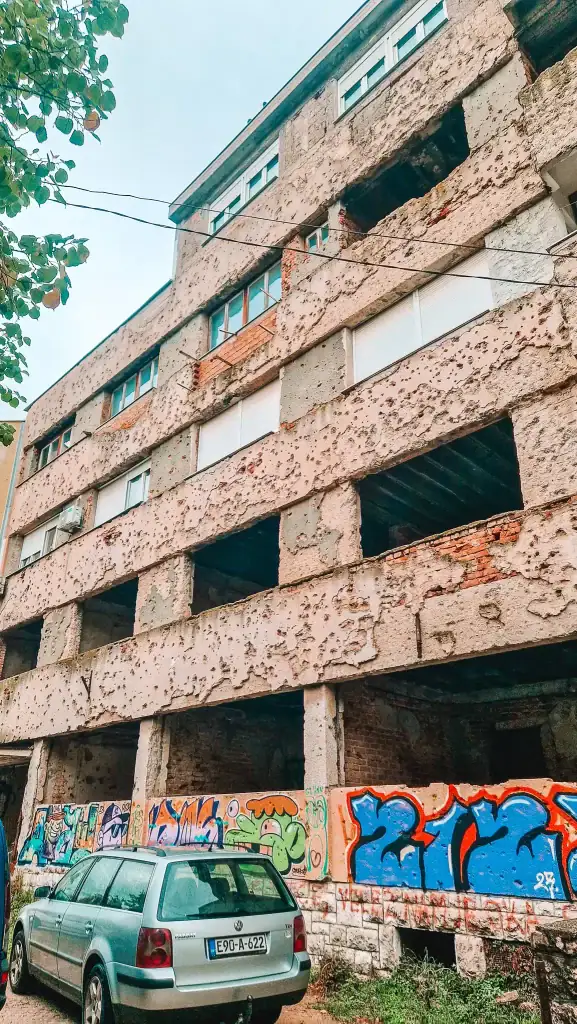
The 1990s brought devastation. During the Bosnian War, Mostar was heavily shelled – with over 75% of buildings damaged or destroyed. In 1993, the beloved Old Bridge was destroyed – a moment broadcast around the world. In many ways, the collapse of Stari Most represented the collapse of Bosnia itself.
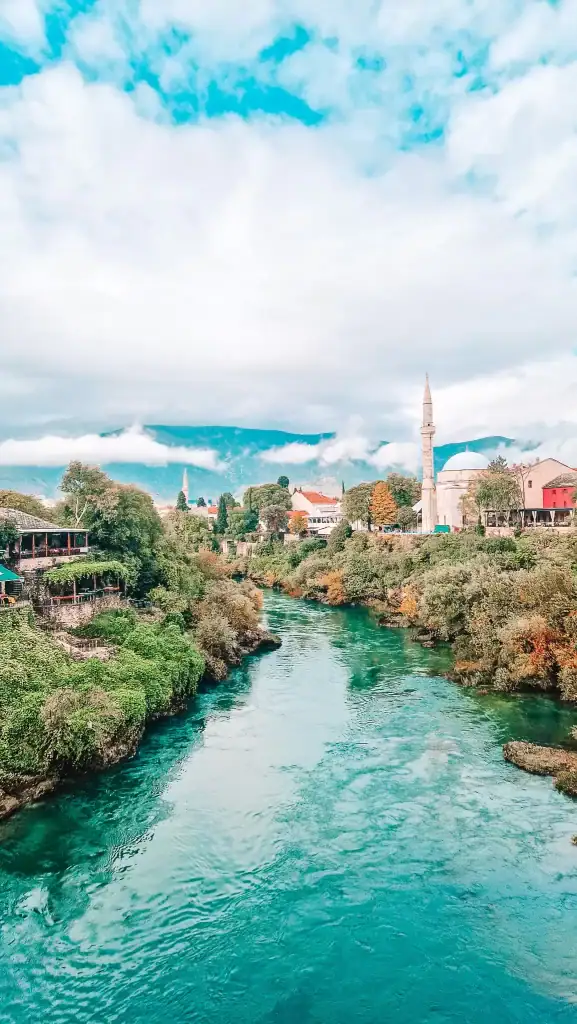
Mostar has spent the years since rebuilding — not just its bridge, but its sense of self. Today, it’s a city still healing, but undeniably alive. The past is present here, but so is joy, creativity, and resilience.
Still researching your Balkans trip?
My free Culture-First Traveller’s Guide to the Balkans introduces Albania, North Macedonia, Kosovo & Bulgaria through history, everyday culture, and thoughtful travel — perfect if you’re just getting started.
👉 Get the free culture-first guide
And if you’d prefer someone to build a personalised itinerary for you — tailored to your time, interests, pace, and travel style — I also offer custom trip planning, including Albania and wider Balkan routes.
What to do in Mostar
Stari Most: The Bridge That Broke and Came Back
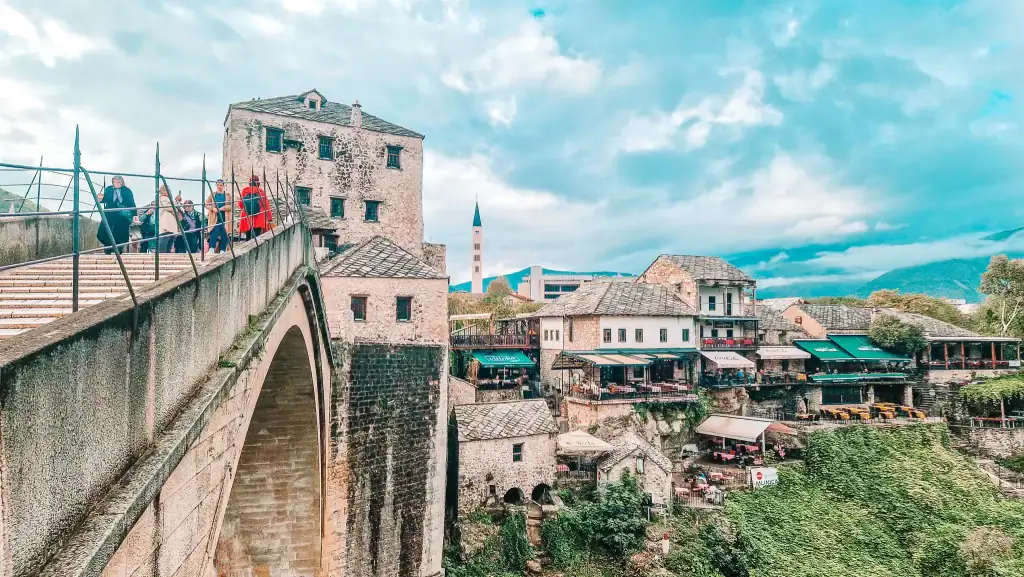
Mostar’s Stari Most is the heart of the old town, and the reason most people visit. Built in 1566, it arches gracefully from one side of the city to the other, linking neighbourhoods that have traditionally represented Bosnia’s ethnic diversity.
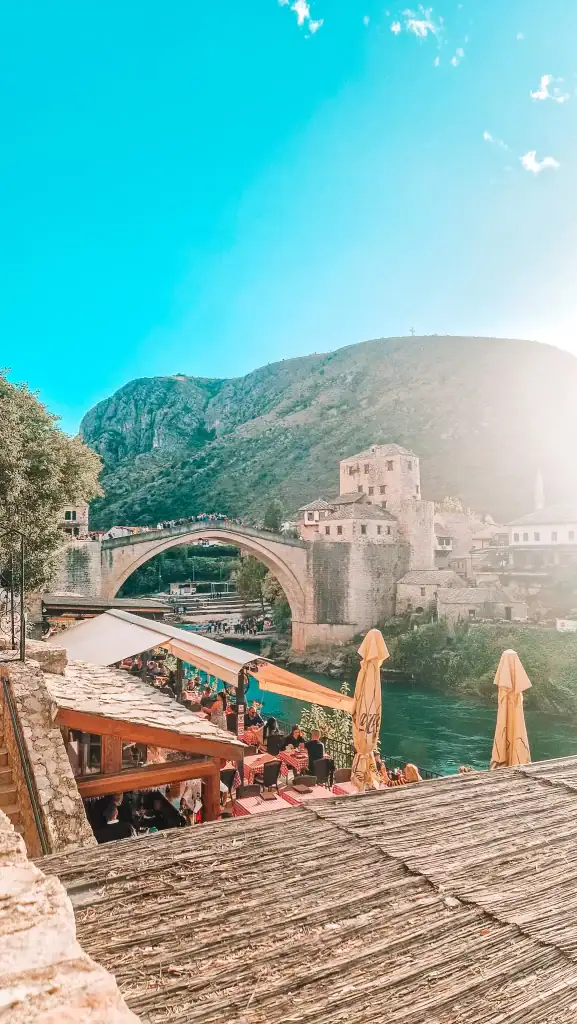
It was destroyed by Croat forces as part of the Bosnian War in 1993, as the Croatian army attempted to take the city. Once the ceasefire was agreed, Mostar set to rebuilding this epic structure. Rebuilt stone by stone using original techniques, the new bridge reopened in 2004 — not just as a crossing, but as a symbol of Bosnia’s future.
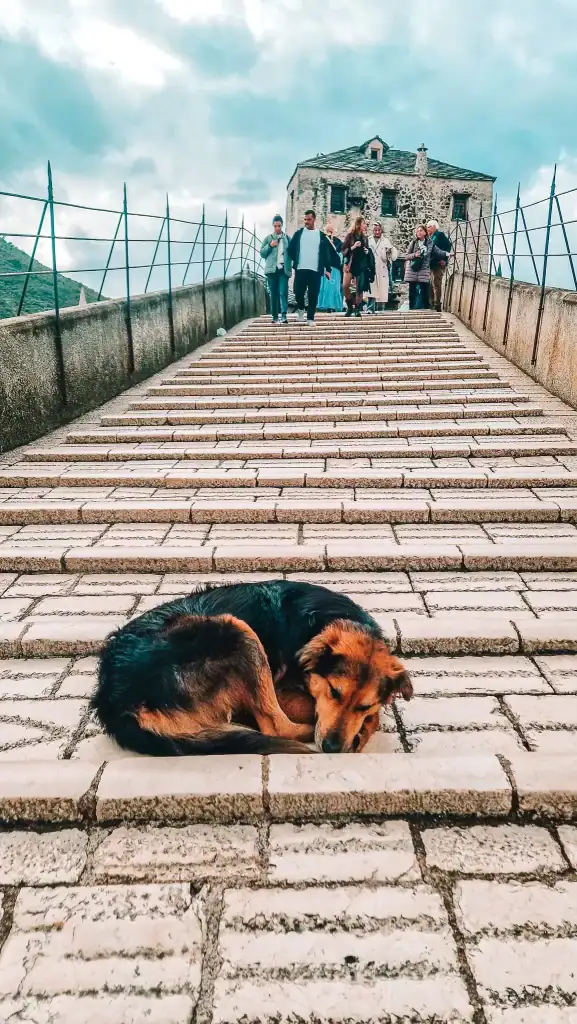
Today, the bridge is a mecca for tourists, and for good reason. Take your time as you wander across (not least because it can be exceptionally slippery), and soak up the ancient vibes. Either side of the bridge, you’ll find cafes and the best kind of tourist shops – the ones with unique, hand made gifts (as well as the usual mass-produced souvenirs).
Keep your eyes peeled for one of Mostar’s famous bridge divers. Bridge jumping from Stari Most dates back over 400 years, a daring local tradition that began in Ottoman times and continues today as a rite of passage and summer spectacle. Locals start training young, and are a part of Mostar’s diving club. Unregistered divers aren’t permitted, but still sometimes jump – but one thing I saw when I visited was that the community around the bridge work really hard to discourage this.
Top tip: want the best photos of Stari Most? I recommend the spot I’ve pinned on the map above, just by Restoran Labrint.
Join the Best Local Walking Tour
Cost: Tip based
Practical tips: Booking required, you can use Whatsapp
Mostar is absolutely full of history from multiple eras, and the best way to fully understand the complexity of the city’s past is through a walking tour. My host in Mostar recommended Sheva’s Free Walking Tour – and she was absolutely right.
This incredible walking tour is led by Ševko, a Mostar native who draws on his own experience of the fall of Yugoslavia and fighting in the Bosnian War. He seemed to know everyone in town, and he’s also a bridge diver – I even spotted him on the bridge one day stopping an unauthorised diver. He even uses photos from his own personal history as part of the tour.
The 2.5 hour tour takes you around Mostar – starting with the bridge, visiting different historic sites around the town, and finishing up in one of the graveyards created specifically for the burial of the war dead. This is one of the most impactful tours I’ve taken – full of both historic detail and personal anecdotes – and it will give you incredible insight into not just Mostar but Bosnia as a whole.
The Sniper Building: A Haunting Urban Relic
Cost: free
Just outside the Old Town stands an imposing concrete shell — the former Ljubljanska Bank building, now known simply as Mostar’s Sniper Tower. During the Bosnian War, this multi-storey structure was used by Croat forces as a sniper position, targeting the Bosniak (Bosnian Muslim) side of the city. Today, it’s one of the starkest physical reminders of the conflict.
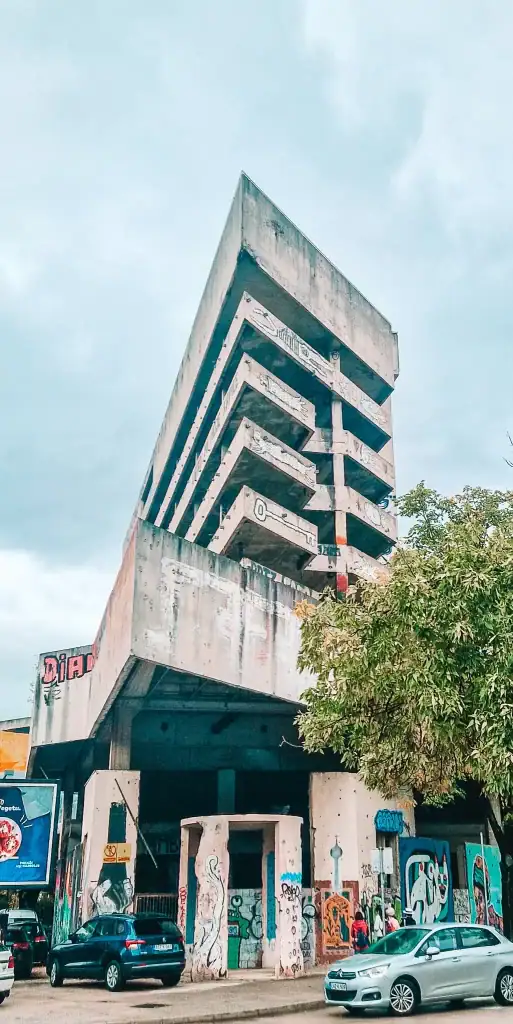
Though the building has long been a site of interest for urban explorers and graffiti artists, it’s currently sealed off and no longer accessible inside. Fencing and warning signs now block the entrances, and for good reason — it’s structurally unsound and unsafe.
Still, even from the outside, the Sniper Building is powerful. Its pockmarked walls, overgrown edges, and layers of graffiti reflect both its violent past and the ongoing struggle to process that history. Standing at its base, you don’t just “see” the war — you feel it.

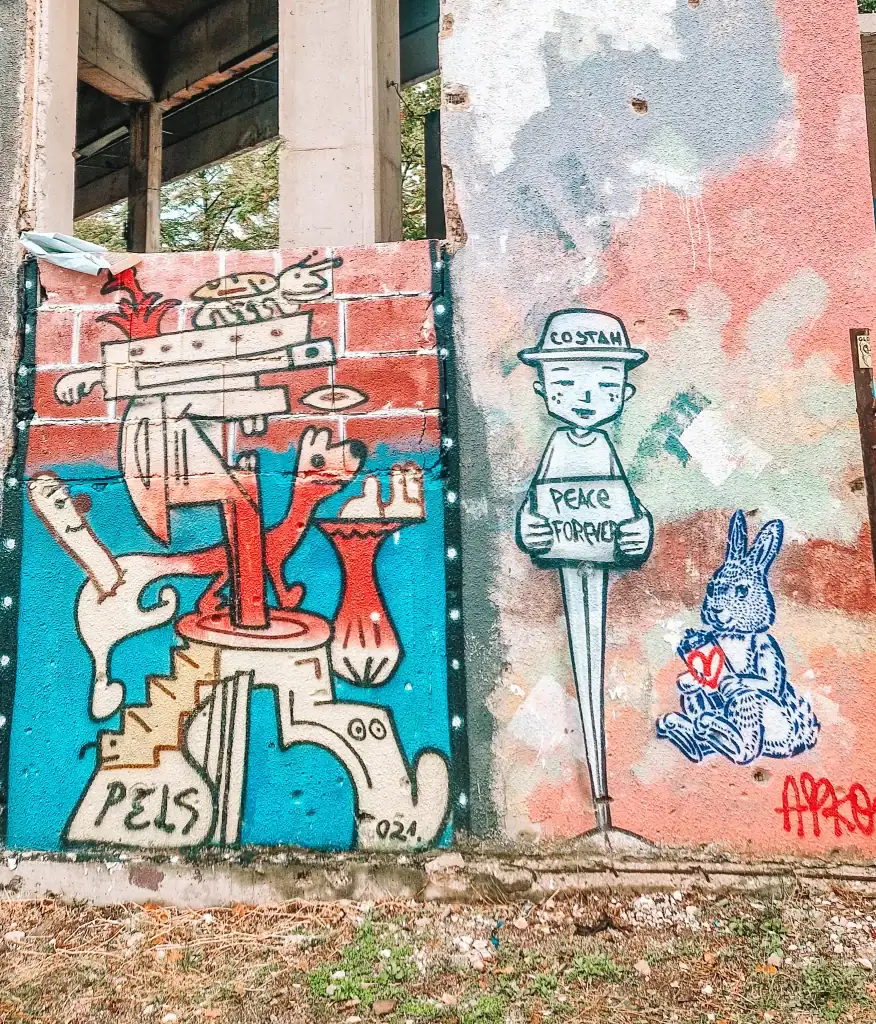
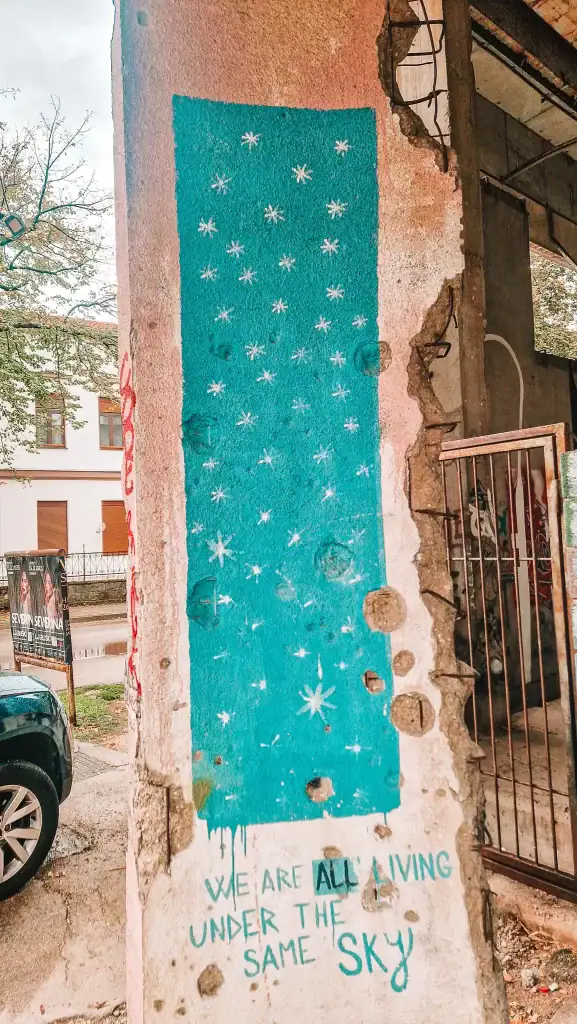
It’s easy to find – just head a few blocks west of the main boulevard. It’s worth the short detour for what it represents. Just remember, it’s a war relic, not a selfie opportunity – I saw people posing for selfies without paying attention to the building’s significance, which was jarring.
Museum of War & Genocide Victims: Mostar’s Painful Past Preserved
Cost: 18 BAM/9e
Content warning: the museum does not censor photos or videos taken during the war, which includes images of bodies, injuries and other traumatic imagery. Bear this in mind when visiting, especially if you’re visiting with children or young people.
No one should visit Bosnia without making an attempt to understand the country’s devastating recent past, and one of the best places to do this in Mostar is at the Museum of War and Genocide Victims.
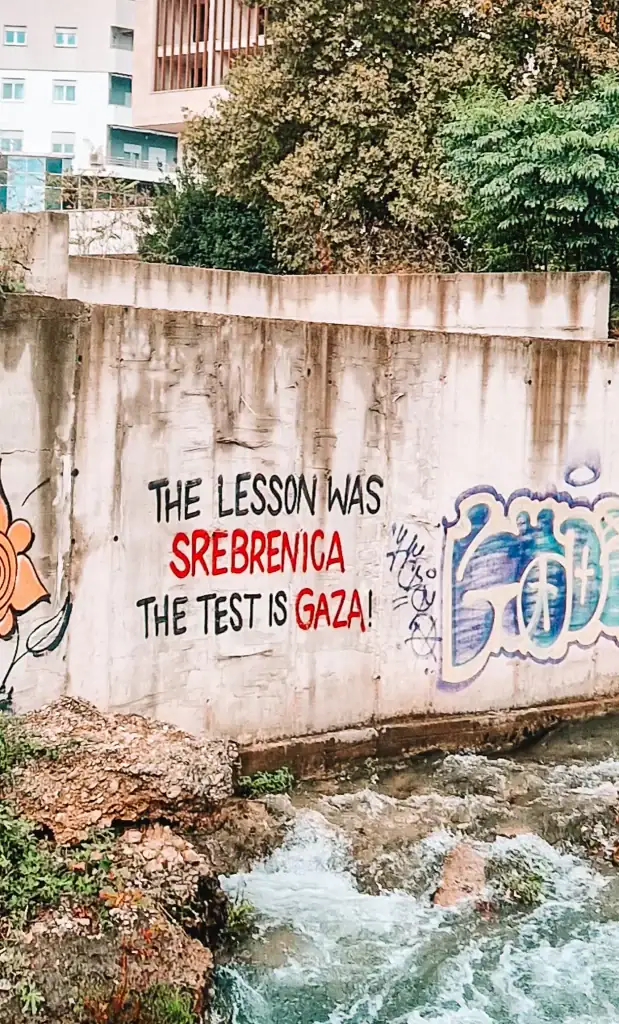
This is a relatively small museum but one that really packs a punch. It contains testimony from people who lived through the Bosnian War, with a particular focus on the genocide in Srebrenica and the violence perpetrated at other concentration camps around Bosnia. There’s a mix of exhibits, from survivor testimonies to videos showing press reports from the time, and the testimony of UN officials, press and aid workers who were in Bosnia at the time. Many of the videos shown were used as evidence during the war crimes trials in the Hague, which really drives home how recent this history is.
Make sure to make time in your Mostar itinerary for this important museum – just ensure that you’re able to decompress afterwards.
Seek Out Street Art with a Message
Cost: free
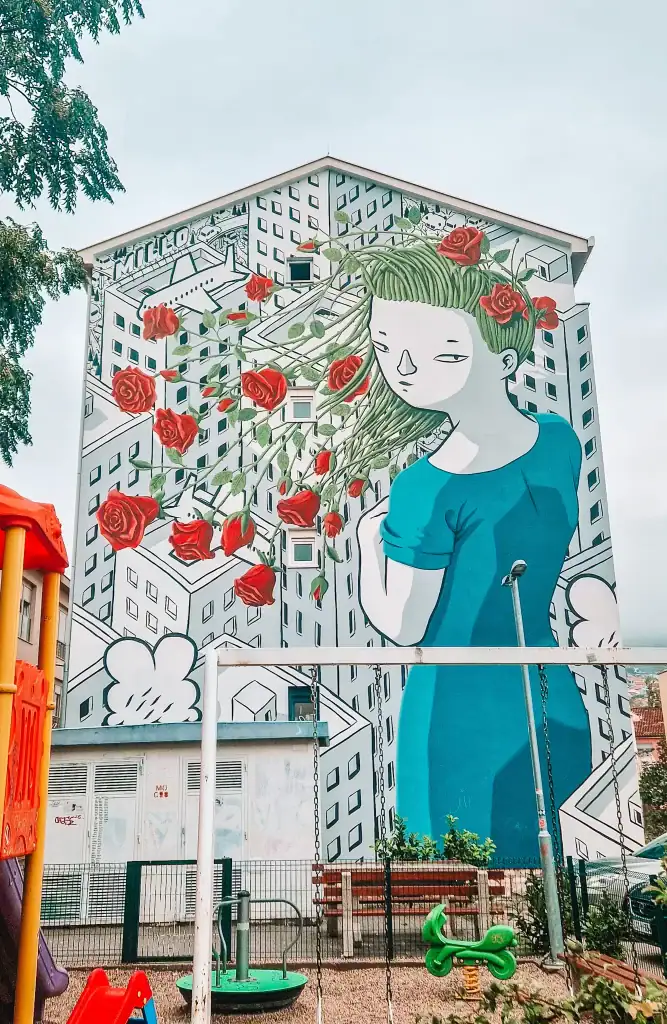
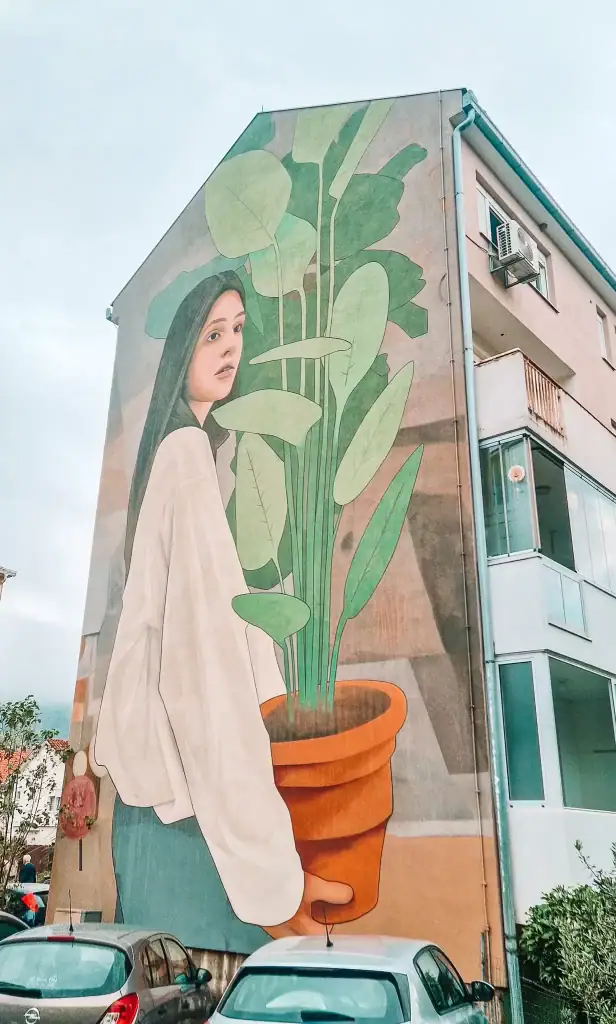
One of the most unexpected joys I found in Mostar was their street art scene. You’ll need to walk out of the old town into modern Mostar to find the best examples, but it’s well worth the walk (around 15 minutes).
There are two main spots – one is the Sniper Building mentioned above. But if you keep walking past this, you’ll come to a residential area, where the apartment buildings feature incredible street art. I’ve put some of my favourites below.
Try Local Wine and Craft Beer in Mostar
Mostar is in the heart of Bosnia’s underrated Herzegovina region, which is brimming with delicious vintages. While in Mostar, you can take trips to local vineyards if you have a car, but if, like me, you’re travelling by public transport, the easiest way to try as many as possible in a short time (so you know what to buy when you get home) is to do a wine tasting.
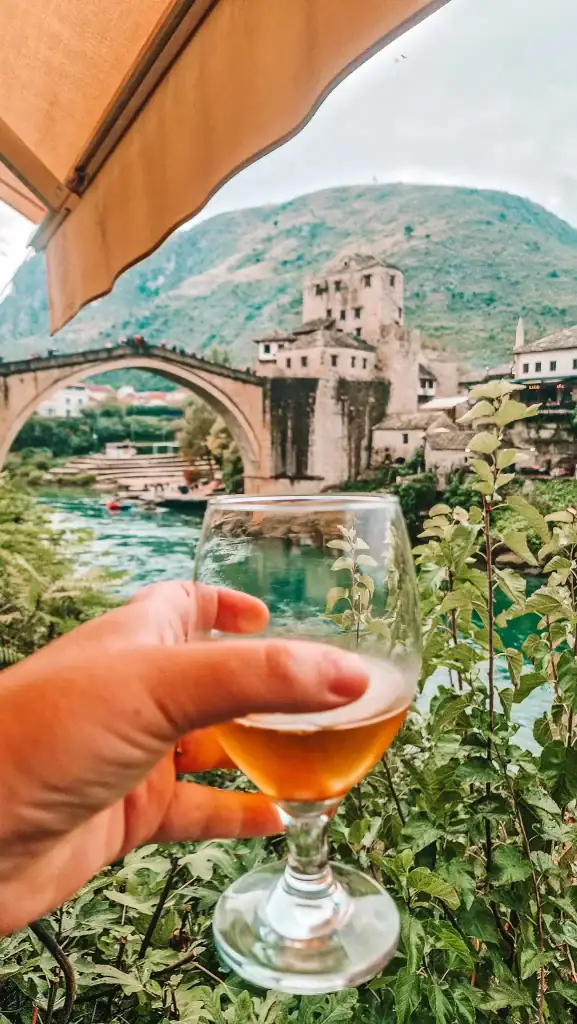
The best spot I found was at The Spirit of Herzegovina, a local produce shop right on Stari Most. This is the perfect spot to feel like you’re really enjoying Mostar, and they offer a tasting of three delicious wines to help you enjoy your time on the Old Bridge. I had a white and two reds, and they were all amazing – not least because their seating is on the shop window ledge directly on the bridge, and the sun was going down, a truly magical moment.
The other spot I found for wine was over the bridge on the main high street, called Via Vino. While I didn’t get to try the wines here, it’s a dedicated wine shop so will have a great selection, and they offer a tasting option as well as the opportunity to have a glass of your favourite.
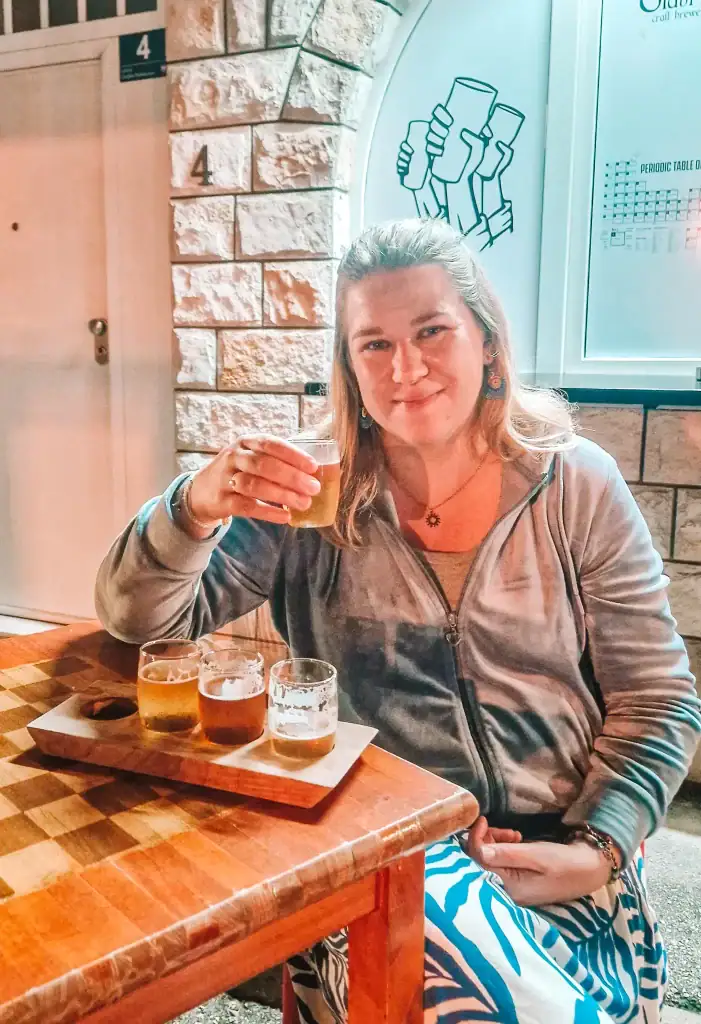
Finally, Bosnia has a growing craft beer scene, and the best place to try local beers in Mostar is at the Craft Beer Garden, on the very edge of the old town. This lovely spot has both indoor and outdoor seating, and offers a range of beers, including the option for a tasting flight.
Bosnian Coffee Rituals: Slow Down Like a Local
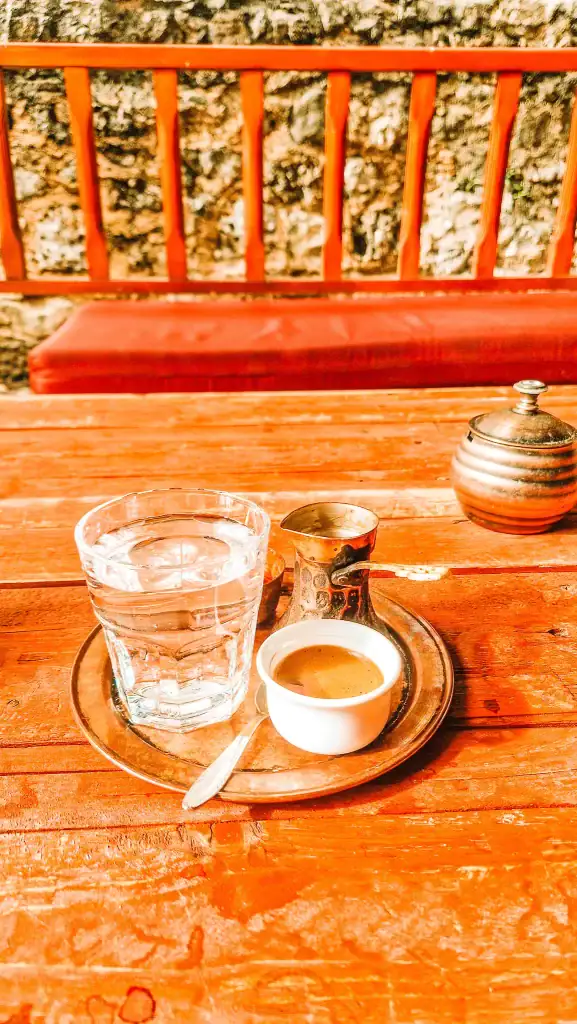
Coffee is an institution in Bosnia, and no trip is complete without trying Bosnian coffee. Bosnian coffee is often mistaken for Turkish coffee, but it’s brewed and served differently — traditionally poured without stirring, using a specific technique that separates the grounds, creating a smoother sip. In Mostar, I found two great places to try traditional Bosnian coffee.
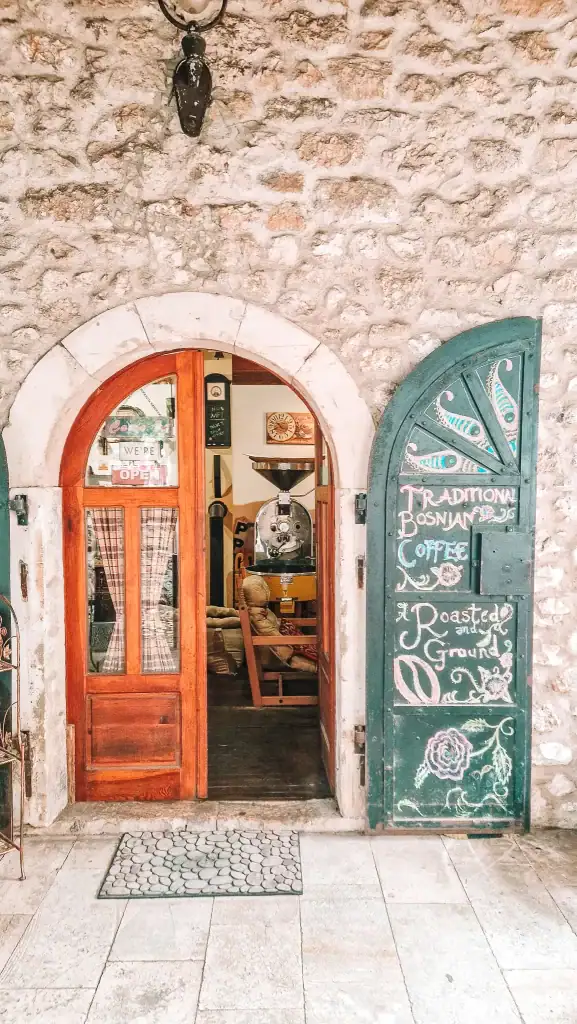
- Cafe de Alma – this little spot by the Hammam Museum is tucked away, making it a bit quieter than the cafes on the main streets. They only serve Bosnian coffee (and some cold drink options), so don’t head here if you want your Flat White. But if this is your time to try Bosnian coffee, this is the perfect spot – the owner will sit with you and explain the process you have to go through to get the perfect brew!
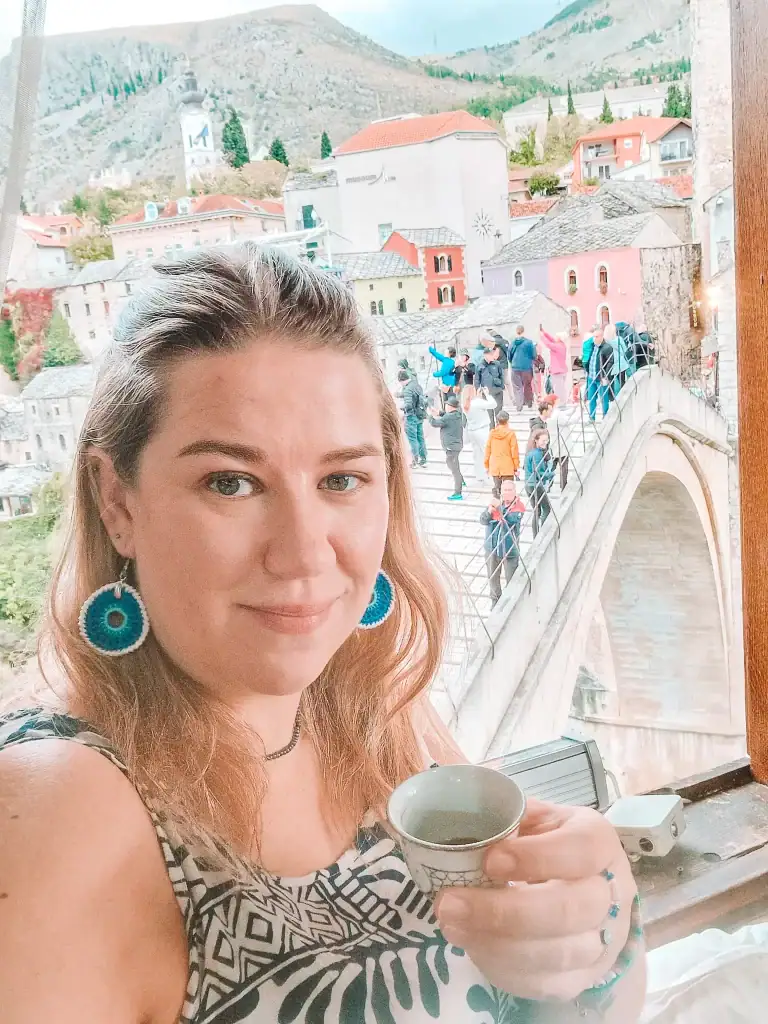
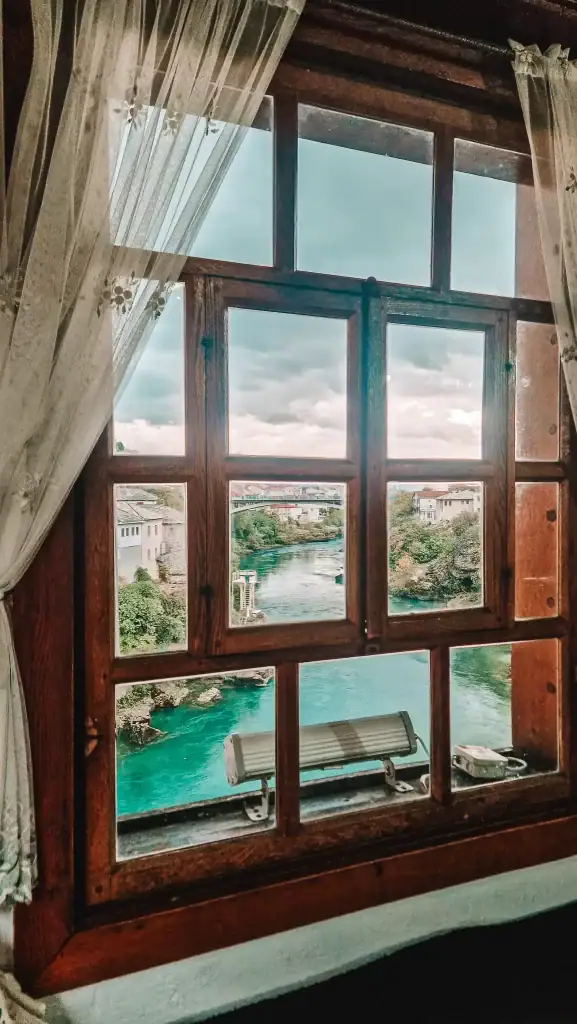
- Najstariji Kafic-Cardak – this tiny cafe has to win the award for most incredible location in the Balkans. It’s actually inside the Stari Most – as you start crossing, climb one of the towers at the end of the bridge and you’ll find the cafe at the top. There are only a few seats, but they are in traditional Bosnian style, and the cafe also serves great baklava – it’s the perfect spot for when you need a caffeine and sugar fix.
Take a Day Trip to Blagaj, Počitelj & Kravice Waterfalls
As is so often the case with my travel guides, the one of the best things to do in Mostar is getting out of Mostar! Herzegovina is incredibly beautiful, and absolutely packed with history.
I visited four key spots in Herzegovina:
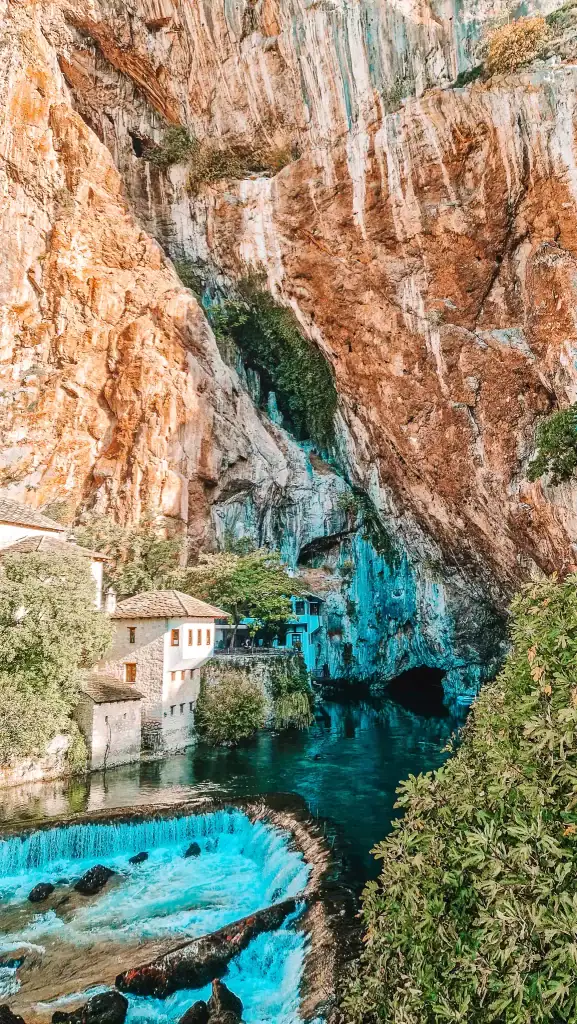
- Blagaj – This tiny historic town hidden in the mountains is most famous for it’s Dervish house – a monastery where Dervish monks lived and practised their form of Islam, which relied on proximity to nature. The monastery is tucked into the mountains in the most incredible spot, and it’s also fascinating to learn about the famous whirling Dervishes.
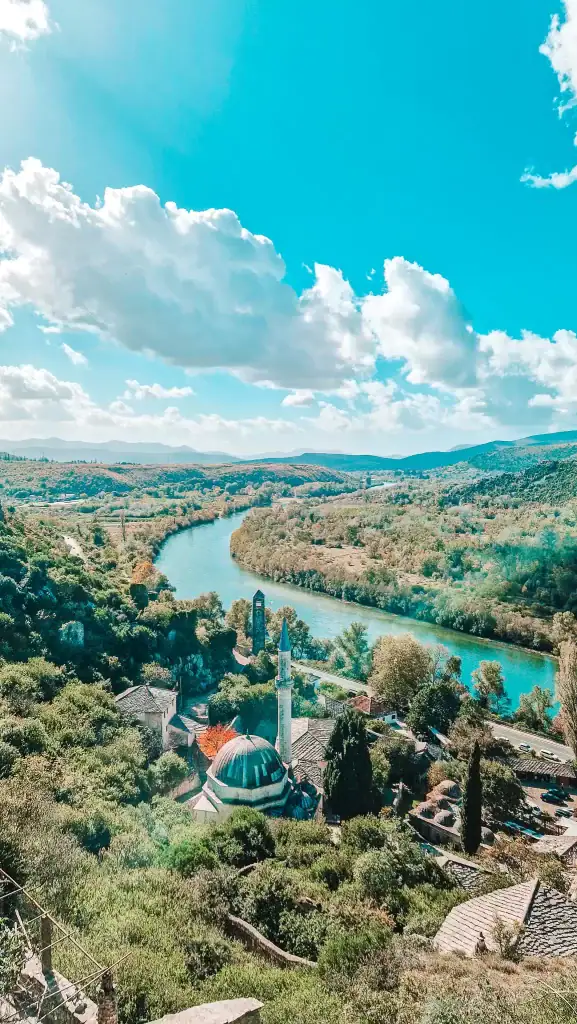
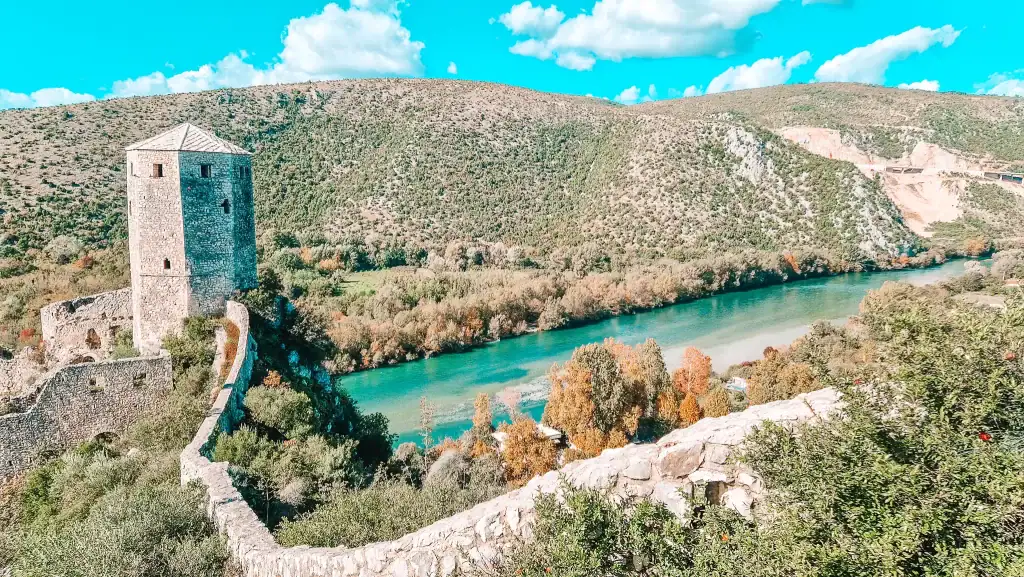
- Počitelj – This small, traditional Ottoman hillside village is full of quiet alleyways and hidden lanes – but most famous for the incredible views you get once you’ve made your way to the ruined fortress and viewing platform on top of the hill. The valley spreads out around you, and it feels like you’re on top of the world.

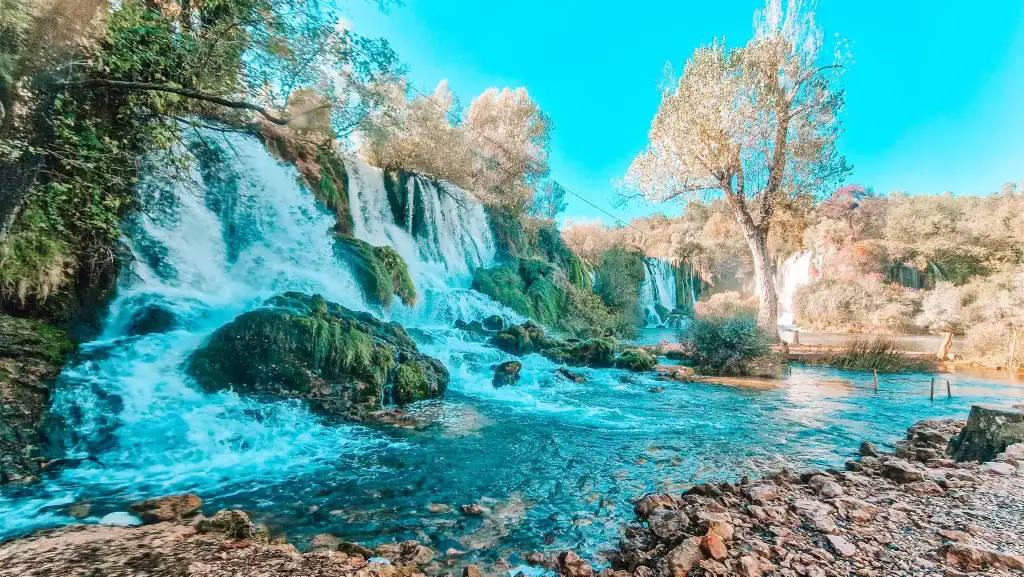
- Kravice – These stunning waterfalls are one of the biggest natural wonders in Bosnia, and visiting in the summer gives you a great opportunity to cool down in the chill water. Even when I visited in October 2025, there were still a few hardy souls swimming – I just dipped my toes in!
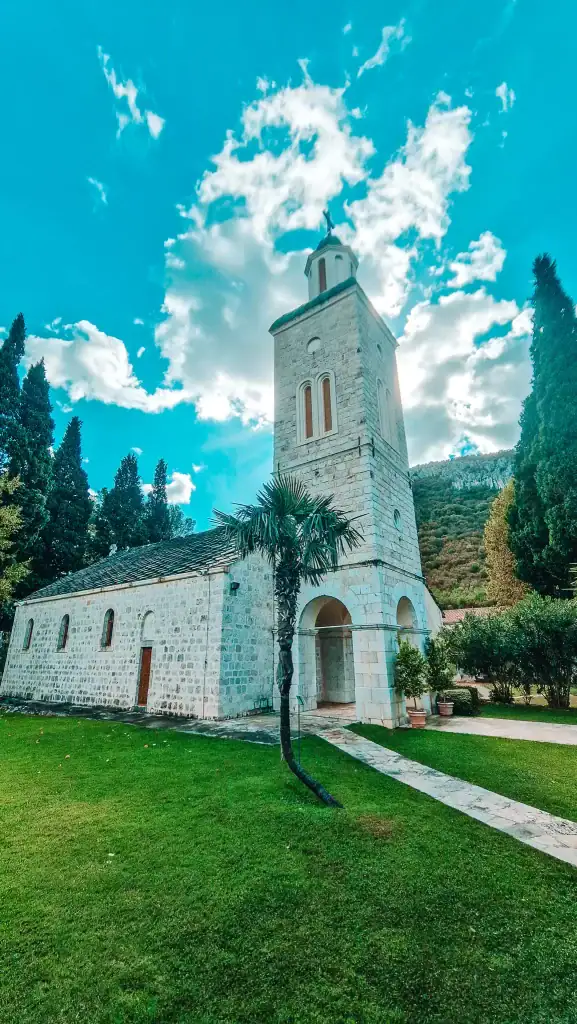
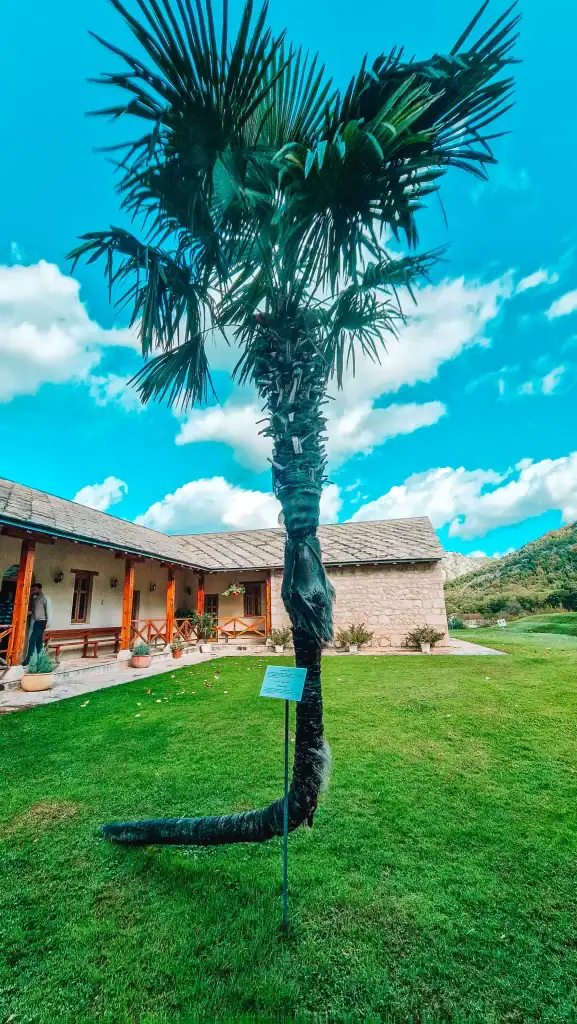
- Žitomislići – the smallest stop on our trip was this tiny monastery in the countryside, which has a painful history in both the Second World War and Bosnian War, as well as a story of hope and reinvention.
If you’re renting a car, you can visit many of these places independently, but if like me, you’re reliant on public transport, I took an amazing day trip – I highly recommend this company. Our guide was knowledgeable and fun, the trip was well organised and the sites were stunning.
- The Exact Day Trip to Blagaj, Pocitelj, and Kravice I took – book here ✨4.9/240+
Accessibility in Mostar: What to Know
Mostar’s Old Town is stunning — but it’s also filled with cobblestones, steep inclines, and narrow alleys that can be difficult to navigate for travellers with mobility challenges or wheeled luggage. Many of the most scenic viewpoints, like the bridge itself, involve uneven surfaces or stairs.
The Sniper Tower and surrounding areas are not accessible, as the building is blocked off and paths around it are unmaintained. Similarly, locations like Počitelj and parts of Blagaj involve steep climbs or gravel paths.
That said, some of Mostar’s attractions — including the Museum of War and Genocide Victims, local cafés, and riverside viewpoints — are more easily accessible. Staying at a guesthouse just outside the cobbled Old Town can also make a big difference.
If you have specific accessibility needs, I recommend contacting your accommodation or tour operator in advance — locals are often happy to help or provide guidance.
Can You Visit Mostar on a Day Trip from Sarajevo or Dubrovnik?
Short on time but still want to see Mostar’s iconic bridge and rich history? You’re in luck — Mostar makes a doable (if long) day trip from both Sarajevo and Dubrovnik, though each has pros and cons.
From Sarajevo
- 🚌 Distance: ~130km | 🚗 Drive time: 2.5–3 hours
- 🚉 Options: Join a day tour, rent a car, or take an early bus
- ✅ Pros: You’ll see beautiful mountain scenery en route and get more insight into inland Bosnia. Most tours also include Blagaj and Pocitelj, as well as the Kravice Waterfalls, so you really get an insight into Herzegovina
- ⚠️ Cons: Most tours are full-day and involve early starts
Recommended tour:
- Day trip from Sarajevo including Mostar, Blagaj, Pocitelj, Kravice Waterfall and Konjic – book here ✨4.9/1.5k
Visiting Sarajevo? Check out my guide to Bosnia’s capital.
From Dubrovnik
- 🚌 Distance: ~140km | 🚗 Drive time: 3–3.5 hours
- 🛂 Note: This route includes crossing the border between Croatia and Bosnia twice — delays are possible, so go with a guide who knows the best times/routes
- ✅ Pros: You can combine Mediterranean coast with Bosnia’s history
- ⚠️ Cons: Touristy in summer, and Mostar may feel rushed
Recommended tour:
- Day trip from Dubrovnik including Mostar and Kravice Waterfalls – book here ✨4.9/7.1k
💡 My Take:
If you can, I still recommend staying overnight in Mostar — the city is a completely different place once the day-trippers leave. But if a day trip is your only option, go for it — just choose a small-group tour with knowledgeable guides so you can make the most of your time.
Where to Stay in Mostar
The best part of Mostar to stay is around the old town. If you have a wheely suitcase, consider staying on the very edge of the old town area to avoid cobbles – Hostel FM was the perfect location for this. I’ve put a handy interactive map below.
- Hostel FM – this budget stay is more guesthouse than hostel. Offering basic but fully functional and clean rooms, with a shared bathroom and kitchen, this hostel is in the perfect location. And the owner was one of the friendliest and most helpful people I’ve met on my travels. ✨9.4/400+
- Hotel Restaurant Kriva Cuprija – this highly rated guesthouse in a historic building offers comfortable and spacious rooms and river views right by Stari Most. ✨9.4/2.7k+
- Pansion Villa Nur – offering a 3*+ stay, this gorgeous hotel has rooms with terraces over the river and a garden to escape the crowds.
- Villa Gunja – I looked at this 4* accommodation every day I was in Mostar, because I could see the balconies overlooking the Crooked Bridge and they were so beautiful. If I go back to Mostar and I’m not on a backpacker budget, this is where I would pick. ✨9.2/660+
FAQs About Visiting Mostar
Is Mostar worth staying overnight?
Absolutely. While many visit on a day trip, spending at least one night lets you enjoy the city after the tour groups leave — especially sunset on the bridge and peaceful early mornings. I also found this the best time to do my walking tour – the 4pm tour (later in summer) takes you around the city while it’s less crowded.
How many days should I spend in Mostar?
I recommend at least two days — one for the city itself, and one for a day trip to Blagaj, Počitelj and Kravice Waterfalls. I stayed four days and didn’t run out of things to do.
Can you visit Mostar as a day trip from Sarajevo or Dubrovnik?
Yes, but it’s a long day — 2.5 to 3.5 hours each way depending on your start point. I’d only recommend this if you’re very short on time. I’ve put my suggested tours above.
Is Mostar safe for solo travellers?
Yes. I’ve visited twice, including solo in 2025, and felt safe walking around during the day and evening. Like anywhere, keep your belongings close and avoid isolated areas after dark.
What’s the best time to visit Mostar?
Spring and autumn offer great weather without the high summer crowds. Summer is extremely hot (the highest temperature in summer 2025 was 47c) but lively – just book accommodation early.
What should I wear in Mostar?
Dress for the heat in summer, but bring a light layer for evenings. Shoulders and knees don’t need to be covered unless visiting mosques.
Ready to Plan Your Mostar Trip? Start Here!
If this guide has helped you plan your trip, you can support my work (at no extra cost to you!) by booking through the links below. These are the exact sites and tours I personally used and recommend:
- 🛏️ Accommodation – Search hotels on Booking.com
- 🥾 Walking Tour with Sheva – Book the Free Walking Tour
- 🏞️ Herzegovina Day Trip – The exact tour I took ✨4.9/240+
- 🍷 Wine & souvenir tasting on the bridge – Visit Spirit of Herzegovina in person for sunset wine with a view
- ☕ Bosnian Coffee – Try Cafe de Alma or Najstariji Kafic-Cardak – two perfect local experiences
Thank you for reading — and I hope Mostar captures your heart like it did mine.
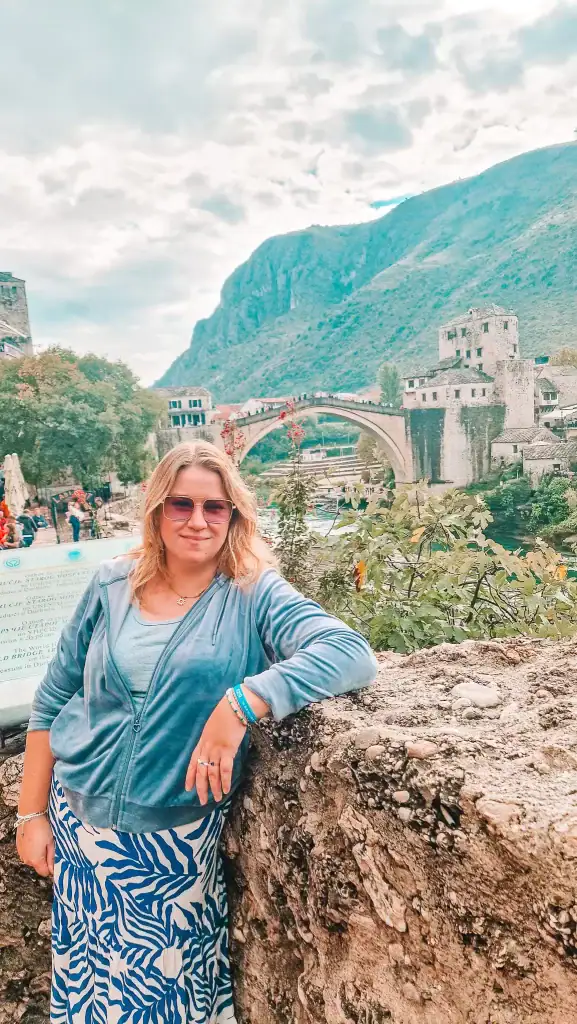
Em is a curious traveller who first visited Mostar in 2012 and returned in 2025 for a deeper look into its culture, coffee, and complex history.