 Em
EmJust so you know: This post contains affiliate links. As an Amazon Associate, I earn from qualifying purchases. I may also earn a small commission if you book a tour, hotel, or buy something else through these links. It helps me keep this blog running and full of travel tips. Thanks for your support!
Sarajevo is one of those rare cities that invites you to walk through history, and I don’t just mean figuratively. Within a 20-minute stroll, you’ll pass Ottoman-era bazaars, Austro-Hungarian architecture, remnants of the Yugoslav socialist era, and modern cafés buzzing with young locals. There’s a reason they call it where East meets West — but it’s not just about geography. It’s the feeling of layers: of stories, struggle, resilience, and reinvention.
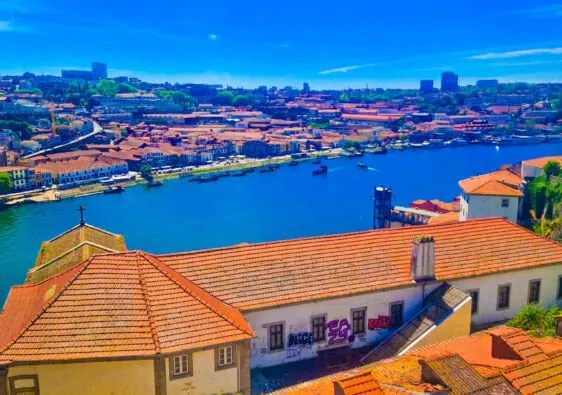
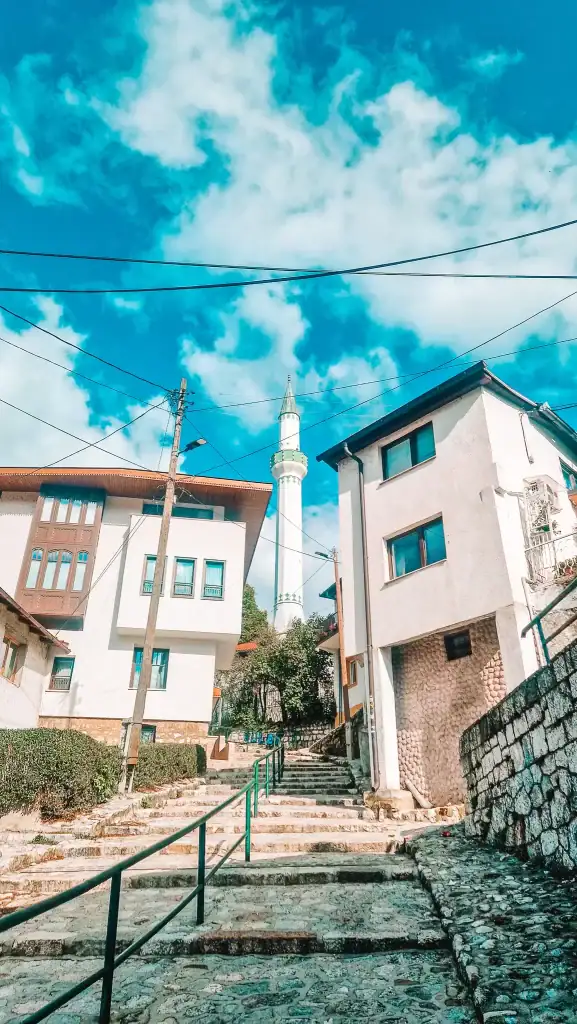
Surrounded by misty green mountains and stitched together with red-tiled rooftops and minarets, Sarajevo is stunning. When I visited in autumn 2025, I knew within in moments that I’d found a new favourite city: The views of the mountains were perfect, the air was crisp. And everything — from the hospitality to the prices — is incredibly underrated.
It’s a city that quietly charms you. One that gives you deep, reflective history and then immediately wins you over with the warmth of the people, an unexpected boutique you stumble across, and the smell of freshly baked burek wafting down the street. (I miss burek already. Also: the baklava? Legitimately dangerous.)
This guide is for travellers who want to do more than just tick off sights. It’s for people who want to experience Sarajevo — to understand it, taste it, and come away changed.
A Quick Look at Sarajevo’s History
Sarajevo has lived through more history than most cities its size, and your visit won’t make much sense without at least a tiny understanding of this history.
Founded in the 15th century by the Ottomans, it later became part of the Austro-Hungarian Empire, which is why the architecture flips so quickly from mosques to European boulevards. It was also the site of the assassination of Archduke Franz Ferdinand that triggered World War I.
In the 20th century, it became part of Yugoslavia, and during the 1990s, it endured the longest siege of a capital city in modern warfare. Much of the city was damaged during the Bosnian War, but its spirit never broke. Today, Sarajevo is a place of remembrance and renewal — where you can still see bullet holes in walls, but also drink coffee in vibrant cafés and shop local art down the street.
Still researching your Balkans trip?
My free Culture-First Traveller’s Guide to the Balkans introduces Albania, North Macedonia, Kosovo & Bulgaria through history, everyday culture, and thoughtful travel — perfect if you’re just getting started.
👉 Get the free culture-first guide
And if you’d prefer someone to build a personalised itinerary for you — tailored to your time, interests, pace, and travel style — I also offer custom trip planning, including Albania and wider Balkan routes.
Things to Do in Sarajevo’s Old Town (Baščaršija)
Cost: free to walk around
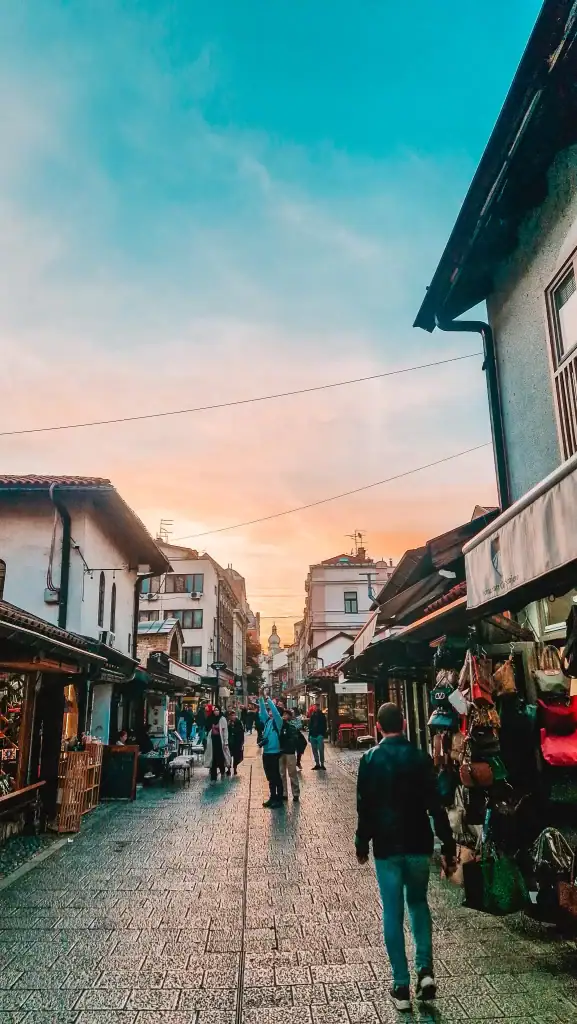
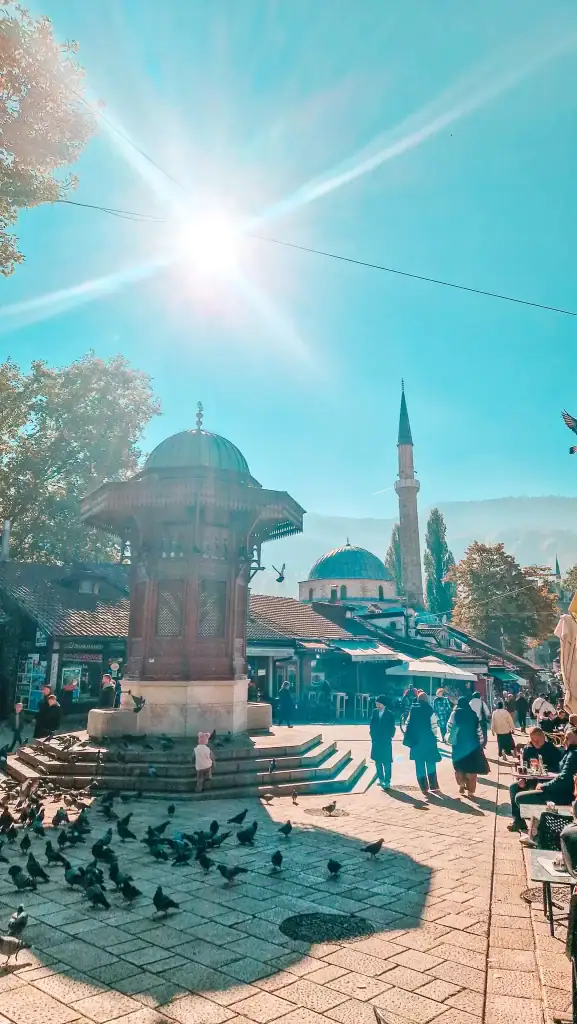
The Old Town (or Baščaršija) is the heart of Sarajevo, and it’s absolutely brimming with character and history. Orient yourself using the famous Latin Bridge, built in the 16th century, which takes you from one side of the Miljacka River to the other. You could easily spend hours wandering the streets, but some of the key sites to look for are:
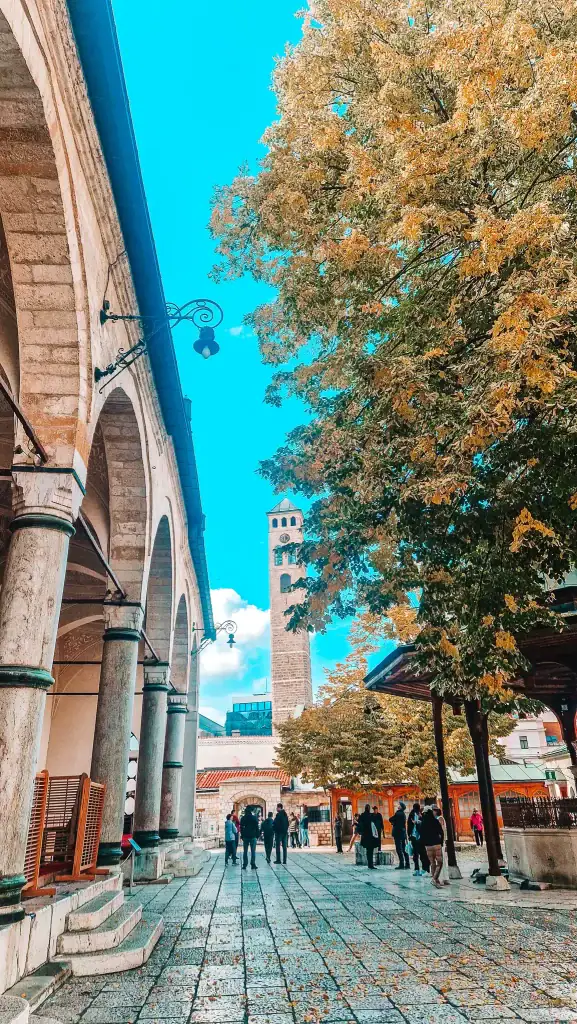
- Gazi Husrev-beg Mosque, Library and Madrasa (high school) – at the heart of the Old Town is a complex of buildings built by one of Sarajevo’s most famous governors in the 16th century. Take some time to enjoy the serenity of the mosque courtyard, or you can even visit the Library where the remains of Bosnia’s National Library are now stored (more on this below).
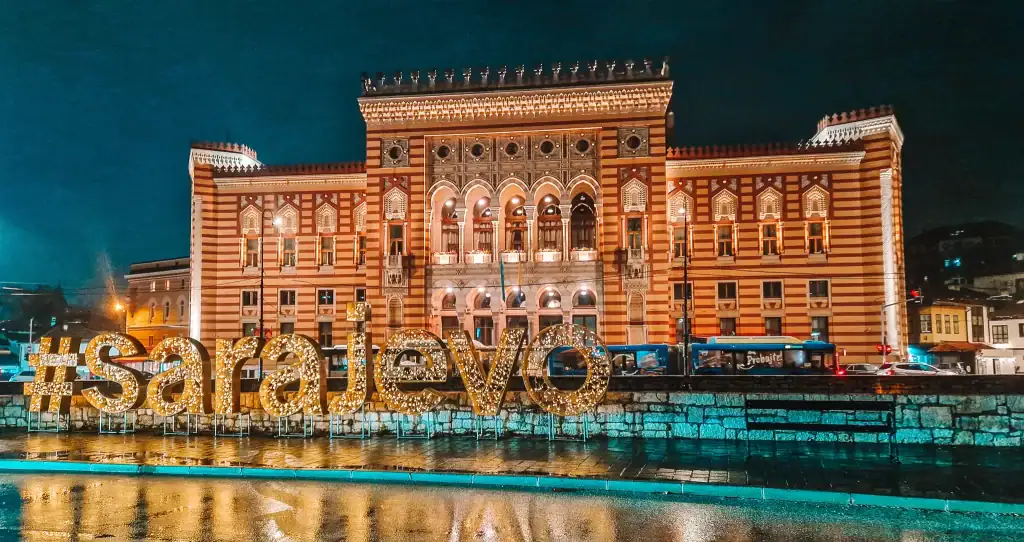
- Visit the Sarajevo City Hall (Vijećnica) – this opulent confection of a building is a major landmark in Sarajevo, just on the edge of the main Old Town and front onto the river. It represents one of the saddest stories of the Bosnian War – once the home to Bosnia and Herzegovina’s National Library, the building was deliberately set on fire in 1992 during the war with over 1.5 million books lost. The building has now been completely rebuilt, and the books that were saved can now be found in local institutions such as the Gazi Husrev-beg Library.
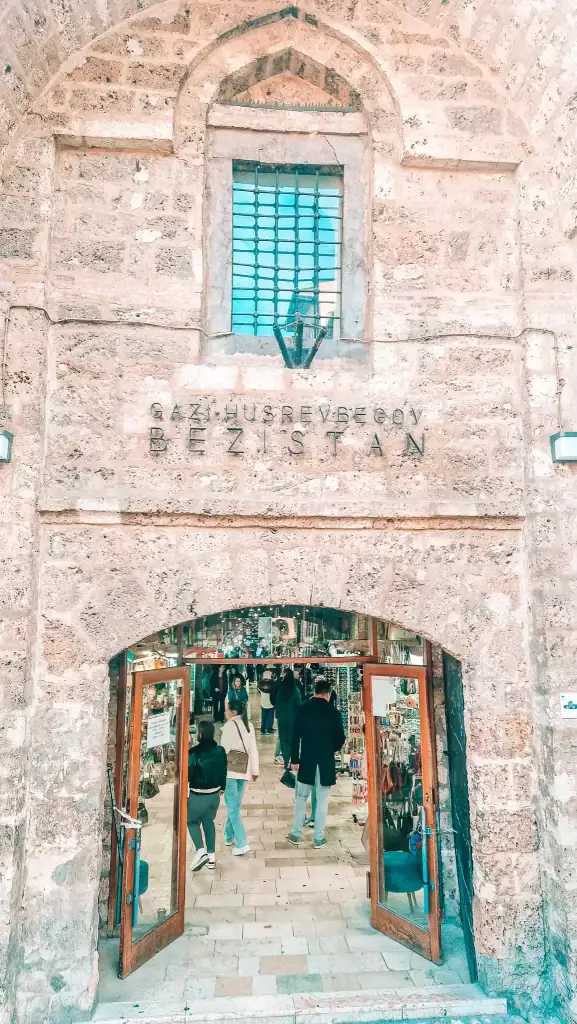
- Wander through the Bezistan – the market that was once the heart of Ottoman Sarajevo. Now a modern market aimed squarely at the flashier tourists (think sunglasses and high-end jewellery), a walk through still transports you back in time.
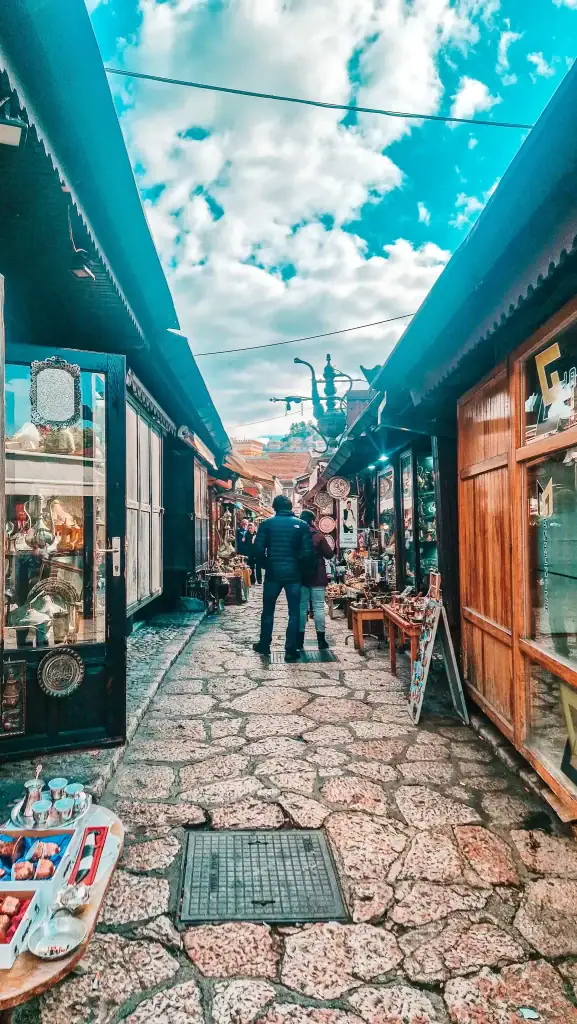
- Visit tiny Copperware Street – this small alley is the only surviving example of Sarajevo’s original trade and craft-based street system. Today, you can find a number of traditional artisans, many of whom have historic family heritage, working in this tiny space. It’s a great place to get souvenirs, but even if your luggage is packed full, it’s amazing to watch (and hear) this traditional craft taking place.
To get the most out of your visit to Sarajevo, I strongly recommend a walking tour. The tour I did took me to all the key sites I’ve mentioned above, but also to many I would have never found on my own – all while linking them into Sarajevo’s complex history.
- The exact, excellent small-group walking tour I took – book here ✨4.9/1.2k+
Latin Bridge Sarajevo: The Site That Sparked World War I
Cost: free
In 1914, Sarajevo became the flashpoint of a global conflict when Archduke Franz Ferdinand of Austria was assassinated here by Gavrilo Princip, a Bosnian Serb nationalist. The event triggered a chain reaction that led to the outbreak of World War I – one of the biggest and most brutal conflicts in world history.
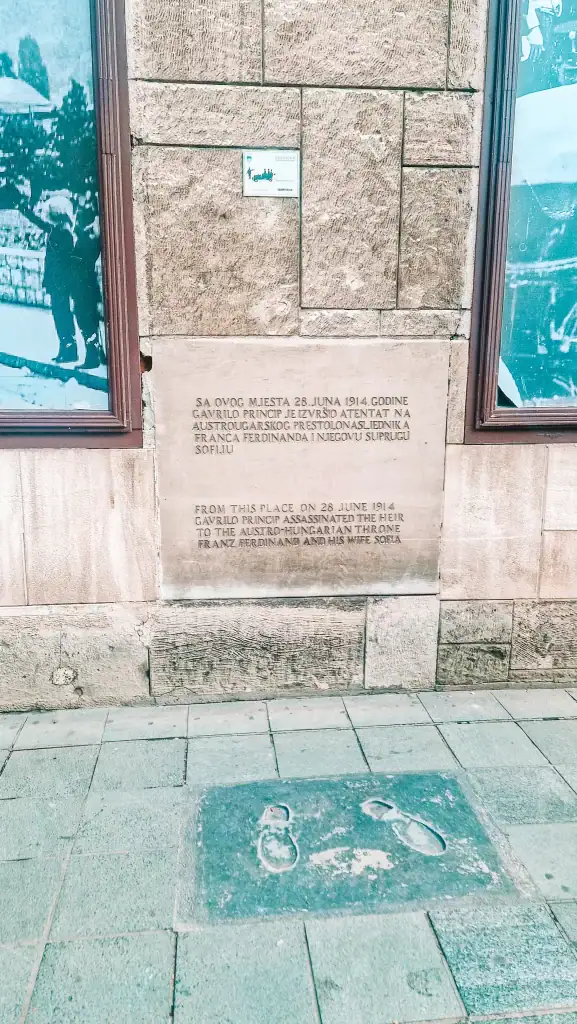
Today, you can see the exact site in Sarajevo where this world-changing event took place, with photographs on the walls showing you exactly what happened and where. If you take the walking tour I recommend above, you’ll learn about the assassin, Gavrilo Princip, a 19-year-old Bosnian Serb, who carried out the assassination in hopes of ending Austro-Hungarian rule. It’s a unique opportunity to literally stand in the footprints of a man who undoubtedly changed the world.
Fall of Yugoslavia Tour in Sarajevo: Why It’s a Must-Do
Cost: c.€35 depending on the time of year
Undoubtedly one of the best tours I’ve taken in the Balkans is the Fall of Yugoslavia tour in Sarajevo. In just four hours, you’ll learn about the history of modern Bosnia and Herzegovina, with a focus on the devastating siege of Sarajevo.
This tour takes you across the city – you’ll visit the beautiful Yellow Fortress, where along with incredible views you’ll learn why Sarajevo’s unique geography contributed to the longest siege in modern warfare. You’ll visit key sites like Sniper Alley, the hotel used by war journalists, and the destroyed maternity hospital.
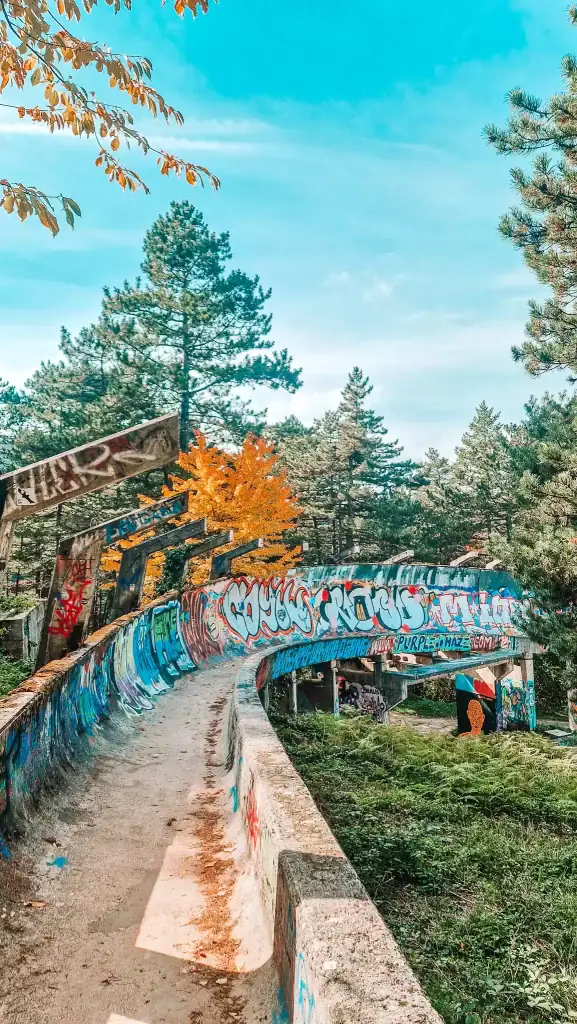
The tour also takes you to two sites outside of central Sarajevo – the fascinating Tunnel of Hope, and the famous Olympic Bobsled Track. I’ve put more on these below, as I think they’re worth visiting even if you don’t want to take an organised tour.
- The Fall of Yugoslavia Tour – one of the best I’ve taken in the Balkans – book here ✨4.9/370+
Sarajevo’s Tunnel of Hope: A Powerful War Memorial
Cost: 20 BAM/€10
The Tunnel of Hope is one of the most important sites in Sarajevo if you are interested in the history of the Bosnian War and the impact of the devastating Siege of Sarajevo. During the war, Sarajevo was surrounded by Serb forces, and while limited international aid made it’s way into the city, it wasn’t enough for the city’s population – not to mention the impact of the lack of medical personnel and supplies. To combat this, the local population began digging a tunnel out of the city into the small area of the mountains held by Bosnian forces, who started digging from their end.
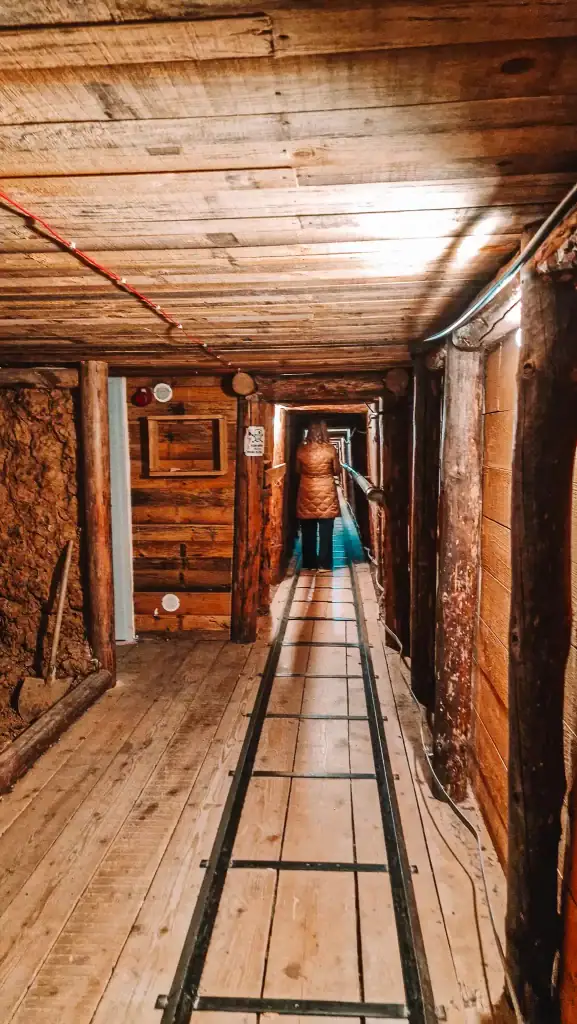
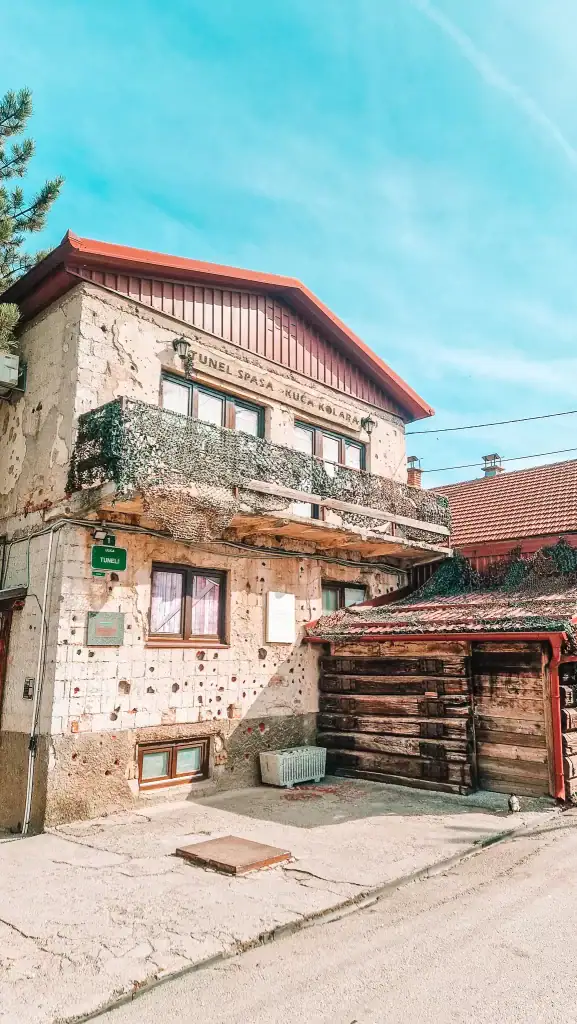
Once the tunnel was complete, it was a true ray of hope for those still living in the city. More and more aid could enter, while the injured could also be medically evacuated. Today, the original tunnel has caved in but a replica has been built to highlight the incredible importance of this structure in helping Sarajevans survive. You can also see maps and a small museum display highlighting the importance of the tunnel – and most chillingly, the house which once hid the entrance has been left as was at the end of the war, devastated by bullets and mortar fire.
How to get there:
The Tunnel of Hope is out by Sarajevo Airport – I saw it again from the plane as I flew out of Sarajevo in November 2025 – so visiting on a guided tour helps with transportation. It is possible, but not easy, to visit independently. The easiest way is by taxi (or if you’ve rented a car). If you want to take public transport, you can use Tram 103 or the airport bus 200E from central Sarajevo, but both require a significant walk (over 30 minutes).
- Visit the Tunnel of Hope on a dedicated tour – book here ✨4.8/601
- Visit the Tunnel of Hope as part of the Fall of Yugoslavia tour – book here ✨4.9/370+
Take the Trebević Cable Car: Best Views in Sarajevo
Cost: 20BAM/€10e
For one of the best views in Sarajevo — without breaking a sweat — take the Trebević cable car (Sarajevska žičara) up to the top of Mount Trebević. Reopened in 2018 after being destroyed during the war, the ride itself is a quiet, scenic 10-minute journey offering sweeping views of the red rooftops, minarets, and surrounding mountains that make Sarajevo so striking.
At the top, you’ll find walking trails, forest cafés, and even the abandoned Olympic bobsled track — an eerie but fascinating relic from the 1984 Winter Olympics and later the war. It’s all wrapped in peaceful greenery, especially beautiful in spring.
This is an easy half-day activity that’s perfect if you want to escape the city for a bit without going far. Go in the late afternoon to catch golden hour light over the city on your ride back down.
How to get there: cross the river from the Old Town and head towards Sarajevo Brewery – you’ll see the stairs heading up to the cable car station.
Best Museums in Sarajevo for History Lovers
Cost: Most museums between 15-20 BAM/€7-€8
Sarajevo is absolutely chock full of museums, which are particularly great if you’re visiting in shoulder season like spring or autumn. I’m preparing a full post on the different museums and what they offer, but if you’re interested in Bosnia’s wartime history, you should absolutely make time in your schedule to visit a couple of Sarajevo’s museums.
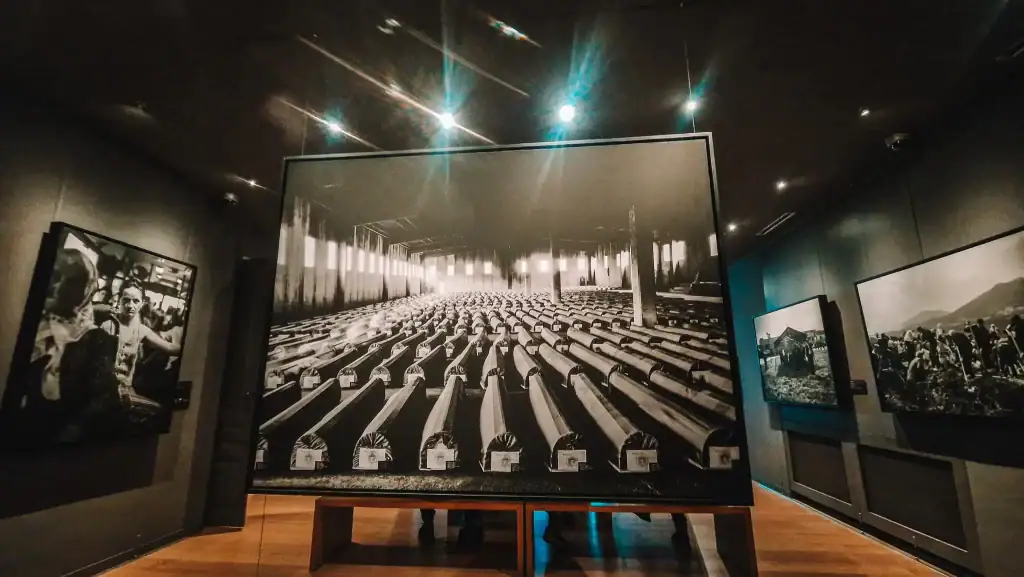
Some of the most well known are the Museum of Crimes Against Humanity, the Srebrenica Gallery, the War Childhood Museum and the Siege of Sarajevo Museum – and all are worth your time.
Sarajevo’s East Meets West Marker: What It Means
Cost: free
One of the easiest things to overlook in Sarajevo is the marker between the East and West sides of the city. This pavement tile represents the change from the Ottoman East of the city to the Austro-Hungarian West – a change you can literally see if you look upwards at the buildings around you.
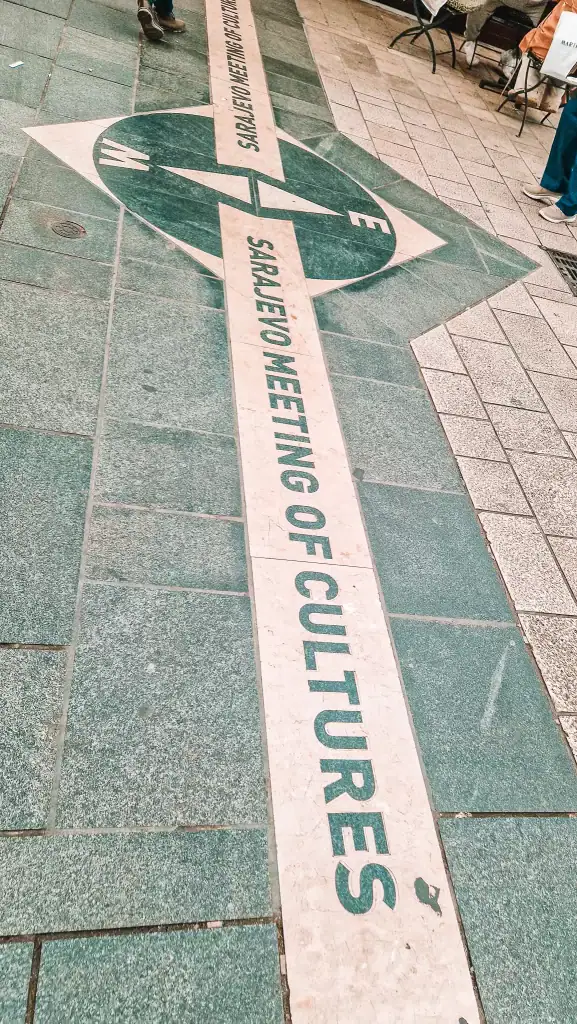
On one side you’ll see mosques, bazaars, and copper workshops, and the other way to grand European facades and cafes. It’s not just a photo op — it’s a visual reminder of Sarajevo’s unique place at the crossroads of civilizations.
Stop for Bosnian Coffee in a Traditional Café
Cost: coffee is usually around 2-3 BAM
As you’ll see throughout Sarajevo and Bosnia in general, there are significant Ottoman influences everywhere you look. And that stretches to coffee – while in nearby Croatia, coffee is served Italian-style, in Sarajevo you’ll find traditional Bosnian coffee. This is cooked in a small pot over heat, before being served up in tiny glasses, often with lokum (Turkish delight) on the side. There’s a whole ritual to how to drink it – you need to scoop off the foam and coffee grounds before pouring for starters.
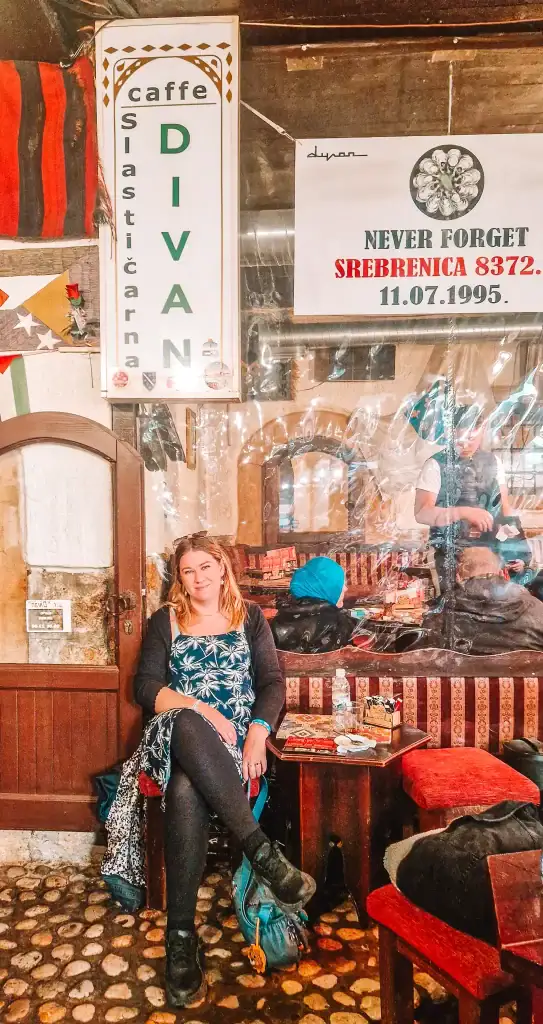
There are any number of places you can try traditional Bosnian coffee in Sarajevo – it’s the first thing on offer in almost all cafes. But I recommend Cafe Divan – a unique spot set in Sarajevo’s only surviving traditional Han, or travellers inn. This bustling cafe has serious historic vibes, and after your caffeine fix you can head upstairs to explore the historic building, where the upper gallery has been turned into an art gallery. And even bigger bonus – Cafe Divan has dedicated smoking and non-smoking spaces, a rarity in the Balkans.
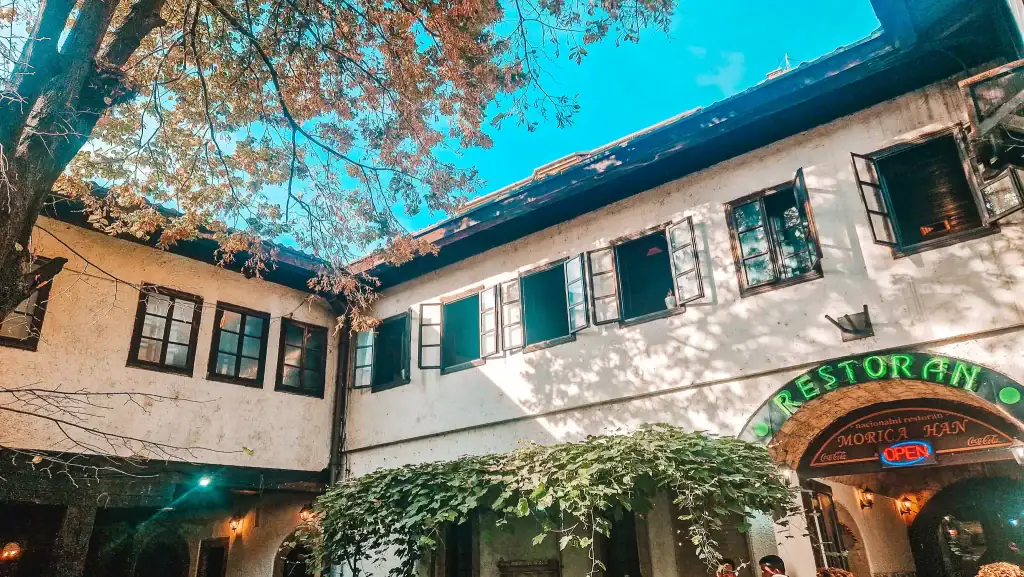
My full guide to Sarajevo’s best cafes is coming soon.
Catch the Sunset from the Yellow and White Fortresses
Cost: free
If you’re in Sarajevo for even one night, watching the sunset from one of its hilltop fortresses is a must. The Yellow Fortress (Žuta Tabija) is the more accessible of the two, offering sweeping views over the old town, the river, and countless minarets that light up at dusk. It’s a local favourite — you’ll often find teens with takeaway pizzas, couples with bottles of wine, and the occasional solo traveller just taking it all in.
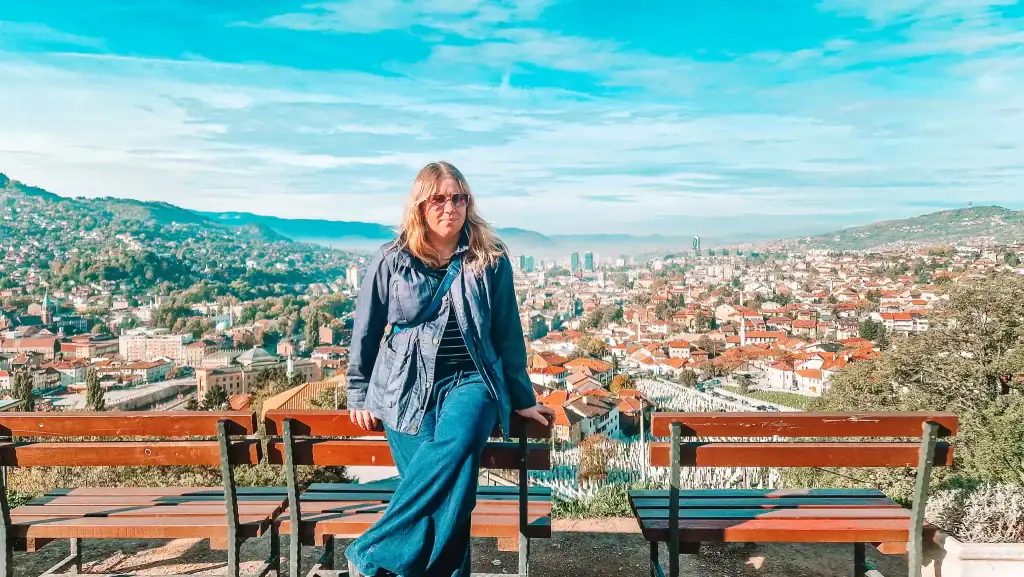
A bit further up and less crowded is the White Fortress (Bijela Tabija). It’s more rugged and harder to reach, but the views are even more dramatic — especially in spring when the hills are green and wildflowers dot the slopes. The walk takes around 20–30 minutes uphill, depending on your pace, and while it’s not technically difficult, shoes with some grip will make it easier.
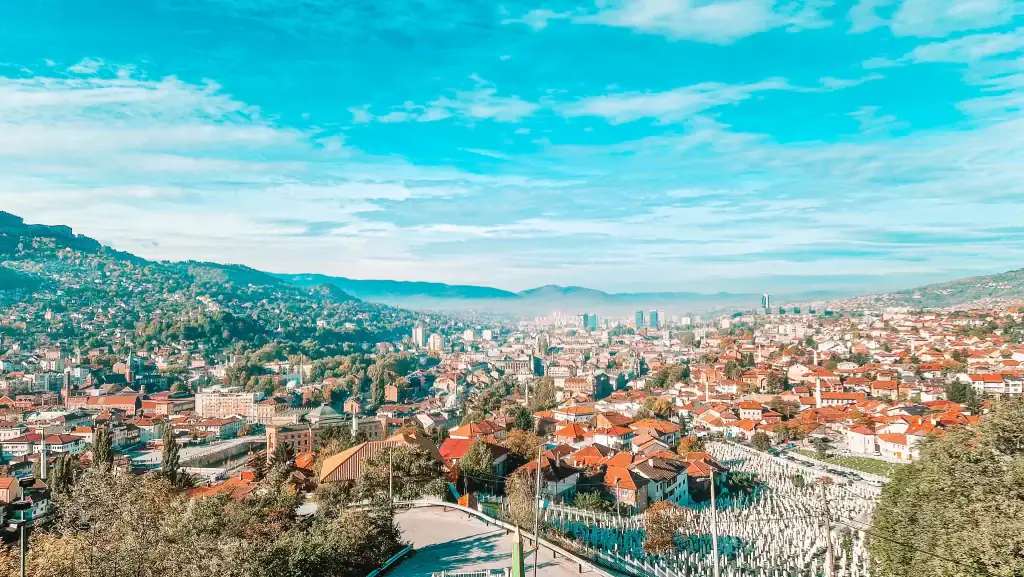
I visited the Yellow Fortress, as part of the Fall of Yugoslavia tour. The views from the Fortress are incredible, especially in good weather, with the whole of Sarajevo spread out beneath you. If you visit while it’s warm, there’s also a little cafe at the top so that you can sip on a delicious drink while you soak it all in. But it’s also a sombre moment – it really highlights the way that the surrounding mountains enabled the devastating siege of Sarajevo.
- Visit the Yellow Fortress as part of the Fall of Yugoslavia tour – book here ✨4.9/370+
Sarajevo’s Abandoned Olympic Bobsled Track: A Cold War Relic
Cost: free
In 1984, just a few years before the break up of Yugoslavia and the start of the Bosnian War, Sarajevo hosted the Winter Olympics. It was the first Eastern European city to host the Winter Olympics, and it remains a huge source of pride for locals. Keep your eyes peeled for Vučko, the cute wolf mascot from 1984 who’s visible all over Sarajevo.
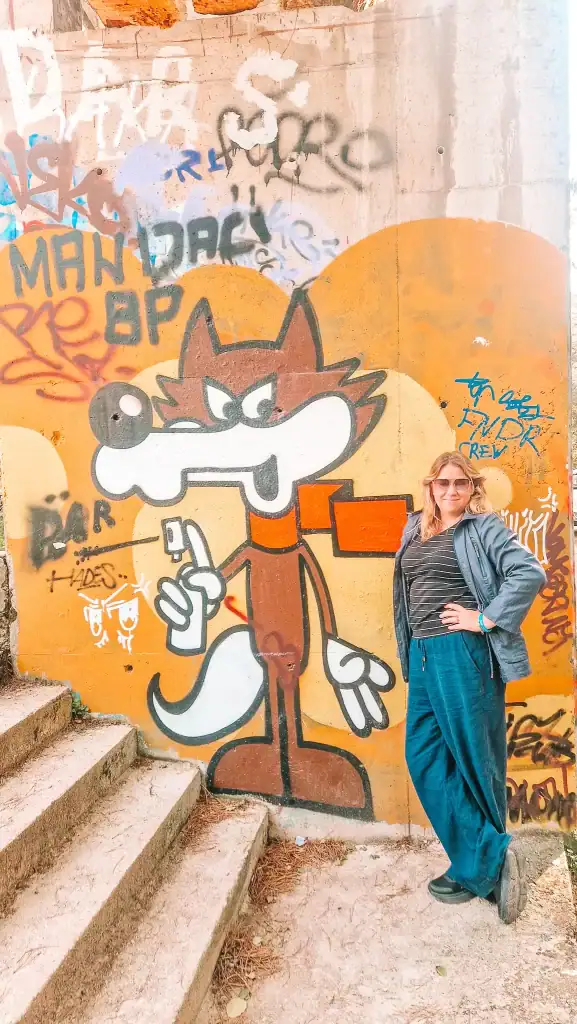
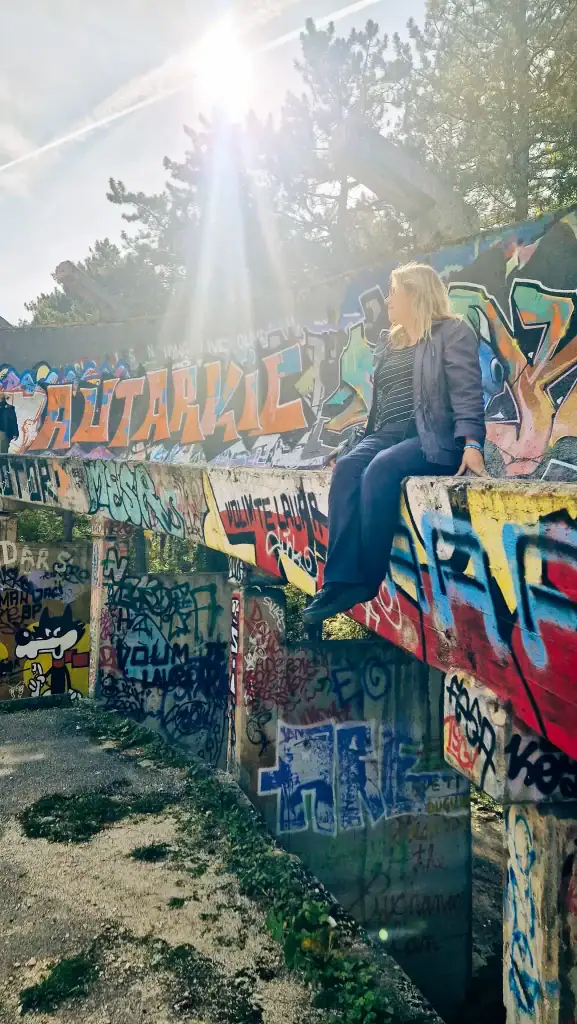
Many of the Olympic sites were destroyed during the Bosnian War, but one that survives (albeit damaged) is the iconic bobsled track in the hills above Sarajevo. Head up to this unique spot for a bit of amateur-friendly urbex-ing (urban exploring), because while the bobsled track has never been repaired, it’s become something of a symbol of the city. Covered in graffiti, it now offers some incredible photo opportunities, as well as great views over the city.
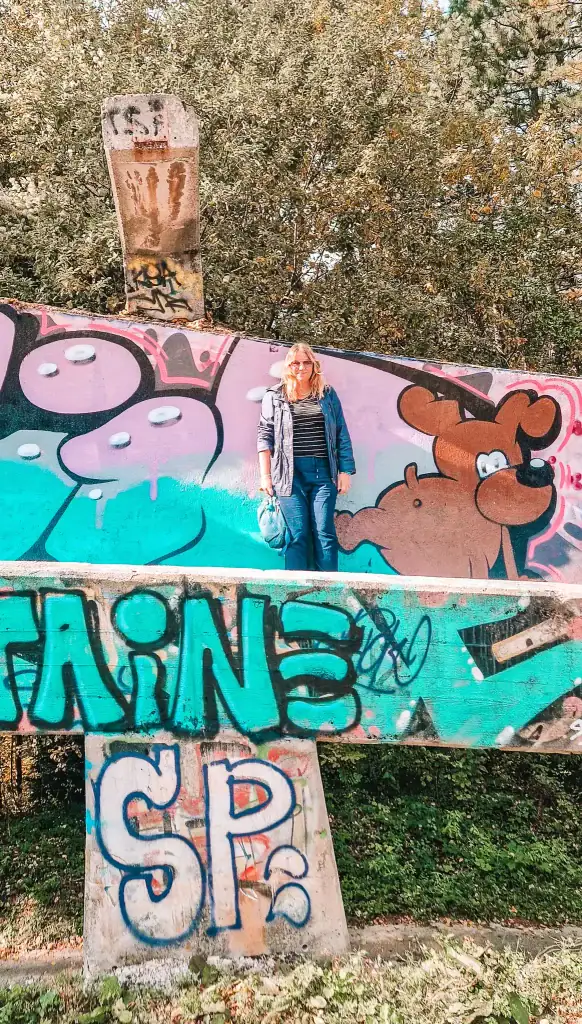
Practicalities: bring shoes with good grip for the unpaved areas around the bobsled track (and for walking down the track itself)
How to get there: I visited as part of the Fall of Yugoslavia tour, and highly recommend this option because you’ll get extra context about the graffiti and history of the site. However, if you want to visit independently, the best way is to take the cable car to Mount Trebivic and walk downhill from there.
- Visit the Abandoned Bobsled Track as part of the Fall of Yugoslavia tour – book here ✨4.9/370+
Spot the Sarajevo Roses Around the City
Cost: Free
As you walk through Sarajevo, keep an eye out for the Sarajevo Roses — bomb craters left by mortar shells during the Bosnian War, filled with red resin to mark where lives were lost. These quiet memorials are a powerful reminder of the siege the city endured, and while many have faded or been paved over, the ones that remain stop you in your tracks.
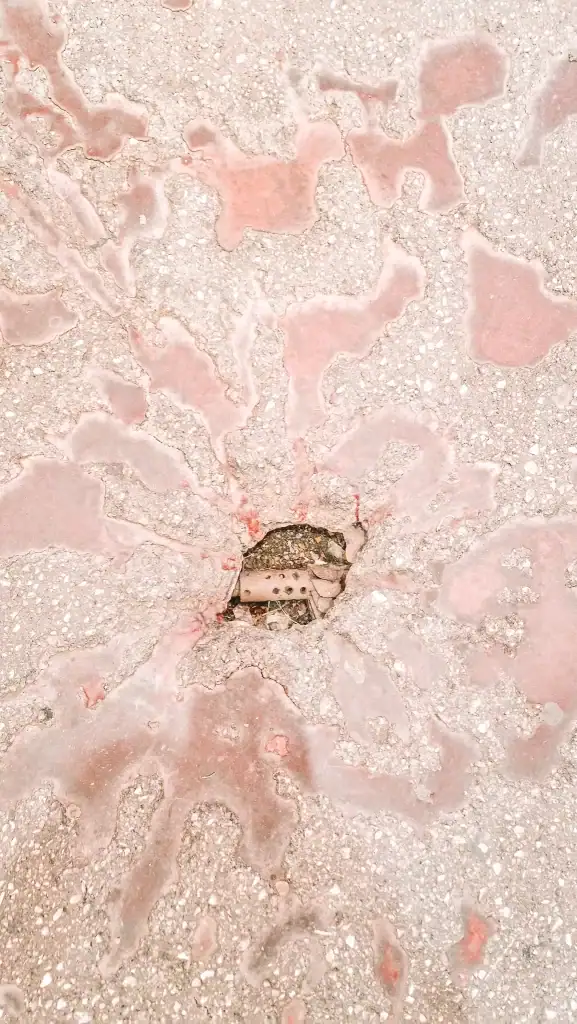
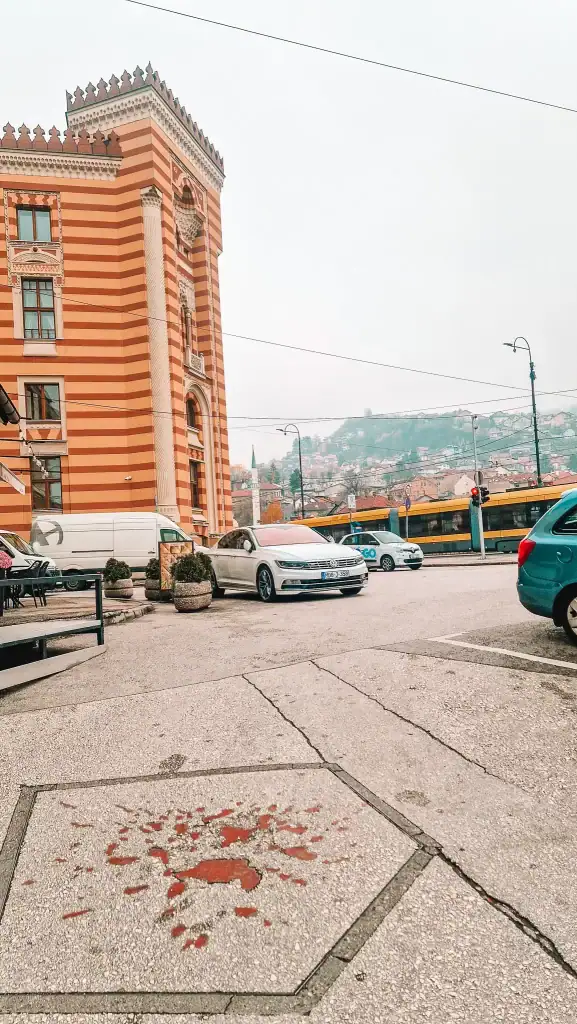
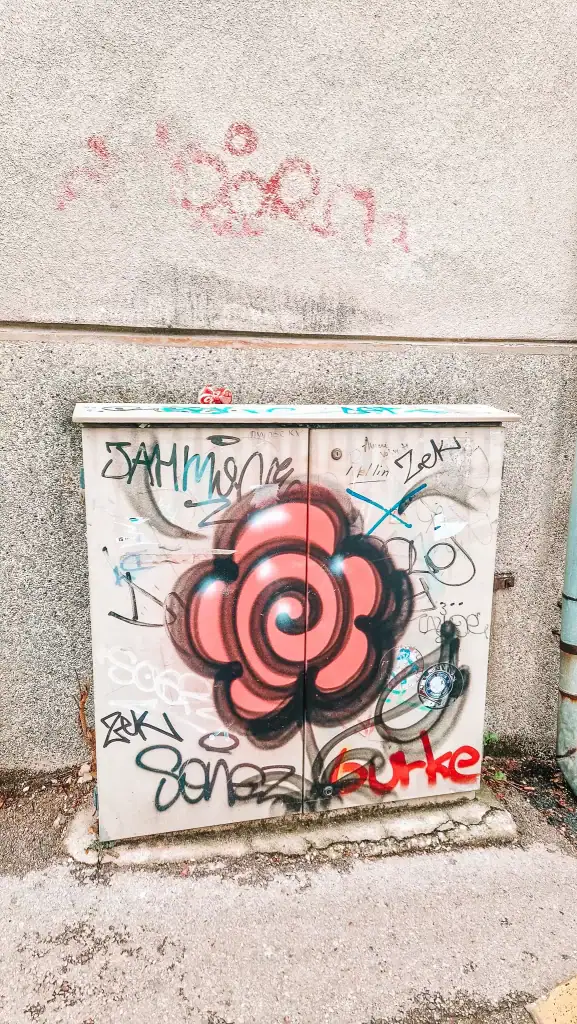
Some of the most visible are near the entrance to the Old Town by Sarajevo City Hall, and in front of the Sacred Heart Cathedral in the newer part of the city. The most heartbreaking is at the Sarajevo Markale market, where two separate mortar attacks killed scores of civilians. You’ll find the rose on the pavement, and the names of the victims inscribed on the wall behind it.
Shop for Local Crafts and Souvenirs
Cost: free (until you start shopping)
If you’re a shopper (or even a window shopper), Sarajevo is undoubtedly one of the best places in the Balkans for shopping. Not the H&M and Pull & Bear kind of shopping found for example in the malls of Skopje and Pristina, but shopping for unique, local items that make great gifts for all the people who weren’t lucky enough to visit Sarajevo with you.
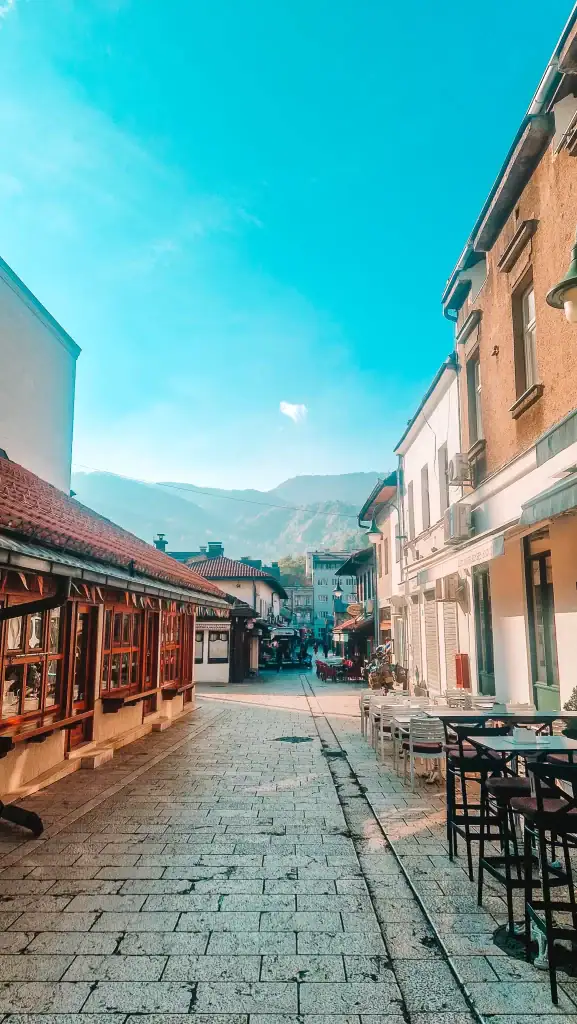
I found Sarajevo’s many shops to be a real mix – there’s plenty of mass-produced items ranging from traditional Bosnian-style coffee trays, knitted cosy socks and Vučko keyrings, but look beyond this and you’ll find the real local, handmade crafts that make the best gifts (whether for your friends or yourself). I found little art shops with unique prints, a shop full of crocheted items, lots of retro-cool arty tshirts, and of course, on Copperware Street, handmade copper items like Bosnian coffee sets and earrings.
Make sure to leave time in your schedule to just wander from shop to shop – you won’t regret it!
Best Places to Stay in Sarajevo (With Map)
Whether you want to sip Bosnian coffee in the heart of Baščaršija or wake up to mountain views above the city, Sarajevo has a wide range of places to stay — and for much better prices than most European capitals.
If it’s your first visit, I recommend staying in or near the Old Town for easy access to the main sights, cafés, and historic sites. Hopefully, this will also limit your uphill walking – hills in Sarajevo can be intense!
To make planning even easier, I’ve embedded this interactive map below — it shows hotels, guesthouses, and apartments with up-to-date prices and reviews. Just zoom in and click around to find your perfect spot.
- Hostel Vagabond — Highly rated for cleanliness, with both dorms and private rooms plus a social area, right in the heart of the Old Town. ✨9/1.1k+
- Apartman Ohren — I stayed here and loved it. This cosy apartment on the other side of the river has a comfy living area, fully equipped kitchen, and a truly wonderful owner. ✨9.5/360+
- Al Dino — Another place I stayed and really recommend. A gorgeous, cosy mid-range guesthouse with incredibly comfortable beds and the friendliest hosts. If you book the apartment, the views are stunning — just note it’s up a hill! ✨9.5/500+
- Old Town Hotel — A 4-star hotel in a perfect Old Town location, with comfy beds and a well-reviewed breakfast. ✨9.3/1.7k+
FAQs About Visiting Sarajevo
Is Sarajevo safe to visit in 2026?
Yes, Sarajevo is generally very safe for tourists, including solo travellers. Like any city, use standard precautions, but overall, locals are warm and welcoming, and crime rates are low.
How many days do you need in Sarajevo?
I recommend spending at least 2–3 full days in Sarajevo. This gives you enough time to explore the Old Town, take a historical tour, visit the Tunnel of Hope, ride the cable car, and enjoy the café culture.
Can you visit Sarajevo on a budget?
Absolutely. Sarajevo is one of the most budget-friendly capitals in Europe. Meals, accommodation, and transportation are very affordable compared to Western Europe.
What is Sarajevo known for?
Sarajevo is famous for its mix of Ottoman and Austro-Hungarian architecture, its role in the start of WWI, its resilience during the 1990s Siege, traditional Bosnian coffee, and its “East meets West” cultural blend.
Do they speak English in Sarajevo?
Many younger locals and people in tourism-related jobs speak some English, especially in cafes, hotels, and tours. Knowing a few words of Bosnian is appreciated, but not essential.
Is Sarajevo walkable?
Yes — most of the main sights are within walking distance, especially in the Old Town. Just be aware that the city is hilly in places, and some side streets are steep or cobbled. There is also a good public transport system that will take you to/from Sarajevo International Airport or Sarajevo Central Bus Station.
What currency is used in Sarajevo?
The official currency is the Bosnia and Herzegovina Convertible Mark (BAM). Credit cards are accepted in many places, but it’s handy to have cash for small shops and markets, as well as the tram or bus if you plan to use this to get to/from central Sarajevo. Many tourist sites and shops also accept Euros, but don’t rely on this.
✈️ Ready to Book Your Sarajevo Adventure?
I hope this guide helped you fall in love with Sarajevo even just a little bit. Whether you’re drawn in by the history, the views, the people, or (like me) the burek and baklava – this is a city that leaves a mark.
If you’re ready to start planning, here are some helpful links to get your trip booked.
🛏 Where to Stay in Sarajevo
- Check Sarajevo hotel and apartment deals on Booking.com
- My personal picks:
🗺 Tours I Personally Recommend
- Sarajevo Walking Tour (includes Latin Bridge & Old Town) ✨4.9/1.2k+
- Fall of Yugoslavia & Siege Tour ✨4.9/370+
- Tunnel of Hope Dedicated Tour ✨4.8/601
Em is a travel writer and Balkan enthusiast helping independent travellers explore underrated destinations across Europe — especially Sarajevo, one of her personal favourites.