 Em
EmJust so you know: This post contains affiliate links. As an Amazon Associate, I earn from qualifying purchases. I may also earn a small commission if you book a tour, hotel, or buy something else through these links. It helps me keep this blog running and full of travel tips. Thanks for your support!
Bulgaria is a country full of contrasts — ancient and modern, joyful and melancholic, vividly present and haunted by the past. I spent six weeks exploring it, from the Roman ruins of Plovdiv (where I lived for a month) to the fortress town of Veliko Tarnovo, the spa waters of Hisarya, and the quiet charm of Melnik. What I saw on the surface was beautiful — monasteries perched on cliffs, cafes tucked into cobbled alleys, sun-soaked vineyards. But what I read helped me understand the layers beneath.
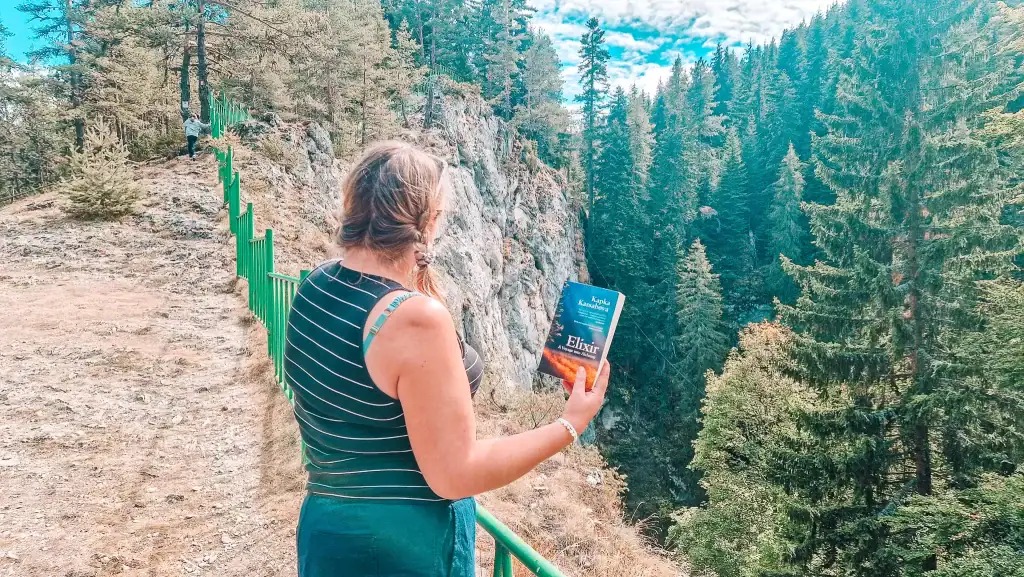
These four books, written by and about Bulgarians, transformed my understanding of the country. They gave me insight into childhood under communism, the invisible weight of intergenerational trauma, the complex beauty of the Rhodope Mountains, and the lingering silences of Bulgaria’s more painful history. Each one added texture to my trip — not just facts or timelines, but feeling.
Whether you’re planning your own visit, curious about post-Soviet history, or simply looking for beautifully written books you might not find on your usual reading list, here are four unforgettable reads that offer a deeper look into Bulgaria.
📚 Useful Reading Accessories for Travellers
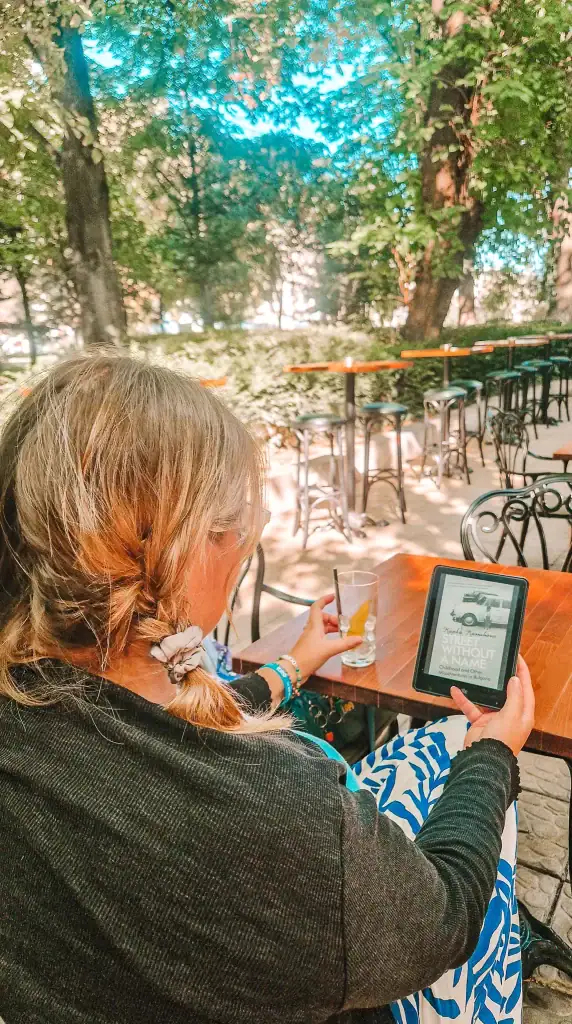
Even if you love physical books, there’s no denying that an e-reader—especially a Kindle—is a game-changer for travel. The first time I travelled long-term, back in 2008, Kindles didn’t exist and I had to rely on book swaps across South America. I read a lot of terrible books!
Now, with a Kindle, there’s no more lugging heavy novels or hoping to find something decent at the occasional book swap. I recommend the Kindle Paperwhite — the backlight makes it easy to read at night or on public transport, and the battery life is excellent.
👉 Get the Kindle Paperwhite here
Another must-have for travel readers is a clip-on reading light. Even if you’re in a budget hostel with only one dim overhead bulb, or an Airbnb with no bedside lamp (which has happened to me more than once), a good reading light makes all the difference.
👉 Get a lightweight clip-on reading light here
If you’re like me and sometimes read by the pool or on the beach, I highly recommend a waterproof Kindle case or sleeve. It keeps sand, splashes, and sunscreen smudges away from your Kindle — and gives you peace of mind when reading in hammocks, on ferries, or by the waves.
👉 Find a waterproof Kindle sleeve here
Finally, if you want to save money while reading more, Kindle Unlimited is incredible value. It’s a subscription that gives you access to thousands of books (including some of the books on this list – at least on UK Kindle Unlimited). If you read even 2–3 books a month, it pays for itself.
👉 Try Kindle Unlimited free for 30 days here
And finally — bookmarks! A beautiful bookmark is one of my favourite souvenirs to collect while travelling. They’re small, affordable, and make thoughtful gifts for book-loving friends.
🗺️ Planning your Bulgaria trip? Check out my full list of guides about Bulgaria?
- 2 days in Sofia
- The best day trips from Sofia
- Melnik and Rila day trip from Sofia
- The best things to do in historic Plovdiv
- The best cafes in Plovdiv
- The best cafes and co-working spaces in Plovdiv for remote work
- The best day trips from Plovdiv
- Things to do in Koprivshtitsa
- The most amazing religious buildings in the Balkans – including several in Bulgaria
Books by Bulgarian authors
There’s no better way to understand a country than through the voices of the people who live there. Bulgarian authors bring a depth of insight that’s hard to replicate — shaped by lived experience, cultural nuance, and a sensitivity to the unspoken histories that define everyday life. This matters even outside of fiction. Take Kapka Kassabova, for instance: although she no longer lives in Bulgaria, her native-level fluency and deep knowledge of the country’s past allowed her to build relationships in the Rhodope Valley that simply wouldn’t have been possible for a foreign author.
📘 Street Without a Name: Childhood and Other Misadventures in Bulgaria
Author: Kapka Kassabova
Date: 2008
Genre: Memoir / Travel Writing / Cultural Commentary
Trigger warnings: Communism, poverty, cultural displacement, emigration
Summary: Born in Sofia during the later years of communist rule, Kapka Kassabova recounts her childhood in 1970s and 1980s Bulgaria — a country locked behind the Iron Curtain, caught in grey uniformity and quiet rebellion. After emigrating to New Zealand as a teenager, she returns years later to make sense of her past and the country she left behind.
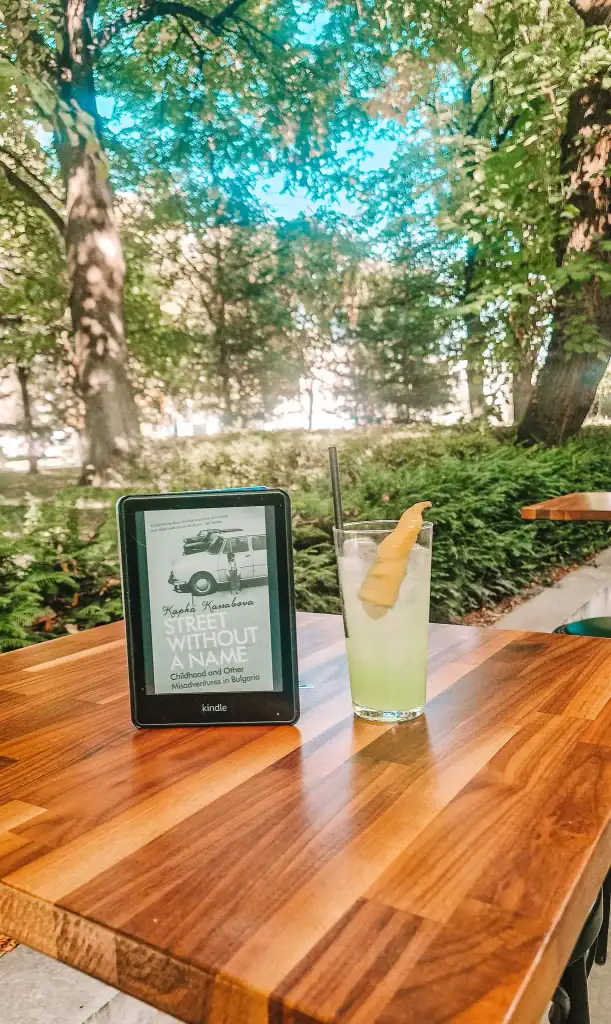
Kassabova’s memoir is a fantastic way to immerse yourself in both 1980s and early 2000s Bulgaria. It opens with vivid scenes from her childhood, from life in a small apartment on the eponymous street without a name in one of Sofia’s purpose-built communist-era housing blocks, to her bemused interactions with the rare Dutch tourists who visit her scientist parents.
Later, she returns to Bulgaria as an adult in the early 2000s, exploring a country both familiar and transformed. She visits almost everywhere a tourist might go — from the wine-soaked hills of Melnik to the fortress town of Veliko Tarnovo — reflecting on how Bulgaria has changed, and what has remained the same.
It’s hard to think of a better introduction to Bulgaria’s recent past. Kassabova’s writing is compelling and observant, filled with moments that are at once relatable and strange to a Western reader — a reminder of how surreal “normal” life can be under authoritarianism.
🧭 Where it takes you: Sofia and provincial Bulgaria during late communism (1970s–1980s), and again in the early 2000s as Kassabova returns to explore post-communist change.
🏆 Awards: Shortlisted for the John Llewellyn Rhys Prize (2008); Kassabova is also a recipient of the British Council Writers’ Award and has won the Saltire Society Scottish Book of the Year for later works.
📖 Why read it: To understand everyday life in communist-era Bulgaria through the eyes of someone who lived it — and then left it. A rare, poetic account of dislocation, belonging, and memory.
📘 Get Street Without a Name in paperback → Get it here
📖 Read Street Without a Name on Kindle → Get it here
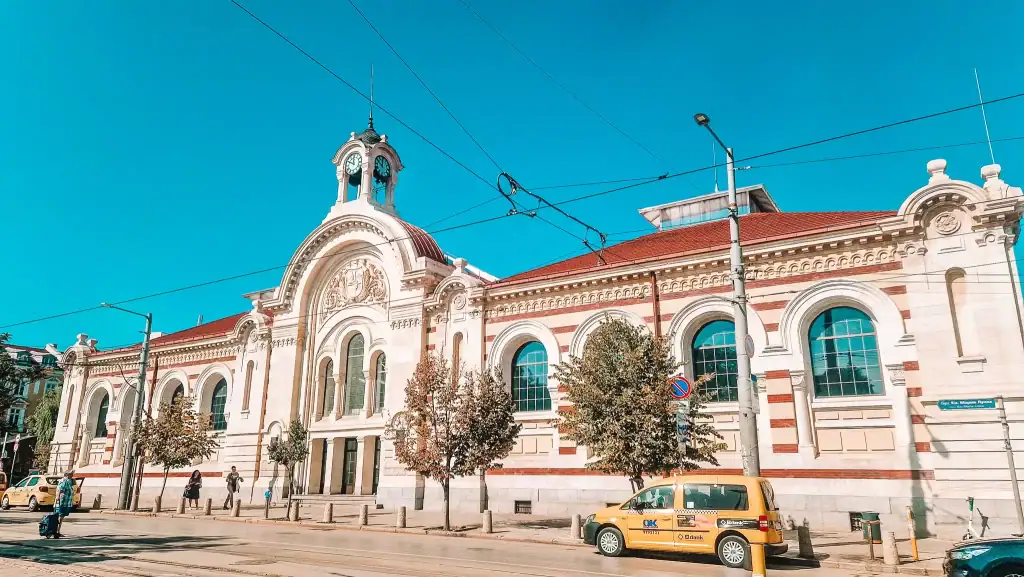
✨Kassabova grew up in Sofia, and many of her childhood memories unfold in neighbourhoods you can still visit today. Explore them in my Sofia itinerary.
The Physics of Sorrow
Author: Georgi Gospodinov
Date: 2012 (2015 English translation)
Genre: Literary fiction, autofiction, experimental novel
Trigger warnings: grief, depression, war, abandonment
Summary: Gospodinov blends memoir, myth, history, and fiction into a dreamlike meditation on memory, sorrow, and what it means to grow up (or grow old) in Bulgaria. The narrator, possibly Gospodinov himself or some version of him, suffers from a made-up condition called “empathetic memory,” where he can inhabit the experiences of others — his grandfather, a Minotaur, a snail in a jar.
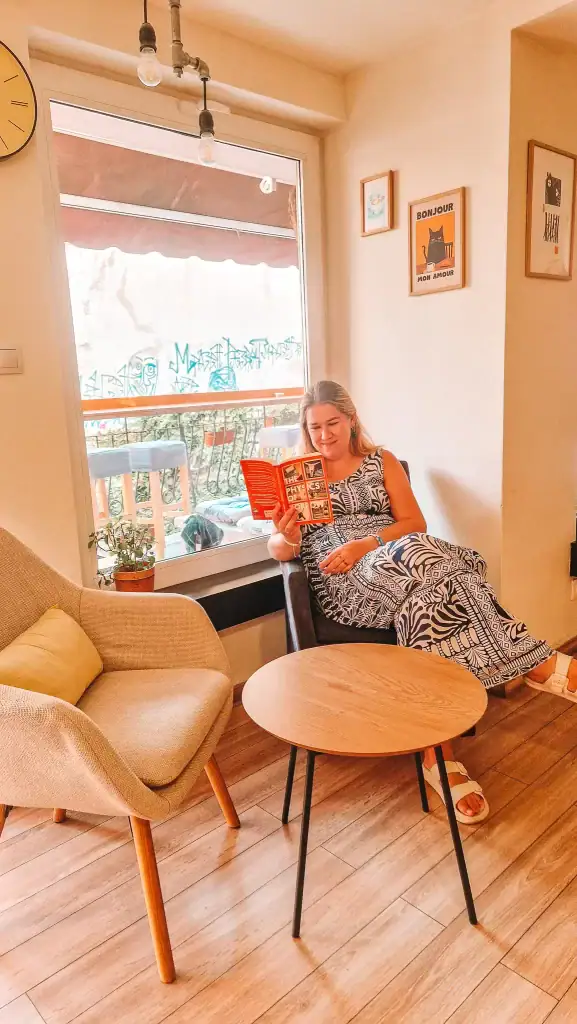
Every bookshop I visited in Bulgaria recommended I read Gospodinov’s books – he’s contemporary Bulgaria’s most recognised author. I chose this one over his more famous Time Shelter (winner of the International Booker Prize) because Time Shelter is about Alzheimer’s disease – one of my few triggers.
Instead, The Physics of Sorrow deals with grief more generally – grief about getting old, about change, general malaise. The unnamed author seems to drift through life in a haze of sorrow. A central thread running through the book is the myth of the Minotaur — not as a monster, but as an abandoned, misunderstood child.
To be honest, I’m still not quite sure what I read or what this book was about – but I read it in two days. The prose is strangely compulsive, even as it drifts between characters, timelines, and myth, and I enjoyed the insights it granted into life in Bulgaria in the 1980s.
🧭 Where it takes you: Bulgaria during and after Communism, but also into memories, myths, and the small universes inside other people’s lives.
🏆 Awards: International Prize for Literature Haus der Kulturen der Welt (2021); shortlisted for several major European literary awards. Gospodinov later won the International Booker Prize for Time Shelter (2023)
📖 Why read it: to experience a book by Bulgaria’s most celebrated modern novelist, and for the insights into life in Bulgaria towards the end of the 20th century.
📘 Get The Physics of Sorrow in paperback → Get it here
📖 Read The Physics of Sorrow on Kindle → Get it here
📘Elixir: In the Valley at the End of Time
Author: Kapka Kassabova
Date: 2024
Genre: Memoir / Travel Writing / Nature Writing
Trigger warnings: Intergenerational trauma
Summary: Kassabova, a Bulgarian who now lives in the Scottish Highlands, returns to the Rhodope Mountains, a borderland region between Bulgaria and Greece, to explore the connections between healing, landscape, and memory. She writes about traditional herbalists, forgotten border villages, and deep ancestral grief, while drawing on the spiritual and ecological dimensions of the region.
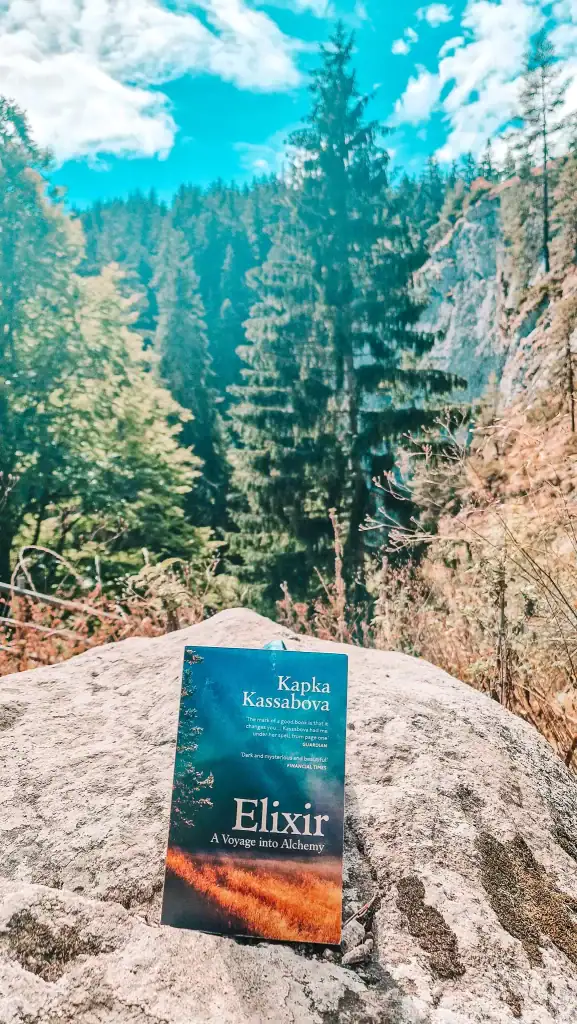
This unusual book was written as a result of Kassabova’s time spent in the Rhodope Mountains in southern Bulgaria. Over the course of several summers, including during the pandemic, she visited different towns and villages in the region, exploring their deep folklore through the medium of herbs.
Throughout the book, we meet a range of characters, from Rocky the Enchanter to the final chapter with the Wild Horseman. She explores not just the use of medicinal herbs, but also how agriculture in the region has changed across the 20th century.
What I found most interesting was her exploration of the painful history of the Pomak minority, who inhabit many of the villages in the region. As she gains the trust of residents, they share memories of violent repression during the communist era, as well as deeper memories of the Second World War and earlier. This isn’t a history I would have found otherwise in my time in Bulgaria, so it was really valuable.
🧭 Where it takes you: To the Rhodope Mountains in Bulgaria as the pandemic hits, but also back in time across the 20th century through the often-painful memories of local people.
🏆 Awards: Wainwright Prize (Longlisted); Highland Book Prize (Longlisted)
📖 Why read it: To understand the deep folk memory of Bulgarian, to find out about the historic discrimination faced by the Muslim Pomak minority and to ruminate on our disappearing connection with the natural world.
📘 Get Elixir in paperback → Get it here
📖 Read Elixir on Kindle → Get it here
Books by non-Bulgarian authors
Sometimes it takes an outsider’s eye to notice the details locals take for granted. Books by non-Bulgarian writers — especially those who have spent meaningful time in the country — offer a different kind of lens: one of discovery, curiosity, and reflection. Whether it’s Elizabeth Kostova weaving Bulgaria’s past into literary thrillers, or a long-term expat chronicling the quirks of daily life, these perspectives can be a perfect entry point for readers unfamiliar with the region.
📘 The Shadow Land
Author: Elizabeth Kostova
Date: 2017
Genre: Literary thriller / historical fiction
Trigger warnings: Grief, war trauma, disappearance, state violence, dehumanisation, depression, age-gap relationship (25 years +)
Summary: When a young American woman named Alexandra Boyd arrives in Sofia, Bulgaria, she accidentally picks up the wrong bag at a taxi stand — only to discover it contains an urn of human ashes. Her attempt to return the urn draws her into a decades-spanning mystery involving the man’s identity, a missing musician, the country’s secret police, and the deep wounds left by Bulgaria’s communist past.

Part literary thriller, part love letter to Bulgaria, Kostova’s love of her adopted country really shines through in this book. The characters trace back and forth across Bulgaria, hitting some of the key spots (Sofia, Plovdiv, a fictionalised version of Rila Monastery) as the danger they’re gradually escalates.
What stood out most to me was how the novel draws you into some of Bulgaria’s more unspoken history — especially the sections set in brutal Soviet-era work (or “re-education”) camps. I found Kostova’s depiction of the prisoners’ despair both compelling and haunting.
On the other hand, not every element of the story landed for me, and this novel is in no way as propulsive as The Historian, Kostova’s most famous work. I found it slightly unbelievable that Alexandra would set off into the unknown with someone she’d only just met – and to be honest, I spent quite a lot of the novel worrying that she hadn’t changed her underwear for days.
Still, if you want to explore the darker side of Bulgaria’s recent past, The Shadow Land is well worth a read. As Kostova notes in her afterword, this is still a history that Bulgaria is reckoning with today.
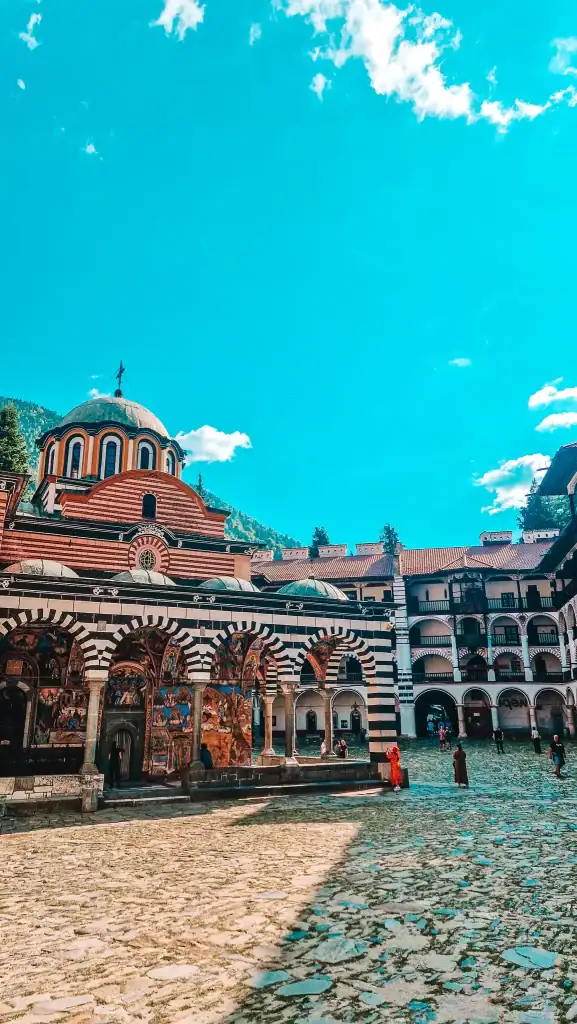
🧭 Where it takes you: Across Bulgaria, from the capital Sofia, to historic Plovdiv and into remote villages and mountain monasteries, including glimpses into the country’s dark communist past. A fictionalised version of the stunning Rila Monastery is included in the story.
🏆 Awards: While The Shadow Land didn’t receive major awards, it was a New York Times bestseller and praised for its vivid portrayal of Bulgaria. You might know Kostova from her debut novel The Historian — an international bestseller set across Eastern Europe that blends gothic fiction with historical intrigue. It was translated into over 40 languages and remains one of the best-selling literary thrillers of the 2000s.
📖 Why read it: To explore Bulgaria’s recent history through the lens of a literary mystery — and to experience the country through the eyes of a foreigner who deeply respects and understands it.
📘 Get The Shadow Land in paperback → Get it here
📖 Read The Shadow Land on Kindle → Get it here
✨ Want to see one of the real-life inspirations from The Shadow Land? A fictionalised version of Rila Monastery plays a key role in the story — visit it for yourself here.
✨ The book also passes through Plovdiv — one of my favourite cities in Bulgaria. Here’s my full guide to the best things to do in Plovdiv.
Looking for Connections Beyond Bulgaria?
- If Street Without a Name resonated with you, you might also enjoy Free: Coming of Age at the End of History by Lea Ypi — one of my top picks for books about Albania. For a similar tone on the other side of the world, Wild Swans tells the story of three generations of Chinese women, from the fall of the Chinese Empire through to the Cultural Revolution. It remains one of the most devastating books I’ve ever read. Explore more in my guide to books about China.
- If you’re drawn to the immigrant experience Kassabova describes, try Wandering Souls by Cecile Pin — the haunting story of a Vietnamese family’s arrival in 1970s Britain. You can find it in my guide to the best books about Vietnam.
- And if you love a powerful, literary story that tackles difficult subjects with grace, How We Disappeared is unmissable. It explores the lives of women forced into sexual slavery in Singapore during WWII — one of the most moving novels I’ve read in years, and a highlight of my books about Southeast Asia list.
For more travel reading across Asia, you can also check out my full books about Malaysia and Southeast Asia reading lists.
Frequently Asked Questions About Books on Bulgaria
What’s the best book to read before visiting Bulgaria?
It depends on what kind of reader you are. If you prefer fiction, The Shadow Land by Elizabeth Kostova is a compelling literary thriller that takes you through Sofia, Plovdiv, and the countryside while uncovering Bulgaria’s hidden communist past.
If you’re more drawn to memoir, Street Without a Name by Kapka Kassabova is a deeply personal account of growing up in 1980s Bulgaria — perfect for understanding the culture and everyday life behind the Iron Curtain. Both are excellent introductions to the country and its complex history.
Are there any books written by Bulgarians that have been translated into English?
Yes — and some of them are award-winning. The Physics of Sorrow by Georgi Gospodinov and Elixir by Kapka Kassabova are both available in English and offer very different but equally rich perspectives on modern Bulgarian identity, memory, and culture.
Is it necessary to understand Bulgaria’s history to enjoy these books?
Not at all. While a little context helps — especially with books that explore post-communist life or the trauma of re-education camps — most of the books on this list are written in a way that makes them accessible to newcomers. You’ll actually learn a lot as you read.
Which of these books is most like Wild Swans?
Street Without a Name by Kapka Kassabova is the closest in tone and content. Like Wild Swans, it blends personal and political history, offering insight into what it was like to grow up in a closed, authoritarian society.
Are these books good for people interested in post-communist countries more generally?
Definitely. Whether you’re interested in Eastern Europe more broadly or the lingering impact of totalitarian regimes, books like The Physics of Sorrow and Street Without a Name offer themes that resonate well beyond Bulgaria.
Where can I buy these books?
All of the books featured in this article are available on Amazon, both in paperback and Kindle format. I’ve included direct links to each one, and many are also available through Kindle Unlimited if you’re a subscriber.
Bulgaria is a country that often gets overlooked — but it has so much to offer readers and travellers willing to look a little deeper. Whether you’re wandering Roman ruins in Plovdiv, sipping mineral water in Hisarya, or puzzling over communist history in Sofia, these books add emotional and historical context that you simply won’t get from a guidebook. They’re not just background reading — they’re a lens through which Bulgaria becomes richer, more complex, and more unforgettable.
If you’ve read any of these books, or have a favourite I’ve missed, I’d love to hear your thoughts. And if you’re planning your own trip to Bulgaria, I hope these stories help you connect more deeply with this fascinating part of the world — even when you can’t get over the protagonist’s dirty underwear.
📚 Shop My Bulgaria List & Travel reading essentials
Here are my top picks , plus the travel reading gear I swear by:
- Street Without a Name → Paperback | Kindle
- The Physics of Sorrow → Paperback | Kindle
- Elixir → Paperback | Kindle
- The Shadow Land → Paperback | Kindle
✨ Travel Reading Essential
- Kindle Paperwhite – my go-to travel reader
- Clip on book light – perfect for hostels & night buses
- Waterproof Kindle Cover – essential for beaches & pools
💌 Planning a culture-first Balkans trip?
Grab my free Culture-First Balkans Travel Guide — packed with weekend-worthy destinations from Bulgaria to Albania.
And if you’d prefer someone to build a personalised itinerary for you — tailored to your time, interests, pace, and travel style — I also offer custom trip planning, including wider Balkan routes.
Em is a writer and slow traveler who spent six weeks exploring Bulgaria — from Plovdiv’s Roman ruins to remote mountain monasteries. She shares culture-first travel guides and thoughtful reading lists for travellers who like to understand a place beyond the surface.
✅ All photos featured on this blog are from my personal travel experiences. No stock images are used.


