 Em
EmJust so you know: This post contains affiliate links. As an Amazon Associate, I earn from qualifying purchases. I may also earn a small commission if you book a tour, hotel, or buy something else through these links. It helps me keep this blog running and full of travel tips. Thanks for your support!
If you’re planning a Malaysia itinerary and wondering whether Malacca (also spelled Melaka) is worth the detour, you’re not alone. With no airport and often skipped in favour of bigger cities like Kuala Lumpur or Penang, this UNESCO World Heritage city can easily fall off the radar. But after spending a two days exploring Malacca in August 2024 as part of a six-week journey across Malaysia, I can confidently say—it deserves a solid spot on your itinerary.
All photos featured on this blog are from my personal travel experiences.
While you can visit Malacca on a quick day trip from Kuala Lumpur (it’s only about two hours by bus), squeezing it in risks missing the very charm that makes it special. Malacca isn’t just about snapping a photo in front of the famous red Stadthuys or walking down Jonker Street.
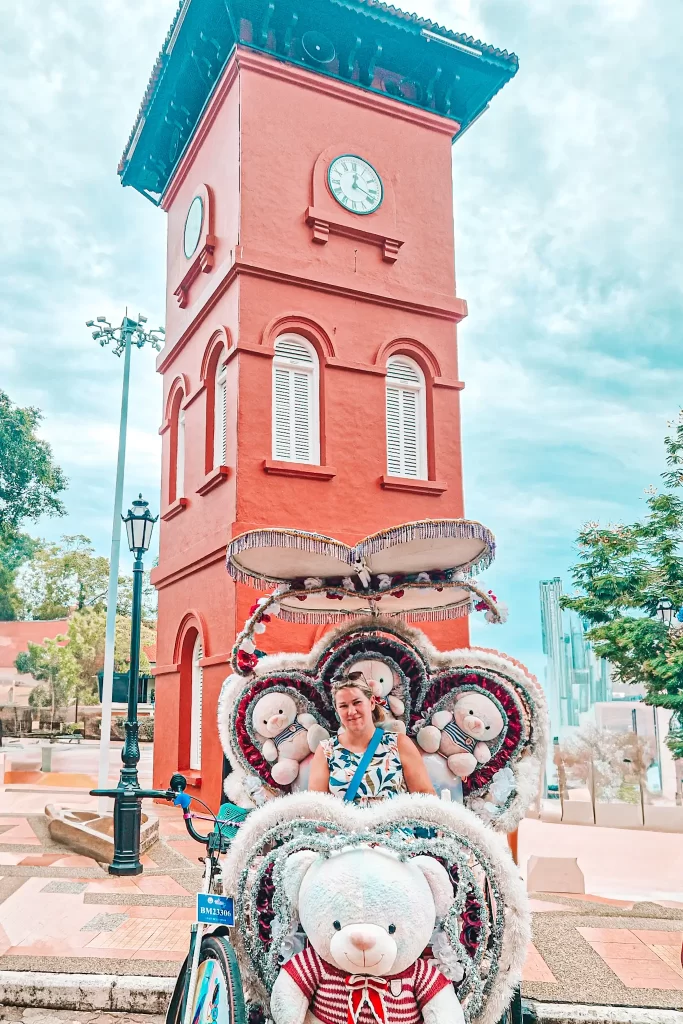
It’s about soaking in centuries of colonial history, tasting flavours that reflect Portuguese, Dutch, British, and Peranakan influences, and yes—riding through the historic core in a rickshaw plastered with teddy bears while 2000s pop music blasts from a speaker.
That ridiculous rickshaw ride through the heart of Dutch Square told me everything I needed to know about Malacca: it’s quirky, deeply layered in history, and not afraid to have a little fun with it.
In this Malacca travel blog, I’ll guide you through how to make the most of one full day in Malacca—what to see and why this small but mighty city left such a lasting impression.
Is Malacca worth visiting?
Just 3 hours south of Kuala Lumpur, Malacca is a small but historically rich town. It’s a wonderful antidote to the modernity and chaos of Malaysia’s capital city, with historic buildings everywhere you look. Even Kuala Lumpur’s most famous temple, the Batu Caves, is relatively modern in comparison, with temple construction only starting around the turn of the 20th century. Malacca is also easily walkable, and when I visited in August 2024, I found it a great way to destress after constantly using public transport or Grab in Kuala Lumpur.
Malacca is steeped in history. Its different to George Town, Malaysia’s other major heritage city, because the majority of Malacca’s historical buildings are from the Dutch colonial period, and are therefore completely different to the British-style buildings found in Penang or Singapore. There’s also a few even older buildings from when the Portuguese first ‘discovered’ the area.
It has been on the Unesco World Heritage list since 2008, but isn’t as busy as many UNESCO sites in Asia, like Angkor Wat, Luang Prabang or Borobudur near Yogyakarta. It still feels like a bit off the beaten track – even my friend and her Malaysian husband have yet to visit.
Finally, Malacca also has a great food and cafe scene, as well as lovely riverside restaurants to enjoy. This makes it a great place to relax and enjoy your time, especially in the evening.
Visiting Melaka Independently vs a Guided Tour
I really valued visiting Malacca independently. However, that’s not the right option for everyone, and at other times on my travels I’ve really valued going on a guided tour. There are lots of guided tour options to visit Malacca from Kuala Lumpur. Guided tours offer efficiency if you’re short on time, reassurance if you’re not a confident traveller, and the chance to make friends if you’re a solo traveller. This guided tour is incredibly highly rated, taking you to most of the places on my suggested itinerary (you’ll miss the river cruise).
Understanding Malacca’s multi-layered past
Malacca was originally a small fishing village, but grew in importance after the founding of the Sultanate of Malacca in the 15th century. It became an important trading port, with a particular focus on Chinese, Indian and Arab traders.
The Portuguese colonised Malacca in 1511, making it one of the earliest European colonies in Asia, and it became one of the most important trading cities in the world. The town still has some Portuguese buildings, including the fortress on St Paul’s Hill. The Dutch were the next to colonise Malacca, from 1641-1795. Many of their buildings still survive in the town centre today and create the iconic red cityscape the city is so famous for.
The Dutch eventually ceded Malacca to Britain in 1825, when it became part of the British colony of Malaya. Malacca was part of the famous Straits Settlements of British colonial rule, alongside Penang and Singapore, and was briefly under Japanese rule during the Second World War. Malacca became independent in 1957, a year later than the majority of Malaysia.
Malacca’s interesting history lends itself perfectly to historical novels. If, like me, you learn about history through reading novels and want one set in Malacca, check out my guide to books set in Malaysia, or my wider guide to books set in other parts of Southeast Asia that I read before travelling.
One Day Itinerary for Malacca: Top Attractions & Must-See Sights
I have created this guide assuming you have 1 full day in Malacca. If you are doing an independent day trip to Malacca from Kuala Lumpur, you could see some of the sights more efficiently by doing a longer rickshaw ride, or skip the boat ride. You’ll also miss out on dinner by the river, as you’ll need to head back to Kuala Lumpur in the evening.
Interactive Map: Cultural Sites & Local Hidden Gems
Use this interactive map to plan your itinerary for 1 day in Malacca!
Stop 1: Visit bustling Jonker Street
Cost: free
The first thing to visit in Malacca is busy Jonker Street. This historic street in Malacca’s Chinatown was named after a Dutch merchant and has been the centre of Malacca since the 17th century.
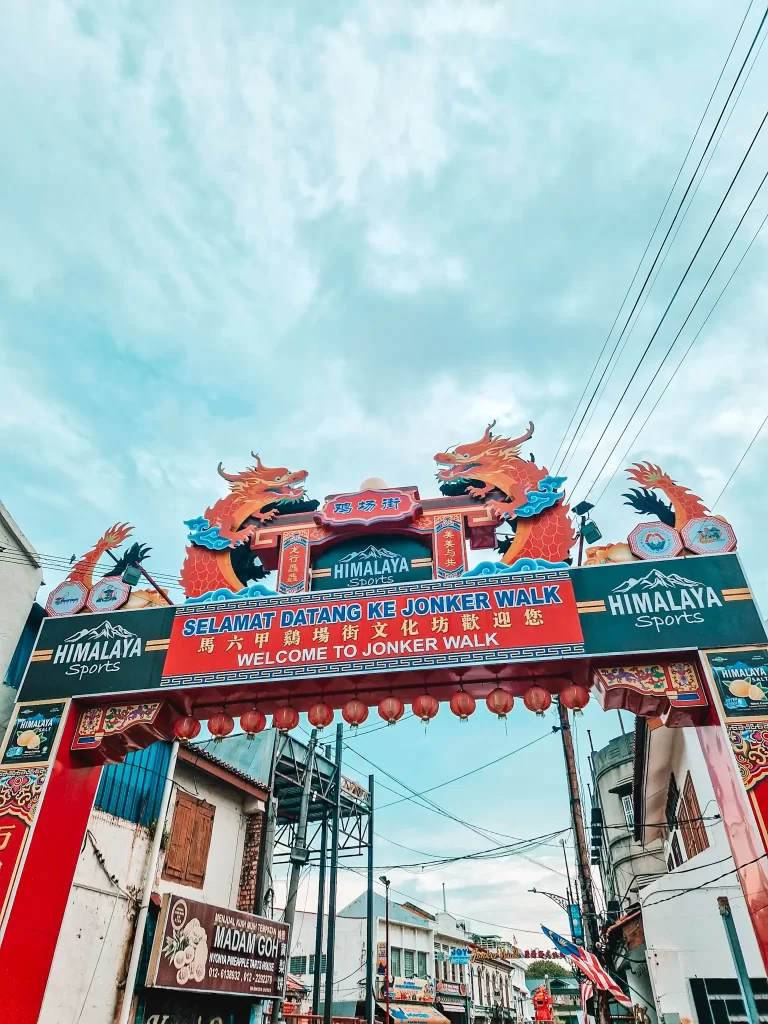
It’s now a busy modern thoroughfare, packed with shops and cafes, many with their original shophouse facades. Take time to wander into shops, admire architecture or sit down for a breakfast coffee and cake in one of the delicious bakeries. I tried the Melaka de Nata (a variation on the famous Portuguese pastel de nata and an indicator of Portuguese heritage in the city) at French Brown and it was delicious!
I found that the best time to visit Jonker Street is first thing in the morning or after around 4pm. During the main part of the day, the street is crowded with large tour groups from Kuala Lumpur, making it difficult to navigate. Visiting outside of this time gives you a much more relaxed experience.
Stop 2: Explore Malacca’s unique Dutch and Portuguese buildings
Cost: Christ Church entry is 22 MYR (c.$5). No cost to visit St Paul’s Church.
Accessibility: Short but steep climb up steps to St Paul’s Church
Malacca is famous for its historic buildings, dating from different eras of colonial rule. The city’s main square is just at the end of Jonker Street, so it’s easy to find and should be your next stop after walking down the busy shopping street.
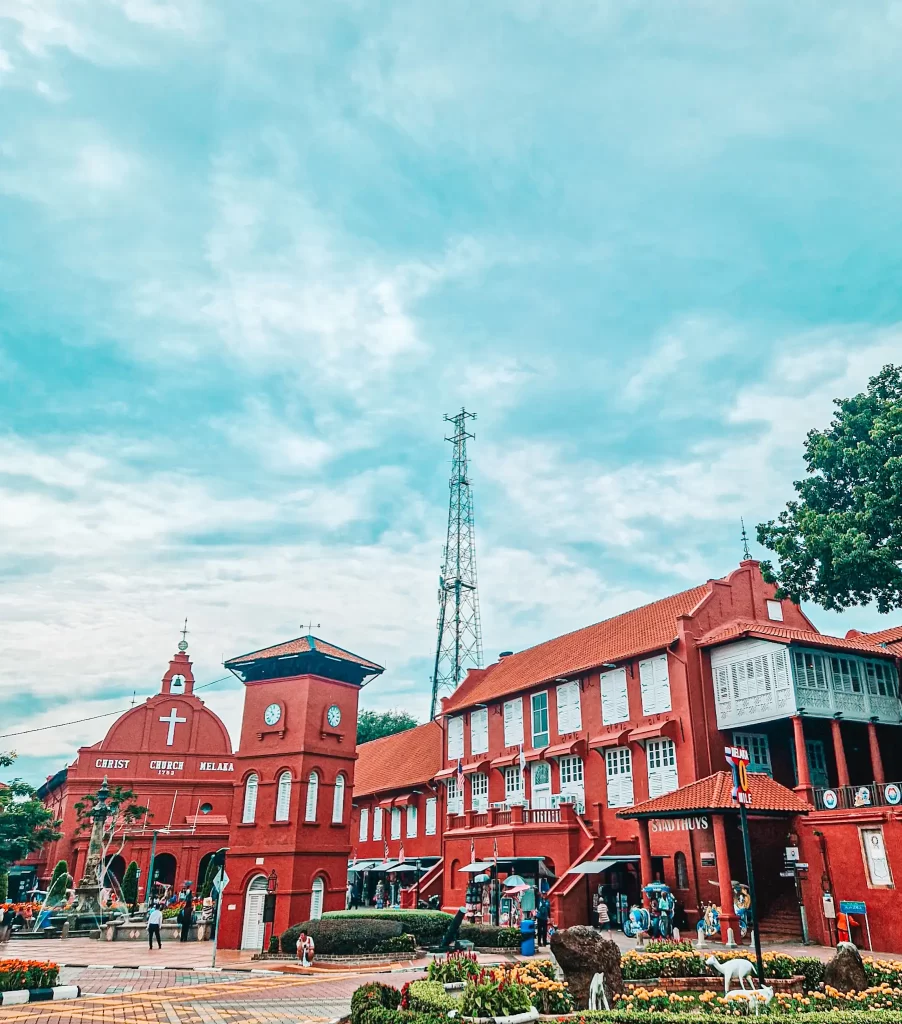
The most famous historic building in Malacca is probably the iconic red Stadthuys, the Dutch town hall dating from 1650. This is (probably) the oldest Dutch building in East Asia. It also formed the nexus of government for both the Dutch and British colonial powers. While there is a museum in the Stadthuys, most people just enjoy looking at the beautiful exterior.
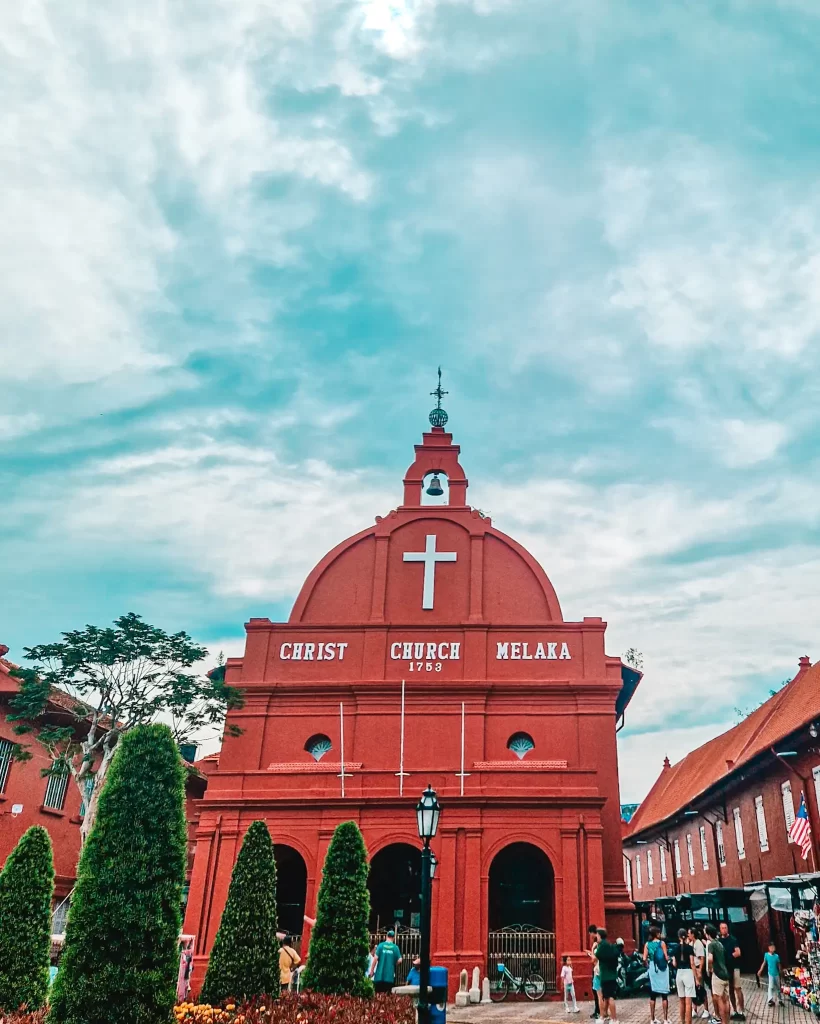
Next to the Stadthuys is Christ Church, which was built in 1753 to mark 100 years of Dutch rule. This makes it the oldest Protestant Church in Malaysia. As both the Dutch and English were Protestant, the church played a major role during much of Malacca’s colonisation. Together, these two red buildings give the square a unique appearance among Asia cities.
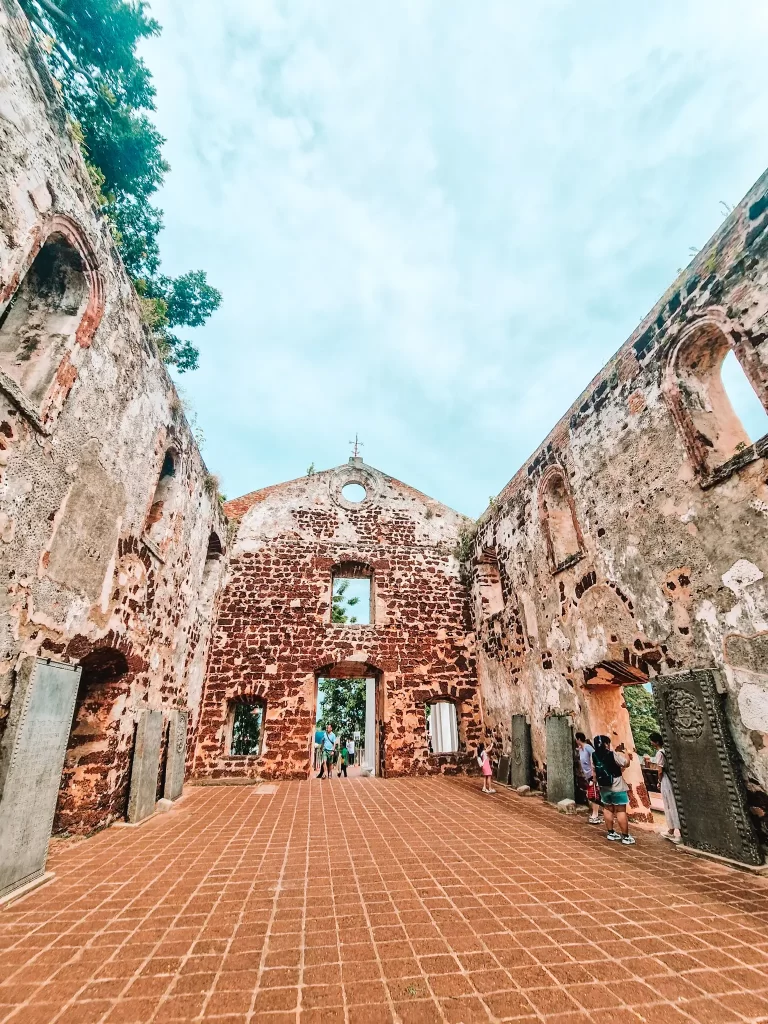
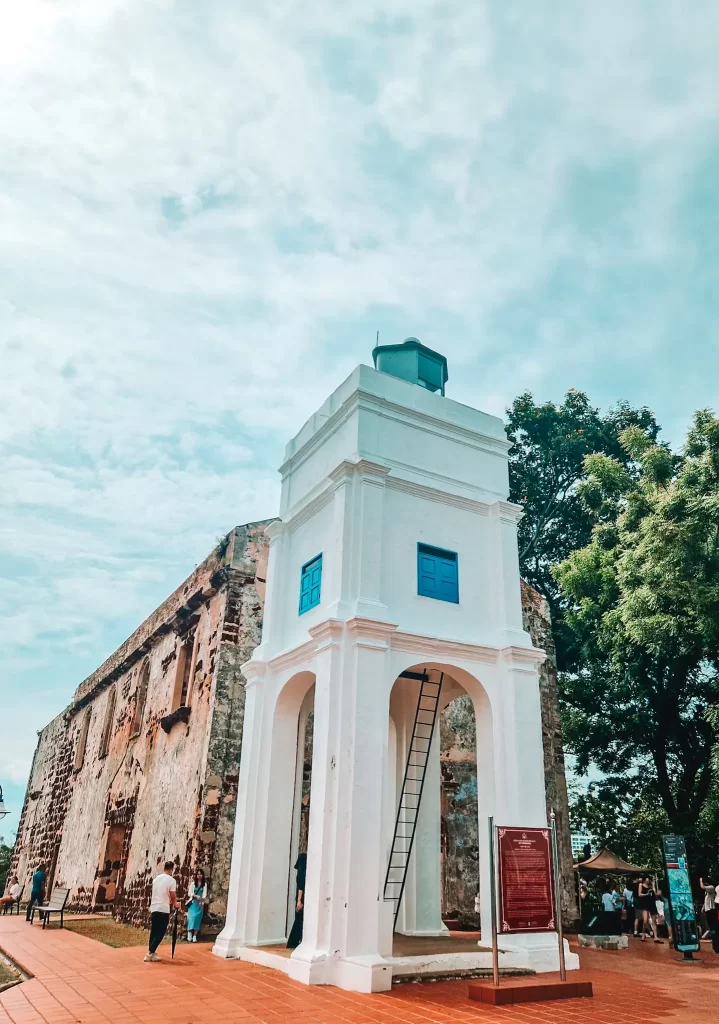
From the Stadthuys, you can climb up to St Paul’s Church, which dates from Portuguese rule during the 16th century. It’s famous for being the oldest European building east of India. While the church is in ruins, it’s very atmospheric and you also get a stunning view over Malacca and the river.
There are a number of other historic buildings you can visit in Malacca, including the A’Famosa Fort, which is behind St Paul’s. I chose to visit this Portuguese ruin on my trishaw ride later in the day.
Stop 3: Admire Malacca’s street art
Cost: free
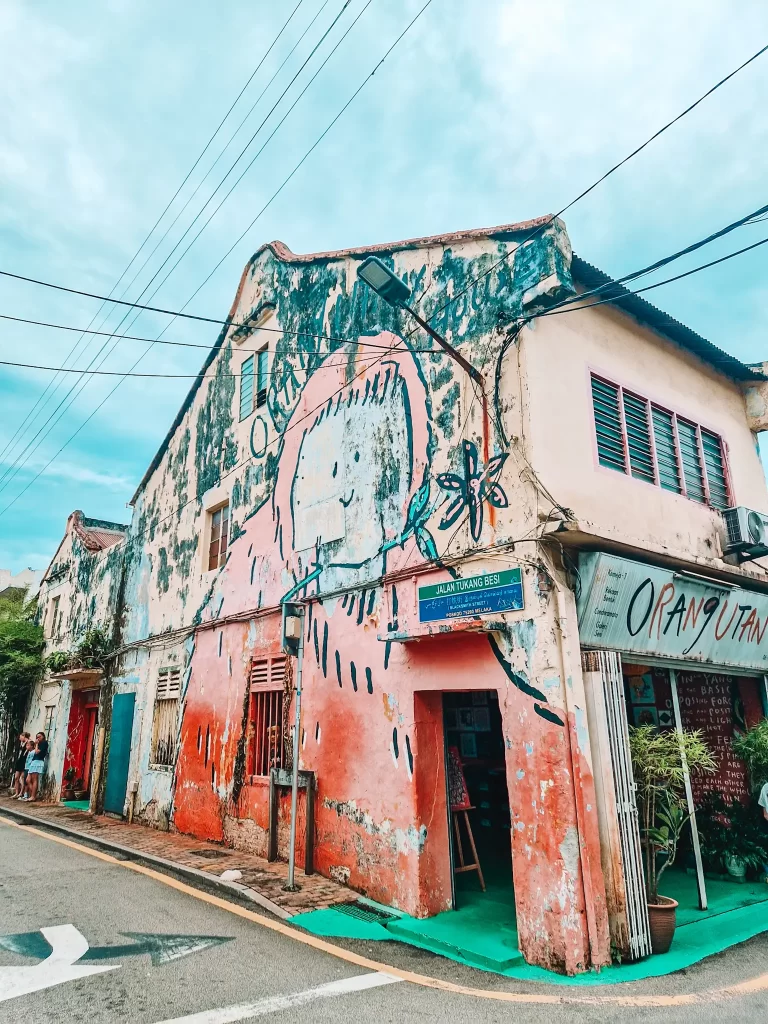
While not as famous as George Town or even Ipoh, there is plenty of street art to spot in Malacca. The two most famous examples are the Orangutan, at the Orangutan House, and the Kiehl’s Mural. This was created in celebration of the five UNESCO Heritage Sites in Malaysia, which include Kinabalu National Park in Borneo and George Town.
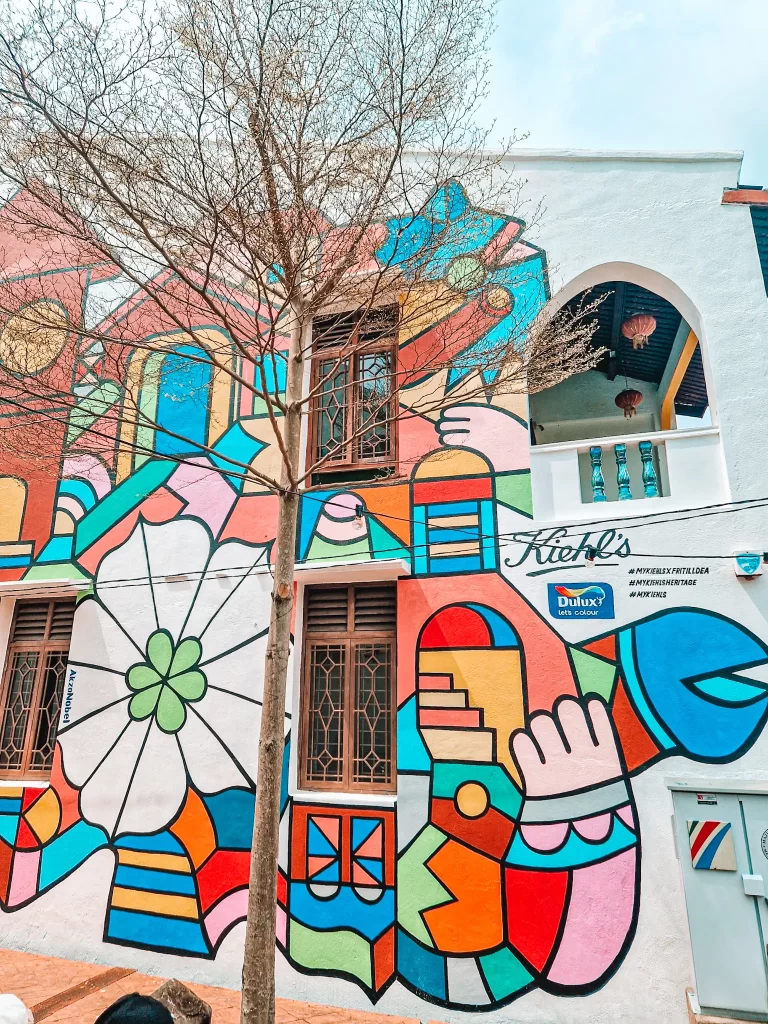
There’s also lots scattered around the town, including a big one welcoming you to the town. If you take the river trip later in the day, you’ll spot lots from the boat.
The Kiehl’s mural is just across the river from the Stadthuys and the Orangutan House is on the next corner. It’s a great stop between the Dutch Square and your next stop, the Cheng Hoon Teng Temple.
Stop 4: Visit Malaysia’s oldest temple, on Harmony Street
Cost: free
The ornate Cheng Hoon Teng Temple in Malacca is the oldest functioning temple in Malaysia. Historians are unclear on the exact founding date of the temple, but it’s from at least the middle of the 17th century, and could be older. The temple was the main place the local Hokkien Chinese community went to worship in Malacca.
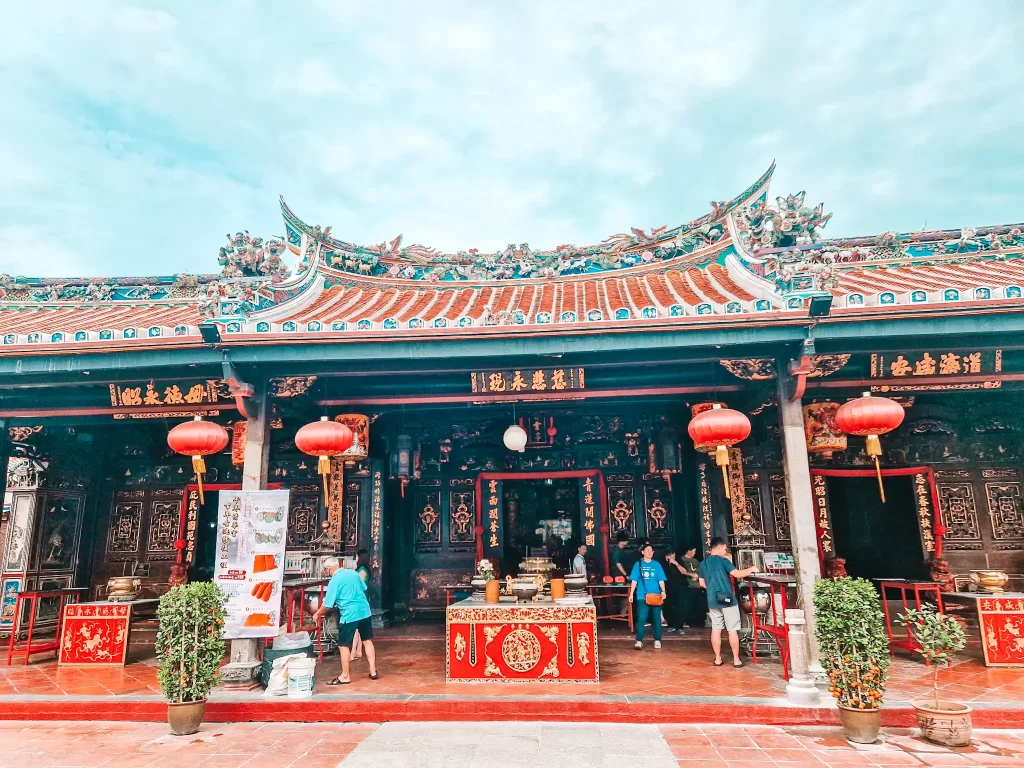
Cheng Hoon Temple is that it’s on a street locally known as Harmony Street (official name Jalan Tukang Emas), named for it’s coexistence with a mosque and a Hindu temple. This highlights the way these three distinct cultures have lived in harmony in Malaysia for hundreds of years.
The temple is about 8 minutes walk from the Stadthuys. You can either walk down Jonker Street, or take one of the streets parallel to avoid the busy middle-of-the-day crowds.
Stop 5: Relax on a boat ride down the Malacca river
Cost: 30 MYR (c.$7)
As it’s likely to be the middle of the day by this point and the Malaysian heat is intense, it’s a good time to do a more sedentary activity.
The Malacca River flows through the centre of Malacca and gives an insight into how important it must have been for trade in the past. Now, it’s filled with tourist boats, offering a gentle glide down the river to the more modern part of town and back.
There are two companies offering river tours in Malacca, with pretty much the same price and definitely the same route. You can buy tickets at the ticket kiosks by the river, or online at Melaka River Cruise (I couldn’t find an online site for the other company).
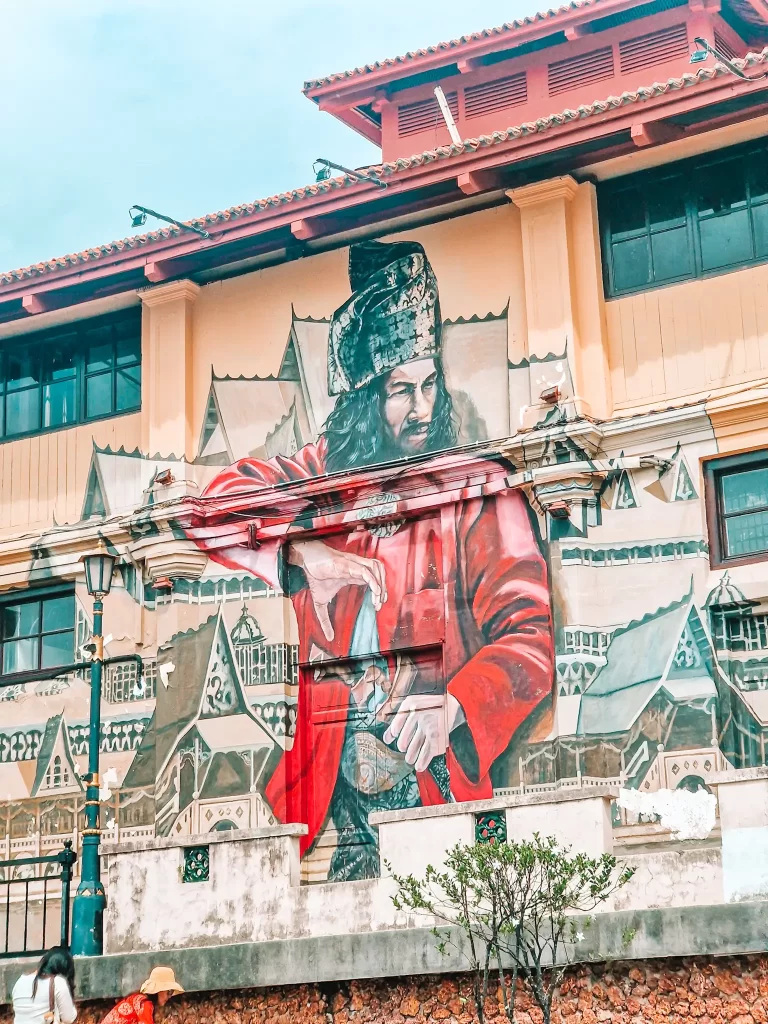
The depart around every half hour or so, and took 45 minutes to go to the end of the route and back. The boats are covered, meaning that they are nice way to pass the time during the hottest part of the day, with a little bit of river breeze. I loved my journey on the boat, and I particularly enjoyed taking in the street art that’s visible from the river.
Among other sites, you’ll glide past the restaurants lining the river, giving you an opportunity to choose your dinner stop! You’ll also pass Kampung Morten, an old Malay village that has become a tourist attraction. It’s very different in appearance to the increasingly modern parts of Malacca you see on other parts of the trip.
Stop 6: Understand how people used to live in historic Malacca
Cost: 25 MYR (c.$5.60)
There are a number of museums in Malacca, but one of the most famous is the Baba and Nyonya Heritage Museum. Once your boat has dropped you off in central Malacca, head down one of the streets parallel to Jonker Street to find this fascinating museum.
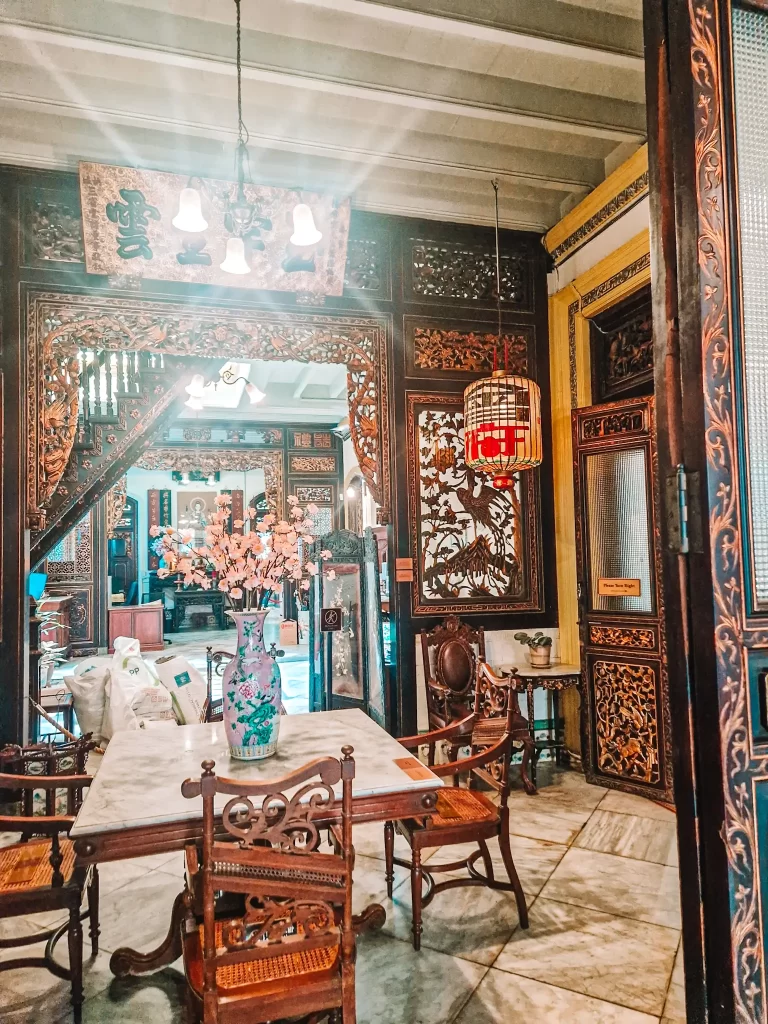
The Baba and Nyonya Heritage Museum was originally three terraced houses, which were then combined into one family house in 1861. Four generations of the same family lived in the house before it was made into a museum in 1985.
The museum is set up to represent what the house would have been like in the early 20th century. It gives a fascinating insight into what life would have been like for an affluent Chinese family at this time. Check out The Ghost Bride on my list of books about Southeast Asia to understand what life would have been like for a family living in this kind of house.
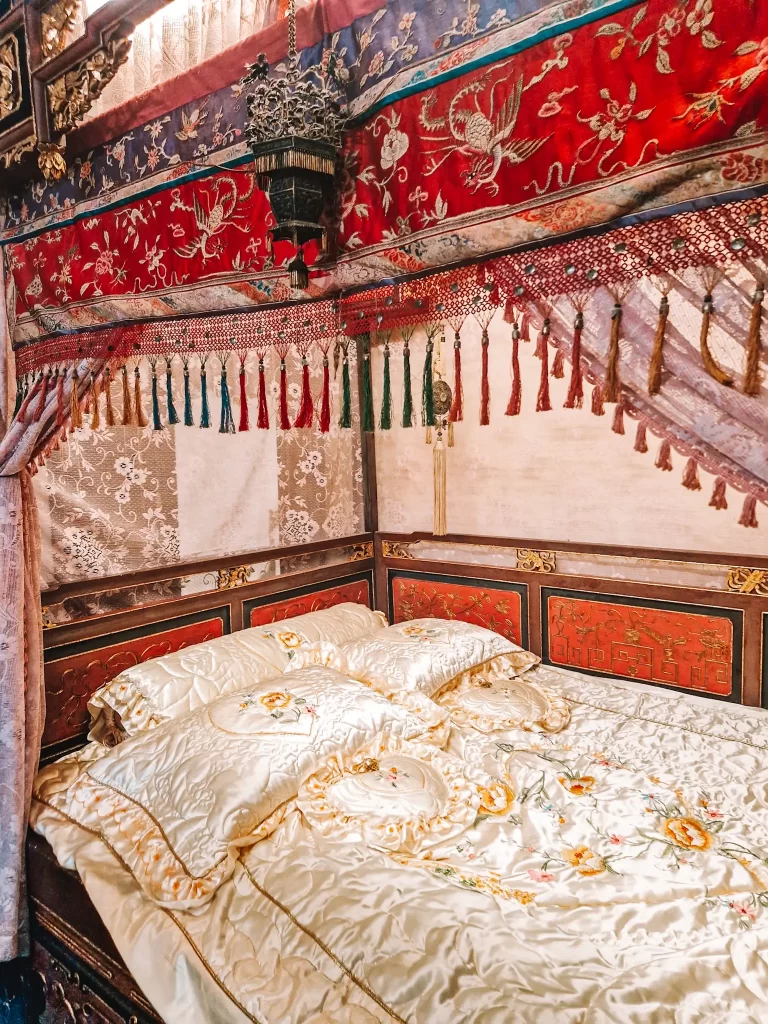
I really enjoyed this part of my visit to Malacca. I loved seeing the marriage bed, and the information about marriages during this period. I also marvelled at how ornate the house was. This is definitely worth a visit!
Stop 7: Take a blinged-up trishaw
Cost: Tourism Malacca states that the standard rate is 40 MYR ($9) per hour, but this is likely to depend on your bargaining skills. Make sure you agree a fare with your trishaw rider in advance and shop around if you can’t get a good rate.
After a busy (and probably sweaty) day of sightseeing, it’s time to take the weight off your feet. One of the most unique things to do in Malacca is take one of the local trishaws on a city tour. As you’re coming to the end of your one day in Malacca, this is a great way to see any sights you haven’t managed to fit into your Malacca itinerary so far.
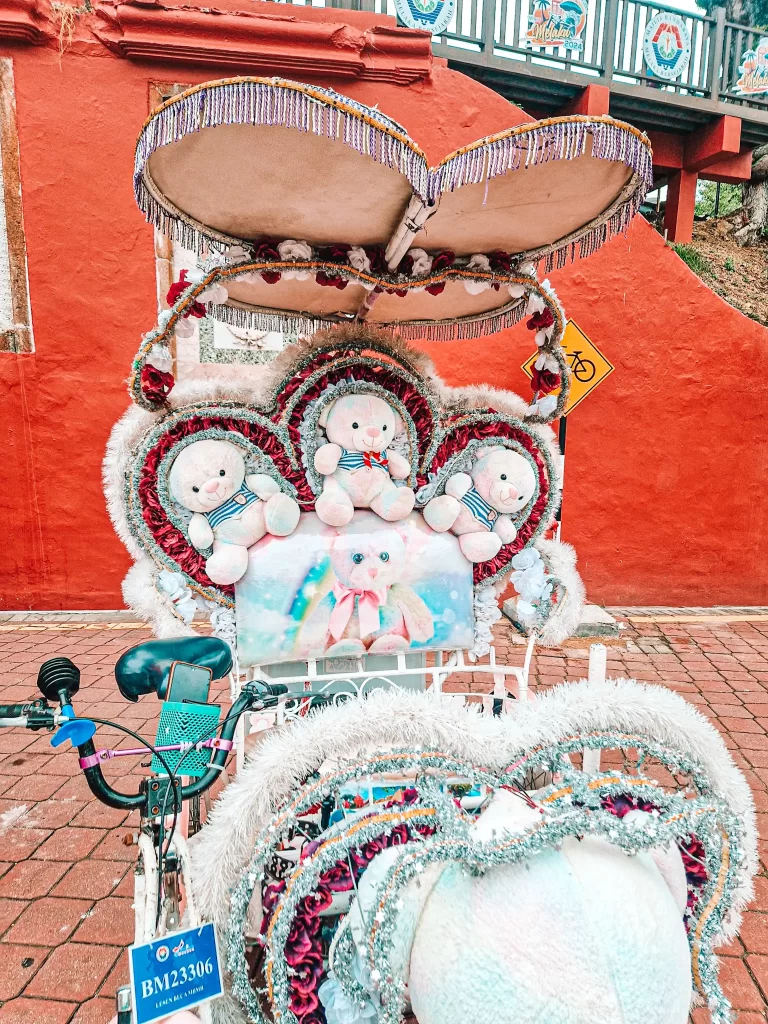
Trishaws in Malacca are unlike anything else I’ve seen on my travels – they are decorated to the extreme! You’ll find them clustered around the Stadthuys and you can pick your theme. Hello Kitty and Spiderman were the most popular, though I chose one with teddy bears.
When I visited in summer 2024, the trishaws offered me a 30 minute route. However, I knew a shorter option was available and bargained for this, as I had already visited many of the sites on the 30 minute route. I was glad I did so – while riding the trishaws is an experience, it’s not a particularly comfortable one as you rattle across cobblestone streets! I’d also already seen quite a few of the sites on the longer route.
Stop 8: Chill by the river
Cost: depends on the restaurant
Once you’ve gone past them on a boat, you’ll be desperate to spend some time chilling out in Malacca’s riverside eateries. These vibrant riverside restaurants mostly open in the evening, making them a perfect way to unwind after a day of exploring.
Some of the top rated include Relish The Moment and Campong O’oloo, while The Old Merchant is a highly rated cocktail bar. You could also head to Malaiqua by Gula Cakery if you’re looking for some freshly baked cakes.
Where to stay in Malacca: Top Hotels & Budget Options
The best area to stay in Malacca is the centre of the city, as this will put you within walking distance of everything you want to see. However, avoid staying on Jonker Street itself, which can be noisy at night.
- As a budget option, I stayed at Ringo’s Foyer, a hostel with private rooms. It’s about 5 minutes from Jonker Street, and very clean with friendly staff and good aircon.
- For a less hostel but still very affordable option, The Pillohouzze is slightly further away but also has excellent ratings. All rooms have shared bathrooms, and access to a shared terrace.
- If you’re looking for something much more luxurious, try the Liu Men Malaka, which is just by the Cheng Hoon Temple. It has a 9.3 rating Booking.com from just under 1000 reviews.
Even if I haven’t stayed at a hotel, I only recommend hotels I would personally consider if they were in my budget, based on reviews, location, facilities and other key factors. For example, in Malacca, I can see relatively few highly-rated mid-range hotels, so haven’t recommended any here.
Frequently asked questions
Malacca vs Penang: Which is best?
Both Malacca and Penang are excellent locations to visit in Malaysia. Both are UNESCO Heritage Sites, with lots of visible history and great food scenes. I visited both in 2024 and enjoyed my time in each – here is my verdict.
✔ Penang is bigger, busier city. It has more cafes, restaurants, historic sights and even public transport around the city, despite it’s relatively small size. It has it’s own airport, which can be convenient, but it’s a long way from Kuala Lumpur if you have a short time in Malaysia. It’s extremely busy, and there are lots of events and activities to take part in – but the crowds can be frustrating and you often have to queue, for example to take pictures of famous street art. Penang is perfect if you value a bustling, lively city.
✔Malacca is smaller and less well-known. There are lots of charming historic buildings, but less to see overall. However, while it can be busy during the day, it is quieter in the evening. It’s much more laid back, and I didn’t have to queue to do anything. It’s convenient to visit from Kuala Lumpur, whether on a day trip or overnight, as the bus is quick and cheap. Malacca is best if you like a quieter, more relaxed destination that’s a bit off the beaten track – although you will still hear the noise from the blinged-up trishaws!
How long should you spend in Malacca?
Malacca is a small city, especially compared to some of Asia’s major city destinations like Singapore, Kuala Lumpur, Hanoi or Bangkok. In addition, all the major sights are fairly close together, meaning you won’t spend tons of time travelling between them. As a result, a 1 or 2 day itinerary for Malacca is sufficient.
If you are planning a 2 day itinerary for Kuala Lumpur, you can easily visit Malacca on a day trip from Malaysia’s capital – check out this highly rated tour if you don’t want to visit independently.
However, as someone who prefers slightly slower travel, I would recommend spending the night in Malacca if you have time in your itinerary. This allows you to explore at a more relaxed pace, and to enjoy an evening in one of Malacca’s riverside bars.
Does Malacca have an airport?
No, Malacca doesn’t have an airport or train station, so most people will arrive in Malacca by bus. The bus station is about a 10 minute Grab (rideshare) ride from central Malacca.
How to get to Malacca from Kuala Lumpur
Cost: c.$3
There are frequent buses from TBS Bus Station in Kuala Lumpur. These take about 3 hours, and are comfortable, with wide seats and lots of leg room.
TBS is a huge bus station serving multiple destinations across the country with good facilities, including toilets and shops. However, TBS isn’t particularly central in KL. While TBS is accessible by public transport, it can involve multiple changes depending on where you’re staying. It’s quick and easy to get a Grab rideshare taxi to TBS.
To book bus tickets, I use 12GoAsia.
How to get to Malacca from Singapore
Cost: $20-$30 depending on the type of bus and departure point
Malacca is a popular weekend getaway from Singapore and there are buses from the Singapore to Malacca. These take between 5 and 6 hours, which allows for time crossing the international border. These buses depart from a number of different MRT metro stations in Singapore, and arrive at a variety of different hotels and sites in central Malacca. Bear this in mind when booking your ticket and choose the departure and arrival points that best suit you.
I use 12GoAsia to book bus tickets.
Malacca may be small, but it packs a punch when it comes to history, culture, and unique experiences. From its colonial landmarks and vibrant street art to its bustling Jonker Street and scenic riverside, a Malacca itinerary has something for every traveler. Whether you visit for a day or linger a little longer, Malacca’s charm is undeniable. As the sun sets over the river and the lanterns light up the streets, you’ll see why so many travelers fall in love with this historic gem. If you’re planning a trip through Malaysia, make sure to add Malacca to your itinerary—you won’t regret it!
Em is the traveller behind Em’s Globetrotting Gems, where she shares honest travel tips and first-hand experiences from her global adventures. During a six-week journey through Malaysia, she spent two days exploring the rich history and vibrant charm of Malacca. Her blog is all about helping fellow travellers plan meaningful trips with practical advice and personal insights.
✅ All photos featured on this blog are from my personal travel experiences. No stock images are used.

[…] .Spending more time in Kuala Lumpur? Consider a day trip to beautiful Malacca, one of the original colonial cities. Check out my guide: Malacca, Malaysia: the most interesting things to do. […]
I really enjoyed KL when I visited (many) years ago, and Malacca looks like another great Malaysian city to visit. I love cities with colourful street art! The boat ride sounds fun, as does the trishaw ride 🙂
Thank you for the guide! How many nights do you recommend spending in Malacca?
AMAZING! I have been to Malaysia a few times, and for my next trip, I want to visit new places. I have never been to Malacca, so I’ll be saving this post for sure
Malacca looks live a lovely town to visit. I always l;ove doing a river cruise, when it’s available in a city.