
 Em
EmJust so you know: This post contains affiliate links. As an Amazon Associate, I earn from qualifying purchases. I may also earn a small commission if you book a tour, hotel, or buy something else through these links. It helps me keep this blog running and full of travel tips. Thanks for your support!
I loved Laos. Deeply. I spent over a month travelling the country in 2024, and it’s one of the few places in Southeast Asia I think about going back to constantly. Not because it was easy — it absolutely wasn’t — but because it felt like stepping into a slower, quieter world that hasn’t reshaped itself around travellers yet.

Laos is unbelievably beautiful.
Golden temples and early mornings in Luang Prabang. Limestone karsts and hot air balloons drifting over Vang Vieng. The sobering, devastating history at COPE in Vientiane. Two days on the Mekong slow boat watching life unfold on the riverbanks. Cycling dusty lanes and swimming at sunset in Don Det. Trying snake wine. Drinking coffee slowly. Doing very little — and loving it.
Even compared to other Southeast Asian countries, Laos feels different. Calmer. Less hurried. Less polished. And sometimes, gloriously untouched.

But here’s the part that often gets glossed over: travelling Laos takes work.
Not physical hardship so much as mental energy. Planning ahead. Managing cash. Accepting long journeys. Adjusting expectations. Dealing with the fact that many things simply aren’t available when you want them — or at all. Some days are effortless and magical; others are slow, hot, admin-heavy, and quietly exhausting.

I wouldn’t change the experience for anything.
But I’m very glad I arrived prepared.
This guide exists to bridge that gap — to help you enjoy everything that makes Laos so special without being blindsided by the realities of getting around, staying connected, crossing borders, or managing money. Think of it as the context I wish I’d had earlier: practical, honest, and rooted in real experience, not theory.
If you travel Laos slowly, with patience and a bit of flexibility, it gives you far more than it takes.
This article will help you get there in one piece — and enjoy it properly.
Quick Overview: Is Laos Right for You?
Laos is not an easier, cheaper version of Thailand — and if that’s what you’re looking for, this itinerary will frustrate you.
Laos is best for travellers who are comfortable with:
- Slow, unpredictable transport OR modern transport where ticketing is often frustrating and unreliable
- Limited infrastructure outside major towns
- Long days broken up by cafés, rivers, and waiting
Laos is raw, quiet, and operationally hard — even for experienced travellers.
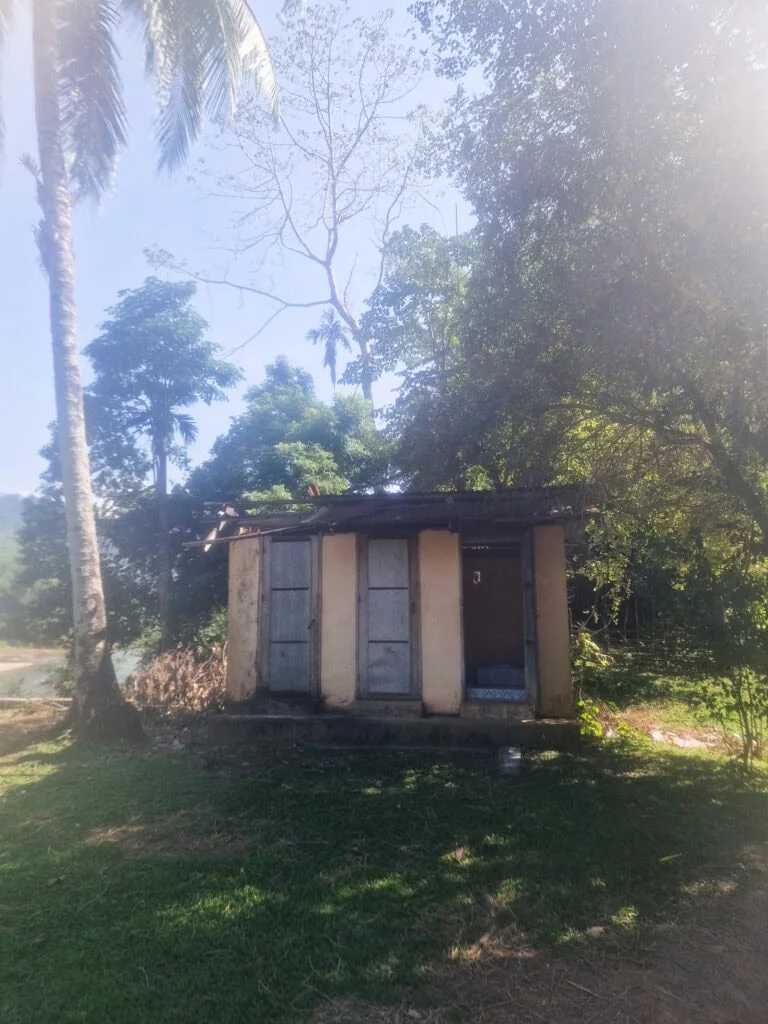
It’s not efficient. It’s not easy.
But if Laos gets under your skin, you’ll never forget it.

🚌 Buses in Laos – when you should use them (and when you shouldn’t)
The Real Reason Buses Take So Long (The Roads)
Getting around Laos is slow, physical, and often uncomfortable — not because distances are huge, but because the roads are genuinely awful.
- Buses are slow because the roads are rough, potholed and winding
- Journeys take far longer than the distances suggest
- Schedules are loose at best and fictional at worst
- Make sure to get motion sickness remedies if you struggle – particularly on longer routes, between Nong Khiaw and Luang Prabang or between Luang Namtha and Houy Xay on the Thai border (the people I met on the Gibbon Experience threw up on this bus)

Day Buses: What to Expect
Some routes in Laos have modern and improving buses. For example, I took the bus between the south border and Pakse in a modern, airconditioned mini van (no seatbelts though!). The minivan I took from Nong Khiaw to Luang Prabang was also modern, but the one on the way out was significantly less so. I also had lovely modern minivans for the tour I did in Luang Prabang between the Kuangsi Waterfalls and the Mekong Cruise. What you won’t find is big coach-sized buses with under-bus storage – so be aware that space is usually tight.

That’s Laos – a mixture of the modern and the old Laos.
The bus route between Vang Vieng and Luang Prabang is particularly notorious – the general consensus while I was in Laos is that you should do everything in your power to avoid it. I heard rumours of sharing seats with chickens (no, they’re weren’t up top like the goats I saw riding a bus roof in Nepal) and people vomiting copiously as the bus went around endless corners, while buses frequently break down and the journey is often closer to 10-12 hours than the 6-8 advertised.
It was the first question travellers asked each other when making friends in Laos – “Did you manage to avoid the Luang Prabang bus?” and I think that says everything about how notorious it was.
Sleeping Buses & Gender-Separated Sharing
Given the condition of the roads, I chose to avoid night buses in Laos. However, if that’s part of your route, they do offer lie-flat beds on long routes e.g. between Pakse and Vientiane. However, I did also meet someone who was doing a 16 hour journey between Pakse and Bangkok in a minivan – a wild choice in my opinion. If you’re planning a long/overnight journey, pay attention to the type of bus and make sure it matches your comfort thresholds.
You should know for sleeper buses:
- You’ll almost always be expected to share a sleeping berth
- Sharing is gender-segregated (women with women, men with men)
- Space is tight, storage is minimal, and sleep is hit-or-miss
If that sounds like a dealbreaker, plan to:
- Travel by day where possible
- Use trains where available
- Budget for occasional flights – see the section below.

When Flying Makes Sense (and When It Doesn’t)
Flying is surprisingly easy in Laos, and in some cases it might be your best option. However, I’m sure when you think about flying in Laos, you’re wondering whether it’s safe.
Lao Airlines, the national carrier, does have a more complex safety reputation than many Western or major Asian airlines.
- Lao Airlines currently holds a high industry safety rating — 7 out of 7 — based on audited safety metrics including incident history, audits and lack of recent fatal accidents in audited safety checks.
- It also achieved IATA Operational Safety Audit (IOSA) certification, which is a recognised international standard for airline operational safety systems.
- It rates lower on passenger/onboard experience – but this isn’t a safety issue.
The safety concerns relate to historic issues – most notably a Lao Airlines flight which crashed on approach to Pakse in 2013, killing all on board – a tragedy attributed to pilot and procedural factors in bad weather. There were also historic issues reaching back decades that reflected past regional aviation challenges.
So in short – Lao Airlines today has a strong safety record. I flew with them between Pakse and Vientiane and it was quick (under one hour) and efficient. Pakse Airport is tiny and there were very few travellers, making everything very speedy. Even better, Vientiane Airport is near the city centre – far closer than the train station.
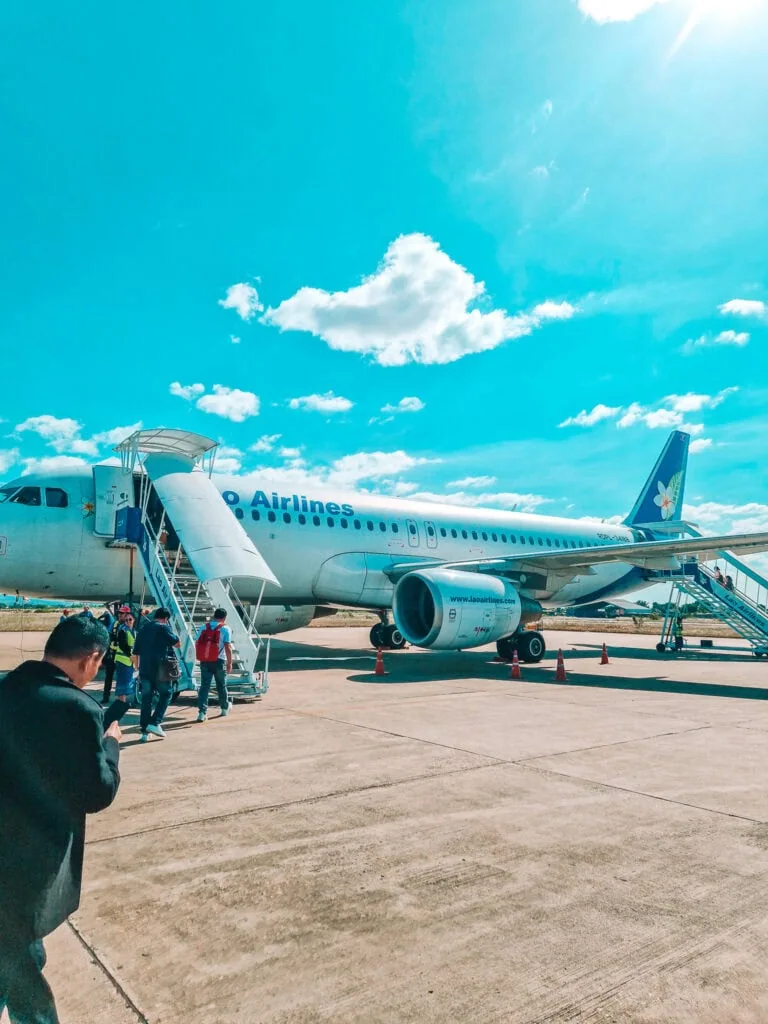
In short, if you’re planning to visit Don Det & the 4000 Islands, or heading to Pakse for the Bolaven Loop, flying between this part of Laos and Vientiane will make your life infinitely easier.
Vientiane Airport also offers international flights, most notably from Bangkok, Phnom Penh and Hanoi, meaning its easy to fly into Laos as part of a wider Southeast Asia itinerary. Luang Prabang Airport is also a growing destination, with flights from the tourist havens of Siem Reap and Vientiane on top of the regional capitals above.
Songtaews & Tuk-Tuks: Local Transport That Fills the Gaps
In Laos, songtaews do much of the everyday transport work that buses don’t cover. They’re not efficient, they’re not fast and they are definitely not comfortable — but they’re essential.

Songtaews are shared pickup trucks with benches in the back. They run:
- Between bus stations and town centres
- From towns to waterfalls, viewpoints and nearby villages
- On short, loosely defined routes where no formal bus exists
My experience was that they were extremely expensive for solo travellers, and that drivers were rarely willing to wait around for them to fill up. I used them primarily as part of pre-agreed tours/transfers e.g. between central Vang Vieng and the lagoons.
Tuk-tuks are far less common, but do exist in tourist towns. It’s not like in Cambodia where you can just order a Grab Tuktuk to take you anywhere you want to go, or even like Motorbike Grabs in Vietnam or Thailand. You’ll have to work to find a short-distance tuk-tuk in Laos. They are often treated as “private”, but:
- Prices are negotiated
- They may still pick up other passengers
- What you agree at the start matters
How payment works
- Cash only
- Either per person (songtaews) or per ride (tuk-tuks)
- Prices rise quickly if you’re the only passenger
Practical tips:
- If you’re short on time or energy, paying extra for a “private” tuk-tuk or a car taxi can be worth it.
- Hold onto the handles or the side of the vehicle – or you’ll get a nasty bump on the head.
🚄 Trains in Laos — How they’ve changed travel in Southeast Asia’s most rural country
Where the Trains Genuinely Make Life Easier
Laos’s first modern national railway is the Boten–Vientiane line, part of the larger China-Laos Railway project. Before it opened, Laos had no functional inter-city rail system — only a tiny French-era portage line on the Mekong river islands that closed in the 1940s (you can still see an old railway carriage in Don Det).
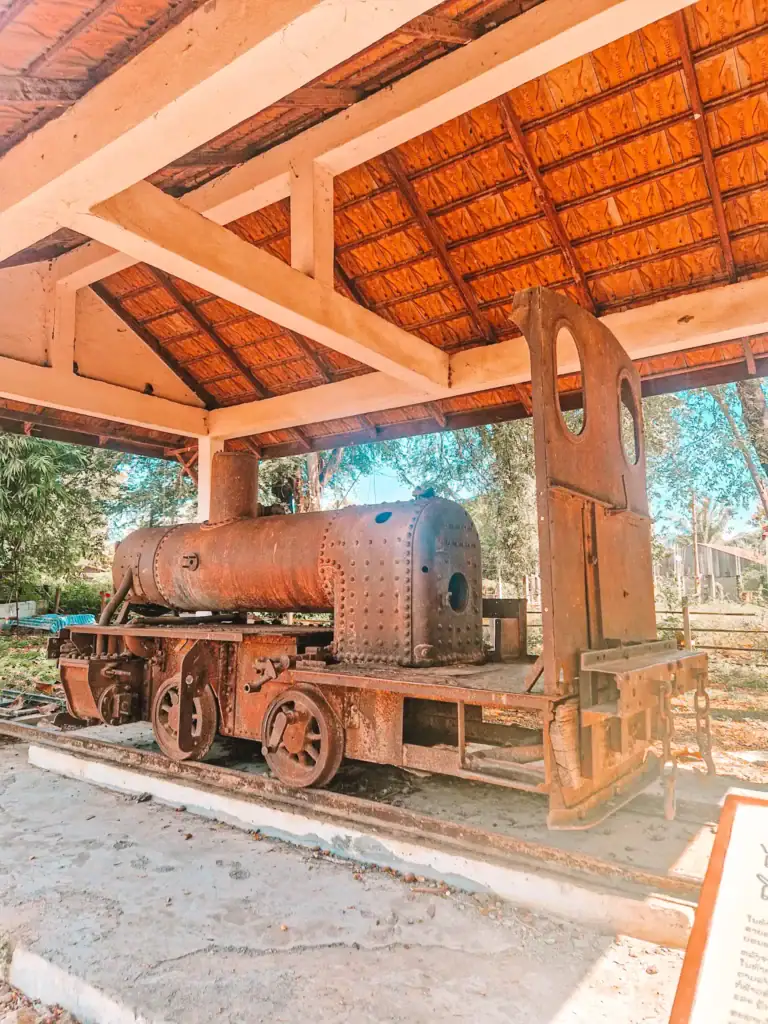
The new line officially opened on 3 December 2021. It links Vientiane in the south to Boten on the China border in the north, connecting directly with China’s rail network and forming a critical section of the planned Kunming–Singapore rail corridor. Since opening, the line has rapidly become a central transport route, significantly reducing travel times compared with road journeys and reshaping how people move around northern and central Laos.
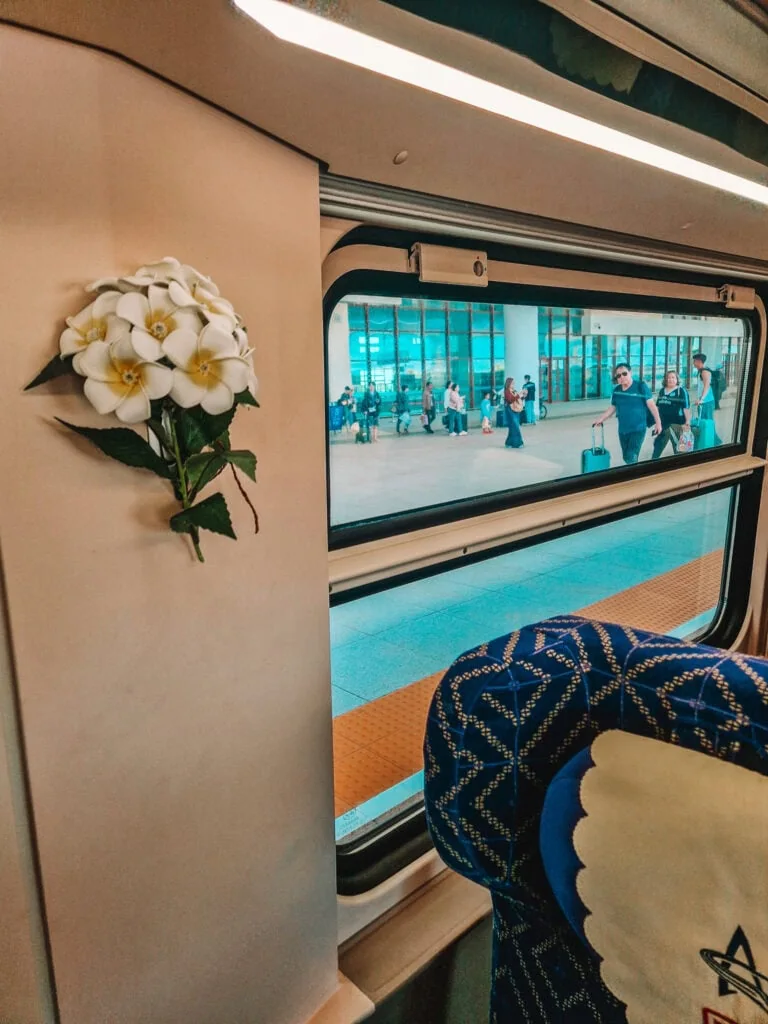
For western tourists, it’s most commonly used between Vientiane – Vang Vieng – Luang Prabang – reducing a journey that was advertised by bus at around 8 hours and often took 12 – down to around 2 hours. It’s an incredibly modern and fast railway, with digital/QR tickets, comfortable seating, ample luggage space, clean onboard bathrooms (including western seated toilets as well as squat toilets) and food options. It is by far the preferred method of travelling this route – especially the longer Vang Vieng – Luang Prabang stretch.
So what are the drawbacks?
Train Stations: Locations, Access & First Impressions
Firstly, and least importantly, train stations are rarely central – with the exception being Vang Vieng, where the train station is about 10 minutes from the main town.
- Vientiane – the station is around 30 minutes drive from the main hotel area on the banks of the Mekong. The Loca App (the Laos version of Grab) is active in Vientiane, so you can use this to guarantee a price between your hotel and the station. While I didn’t travel from the station into town, it’s likely that you’ll be more reliant on bartering with local taxis.
- Luang Prabang – the station is also about 30 minutes from the historic district. When I arrived, there was a chaotic scramble of taxis and minivans – people were crammed into shared vehicles for a set price, brokered by organisers manning the car park. It got me into town, but it wasn’t a serene experience. From the historic district back to the station, speak to your hotel or homestay about the cheapest option – there might be a shared Songthaew/tuktuk
- Vang Vieng – this is the easiest to navigate as the station is about 10 minutes from the centre of the town. If you buy your ticket through 12GoAsia (more on this below), it might include a transfer (via songtaew) to your hotel.
In general, train stations are modern and clean. There is some access to basic food and drink – you’ll be able to buy instant/machine coffee, water etc., but given the size of the stations, they feel oddly devoid of shops.
There are clean, modern bathrooms in the stations, though the ones I visited didn’t provide toilet paper. Bring your own.
Booking Tickets — What’s Required, What Goes Wrong
Booking tickets for the trains in Laos is the biggest drawback to using them. Tickets are only released 3 days in advance for all routes, and are often bought up quickly both by individual passengers and agencies. Laos is becoming a really popular destination for Chinese tourists, who tend to travel in large tour groups – this means that one agency can quickly eat up a lot of available tickets on any given day.
So how do you book? There are two main options:
- Direct booking via the Laos Railway App:
- Tickets are released at around 6.30am.
- You’ll need to register in advance – it’s a lengthy process
- Payment options are limited – I found out to my cost that they don’t accept Mastercard, and AliPay is limited to Chinese nationals.
- Booking through an agency or your accommodation
- Agencies, including via 12GoAsia, offer a booking service. You can buy this in advance, but it doesn’t guarantee you a ticket – they’ll notify you 3 days in advance if your ticket purchase was successful and if not you’ll be refunded.
- Agencies will also you to provide your flexibility levels. This includes: flexibility on transport class and flexibility on time of day you travel e.g. you’ve asked for the 7am train but they can only get tickets for the 11am train, would this work.
- Some agencies offer transfer services and some don’t. I had a transfer service from my hotel to the station in Vientiane, and from the station to the hotel in Vang Vieng, but no transfers were available for Luang Prabang. The drawback? My transfer in Vientiane was so early that the train station wasn’t even open – I had to wait outside in the heat for an hour.
- Your hotel/hostel/homestay may have a relationship with a local travel agency who can provide tickets, even at the last minute. If your plans change or your pre-booked tickets don’t work out or you can’t use the app, ask your accommodation.
Security & Luggage Rules, Reality & Enforcement
Security is high on trains in Laos. Stations open around 2 hours before each departure – if you arrive before that (as I did in Vientiane), you’ll have to wait outside. You’ll then need to show your ID/Passport and ticket to enter the station, before your bags are security checked. I then had multiple other checks of my ticket throughout the journey – keep your ticket and passport to hand.
There are official size and weight limits for bag. I didn’t personally see this being enforced – but its good to be aware:
- Officially a 20 kg limit per adult and 10 kg for children.
- A total dimension limit (length + width + height) of roughly 130 cm is listed in official guidance.
There are several items that are specifically prohibited on trains – most pertinently for travellers:
- Sharp objects like knives, scissors etc – even in your main baggage
- Some stations may treat aerosols or pressurised cans as prohibited
- The usual restrictions around weapons, ammunition, explosives – the kind of things you absolutely should not be carrying anyway.
I knew about the restriction for penknives in advance and had specifically left mine at home, but there are persistent reports of these being confiscated – if you’re attached to yours or it’s expensive, err on the side of caution.
Comfort Levels
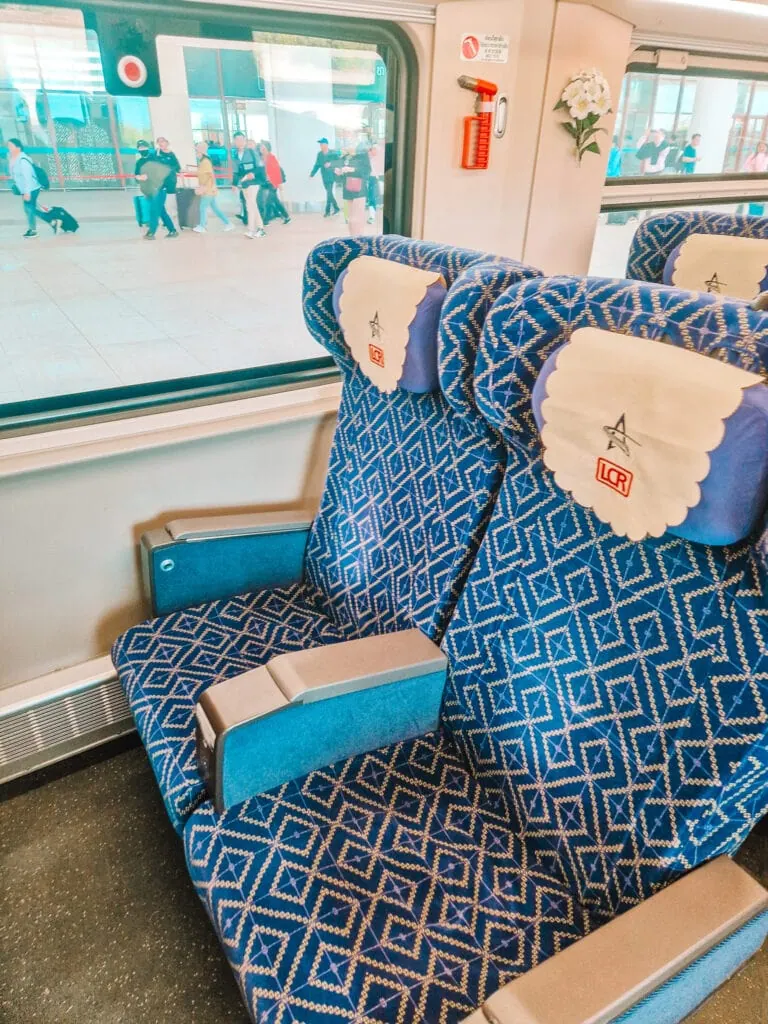
Vientiane’s new railway offers 3 travel classes. Seats are new, clean and comfortable. The carriages themselves are spacious, with overhead luggage racks that were big enough for my 40L Cotopaxi backpack (which is bigger than a carry on). There were also luggage storage areas at the end of carriages.
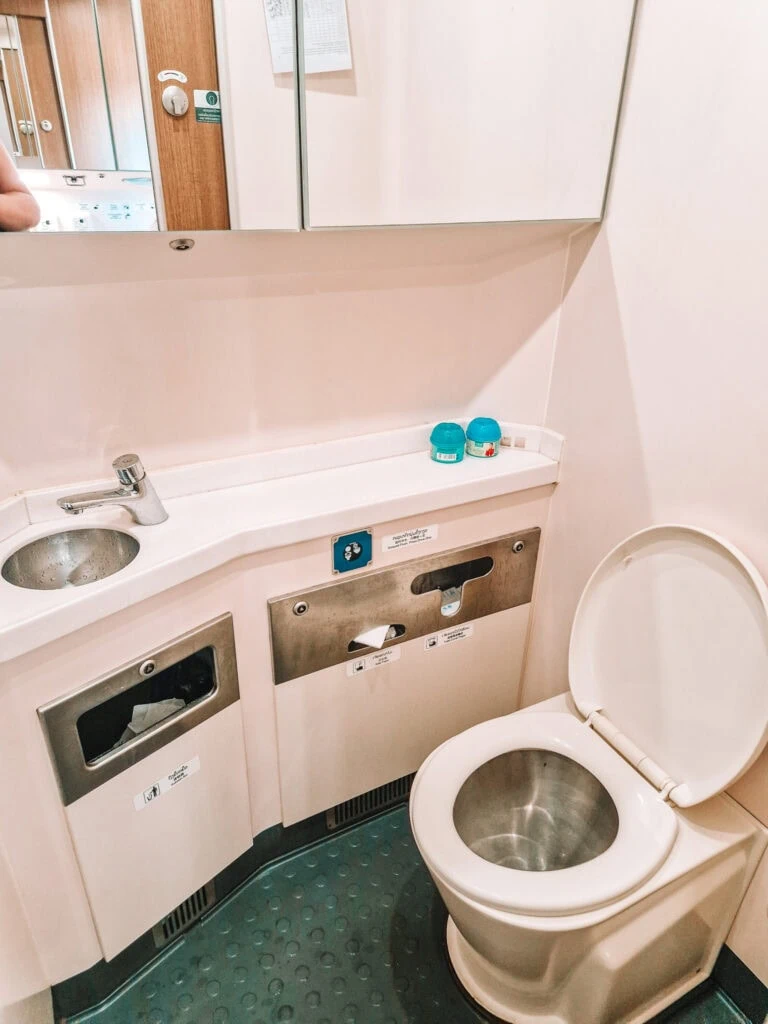
Toilet facilities were as good as/superior to what you’d find on trains in the UK – they were clean, with western-style toilets and sinks to wash your hands.
Business Class
- Most premium option on qualifying services (not on all trains).
- Fewer seats; more space and comfort than other classes.
First Class
- Mid-tier seating: wider seats and more legroom than second class.
- Seats generally arranged 2+2 across the aisle with decent space, power outlets and good views.
Second Class
- The most common and affordable option on high-speed trains.
- Seats in a 2+3 layout — narrower than first class but still comfortable for most journeys.
On both journeys, I used the First Class option – the price difference between First Class and Second Class is minimal. However, I peeped at Second Class and for the short journeys between Vientiane – Vang Vieng – Luang Prabang, they would be absolutely fine. The difference would only start to matter if you were extending your journey e.g. to Luang Namtha or even into China itself.
Verdict: Train vs bus
For me, taking the train is enormously preferable to a bus for the journeys where it’s available. While ticketing is stressful, it’s worth it for the payoff. Seats are comfortable, you have access to a bathroom when needed, you can keep an eye on your luggage, and they are extremely safe. You’re also significantly less likely to be seated next to a chicken or throw up.

What to Pack in Your Day Bag for Long Journeys
Long journeys in Laos are rarely just long — they’re hot, slow, and unpredictable, particularly if you’re travelling by bus or boat. Everything you actually need should be in your day bag, not buried in your main pack.
Essentials you’ll want within reach:
- Passport (plus visa paperwork if relevant)
- Cash in small notes (ATMs and card machines can’t be relied on mid-journey)
- Phone and charging cable
- Power bank (charged before you leave)
- Refillable water bottle
- Pen (for forms and border paperwork)
For comfort (non-negotiable on longer routes):
- Light layer or scarf (air-con is inconsistent but often freezing when it works and if you’re taking the slow boat, it gets slightly chilly as the sun goes down on the water)
- Sunglasses and sun protection (many stops involve standing around outside)
- Wet wipes or tissues (toilets are basic, if they exist at all)
- Hand sanitiser
Food & sanity savers:
- Snacks that won’t melt or crumble
- Electrolytes or rehydration salts
- Something offline to read or listen to
What not to rely on:
- Wi-Fi
- Card payments
- Clear instructions
If you take one thing from this: pack your day bag as if you won’t see your main luggage for hours. Because sometimes, you won’t.
Border Crossings: Paperwork, Patience & Heat
Some crossings are painless. Others are… character-building.
What a “Straightforward” Laos Border Actually Involves
When people describe a Laos border crossing as straightforward, what they usually mean is: you’ll get through eventually.
Expect the process to involve multiple small steps rather than one clear procedure. Even when everything goes smoothly, it’s rarely quick.
Admin-wise, nothing is especially complicated, but it is repetitive. You may be asked for:
- Your passport more than once
- A visa printout or photo (even if it’s already in the system)
- Small fees paid in cash
| What helps | What doesn’t help |
|---|---|
| Having everything easily accessible in your day bag | Tight onward connections |
| Carrying small notes rather than large bills | Expecting clear instructions |
| Eating and hydrating before you start the process |
The Siem Reap → Pakse Crossing: What to Expect
I travelled from Siem Reap in the north of Cambodia to the 4000 Islands in the south of Laos – often known as the Siem Reap-Pakse crossing as this is the nearest big town in Laos. This is a full day experience – roads on the Cambodian side are bad for a long part of the journey, and it involved a lot of waiting around due to the way the bus company schedule the crossing. Traditionally, the only way to do this crossing was via Asia Van Transfer, with different vehicles on either side of the border so that you had to carry your bags across the bridge between the countries.
However, the speed of the journey may now have changed due to the introduction of a direct service run by Cambodia’s biggest bus company, Vireak Buntham – but the quality of the roads and the admin burden at the Laos side of the border will remain the same.

The Siem Reap → Pakse border crossing was extremely hot, slow-moving and heavy on paperwork and waiting around.
- Evisas are not valid at this crossing point. You need to do the paperwork once you get to the border. It was so humid we were sweating onto the paperwork!
- You’ll need to queue at multiple windows for different steps in the process – we were the only group there, but having to go through several steps made it a long process.
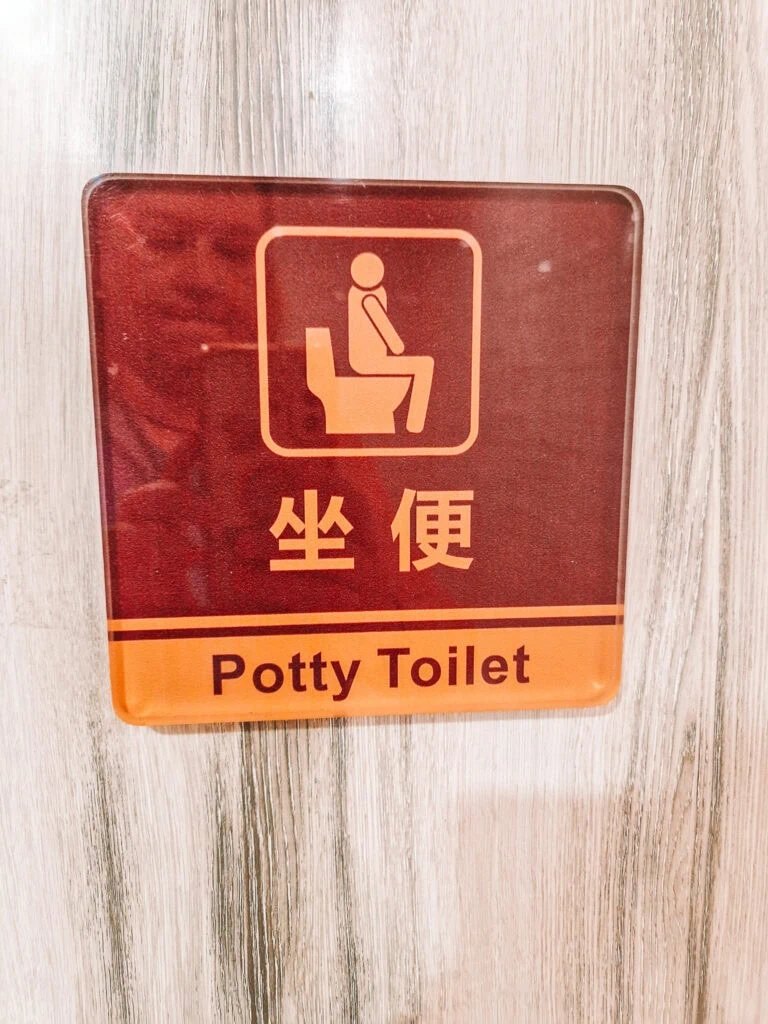
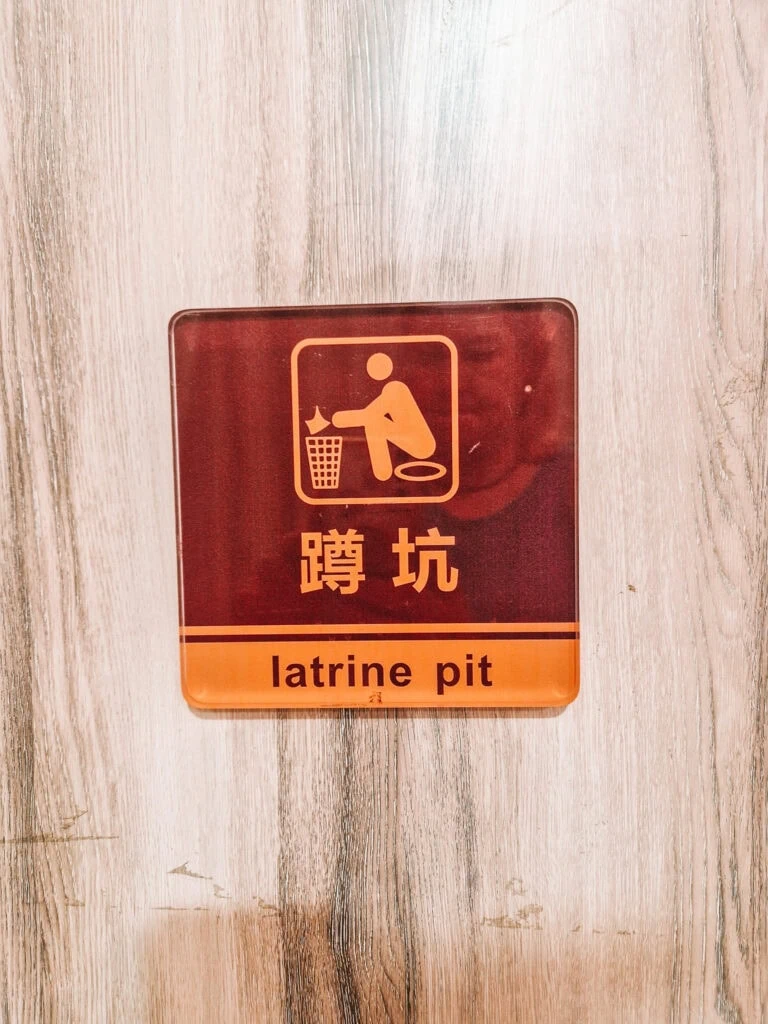
- There are bathrooms but they are again… character building.
- You can buy a Sim card at this border while you’re doing your paperwork – I did this and probably paid more than I would have in a town, but if you’re travelling to Don Det/the 4000 Islands rather than Pakse, you’ll struggle to buy a sim card on the islands.
The Houy Xay – Chiang Rai border
This is probably the most popular crossing for tourists to move into Laos – as the two tourist cities of Chiang Rai and Chiang Mai in north Thailand link up with Huay Xay, the end point for the famous Mekong Slow Boat to Luang Prabang.
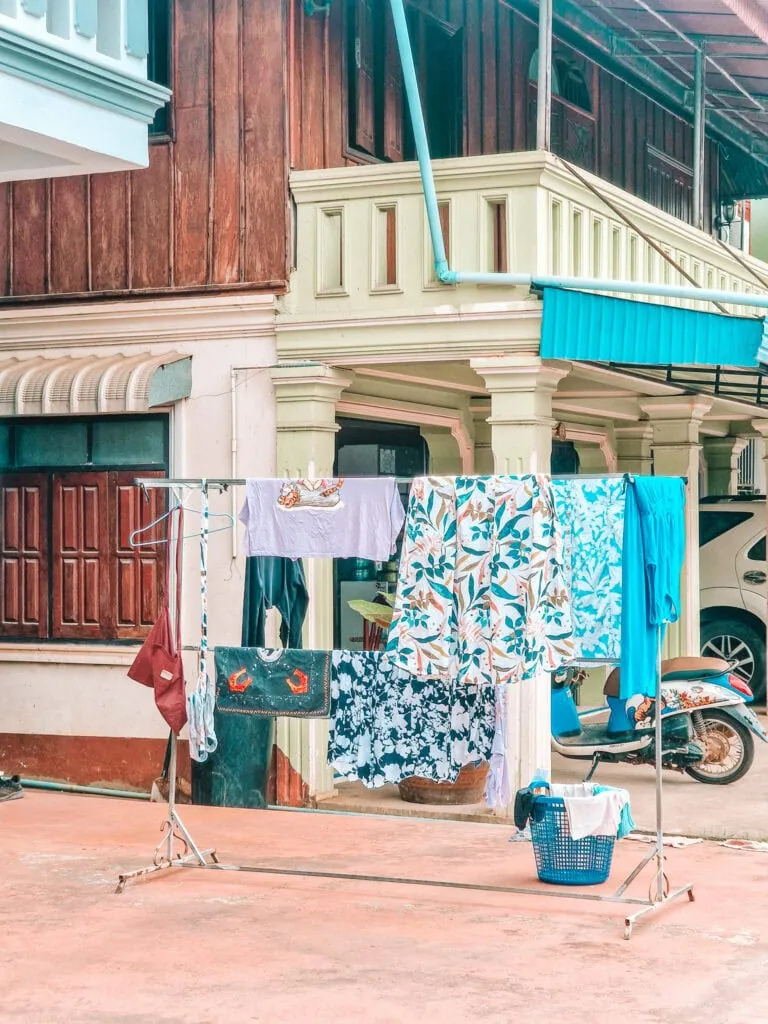
I travelled across this border from Laos into Thailand. Compared to the border with Cambodia, it was an absolute breeze. I booked a through ticket to Chiang Rai, which included:
- Songthaew transport to the border from Huay Xay – only about 10 minutes
- The driver took a picture of us, which he sent to his counterpart across the border who showed us on arrival – this ensured that we weren’t getting into a car with a random stranger
- We exited Laos and waited for a short bus to take us to the Thai border station
- Thai immigration was extremely speedy – although there are rumours that they are cracking down on people doing border runs, so this may become a bit more demanding in future.
Visas on Arrival vs eVisas — What’s Easiest
For most travellers, both visas on arrival and eVisas work in Laos depending on whether you arrive via land or air— but neither is completely friction-free.
Visa on arrival is still widely used at land borders and airports. It’s functional rather than efficient:
- Paper forms
- Cash payment (usually USD)
- Waiting around while visas are processed manually
It works, but it adds time — especially at busy or understaffed crossings.
eVisas remove some of the admin at the border, but not all of it.
- NOT usable at some land borders – check before you travel
- You apply online in advance
- You still queue on arrival
- You may still be asked for printed confirmation
In theory, eVisas are quicker. In practice, the time saved can be modest — and only if the system is recognised smoothly at your specific crossing.
The realistic takeaway:
- If you already have an eVisa, use it — it won’t hurt
- If you don’t, visa on arrival is usually fine
- Neither option guarantees a fast crossing
Laos borders are slow because of process, not because travellers are doing something wrong.
What to Have Ready Before You Queue
Being organised won’t make a Laos border fast — but it will make it less stressful.
Have the following in your day bag, not buried in your main pack:
- Passport (with at least six months’ validity)
- Printed eVisa confirmation if applicable
- Passport photos (even if they’re “not required”)
- Cash in small notes (USD preferred; local currency sometimes accepted)
- Pen (don’t rely on there being one)
Other useful prep:
- Eat and hydrate before you reach the border
- Download or screenshot key documents — don’t rely on signal
- Wear something breathable and sun-appropriate
Money in Laos: Cash Is Not Optional
Managing money in Laos takes more planning than elsewhere in Southeast Asia. ATMs exist, cards technically work — but neither is reliable enough to wing it. Cash isn’t a backup here; it’s the default. This includes paying for your accommodation in cash – factor this into your ATM planning.
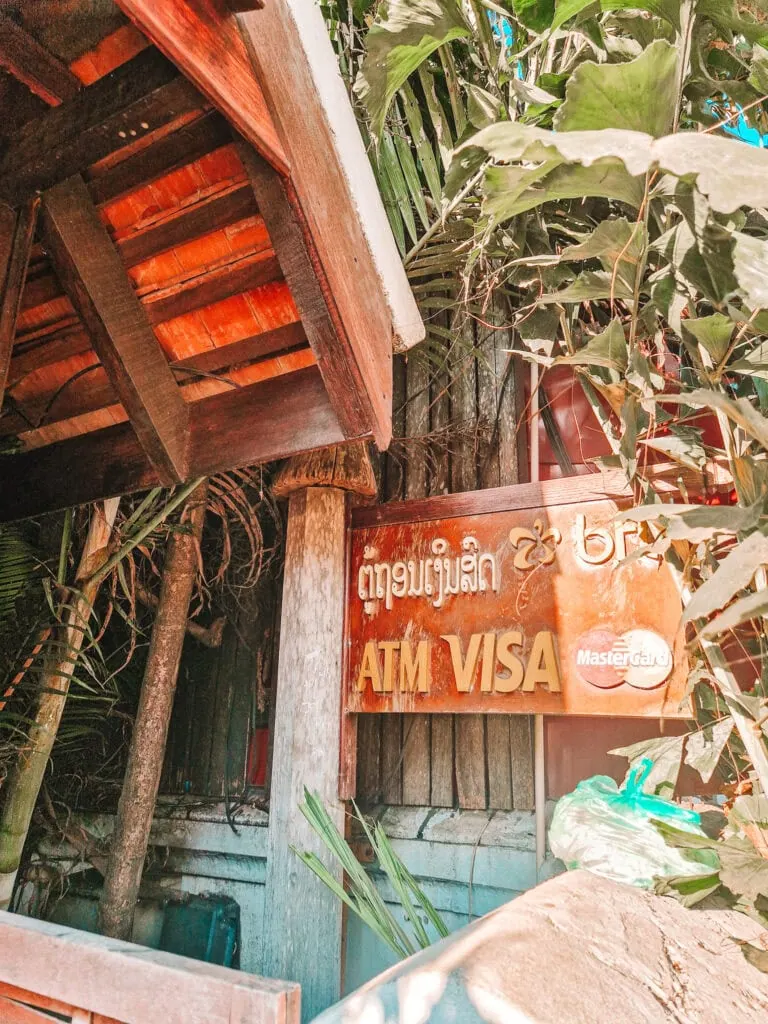
ATMs: Availability, Reliability & Common Failures
ATMs are present in cities and larger towns, but they’re unpredictable. Common issues include:
- Machines being completely out of service
- No cash available
- Cards rejected for no obvious reason
- Transactions failing after funds appear to be approved
Even when an ATM works one day, there’s no guarantee it will the next. Outside major hubs, you should assume the next ATM may not exist — or may not function.
Key mindset shift:
Withdraw cash when you can, not when you need to. This is particularly important if you’re going to the 4000 Islands – there are no ATMs on the islands.
Visa vs Mastercard — What Actually Works
Card acceptance in Laos is limited, and Visa is overwhelmingly favoured.
- Visa: Most likely to work (still not guaranteed)
- Mastercard: Rarely accepted and often rejected at ATMs
- Amex: Effectively useless
Even in places that advertise card payments, machines may be offline or staff may quietly ask for cash instead. Guesthouses, transport, tours, cafés and local restaurants are overwhelmingly cash-only.
If you travel with a Mastercard as your main card, you’ll feel the friction quickly – speaking from experience.
How Much Cash to Carry Between Stops
There’s no single “right” amount, but the safest approach is to carry enough cash to cover your next destination comfortably.
As a rough guide:
- Enough for accommodation, food, local transport and activities
- Extra buffer for delays, route changes or ATMs being down
- Smaller notes where possible — change isn’t always easy to get
This matters most when:
- Travelling between towns
- Heading somewhere rural
- Arriving late in the day
Running out of cash in Laos is inconvenient at best and trip-disrupting at worst.
What to Do When the ATM Doesn’t Work (Because It Won’t)
At some point, an ATM will fail you. When it does:
- Try another bank, not just another machine
- Ask your accommodation which ATMs currently work or talk to other travellers to find one they’ve used
- Use Visa at larger hotels or tour offices if they’re available – mainly in Vientiane
What doesn’t help:
- Assuming the next town will be better
- Relying on card payments
- Waiting until you’re down to your last note
If you’re really stuck, some tour agencies will offer a withdrawal service for a fairly hefty fee. This is entirely safe – you input your pin into a standard card machine and they give you cash so they never get your card or bank details – but you’ll like be scammed on both the overall fee and the conversion rate. It’s there as an emergency rather than a first choice.
Practical rule:
If you’re thinking, “I’ll just withdraw later” — withdraw now.
SIM Cards, eSIMs & Staying Connected in Laos
Connectivity in Laos is better than many people expect – data coverage works well in major cities and most places except on the slow boat down the Mekong. But how you get online matters. This is one area where default travel habits (buying an eSIM in advance and forgetting about it) don’t work particularly well.
Why eSIMs Are a Poor Deal in Laos
Most international eSIM plans for Laos are:
- Expensive for what you get
- Data-limited and often time-limited
- Poor value compared to local options
Coverage itself isn’t the main issue — price is. You’ll often pay significantly more for far less data than you would elsewhere in Southeast Asia.
eSIMs do work, but they’re best treated as a short-term stopgap, not a long-term solution.
The Best Strategy: Arrival Data First, Physical SIM Second
The most reliable approach is a two-step one:
- Use a short-term data option on arrival It’s unlikely that you’ll have Laos on your data roaming package, so I advise an eSim – but check just in case. Getting a short term eSim will allow you to:
- Order transport
- Message accommodation
- Navigate your first day
- Buy a local physical SIM once settled Local SIMs are:
- Far cheaper
- More flexible
- Better value for longer stays
This avoids overpaying upfront while still keeping you connected when you first land.
Exception: if you are entering Laos and heading straight to the 4000 Islands/Don Det, you might not be able to buy a physical sim on the islands. There are only a couple of small shops on Don Det. If this is your plan, you’ll need to rely on eSims until you get to Pakse – or get a physical sim crossing the border like I did.

Where to Buy a Physical SIM
Physical SIMs are widely available in:
- Cities and larger towns
- Phone shops
- Some guesthouses and travel agencies
- Border crossings – but this is not recommended unless its your only option
Staff will usually:
- Register the SIM for you
- Set it up on the spot
- Check it’s working before you leave
This is one of the smoother admin tasks in Laos — once you get past day one.
Coverage Expectations (Be Realistic)
Coverage is generally:
- Good in cities and larger towns
- Decent along major routes
- Patchy or non-existent in rural areas
Don Det, remote waterfalls, mountain roads and border areas often have limited or no signal. Wi-Fi can also be unreliable outside major hubs.
Plan for gaps. Download maps, tickets and documents in advance.
Practical Takeaway
- Don’t overspend on a long-term eSIM
- Expect to switch to a physical SIM
- Assume there will be moments with no signal
- Treat offline time as normal, not a problem
Laos isn’t a place where you’re constantly online — and once you stop fighting that, travel becomes much easier.
Common Mistakes That Make Laos Harder Than It Needs to Be
Laos is challenging, but most of the stress travellers experience comes from expectations imported from elsewhere. These are the mistakes I see (and have made) that turn a manageable trip into a frustrating one.
Overplanning Tight Schedules
Trying to run Laos on a tight itinerary is the fastest way to hate it.
Distances look short on a map, but travel days regularly take far longer than expected. Delays, road conditions, late departures and unexpected stops are normal — not exceptions.
When you plan:
- Same-day connections
- Back-to-back long journeys
- “Just one night” stops
you leave no room for reality.
Better approach:
Build in buffer days. Stay longer in fewer places. Assume at least one journey will take most of a day — because it probably will.
Assuming Transport Works Like elsewhere in Southeast Asia
This is the biggest mental trap.
Thailand is one of the easiest countries in the world to travel independently, and in Vietnam almost everything is bookable online. Laos is different. Transport in Laos is slower, less frequent, less transparent, and more physically demanding.
That doesn’t mean it’s broken — it means it works to a different rhythm.
Problems arise when travellers:
- Expect clear timetables
- Assume hourly departures
- Plan based on “Google Maps logic”
If you approach Laos expecting Thailand-level efficiency, you’ll feel constantly behind. If you approach it on its own terms, things make more sense.
Relying on Cards or eSIMs
Laos is not a tap-and-go country.
ATMs don’t always work. Card machines are often offline. eSIMs are expensive and poor value. None of this is dramatic — but it becomes stressful if you assume digital solutions will save you.
Common missteps:
- Carrying minimal cash
- Assuming Mastercard will work
Reality:
Cash solves most problems. Physical SIMs are better value.
Underestimating Journey Fatigue
Laos travel isn’t just slow — it’s draining.
Heat, noise, waiting around, early starts, basic facilities and long days compound quickly. Even experienced travellers underestimate how tiring consecutive travel days can be.
This shows up as:
- Short tempers
- Decision fatigue
- Feeling “done” with a place too quickly
Often, the fix isn’t changing destinations — it’s stopping for longer.
If a place feels flat or frustrating, ask yourself whether you need a rest day before you decide it’s “not worth it”.
Laos Travel Basics: FAQs
Is Laos difficult to travel?
Laos isn’t dangerous or chaotic — but it is operationally challenging. Transport is slow, planning requires flexibility, and many things that are easy elsewhere in Southeast Asia take more effort here. If you’re patient and prepared, it’s very manageable.
Is Laos worth visiting despite the challenges?
Absolutely. Laos is one of the most beautiful and emotionally rewarding countries in the region. The slower pace, friendliness, landscapes and cultural depth more than make up for the logistical friction — as long as you don’t try to rush it.
How long should I spend in Laos?
Unless you’re planning just a city break in Luang Prabang (a popular option now from other Southeast Asian countries), you’ll need a minumum of two weeks. But three to four weeks is far more realistic if you want to travel without exhaustion. Travel days are long, and Laos rewards staying put longer rather than hopping quickly between places.
Is the train better than buses in Laos?
Yes — where the train exists. The modern railway between Vientiane, Vang Vieng and Luang Prabang is faster, more comfortable and far safer-feeling than long-distance buses. Ticketing is the main challenge, not the journey itself.
Are overnight buses in Laos safe?
They’re common and generally safe, but not especially comfortable. You should expect:
Shared sleeping berths (gender-segregated)
Tight space and variable road conditions Many travellers choose to avoid them where possible and use trains or flights instead.
Is it safe to fly domestically in Laos?
Yes. The national carrier, Lao Airlines, meets recognised international safety standards and is widely used by locals and travellers alike. Domestic flights are short and can save huge amounts of time.
How much cash should I carry in Laos?
More than you think. ATMs are unreliable, card payments are limited, and many places — including accommodation — are cash-only. Always carry enough cash to comfortably cover your next destination, not just the day ahead.
Do eSIMs work well in Laos?
They work, but they’re poor value. Most travellers are better off using a short-term eSIM or roaming on arrival, then switching to a local physical SIM once settled. Coverage is good in towns and patchy in rural areas.
Is Laos expensive?
Laos is not cheap for solo travellers. Transport, private transfers and accommodation can feel expensive relative to comfort level, especially compared to Thailand or Vietnam. Travelling slowly and staying longer in each place helps keep costs down.
Is Laos suitable for first-time Southeast Asia travellers?
It can be — but only if you’re flexible and well-prepared. If this is your first trip to the region and you want ease and efficiency, Laos may feel overwhelming. If you’re curious, patient, and open to a slower rhythm, it can be unforgettable.
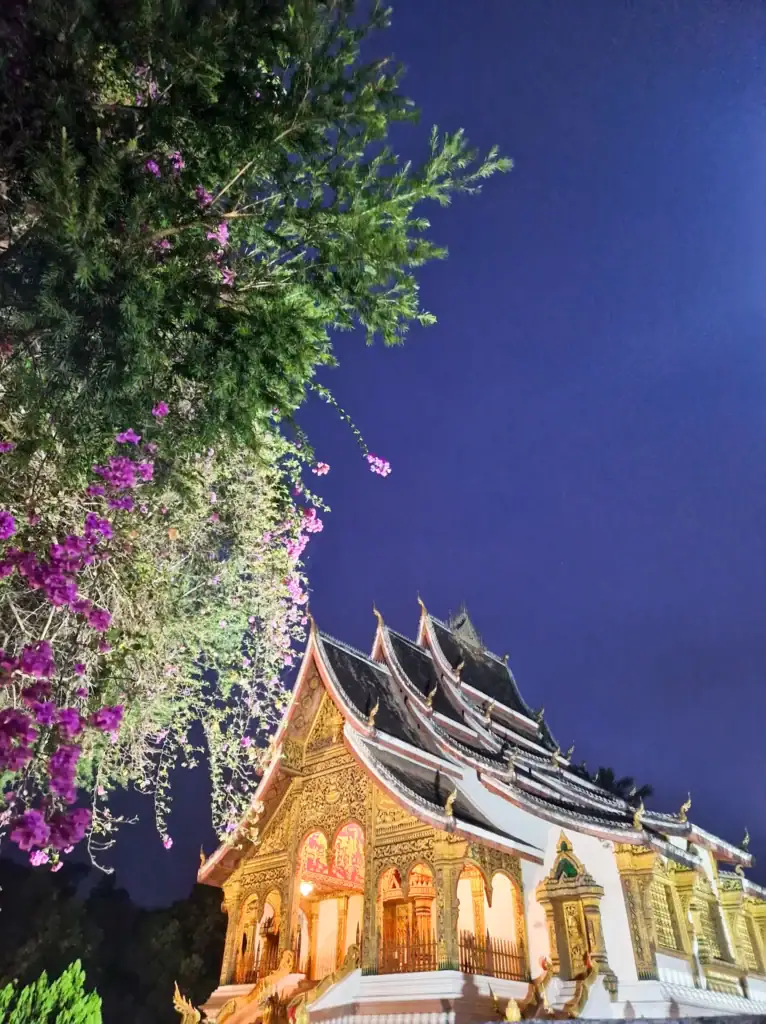
Laos is one of the most rewarding places I’ve travelled in Southeast Asia — not because it’s easy, but because it asks you to slow down, adapt, and meet it on its own terms.
If you arrive prepared, flexible, and willing to let go of efficiency, Laos gives you space: to think, to rest, to notice details that get lost elsewhere. I loved my time here — enough that I already know I’ll be back — but next time, I’ll arrive even better prepared.
If you’re planning your own trip, these guides will help you build a route that actually works:
- Vientiane – for history, COPE, cafés and a gentle reset before moving on
- Luang Prabang – temples, waterfalls, markets and the cultural heart of Laos
- Don Det & the 4,000 Islands – cycling, river swims and doing very little very well
- My complete Laos itinerary – coming soon, with realistic pacing and transport logic
For booking transport in Laos, I generally recommend 12GoAsia as a starting point — especially for trains and longer routes — with the understanding that availability can be limited and flexibility helps.
I’ll also be linking to a recommended eSIM option here for short-term arrival data (useful for day one), before switching to a local physical SIM once you’re settled.
Laos isn’t a place to rush — and it’s not one to underestimate.
But if you give it time, patience, and a bit of planning, it’s quietly unforgettable.