 Em
EmJust so you know: This post contains affiliate links. As an Amazon Associate, I earn from qualifying purchases. I may also earn a small commission if you book a tour, hotel, or buy something else through these links. It helps me keep this blog running and full of travel tips. Thanks for your support!
I’ve spent about four months in Vietnam over the past year — and if I’m honest, I probably spent more than half that time caffeinated. From egg coffee in Hanoi after a coffee-making workshop, to a steaming Phin coffee on the Reunification Express, to breakfast in the clouds in Sapa, Vietnamese coffee has been the unsung hero of my travels here. I’ve slurped down cups on a locals-only coffee boat in Can Tho, watched sunsets over Mount Fansipan with a mug in hand, and even made a pilgrimage to the little café in Hue that invented salt coffee — a drink that didn’t even exist when I first visited Vietnam back in 2010.
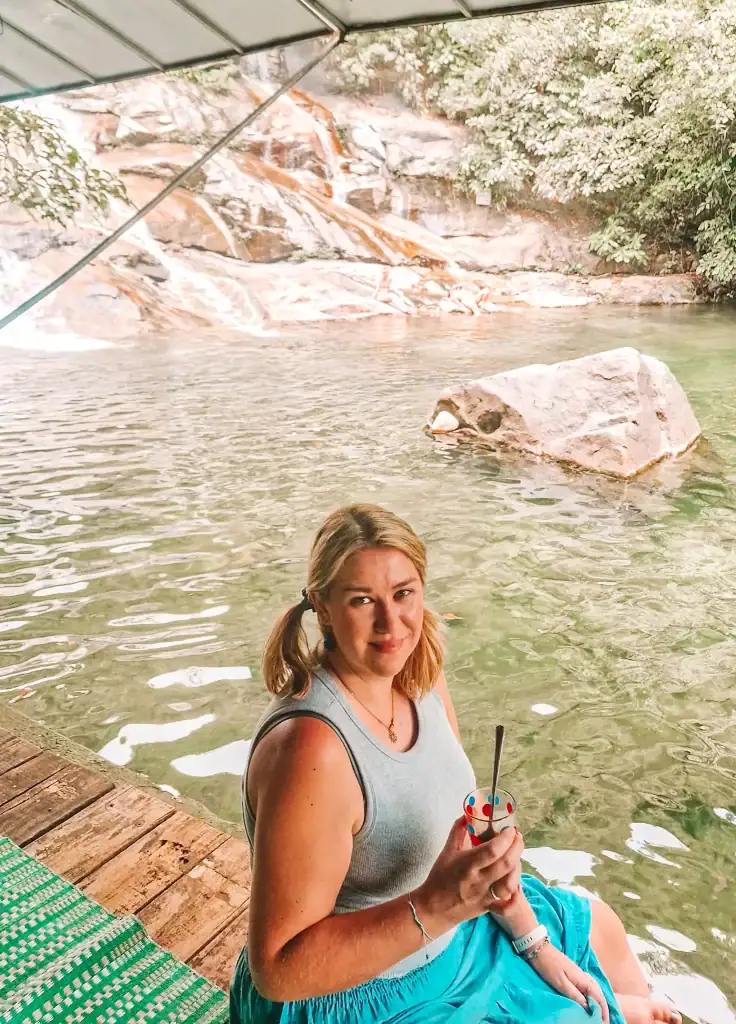
Whether it’s rich and black, laced with sweetened condensed milk, or topped with salty whipped cream (trust me, it works), Vietnamese coffee is more than just a drink — it’s a ritual. A pause. A cultural deep dive. And one of the best ways to experience the country.
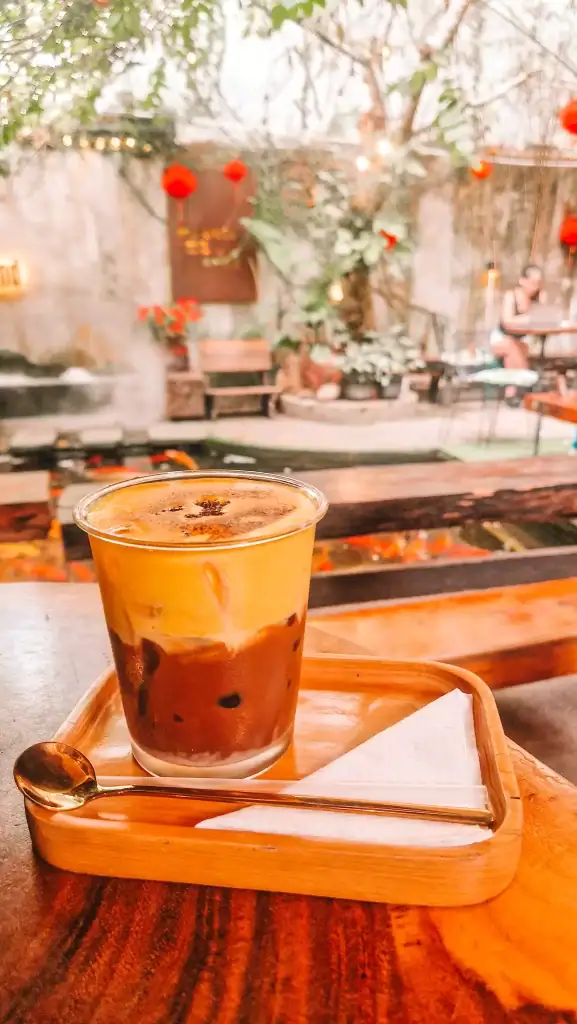
In this guide, I’m sharing everything you need to know about Vietnamese coffee: what to order, how to order it, and where to find the very best brews. Let’s caffeinate your next adventure.
Want help planning Vietnam without overwhelm?
Vietnam, Unlocked is a culture-rich travel guide with itineraries, transport guidance, and planning tools — built for independent travellers who want depth, not rush.
Or, if you’re just getting started, you can sign up for my free Culture-First Traveller’s Guide to Vietnam, Laos & Cambodia — focused on history, everyday culture, and travelling thoughtfully.
And if you’d prefer someone to build a personalised itinerary just for you, I also offer custom trip planning.
👉 Request a custom Vietnam itinerary
How to Order Coffee in Vietnam
Vietnamese coffee is world-famous for its bold Robusta beans, slow Phin brewing method, and unique flavors like egg coffee and salt coffee. Whether you’re sipping cà phê sữa đá in Saigon or enjoying a coconut coffee in Hoi An’s rice fields, this guide shares the best Vietnamese coffee drinks to try, how to order them, and where to find them across Vietnam.
Coffee is one of the country’s biggest exports, and Vietnamese coffee culture is a huge part of life across the country. Coffee is usually grown on higher ground, for example in the area around Da Lat in the south.
The majority of Vietnamese coffee is Robusta coffee beans (around 97% of production), which produces a stronger, more bitter coffee than the Arabica we more commonly drink in the West. Robusta also tends to be higher in caffeine, which is why you might find your hands shaking!
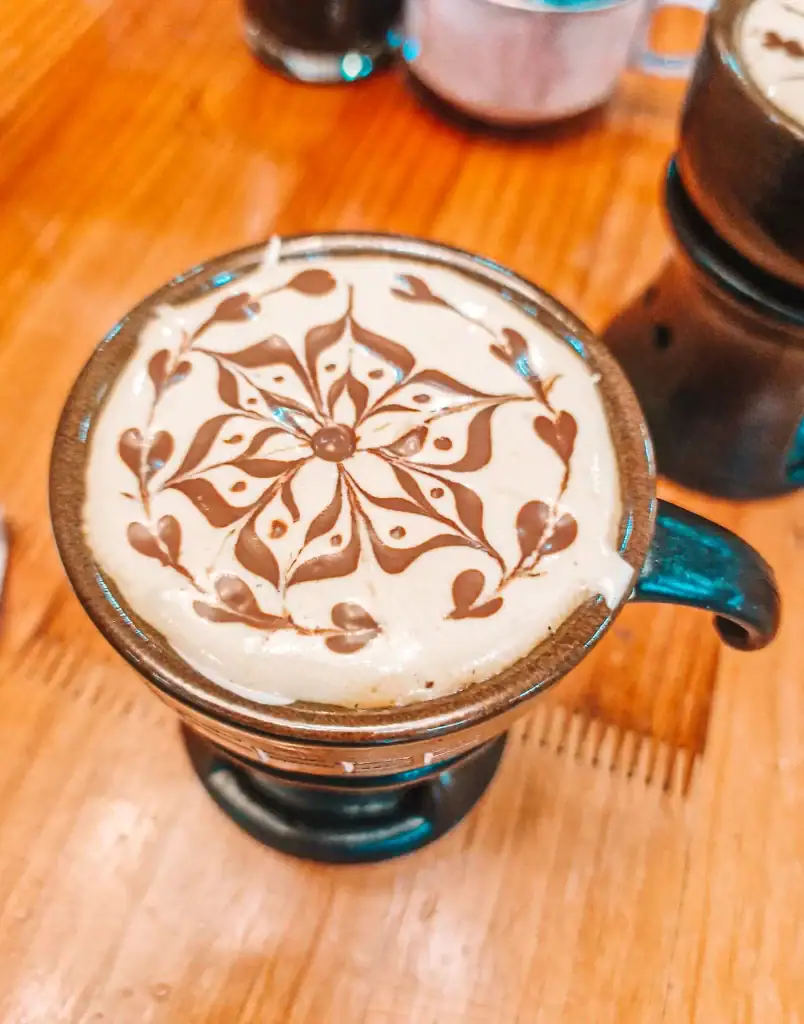
As a result, most coffee is served with sugar by default – if you’re not a fan of sweet coffee, remember to ask for it to be sugar free. You might get a slightly disbelieving look, but they’ll make it for you – which is more than I can say for Iced Americanos in Albania.
Most coffee shops will speak enough English for you to order comfortably, and if not, Google Translate is your friend.
Must-Try Vietnamese Coffee Drinks
Phin Coffee
This is the typical Vietnamese black coffee. Made using an over-the-cup Vietnamese drip coffee maker known as a Phin, this produces a very slow, very strong black coffee. As most Vietnamese coffee is made using Robusta beans, it’s often bitter, so follow tradition and add sugar! This is the kind of coffee you’ll get if you’re a bit off the beaten track in Vietnam.
Where to try it:
🏞️ The waterfall in the middle of the Hai Van Pass – but only if your Easyrider orders it for you from the locals.
🚃 From the trolley on the Vietnam sleeper trains – the same trolley visits both the Vietnam Railway cars and the more touristy private carriages, so you’re still getting the real deal even if you opt for comfort.
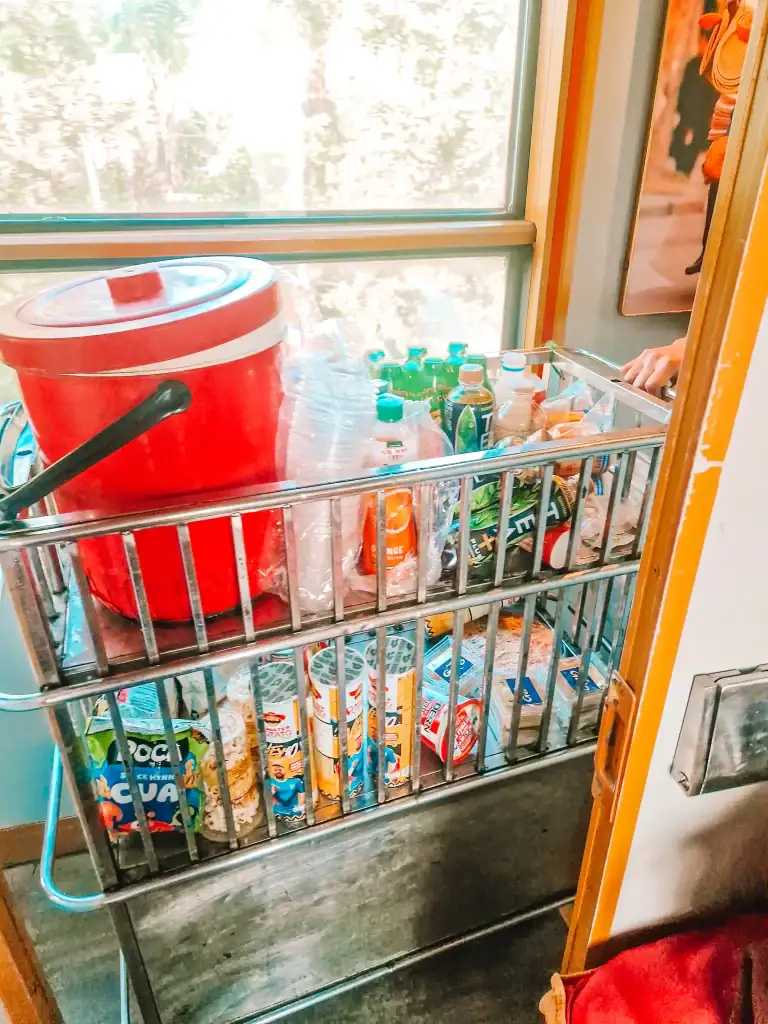
🛶 From a local coffee boat at the floating markets in Can Tho – but only if you choose the right tour. Most take you to the touristy floating restaurants, but this amazing small group tour only took us to local places.
Egg Coffee
Created in Hanoi, egg coffee is a delicious treat. Again, it’s Phin coffee, this time topped with a whisked mixture of egg, condensed milk, cinnamon, and other ingredients.
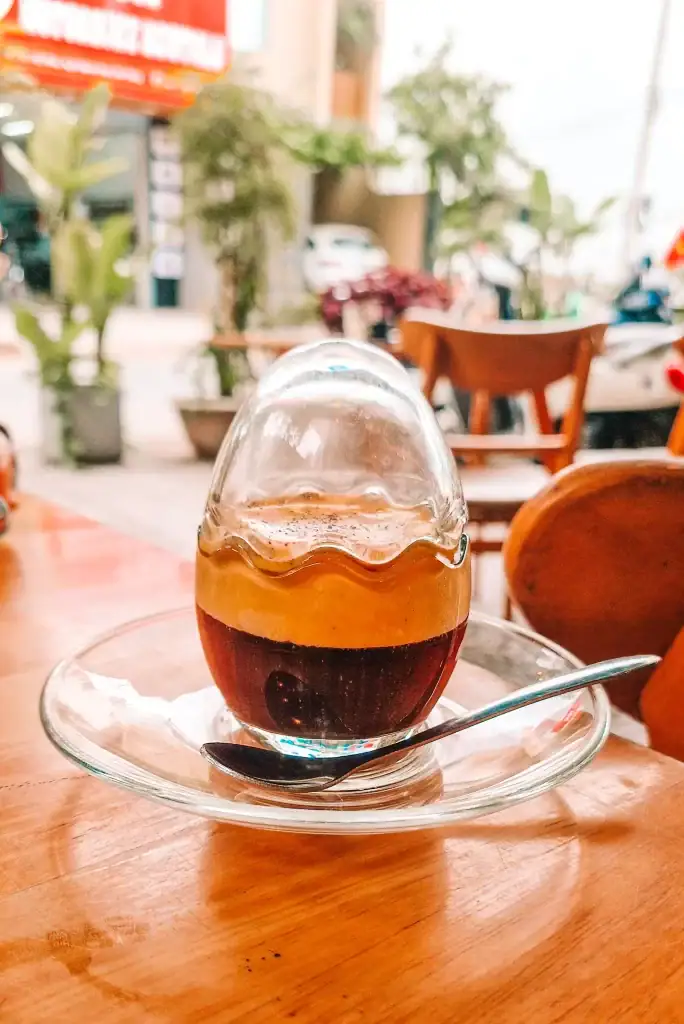
Dating from 1946, egg coffee was invented during the First Indochina War by a bartender desperate to find a way to make a creamy coffee without milk, which was in short supply.
Where to try it:
🥚The famous Giang Coffee shop in Hanoi where the inventor’s son still serves up his father’s invention today.
☕ At one of my recommended cafes in Hanoi or even at an amazing coffee making workshop in the capital
Salt Coffee or Ca Phe Muoi
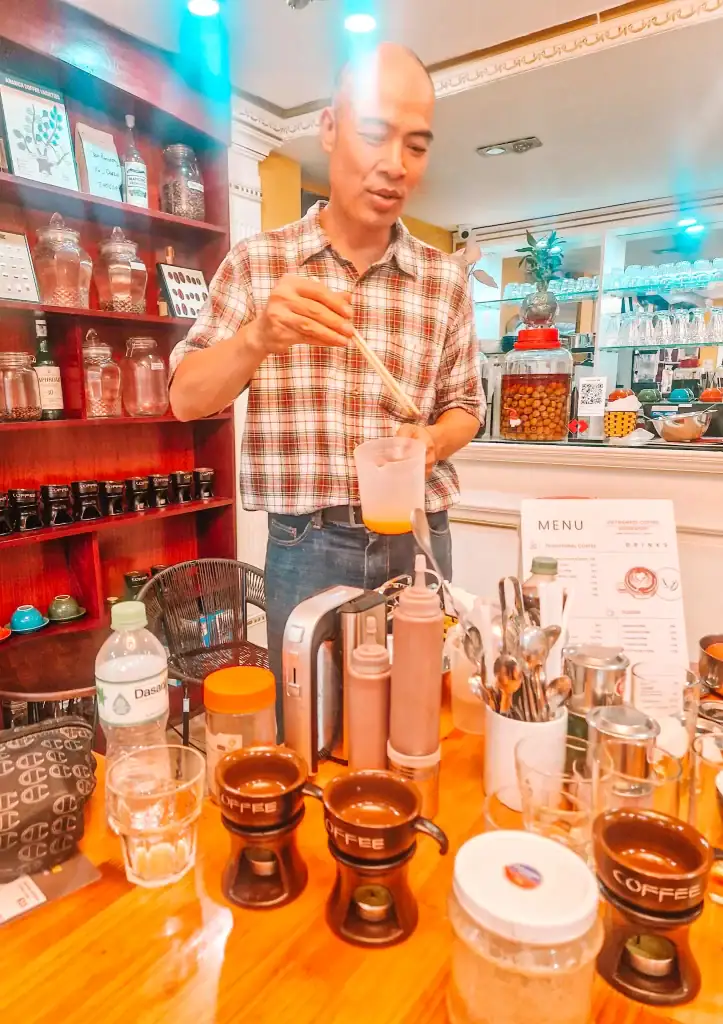
Created in Hue in 2012, this delicious coffee is famous in central Vietnam. It’s a typical Vietnamese Phin Coffee with delicious slightly salted whipped heavy cream on top. It’s probably the best thing I’ve ever had and I drank it most days.
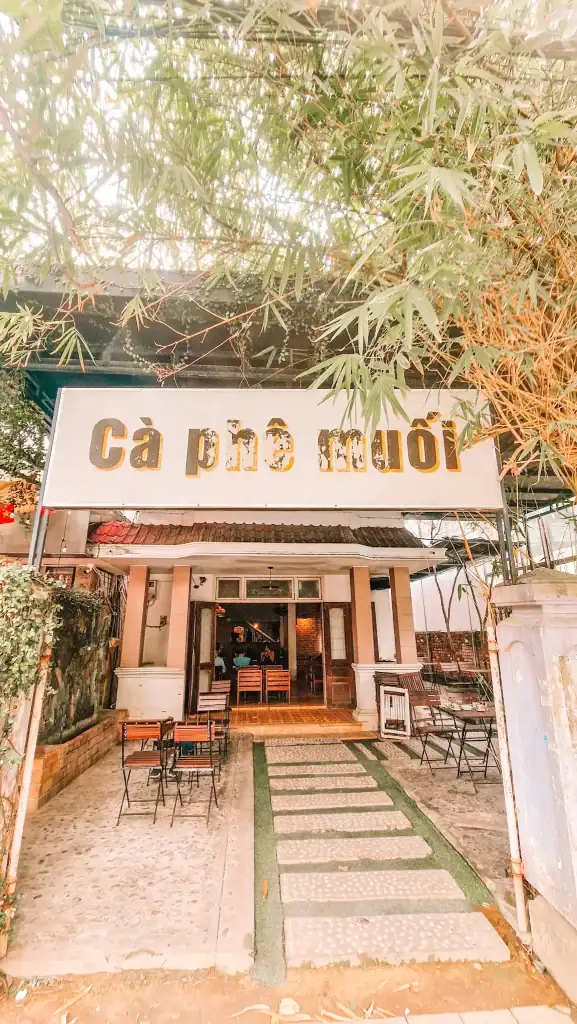

Where to try it:
⛩️ At the cafe that invented it, featured in my suggested 2 day itinerary in Hue
🏡 From one of my favourite cafes in Da Nang, where I spent 2 months living in 2025.
You can also learn how to make Salt Coffee at this highly rated coffee workshop in Da Nang:
Ca Phe Sua Da
This is a traditional Phin Coffee with added condensed milk, a popular ingredient in Vietnamese coffee. This makes a milky, creamy sweet texture that’s usually served over ice.
Where to try it:
🏢 At the Cafe Apartments in Ho Chi Minh City.

Coconut coffee
These are the ultimate Instagram-friendly coffees. Made using coconut cream and condensed milk, these are a delicious sweet treat that’s almost like ice cream. They’re usually topped with dried coconut for added decadence.

Where to try it:
🚲 At one of the gorgeous cafes in Hoi An’s ricefields
🏖️ As a way to cool down while relaxing at one of the cafes near An Bang, the nearest beach to Hoi An
⛰️ While sitting above the clouds at one of the gorgeous cafes opposite Mount Fansipan in lively Sapa
Weasel Coffee
This expensive, famous coffee is available to buy in many shops in Vietnam, but I never saw it in a cafe. It’s made from beans that are eaten, and then pooped out, by weasels, also known as civets. I tried this coffee in cafes in Yogyakarta and Bali, but have since found out that there are ethical problems with the way the civets are treated.
While it’s widely available in Vietnam, I don’t recommend it — even “wild” weasel coffee is often farmed under poor conditions. Better to admire the packaging than to support the industry.
Where to Drink Vietnamese Coffee: Best Café Regions
Honestly, all of Vietnam is great to drink coffee – it’s such an integral part of life. But if you’re looking for my absolute favourite spots, I would suggest:
- Da Nang – at times it feels like there are more cafes than people in Da Nang – and they’re almost all amazing. Some cafes are perfect for relaxing with a book (check out my best fiction about Vietnam if you’re looking for something to read), while others have really embraced Da Nang’s vibrant digital nomad scene and are great for working.
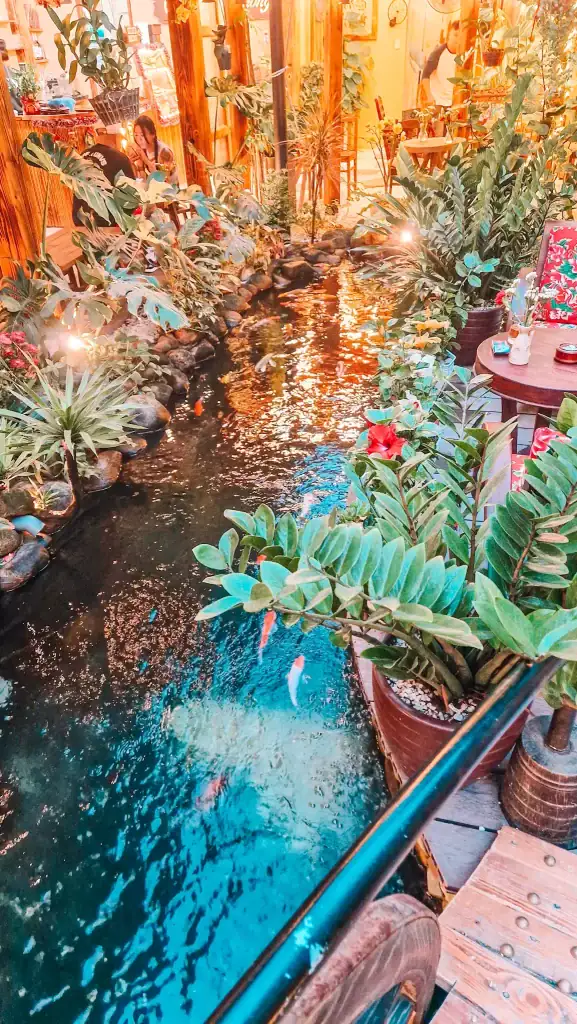
- Hoi An – probably my favourite place in the world, and one reason for that is the abundance of gorgeous cafes. Get out of the city into the scenic, peaceful ricefields to try a coffee with a view, or relax to the sound of crashing waves at a cafe at the beach in nearby An Bang
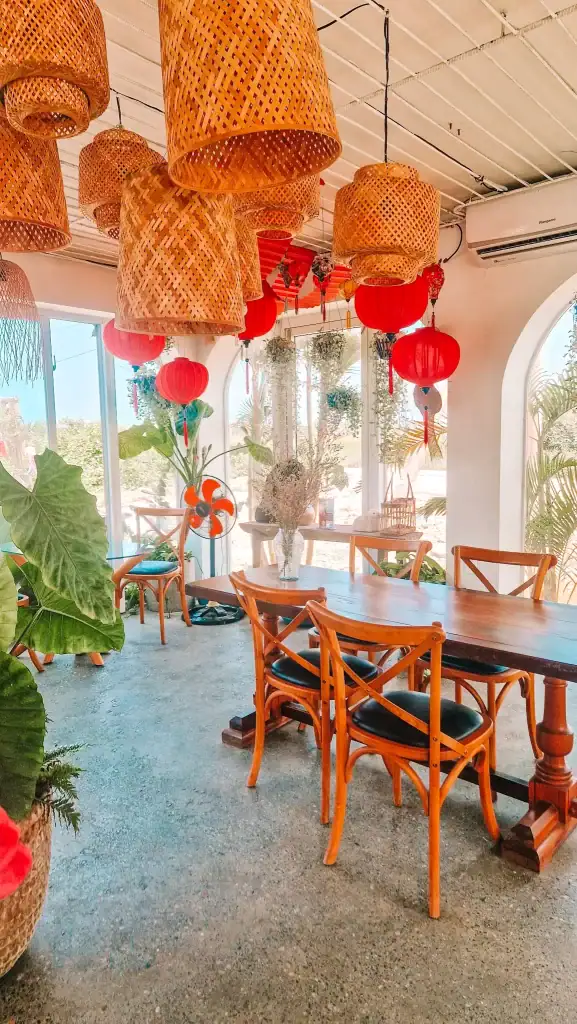
- Sapa – there’s nothing like sipping a coffee when you’re above the clouds. Sapa has become famous in recent years for cafes with incredible view – find out my favourites in my guide to Sapa.
- Hanoi – no guide to Vietnamese coffee would be complete without talking about Hanoi’s incredible cafe scene. From Harry Potter-themed cafes to the cafe where Egg Coffee was invented, the capital thrives on coffee.
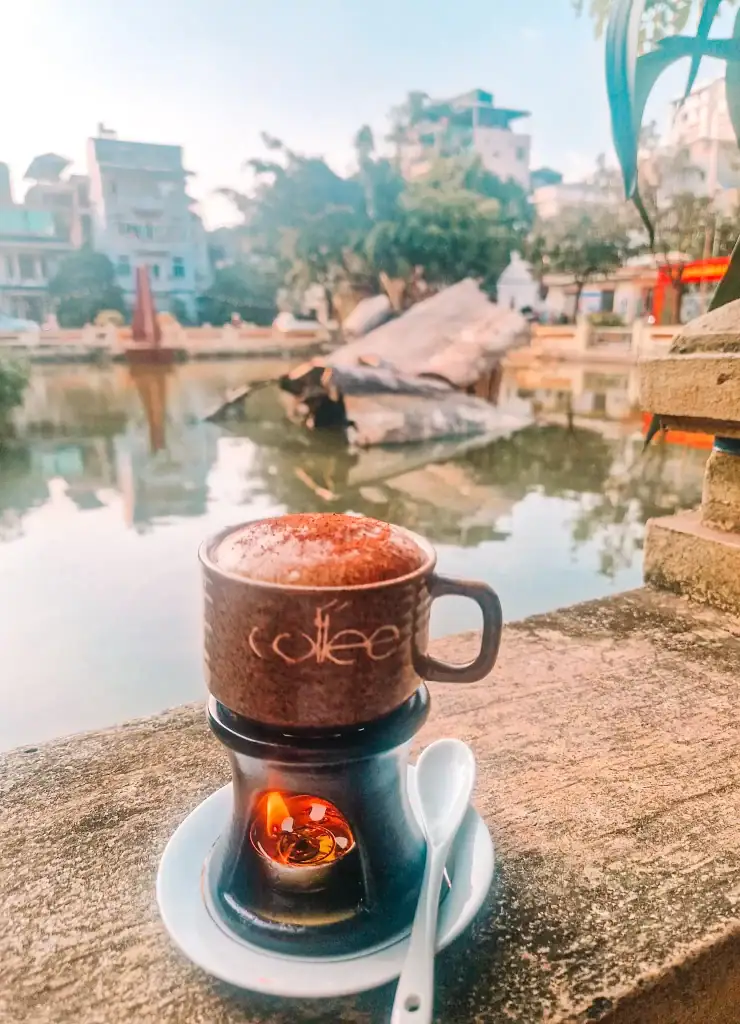
Want to find great coffee and cafes outside of Vietnam? Chiang Mai in Thailand was my other favourite cafe city – it has beautiful locations with locally grown coffee and an amazing digital nomad culture, with cafes perfect for working.
🐢 A Look at the Vietnamese Coffee Experience
One of the things I love most about Vietnam is that coffee isn’t rushed — it’s slow. Whether you’re perched on a plastic stool on a busy street corner or lounging in a rooftop café, the ritual is the same: you order your coffee, and then you wait.

That’s because most Vietnamese coffee is brewed with a Phin filter — a small metal contraption that slowly drips strong, dark coffee into your cup below. It can take a few minutes, but that’s the point. Like the Mediterranean cafe culture I found in Tirana, Albania, you can sit and people watch, or read, or work – without any pressure.
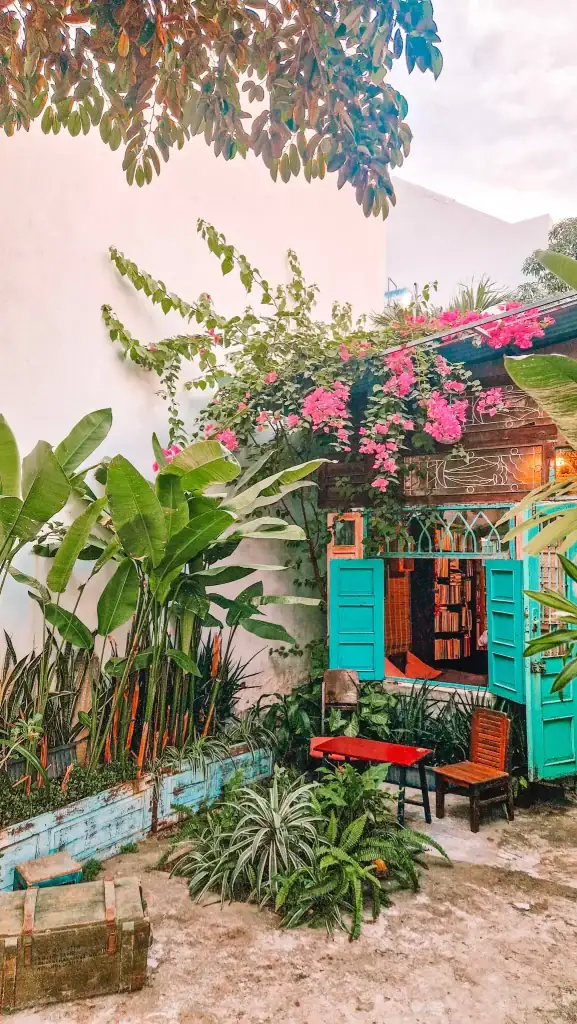
In big cities like Hanoi or Saigon, you’ll see locals in office clothes and tourists with backpacks all doing the same thing: watching their coffee drip and soaking in the moment. In quieter spots like Hue or Da Nang, cafés become tiny retreats — gardens, koi ponds, even the occasional corgi (hello, Alo Café) — where you can slow down and be.

Cafés are also a big part of digital nomad life in Vietnam – I’ve never stayed anywhere where cafes were so clearly geared towards digital nomads as they were in Da Nang. The music was soft, the vibe was chill, and every table had a laptop – I never felt out of place.
Whether you’re journaling, reading, working, or just existing with a good cup of salt coffee — café culture in Vietnam is a window into the soul of the country. And honestly? It’s one of the reasons I keep coming back.
🛍️ Want to Bring the Coffee Home With You?
If you’re already dreaming of salt coffee on your sofa or recreating that coconut coffee you had by the beach — you’re not alone. Vietnamese coffee is surprisingly easy to make at home once you’ve got the right setup.
I’m working on a full guide to the Vietnamese coffee kit I use at home, but in the meantime, here are a few of my must-haves:
- Phin filter – The iconic Vietnamese drip filter. Small, sturdy, and a complete game-changer.
- Robusta coffee – It’s what gives Vietnamese coffee that bold, intense flavour.
- Handheld electric mixer – essential if you want to make Salt or Egg Coffee.
- Sweetened condensed milk – Essential for making a proper cà phê sữa đá. Get it from the baking section at your local supermarket.
Optional but recommended:
- Travel mug – If you’re a digital nomad or café-hopper, it’s a lifesaver in Vietnam too.
- Travel planner – cafes in Vietnam are the perfect place to get your travel planning done while sipping a brew
Frequently asked questions about Vietnamese coffee
What is the most popular type of coffee in Vietnam?
The most popular coffee in Vietnam is cà phê sữa đá — strong Vietnamese drip coffee (Phin) served over ice with sweetened condensed milk.
What is the difference between Robusta and Arabica coffee?
Robusta coffee, used in most Vietnamese brews, is stronger, more bitter, and higher in caffeine than the smoother, sweeter Arabica beans commonly found in Western coffee.
Can I drink Vietnamese coffee if I don’t like sweet coffee?
Yes — but you’ll need to ask for it without sugar or condensed milk. Most Vietnamese coffee is served sweet by default, so specify “no sugar” when ordering.
What is egg coffee, and where can I try it in Vietnam?
Egg coffee is a traditional Hanoi drink made with Vietnamese drip coffee and a creamy mixture of egg yolk, sugar, and condensed milk. You can try the original at Giang Café in Hanoi and in a wide variety of cafes in the capital. While it is available across Vietnam, in my experience it’s not as good outside Hanoi!
What is salt coffee, and where can I try it?
Salt coffee (cà phê muối) originated in Hue, Vietnam. It combines strong Vietnamese coffee with a salted whipped cream topping. You can try it at the original café in Hue or in other cafés in central Vietnam.

Plan Your Café Adventure
Ready to explore the cafés yourself?
- Da Nang café guide
- Da Nang digital nomad cafe guide
- An Bang cafés
- Cafes in Hoi An’s rice fields
- Visit the home of Salt Coffee in Hue
- Find the best cafes in Hanoi in my 2 day itinerary
- Chiang Mai cafés for relaxing
- Chiang Mai cafes for working
If you’re planning to explore Hoi An, Da Nang and Hue, check out my central Vietnam itinerary!
Planning a Trip to Vietnam?
If you want a detailed, culture-first Vietnam travel guide with realistic itineraries, destination deep dives, transport advice, and practical planning tools, Vietnam, Unlocked is designed to help you plan a confident, well-paced trip — without overwhelm or rushed decisions.
👉 Explore Vietnam, thoughtfully with Vietnam, Unlocked
If you’re still in the inspiration or early planning phase, you can also download my free Culture-First Traveller’s Guide to Vietnam, Laos & Cambodia — a thoughtful introduction to travelling Southeast Asia with context, care, and curiosity.
👉 Get the free culture-first guide
And if you’d prefer someone to build a personalised itinerary just for you — tailored to your time, interests, pace, and travel style — I also offer custom trip planning.
👉Request a custom Vietnam itinerary
Em is a travel writer and coffee enthusiast who has spent months exploring Vietnam’s café culture — from sipping salt coffee in Hue to learning the art of egg coffee in Hanoi. Through her blog, Em’s Globetrotting Gems, she shares first-hand experiences, practical travel tips, and cultural insights to help fellow travelers discover destinations more deeply. When she’s not café-hopping in Vietnam, you’ll find her seeking out local flavours and hidden gems around the world.



Cafés have become such an important part of digital nomad life. Wonderful to see the variety of coffee drinks. The egg coffee and coconut coffee look quite appealing.
I’m a huge coffee lover, so this guide really speaks to me! Vietnamese coffee culture looks so unique, and I’d love to try egg coffee in Hanoi and a traditional phin coffee one day. Planning to visit Vietnam is definitely on my list, and your tips make me even more excited. The mix of flavors and traditions sounds like such an unforgettable experience!
Coconut coffee was my favorite when in Vietnam! I can’t believe it hasn’t taken Canada by storm they way the condensed milk Vietnamese coffee has. I tried Luwak coffee in Bali too. I didn’t think it tasted too special.
Hello! What an interesting experience! I think each country has its own taste, be it food or beverages. Vietnamese gastronomy looks very diverse!