
 Em
EmJust so you know: This post contains affiliate links. As an Amazon Associate, I earn from qualifying purchases. I may also earn a small commission if you book a tour, hotel, or buy something else through these links. It helps me keep this blog running and full of travel tips. Thanks for your support!
Vientiane is one of Southeast Asia’s most underrated capitals — and one of the easiest to underestimate. Most travellers only pass through on their way to Luang Prabang, Vang Vieng, or onwards into Thailand, often assuming there’s little reason to linger. I felt the same — until I spent a full day exploring.
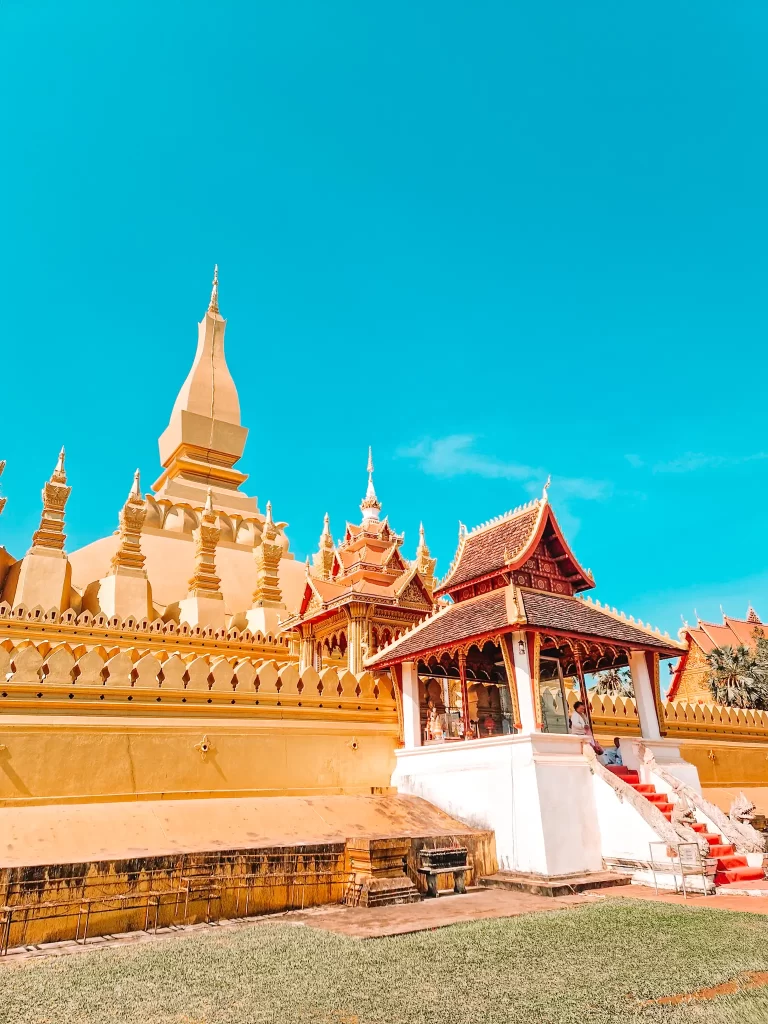
Laos’ laid-back capital isn’t about rushing between headline sights. Instead, Vientiane rewards a slower pace: golden temples set back from wide boulevards, thoughtful museums that explain the country’s recent past, and long, hazy evenings along the Mekong. It’s calm, walkable, and refreshingly unchaotic compared to many Southeast Asian capitals.
If you have just one day in Vientiane, this itinerary focuses on what genuinely matters — the places that give you context, not just photos. Whether you’re stopping over in transit or deliberately carving out 24 hours, this guide will help you prioritise well and experience the city at its best, without trying to do too much.
Your 1 Day in Vientiane Itinerary at a Glance
Here’s the plan for the ultimate 1 day in Vientiane itineary:
- Stop 1: Breakfast at Cabana Cafe
- Stop 2: Patuxay Victory Monument
- Stop 3: Pha That Luang Temple
- Stop 4: Cope Visitor Centre
- Bonus Stop: Vientiane’s Biggest Mall
- Stop 5: Wat Sisaket
- Stop 6: Ho Phra Keo Museum
- Stop 7: Sunset at Tipsy Elephant
- Stop 8: Vientiane’s Bustling Night Markets
⏱️ Got Less Time? How to See Vientiane in Half a Day
If you’re only stopping in Vientiane briefly (which most travellers do), focus on these three priorities:
- Pha That Luang – The spiritual heart of Laos and completely unmissable
- COPE Visitor Centre – The most important and impactful stop in the city
- Mekong sunset or night market – A relaxed, local way to end your visit if your time in Vientiane ends in the evening.
If you only do one cultural stop in Vientiane, make it COPE — it gives you more insight into Laos than any temple.
Is Vientiane Worth Visiting on a Short Trip?
Yes — if you approach it on its own terms. Vientiane isn’t a city of blockbuster attractions or frantic sightseeing, and that’s exactly why many travellers overlook it. Compared to the temple density of Luang Prabang or the adrenaline of Vang Vieng, Laos’ capital can feel understated at first glance.
But if you’re already passing through — which most people are — Vientiane is absolutely worth one intentional day. It offers something many Southeast Asian capitals don’t: space to breathe. Wide streets, manageable distances, and a pace that encourages walking rather than rushing make it an easy and surprisingly pleasant stop.
Where Vientiane really shines is in context. Visits to places like COPE help you understand Laos’ recent history in a way that stays with you long after you leave, while temples such as Pha That Luang anchor the city’s spiritual identity. If you enjoy travel that adds depth — not just stamps in a passport — Vientiane delivers far more than its reputation suggests.
A Brief History of Vientiane
Vientiane was founded in the late 13th century and became the capital of the Lao kingdom of Lan Xang in 1563 under King Setthathirath, who moved the capital from Luang Prabang.
After the fragmentation of Lan Xang in 1707, Vientiane became the center of its own kingdom. In 1779, it was conquered by Siam (modern-day Thailand) and remained a vassal state until 1828, when a failed rebellion led to the city’s annexation by Siam.
Vientiane then came under French control and was eventually made the capital of the French protectorate of Laos in 1899. During the colonial era, it was developed as an administrative and cultural hub.
Laos gained independence in 1953, but the city was heavily affected during the Laotian Civil War, particularly during the Battle of Vientiane in 1960, which resulted in political upheaval and damage.
Laos is now a growing modern city, but nothing like on the same scale as regional peers Bangkok, Hanoi or Kuala Lumpur.
The Best Way to Spend 1 Day in Vientiane
Stop 1: Start your 1 day in Vientiane with breakfast at Cabana Studio
Unless your hotel offers an incredible breakfast, head to this gorgeous little cafe near the river for breakfast and a coffee. One of the best cafes in Vientiane, Cabana is a quiet, tranquil little paradise and offers a great brunch-style menu as well as delicious coffee. It’s one of the many delightful things to do in Vientiane before your day kicks off, and it’s a great place to get some work done as well if you’re spending longer in the city.
Stop 2: Patuxay Victory Monument
Built between 1957-1968, the Patuxay Victory Monument in Vientiane commemorates those who gave their lives fighting for freedom from French colonisation. It looks a bit like the Arc de Triomphe, but with typically Laotian features such as Naga Kings and lotus flowers. The four corners of the monument depict the four directions. You can climb to the top for a panoramic view over Vientiane.
A drive-by on my way to Stop 3 was enough for me to see this huge monument in central Vientiane, but feel free to stop off here if you’re keen to see more. I recommend taking a taxi using Loca (the Laos version of Grab), as it’s the longest journey you’ll do.
Stop 3: The Gorgeously Golden Pha That Luang Temple
Use a Loca taxi to get to Pha That Luang Temple, the cultural heart of Vientiane. The pinnacle is so important it’s on the national seal and Lao currency.
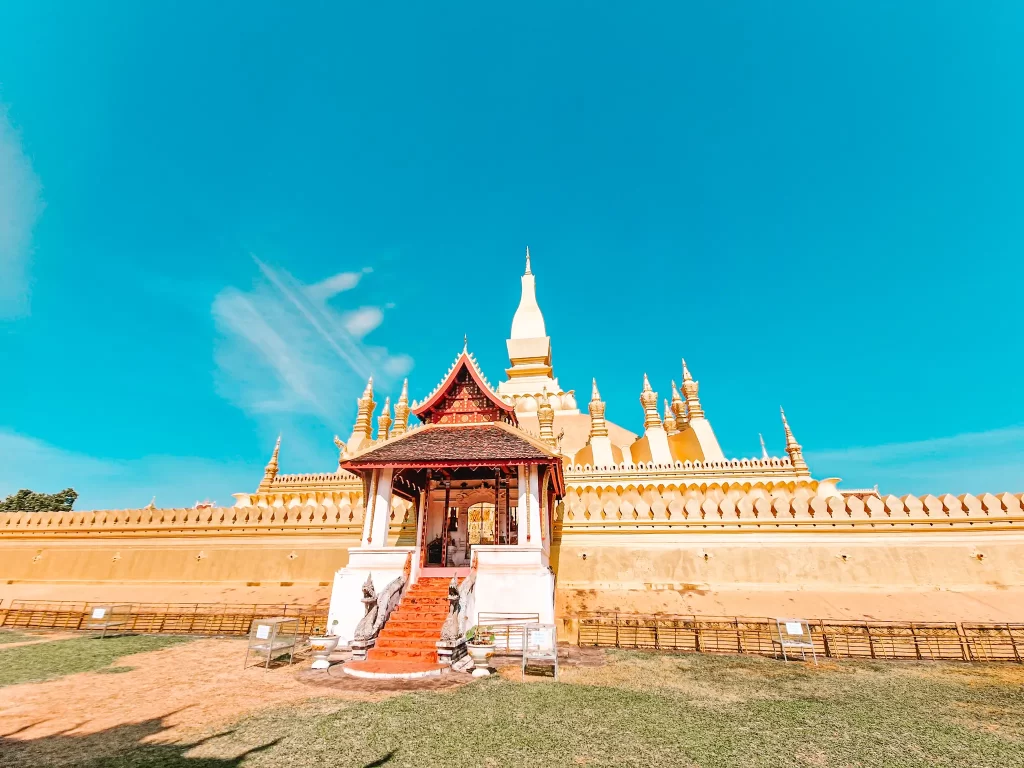
Originally built around the 3rd century CE, it has been rebuilt a number of times, mostly due to invasions. The most recent rebuilding was in the 1930s.
It’s a stunning structure, painted entirely gold and topped with a pinnacle of real gold. When I visited, you were only able to walk around the grounds, with the temple structure off-limits, but it’s well worth the visit.
Stop 4: Cope Visitor Centre – the most important thing to do in Vientiane
After the beauty of Pha That Luang, it’s time for something completely different. Take your second and last taxi of the day to the Cope Visitor Centre.
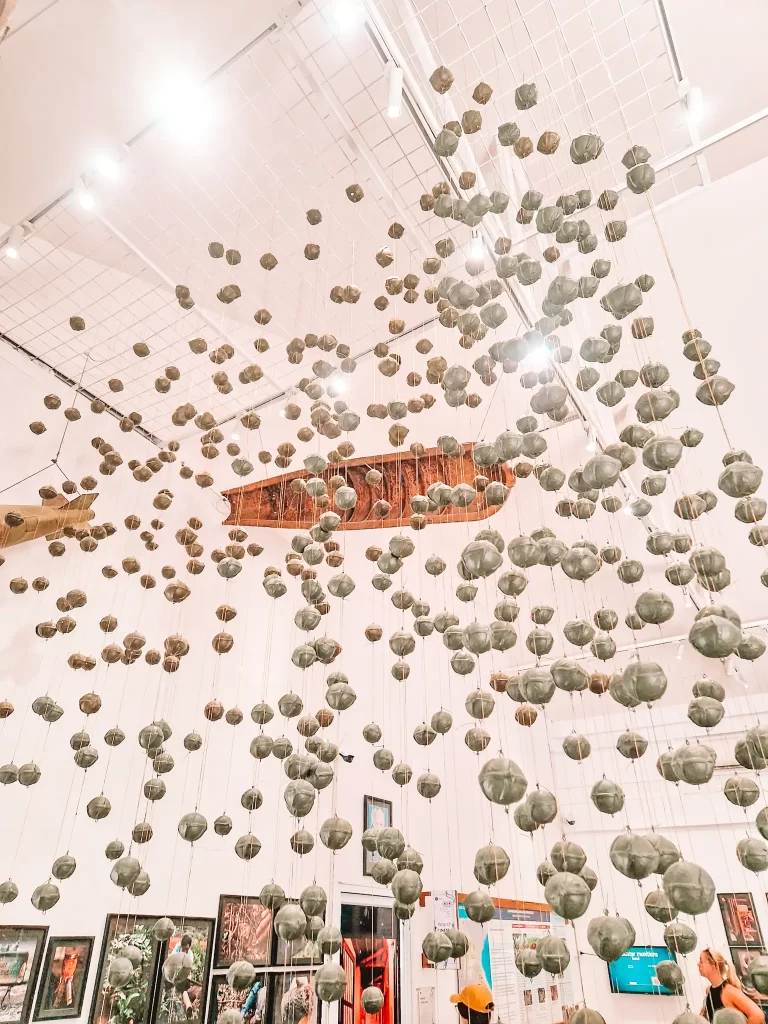
This sobering but hopeful centre is the visitor arm of the Cope NGO, which creates artificial limbs for people in Laos. The majority of these people have been injured by unexploded bombs left over from the US bombing of Laos during the Vietnam War.
Laos has the most unexploded bombs in the world, and people (mostly children) are still injured every year. This is mostly from ‘bombies’ – the small balls found inside the cluster bombs dropped by the USA, which are still found in farmland and forests across the country.
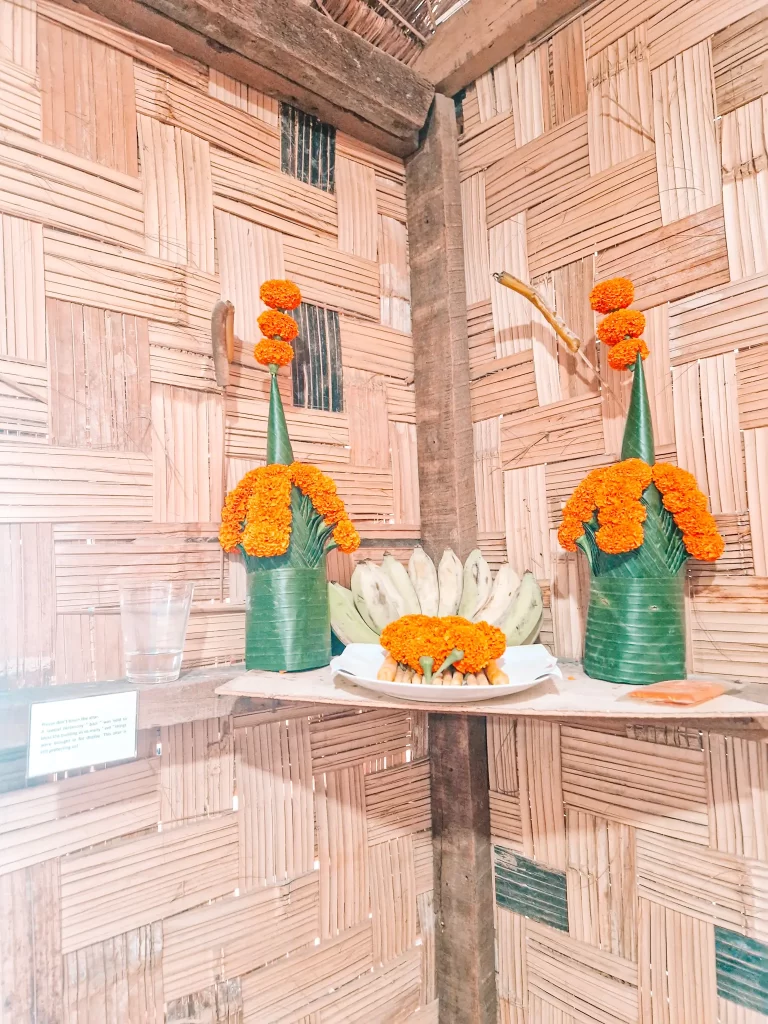
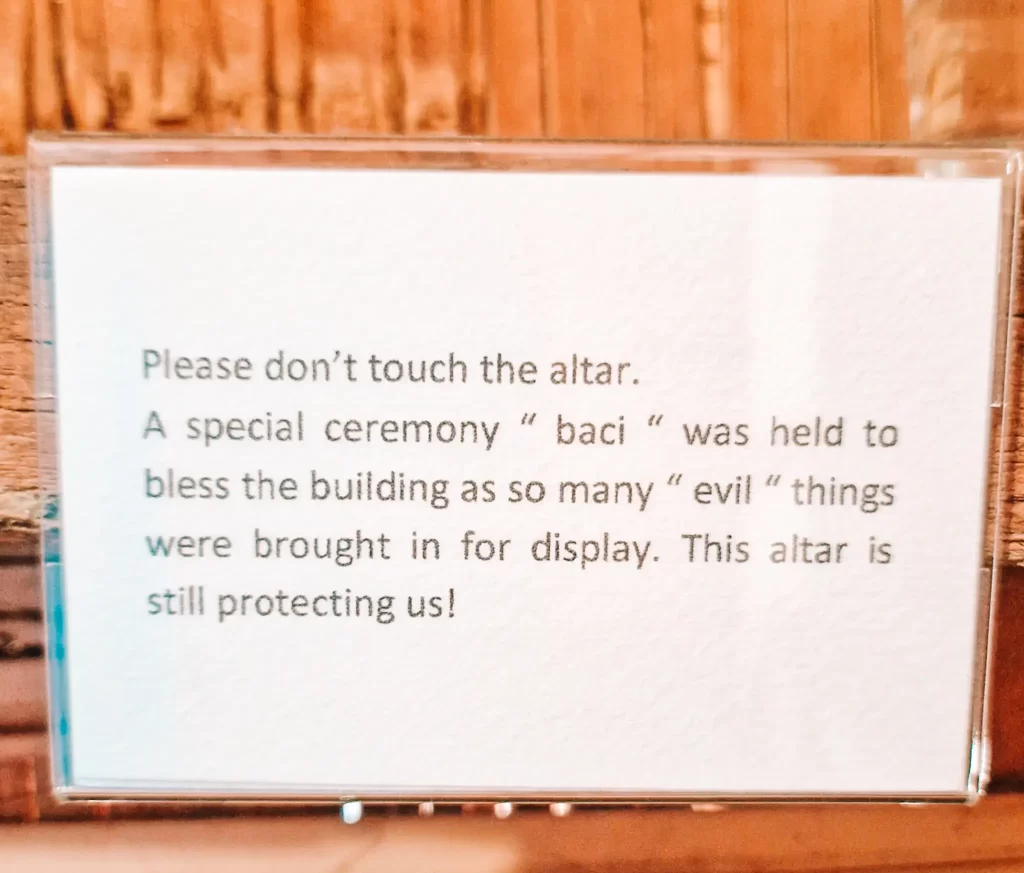
The Cope Centre will talk you through the impact of this devastating ‘secret’ war before moving on to the inspiring stories of survivors. Cope supports them with prosthetic limbs, helping them to rebuild their lives after such devastating injuries.
I’m not going to sugarcoat things – this is a difficult visit. But if there’s one thing you should do during your 1 day in Vientiane, it’s a visit to Cope. The visit is free, but you should leave a donation to help them continue this incredibly important work.
Bonus Stop: Vientiane’s Biggest Mall
If you’re a fan of shopping, or like me, you’ve been travelling for a while and need to stock up, Vientiane’s biggest mall is about a 10-minute walk from Cope. I headed there to grab some toiletries and ended up eating lunch. Don’t get too excited though – this is nothing like the scale of the malls found in other southeast Asian capitals.
Shopping isn’t always easy in Laos – there’s no 7-11 or good toiletry stores like there are in most of Southeast Asia. So if you’re travelling further into Laos, this is a good opportunity to make sure you have everything you need.
Stop 5: Wat Sisaket
Walk for about 20 minutes from Cope (or the Mall!) to Wat Sisaket, your next stop. I loved walking around Vientiane – unlike most Southeast Asian cities, there were safe pavements and the city isn’t crowded. It felt like a real relief after navigating other cities where walking can be difficult or even dangerous.
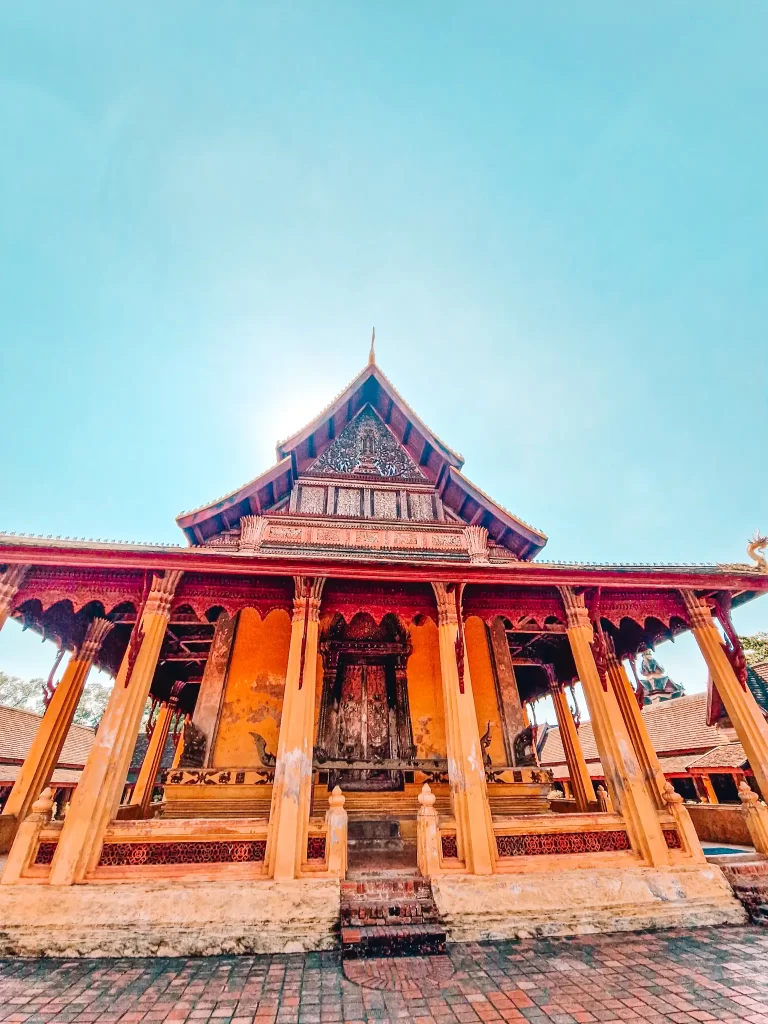
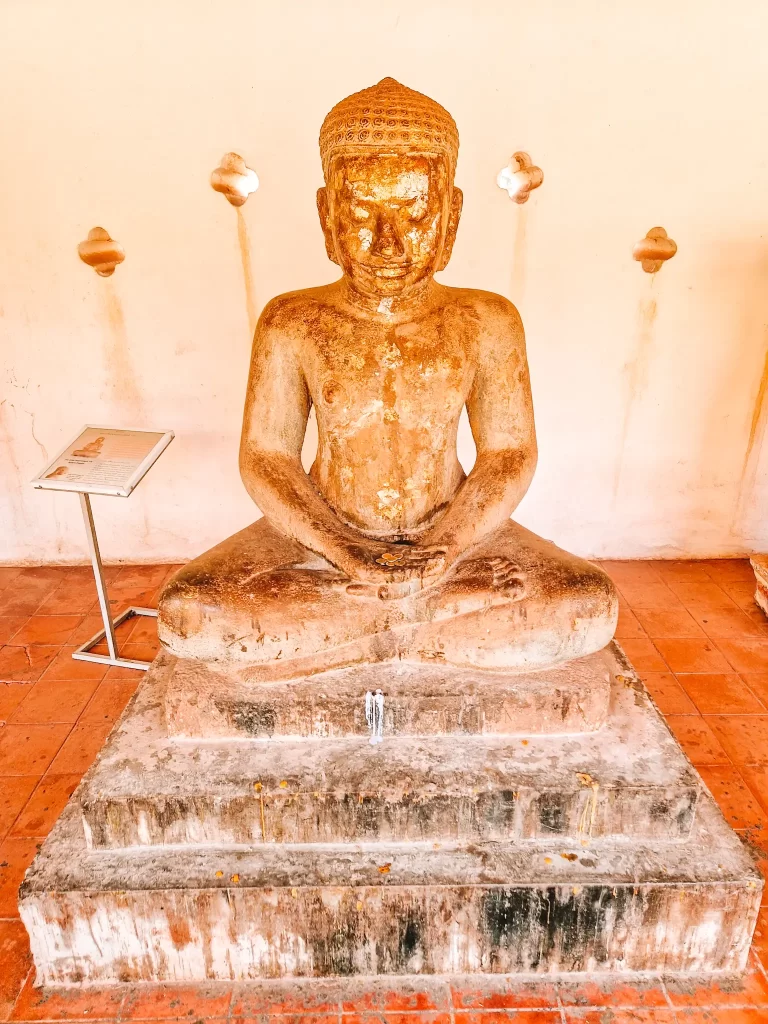
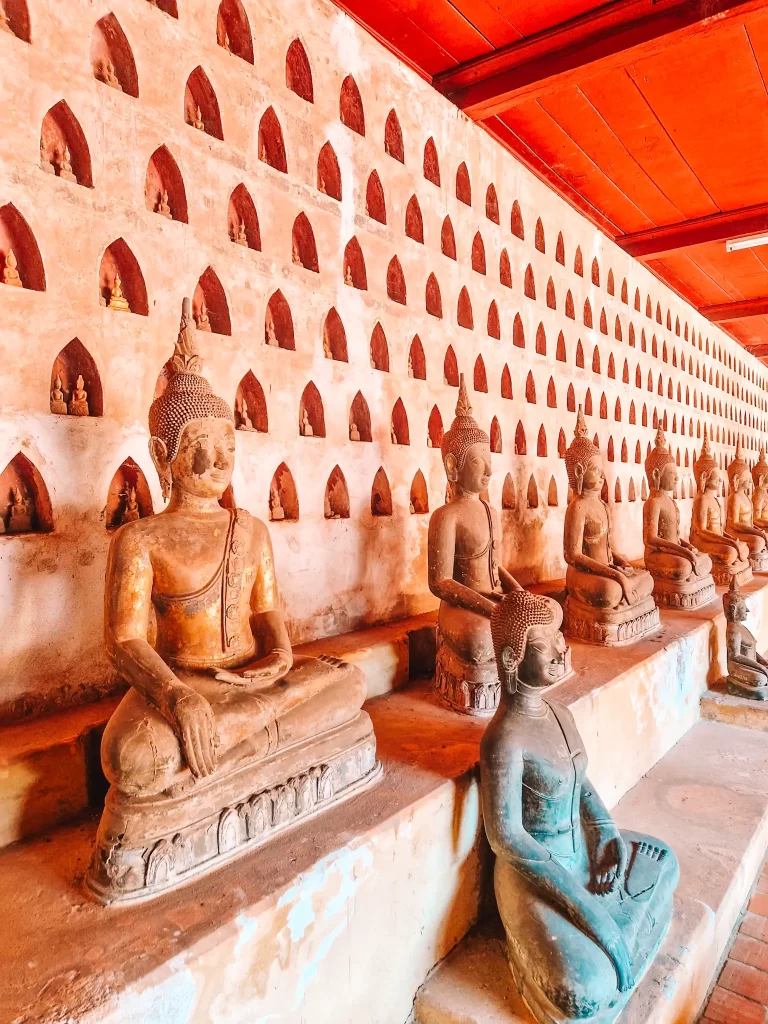
Built in 1819, Wat Sisaket is famous for being filled with more than 2000 Buddhas. These are made of ceramic and silver. Take a few minutes to wander around the Buddha-filled cloisters and marvel at the workmanship. It’s also believed to be the city’s oldest surviving Wat.

Stop 6: Ho Phra Keo Museum
From Wat Sisaket, it’s a much shorter 3-minute walk to the Ho Phra Keo Museum, sometimes written as Haw Phra Keo. Originally built in 1565 to house the Emerald Buddha, it is now a museum and shop. The Emerald Buddha is now in the Royal Palace in Bangkok, as it was originally made by the Lanna Kingdom in Chiang Mai.
The Museum gives you the chance to see yet more Buddhas, many dating from the 6th to 9th centuries. While you’re unlikely to spend much time here, it’s a nice place to walk around before you head back to the center of the city.
Stop 7: Take in the Vientiane Sunset at the Tipsy Elephant Rooftop Bar
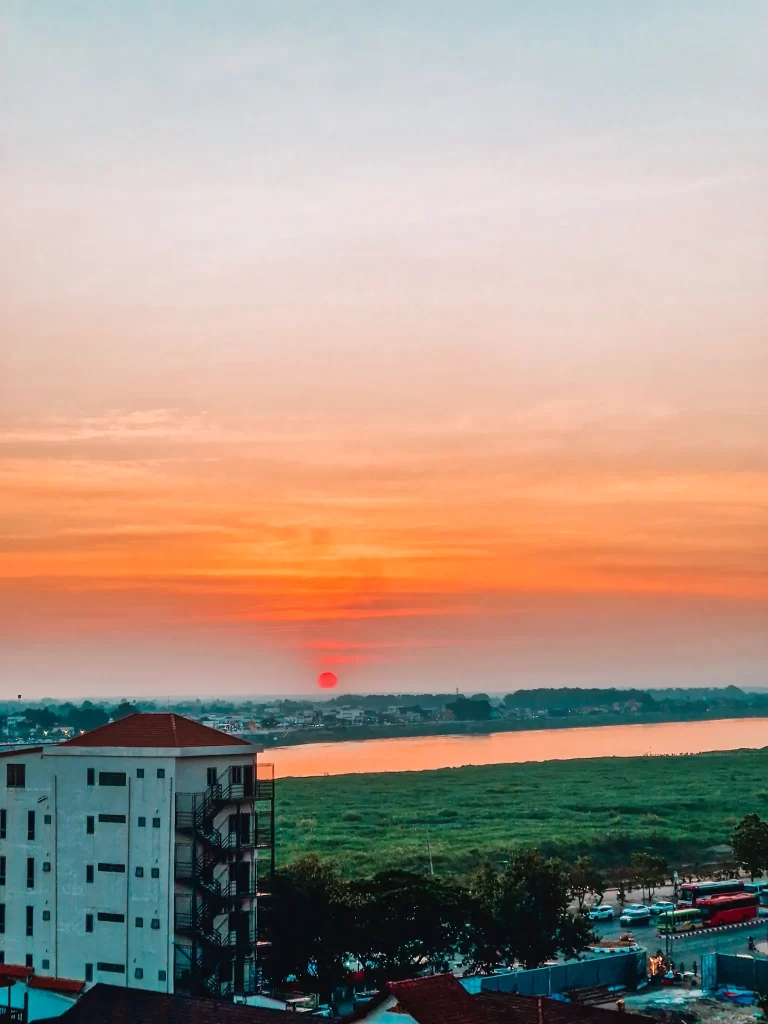
Vientiane has a gorgeous reddish-orange sunset, and the best way to see this is from one of the few rooftop bars in the city. Tipsy Elephant is a gorgeous bar at the top of the Best Western on one of the main tourist streets, so it’s easy to find and likely to be near your hotel.
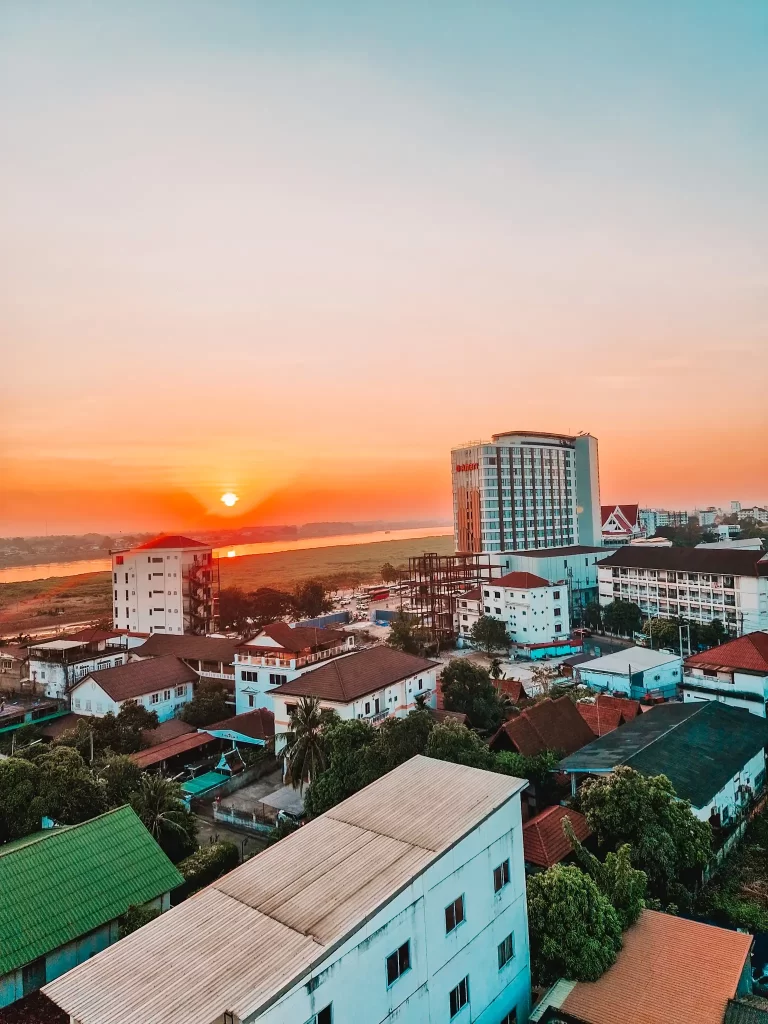
The bar opens at 5 pm, and I recommend arriving then – when I arrived at 5.15 pm, all the best seats around the edges were already taken! The bar offers a full menu of drinks and cocktails, so take a chance to relax after your busy day with a cold drink.
Stop 8: Head to one of Vientiane’s Bustling Night Markets
Once you’re feeling refreshed, it’s time for the last stop on your 1 day in Vientiane itinerary: a visit to one of Vientiane’s two busy night markets.
The first is along the river, and if you’re struggling to find it, just follow the booming noise from the small theme park on the far side of it. Vendors start setting up earlier in the afternoon, and it should be in full swing by the time you’ve had your drink at Tipsy Elephant. The market offers some tourist stalls, along with a lot of shopping stalls for locals. It’s a great place to get that charger you forgot, or pick up your elephant pants if you don’t have them yet.
After your trip to the main night market, you’ll definitely be ready to eat. The second night market in Vientiane is a food market, offering a wide variety of food stalls. Wander the market and decide which delicious offering is right for you! The food market is about a 20 minute walk from the night market, on the other side of Tipsy Elephant and away from the river.
If you’re not feeling up for street food, Vientiane has a wide variety of restaurants. These are mostly clustered on the same road as Tipsy Elephant, and on Rue Francois Ngin, which is parallel, as these areas are the tourist center of Vientiane.
Alternative option: Vientiane’s famous Buddha Park
Just outside the city is one of Vientiane’s most famous — and more surreal — attractions: Buddha Park (Xieng Khuan). The park is filled with dozens of Buddhist and Hindu statues, ranging from small figures to enormous concrete sculptures, and it’s a popular stop for travellers who enjoy unusual or photogenic sights.
I didn’t visit Buddha Park on this trip, mainly because it’s around 25 km outside the city and I wanted to prioritise places within Vientiane itself. If you only have one day — especially if you’re arriving or departing by train or plane — the travel time can take up a significant chunk of your schedule.
That said, if Buddha Park is high on your list, a guided half-day tour can be a very efficient way to visit. This option combines Buddha Park, Pha That Luang, and the Patuxay Monument, removing the need to arrange multiple taxis or navigate public transport. You could then spend the afternoon visiting the COPE Visitor Centre back in the city. 👉 View the half-day Buddha Park tour here ✨4.9/40+
Where to stay in Vientiane
Vientiane isn’t as huge as some capitals in Southeast Asian capitals, but location is still important. I recommend staying in the more touristy area near the Mekong and the night market. While many things in Laos are very good value, accommodation tends to be more expensive than in neighbouring countries, so if you’re looking for budget accommodation and see a good option, grab it!
Use the interactive map below to explore, or I’ve put some carefully curated recommendations below.
- Mixay Paradise Hotel – rare budget option offering private rooms, basic breakfast & afternoon tea ✨8.3/430+
- Peaceful 2 Hotel – mid-range option in a central area with friendly staff ✨9.3/250+
- Salana Boutique Hotel – modern hotel offering beautiful rooms and an excellent breakfast in a central location ✨9.2/650+
Practical Tips for Visiting Vientiane
Before you set off exploring, there are a few practical things worth knowing. Vientiane is easygoing, but it works a little differently from other Southeast Asian capitals.
Dress modestly for temples
For temple visits, you’ll need to cover your shoulders and knees. Lightweight trousers or a midi skirt are ideal in the heat. You don’t need anything overly conservative, but very short shorts or strappy tops will limit where you can enter — particularly at Pha That Luang.
Carry cash — cards are unreliable
Cash is still king in Laos. ATMs can be temperamental, often charge high fees, and sometimes simply don’t work. When they do, withdrawals are usually capped. Try to withdraw during the day, in busy areas, and don’t leave this until the last minute. Many cafés, taxis, and attractions won’t accept cards.
Plan around the heat
Vientiane is flatter and more walkable than most capitals in the region, but the heat can sneak up on you, especially if you’re walking between temples in the middle of the day. Start early, build in café or museum stops, and save slower activities (like sunset drinks or markets) for later in the afternoon.
Mobile data makes life much easier
Ride-hailing apps like Loca, Google Maps, and checking opening times all rely on having data. If you’re only in Laos briefly, an eSIM can be far easier than dealing with airport SIM counters or patchy shop hours, especially if you arrive late or are travelling onward the next day.
My Laos Packing Essentials
If you’re only spending a short time in Vientiane — especially as part of a longer Southeast Asia trip — these are the items I’ve consistently relied on.
- Comfortable walking sandals – Tevas or Birkenstocks Vientiane is flatter and more walkable than most capitals, but you’ll still clock up steps in the heat. Lightweight, supportive sandals you can walk in for hours are essential.
- Lightweight packing cubes – these are the ones I use Particularly useful if you’re arriving for one night or repacking for a train or flight the next day. They keep things organised and save time when you’re constantly on the move.
- Portable power bank – compact option or higher-capacity version Between maps, ride-hailing apps, and photos, your phone battery drains fast. I wouldn’t explore Vientiane — or rely on Loca — without one.
- Mini USB fan – this one It sounds excessive until you’re walking between temples at midday or staying somewhere with weak air-con.
- Universal multi-port plug adapter – my go-to Ideal if you’re charging multiple devices overnight in basic accommodation or moving on the next morning.
- Kindle – mine Book swaps are rare in Laos, and cafés like Cabana are perfect for slowing down with a book. I travel with mine everywhere.
Frequently asked questions
Is Vientiane Safe?
As a female solo traveller, I found Vientiane a generally safe city. However, it is a capital city in a developing Southeast Asian country. I was careful to stick to busy areas at night, particularly areas that are tourist-friendly.
The UK Foreign and Commonwealth Office (FCDO) notes certain risks for the whole of Laos, including bag snatching and theft at ATMs. You should take sensible precautions when taking out money. Try to do it in daylight, in a busy area. I often had to visit multiple ATMs in Laos before finding one that worked; leave enough time in your schedule for this.
I would advise carrying a copy of your passport rather than the real document, which should be kept somewhere safe.
Finally, the FCDO notes occasional reports of people being followed. As above, stick to touristy areas at nighttime and exercise the usual caution in terms of making sure you have a charged phone, know where you’re going, etc.
Is it easy to get around in Vientiane?
Vientiane is one of the easiest capitals in Southeast Asia to navigate. It’s relatively small, and much less busy than other capital cities. Unlike many cities in Asia, it has relatively good pavements/sidewalks, so it’s easy to walk around as well.
It’s also easy to get taxis around Vientiane. I used the Loca app – this is the equivalent of Grab in Laos. The functionality is not as good as Grab, and it only works in Vientiane and Luang Prabang. However, it was useful for a couple of the longer journeys across Vientiane and the trip from the airport to the city centre.
As with all cities in Southeast Asia, there are taxis and tuk-tuks that you can use without an app. If you’re using one of these, make sure to negotiate your price first.
Make sure you’re connected on arrival in Laos – especially if you’re arriving by air – by getting an Esim. This will keep you connected as you wander the city as well, making sure you don’t get lost and you can access the Loca app if you need it. I recommend Airalo, as they have a variety of data packs for Laos (esim provision in Laos can be limited, with some providers only offering one option).
How Long Should You Spend in Vientiane?
I spent one full day in Vientiane, Laos, and I felt that was enough to see the best things to do in Vientiane. It’s one of the most laid-back capital cities I’ve visited in Southeast Asia, which makes a nice change. I recommend arriving late in the day, spending a full day exploring, and departing the following morning – making 3 nights with one full day. However, you could compress this if you had a late flight or train out in the afternoon or evening and just spend two days overall.
How to Get to Vientiane: Fly into Wattay International Airport
Wattay International Airport is Laos’ main airport, and one of only two international airports in the country (the other is Luang Prabang). However, destinations are still limited, with the main flights coming from Hanoi, Bangkok, Kuala Lumpur and China.
It’s easy to fly in and out of, and near the main city. It’s only about 15 minutes from the main hotel area near the river and night market. To get to your hotel, you can:
– Take an airport taxi (around $7)
– Use the Loca app
– Take the shuttle bus (around $1.80/40,000 KIP). This runs along the main road by the night market, stopping at various hotels. This makes a great budget option, but isn’t very frequent.
How to Get to Vientiane: Train
Many people will arrive in Vientiane on the new Laos-China Railway from either Vang Vieng or Luang Prabang. Like taking the sleeper trains in Vietnam, this is an experience in itself! The new railway is clean, punctual, and much quicker than buses on these routes. However, the train station in Vientiane is nowhere near the centre of the city.
The easiest way to get from the train station to the city is by taxi or tuk-tuk. It’s about a 25 minute ride, and taxis will cost around $12.
If you’ve booked your ticket via an agent on 12goasia, this may include a transfer. Make sure to check if your ticket includes this.
How to Get to Vientiane: Bus
Buses arrive in Vientiane from across Laos, including Luang Prabang and Vientiane in the north and the 4000 Islands and Pakse in the south. There are even international arrivals, for example from Bangkok and Siem Reap. There are three bus terminals in Vientiane, make sure to check which terminal your bus arrives at before setting off:
The one in the centre of town provides mainly local buses.
The two outside of town, North Terminal and South Terminal, are where long-distance buses are likely to arrive.
Once you’ve arrived, you can use the Loca taxi app to get to central Vientiane. There will also be taxis and tuk-tuks available at the bus station.
Where to Go Next in Laos
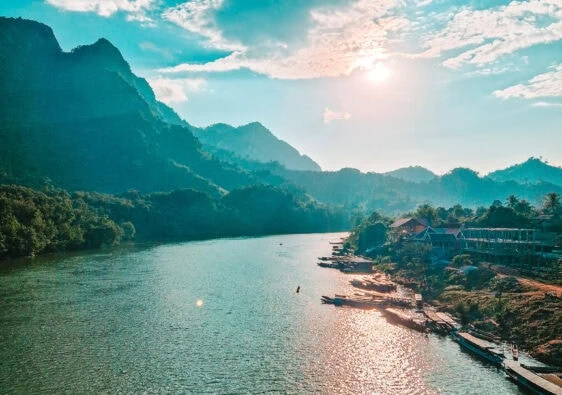
Vientiane isn’t a city that demands more time — but it often makes you want to travel through Laos more thoughtfully. After a calm, grounding day in the capital, most travellers continue north or south, each offering a completely different side of the country.
If you’re heading north, Luang Prabang is the natural next stop. Its temples, colonial architecture, and slower pace make it a beautiful contrast to Vientiane — and a place where it’s well worth staying longer.
👉 Read my guide to the best things to do in Luang Prabang
Travelling south, the pace slows even further in the 4000 Islands. This is Laos at its most relaxed — hammocks, river sunsets, and days structured around very little at all.
👉 Plan your visit with my guide to what to do in the 4000 Islands
If you’re booking transport, accommodation, or connecting flights as you move through Laos, it’s worth planning ahead — options can be limited, especially in peak season. I use Booking.com for accommodation and 12GoAsia for trains and buses, as both are reliable in Laos and allow you to check availability before you arrive.
Vientiane may be a short stop — but it’s often the one that quietly sets the tone for the rest of your journey.
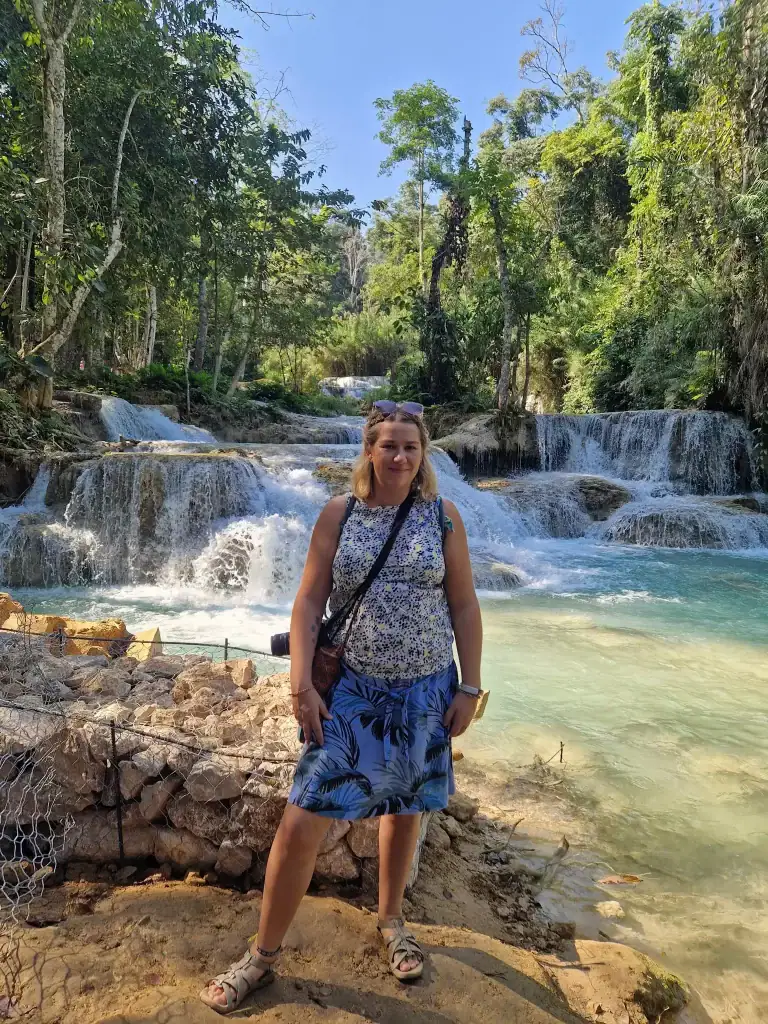
Em is the traveller behind Em’s Globetrotting Gems, a blog where she shares honest travel tips and first-hand experiences from her journeys around the world. As part of a month-long adventure through Laos, she spent three nights in Vientiane, exploring the capital’s cultural sites and laid-back charm. Her blog is all about helping fellow travellers plan enjoyable, stress-free trips with practical advice and personal insight.
✅ All photos featured on this blog are from my personal travel experiences. No stock images are used.

The sunset picture is absolutely beautiful! Thanks for sharing your trip to Laos.
[…] depart from Huay Xiay on the Thai border, which is accessible from Vientiane and Luang Prabang through the brand new Laos railway, adopted by a bus. It’s typically booked […]
[…] depart from Huay Xiay on the Thai border, which is accessible from Vientiane and Luang Prabang via the new Laos railway, followed by a bus. It is often booked up far in […]