 Em
EmJust so you know: This post contains affiliate links. As an Amazon Associate, I earn from qualifying purchases. I may also earn a small commission if you book a tour, hotel, or buy something else through these links. It helps me keep this blog running and full of travel tips. Thanks for your support!
Planning a trip to Cambodia but not sure where to start? Whether you’re drawn by ancient temples, dreamy islands, or the country’s rich but often tragic history, this 2-week Cambodia itinerary will help you experience the best of the country — without spending your whole trip on a bus.

After spending more than a month exploring Cambodia in the past year, I’ve pulled together the exact route I’d take if I had 2 weeks to see it all. You’ll relax on postcard-perfect beaches, wander the pepper farms and colonial streets of Kampot, understand the country’s complex past in Phnom Penh, get a hit of creativity in Battambang, and finish with the world-famous temples of Angkor Wat in Siem Reap.
This route is designed to be efficient and logical, with limited backtracking, no internal flights, and just the right balance between activity and rest. I’ve also included real hotel recommendations, tried-and-tested tours, transport booking links, and safety tips — so you can travel smarter, even on a first visit.
Let’s dive in.
🛫 Overview: How to Use This 2-Week Cambodia Itinerary
- Itinerary pace
✈️ Koh Rong or Koh Rong Samloem → Kampot → Phnom Penh → Battambang → Siem Reap ✈️
This two week Cambodia itinerary is not too fast-paced and prioritises jet-lag recovery at the beginning. I haven’t included night buses because I didn’t find them necessary in Cambodia, but also because I don’t like that Cambodian nightbuses require you to share a berth with a stranger if you’re a solo traveller.
I’ve also put in some suggestions for how to shorten it or extend your time at the end.
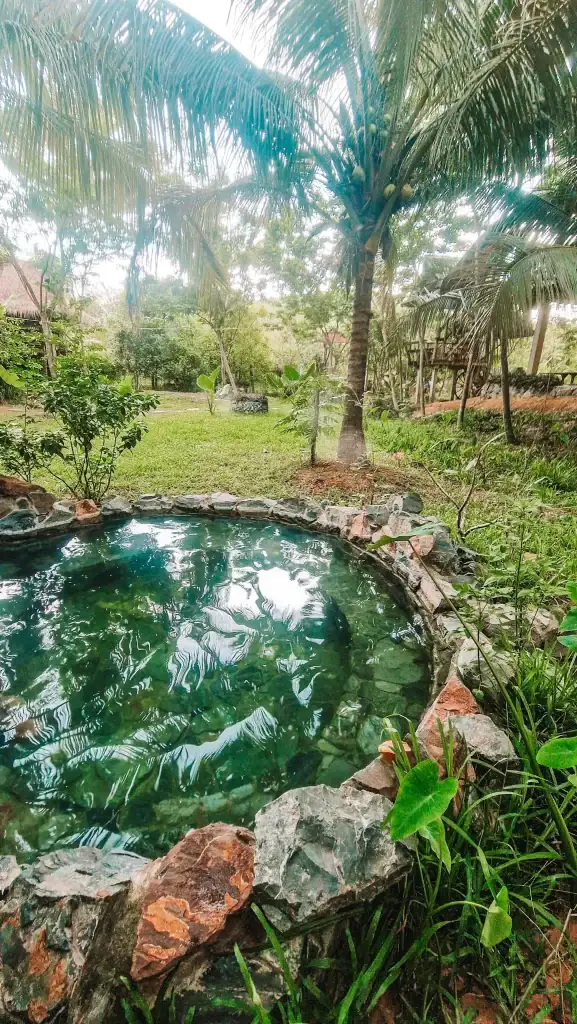
- Map of the route
- Visa info
Most citizens will need a visa, which costs $30 USD. This can be bought in advance via an easy online portal, or on arrival. Arrival is usually easy and quick, especially if you’re arriving through airports. If you do arrive by air, you’ll need to fill in the online arrival card in advance.
Always check your government website for the most up to date requirements – for example, I use the British Foreign, Commonwealth and Development Office.
- 📲 Get connected on arrival
I always prefer to make sure that I’m going to be able to access data when I arrive somewhere new, and the easiest way to do this is via an Esim. For Cambodia, I recommend Airalo as one of the most reliable eSim providers.

🏖️ Koh Rong or Koh Rong Samloem (3 nights, 2 full days)
📌 Take an easy bus + boat transfer from Phnom Penh airport to your chosen island via Sihanoukville, or you might even find direct flights to Sihanoukville’s international airport
📌 Spend two days recovering from jet lag and relaxing in paradise
📌 On the fourth day, transfer via boat + bus to Kampot
Koh Rong and Koh Rong Samloem are two paradise islands just off the southern coast of Cambodia. They are emerging tourism destinations that are still incredibly undeveloped – just a few years ago, they were free of tourism altogether. They make for a wonderful, relaxed way to start your two week Cambodia itinerary.
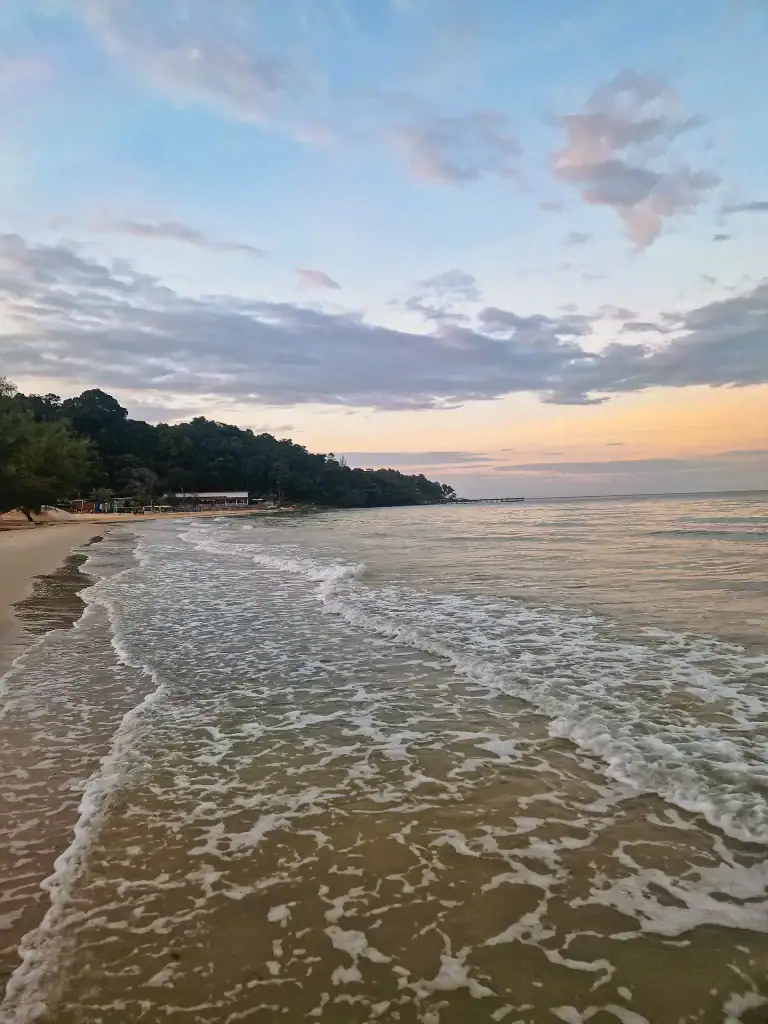
Koh Rong is the more developed of the two islands. There is a small town/village on the island, with a couple of hostels (at least one offering a party scene, if that’s your thing). In contrast, Koh Rong Samloem only offers boat-access beach resorts – once you’re at the beach, you won’t be going anywhere else. I stayed at Tube Hotel on Koh Rong Samloem and loved it – peaceful beach days combined with chilled evenings to give me a break I barely knew I needed after months of travelling every few days.

However, there are some caveats to note about staying on Koh Rong Samloem (and Koh Rong, to a lesser extent):
- There aren’t really any shops, and no ATMs – bring cash and anything you think you’ll need.
- Boat tours/taxis around the islands are exceptionally expensive, so you might not want the expense of visiting another beach.
- You’ll only have your hotel and maybe one other option to eat at – meaning that for Cambodia, prices are high due to lack of competition.
- Finally – if the winds are bad, you could get stuck on the islands until the seas calm down, so keep an eye on the weather before departing.
Getting there
From Phnom Penh, you can take a bus to Sihanoukville (c.3 hours on a brand new highway) and then a boat across to your island of choice (time depending on the hotel you choose + how many deliveries the boats are making). There are no cars or roads on the islands so you need to get as close to your resort as possible.
There are ATMs at the Sihanoukville Port to get cash – many places in the islands do not accept card.
Sihanoukville is notoriously unpleasant, so I recommend trying to do the journey in one day if possible. However, you could spend the night in Sihanoukville and transfer first thing the next day if your flight arrives late.
Note: Some boat companies that serve the islands have better reviews (particularly around safety) than others. I recommend GTVC, who have excellent reviews, but they only serve the major stops, not individual beach resorts.
In contrast, Buva Sea, the busier company which links with Vireak Buntham buses and serves the small stops, has terrible reviews (primarily around punctuality/overselling, but some around safety). Do your own research and book according to your own level of comfort with risk.
Book your tickets to Koh Rong or Koh Rong Samloem here
Where to stay on Koh Rong and Koh Rong Samloem
Koh Rong Samloem
- Island Centre Point – luxurious stay in the main area of the island, Saracen Bay – meaning you can get the good ferry and have a few other dining options, while still enjoying a private beach. (✨ 9.2/930+)
- Kamaku Bungalows – affordable bungalows on a private beach, just beware of reviews stating that it’s a long walk between the ferry and the hotel (✨ 9.1/480+)
- M’Pai Bay Hotel – new hotel in the main village on Koh Rong Samloem. Good reviews but no private beach (access to public beaches only) and a multi-floor hotel rather than beach-hut style accommodation found in other places (✨ 9.4/12+)
- Tube Resort – modern pod-style bungalows with a private beach. Where I stayed – just beware that they require the poorly-reviewed boat. (✨ 8/370+)
Koh Rong:
- Lily’s Beach Bungalows – simple, budget huts on a quiet beach, but beware that they aren’t easy to get to (✨ 9.1/150+)
- The Secret Garden – Luxurious and stylish with a private beach. Where I was going to stay when I originally planned a short, high-end Cambodian adventure instead of a year (or more) backpacking. (✨ 9.4/580+)
🌶️Kampot (3 nights, 2 full days)
📌 Take a morning boat + bus from the islands to Kampot
📌 Spend your first day exploring the area and your second day at the gorgeous women-only Banteay Srey Day Spa
📌 Bus transfer to Phnom Penh on the final morning
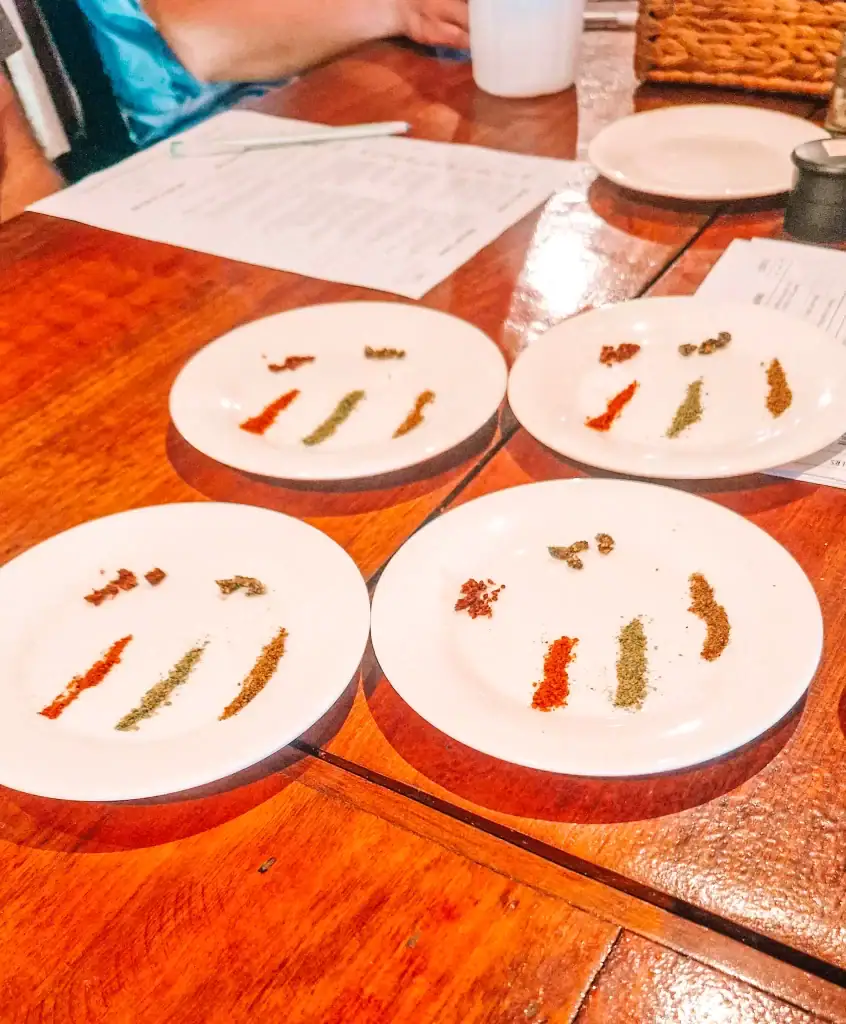
Kampot is a little-known colonial-era jewel on the south coast of Cambodia. Kampot is most famous for their local peppers, which are geographically protected (like Stilton Cheese in England). Spend your first day touring the countryside in a Tuk Tuk, visiting the gorgeous La Plantation to do a pepper tasting. You can also head to the beach for seafood at nearby Kep, or if you’re feeling ready for some activity, take a day trip to Bokor National Park to see waterfalls and historic buildings.
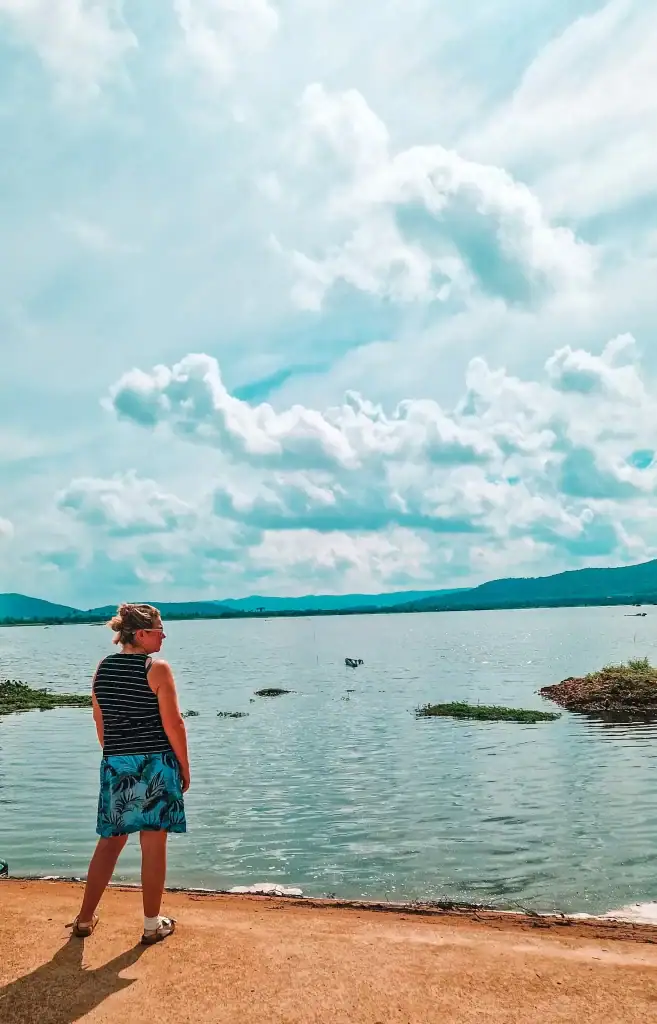
On your second day, visit Banteay Srey Women’s Spa. This incredible NGO offers a full day spa experience, run entirely by and for women – giving local women the kind of skills that help them to avoid work in the sex trade, which is rampant in Cambodia.
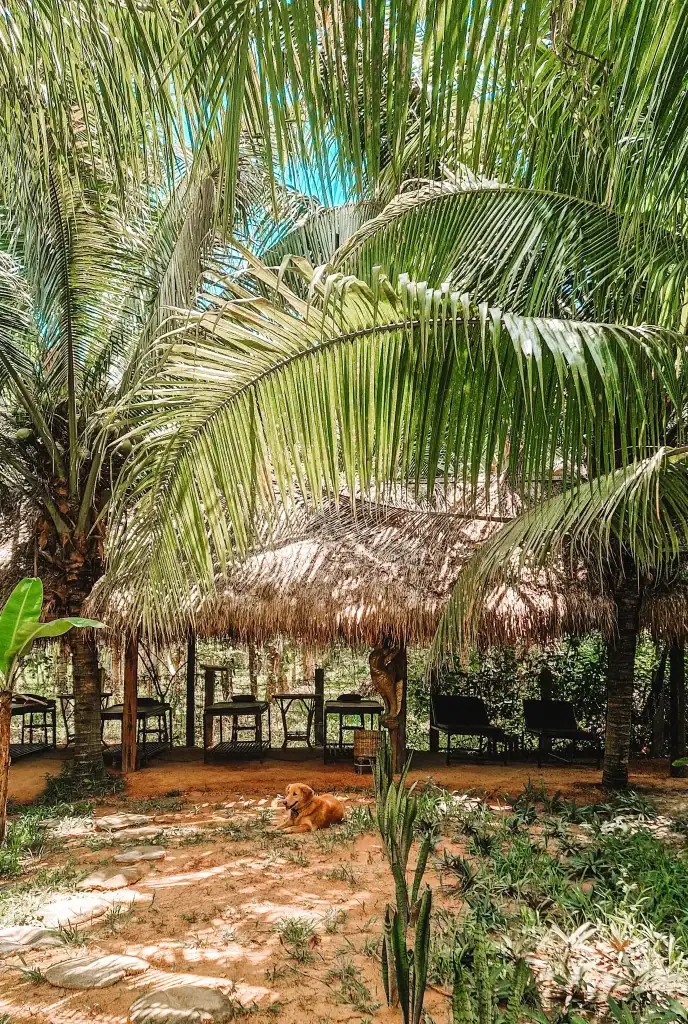
You’ll be picked up by Tuk Tuk around 11am and taken for a homemade lunch at the spa. After making your own body scrub with local ingredients, you’ll get a full spa experience, with a traditional sauna, dream massage and dip in a spring fed pool. Truly one of my favourite experiences in nearly 18 months of travel.
The best tours:
- Book your day spa directly with Banteay Srey, an incredible NGO
- Half Day Tuk Tuk tour to Salt Flats, La Plantation and Secret Lake – Book here ✨ 4.9/300+
- Full Day Tuk Tuk tour including everything above + Kep – Book here ✨ 4.9/150+
- Day trip to Bokor National Park to see waterfalls, the colonial hill station and even monkeys – Book here ✨ 4.6/82+
Getting there
From Koh Rong or Koh Rong Samloem, take a boat + bus transfer to Kampot (c.3.5 hours). You can also take a less frequent direct boat. See my notes on boats to and from the islands in the section above.
Book your tickets on 12GoAsia.
Where to stay in Kampot
- Orchid 101 is a friendly guesthouse near the centre of Kampot. While it’s not fancy, it is comfortable, clean and well-set up. They offer free filtered water, and a good value breakfast. The British-Filipino couple who own it are friendly and incredibly helpful, and I loved my stay here. (✨ 9.1/700+)
- Sabay Beach is a really unique stay. Choose a treehouse, or a riverfront cottage. The hotel is outside of town, so it’s quiet and peaceful, and the food is excellent. (✨ 8.9/600+)
Find out more: 🧭 My guide to relaxed Kampot
🏛 Phnom Penh (1 night, half day)
📌 Take a morning bus from Kampot before an afternoon walking tour
📌 Spend the next morning learning about the Cambodian Genocide before travelling onwards to Battambang
Let’s face it – Phnom Penh is not the world’s most exciting city. However, it is an essential stop on your Cambodia itinerary if you value history and understanding the story of a country. Following this Cambodia itinerary, you’ll arrive in Phnom Penh in time to do a walking tour of the city at 4pm.

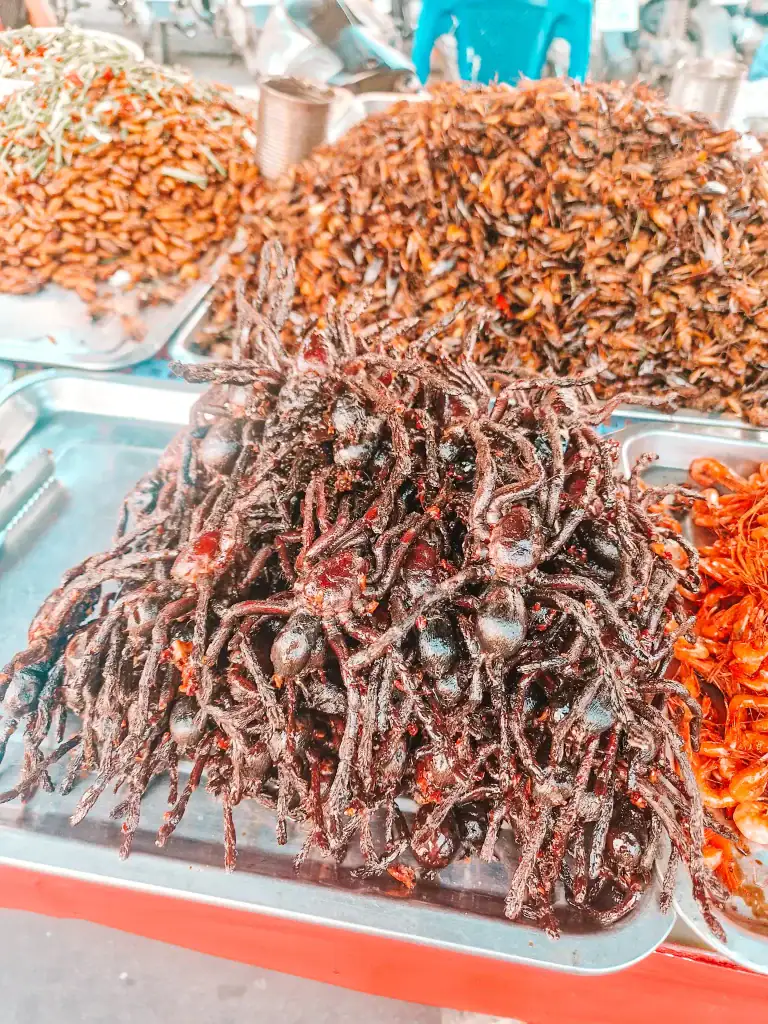
I did this tour and highly recommend it. While visiting key Phnom Penh sites like the Royal Palace, a Buddhist Monastery and Wat Penh, the guide put the Khmer Rouge (which you’ll learn about in detail the next morning) into a wider perspective of Cambodian history, including the modern government. And he’ll also take you to his favourite stalls in the nightmarket to try the best local snacks, including fried tarantulas (if you’re brave enough!).
The next morning, visit the Tuol Sleng Genocide Museum and the Killing Fields to understand the devastating impact of the Khmer Rouge, before getting the bus to Battambang in the afternoon. This is a difficult visit and while I recommend visiting with a guide, others prefer the excellent audioguides offered at both sites – I break down both options in my full guide to Phnom Penh.
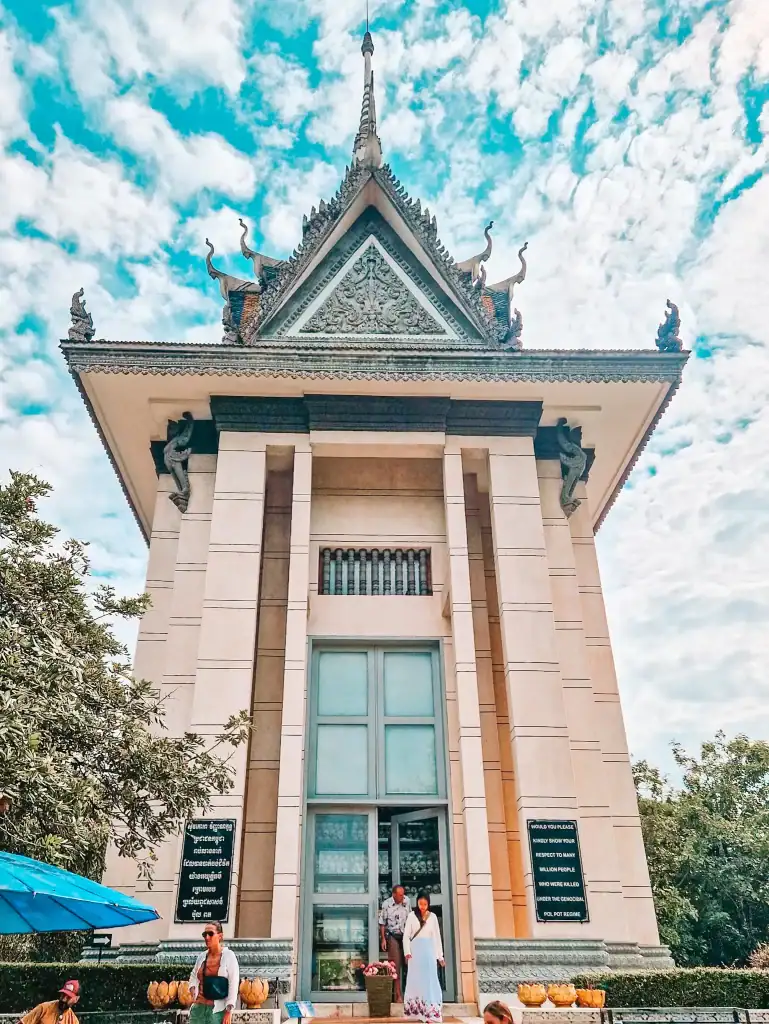
Note: the Tuol Sleng and Killing Fields visits are incredibly difficult. Please take care of your mental health while visiting, and plan ways to decompress. I go into more detail on this in my full guide.
- Take the exact tour I used to learn about the continuing impact of the genocide (✨4.8/2.7k+)- book here.
Getting there
There are regular buses from Kampot to Phnom Penh. Buses will arrive and depart from the office of the bus company you’ve chosen. Virek Buntham are likely to have the most flexible departures and the minibuses are fairly comfortable.
From the Virek Buntham office in central Phnom Penh, it’s an easy Tuk Tuk ride to any central hotel.
Where to stay in Phnom Penh
Stay near the riverfront and near but not on the nightmarket for central access without the noise.
- Julieka’s Guest House – this is a great budget option, and as it’s opposite the National Museum, the location couldn’t be better. (✨7.9/870+)
- Pacific Hotel – I stayed here the first couple of days I was in Phnom Penh. Spotlessly clean, great bed linen, great lighting options in the room and a good breakfast. However, it’s not in the centre of the city, so you’ll need to take Grab Tuk-tuks to get to central Phnom Penh. (✨8.4/1.1k+)
- Aquarius Hotel and Resort – I didn’t stay here, but during my research for my original short trip to Cambodia (before I decided on long-term backpacking) this was my top choice. It has a rooftop infinity pool and gorgeous-looking rooms. (✨9.2/2.2k+)
🧭 Find out more: Read my guide to what to see in Phnom Penh
🤹🏼 Battambang (2 nights, 1 full day)
📌 Take an afternoon bus to Battambang after your tour in Phnom Penh (bring a relaxing podcast or audiobook to decompress on the bus)
📌 Spend your day exploring the countryside around Battambang, including a ride on the thrilling Bamboo Train. In the evening, visit Phare Circus
📌 Take a morning or lunchtime bus to Siem Reap, your final stop
Battambang is another of Cambodia’s underrated cities. Like Kampot, it’s an old colonial town, and now has an arty, alternative vibe with gorgeous leafy cafes and a fantastic photography gallery. But it’s become most famous for the thrilling Bamboo Train – spend the afternoon speeding through the Cambodian countryside on a bamboo platform, which has to be dismantled if someone is coming the other way!
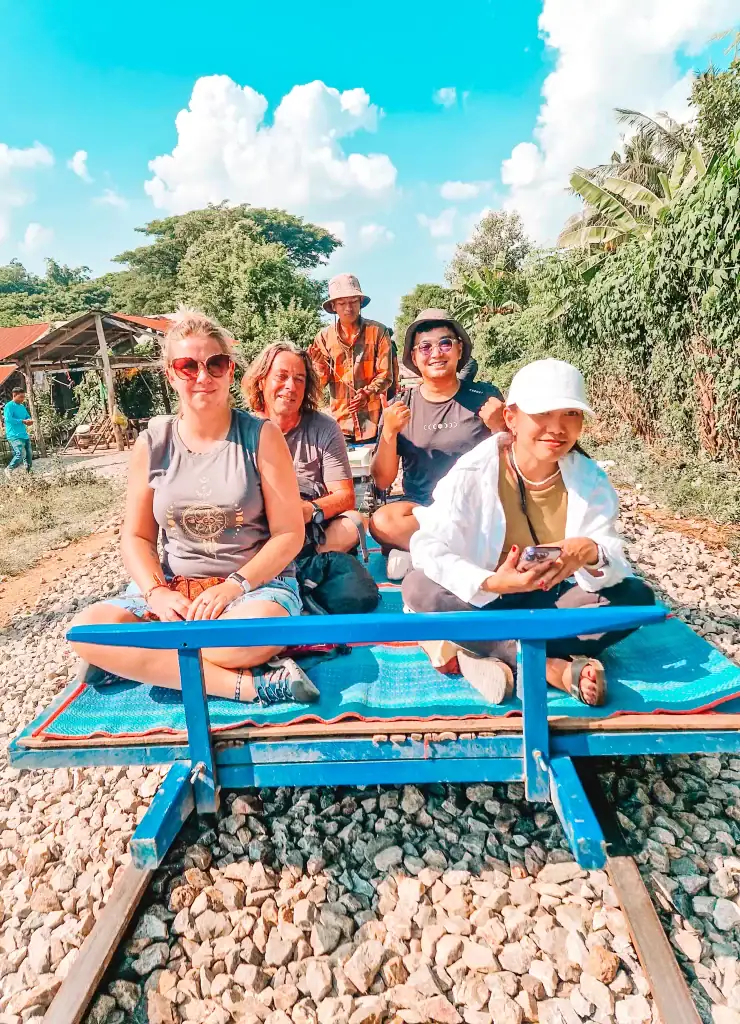
After the Bamboo Train, head to the Bat Caves to one of Cambodia’s most stunning natural sights: millions of bats pouring out of the rocks at sunset.

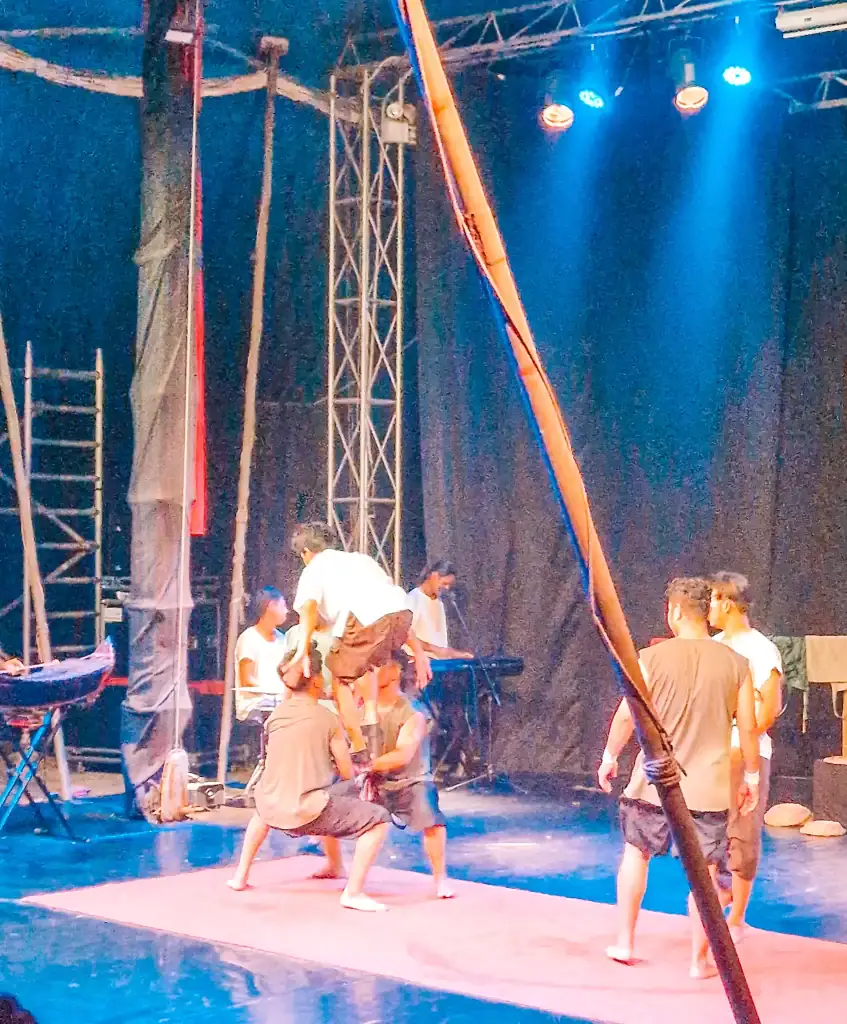
In the evening, visit another of Cambodia’s fantastic NGOs – the Phare Circus. Developed to give young people at risk of exploitation a safe space in which to learn performance art skills, there are nightly performances from students in Battambang. If you can’t make a performance in Battambang, you can catch those who’ve graduated to the professional stage in Siem Reap (but note that this sells out quickly!).
The best tours:
- Support local young people and buy tickets directly from Phare here
- Ride the thrilling Bamboo Train & enjoy sunset at the Bat Cave tour – book here ✨4.9/1.1k+
Getting there
Battambang is easily accessible from Phnom Penh, with regular buses throughout the day. I recommend choosing Vireak Buntham or Giant Ibis. You’ll need to take a Tuk Tuk between the offices of your chosen bus company and your accommodation.
Where to stay in Battambang
- I stayed at Pomme Hostel , a unique spot offering small individual pods and shared bathrooms at hostel prices – but they are very small and basic, and air con is switched off during the day. (✨8.8/680+)
- Mothers House offers more traditional hotel rooms, with excellent reviews and a great location (✨8.4/350+)
- La Villa is a beautiful high-end option just across the river from the main tourist area, but still in easy walking distance (✨8.5/600+)
🧭 Find out more: My guide to artsy Battambang
🛕 Siem Reap – 4 nights, 3 full days
📌 Take a morning bus from Battambang
📌 Spend 2 full days visiting the Angkor Wat Complex – for most tours, you’ll need to buy your 1 or 3 day Angkor Pass separately to the tour
📌 On your final day, enjoy a fascinating trip to the Floating Villages and see the sun set over the Mekong
It’s time for the jewel in the crown of your 2 week Cambodia itinerary – the beautiful Angkor Wat near Siem Reap, in northern Cambodia. This UNESCO-heritage site is world-famous for a reason – it’s one of the most incredible historic attractions in the world, and particularly magical at sunrise.

Spend two days exploring both the main Angkor Complex and some of the many surrounding temples, all of which are magnificent, before spending your final day relaxing around vibrant Siem Reap.
I recommend a delicious morning coffee at one of Siem Reap’s many cafes and buy souvenirs in the central market, before a sunset cruise on the Tonle Sap Lake to see the famous floating villages.
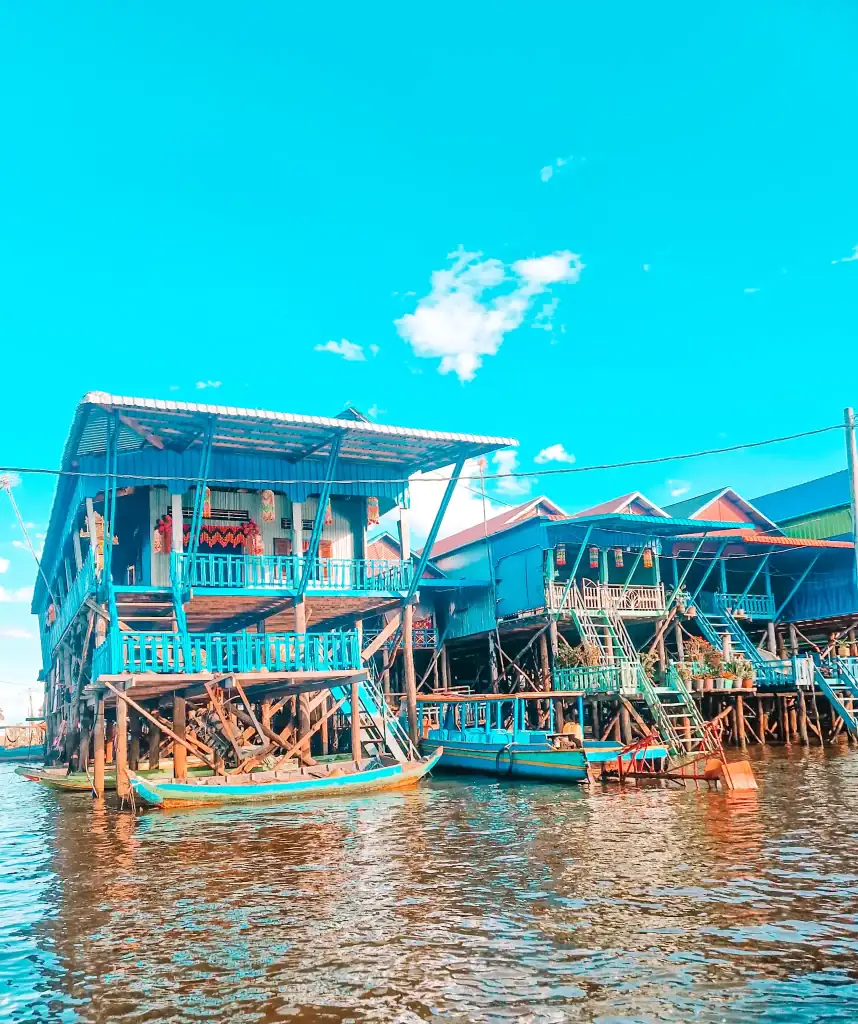
Depending on your bus, you might also have extra time on the first day – if so, I recommend visiting one of the two excellent museums detailing Cambodia’s ongoing battle to clear landmines – I go into more detail in my full guide to Siem Reap.
Need to compress your visit? You could visit the highlights of the Angkor Wat complex in one day, rather than two.
The best tours:
- This is the exact, excellent Angkor Wat 2 day tour that I used (✨ 5/2.3k+)
- Highly-rated 1 day tour of Angkor Wat, taking in the major sites (✨5/11.2k+)
- Visit the fascinating Floating Villages and watch the sun set on the Mekong on your final day – book here (✨ 5/4.4k+)
Getting there
From Battambang, there are regular buses to Siem Reap. Book in advance because they are popular. I recommend using either Virek Buntham or Giant Ibis, depending on your schedule and the times offered.
Use Grab Tuk Tuks to get to and from your hotels.
Book your bus between Battambang and Siem Reap on 12GoAsia.
Where to stay in Siem Reap
Stay near but not on Pub Street to avoid noise and crowds.
These options are highly rated:
- Siem Reap Comforts Hostel – budget hotel with a pool, near the centre, with a glorious noodle restaurant almost next to it. I really loved my stay here. (✨ 8.9/830+)
- Siem Reap Urban Boutique Hotel – right in the centre of the action, this mid range hotel has excellent reviews and a pool. (✨ 8.9/1.1k+)
- Golden Temple Residence – this luxury complex was highly rated by people I met on my Angkor Wat tour. In the same area of Siem Reap, it offers real luxury with at a reasonable price tag. (✨ 94/890+)
🧭 Find out more: Check out my full Siem Reap guide

🎒 Bonus: What to Pack for Cambodia
Clothes:
There are a few key tips for packing clothes for a Cambodia trip:
- Bring loose, light fabrics to avoid sweating in the humidity. However, I don’t recommend linen – I honestly found it too heavy.
- I swear by the Airism underwear from Uniqlo – they dry much more quickly than cotton so are much more comfortable.
- You’ll need to make sure your knees and shoulders are covered at many sites, including Angkor Wat. A lightweight scarf can be really useful.
- You’ll need sturdy shoes that are lightweight and comfortable – look around any group of tourists in South East Asia and you’ll see that Tevas or Birkenstocks are the universal choice
- While it doesn’t rain often in Cambodia, when it does rain it’s intense. Consider a Packable Rain Jacket and make sure your bags are water repellent if possible, or bring plastic bags for key items like your passport/currency, any electronics and anything else easily damaged (sadly I learned this from experience).
Other essentials – the items I swear by:
- Lightweight packing cubes – I’ve used these for over a year and they let me pack far more than I could without them
- Small handbag charger, or this bigger but heavier charger that offers more power – both perfect for making sure your phone doesn’t run out when you’re trying to get those Angkor Wat pictures
- Mini USB Fan – Perfect for hotels with poor AC or the million other times you’ll be hot.
- Multi-Port Plug Adapter – My go-to for travel: fast charge + universal.
- Locks to keep your luggage safe in hostels, buses and trains – I’ve used these combination locks for the past year with no issue
- Book swaps are far less common than they used to be – keep yourself occupied through inevitable transport waits with a Kindle, and sign up for Kindle Unlimited Membership to stock it up
📘 Want to read books set in Cambodia before you travel? I struggled to find many, but check out my list of books about Southeast Asia for the one I do recommend.
🔁 Variations & Shortcuts
- If you need to trim your itinerary slightly, choose either Kampot or Battambang depending on your interests. If you are a spa person, I highly recommend choosing Kampot – if not, prioritise Battambang.
- If you want to add time, consider spending more time on the beach.
- If you want to significantly extend your stay, consider a trip to south Vietnam. Ho Chi Minh City is easily accessible by bus from Phnom Penh, and there are also boat tours that run between the two cities via the Mekong Delta. From Ho Chi Minh City, you can visit the Mekong Delta and Cu Chi Tunnels just outside the capital.
Find out more:
🧭 My guide to visiting the Mekong Delta independently
🙋♀️ Final Tips for Your Cambodia Trip
- Currency & card tips : Cambodia uses a mixture of Riels and USD – you could pay in Riels and get USD change, or vice versa. Always check your change to make sure you’ve been given the right amount, and keep UDS bills flat and pristine, or they won’t be accepted. Card payment is much less common – you’ll need cash.
- Cross-border SIM advice: I prefer to have an eSim when arriving in a new country, so that I’m ready to get taxis from airports or bus stations – and I just feel safer in general. For Cambodia, I recommend Airalo, as one of the most reliable eSim companies.
- Getting around cities in Cambodia: the easiest way to get around cities in Cambodia is using Grab Tuk Tuks. In all the cities I’ve listed, it’s easy to call a Tuk Tuk using Grab, and you have the added benefit of knowing the price in advance and not having to barter. You can link it to your card for easy payment or pay in cash on arrival.
- Tips for booking transport online: I used 12GoAsia for almost every trip I booked across the whole of Asia and never had any issues. I particularly like that they let you select upper/lower cabins on sleeper buses.
- Bus companies in Cambodia: After reading reviews and taking tips from other travellers, these are the bus companies I used while in Cambodia:
- Vireak Buntham – the biggest provider of buses in Cambodia, with extensive routes and times. Vireak Buntham offer different vehicles – check the vehicle type before you book tickets. They do the joint bus + boat itineraries to/from the islands, but the boat company they partner with has very poor reviews.
- Vireak Buntham VET Airbus – I also used Virek Buntham’s new airbus to go from Phnom Penh to Battambang. The bus was serious luxury – like travelling business class. The hostess even brought me a coffee! If you want to travel on these, book in advance – they sell out quickly.
- Giant Ibis – a smaller company which offers certain routes, including luxury VIP buses on longer journeys. They are my recommended choice if you are travelling between Phnom Penh and Ho Chi Minh City in particular. Giant Ibis say on their website that they always have two drivers on board, and encourage drivers to drive slowly to promote safety.
- Airport Tips – I used Phnom Penh Airport both as an arrival and departure point. It’s reasonably quick and has decent facilities. While I haven’t used it personally, I’ve seen amazing pictures of the huge (and only lightly used) new airport in Siem Reap.

Frequently Asked Questions About This Cambodia Itinerary
What’s the best time of year to visit Cambodia?
The best time to follow this itinerary is November to April, when the weather is generally dry, sunny, and more comfortable for exploring temples and the countryside. If you travel between May and October, expect high humidity and sudden heavy rain, especially in the south and around the islands. It’s still very possible to travel during this time — just build in flexibility for ferry delays and avoid very tight travel connections during stormy periods.
Do I need visas for Cambodia?
Most nationalities require a visa ($30 USD), available online or on arrival.
Always check your own government website before travelling, as rules can change. If entering Cambodia by air, remember to also submit the arrival card online in advance.
Is 2 weeks enough to see Cambodia?
Yes — 2 weeks is a great amount of time to get a balance of cities, countryside, culture and history. This itinerary is designed to reduce backtracking and long travel days so it stays manageable. If you prefer to travel slower, I’ve included suggestions for where to add or remove nights depending on your interests.
Is it better to start in Siem Reap or Phnom Penh?
I recommend starting in Phnom Penh, mainly because ending in Siem Reap gives you a huge highlight to finish on (Angkor Wat at sunrise is hard to beat!).
Is it safe to travel solo in Cambodia?
Yes — Cambodia is popular and generally very safe for solo travellers, including solo female travellers. Petty theft can happen in busy areas, so keep valuables secure and use combination locks on transport. People are usually very warm and helpful, and travel infrastructure is well established, especially along this route.
What’s the best way to get around Cambodia?
Buses and minibuses are the most common and affordable way to travel between cities, with Vireak Buntham and Giant Ibis among the most reliable companies. For shorter journeys and within cities, Grab Tuk Tuks are your best friend — no haggling and payment is easy.
Do I need travel insurance for Cambodia?
Yes — travel insurance is highly recommended for Cambodia. Healthcare access outside of Phnom Penh or Siem Reap is limited, and even common incidents like scooter accidents or stomach bugs can become expensive without cover. I always recommend getting a policy that covers medical care, theft, and cancellations.
🎯 Ready to Book Your Cambodia Trip?
Here’s everything I used on my own journey — most of it booked in advance to avoid hassle on the road:
✅ My go-to site for transport across Asia: 12GoAsia – book buses, trains & transfers here
✅ My top-rated tour picks:
- Best Angkor Wat Sunrise Tour in Siem Reap ✨5/11.1k+
- Tuol Sleng and Killing Fields in Phnom Pehn ✨4.8/2.7k+
- Floating Villages and Mekong sunset ✨ 5/4.4k+
- Bamboo Train & Bat Cave tour in Battambang ✨4.9/1.1k+
- Half Day Salt Flats, La Plantation and Secret Lake in Kampot ✨ 4.9/300+
✅ My top-rated experiences with NGOs:
- Book your day spa directly with Banteay Srey
- Book your Battambang circus performance directly with Phare
✅ My personal hotel recommendations:
- Sabay Beach in Kampot ✨ 8.9/600+
- Pacific Hotel in Phnom Penh ✨8.4/1.1k+
- Pomme Hostel in Battambang ✨8.8/680+
- Siem Reap Comforts Hostel ✨ 8.9/830+
✅ Don’t forget:
- Get your eSIM sorted before you land
- Grab these must-have travel accessories: Portable charger ~ USB Universal Adaptor ~ Locks ~ Packing Cubes ~ Kindle
💡 Bookmark this post or save it to Pinterest — that way you can come back while booking!
Em is a solo female travel writer who explored Southeast Asia at a slow and thoughtful pace. Her guides are packed with practical tips, tried tours, and honest advice — tested from the road so you can travel smarter, safer, and deeper.