
 Em
EmJust so you know: This post contains affiliate links. As an Amazon Associate, I earn from qualifying purchases. I may also earn a small commission if you book a tour, hotel, or buy something else through these links. It helps me keep this blog running and full of travel tips. Thanks for your support!
If you’re looking for the best things to do in Luang Prabang, you’re in for an unforgettable journey through one of Southeast Asia’s most enchanting cities. Nestled between the Mekong and Nam Khan rivers, Luang Prabang is a dreamy blend of golden temples, rich cultural heritage, and natural beauty. Whether you’re a solo traveller, a history lover, or just seeking somewhere serene yet vibrant, this UNESCO World Heritage city offers more than just photo ops – it offers depth and authenticity. From its ornate wats and royal architecture, to powerful stories of resilience and local tradition, Luang Prabang is not just worth visiting—it deserves a place at the very top of your itinerary.
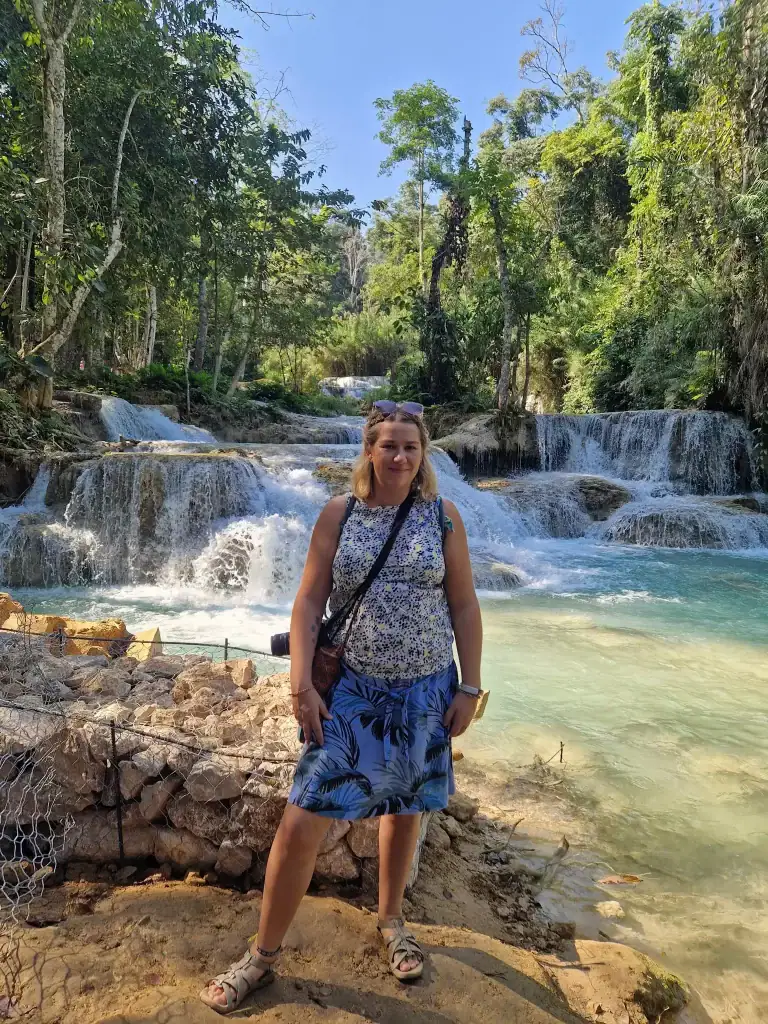
Is Luang Prabang worth visiting?
Absolutely. Along with George Town in Malaysia and Hoi An in Vietnam, Luang Prabang is one of my favourite cities after over 10 months of travelling. It has the perfect mix of history and culture, access to nature, and a compact size that helps the city thrive as a tourist destination. It became a UNESCO World Heritage Site in 1995, so you know it’s going to be stunning, and there are so many amazing places to visit in Luang Prabang.
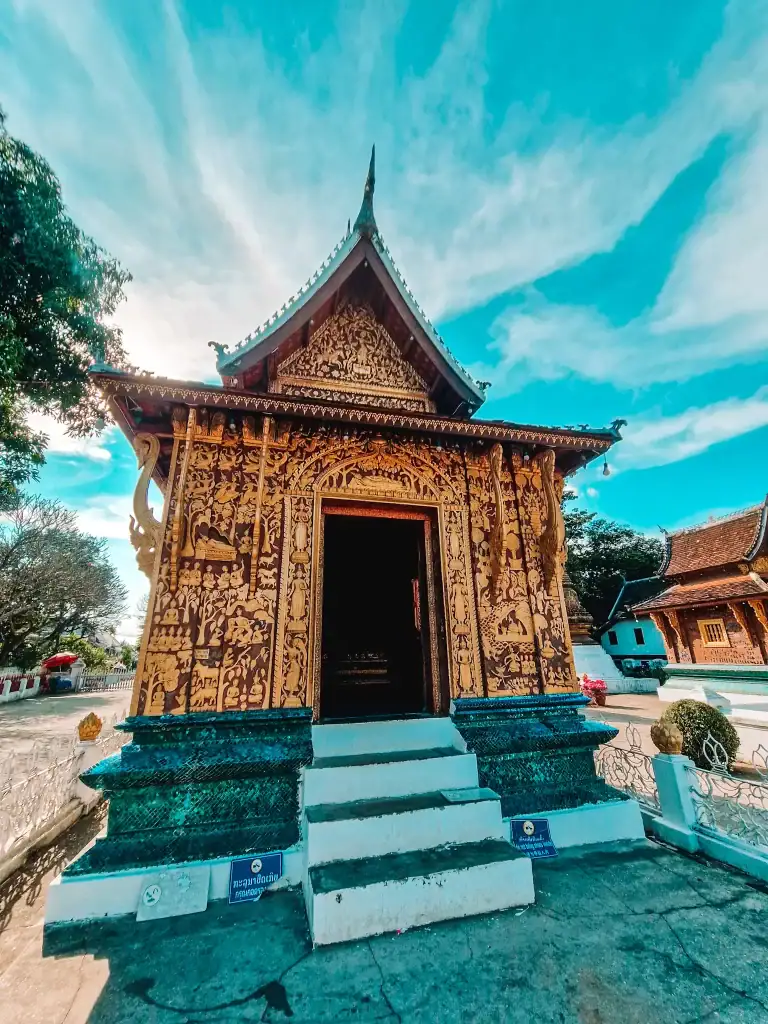
Beyond my love of Luang Prabang, it was rated the number one place to visit in Asia by Lonely Planet in 2024. The new Laos-China Railway makes the city accessible in a way that it never was before, and this is resulting in an explosion of tourist-friendly infrastructure like coffee shops and restaurants.
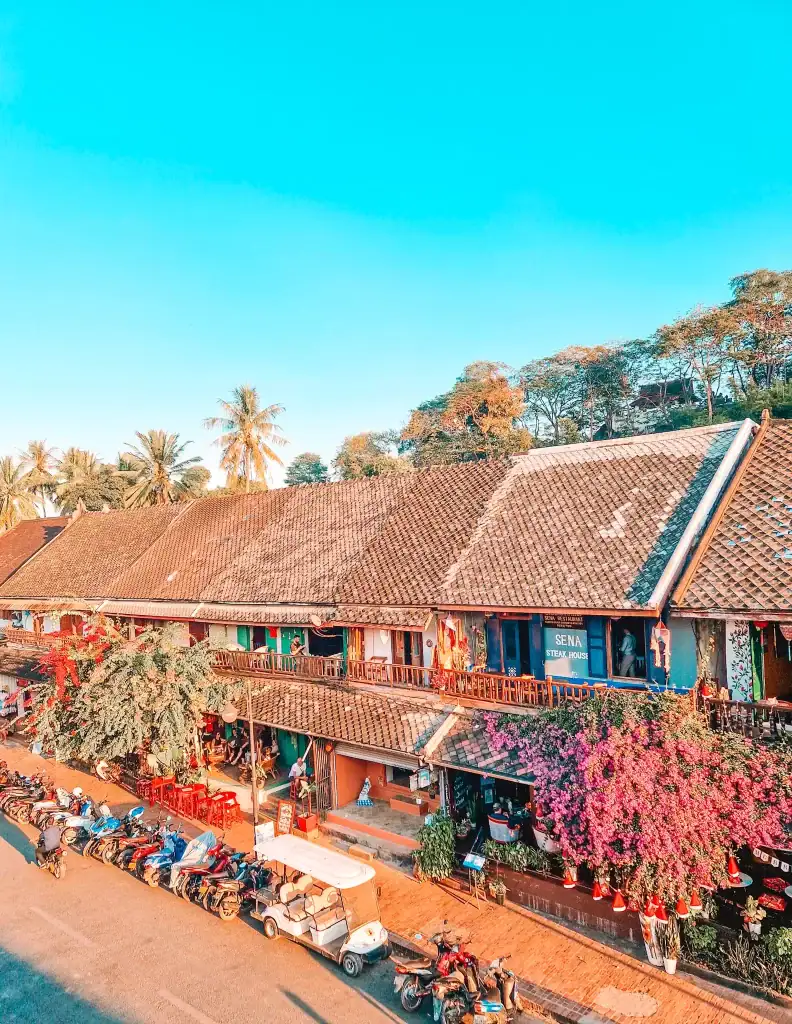
Luang Prabang is going to get increasingly busier and more popular over the next few years. Plan your trip now while it’s still relatively unknown!
The history of Luang Prabang
Luang Prabang, where the Mekong and Nam Khan rivers meet in northern Laos, is one of Southeast Asia’s most historically rich and culturally significant cities.
In 1353, King Fa Ngum founded the Kingdom of Lan Xang, uniting much of what is now Laos, and made Luang Prabang its capital. The city remained the royal and spiritual center of the kingdom until 1707, when Luang Prabang became the capital of its own smaller kingdom, and Vientiane became the major capital in the region.
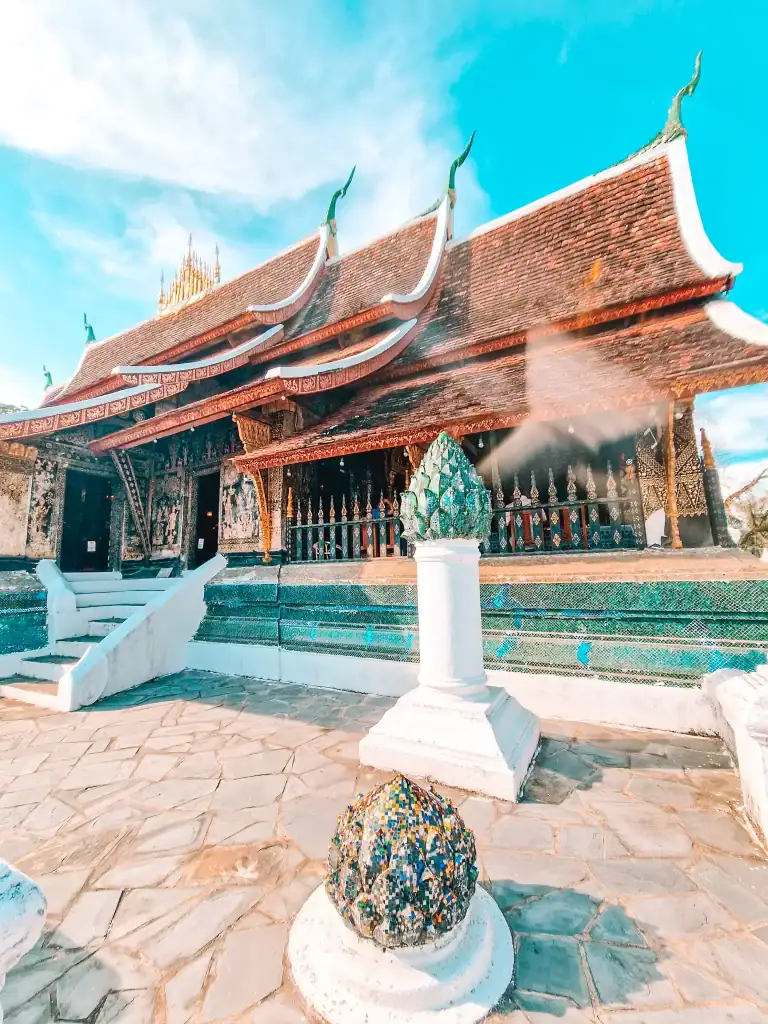
By the late 19th century, French colonial expansion into Southeast Asia meant that Luang Prabang became part of the French Protectorate of Laos. Despite colonial rule, the city maintained its spiritual importance and traditional character.
After Laos gained independence in 1953, Luang Prabang continued as a cultural capital. In 1975, the monarchy was dissolved when the Lao People’s Democratic Republic was established, ending the royal lineage that had ruled from the city for over six centuries.
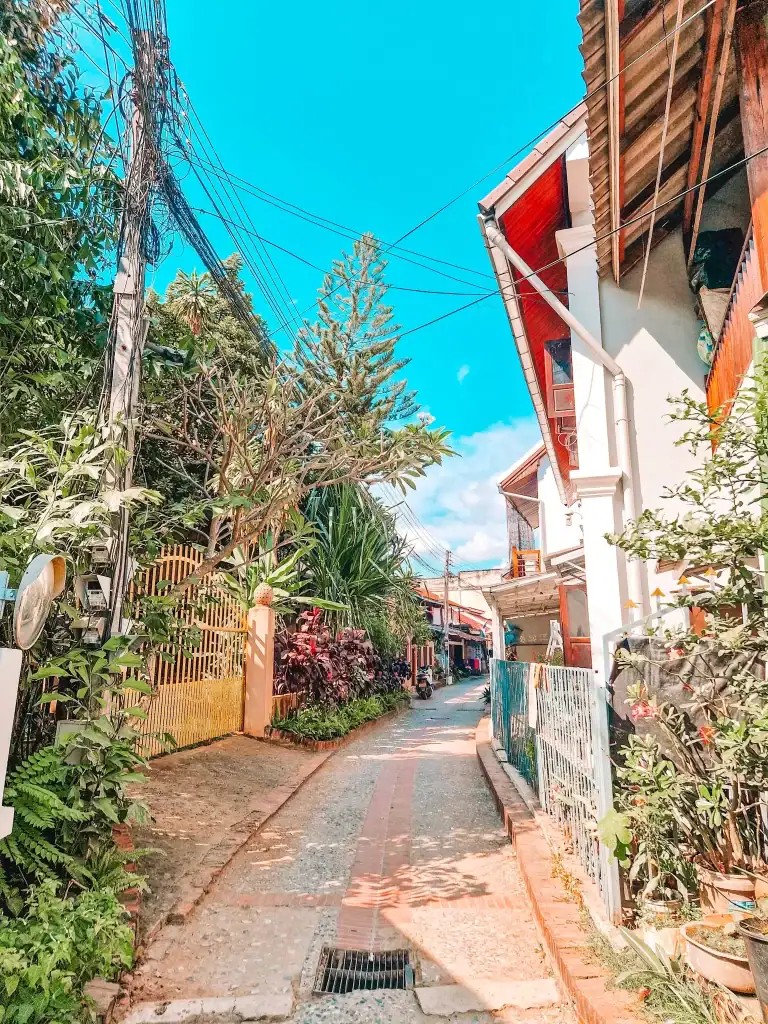
The best things to do in Luang Prabang
Luang Prabang is bursting with things to do and places to visit! I’ve laid out my top 10 best things to do in Luang Prabang below, which are suitable for people who are happy to take day trips, as well as attractions that are walkable in the city. If you’re willing to rent scooters and brave Laos’ terrible roads, there’s definitely more to enjoy around Luang Prabang!
Map of the best things to do in Luang Prabang
Use this interactive map to plan your time in this magical city!
Temple hop your way around Luang Prabang
As a UNESCO Heritage city, Luang Prabang is packed with stunning buildings, just waiting to be explored. Spend a day wandering the city centre and visiting some of the most beautiful places in Luang Prabang!
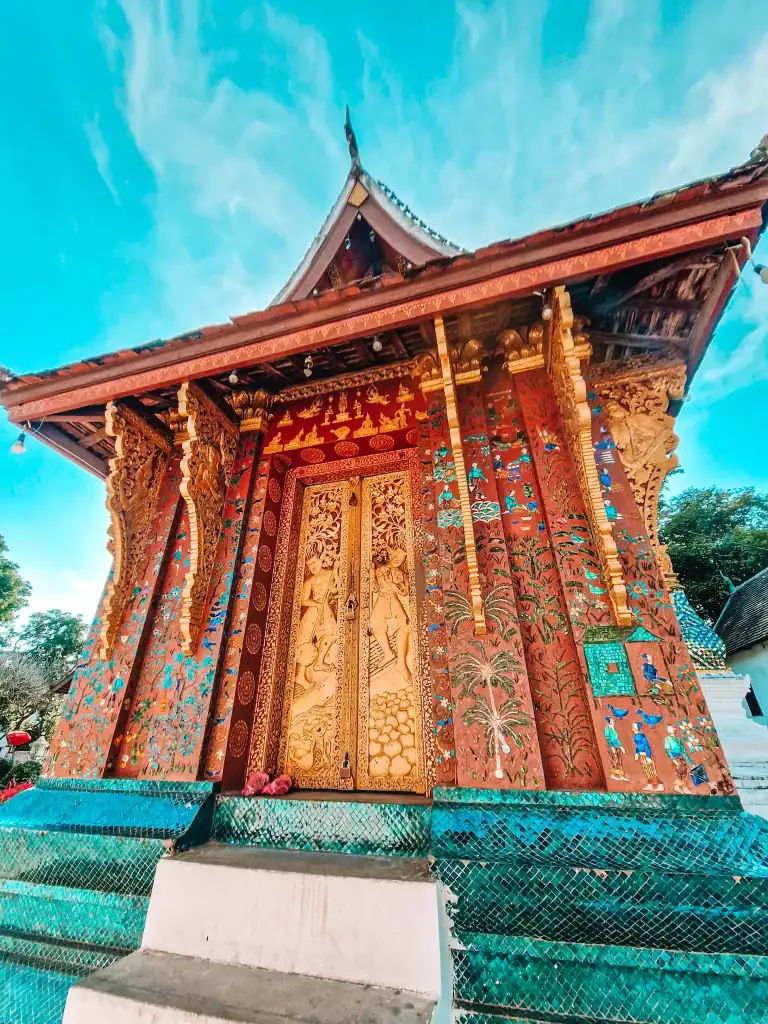
My favourite was Wat Xiengthong, a short walk from the main tourist street. This Wat really stood out for me because of the stunning glass mosaics found around the site. It was built around 1561 and is considered the most important temple in the city.
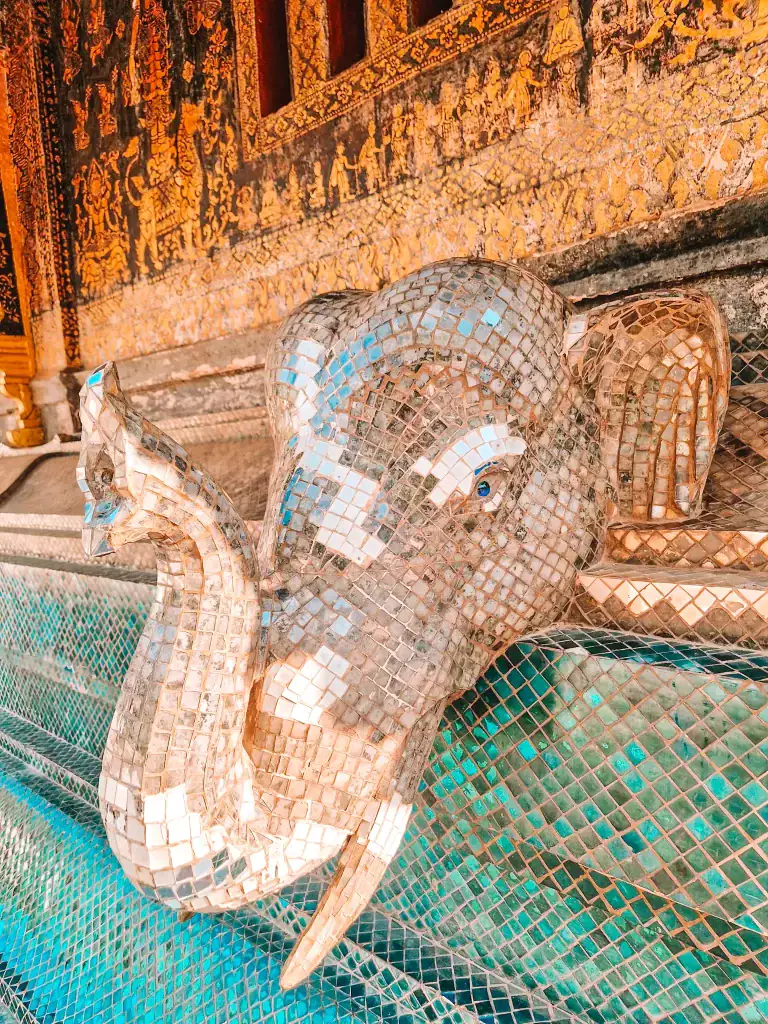
I also enjoyed Wat Wisunerat, built in 1513 and housing the largest Buddha in Luang Prabang, as well as the beautiful golden Haw Pha Bang in the grounds of the Royal Palace, and the famous stupa at the top of Phou Si Hill (see below for details on both).
Visit the Magnificent Royal Palace
Cost: 60K KIP
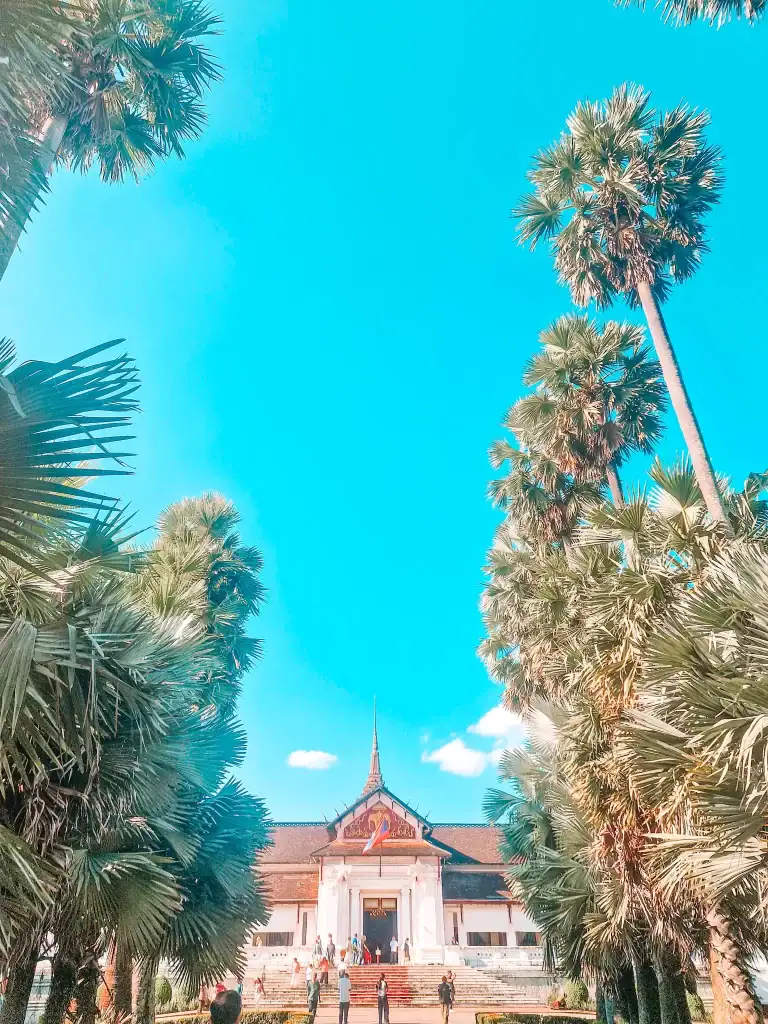
At the edge of the tourist centre of the city, Luang Prabang’s Royal Palace can’t be missed and is one of the best things to do in Luang Prabang. This huge structure was built between 1904 and 1909, as part of the French colonisation of Laos. The buildings are beautiful, particularly the stunning Hwa Pha Bang golden temple located just inside the grounds.
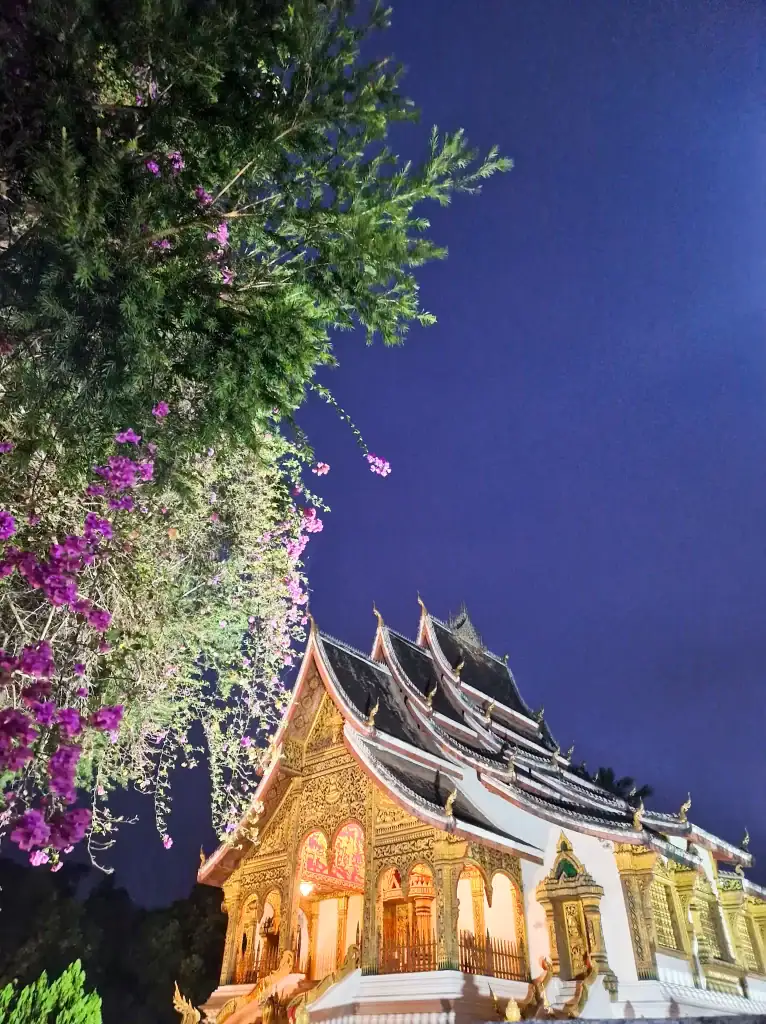
Tips for visiting the Royal Palace:
- You will need to have your shoulders and knees covered.
- You will need to put all your things in a locker before entering the main area, including your water bottle.
- It gets very busy with large tour groups later in the day. Try to go earlier in the morning. This will also help with the heat, as water bottles are not permitted inside.
Climb Phou Si Hill, the spiritual heart of Luang Prabang
Cost: 20K KIP
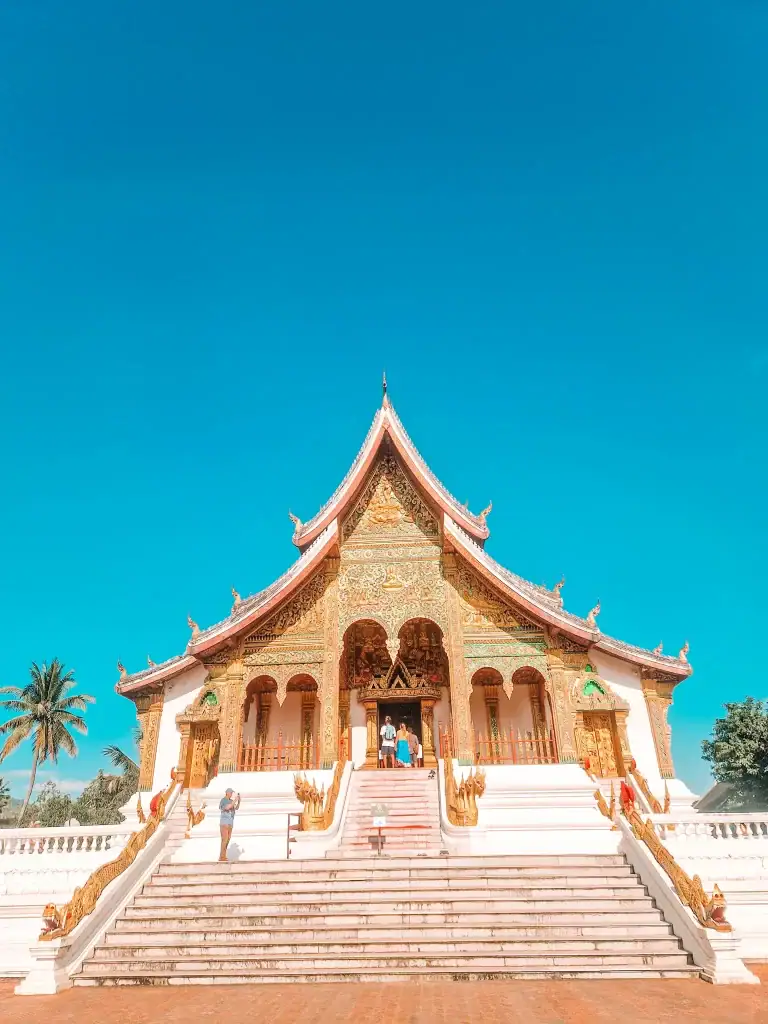
No trip to Luang Prabang would be complete without a visit to the summit of Phou Si Hill. Whether you go with the crowds for the famous sunset, or take an early morning hike for more peace, this is not to be missed. Phou Si Mountain is the spiritual and physical centre of Luang Prabang, and the summit features Wat Chom Si stupa, built in 1804 by King Anourat.
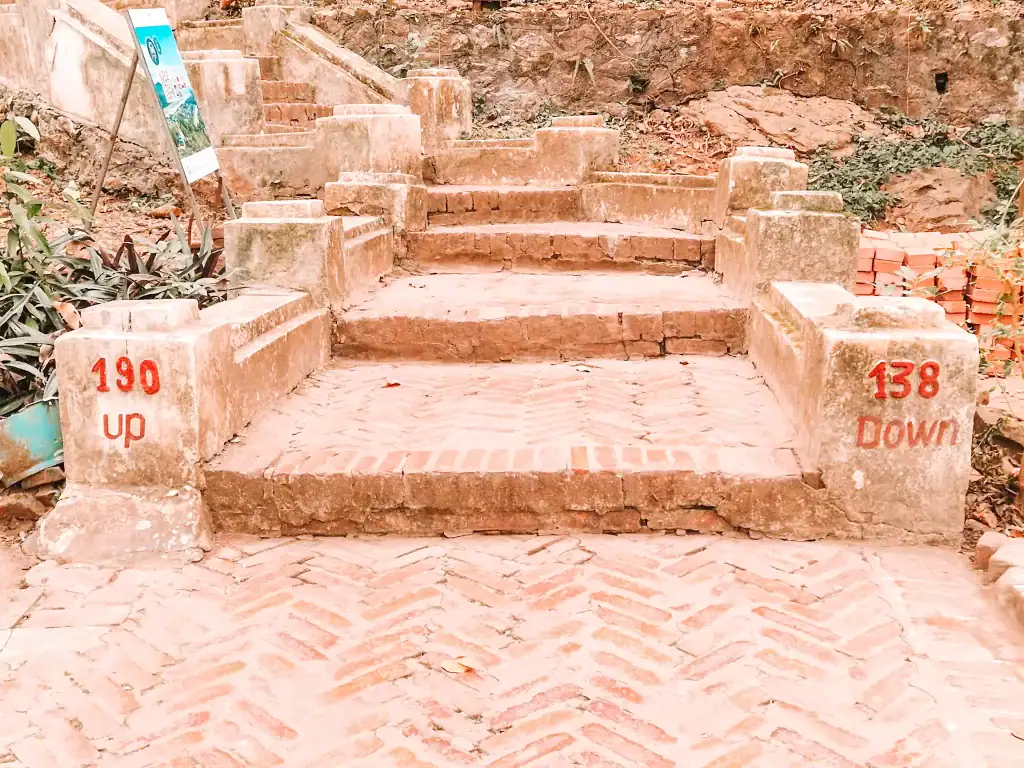
There is, technically, an entrance and an exit into Phou Si Hill, but people don’t seem to pay much attention to this and enter by both gates. If you enter via the ‘entrance’ at the front, you’ll climb 328 stairs to reach the stupa on the top. The views over Luang Prabang are superb, and clear weather makes the panoramic views even more spectacular.
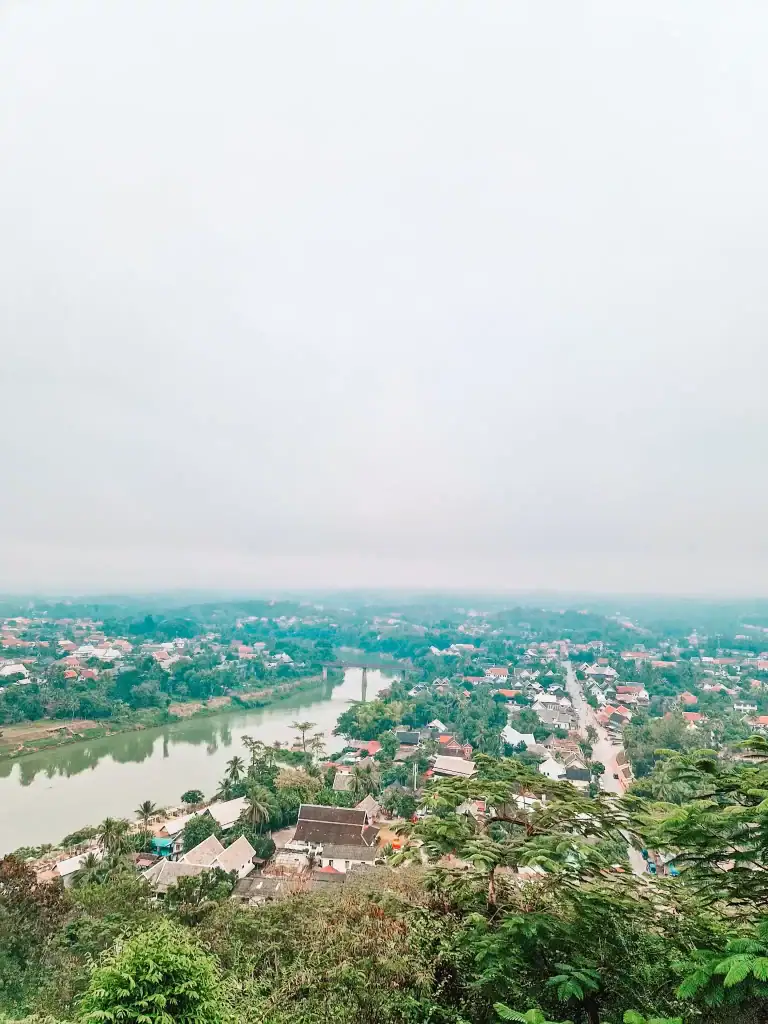
You’ll then follow a different route down (which has even more stairs), which takes you through a number of smaller temples, including Wat Tham Phousi. It’s definitely worth taking both routes, as they offer something different.
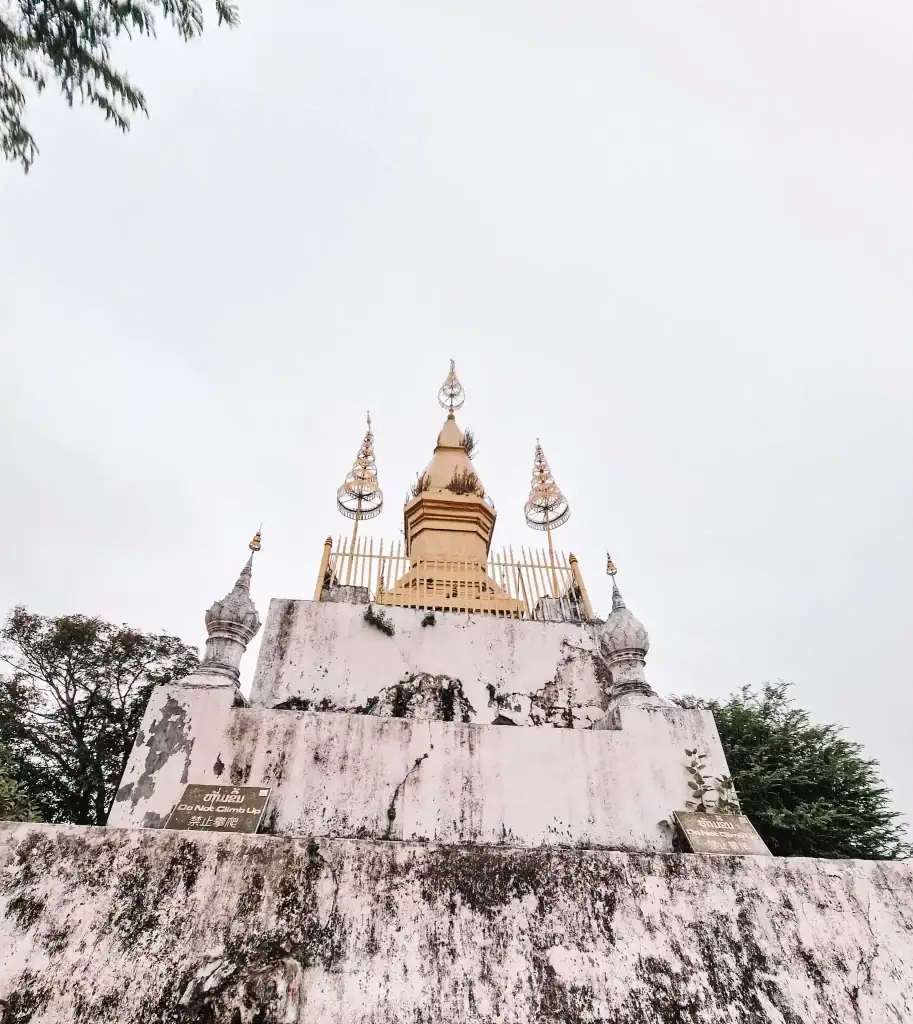
I visited early in the morning, after the alms giving ceremony, and there were very few people there – just some people taking sunrise photos. If you visit for sunset, you will need to go early, as it gets very crowded.
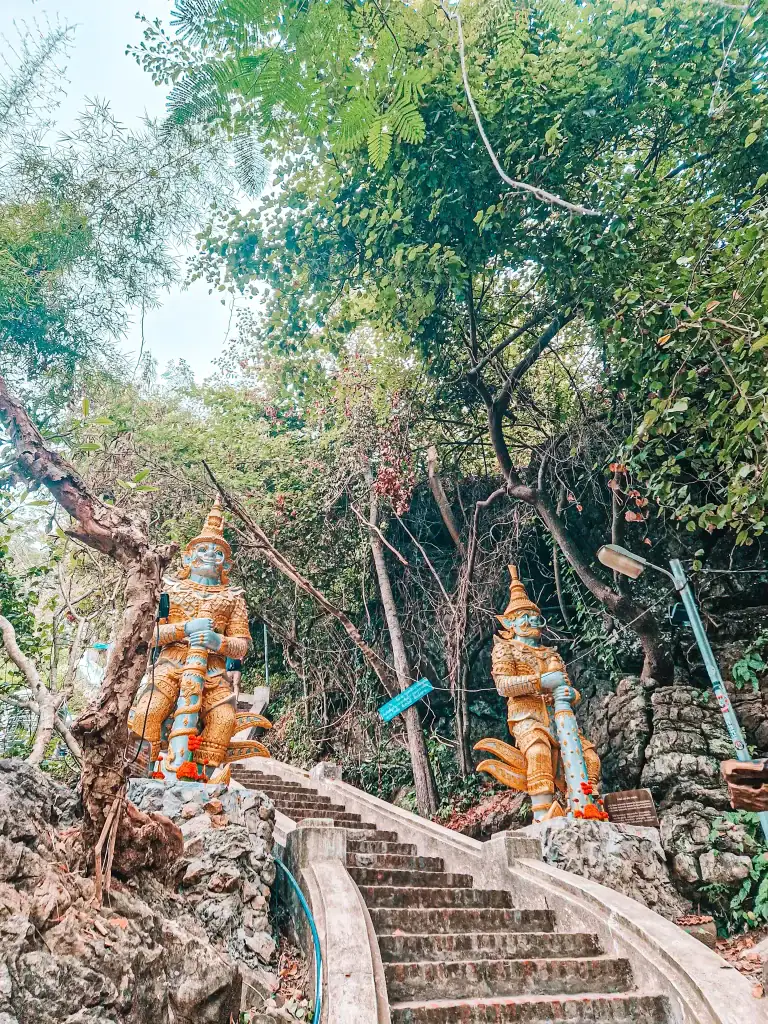
Remember that Phou Si Hill is a sacred site and you will need to dress accordingly.
Learn about the devastating recent Laotian history at the UXO Museum
Cost: Free, but donations encouraged
One of the most important things to do in Luang Prabang is to understand Laos’ deeply painful 20th century history. Along with the Cope Visitor Centre in Vientiane, one of the best places to do this is the UXO Visitors Centre.
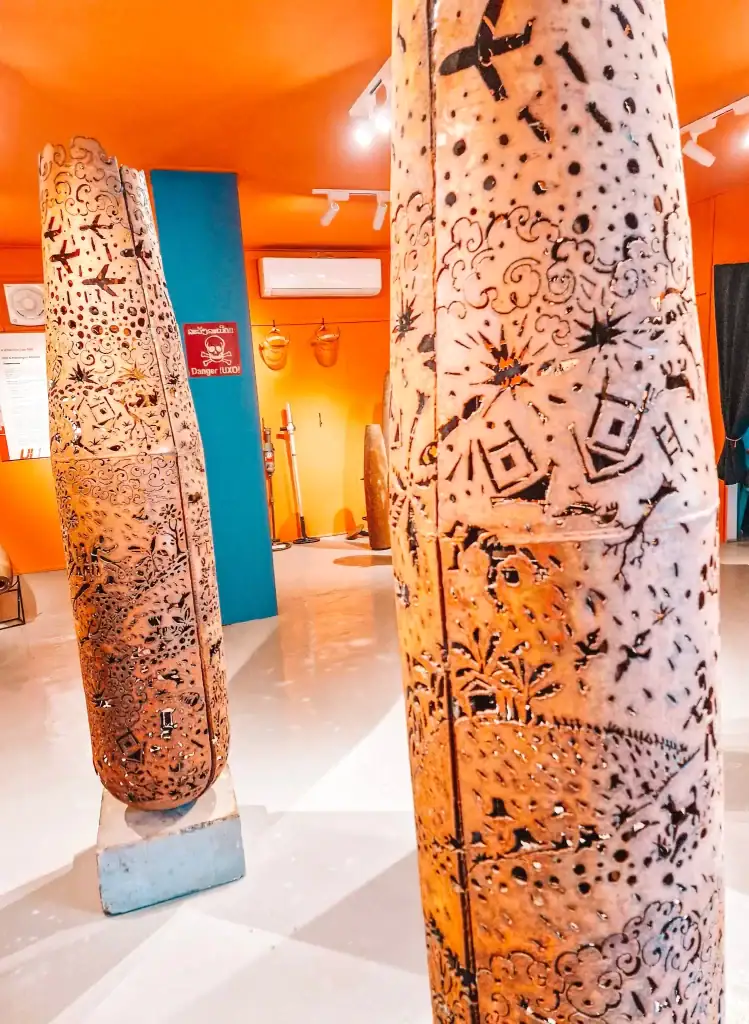
During the Vietnam War, a secret bombing campaign over Laos saw the USA drop over 2 million tons of ordnance, equivalent to a plane load every eight minutes, 24/7 for nine years. This has made Laos the most heavily bombed country in the world per capita, and many of these bombs remain buried in the Laotian soil, just waiting for an unlucky person to set them off.
The UXO Visitors Center isn’t particularly central in Luang Prabang, but it’s well worth the walk. It’s on the same site as one of the organisations working to clear the bombs from Laos, and has a range of exhibits including ‘bombies’, the small cluster bombs that dispersed when a bomb was dropped and cause most of the problems today.
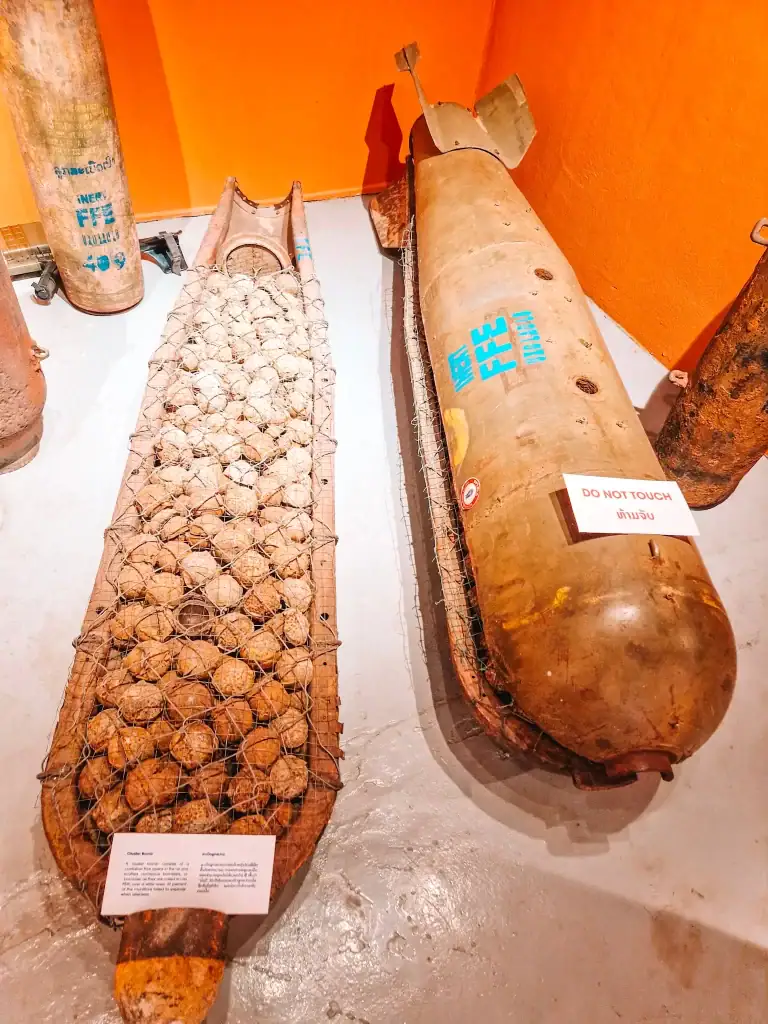
The most moving thing for me were the documentaries shown in a small room. There were several different programmes, lasting about half an hour, and I’ve never been in another museum where every single visitor sat quietly and watchedthe entirety of every video. The museum, and these documentaries, are a great way to understand the devastating ongoing impact of the Secret War.
Visit Luang Prabang’s bustling night market
Cost: free to enter
Luang Prabang’s night market is one of the best in Southeast Asia, and definitely worth a visit! Night markets are a staple of Asian life, and are believed to have started during the Chinese Tang dynasty (618–907).
Luang Prabang’s night market stretches down a long street lined with vendors – great for shopping, particularly if you want anything elephant-themed! As you get to the end of this long shopper’s paradise, you’ll come to the heart of the night market – the food court!
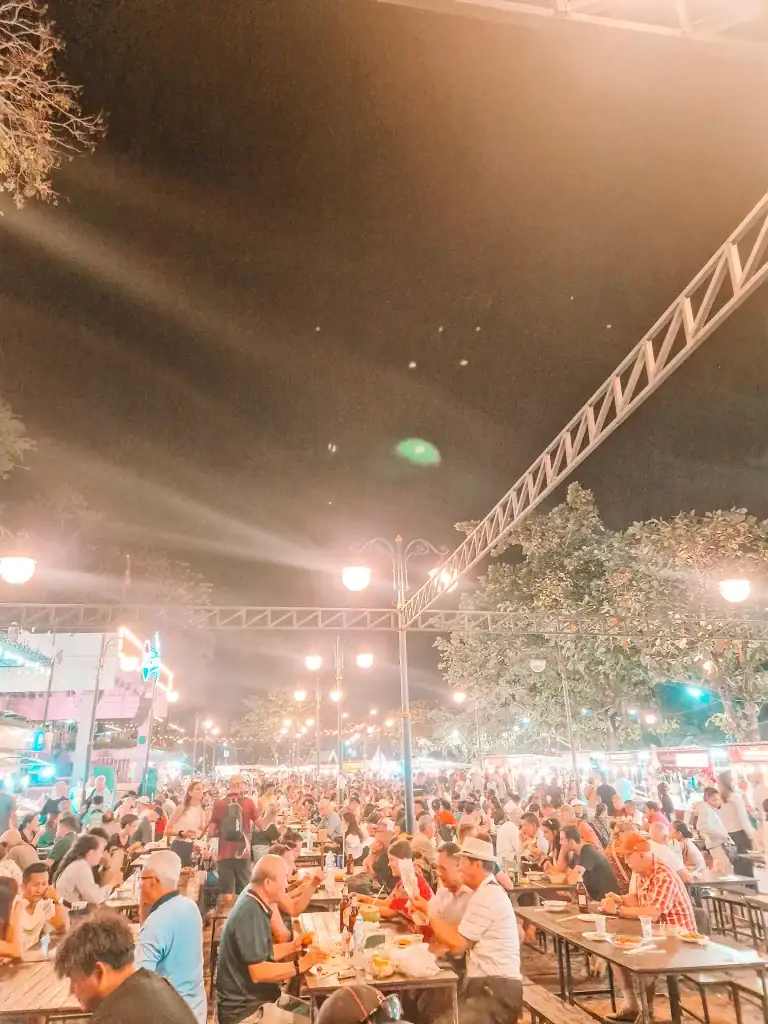
This big space was always absolutely thriving when I visited, and offers food from a range of cuisines. The most popular are, of course, traditional Laotian and Asian favourites. Popular with western tourists, this is definitely one of the safer places to try that unusual meat dish you’ve been eyeing at roadside stalls!
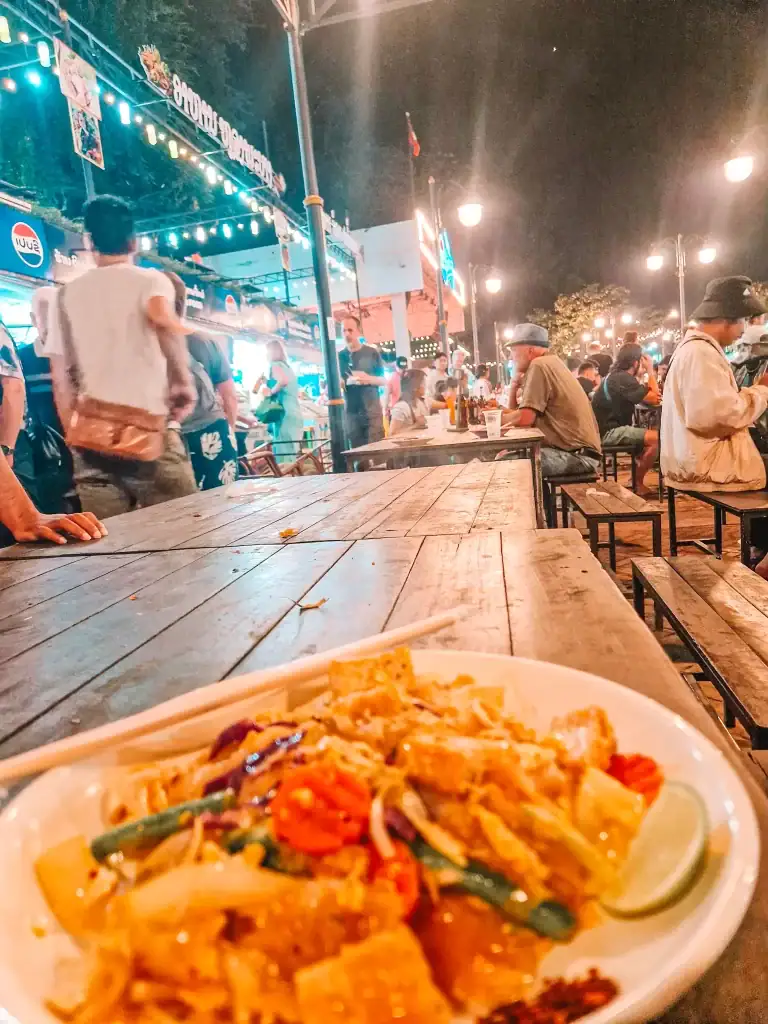
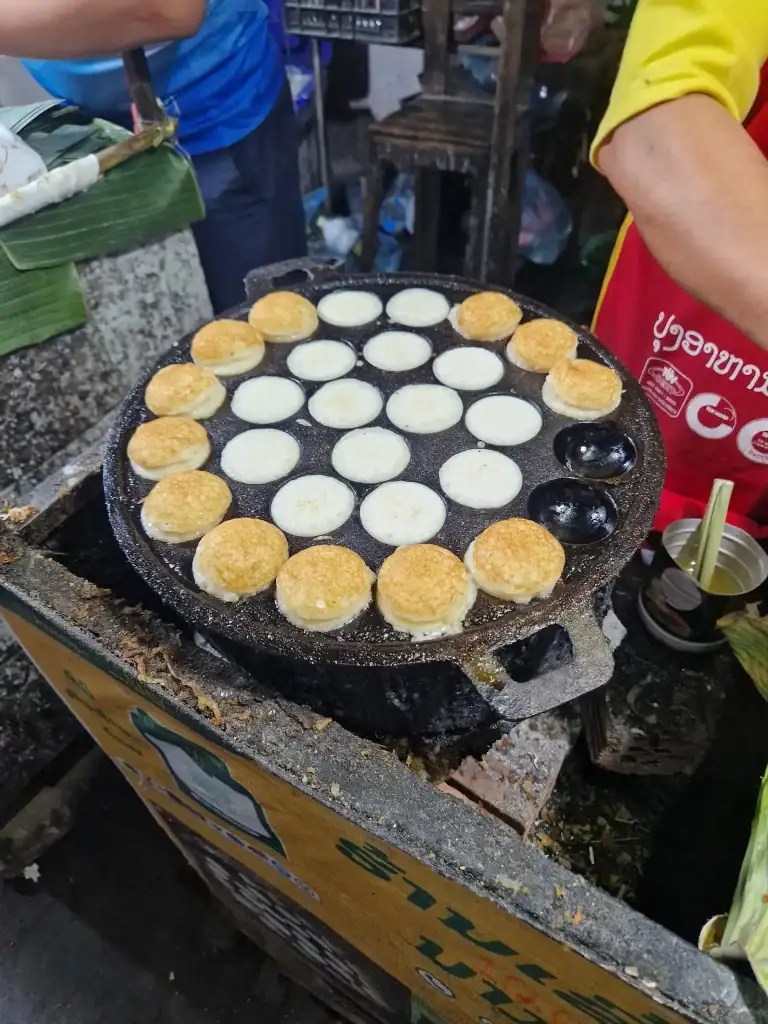
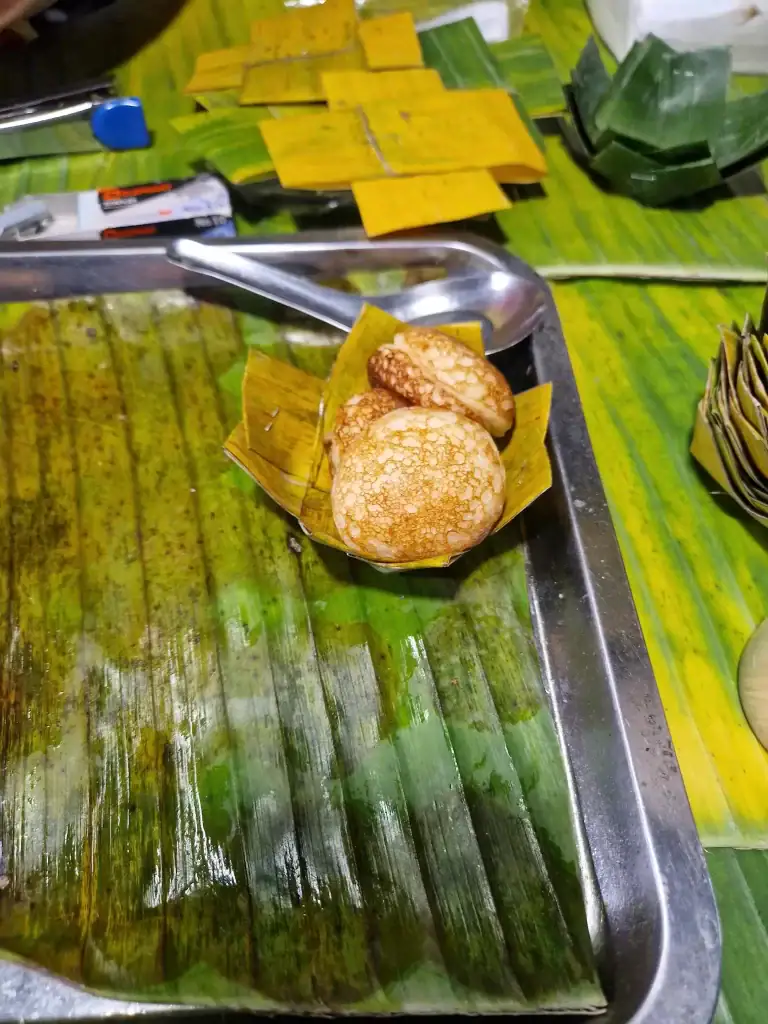
Once you’ve had dinner, make sure to try the delicious sweet, bite-sized coconut pancakes available around the market for dessert!
You can also visit Luang Prabang’s morning market, which starts opposite the exit from the Royal Palace. This is much more geared towards locals, with grocery stalls mixed in with a few tourist options.
Visit the Traditional Arts and Ethnology Museum to learn about the diversity of Laos’ ethnic minority groups
Cost: 25K KIP
One of my favourite visits in Luang Prabang was the excellent Traditional Arts and Ethnology Museum. This well designed space provides details on the history and customs of Laos’s diverse ethnic groups, including the Akha and the Hmong peoples.
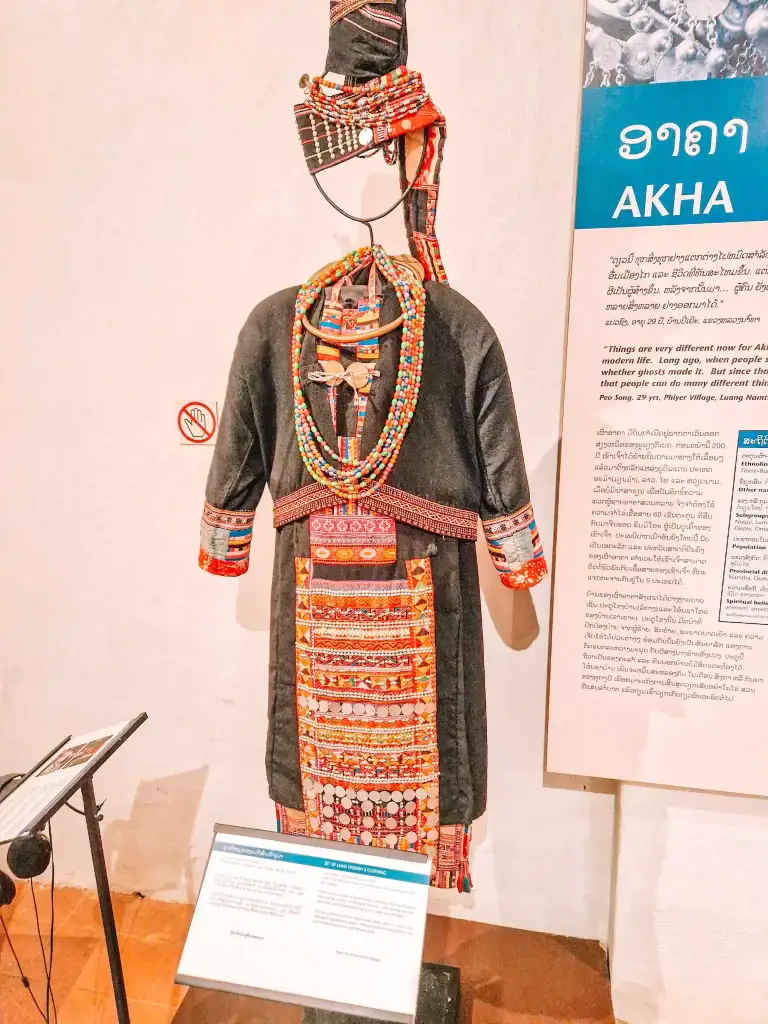
The museum features examples of different traditional dress, and while I was there, a fascinating exhibition on cultural appropriation in the western high-fashion industry and the effort to combat this exploitation. To see examples of designer Western clothes that had exactly copied traditional patterns, with no recompense or even recognition given, was a real insight into the way the West dominates other cultures. As of April 2025, this exhibition is still on at the museum.
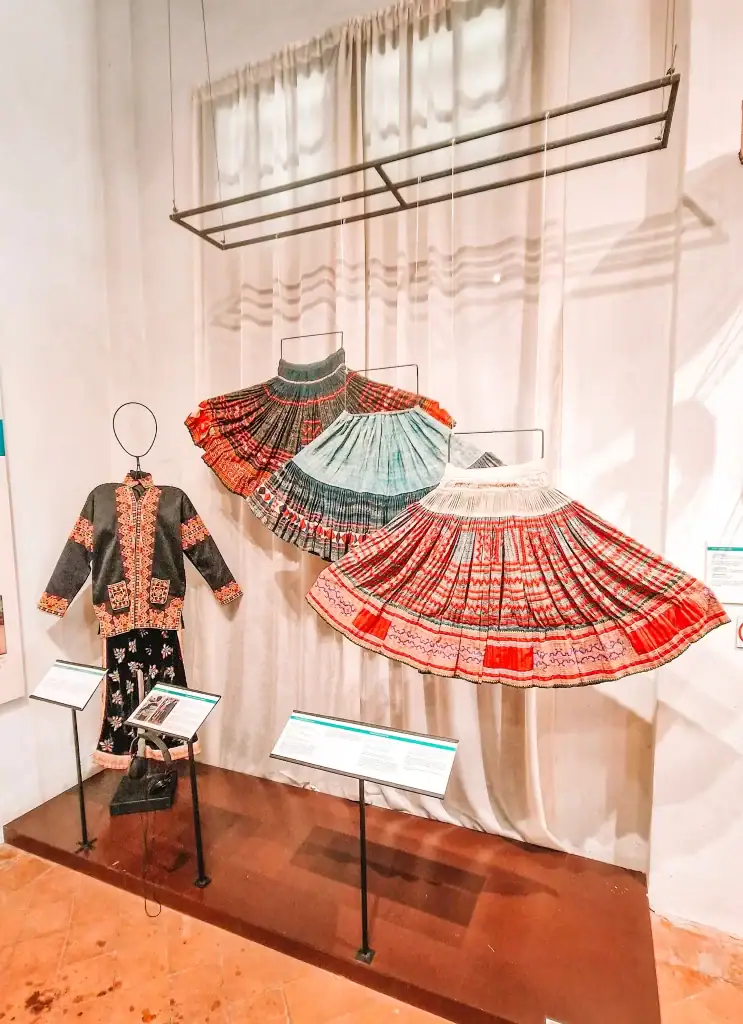
The museum also delves into the different handicrafts practiced in Laos, and has a great area for kids where you can examine handmade versus mass-produced items to see the differences in quality, and learn how to avoid fake handmade items in markets.
Experience traditional Laotian storytelling at Garavek
Cost: $6
One of the most interesting things to do in Luang Prabang, and a great way to understand the culture of Luang Prabang and Laos, is Garavek, a small theatre in the centre of the city. Every evening, Garavek provides a show focusing on traditional Laotian stories, including the story of the founding of Luang Prabang. The show comprises two artists – the storyteller and a musician playing a traditional khene, a handmade bamboo mouth organ. The theatre is only small – about 40 people – so it’s a wonderful way to understand how these stories how these stories were traditionally passed down from generation to generation.

You can buy tickets on the door from 6pm, and the show starts at 6.30pm. Tickets are only available at the door. While the theatre wasn’t full when I visited, if you are there in peak season I’d recommend going nearer to 6pm to make sure you get your ticket. There is a small shop next door where you can buy a drink and a snack.
Visit the gorgeous Kuangsi Waterfall, and see adorable Moon Bears!
Cost: 60K KIP
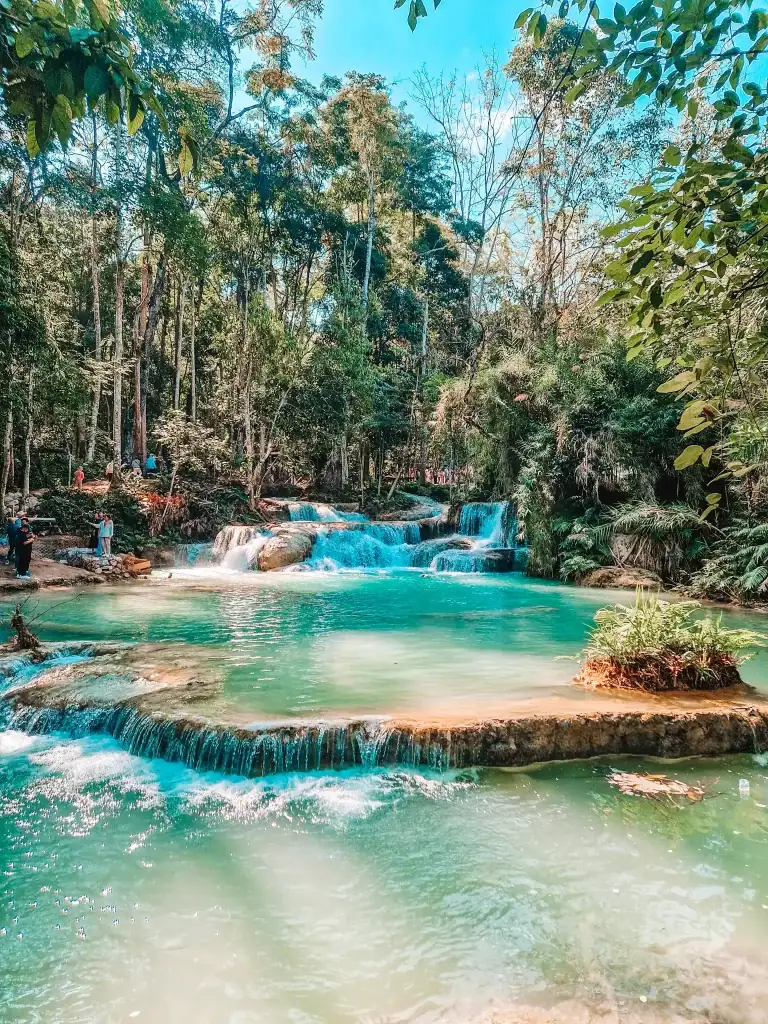
The stunning Kuangsi Waterfalls are probably the most famous place in Luang Prabang. About 45 minutes drive from the city, they are well worth the effort!
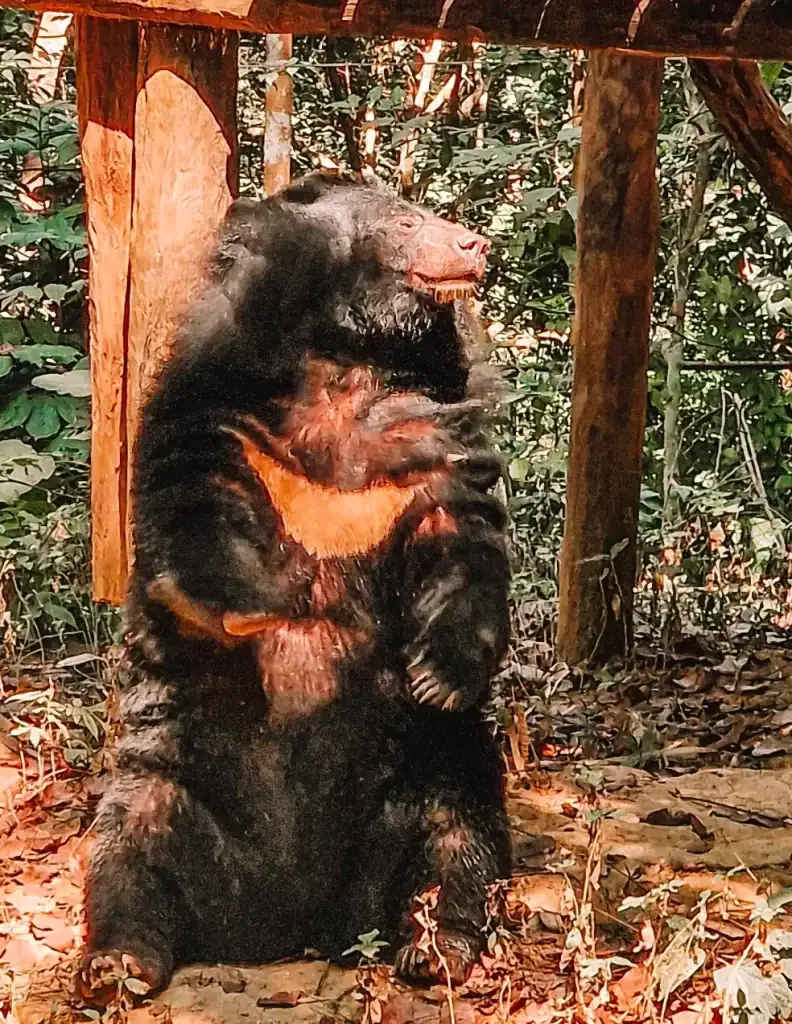
As you enter, you’ll first come across Free the Bears Sanctuary, full of adorable Moon Bears! These lovely friends are shaggier and much bigger than the Sun Bears I volunteered with in Borneo, but still amazing! As a dedicated bear lover, I definitely lost my cool a bit as we turned a corner on the path to find spacious enclosures full of bears. While the sanctuary is an NGO, it shares space with the waterfalls and there is no additional cost to see the bears. There’s plenty of information available to learn about these lovely creatures, and I would have visited Kuangsi for this alone!
Once you’ve dragged yourself away from the Moon Bears, you’ll follow a path through the trees, following the beautifully clear river as the waterfalls and pools get bigger and bigger. Just when you think you’ve reached the highlight, there’s always more to discover. Keep going, and you’ll be rewarded with the final waterfall, a massive cascade of rushing water.
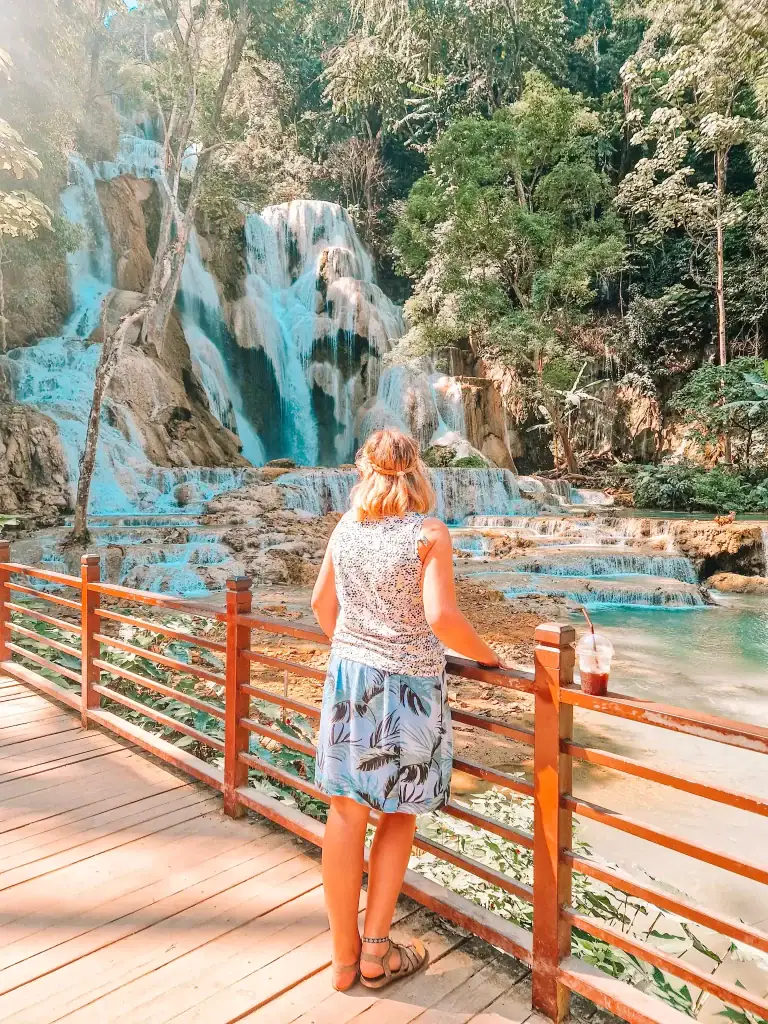
There’s no getting around the fact that Kuangsi is touristy and busy – but the upside to that is that there are toilets and changing rooms (if you want to swim) and a coffee shop for some necessary caffeine. I visited at mid-morning as part of a tour – if you visit at a different time of day, I expect it would be much quieter as the tours tend to follow the same schedule.
To get to Kuangsi, you can:
- Join a guided tour as I did, which also took me to the Pak Ou Caves (below)
- Rent a scooter, which will take about 45 minutes. Roads in Laos are terrible, so be prepared and consider how confident a driver you are
- Take a songthaew, a large Laotian semi-public vehicle that’s essentially a truck with semi-covered benches on the back. These usually take around 10 people and it’it’s very expensive to hire one as a solo traveller or couple. Try to find a group to join with!
Marvel at thousands of Buddhas in the Pak Ou Caves
Cost: 20K KIP
Another famous experience in Luang Prabang is a trip to see the Pak Ou Caves. Set on the Mekong outside of the city, this is often combined with a trip to the Kuangsi Waterfalls (as I did).
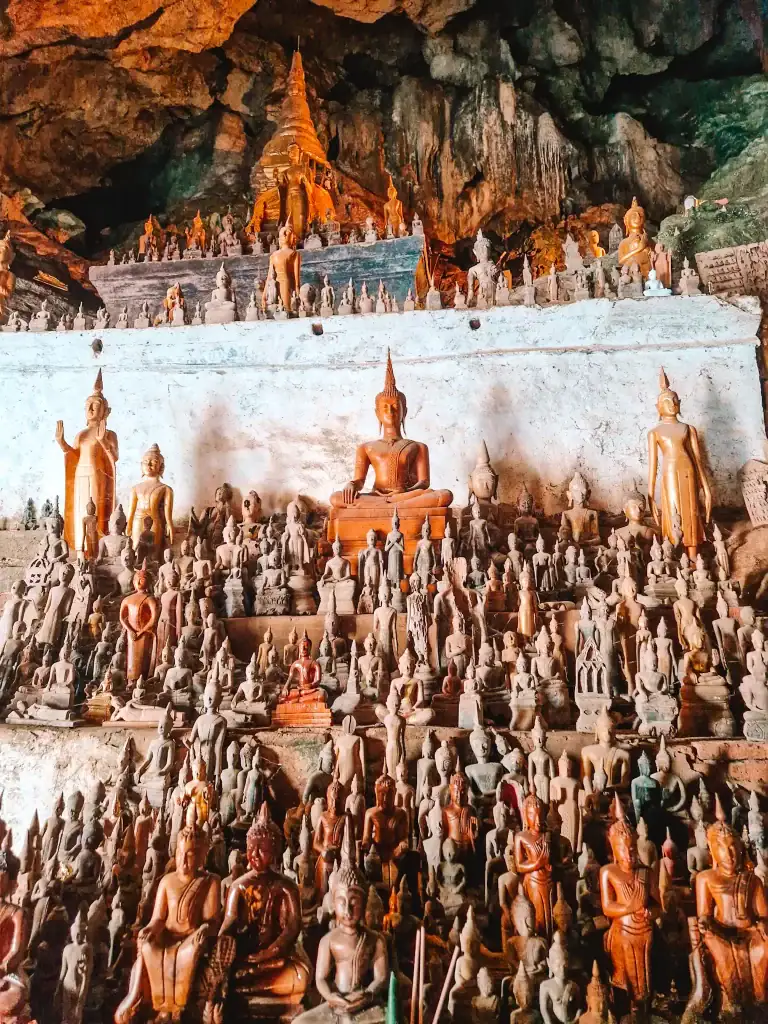
While the climb up Mount Phousi offers sweeping views, there’s something grounding about watching the Mekong slip by from a slow boat. The caves are famous for the over 4000 small Buddha statues inside. The caves are considered a sacred site, and Laotians believe they have existed since around 800 CE, when they were used to worship river deities. After Laos adopted Buddhism in the 16th century, the King would make a regular pilgrimage to the caves on New Years Day, leaving statues each year.
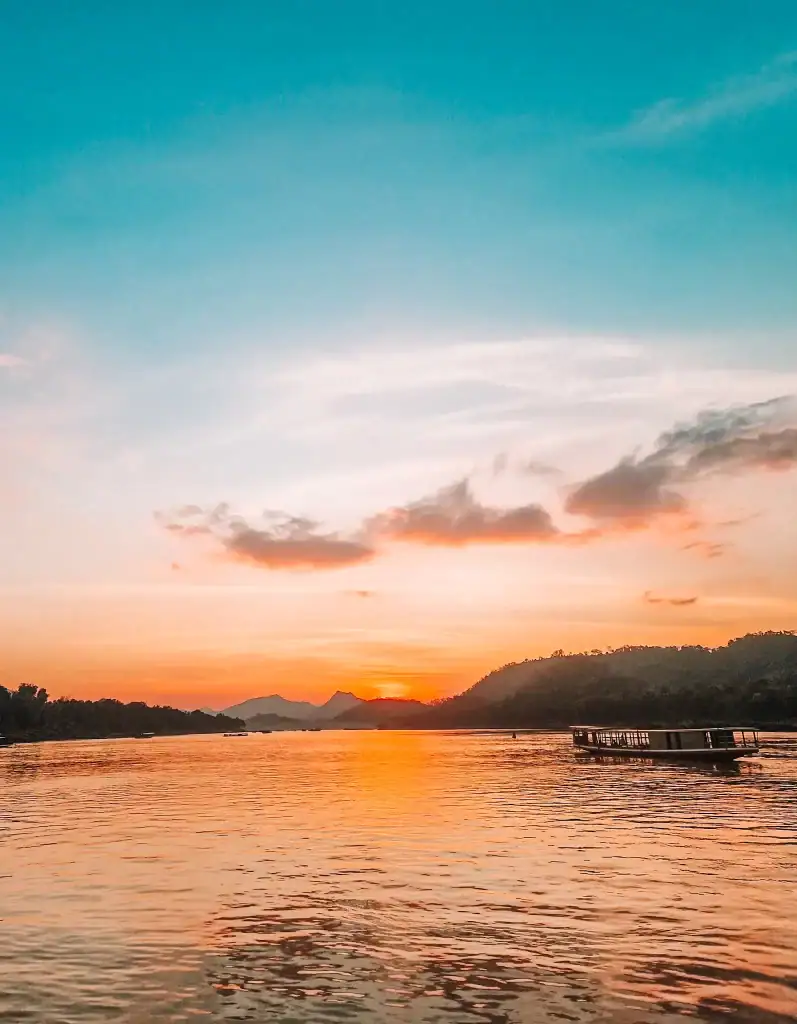
To be honest, I found the caves underwhelming, but really enjoyed the river cruise there and back!
To get to the caves, you can:
- Join an organised tour, which will usually take you down the river by boat. This is what I did, and the tour included Kuangsi Waterfall, a Hmong village, the famous Whiskey Village and the caves.
- Take a shared boat – a public boat departs every day at 8.30am, and the jourey lasts about 2 hours on the way there, and 1 hour back.
- Take a car or tuktuk – this will take you to a village on the shore for about 200k KIP, and you’ll then need to pay a small fee to get across to the caves. This is a much less scenic route.
Try delicious and traditional Laotian tea
Cost: buy a drink
Luang Prabang is quickly developing the kind of bougie tourist cafes that I absolutely love! But one of the best places I went in the city was actually a gorgeous tea house, on Luang Prabang’s pretty main tourist stree
Laos is a major tea grower, and much of their tea is grown in the north in more mountainous regions. Much of the tea production is done by women from ethnic minority communities, so a visit to Maison Sam San nicely ties in with a visit to the Traditional Arts and Ethnology Museum above.
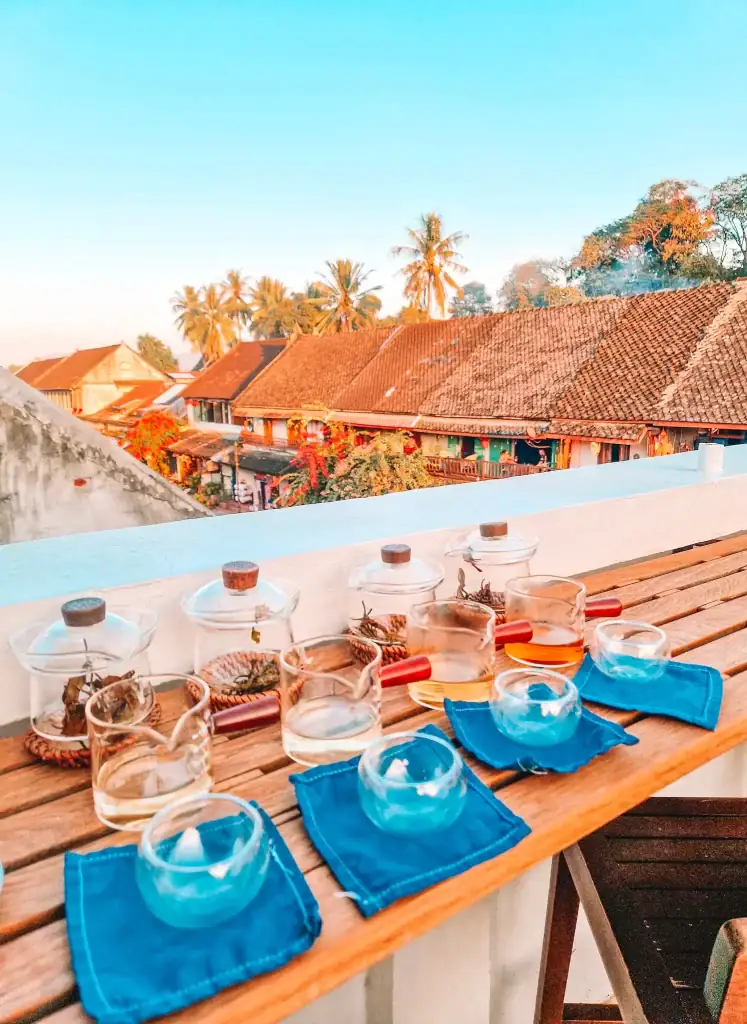
Maison Sam San is an absolutely lovely spot, with a roof terrace that’s perfect for a late afternoon tea. They take their tea seriously as well, and it was the first time I’ve seen the traditional Chinese tea cakes in real life. After reading The Tea Girl of Hummingbird Lane, one of my favourite books (almost) about Southeast Asia and the Akha people that can also be found in Laos, this was really exciting for me!
But it just got better – they offer a delicious tea tasting menu featuring black, white, green, and Pu’er teas that I sampled on the rooftop. This is a great place to stop after a long day of temple hopping or waterfall chasing, relaxing as you sample delicious tea grown in Laos.
While they do local Vietnamese coffee, my favourite coffee shop in Luang Prabang was Aromdee Nature, down on the waterfront. Their coffee was exceptional, they did my favourite coffee drip bags to take away, and they had a stunning view.
Things I recommend with caution
Witness Luang Prabang’s famous Alms Giving Ceremony
Cost: free
The morning Alms Giving, or Sai Bat, procession is perhaps the most photographed tradition in Luang Prabang , but it’s a very controversial one.
All across Laos, Buddhist monks emerge at dawn and visit their neighbours, asking for alms. This practice dates back to the 14th century, when Theravada Buddhism was introduced and adopted in Luang Prabang. The ceremony is particularly important in Luang Prabang, given the sheer number of temples in the city.
The ceremony can be hauntingly beautiful if you get it right, with monks emerging from the dawn mist. I was lucky to see it by chance in Huay Xiay, on the border with Thailand, and it was a very special moment where I was able to observe without impact the worship of local restaurant and hotel owners who were waiting for the monks. However, when I got myself up early for this experience in Luang Prabang, it felt deeply uncomfortable.
It has now become a deeply commercialised element of Luang Prabang’s tourism. Vendors line the streets with cushions and rice bowls for tourists to buy a seat, and those tourists don’t always behave appropriately (not just Western tourists). I saw vendors shouting at tourists (quite rightly) when they were disrespectfully breaking the rules they’d been given. Luang Prabang has also had to put barriers up to create a route for monks, to stop people getting alongside and behind them to take photographs. Overall, it was a bit reminiscent of Hanoi’s famous Train Street, and crossed into voyeurism. I did try to find quieter spots where I could watch the ceremony in peace, but didn’t manage to find one on their route.
My advice is to think carefully about whether you want to take part in this practice. If you do, try to scope out a quiet place the day before, where you won’t have a negative impact on the important religious elements of the alms giving – perhaps ask your hotel or homestay to suggest a spot.
Try local whiskey at Ban Xiang Hai, the whiskey village
Cost: usually included in a bigger tour
Around 30 minutes drive from Luang Prabang, on the banks of the Mekong, you’ll find Ban Xiang Hai, a small village that has made a name for itself selling home-brewed rice whiskey.
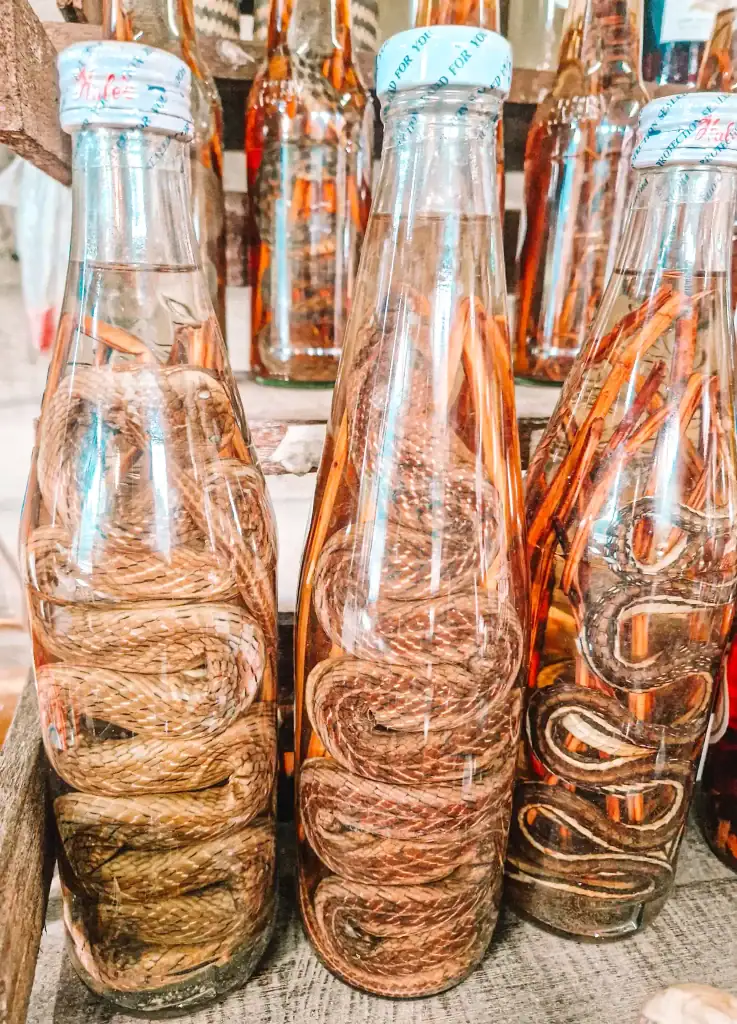
I visited Ban Xiang Hai as part of the organised tour that took me to Pak Ou and Kuangsi, and this will be the case for most visitors. Once you arrive, you’ll join a talk from a local on how this local rice whiskey is made. You’ll see spirits made from both snakes and scorpions, as well as other animals, and learn about the medicinal properties different animals bring to the wine. You’ll then get a chance to try a free sample, although you’ll need to pay to sample the snake or scorpion-infused varieties (although I had already tried scorpion wine in Battambang in Cambodia and wasn’t a fan).
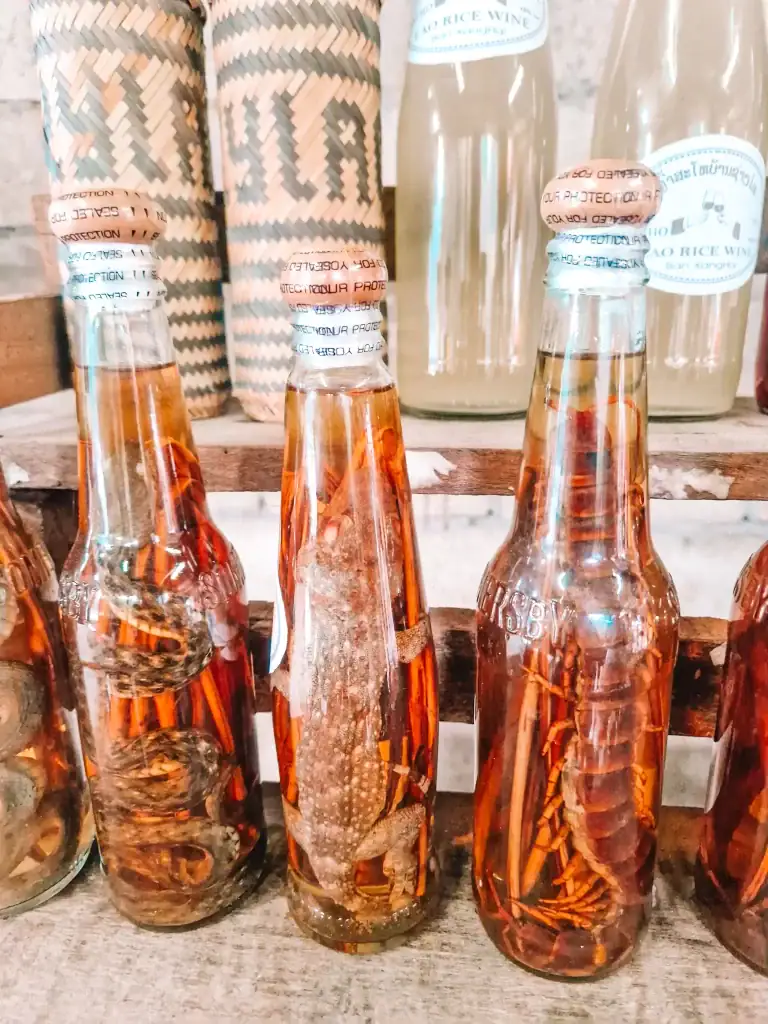
While I found this really interesting, it’s definitely purely a tourist attraction. I was also in Laos just after the methanol-related deaths in Vang Vieng, and this raised awareness of an enormous problem across Southeast Asia. Methanol deaths are frequent, although rarely tourists, and come about as a result of poorly made local alcohol. I was reassured by my guide and enjoyed my shot with no issues, but you’ll need to make an informed personal decision about whether you enjoy the free samples.
I visited Ban Xiang Hai as part of my tour to Kuangsi and Pak Ou, and this is how most people are likely to visit the village. Unless you have a long time in Luang Prabang, I wouldn’t recommend this as a standalone activity.
Learn more about local culture at the Hmong Village
The Hmong people are one of the major ethnic groups in Laos, as well as across other parts of Southeast Asia – for example around Sapa in Vietnam. There are an estimated 600k Hmong people in northern Laos, and they have a distinct culture, practicing slash and burn agriculture and have a unique animist belief system. They arrived in Laos from southern China in the 18th and 19th centuries. Today, the Hmong people, like many in Laos, face deep poverty, partly because the land they farm is inherently unproductive land.
As part of my day trip, we visited a tourist-friendly Hmong village, and this was something I was really excited to do. However, I had very mixed feelings about the experience. I loved learning more about the culture and really enjoyed understanding the weapons – I even got to try shooting a traditional bow and arrow (I was pretty good!).

But the overall experience felt uncomfortable and overly voyeuristic, and it was the most evident poverty I have experienced in Southeast Asia. As we entered and left, desperate women, usually holding children, begged us to purchase small handcraft items. While I obviously have no objection to people trying to make a living, the level of desperation made it clear that the tourist village is not bringing in the money needed to support residents – or that the money is being siphoned off elsewhere, or the tour companies do not contribute at all. Unlike the also-worrying Karen Tribe Village I visited near Chiang Mai, we did not pay an entrance fee – all profit seemed to come from purchases.
This is one of those scenarios where I’m genuinely not sure of the right approach. If you choose to do a day trip in Luang Prabang, it’s likely it will include this village or a similar one as part of the tour. My advice would be to budget a small amount to make a purchase if this is the case. Otherwise, I wouldn’t recommend a standalone trip, as the villages felt exploitative.
Consider a trip to the boutique run by the Traditional Arts and Ethnology Museum instead, where you can buy items handmade by local tribes. While many of the items in store are likely to be beyond the average backpacker budget, I did pick up a sweet handmade rabbit bag charm for a friend, which came with a card informing me about the ethnic group that made it.
FAQs
How many days should I spend in Luang Prabang?
Most visitors find that 3 to 5 days in Luang Prabang allows enough time to explore temples, visit Kuang Si Waterfalls, take a day trip or two, and soak in the relaxed vibe. If you’re interested in slower travel or photography, even longer stays are worthwhile. I stayed 5 full days, which was enough time to really explore – but I definitely could have stayed longer!
When is the best time to visit Luang Prabang
The best time to visit Luang Prabang is between November and February, when there is dry weather, relatively low temperatures (by Southeast Asian standards) and it’s not burning season. I visited in November 2024 and it was warm and dry.
Rainy season runs from May to November. Roads in Laos are universally poor, so it’s likely you would experience travel disruption during this time (as well as getting wet).
March and April are the peak of burning season and are best avoided, particularly if you have any health problems like asthma. This is when farmers across Laos and Southeast Asia burn their land to prepare for new crops, causing intense pollution.
Is Luang Prabang good for solo travellers?
Yes, it’s a great destination for solo travellers! The city is compact, walkable, and generally safe. Many accommodations cater to backpackers and solo tourists, and it’s easy to join group tours to Kuang Si or Pak Ou. Just take usual precautions, especially at night.
Is Luang Prabang safe?
Luang Prabang is a moderately safe city. Numbeo reports generally low levels of crime. The centre of Luang Prabang is generally busy and felt safe for me, even first thing in the morning when I got up to see the alms giving ceremony.
However, government advisory websites report concerns around crime across Laos. Concerns noted by the British Foreign, Commonwealth and Development Office (FDCO) about Laos are typical of those reported in cities across Southeast Asia and the rest of the world: bag snatching and petty crime at ATMs. As usual, be aware of your surroundings and try to use ATMs during the day and in busy areas. As a side note, ATMs in Laos can be unreliable and often out of cash, so you may have to try a few before you actually get any money!
The FCDO also advises women to take additional precautions due to isolated reports of sexual assault. Take the usual precautions of not walking alone at night in unsafe areas, only using licensed taxis or those organised by your hotel, and being aware of your surroundings.
What should I wear in Luang Prabang?
Laos is a conservative country, and modest dress is appreciated, especially when visiting temples or sacred sites. Cover shoulders and knees, especially at places like the Royal Palace and Phou Si Hill. Light, breathable fabrics are ideal for the heat and humidity.
You’ll also need swimwear if you want to dive into the crystal-clear waters at Kuangsi Waterfall. However, the Luang Prabang Tourism Website states that they prefer that revealing swimwear is covered up by a tshirt or similar.
Can I use credit cards in Luang Prabang?
While high-end hotels and restaurants may accept credit cards, most places in Luang Prabang operate on a cash-only basis. ATMs are available, but not always reliable or stocked—it’s best to carry sufficient Lao Kip, especially when heading to markets or rural attractions.
As with many countries in Southeast Asia, it is also useful to have a backup of US Dollars, or even GBP or Euros, in case of emergencies.
Do I need a visa to visit Laos?
Many nationalities can get a visa on arrival or use the Laos eVisa system. Requirements vary depending on your passport, so check your local embassy or the official Laos Immigration site. Make sure your passport is valid for at least 6 months beyond your entry date.
If you are entering via a land border, particularly the quiet land border between Siem Reap and Pakse or the beautiful 4000 Islands in the south, you may not be able to use an eVisa. Research this in advance if arriving by land.
How to get around in Luang Prabang
There are several ways to get around in Luang Prabang.
Walking: the majority of things you’ll want to see in the main city are walkable
Using the Loca Taxi App: Laos is the one country in Southeast Asia that doesn’t have Grab (the Asian version of Uber). They have an alternative called Loca. The functionality of this is nowhere near as good, and it only operates in Vientiane and Luang Prabang, but you can use it to get around in Luang Prabang if you are covering longer distances.
Use Songthaews (shared tuk-tuks): These massive multi-person tuktuks are more like a truck with benches on the back, and I personally found them uncomfortable and not great value for solo travellers! They are bumpy and uncomfortable, and prohibitively expensive for solo travellers or small groups. However, if you join a tour or you’re a bigger group, a Songthaew is likely to be a good bet for you. Make sure to negotiate the price in advance.
Rent a motorbike: motorbike rental is easily available in Luang Prabang, and a great way to get out to locations like Kuangsi Waterfalls or to explore the countryside. However, you should only rent a motorbike in Laos if you are a confident rider. Roads are in terrible condition, much worse than in other parts of Southeast Asia, making driving significantly more hazardous. I met other travellers who had rented scooters in other Southeast Asia countries but refused to do so in Laos.
Use a regular taxi/private car: Private taxis and cars also exist in Laos, and if you’re a bigger group, can be a great way to get you to destinations further afield. As noted in the safety section above, be mindful of who you book a car with. Use your hotel, a reputable travel agency or even an app like GetYourGuide or Viator.
How to get to Luang Prabang: Air
Luang Prabang International Airport is one of only two international airports in the country (the other is Vientiane). As well as domestic flights, there are arrivals from Bangkok, Chiang Mai, Siem Reap and Hanoi.
It’s not far from the city – between 10-15 minutes drive from the main hotel area. To get from the airport to the city, you can take a fixed-rate taxi or tuk-tuk, which are available at the exit. Online reports also suggest that you can use the Loca app, but as I haven’t visited the airport, I I wasn’t able to confirm this personally.
How to get to Luang Prabang: Train
Luang Prabang is on the new Laos-China Railway, which opened in 2021. The most popular routes are the train from Luang Prabang to Vang Vieng and the train from Luang Prabang to Vientiane. The railway is modern, efficient and incredibly fast. For example, the journey time from Vang Vieng to Luang Prabang by rail is under 2 hours, but 6-8 hours by bus (on terrible roads).
There are two classes on Laos’ railway – First/Business and Second Class. From a western perspective, the cost difference for travelling in First Class is not big, so I highly recommend
trying to get these tickets if you can!
Trains are modern, spacious and comfortable. They have excellent Western-style toilets. They also run on time (a shock to British people!). Train is definitely the best way to get from Vang Vieng to Luang Prabang!
Buying a rail ticket is not straightforward – it actually seems designed to be as complicated as possible. Tickets are released only three days before departure, typically at around 6am.
You can buy tickets directly via the official App, but you will need to set up an account in advance. If you’re travelling the popular Vang Vieng-Luang Prabang route, you’ll need to book as soon as possible after the tickets go on sale, as this route sells out quickly. Note that the app only takes Visa, not Mastercard.
You can buy tickets further in advance via an agency, either via 12goAsia or a local travel agency. They will then try to buy your tickets when they are released, but can’t guarantee they’ll get one. They’ll ask you for your flexibility level: can you travel at a different time of day, in a different travel class or even on a different day. I was always lucky to get my requested tickets, but there is a risk that you won’t.
You can find the train schedules, including the schedule for Vientiane to Luang Prabang and Vang Vieng to Luang Prabang, here.
How to get to Luang Prabang: Bus
Bus routes to Luang Prabang are widely available, including from Vang Vieng and Vientiane. Travel times vary, depending on the condition of the bus, the traffic and any roadworks going on.
From Vang Vieng and Vientiane: While I didn’t take the Vientiane or Vang Vieng-Luang Prabang bus, I heard multiple horror stories from other travellers, and the general consensus was that the bus is only advisable if you’re unable to secure train tickets. The journey is much longer – 6-8 hours compared to under 2 hours on the train – and on terrible roads. I was told of bus breakdowns, people vomiting in the bus, people being seated next to live chickens and all sorts of other horrors.
From Nong Khiaw: If you’re heading to beautiful Nong Khiaw from Luang Prabang, the bus is your only option. There are minivans available for this 3.5-hour journey. They usually depart from either the bus station or the company offices in central Luang Prabang. If you are heading from Nong Khiaw into Luang Prabang, I was told there is only one minivan that takes you into the city centre – the rest drop you off at the bus station. You can pick up the central Luang Prabang one from the Ing Ing Mountain View Hotel on the river. The journey is bumpy and windy, so if you get motion sick, consider taking motion sickness medication before travelling.
How to get to Luang Prabang: Boat
One of the most famous ways to get to Luang Prabang is of course the is the iconic two-day slow boat journey from Thailand.
This departs from Huay Xiay, a small town on the Laos side of the Thai-Laos border, and takes two days to reach Luang Prabang.
You’ll stop overnight at a town called Pak Beng – a small town that mostly exists to service the slow boats. You’ll spend two days peacefully drifting down the mighty Mekong, and it’s a wonderful way to experience the stunning beauty of Laos.
If you choose to get the slow boat to Luang Prabang, there are many tour agencies in both Chiang Mai and Chiang Rai that offer this service. Shop around for the best deal, but keep in mind that most agencies book the same boats. If you want to get the slow boat from Luang Prabang to Huay Xiay, ask your hotel (as I did) or a travel agency. Be sure your booking includes transfers, as the boat dock is quite far from Luang Prabang’s city centre.
I’ll be writing a guide soon on my slow boat experience with everything you need to know!
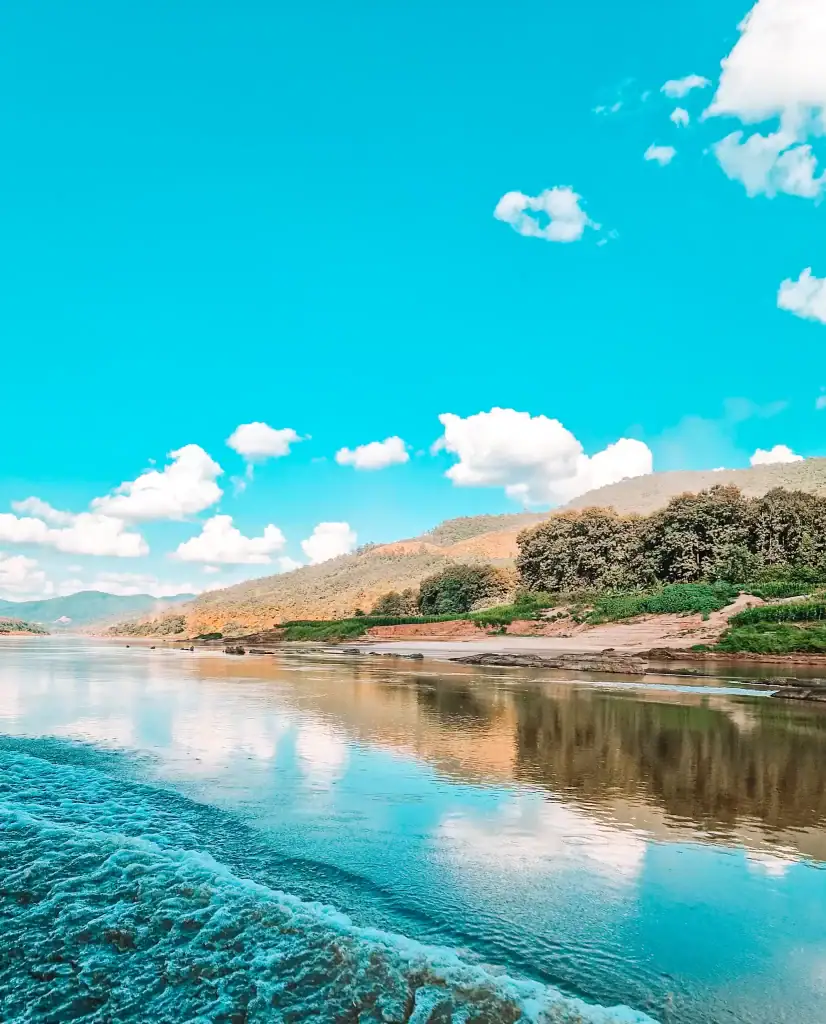
With its golden temples, gentle rhythms, and rich cultural layers, Luang Prabang reveals itself slowly—and beautifully—to those willing to linger. From peaceful river cruises and hidden waterfalls to hands-on cultural experiences, the city is full of both iconic sights and lesser-known gems. However long you stay, let curiosity lead the way—Luang Prabang has a quiet magic that stays with you long after you’ve gone.
Em is the traveller behind Em’s Globetrotting Gems, a blog dedicated to sharing honest tips and real experiences from her adventures around the world. As part of a month-long journey through Laos, she spent five days exploring the charm and culture of Luang Prabang. Her blog is all about helping fellow travellers discover meaningful experiences with practical advice and a personal touch.
✅ All photos featured on this blog are from my personal travel experiences. No stock images are used.
This looks like a wonderful spot for visiting the many temples. Hope we’re able to visit.